Showing posts with label spirituality. Show all posts

Thursday, August 14, 2025

Thoughts on random topics

                            In the name of God, The Compassionate, The Ever-Merciful


It has been a few months since I have composed a full article for this blog. This is largely because of a very busy schedule, which includes a publishing project (which is in the final stages now). In any case, I want to share below some thoughts on subjects which are very important, challenges that are facing not only the United States or even the Muslim Ummah, but also mankind, regardless of religious or national affiliation. Keep in mind that below are thoughts expressed rather quickly. Thus, this post is not structured with references, notes and links.


(1) Palestine


The crisis with the victimization of Palestinians by Israel is not a new situation. The current onslaught in Gaza is simply a continuation of policies that have been in place since 1947. It is perhaps "new"  in the sense that with mass communications and social media, the horrific images cannot be hidden from the world. 


The system of apartheid and colonialism (which also has ideological components ) is unsustainable, and it is my view that we are witnessing desperate attempts to keep it going. That desperation leads to open violence, disdain of international opinion and legal bodies. I think that while the Palestinians continue to suffer, there is light at the end of the tunnel. 


Indeed, God himself states that He does not allow success to be experienced by those who are oppressive (Innahu Laa Yuflihudh Dhaalimoon) (Qur'an 6:135 etc). This means that oppression is not a permanent condition. It will eventually be lifted. It's just a matter of time. 


A few months back. I was invited to teach on Middle East Affairs, and I outlined in an academic environment both the foundations for the conflict as well as for peace. Two of those class presentations are available. See (From the Land of Canaan )


As well as 

(Exploring paths to peace in the Middle East)


(2) Muslim-Christian relations


I am a strong believer in Islam, it is the summary of Divine guidance as given through all of the messengers of Allah ('alayhim as salaam) ending with the coming of the Final Prophet (Muhammad, Sall Allahu 'alayhi wa sallam). I believe inviting Christians to accept Islam is an important task, and have been active in that field for many years. 


Yet, I believe that the religious environment has been poisoned in recent times, particularly in online content. While it is common for Christian  apologists to make outrageous, even stupid claims, against Islam and Muslims, I am also increasingly concerned with Muslim behavior towards Christians. I find that Muslim videos (and keep in mind, typically the creators of these videos are not Imams of any type) are unnecessarily antagonistic, filled not only with superficial arguments, but creating tensions and conflict.


There will always be believers and disbelievers. Christians, Jews, Muslims, Hindus,  and others, will always exist, as long as the world exists. Frankly, I am unbothered by Christians (or Muslims for that matter) who think I am destined for Hell. Da'wah is fine, but we have to do it in the best fashion. We invite using cogent arguments, wisdom and also with our good character. We need maturity, calm discussions, and we also need to accept that others will have religious beliefs that do not align with our own, and that is fine. After all, Allah could make everyone think the same, but He did not do that. 


So yes, we should do da'wah, but in a professional fashion, and avoid emotional arguments, gas-lighting and stay away from creating environments of conflict. The actions of many of our active Da'ees (callers to Islam, mostly online) are reactions to the belligerent and often insane moves of Christian missionaries (which includes disrupting prayers at a mosque to even chewing pages of Qur'an online), however, these so called Christians are not our teachers. Our primary, practical teacher is the Prophet Muhammad, the one who is called "a mercy to all nations" (Q 21:107). His ethics were that of engaging in a holistic manner with the followers of other religions. His style was discussion and sharing the content of the Qur'an. 


While I can confess to engaging sometimes in religious arguments, in general it is not the best way for long-term goals.  On areas of shared interest, especially in a Western environment, Muslims and Christians can work together. Addressing poverty, immorality, political disenfranchisement, etc.. we should be able to do that. But that requires maturity on both sides of the aisle. Moreover, there are elements out here, both within religious discourse -and their financiers behind the scenes- who desire to poison any attempts to do good things. It suits their political interests to keep us divided. This is something our leaders have to be cognizant of.


(3) American society (Homelessness, immigration, family, economy, racism, xenophobia)


In the second term of President Donald Trump's reign, I am increasingly alarmed at not only his foreign policy actions of late, but also the exercise of authoritarianism on domestic levels. I cannot help but sound an alarm at his announced plans to employ the National guard to have a Federal takeover of Washington, D.C. claiming it is a move to fight crime and homelessness. He has expressed a desire to do something similar to Chicago, Illinois.


Regarding homelessness, in the West coast of the United States we see it on the rise. However, using police tactics-simply to move them from one place to another- is a temporary fix at best. The solution-I think- is a reform of the culture, as well as shifting of spending priorities on the county, state and national levels. After all, how much money is spent on our military budget? How much is spent to support Israel? Or to Ukraine, which only provokes Russia?  Those funds are better spent dealing with the social issues of this country.


Immigration has been another hot topic, in which even some Non-White immigrants express support for the Trump administration crackdown on illegal immigrant. I think the support of some voices from immigrants is a desire for proximity to power, but also stems from class differences.  The Trump supporters (of all stripes) view themselves as elites, and cannot see the other side. 


Racism and Xenophobia have also been on the rise, with both official and unofficial expression. It is difficult and seemingly almost impossible to change the mindset of those who have embraced these views. As such, those with a more sane vision of existence need to hope for the best and also become prepared. Everyone should have items such as a passport, second streams of income, practice careful spending/investing, and become better educated (both formally and informally).  Those with the ability to enter into politics, media and the like should do so, and at the least, try to slow down the rise of dangerous ideas.


The Prophet Muhammad, upon whom be peace, has remarked that end times are indicated by "the diminishing of knowledge and the popularization of ignorance" (Yaqillul 'ilmu wa yakthurul jahl). I firmly believe that this can equally be applied to the era of the fall of a society. It is up to people of 'Ilm (knowledge) and Hilm  ( mental controls) to put something out there that has a positive impact on these situations. They cannot stay silent.


The preservation of the family (and even redefining it in order to create stronger networks of support) is very important. The concepts of excessive individualism and materialism are not only destructive, they are contrary to Divine guidelines. Thus, the social trends of encouraging conflict between the sexes and the like should be thrown into the trash.


I have no doubt that this post is short on details. It can be made better. These are simply some thoughts on just a sample of the most important issues we face today. As always, I welcome reactions, reflections, be it in agreement or disagreement. Thank you. 

Tuesday, August 27, 2024

Identitying spiritual resources

 Just as those who work in public service realms often have the task of directing clients to resources suitable for their needs, the religion itself has built-in resources, designed to meet the intellectual and spiritual needs of all who care to derive benefit therefrom. Although an analogy, we can take it further and assert that the primary difference between the public service realm and religion is that the latter is (largely) self-driven, while the former will often have within it a highly regulated, organized program designed to meet the particular need of the client.


The purpose of this article is to direct the reader to some of those spiritual resources, available capital as presented from the religion of Islam. May Allah allow us to utilize those assets. 


During Isolation or persecution


"And when the servant of God stands up, (involved in) calling upon him, they almost became as a big crowd to suffocate him" (Q 72:19)

وَّاَنَّہٗ لَمَّا قَامَ عَبۡدُ اللّٰہِ یَدۡعُوۡہُ کَادُوۡا یَکُوۡنُوۡنَ عَلَیۡہِ لِبَدًا


It is necessary to understand that the messengers of God as well as the people dedicated to the right thing (saaleheen) have these sorts of experiences. Indeed, some of them were killed unjustly, as highlighted in scripture, and today often face the same threats. This verse also highlights the sense of isolation often felt by believers, when it seems that trying to be about what is right is deemed a fringe interest.


Part of the solution is present in this very text. The power of du'aa, salaah and the attitude of worship in general function as solutions to these feelings. Often there is the case of believers, who actually have imaan in Allah and the religion, yet they don't engage in salaah nor du'aa. These are resources that require no payment or much insofar as preparation. In other words, they are easy to access. The Qur'an reminds us that Allah responds to the call of all who call to him ( Q 2:186), that He is closer to man than the jugular vein (50:16), and that regardless of which direction one turns, God's presence is there. (Q 2:115).


The Qur'an says further (72:20) that proclaiming God's oneness, invoking him alone in worship, and avoiding idolatry (and the environment which cultivates idolatry) is the best formula to adhere to, especially in rough circumstances (ft.1)


The Qur'an gives a number of specific supplications to be recited as well as a number of stories that, in addition to invoking God, are designed to deliver confidence and drive to the believer. This includes, but is not limited to, the accounts of Ibrahim (Abraham), Moses, Joseph (Yusuf) and Jesus, may peace be upon them all. 


Other resources


(1) Maximizing the companionship of fellow believers: Communal prayers provide the best avenue for this, and in an Islamic context this happens not only on Fridays but has potential to happy every day five times daily in the mosques. The Prophet described congregational prayers as twenty-five times better in degree than if the same salaah was done alone. It is important here to mention the family relationships, particularly when sharing the same faith. Islam takes the position that those ties actually build up those spiritual resources. We have a hadeeth which describes marriage as half of one's religion, and indeed the maxim "the family that prays together, stays together"


(2) The natural world: Remember, the natural world was created by Allah. Our presentations have placed emphasis on this reality, the positive impact of seeing, breathing and hearing nature, on the soul. It is a great spiritual resource. Rivers, oceans. mountains, forests, etc. 


( From Top: Mount Charleston, Nevada, Superstitious Mountains, Arizona, and Lone Mountain, Nevada.)


(3) The Qur'an itself: Its regular recitation and reading, even if the translation is unavailable or not understood. While I have in the past suggested a minimum of ten verses daily, even less than that would be useful. It can be listened to sometimes while driving or in some other activity, and it certainly deserves to be read with meaning. If your community has a regular Qur'an study circle (halaqah), do join it. 


What does spiritual wealth look like?


In short, a person who seeks to have truth and a rich inner life should have within them the qualities of understanding, love, forgiveness, mercy, joy and general happiness. They should be open-minded, avoid being judgmental. They should also stay clear of addictions, have a clean life, in body, mind, soul and general surroundings. Things such as an organized home and a clean bedroom are actually important indicators of spiritual substance. 


The spiritually wealthy has a kind heart yet has strength. The Prophet Muhammad himself, peace be upon him, was very compassionate, yet also fought in battle. A spiritual person won't automatically be sinless or without faults. Indeed, Islam has a teaching that even Adam's sin, of disobeying God by his consumption of the forbidden fruit, not only was forgiven by God, but that God actually taught Adam how to do repentance (Qur'an 7:23). If the reality of our lack of perfection becomes recognized, accepted, this actually helps in spiritual growth. After all, only Allah is perfect!


Expecting perfection from others or even self can lead to unnecessary disappointments, creating excuses for stagnation and worse, destruction. Islam says strive to be better, but that doesn't necessarily translate into perfection!  It is important to not only engage in forgiveness of others, but also self-forgiveness. 


May God allow us to enjoy rich inner lives. Wa Billlaahit Tawfeeq.


Footnote

(1) It is important to note the context of Q 72:20 fits in an overall discussion on the occult. There is a clear connection to idolatry (shirk in Muslim parlance) and devilish forces. It is also noteworthy that the Qur'an connects shirk to injustice, for which see Shamsuddin Waheed: Only one God: forgotten aspects of Tauheed and its application


Friday, July 19, 2024

Guarding the soul: practical guidance from Islamic sources

 Introduction

Ours is a fast- paced world, perhaps the fastest in the history of mankind, evident not only in the relatively quick technological developments, but also in the social, political, economic and entertainment realms. It is widely acknowledged that physical goods are now built with a very limited lifespan, forcing customers to replace them on a semi-regular basis. Mobile phones, entertainment technology, and the like are obvious examples. This also has bearing on subjects such as spiritual development, relationships and statecraft. Thus, everything and everyone is now deemed replaceable if (and when) the winds of popularity change (be it organically or otherwise), presenting a level of instability that would not be imagined in times past.


It is in this backdrop that we have decided to have a look at the soul, the core of a human being, a nonphysical item that is (almost) universally acknowledged to exist even after death, that which faces some level of Divine scrutiny, an item that has been ignored, neglected, even abused. The purpose of this article is to generate thought, positive development, and the presentation of this rather complex subject in a succinct fashion. In the end, success in achieving the above-mentioned goals comes from Allah. Wa Billaahit Tawfeeq.


Soul is like a sponge


At the outset, it seems necessary to explain that we tend to use the term "soul" as synonymous with other terms such as "the self" "spirit" "mind/mental foundation" " and even "psychological foundation". (ft.1) All recognize the importance of delivering positive reinforcement, discipline, love and attention to children, and similarly understand that the experience of childhood has profound impact on the same individuals as adults. 


Thus, it is true that the soul is like a sponge, yet its arrival in our world is totally pure, without blemish or sin. Thus, Islam disagrees with the Christian notion of original sin, and further refutes the idea that the original sin would have to be dealt with through the blood atonement of Jesus (depicted as son of God, but also God himself in mainstream Christianity). Yet, over time, the soul will absorb both good and bad, beautiful and ugly, largely as a result of outside influences. 


The Qur'an says that the most successful has been the one who has been keen on purifying it, keeping it clean (Q 91:9, 87:14). Similarly, it also asserts that the biggest lost is experienced by the one who damages the soul by corrupting it (Q 91:10).


What corrupts the soul?


The world religions tend to have similar ethical considerations (i.e. murder, theft, etc.) and thus see the violation of its commandments as not only actions bringing spiritual harm, but worldly damage as well. Today's world has made these things a bit murky, in that both capitalism and individualism (worldviews that are actually cousins) have had an impact on modern religious perceptions. Thus, religion itself is widely seen as a personal journey, confined to rituals and a set of theological assumptions. 


The other side of this coin is that (wrong-headed) religion itself can be manipulated through technicalities, its rules abused, leading to ridicule and outright rejection of religion. These points, the manipulation and misuse of religion, can actually corrupt the soul.


This is partly the reason behind Almighty Allah sending forth messengers, prophets and scriptures. The New Testament presents Jesus (peace be upon him) as overturning the tables of the moneychangers in the temple, and of course the Prophet Muhammad (peace be upon him) himself removed the idols that were present at the Ka'bah, itself a sanctuary built for the worship of God by the Prophet Abraham.


Thus, among the other items in the modern world which corrupt the soul, as seen by this writer, include

(1) Narrow-mindedness: A thinking of "I am always right and cannot be wrong or ever change". A stubbornness that leads to long-term harm to self-interest. This particularly happens in family conflict (itself possibly on petty grounds). 

(2) Addictions: Intoxicants such as drugs, alcohol and the like. The Qur'an has placed gambling and even occult practices in the same realm (Wal Ansaabu wal azlaam see Q 5:90) of discussion. 

(3) Harmful entertainment: At no other time in history has entertainment been so readily available. Television programs, music, even the messages of influencers of social media and politicians themselves generate conflict, misinformation, the breakdown of family units, gender wars, can lead to harm, if not outright corruption, of the soul. This includes the so-called hookup culture and low commitment relationships. The consumption of pornography is also grouped within this heading. 


(4) Idolatry: Recognized in Islam as the one sin that-if maintained till death- has the likelihood of never being forgiven, we have placed it as number 4 on this list rather than number 1, because we tend to have a limited way of thinking of it. Shirk is not simply bowing to a statue or photo.! Rather, it can be manifested in arrogance (worship of self), racism (worship of color or clan), partisanship as well as the holding unto negative thoughts and emotions, making (false) victimization one's primary identity. This is a sort of worship (of other than God) which is harder to recognize and combat, nonetheless it is still a problem that needs to be seen and dealt with via the authentic spiritual resources. 


(5) Bad influences: The Prophet Muhammad- Sall Allahu 'alayhi wa sallam- is reported to have said " The man is upon the deen of his close friend (khalilihi), so each of you should look carefully (falyandhoor)  regarding who becomes his close friend" (At Tirmidhee). Having close friends who don't share your spiritual interests can be very damaging. In the name of friendship, questionable or outright haraam actions take place, one is influenced in the wrong direction. In an American context in particular, a phenomenon exits in which men and women in their 50's have the mentality and actions of teenagers! 


What saves the soul?


(1) Tauheed: Recognizing that God alone deserves to be worshiped. This is more than abandoning the gods of Greek or Hindu mythology. This means making Allah as primary focus in the spiritual and mental realm. In a practical sense, this entails giving priority to the priorities in the Qur'an. Notice that Tauheed is connected to justice and the acquisition of knowledge, and shirk is connected to injustice (Q 3:19, 31:30 etc.).


(2) Spiritual practices: This has to be done on a regular basis to be affective, just as bathing. The Muslim practice is five daily prayers, but there are also supplementary actions such as dhikr (which can be done at any time, in which God's name or a Divine attribute is verbalized- loudly or softly), du'aa (asking God directly), and the recognition of God in everyday activities by terms such as Inshaa Allah (God-willing), Alhamdulillaah (praise belongs to God), Maa-Shaa-Allah (this was Allah's will) and so forth. In a broad sense, we can place the five pillars under this category, three of them are spiritual practices in nature. 


(3) Actions of regular charity: As with number 2 above, zakaat is a pillar of the Islamic religion, and in the Qur'an prayer and the regular charity (zakaat) are almost always placed together. Engaging in charity, at whatever level possible, does tremendous work in delivering salvation to the soul, and it generates good feelings in the person who does it. Q 74:44 mentions that refusal to engage in charity (in this case, feeding the poor) is listed as a reason to be placed in Hell. Refusal of engaging in charity is the symbol of ultimate selfishness, a lack of care that is devastating for spiritual development. 


(4) Goodly company: In all contexts (including romantic) this is needed to attain spiritual progress. This is not only supported by texts (of the Qur'an and hadeeth) but also by real life experiences. Indeed, every culture has recognition of this at some level. Some faiths (such as early Christianity and aspects of Buddhism) seem to hold the view that spiritual growth is attained on a personal level and that other people's presence is a distraction from that goal. Islam teaches that the opposite is the case. The Prophet is reported to have said that marriage is half of one's faith, and another hadeeth asserts that praying in congregation (jamaa'ah) is twenty-seven times greater in reward than offering the same prayer in a solitary fashion. 


(5) Dropping unnecessary grudges: Negative feelings and memories can hold a person back and as seen earlier, can be a sort of idolatry! The Qur'an teaches that spiritual awareness (here a reference to taqwaa) is connected to humans dealing with one another, even to the point that it can supersede rituals (Q 4:1). While some grievances are rightly held and cannot be easily dismissed, it is often the case nowadays that a person will hold a grudge over a minor situation, to the extent that even when said issue is addressed, the 'aggrieved' party will continue to harbor ill-will, ultimately bringing harm to themselves. Islam teaches that God is Intense in delivering forgiveness and mercy (Al-Ghafoor Ar-Raheem), if we want that from God, should we not use it for ourselves? The Qur'an asserts that believers have certain characteristics, let us have a read: " And what is with Allah is better and more lasting for those who have believed and have trust in their Lord, those who abstain from sin, great and small, as well as immorality, and when angered, forgive (wa idhaa maa ghadiboo, hum yaghfiroon.)" (Q 42:36-38). The same Soorah goes on to say that those who engages in pardoning and reconciliation ('faman 'afaa wa as-laha) receive rewards from God"(Q 42:40) (ft.2).


While the above is brief, it provides a foundation for salvation, happiness in this life and the life to come. There are of course more details given in the Islamic texts, but this should be sufficient to begin the process of introspection, thought and discussion where needed. 


Footnotes


(1) There are a number of terms used within Islamic texts and amongst Muslims generally that carry slightly different meanings, such as nafs, rooh, (plural being arwaah), 'aql, 'ilmun nafs, etc. For the purpose of this article, all the slightly different concepts should be seen as being addressed here, in the sense of discussing the inner reality of man.


(2) The term 'afaa is related to the term 'afuww (coming from the same root), the latter having the connotation of 'erasing'. The latter term is in the du'aa traditionally made when seeking out the apex of the Ramadan experience known as Laylatul Qadr. If we are asking God to 'erase' our bad points or actions, would it not be expedient to do that as human beings with one another?  Q 42:37 uses the verb yaghfiroon for forgiveness being a quality of believers, this term has-at core, covering up, cutting off or being protected from bad consequences of an act. The term comes from the same root as a number of God's names in Islamic texts, such as Al-Ghaffar (The ever forgiving), Al-Ghafoor (the intense in delivering forgiveness). God is described in one text as "The forgiver of sins" Ghaafir adh-dhanb Q 40:2).  For more on Laylatul Qadr, see Shamsuddin Waheed: Las Vegas Metro Police Department presentation on Laylatul Qadr as well as Shamsuddin Waheed: Ramadan reflections: towards new beginnings


Sunday, March 31, 2024

Ramadan reflections: towards new beginnings

 Truly benefitting from the experience


As is well known, the ninth month of the traditional Muslim calendar, known as Ramadan, is observed through fasting, with more emphasis on prayer, charity, scripture recitation and reflections. It is also widely seen in Muslim culture to be a time of great family and communal meals, gifts (towards the end of the month) and socialization, the specific details of which varying from place to place.


The scripture itself(Q 2:185) describes Ramadan as the month in which the Quranic revelation was initiated to the Prophet Muhammad, Sall Allahu 'alayhi wa sallam. This seems to provide us a clue that the period itself can be transformative(ft.1).


Indeed, the practice of scripture reading, extra prayers (often in which the entirety of the Qur'an is recited in roughly even portions on a nightly basis) and abstinence helps us in looking inward, in building up our spiritual health and character. 


God as the one who erases and displays generosity.


The last ten night of the blessed month has certain traditional practices, and while I don't intend to address all of them here (ft.2), one of those practices, which emerges from the Prophet himself, is that of a particular supplication (du'aa), to be made in particular when seeking out the Laylatul Qadr (ft.3).


The Arabic text (as well as a Melayu translation) is in the image below.


The usual English translation is "O Allah, Indeed, you are the forgiver, generous, you love to forgive, so do forgive us." However, there is a nuance missing in this rendering. The term 'Afuww in the text actually carries the meaning of eliminating or erasing. In other words, in this du'aa, we are asking God Almighty to make for us a new start, to wipe the slate clean and move forward in life. 

The text also has the term Karim (generous)(ft.4 & 5). I think this is very appropriate. The superlative form (i.e. Al Akram the most generous Q 96:3) was among the first words given to the Prophet (peace be upon him) in the initial revelation. 

We are eagerly waiting for Allah to display for us a wiping of clean slate and generosity in His dealings with us. That wish forms a deep part of the spiritual life. 

If that is the case with God, then shouldn't we, as human beings, have those same qualities insofar as our dealings with each other? The Prophet Muhammad certainly had those qualities, he is described as forgiving and generous by his companions. 

More importantly, should we not also have generosity with our own souls? Should we not engage in self-forgiveness, and not become slaves to the past?  Many of us, as human beings, become so entangled with past situations, much of which no longer have relevance, that we cannot move on. 

Life is more than a CV or a biography on LinkedIn. There are always good and bad points, successes and failures. The religion of Islam gives us, in both a ritualistic and a philosophical sense, numerous Oppurtunites not only to address the past, but to overcome the burdens of the past, to a road of stability and happiness, in this world and the next. 

Those opportunities are not only in the presence of God, because as believers, we already accept that Allah is the one who forgives, has mercy and understanding. Those opportunities are insofar as humans dealing with one another and, arguably most importantly, in how a person sees their own self. 

Self-worth should not be viewed insofar as a bank balance or in past failures. That is what Islam teaches us generally and should likewise be emphasized through the Ramadan experience.

May Allah accept all of our fasting, prayers and good actions, and may we gain from this month the beautiful aspects pointed to above. 


Footnotes

 (1) The same text goes on to describe the Qur'an as "guidance" (hudaan). This implies that guidance was (largely) absent before its introduction via the revelation, thus, giving another indication of its transformative mission. 

(2) For more on the traditional observations, see my lecture Religious manifestations of Laylatul Qadr

(3) In the following link, we have made the argument that there is more than simply spirituality sought after in Laylatul Qadr. Laylat Al Qadr, an alternative perspective

(4) There is some discussion among the muhaditheen regarding the presence of the term "Karimun" ("generous") in this text. In fact, some renderings omit this term all together. Nonetheless, it is my view that even if the term does not belong to the original hadeeth, it is still appropriate, after all, God is certainly generous, we are invoking him with that reality in mind. Moreover, du'aa is worship and invoking of God with very few (if any) rules, contrasting with the ritual of Salaah. 


(5) A related question is the possibility of making this du'aa outside of Ramadan. I don't see this as problematic, especially considering that du'aa has very few rules (as stated in footnote 4). Moreover, the operative term 'afuw (explained by us as erasing) appears in Quranic du'aa as well. See Q 2:286, the line wa'fu 'anna, waghfir lanaa war hamnaa "and erase for us, bestow forgiveness and mercy to us."


Monday, November 18, 2019

Methods And Goals Of Contemplative Practices In My Faith (Panel Discussion )

(The following is an edited version of my presentation for the 2019 Interfaith Forums, organized by the Interfaith Council of Southern Nevada, held November 10th, 2019 at Masjid Ibrahim.)

Introduction


The Qur'an tells us "Indeed, prayer restrains from immorality and repugnant actions" ( Q 29:45). The word translated as "prayer" is "Salaah". In our faith, it is observed at least five times daily, during specific times of the day. The Salaah ritual has therein recitation of Quranic texts, bowing and prostration. God does NOT need that we do this, or any other act of worship, rather, it is we who need it.

The Salaah ritual is regulated, offered in a particular fashion, and is deemed a religious obligation. The spiritual and physical benefits of Salaah have been widely recognized. The Prophet Muhammad (peace be upon him) identified it as the main exercise which distinguished between faith and lack of faith.

The Qur'an reminds us that there will be a time in which we are held accountable before God, and the salaah essentially reminds us of that, therefore it becomes important to do as much positive works as we can. Thus, the Qur'an connects the ritual of salaah to the giving of a portion of one's wealth to the benefit of worthy causes, such as uplifting the poor. Similarly, the Qur'an expresses criticism of those who do ritual worship, yet are neglectful of needy human beings.


Dhikr- The remembrance of God


Another ritual act done is known as dhikr! Traditionally, this includes the recitation of  God's names, formulas of praise and glorification. As a ritual, it is not deemed in an obligatory sense- the important exercise is the mental one here. The Qur'an says "The remembrance of God is the greatest (source of inspiration and power)" .

Dhikr as a ritual often takes place after the Salaah, and can be offered at any time without any preconditions. If we engage in this act (be it in a ritual or non ritual fashion)- it helps us to internalize the very hopes we seek from God. In other words, if we invoke and recall God as The Ever-Forgiving (Al-Ghaffar), forgiveness should become a part of our character as well.


Miracles

The actions of Salaah and dhikr produce a sort of barrier against mental and spiritual attacks, and is the main ways by which we connect ourselves to the Almighty.

With that said, what is perhaps most curious on this point is that miracles and mystical experiences are NOT the goals of these actions! THIS does not negate that miracles can take place, and that people can experience mystical moments, yet the fact of the matter is is that such things are subjective and ultimately do not provide any evidence beyond an individual level.

This is illustrated in the experiences of the 12th century figure, Shaikh Abdul-Qaadir Al-Jilani.  Once while he was praying, a voice comes to him, saying "I am your Lord".  The Shaikh replies "Are you God?" After repeated questioning, this voice says "I am making  lawful for you what I made unlawful for others". The Shaikh replied "You are Satan, because I know God would not make lawful for me what He has made unlawful for others".

Miracles are not what we need, because they can themselves be misleading. What we need is the inspiration derived from worship to be able to recognize truth and produce in this world, that is the formula for success in this life, with springs to enjoy in the life to come.


Wednesday, October 16, 2019

Quranic Insights: Roadmap for a Better Life

( Below you will find parts one and two of a presentation on the utility of the Quranic revelation. It covers issues ranging from the sciences, hermeneutics, literalism and allegory in religious discourse.)


PART ONE


PART TWO

( Q and A session)


Saturday, August 24, 2019

Towards creating a balanced personality: brief reflections on the role of Prophet Muhammad)

( Note: the following is an article that is based on reflections shared in our Friday Khutbah 8/23/19. Both that khutbah and this article  should be viewed as a follow up on our Khutbah entitled " The Islamic Formula for Happiness: A Quranic perspective", which can be found part 1 as well as Part 2 . We recommend, in the interest of viewing the whole context, that  the above referenced Khutbah be viewed.)


Why Prophet Muhammad?

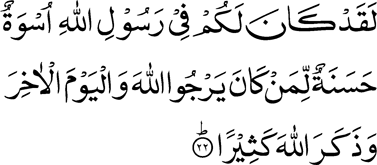
لَقَدۡ کَانَ لَکُمۡ فِیۡ رَسُوۡلِ اللّٰہِ اُسۡوَۃٌ حَسَنَۃٌ لِّمَنۡ کَانَ یَرۡجُوا اللّٰہَ وَ الۡیَوۡمَ الۡاٰخِرَ وَ ذَکَرَ اللّٰہَ کَثِیۡرًا

" Indeed, you have in the Messenger of Allah, a goodly model, for any who has hope in Allah, the final day, and who recall Allah abundantly." ( Q 33:21)

While the above quotation is often viewed superficially(ft.1), this Quranic verse tells us to look at the Prophet as an example of real success. He functions as an example for those who have hope in the future, hope in God's designs and plan.

While the Qur'an does tell us ( Q 9:129) that the core characteristics of the Prophet was that of kindness and compassion, there is another side that is present.

Another characteristic of the Prophet

"Muhammad is the Messenger of Allah, and those with him display strength(ashidda) with those who reject, yet display mercy with each other. You see them, in rukoo' (bowing), in sajdah (prostration), seeking bounty from Allah and His pleasure, in their faces ( i.e. the core of their being) are the traces of that submission ( min atharis sujood)" ( Q 48:29).
 
 مُحَمَّدٌ رَّسُوۡلُ اللّٰہِ ؕ وَ الَّذِیۡنَ مَعَہٗۤ اَشِدَّآءُ عَلَی الۡکُفَّارِ رُحَمَآءُ بَیۡنَہُمۡ تَرٰٮہُمۡ رُکَّعًا سُجَّدًا یَّبۡتَغُوۡنَ فَضۡلًا مِّنَ اللّٰہِ وَ رِضۡوَانًا ۫ سِیۡمَاہُمۡ فِیۡ وُجُوۡہِہِمۡ مِّنۡ اَثَرِ السُّجُوۡدِ ؕ
The above verse highlights the characteristics of strength and resolve. That requires working hard to accomplish necessary goals. The Prophet was not so "merciful" as to be passive!

The idea of passivity, of surrendering to tyranny (of whatever form) in the name of "surrender to God's will" exists within every religious community in some form or another, but what we learn from the Prophet Muhammad is that he had to face those who sought to destroy him, his followers and his community, and he faced those challenges by being proactive.

Both texts (33:21 and 48:29) have connecting to God in common. In Soorah 9:128-129 we see not only that the Prophet was kindly and compassionate, we  read therein a formula that he was to recite, to seek out God's presence and protection.

Some people believe that a passive, weak personality, is necessary for a healthy spirituality and even assert that such have moral superiority over Prophet Muhammad. Christian apologists cite Jesus's supposed passivity in the face of opposition as an example of his moral superiority over Muhammad.(ft.2).

When a personality is both spiritual and displaying strength, it can breed jealousy, opposition as well as slander. Worldly motivations are projected unto the Prophet, as well as the creation of stories of atrocities.

This happens to Prophets as well as Non Prophets. Good people, who want to see good within themselves and their societies, become targets by those opponents with jealousy within their hearts, or by those who themselves derive some power or benefit from an evil status quo.  It can be disheartening to those trying to do good.

When feeling like this, the Qur'an says to look to the Prophet Muhammad, upon whom be peace.  The Qur'an says, in essence, to the modern reader, "Look at what the Prophet was able to accomplish."

Arabian society had so much serious baggage in those days, well known social and religious ills, and the Prophet was largely successful in removing those bad elements, turning rough people into brave, yet contemplative, personalities, such as 'Umar b.Al-Khattab. His followers became people who looked inward, who worked hard on themselves. They did so by following the Prophet's example, by prayers, contemplation upon Allah (ft.3), discipline, and cultivation of the self.

Thus, the Prophet Muhammad is a model of success, not simply in the religious realm, but in the worldly life as well. The teaching that he conveyed-from Allah-has within it things which we could all use to create happiness and security in life. It is true that not all that he conveyed ("allowed" is perhaps a better term) is always to our pleasing, being as we all come with our own personal and cultural baggage, nonetheless those options are there.

More importantly, the personality of the Prophet is that of a balanced human being. He can be strong when fighting is necessary, but he can likewise be calm, kind and compassionate at those other times when strive is not present.

There are exaggerations and outright slanders against him. These things are brought up as attempts to indicate that the Prophet was a vicious and petty criminal. If such accusations were valid, Islam would have never went anywhere! It would have died out or become of marginal affect.

Yet, the contrast is the reality. Islam is here to stay. It is here to benefit all humanity. It is not here to be imposed by force, but it functions as a blessing.


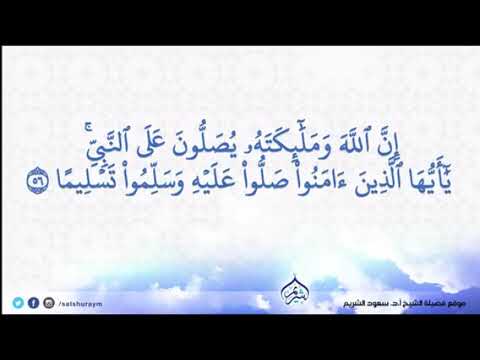
 Image result for quran 33:56

Footnotes

(1)  It is to our dismay that Muslims tend to quote this verse as evidence of a superficial following of the Prophet, taking only things such as dress and eating style from him. Muslim scholarship has wisely stated that there are things we follow of the Prophet when it has religious impact, but that there are things of the Prophet that exist only due to his place and time, such as the dressing style and other things common to all Arabs.  A superficial reading of the Quranic verse does a disservice to the Prophet.

(2) Other assertions made by Christian critics assert that the Prophet's married life was governed by sensual concerns, whereas Jesus was a higher moral code due to being celibate. These type of accusations have been addressed elsewhere by this writer See Here .

(3) The Hadeeth literature is full of examples of individuals coming to the Prophet, seeking out advice on making themselves better. There are even accounts of a self-accusatory nature, wherein people would even embarrass themselves in public by sharing their shortcomings, yet the Prophet would generally find ways to make them feel better about themselves. One example is found in both Al-Bukhari and Muslim, summarized thusly: A man wanted to confess to an indiscretion, the Prophet kept pretending not to hear him. After prayers, the man repeated the confession, the Prophet asked him if he had just prayed with him, the man replies in the affirmative. The Prophet replies that God had already forgiven him (i.e. the questioner).


Wednesday, July 11, 2018

Mental & Spiritual Heath: An Islamic Perspective

( Note: The following is an edited version of my presentation at this month's spirituality session. The participants all had-at q& a time- very insightful observations, and while initially we planned on posting the entire recording on the internet, we decided this format would be better, as it would allow for more sustained thinking and discussion, plus the core of the presentation is best preserved in this format. The wording has been edited to reflect a written article, rather than repeating verbatim the presentation. )


Questioning or having doubts on one's faith/Islam

There are a number of issues, that range from theoretical, historical, as well as practical, which can cause doubts in one's faith. It has to be mentioned that personal problems and mental stress can likewise influence this situation, but that is admittedly not always the case.

Some examples include doubts about the existence of God ( Almighty Allah), theory of evolution, role of women in the texts as well as within the community, having difficulties observing the Ramadan fast, lack of benefit from prayer ( Salaah), Muslim community politics, terrorism and so forth.

I admit these diverse subjects, and others like them, can be very complex, and simply doing internet searches will often only add to the confusion, in light of the contradictory answers out there.

On the subjects mentioned above, there are answers to be found within the Qur'an and Sunnah, but sometimes we either can't find the answers or we don't understand properly those answers.

There are some steps we have to take in order to deal with those issues which we struggle with. Those steps are

[1] Consult trusted authorities

The Qur'an says "So ask the people of knowledge, if you do not know" ( Q 16:43 among other verses). The meaning of this teaching is that one has to consult an authority, a person whose knowledge on that particular subject is trustworthy, who understands not only the subject but who understands your own unique backround and situation.

This is the way we do with our medical doctors. Usually we have our own doctors, a general practitioner or family doctor, a person we have a personal relation with, who understands all of our medical history, and who will deal with us in a trustworthy manner, who will safeguard our medical information, who will give us advice in a succinct fashion.

The same should be applied to issues of faith. The person giving the answer should know what he/she is talking about, they should understand how to give that information, they should be sure to give accurate and succinct information.

We place emphasis on having a trustworthy tie to the one you are asking information from, contrasting to simply looking on the internet for an answer. The internet is a platform which often has untrustworthy and unreliable assertions, particularly on Islamic subjects.

[2] Engage more in worship ( 'Ibaadah)

The power of prayer is universally recognized, in particular we have to emphasis communal prayer, as well as engaging more in personal invocation and supplication to Allah ('Azza wa Jall). The Prophet Muhammad     صلى الله عليه وسلم         says "The hand of Allah is over the community"(ft.1). He is also famously reported to have said that prayer in congregation is twenty-seven times more virtuous than prayer alone. We emphasis the Friday prayer (Salaat Al Jumu'ah), as well as Fajr, Maghrib and 'Ishaa prayers, because in those prayers, the Imam is reciting the Quranic texts aloud. The recitation of the Qur'an, aloud, in worship of God, has an affect. It not only touches the soul, but prayer in congregation also creates ties of brotherhood which has no replica in any other worldly example. In other words, "community" and all that goes with it really does strengthen faith.

[3] Recognize that we have limitations to our understanding and comprehension

There are things, subjects and items which we will not always be able to get a complete understanding . That does not negate it's authenticity or importance. The Qur'an describes itself as a guide for the God-aware, who have qualities which include being "those who believe in the unseen"( Q 2: 3). The "unseen" (Ghayb) include things such as angels and Jinn, and even God! It is true that popular culture depicts all of these in some fashion, but the majority of those depictions are baseless, even if those depictions enter into the religious literature. (ft.2)

(4) Invoke Allah via du'aa

One of the salient features of Ramadan for most of us is Salaat At-Taraweeh. The Imam recites long Quranic passages, and typically offers Salaat Al-Witr, which has therein the Du'aa Al-Qunoot(ft.3).

I strongly recommend increasing in making du'aa. The supplications you make don't have any particular rules ( contrasting to the more formal salaah). They can be done at any time, place, in any language or format. The Prophet Muhammad ( peace and blessings of Allah be on him) says that du'aa is the core of worship. He also says that it is the "weapon of the believer" and is actually worship in and of itself.(ft.4).

We have in the Qur'an and hadeeth literature many supplications, which we can invoke God with. Those supplications not only are useful for invoking God, but they are useful in creating good feelings and in teaching us morals to be both internalized and expressed within the public life.


Mental Health Issues

There are many factors which create mental health issues, both internal as well as being created by external factors. Indeed, even watching the news on television can create stress. Spiritual doubts can be because of this as well, however we must emphasis that that is not always the case.

The external factors can include things beyond our control, such as societal breakdown due to war and economic hardships. Personal failures, legal issues, etc.

Recently we have had the suicide of a famous celebrity chef, Anthony Bourdain. His decision to end his own life led to a flurry of discussions in the media on mental health issues, depression and suicide. Indeed, the Muslim community worldwide was shocked at the June 9th suicide at the Haram (Makkah Al-Mukarramah, the Masjid Al-Haram). Perhaps getting less attention, yet another person did the same less than a week later ( for which, see here) 

There are taboos against seeking out medical help, but those taboos are misplaced. If a person has to take certain medicines to deal with depression, to seek out therapy and the like, that is precisely what they have to do.


While the medical aspect has to be stated, we would also like to be considered the spiritual aspect. The Qur'an states "Say: it { Qur'an} is- for those with faith-  a guide and a healing" ( Q 41:44). It begins with Imaan, the spiritual foundation which recognizes the existence and power presence of Allah. If we have faith in God, that faith will be a help in whatever issues we are facing.

The ayah referenced above describes the Qur'an as "a guide" . This means that the Qur'an is a roadmap, a GPS of sorts. It does NOT tell us every single address, but it tells us in general what behavior to embrace and what behavior to   avoid. It has commands and prohibitions that are not arbitrary, they are for our long-term benefit.  In that sense, it is a "worldly guidance". But it is also a "religious guidance" in the sense that it tells us the religious truths that we are to be aware of, such as that God alone deserves worship, that the hereafter is true, that Allah has indeed sent prophets, etc.

So the worldly and the religious guidance both provide a broad protection. The follower of the Qur'an not only understands God-concept in a correct form, but he or she should also- as a consequence- have a healthy life, following what the Qur'an says.

Using the Qur'an to heal

The verse ( 41:44) also says it is a "healing" (shifaa). The process of healing happens at many levels, but I am suggesting here that the process of healing can be helped along by reciting the Qur'an, whatever Soorah or verses you know, and simply listening to its recitation. Youtube is a wonderful resource in terms of having beautiful voices reciting the words of Allah. It is true that Prophet Muhammad puts emphasis on particular texts ( such as Ayatul Kursiyy and the last three Soorahs of the Qur'an) but any other verses and texts work as well.

In dealing with depression, or with other mental stresses, please remember the Prophet Muhammad.  The Qur'an says about him

"Indeed, you have in the Messenger of God, a goodly model, for any who has hope in Allah, the final day, and contemplate on Allah much." ( Q 33:21).

In other words, if you feel all is hopeless, remember the Prophet. Allah- in essence- says "Look at MY Rasool".  The life of Muhammad was filled with turmoils. His mother died when he was six, and his father before his birth. At critical times, important people such as his wife (Khadijah) and uncle ('Abdul Muttalib) died. All of his children , with one exception (Fatimah), preceded him in death. This does not even take into consideration the various plots and enmity of the disbelievers after he began preaching the Quranic message.

Yet, he did not become bitter. It did not warp or damage him. He lived a healthy life. He forgave his enemies, and even did the funeral prayer (Salaat Al Janazah) for the leader of the hypocrites. His wives and children, the children of his followers, his community, all loved him and he them. There are so many examples of all of this, but the point is that the Prophet- by Allah's help and guidance, ultimately overcame his turmoils.

I would recommend taking a look at the chapters which make up the last section of the Qur'an. Many of them are Allah's communication to the Prophet in times of grief.

Among them are Soorah Ash sharh (chapter 94) and Ad-Duhaa ( chapter 93). Read the entirety of those short Soorahs, and try to recite them when feeling down.

Other ways to maintain mental and spiritual health include having goodly company, avoiding the company of the hateful and jealous types, community service ( such as feeding people), charity work and reconnecting to nature, such as trips to the beach, the park, cleaning one's living spaces, making them look pleasant. These are proven to be very effective.


Footnotes

(1) Another version of this hadeeth is "The hand of Allah is with the community". This version is more quoted in today's discourse, because of the presence of "with (Ma'a) " as opposed to" 'Alaa (Upon)". This writer prefers the version quoted, and pays no heed to the supposed theological problems with the term "upon". After all, the Qur'an uses the same sort of  expression "The  hand of Allah is over their hands "[Yadullahi Fawqa Aydeehim]. ( Q 48:10). None should see these terms in literal, physical fashion, so we need not be bothered with the debate over which preposition is appropriate, as both convey the same meaning, that God's help and guidance is for those who seek him.

(2) By "religious literature" we refer to some of the commentaries, particularly those penned in the middle ages, which may include fanciful legends to explain things in the Qur'an.  As a general principle, the Qur'an is very clear and does a wonderful job of self-explanation.

(3) The usage of Du'aa Qunoot varies according to the school of jurisprudence. The Shafi'ee school uses it in Fajr prayers as well as Witr prayer, but only on the last ten nights of Ramadan. The Hanafis recite it in Witr prayers, but so do silently (Sirri). The other Sunni schools recite it in Witr aloud (Jahri), and the Shiites recite Qunoot in every prayer. The word Qunoot basically means devotion and sincerity. Although tradition has ascribed the term Qunoot to a couple of beautiful Prophetic supplications, in fact any du'aa can be used, and indeed, many Imams do recite other Quranic supplications, supplications from the hadeeth literature and even of their own. All of the schools have their arguments and justifications for their practice , and- in my view- deserve respect.

(4) The hadeeth alluded to says "Du'aa is in fact worship" {Ad-du'aa u, Huwal Ibaadah).

Sunday, September 24, 2017

Are Activists allowed happiness?

Introduction

This weekend has been a flurry of activity on Socia Media within the Muslim community worldwide, because of accusations leveled against a certain well-known Muslim personality. The said person released statements denying the accusations, and obviously his ideological foes have hooked themselves strongly to the accusations.

It is worth noting that the said person has not been accused by anyone of doing anything illegal, rather, at worst, of exercising poor judgement,  and I am actually not going to address that at all, as I find that such would be useless and unproductive. Rather, I would like to go to an even bigger issue, one which, I must confess, I have struggled for a very long time to be able to contemplate, let alone put into words. 

This bigger issue is not restricted to famous personalities and political figures. This issue is also an issue with anyone- well known or anonyomous- who has sincere belief in a certain cause and sacrifices for that cause, be it religious, social, national, global, etc.

People of dedication to meaningful causes or to living according to a serious code tend to have a number of struggles, in that they are attempting to do right and live right, according to their sincere understanding of that code, even going against their own impulses to those things which seems to bring them happiness, security, comfort and peace.Such folks, it seems, even unconsciously sabotage whatever efforts they do make at attaining that which can bring forth happiness, because of these struggles.

This is not restricted to issues of intimate relationships. This can also refer to living comfortably, nice homes, clothing and finances, or a combination of all the above. There are a great deal of complexities involved in thinking and speaking about subjects of this nature, as well as differences vis a vis public figures and regular citizens, as such, we will divide our thoughts broadly between the two categories of people, even though it is true that much overlapping can (and does) take place.

The Sincere have every right to happiness and comfort in this life

"Say: Who has eternally forbidden (Harrama) God's pleasant (things) [ft.1] which He has produced for his servants, as well as that which is wholesome from His (own) provsion? Say: They are for those who believe, in this life, as well as [being manifested ] specially on the Day of Resurrection. Thus, We (Allah) explain signs to a people of knowledge." ( Q 7:32)


This verse alone should be sufficient as an evidence that having a pleasant existence in this world does not negate any righteous cause, nor does it destroy one's chances with God in the next life. I think the idea that believers or people dedicated to certain goodly causes are to have mariginal existence here in this life stems from Christian rhetoric. After all, the Bible and Christian tradition depicts Jesus ( believed to be God incarnate as well as God's son) as unmarried, totally against material or financial comforts of any sort. That thinking has filtered down to the culture, creating attitudes such as swearing off the opposite sex as well as children and material comforts, even among Non Christians! 


Two famous supplications from the Qur'an below illustrate that the Islamic religion teaches a balanced approach to all these sorts of issues. 

Our Lord! Give on us that which is pleasant in this life, as well as that which is pleasant in the after-life, and protect us from the punishment of the fire[ft.2]  ( Q 2:201)
Our Lord! Bestow on us from our spouses and offspring that which will be a source of comfort for our eyes, and make us leading for those who are holding God in awe." ( Q 25:74)

There are many ahadeeth or sayings of the Prophet Muhammad, upon whom be peace and blessings, which can be cited. Often his sayings discuss the issues of marriage because, as the reports are presented, there was a desire among many to swear off dealing with the opposite sex, even wanting to be castrated.  Perhaps this was done out of the convert's zeal, wanting to totally abandon the distractions present in the days of ignorance that preceded the Prophetic preaching in Arabia. Yet, The Prophet says "I fast and I break my fast, and I marry women." He says, further, "Marriage is my Sunnah, and whosever abandons My Sunnah, is not of me." [Sunan Ibn Maajah, Kitaab an Nikaah, narrated by 'A'ishaa].


There are many other verses of the Qur'an that speak to the privacy of the Prophet Muhammad needing to be respected. People were repeatedly told not to monopolize his time, to have  respect  for his household, even to pay something in the public charitable fund before making private appointments with him ( 33: 53-53, 58:13, among other verses). His time is valuable, and should not be abused. 


These are principles which can be applied to any public figure. Imams and teachers should be paid for their services, especially those in which more work and mental energies would be needed in order to address said situation. It is not that the teacher or the worker is greedy, but it does show respect as well as appreciation. The worker is human, has his own bills and needs for happiness just like anyone else. 

It is an odd situation in today's world in which people pay a therapist, psychcologist or counselor for one hour sessions gladly, burdening that person with all of their problems with the hopes that the person will be able provide some solutions, yet will not consider the same situation for their religious consultant. This does not only happen with Imams in the Muslim community, it happens with many of my clergy friends from across the religious aisle! Calling them at all hours of the night, text messages and social media messages asking all sorts of queries, seeking resolutions. 

That consultant does not only deserve a honorable financial compensation. He or she also deserves that they be allowed a private life, a life that has happiness therein. To demand that such persons live as hermits,overworked and underappreciated,  while their flock is busy in pursuit of dunya, is unreasonable and unrealistic.


Respecting the privacy of others

The Qur'an instructs that a home cannot be entered if permission has not been obtained from its resident ( 24:27-28). While this may seem to be common sense, a figurative way of looking at this command shows us that it can also mean that we should stay out of people's inner lives. Indeed, the only authentic reason where this may not be a workable situation is if there is a risk of public damage or health! 

In private, people can pursue Halaal as well as Haraam, but when others enter into private affairs, those distinctions get blurred, depending upon the prejudices and thinking pattern of those doing the meddling. 

A very interesting Quranic text reads "O Believers! Avoid much conjecture, because sometimes conjecture is sinful, spy not on one another, and do not backbite one another..." [Q 49:12]

This verse has in it the concept of Husnudh dhann, which basically means to assume the best before assuming the worst. An example is this real scenario. A person sees a Muslim, dressed in Muslim attire, entering a bar. To someone looking on, the Muslim is doing a Haraam act, about to consume alcohol.  However, as it turns out, that Muslim is a salesman, selling colones and perfumes, which is perfectly Halaal. The same person could be delivering food! 

The verse says not to engage in bad assumptions in opening observations, but it also prohibits spying on one another. There maybe skeletons in your brother's closet, or, at mimimum, private issues he would rather stay private. It is not an issue of what is Halaal or what is Haraam. It could be that the thing in question's Islamic status is unclear, or it could simply be no one else's business. 

This, I would say, is for public figures and regular citizens alike. We live in a sensationalized, staged world, with Television programs such as Jerry Springer and The Maury Povich show show viewers the most intimate and embarrasing details of families unknown to us. We have become accustomed to knowing and gossiping about private affairs, issues which may not even be crimes or religiously unlawful, that we forget the Islamic guidelines!


Jealousy of another's successess is a spiritual disease and can cause damage to the object of envy


Much of the Quranic treatment of scandals and social niceties also has therein mention of "hypocrites" or "those with diseased hearts". Indeed, Muslim women in general [Q 24:31] as well as the Prophet's own wives [Q 33:59-60 among other places]  are told to behave in such a way as to minimize gossip from detractors and those with incorrect thoughts on matters. This writer recalls that Michelle Obama, wife of then US president Barack Obama, causing controversy by wearing a sleveless dress. The critics themselves supported personalities who dress in much more revealing ways, however their attacks were not motivated by genuine concern on the morals of the inhabitants of The White House, rather, it was motivated by jealousy!

The Prophet Muhammad Sall Allahu 'alayhi wa sallam is reported to have said the following words:
"Do not be jealous of each other, do not inflate prices on each others, do not have  hatred of each other, do not turn away from each other, do not undercut each other, and be, O servants of Allah, brothers.." [Saheeh Muslim]


I find it interesting that the hadeeth here connects these issues, viz jealousy, price fixing etc..

Those with diseased hearts are people who have so much envy buried within that they seek to actually destroy the object of their envy! 

The ideal condition is that people should be happy at the success of others, especially if that success was earned lawfully and correctly, and that success is translating into good results, felt by many. However, not all people are thinking correctly.

In these regards, it is best to avoid, as much as within one's ability, showing off, especially if you become aware of jealousy surrounding you. The rich person should not brag about his riches or the food he wasted in front of a hungry, poor person. One's clothes should be modest, not just in regards to decency, but in displays that could possibly cause resentment. The Prophet's commands for men to not wear gold and silver are good places to start. In addition, one should treat all, rich and poor alike, equally and with justice. 

If you find that there are those around you who have resentment towards due to your perceived success, and that your efforts to dissuade them of their fears have come to naught, it maybe time to limit contact, if not break ties all together. One must look for one's own health, especially one's spiritual health, with great care.

It can happen, and seems to have happened in this public fiasco, that jealosy of a person's success can cause the "family" or "friends" around them to seek to knock them down, "put them in their place"- as the saying goes. 

This is why it is important, vital, to have the company of believers, of sincere and God-fearing folks, particularly in intimate situations.

I read a quotation in a book on marriage which has really been profound. In it, it says that a wise man once divorced his wife, who then remarried. Upon being asked why he divorced his wife, the wise man said "how can you ask me about another man's wife?"

In other words, despite whatever situation that emerged in his life, he had enough sense to simply keep that situation private. 


Conclusion

Regarding the scandal which has taken Muslims by storm on social media outlets, whatever happened does not seem to warrant the attention it has received. A mixture of motivations for many parties is the real reason this has been blown out of purportion, but it did inspire me to think about the overall bigger questions about activists and ordinary folks alike attempting to navigate between their feelings and what they believe to be religious commands/truths. 


Everyone has a right to privacy. That is recognized not only in Islamic teachings, but under US law. We should be careful and we should always seek to obey the commandments of our faith, we should exercise good judgement and discretion, to avoid the appearance of doing something wrong, however that does not negate the fact that everyone has a life that has private aspects, that such things should be respected. It's perfectly fine in Islam for a man to pursue a woman ( or a woman to pursue a man for that matter, as we know that Prophet Muhammad was the one proposed to by Khadijah), and unless some serious crime has occured, such as rape, incest, sexual harrasment, pedophilia or something along those, personal business should be left personal. 

The Prophet Muhammad (Sall Allahu 'alayhi wa sallam) is reported to have said "Among the pleasant [aspects of] Islam [is] to leave alone that which does not have meaning for you." 

That hadeeth, and ahadeeth like it, are more relevant now than at the time those words were originally uttered. 

I would like to conclude this post with another important verse from the Qur'an, regarding prohibitions

Say: The only items eternally forbidden by My Lord are shameful acts, public and private, sins, transgressing unjustly, associating to God which you have no authority, and speaking about God what you do not know." [Q 7:34]


Footnotes

[1] The phrase Zeenah [not to be confused with Zinaa, which means adultery] is used here. It has shades of meaning that all have to do with pretty or pleasantries, sometimes "glitter". Here, we have rendered it as "pleasant (things)".

[2] Imam W. Deen Mohammed (1933-2008) renders wa qina 'adhaaban Naar as "protect us from the fires of sin". 


Sunday, January 22, 2017

What is the point of invoking Allah ? Friday Khutbah

( Note: The following is an edited version of a Friday Khutbah delivered 1/20/17 at Toledo Masjid Al-Islam. Much of the references in Arabic language have been omitted here, as has the opening Hamd.]

Does God answer our prayers?

A common question is that if a person believes in God and prays to him, why doesn't he answer his prayers? A person invokes Allah for this or that particular thing, and the opposite happens! The core of these questions is actually the query "If God is All-knowing, Omnipotent and Omnipresent, why pray to him in the first place?".

The meaning of the core question is simple: if God already knows what we want and need, why even bother invoking him at all? The answers to these queries are found within the Qur'an and the Sunnah.

The Prophet Muhammad صلى الله عليه وسلم  has said "Du'aa [invocation] is the core of worship.";الدعاء مخ العبادة. He is also reported to have stated "Du'aa is worship". Therefore, we are to learn from these statements of the Messenger [Peace and blessings be upon him] that asking Allah, invoking him is an indicator, a strong sign, of being truly connected to him. 

It is true that the Qur'an teaches that God is all knowing, all aware, all seeing and is even all good [the latter is found within another hadeeth]. He knows what you want and what you need, yet the need still exists to invoke him.

If that is the case, why does he not answer?

Allah hears all supplications


Allah does respond. The Qur'an tells us directly Allah's statement on this issue: "I respond to the du'aa of the caller when he calls Me." اجيب دعوة الداع اذا دعان . So Allah does hear, he does see, and he even responds, however, it is not always the response we want!

Your child asks you for candy. There are times you give it to them, however out of concern for their health or other issues, you restrict it, even though the child is asking for it. The child does not always understand the wisdom you possess, but is forced to accept your parental veto,

It is because Allah is the All-knowing and the all aware that he does not always answer our du'aas the way we want them answered. 

In these regards, we need to ponder upon Allah's statement : "The human makes du'aa for bad [harmful] when he should be doing so for good, Indeed, man is hasty." و يدع الانسان بالشر دعاءه بالخير وكان الانسان عجولا

This ayah gives us another teaching, supplications to Allah can be spontaneous, however they should as a general rule be thought out, and connected to genuine human efforts. After all, if God grants all we ask at the moments we ask and in the precise measurements we ask, that would breed laziness, stagnation and stunt creativity.

When can we call upon Allah

Call upon Allah.The Prophet Muhammad has taught us that good opportunities are found in the rukoo', the sujood, after the Tasleem [the concluding act of the formal salaah], and Fridays. Whenever you make du'aa, be sincere therein, and think deeply on what you want to invoke him for. 

When bad things happen


Natural disasters and oppression by man sometimes causes people to either deny God's existence or to view him as cruel and capricious. Philosophers and theologians of every religions have been discussing this for countless generations. 

Facing catastrophes, bey they natural or otherwise, have the effect of bringing us closer to Allah and to each other. It is said that it is only when facing disasters that one discover's one's true friends.

Other related texts on this subject include these following profound Quranic verses. "Praise belongs to Allah, who has created the heavens and the earth, and made darkness and light." [Q 6:1]. We also read : "Say: I seek refuge with the Lord of daybreak, from the 'sharr' he has created." [Q 113:1-2].

The term 'sharr', usually translated as 'evil', can also be rendered as 'harm' 'source of injury', even 'fires of youth'. So these things happen by God's will within the Sunnah of Allah, with a wisdom therein which we can't immediately see, but often see later on in life!

Allah's Sunnah is to give us lessons by using our selves or by seeing the lessons in the experiences of other people.

So if we think we are experiencing problems, we should address them by turning closer to Allah Our Lord, and to our deen.

When our supplications aren't answered in the way we want, consider that the thing we are praying for may be harmful in the long term.

Sins stopping one from acts of worship

Some people think that weaknesses or sins are a barrier to worship, that any acts of worship they do would end up being hypocritical, so they consequently will not pray.

Such thinking is understandable but misplaced. The Qur'an says "Indeed, prayer [salaat] restrains from indecenies and repugnant acts, the remembrance of Allah is the greatest [source of inspiration and power] and Allah knows what you produce." [Q 29:45]

ان الصلاة تنهى عن الفحشاء والمنكر ولذكر الله اكبر ولله يعلم ما تصنعون

Eventually, the effects of salaat enter our hearts, our arms and our legs, so don't let weaknesses or sins discourage you from Allah, from remembering and worship of him.