Showing posts with label relations with Non Muslims. Show all posts

Wednesday, October 14, 2020

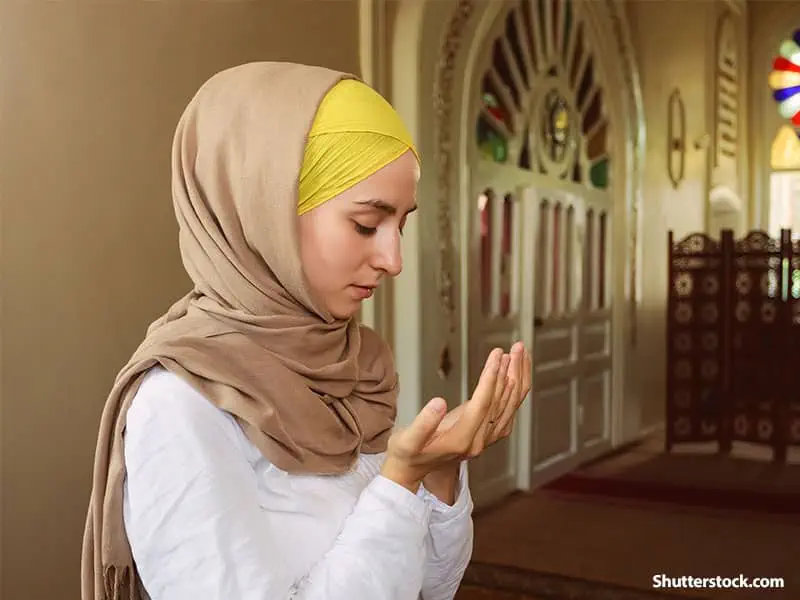
Are Muslims allowed to pray for Non Muslims ?

 Introduction


There are a number of issues that, while seemingly academic in the Muslim world, have real life implications in the wider global scene. Among those issues is that of praying for Non Muslims, both alive or dead. A related issue would be the question of giving Zakaat (The mandatory charity) to Non Muslim recipients. 


This issue of praying for Non Muslims is raised in the West due to mutual interactions and interests, where there is a greater chance of viewing the other in human terms (as opposed to a limiting label).  Online debates were in full force upon the death of Chadwick Boseman,( star in Black Panther) which saw some Muslims offering their condolences, including using traditional religious expressions such as "From God we come, to him is our return". 


There are texts typically cited in support of the notion that we are forbidden by religion from offering supplication on behalf of Non Muslims. Those texts are examined below.


Prophet Ibrahim 'alayhis salaam (Abraham)

It is not for the Prophet and those who have believed to ask forgiveness for the polytheists, even if they were relatives, after it has become clear to them that they are companions of Hellfire.


And the request of forgiveness of Abraham for his father was only because of a promise he had made to him. But when it became apparent to Abraham that his father was an enemy to Allah, he disassociated himself from him. Indeed was Abraham compassionate and patient. (Qur'an 9:113-114, Saheeh International  translation).


The above text is from the ninth chapter, which carries, among other names "Al-Baraa-ah", which means "disassociation". The Soorah itself is given during war context, according to all authorities.  A treaty had been entered into between the Muslims and the Makkan opposition, the latter breaking it(ft.1)
The  Makkans were generally related by blood or tribe to The Prophetصَلَّىٰ ٱللَّٰهُ عَلَيْهِ وَسَلَّمَ‎  as well as his followers, yet- at that time- that did not stop them from waging war upon the Muslims . This text reminds the Muslims that in battle context, one must be strong, that emotional manipulation should not be allowed, even from family members, if such members have an agenda against you. 


This teaching is given voice elsewhere in the Qur'an:

 "  O you who have believed, indeed, among your wives and your children are enemies to you, so beware of them. But if you pardon and overlook and forgive - then indeed, Allah is Forgiving and Merciful." ( Q 64:14, Saheeh international translation).

It should be noted that even though the ninth chapter is given within a war context, it does not address the Mushriks en masse. Q 9:4 asserts that the previously referenced treaty remains in force for those who did not break it, meaning that a strong stance need only be maintained with those who have expressed danger via their actions!
 
Abraham's exampleعَلَيْهِ ٱلسَّلَامُ - - is given, in that his father had been a clear enemy, taking many actions to actually put Abraham in danger of losing his life. If a parent or another loved one actually takes steps to take your life, at a minimum, one must protect himself from clear and present danger. This is something which is widely understood in the modern world, in that "family" and "friends" can actually be the worse of enemies, for a variety of reasons. (ft.2)


Thus, there is a clear difference between belligerent foes and those in one's family/circle who, while maintaining a differing religious identity, do not have enmity.


Hadeeth reports

Other reports exist in the hadeeth literature which forbids, at some levels or another, invoking God on behalf of Non Muslims. However, the majority of those reports have been declared weak or even fabrications by such luminaries as Shaikh Akram Nadwi. Some of them are outright contrary to the Qur'anic usage, while others clearly do not assert what is claimed in their name.(ft.3) Some have- for example, asserted that it is forbidden to initiate salaam greetings with Non Muslims, and that if initiated by a Non Muslim, the Muslim should respond with "Peace for those who follow guidance."(As salaamu 'ala man it tab'a'a al hudaa) Yet, the Qur'an itself says that one should respond with a similar or better greeting when addressed (Q 4:86), as well as asserting that one should not assume that the one making greeting is not actually a believer (Q 4:94). 


More evidence

The Qur'an calls Allah "The Caretaker of the Universe" (Q 1:2). That shows simply that Allah, the God of the Qur'an, of Muslims, and the world in general, cares for his creation, regardless of their particular label.
The same text allows marriage and consumption of food with huge segments of Non Muslim population ( Q 5:5). Prophet Muhammad (peace and blessings of Allah be upon him)  is referred to as a Mercy for all nations (Q 21:107), The Qur'an likewise tells Muslims to keep strong family ties with Non Muslim members ( Q 29:8), and tells us to be just with all, and not allow religious differences to drive us in the opposite direction ( Q 60:8-9).

Conclusion

It should be apparent that there is no harm in making supplication for those who do not believe as we do, be they dead or alive. Of course, Allah's response is his business, and He says he can respond with mercy or punishment, even for those who are deemed as 'evil'. (Q 3:129-130). 
 
It should also be noted here that the Salaat Al Janaazah (funeral prayers) is a rite specific for Muslims. Quranic verses are recited therein, as well as supplications that are made by believing Muslims for believing Muslims, specific to particular Islamic theological assumptions. Thus, it is inappropriate for a Non Muslim to have that sort of funeral, just as it would be likewise a disrespect for a believing Muslim to be given a Christian funeral. This is more a matter of respect for one's religious life and identity, than it is an issue of conflict.(ft.4)


Notes

(1) The details of this are widely available, for which I would recommend The Life of Muhammad by Muhammad Husayn Haykal.
 
 
(2) All relationships have some level of review and renewal. Islam certainly calls for maintaining family ties, even with disbelieving family members, but it is likewise acknowledged in the Qur'an (64:14) that "enmity" can exist in one sense or another. The aforementioned text says to "take caution",  leaving it up to individual evaluation how that takes place. The same can be said for narcissistic, manipulative and jealous individuals outside of blood ties. An interesting article on this subject, by psychotherapist Sharon Martin, can be found at  https://blogs.psychcentral.com/imperfect/2019/10/its-okay-to-cut-ties-with-toxic-family-members/ . 
 
 
(3) The Prophetic tradition of saying "May Allah have mercy on you " (yarhamukumullaah) when a person sneezes is said to be altered when a Non Muslim sneezes to "May Allah guide you and rectify your condition", allegedly because it is forbidden to pray for "mercy" for a Non Muslim. Even supposing that report is true (although not mentioned in the saheehayn), it still is a supplication for the Non Muslim, and, moreover, that wording is also found in the practice of sneezing, i.e.,  The one who sneezes praises God, the one around them respond with the request for mercy for them, and the one who sneezed responds with "May Allah guide you and rectify your condition " (Yahdeekumullaah, wa yuslih baalakum).
 
(4)  It is often asserted that Muslims cannot attend the funerals of Non Muslims, due to the latter having their own religious beliefs contrary to Islam. This has no support from Islamic texts, and would totally destroy mutual respect among family/friends of varying religious labels. This writer has attended many non Muslim funerals, and has never felt any qualms in doing so. On the question of what to do if-in that situation, feeling uncomfortable in the Non Muslim funeral rites (for example, a Catholic funeral in which the mark of the cross (known as "signing") is made, the Muslim can simply don't do that, or any action that they may feel is contrary to Islamic teachings. 
 
These sort of social quagmires exist among Christian and Jewish communities as well, reaching vastly different conclusions. Rabbi Tovia Singer argues that Jews are allowed to pray in Muslim mosques but not even enter into a church https://www.youtube.com/watch?v=moRM1YFdvyI  , The Jehovah's Witnesses, likewise,  forbid their members from even entering a Non J.W. worship site. 


Saturday, April 8, 2017

Exploring our age in light of Islamic texts: Friday Khutbah

[Note: The following is an edited version of Khutbah delivered 4/7/17 at Toledo Masjid Al-Islam. The opening Hamd has been omitted, as well as other comments made. It should also be noted here that this Khutbah serves as an introduction to an upcoming lecture called 'Day of Judgement: Lessons from the Qur'an and Sunnah".]

We have indicators in the Islamic primary texts as to the indicators of the approach of Judgement Day. One of the Prophetic narrations [reported by Aby Hurayrah and found in Tirmidhee's collection] has it that those indicators include (1) The man will obey his wife  [literally 'his woman'] و اطاع الرجل امراته   

2] Disregard his mother. (3) Closest to his friend (4) Yet the most distant from his father [Aqsaa Abaahu]. (5) And [the trend of the ] emergence of loud talking in the mosques [places of worship] (Ft.1)

We are emphasising these five items as found in the hadeeth because they show the breakdown of the natural family structure, a situation we are seeing in today's world in the name of the follies of youth and "freedom". 

This does not absolve that there are parents out there who have been horrible to their children or children who have been horrible with their families, however we are simply relating the hadeeth here without fault-finding, putting all of the pieces together. We are looking at the Prophet's words with the hope of finding guidance. 

We should learn from this hadeeth that we have to strengthen our family ties, even if the famiy is Non Muslim or Non Practicing as Muslims! If Parents have made severe mistakes in their treatment of their children, then it becomes incumbent on them to find a way to repair the damage!

The last item mentioned in the narration tells us that loud voices would be heard or emenating from the mosques. THIS shows us that the places of worship have, in the age closest to Qiyaamah, become little more than social clubs, in which people have forgotten the solemn nature of the mosque. The Mosque [Masjid], the house of Allah, particularly the prayer area (musalla) is for prayer, reflection, study, reading the Qur'an, not for gossip!

I find it interesting that the Prophet صلى الله عليه وسلم placed these five items together. In short, we are called upon to strengthen, to have proper ties, to Allah and to our families [see Qur'an 4:1]. Such ties are necessary if we are to survive and to be sane in the age which is seemigly close to Judgement day. 

Prophet Muhammad is misrepresented in the age near to Judgement Day

Another hadeeth, found in Saheeh Muslim, tells us "The lying decievers will come at you with 'ahadeeth' which neither you nor your ancestors have heard of..." 
ان دجالون كذبون ياتونكم من الاحاديث بمالم تسمعوا انتم ولا اباوكم

THIS informs us that the Muslims will be the victims of great decievers, coming at us with deliberate misrepresentations of the final Prophet.

The Lying Dajjals [Dajjaloon Kadhdhaboon] cannot do that with the Qur'an, because the Qur'an has been protected by God [ see Q 15:9]. This is not only from a faith-based perspective, but from a physical and historical realistic perspective. Since the decievers cannot do that with the Quranic text, which is accessible and very well known, they target hadeeth, which is not as  widely known (ft.2).

This has happened both literally and figuratively. People quote 'hadeeth' or make assertions that portray Prophet Muhammad as stern, fanatical, harsh and rigid. The Prophet ends up being extremly misrepresented. 

Our best weapon against the lying decievers is the Qur'an itself. The evidence for this is that we have atleast two narrations [Muslim and Abu Dawud] that speak of texts from Soorah Al Kahf [chapter 18 of the Qur'an] as protection from Dajjal(ft.3). We read in that Soorah that God deserves praise for not allowing any deviation to be placed within the Quranic scripture [Q 18:1]. So we have to make time to read it, to study it, to memorize it, use its text in our prayers but most importantly to live by it. The Qur'an is not a book for the dead, rather it is a book for the living! 


The hearts of those firmly grounded in the Book of Allah will not have signifigant influence from the deceptions of the decievers [Dajjaloon].

Concluding thoughts

Constant introspection, examining our family ties and our ties with God and with God's revelation is the only way to go in order to find guidance. Complacency will only become the doorway for misguidance. We want to be open to truth. So be regular in worship, in supplication [du'aa] and keep in mind the Prophet's supplication; " O Allah, show us truth as truth, and give us the ability to follow it. Show us Baatil as Baatil, and give us the ability to abstain therefrom."

We should also pray from protection from the 'fitnah' of the deceiver. It does not matter if 'Fitnah' is translated as 'trial' or 'test' or 'tribulation'. We don't want any of it!

Rather, we are to desire guidance for ourselves and our families, not to be deluded.


Footnotes

(1) In Arabic the word for Mosque [Masjid] literally means "place of prostration". It is on a pattern indicating the a noun of place and time ( Ism Zamaan wa Makaan]. We have explained 'masjid' here to include even a broader possibility, and that is that all places of worship, regardless of religious affiliation, in the age nearest to Judgement day, would become nothing more than social clubs in which authentic searching for spirituality would be absent. This writer has in mind Qur'an 22:40 which contains recognition [even though the Qur'an obviously refutes some religious ideas] that places such as monasteries, Churches and Synagogues function as places wherein the congregants are seeking out God.

(2) The evidence for this assertion is that the Qur'an has been widely memorized and acted upon even by lay Muslims throughout history. The science of hadeeth ['Ilm ul hadeeth] is very complex and is full of scholarly disagreements on criterion for judging the authenticity of this or that narration, not to mention the chain of transmission [Sanad]. So while most Muslims have the Qur'an, only the scholarly class have in their personal libraries the many volumes of hadeeth. With the emergence of the internet, all of the traditions have been recorded by many websites and made available, however that does not mean it would be as understood and seen correctly as the Qur'an has. It is the opinion of this author that the scholarly class spend their time in deep research into the sciences of hadeeth, that lay Muslims have in their own libraries and in their hearts Prophetic sayings as found in books such as Riyadhus Saaliheen or Forty Hadeeth, statements that are inspirational and push us towards goodly relations with God and neighbor etc, and that the Qur'an remains the primary source for  religious truths.

(3) I see these narrations as indicative of not necessarily the last ten or the first ten verses of Soorah Al-Kahf as serving as protection from Dajjal. but rather the entire Soorah itself. In the Soorah, we find a number of accounts and morals that provide-if internalized, a proper respect for Allah, faith in Allah, the true state of humanity, and much more. The stories of Moses and the teacher [known as Khidhr], the believers who escape persecution by going to the cave, the parable of the believer and the disbeliever, are among the highlights of the Soorah. In general, the overall message of the Qur'an itself provides both personal and communal protection from the forces of deception. This subject cannot be fully explained adequately in a footnote, nonetheless we hope this provides a desire to study and consider the Qur'an itself, with emphasis on Soorah Al Kahf.


Saturday, February 11, 2017

Common misconceptions about Islam

Introduction

Islam is the religious choice of a fifth of humanity, it is the dominant faith in areas of the world rich in resources and strategic importance. It has influenced countless trends in philosophy, culture, theology, and the practical sciences. It has not only given us 'Umar ibn Al-Khattab(1), it has given us figures as diverse as Rumi (2) and Muhammad Ali.

Despite these presence of these undeniable facts, there persists a number of myths and misconceptions in the minds of people, Some of these myths have their origins during the time of the Crusades(3) while others are of a more recent creation,

While misconceptions may be held and perpetuated out of simple ignorance, we have to admit that outright distortions of the Islamic message are spread via mass media, movies and the like, out of political interests. In short, the religion of Islam and Muslims are a convenient scapegoat.

This brief article seeks to address the leading misconceptions on Islam. Comments/questions are welcome, and as time allows this writer will seek to address them all.

Who or what is 'Allah'?


Allah is the Arabic name for 'God'. Literally, it is a contraction of two words,"Al" and "Ilah", "The" "Object of worship". It refers to the One and Only God!

It may come as a surprise that Arabic translations of the Bible have God referred to as "Allah"!

The concept of the Divine as given in Islam can be found in well known Quranic references "Say: He is God alone, God the Absolute, He has not given birth to any, nor was he born to any, and there is nothing like him." ( Q 112:1-4)

"He is God {Allah}, besides whom there is none deserving worship but him. (The one who) knows the hidden and the apparent, He is the Merciful, The Compassionate. He is God, besides whom none deserves worship but Him, The Sovereign, The Sacred, The Source of Peace, The Guardian (4) of faith, the Protector, The Mighty, The Powerful, The Great. Glory belongs to God, he is exalted above what is [wrongly] attributed to Him. He is God, The Creator, The Maker, The Creator of Form, To Him belongs the most beautiful of names. To him belongs glory, in the heavens and the earth, and He is The Mighty, The Wise." {Q 59:22-24}


Is Allah a moon god?

This particular assertion has been made in recent years by a handful of Christian polemicists in books and, more popularly, comic-book leaflets. The gist of their argument is that a pantheon of deities were deemed worthy of worship by the Arabs of Muhammad's time, and he simply picked one, a deity associated with the moon!  This, the argument continues, is why the traditional calendar is lunar, mosque domes often have a crescent moon adorning it, and the reason why many Muslim nations have a crescent on their flags!

There is a plethora of evidence to refute this notion and this has been addressed succinctly by others(5), however, this Quranic evidence should be sufficient for an honest reader.

"Do you not see that verily, to God is submissive who is in the heavens, the earth, the sun, the moon, the stars, the mountains, the trees, animal life as well as a goodly number of humans..?{ Q 22:18}

In another Quranic verse, we read that the pagans were asked "If you ask them 'who created the heavens and the Earth and subjected the sun and the moon, they will reply 'God".." [Q 29:61].

The Qur'an repeatedly speaks of both the moon and the sun as being used to measure time [6:96, 10:5, 55:5] and under the control of God. The Qur'an has never given legitimacy to a view that the Moon has Divine properties, or that "Allah" was synonymous with a moon deity!

Allah cannot be seen physically by human beings, because, ultimately, we would not be able to grasp Him in a full and complete manner, This is why God is never depicted in human form [or any physical form for that matter] and no pictures are present in prayer halls. Indeed, we find that if any decorations adorn the Mosques, it would be quotations from the Qur'an itself, designed to remind the visitor of the greatness of God.

"And the mosques are for God, therefore do not supplicate any other than him."[Q72:18]


Islam as the teaching of Prophets preceding Muhammad and coming through Muhammad

Islam is an Arabic word meaning "submission to God". The one who does the act of submission is called a "Muslim". If one were to read about the characters of old, particularly in the Jude-Christian dispensation, we find that indeed, they taught their followers submission to God. It is true that there are some differences in emphasis and rituals, however the core of submission remains.

As Muslims see it, this thread of teachers, scriptures and Prophets ended with the coming of Muhammad. He comes, according to Islamic teachings, as a Mercy from God to be felt universally [Q 21:107], as the Last of the Prophets with the final scriptural revelation { Q 33:40}, and with teachings that correct certain important misconceptions and that will act as an ultimate criterion for judgement between what is authentic and what is spurious, { Q 27:76 and 25:1].

As part of the Muslim practice, we are to pray for peace and blessings to be bestowed on all the Prophets and do not allow any disrespectful language about them.

Islam's relation with Jews and Christians 

The modern discourse has placed the three monotheistic religions alongside each other as reflective of the shared roots in Abraham, thus, the term Abrahamic religions.

While it is true that Islam has strong theological disagreements with the other two faiths, the Qur'an repeatedly calls them as "People of Scripture" and allows both marital and other social ties [Q 5:5].


Terrorism/Violence to spread religion

This is perhaps the greatest myth perpetuated by forces with political interests. It is imagined that Islam has taught its followers to spread the faith at the point of a sword, however, this is far from the truth. The Qur'an itself says "There is no compulsion in religious affairs, as truth stands clear from error.."[Q 2:256].

It says further "And say; Truth is from your Lord, so he who will accept, let him accept, and he who will reject, let him reject..[Q 18:29].

The Qur'an tells us that Noah says to his interlocutors "Shall we compel you to accept while you are hateful of it?" [ Q 11:28]

So we should be able to see clearly that using violence as a means to spread religion is not correct as far as Islam is concerned. In today's world, forces both inside and outside the Muslim community seem to believe otherwise, but all of that is connected to political causes and often are simply masks to disguise other agendas!

Islam is a missionary religion, it does seek to call people to investigate it and accept it. However, it does so by telling the "caller" to use "wisdom and articulate expressions" { Q 16:125}. The Qur'an refers to itself as a scripture given in order to influence people to think [Q 12:4, among other texts], so it is clearly against a blind faith.

Jesus

Depicted as a Prophet and great teacher, Jesus is mentioned by name twenty five times in the Qur'an. Muslims affirm his virginal birth and view him as the Messiah, although the understanding we have on the meaning of that differs from mainline Christianity.

This article does not seek to enter into details on that(6), nonetheless what we should convey is that belief in Jesus as Messiah is part and parcel of Islam. He is loved and respected by Muslims, even though our understanding of his significance differs from Christians,

Women

Increasingly in the West the issue of how women are treated and viewed in Islam has been raised. The most visible Muslim women are of course those who wear Hijaab or other well-recognized dress associated with Islam.

It can be said that certain parochial cultures have a negative attitude towards women, but that reflects their own views, not necessarily the teachings of the Qur'an and Prophet Muhammad. In the time before Arabia accepted Islam, the Arabian custom was to view females with little regards, even practicing female infanticide! The Qur'an, in one of its earliest texts, addressed this horrific practice [Q 81:8-9]. Islam as taught by Muhammad himself gave inheritance rights, leadership roles, rights in choice of marriage and freedom with their own incomes. Indeed, we have an entire Quranic chapter entitled "The Women" [An Nisaa'].

There are guidelines for dress for women, but what is often ignored is that there is a dress code for both men and women. The Qur'an does directly speak on how women should dress [Q 24:31 and 33:59] but what is often ignored is that the context of these regulations, particularly in the Qur'an's chapter 24 as referred to above, speaks on men and women abstaining from inappropriate staring, and behavior in general. In other words, the dress code is connected to a wider set of behavioral guidelines.

How those guidelines are carried out will vary from culture to culture. Nigerian clothing styles differ from those in the Arab world, but so long as modesty and appropriate respectful guidelines are observed, they are all equally Islamic or allowable in Islam!

For women, the dress code includes the covering of the whole body, including hair. This actually seeks to create an environment of respect and appropriateness. It has no relation to oppression of women.


Endnotes

(1) 'Umar ibn Al-Khattab {d.644 C.E.} was initially a foe of Islam, even wanting to kill Prophet Muhammad, but his heart was touched by the Quranic message and he went on to become a strong defender of the faith, even at one point becoming the leader of the Muslim community after the Prophet's death. He is well known for his modesty and sense of justice for all.

(2) Jalaluddin Ar-Rumi [d. 1273 C.E.] was a great poet, philosopher and spiritualist. The Western world absorbs his poetry and often he is seen as having been divorced from Islam. While there is admittedly some controversy surrounding him in Muslim discourse, nonetheless he saw himself as totally in line with Islam. One quote attributed to him says "Be in the community of those who receive Divine Mercy, don't abandon the Sunnah of Ahmad [i.e. Prophet Muhammad], rather, be commanded by it." A book has recently been published, which I have yet to obtain, that speaks on this attempt to divorce Rumi from Islam. The book is called Rumi's Secret by Brad Gooch. A review of it, as well as a very pleasant overview of Rumi's reach, is to be found at [url] http://www.newyorker.com/books/page-turner/the-erasure-of-islam-from-the-poetry-of-rumi[/url] .

(3) Some of these myths are described well in the book Holy Wars: The Crusades And Their Impact On Today's World by Karen Armstrong [New York, 2001].

(4) Al Mu'min is rendered here as "The Guardian", but it has been variously interpreted. Tafseer Al-Jalalayn has it as informing us about God who is "The truthful, who conveys the truth of miraculous creation". I'raab Al Qur'an  mentions three different interpretations, which include God's "Protecting of his servants from danger." " The Protector of his closest ones [Awliyaaa'] from his own wrath." and "That the believers will testify on judgement day and their testimony will be truthful, verified as true by God.."  This work, by the 10th century Egyptian scholar Abu Ja'far Ahmad bin Muhammad Isma'il An-Nahhas, is a wonderful reference source for examining the grammatical possibilities of Quranic words. The edition we have is published by Dar Al Ma'rifah, Beirut, Lebanon.

(5) The famed Muslim debater and academic Dr. Shabbir Ally has published a thorough refutation of the moon god theory. It can be found at [url]http://www.beautifulislam.net/christianity/robert_moreys_moon_god_myth.htm[/url].

(6) The Islamic understanding of the role of Jesus is explained by this writer at [url] http://shamsuddinwaheed.blogspot.com/2008/01/jesus-in-islam.html[/url].


Monday, September 28, 2015

Struggling to submit: thoughts on what it means to be a Muslim

Daily we encounter examples that illustrate the hardships faced by those who are conscientious of their faith. It's true that Muslims are not the only ones with these struggles, as recently demonstrated by Kim Davis, a Kentucky county clerk who refused to issue marriage licenses for homosexuals, however Muslims, especially in a Western context, have much more to deal with, especially considering that Islam is widely seen as a foreign religion  that is incompatible with Modern values, and often Muslims in the West are ethnic and racial minorities who automatically generate scrutiny.


At least for the "born Muslims", there exists more social support. "Born Muslims" have a backround in some Islamic culture somewhere. All of their family members are Muslims and are, even if not practicing, comfortable at home and in their professions. But what about the person who spent time investigating religion, perhaps going through a crisis of faith, and discovers Islam for themselves? Surely, such persons will have a different struggle. In many ways their struggle will be even more rough than the born Muslim in the West. The person who accepts Islam on their own has to deal with family dynamic, that will be reflected in problems both big and small.


Recently the media highlighted the case of Charee Stanley, an airline flight attendant. As a "new" Muslim, she has been learning about her faith and applying it, and upon learning about the religion's prohibitions on alcohol [which includes serving it], she stopped serving it on flights. What she would do was to have co-workers serve it. Eventually, a detractor raised an issue, and she was subsequently suspended from her job at ExpressJet.[ See Stanley's interview on The View. https://search.yahoo.com/yhs/search?p=charee+stanly+on+the+view&ei=UTF-8&hspart=mozilla&hsimp=yhs-002].


How this particular case will play out in the airline world and perhaps the courts remains to be seen, but what was interesting to this writer is the diversity of views, even surprising ones from unexpected sources, such as Sheikh Yasir Qadhi [head of the Al-Maghrib institute], who found her position "clearly unreasonable" , creating future hurdles in accommodating "reasonable issues" such as Hijaab and beard.

So, what about the worker in a business that sells alcohol? In some places in USA, most of such businesses are owned and operated by Muslims. Similarly, Muslims work in the stock market, in the banking system, restaurants, hotels and the like.
On issues relating to alcohol and drugs, this writer feels very strongly that these are categorically Haraam and that Muslims are to not enter into such activities for their livelihood. Yet, the truth is that people-including Muslims- need to earn an income. Even attaining a degree usually requires acquiring loans, in which interest will always be a component.

So what do we do? On a personal level, there may or may not be easy solutions. Some may be able to get along very well without attaining a college degree, to buy their vehicles without resorting to loans, while for others this may very well be impossible. The same can be said of those in other businesses or sources of income that are questionable or clearly Haraam.

While we have concentrated on income, the struggle can capture many other areas of life. Persons in relationships that are not marriages. Marriage with Non Muslims, family dynamics, struggling with the social life, and many other areas.

Institutional building is needed


If we are going to live in the West, we have to recognize that these situations will not simply go away. These types of problems will continuously pop up, and-in fact- will endure. On an individual level, Muslims may be able to control their diet, the moments they pray, the clothes they wear. This person may even be blessed with a magical solution to all of their issues,yet, we must say, that American Muslims of all sects, nationalities and orientations, must work together to create united efforts to minimize [if not totally eliminate] the need to find our bread and butter in questionable occupations. That means Muslims must form their own banks/credit unions, they must create funds and open up housing for New Muslims, they must cooperate, live in their own neighborhoods, form strong bonds that will have an impact both socially and politically.

Personal level- do what you can

To use an analogy, all of us look at the ingredients when shopping at a grocery store. Mainly, we search to make sure our food is not Haraam, but some mistakes may end up being committed along the way, out of ignorance or necessity. But we have to keep making effort to make sure our food is actually lawful.


If a person is in a questionable  business, he or she should strive to find a better -Halaal-job. Make some effort. Allah says that he provides from sources a person cannot even imagine, if that person has Taqwaaa. [Q 65:2-3]. If he or she has a relationship that's not marriage, the solution, if love and compatibility are there, to get married. In terms of income issues and education, housing etc, a family can work together- share all the expenses, and end up avoiding Ribaa, paying off loans, paying for an education. But all of this requires patience, discipline, foresight, and intelligence. It also requires thinking as family, thinking as community, thinking and acting based upon the interests of the big picture.

Consider the story of the Barrientos sisters. These four Texas sisters were able to eliminate $180,000 in debt in just eighteen months by sharing the load[ see http://abcnews.go.com/Business/texas-sisters-erased-182k-debt-18-months/story?id=33485609]

Islam sees the spiritual and the material as connected to each other. Even our food can affect our souls. Our financial situation can color our relationship with God. That's a simple fact, regardless of whether we like it or not. So we have to have faith, use the minds given to us by Allah, take some actions and go from there.

Tuesday, May 27, 2014

Contemplating Islamic principles: Marriage, love and family ties in today's world

Introduction

We often say that "Islam is the answer", that all of  the contents of the Qur'an and the Sunnah have all we need for guidance, even though the scripture and the Prophet to whom it was revealed, upon whom we pray for God's choicest of blessings and peace, was sent forth fourteen centuries ago, in the Arabian peninsula.

Yet, this assertion is under constant scrutiny. It is questioned, even by some believing, practicing Muslims.There are a number of examples from the Islamic texts, terms and concepts, particularly from the realm of social relations, that are cited, be it Jizyah, Dhihaar{Ft.#1}, AhlidhDhimmah, and so forth. Should these type of concepts be revived in a modern, complex and diverse world? If so, in what fashion? If these things should be consigned to the past, would that not deny the assertion that Islam has all the answers? Would it not show Islam to be relevant only to a particular moment in the past?

To answer this question, we would like to examine the example of male-female relations.


Relations between men and women a  foundation for healthy life

This statement needs no textual evidence to back it up. Adults know this instinctively. Humans seek out the companionship of the opposite sex, be it through Halaal or Haraam means. If unsuccessful, that failure can lead to many problems, creating bitterness that can eventually lead even to things such as suicide and murder, as we recently seen with Elliot Rodger, a young man who, due to his failures with women, went on a rampage in Santa Barbara, California , killing seven people as well as himself.

In the time of the Prophet, Sall Allahu 'alayhi wa sallam, there were men who swore off women. One says he will fast continously, and another says he will even undergo castration, that way there is no distractions and they can simply devote their time to worship.The Prophet responds to this by saying "I fast and I break fast [meaning that he doesn't continously fast], and I marry women." He says " Marriage is my Sunnah, and whosoever abandons my Sunnah is not of me." [ Bukhari, 62:1, narrated by Anas ibn Malik]


Searching for love

Worldwide people have grown up watching movies and hearing about 'soulmates', seeking out 'love'{ft.2}. The modern world's method is for dating to take place, the couple go out for a couple years, discover is they are indeed compatible in all areas, 'fall in love' and marry. Admittedly the emotional tie is the norm. There is no objection, either religious, moral or legal, to wanting to love and be loved. But we have to admit, Islam - God's Deen for the benefit and health of humanity, is actually very realistic. What we mean by this is that while the rhetoric of love is very appealing, this pattern of repeated relationships people go through, having the ups and downs of emotional attachments even when unmarried, brings forth constant instability. Countless problems are created because of this instability, a pattern that repeats itself so much that a person, even a 'catch'- may never move forward towards other important life areas.


Looking at some of the options available 

Islam does not lend support to sexual relations, except in a certain context, i.e. the marriage context. Even in that, Islamically [as per the Sunnah], marriage is very easy. Agreement [Qubool] between the parties, a gift to symbolize the man's responsibility in this serious manner [Mahr or dowry], a ceremony [Ft.3], the agreement being witnessed by a minumum of two witnesses.Forced relationships are Haraam.

Society may have certain expectations that are unrealistic or unreachable for certain peoples. Moreover, there are also traditional demands about having spouses from the same race or social status, village, family or tribe etc, leading to extreme stress and late marriage, if at all.

The Qur'an has this to say, as an example of the options available. The quoted translation is from Saheeh International.

And whoever among you cannot [find] the means to marry free, believing women, then [he may marry] from those whom your right hands possess of believing slave girls. And Allah is most knowing about your faith. You [believers] are of one another. So marry them with the permission of their people and give them their due compensation according to what is acceptable. [They should be] chaste, neither [of] those who commit unlawful intercourse randomly nor those who take [secret] lovers... 4:25

To put it in another way, if the normal avenue of marriage is unavailable for a man, he should expand his field of potential mates to include those whom he would not usually seek out. Why not seek out, or at least be open to, a woman who already has children? Or a widow, as there are many women who have been widowed as a result of the war in Syria and Iraq.

Islam repeatedly connects solving social problems with the religious life. A woman struggling, for whatever reason, does not need limited charity. Charity, although good and a religious pillar, is of a limited reach. However, a woman or a mother with children with no support will find long-term solution in being with a man who at least is willing to deliver emotional, moral, physical and of course financial support. That- in term- will see the development of love, of families melding together, of becoming attached and loving children.

We also admit that Islam allows a limited polygamy. All of these allowances from the Most Wise Creator, if done with maturity, planning, a realistic [as opposed to ideal] outlook, can bring forth more peace in neighborhoods, responsibility, less burden on governments. Men and women learning to expand their scope of care and support. In the end, that is the miracle of miracles. Community oriented and socially responsible human beings who seek to obey Allah and his Messenger.

Footnotes
[1] Dhihaar was a common divorce method in Pre-Islamic Arabia designed to maximize suffering to a woman, so that she could neither expect support from her husband nor seek out a new husband. The Qur'an [ 58:2-3] outlawed this practice.

[2] An interesting fact is that the Arabic word for love, Hubb, is from the same root as the word Habb, which means seed. The ideas interchanging within these words are obvious. From the seedling we may get a fruit producing tree, benefitting generations. The same can be said of love.

[3] In many societies the important thing is the signing of the marriage agreement ['Aqd], the ceremony only being for public consumption. Moreover, it is often the case that neither the groom nor bride are at the signing, being signed instead by representatives.

Friday, January 10, 2014

Some pictures

Salaam, every now and then I receive requests for pictures. So, here are some.

From the top, The Islamic center of Greater Toledo [ISGT], 9/11 program sponsored by UMAT. "Make a way for unity week" presentation at the University of Toledo. "Learning from Jesus: benefitting from the Messiah" program at Toledo Masjid Al-Islam. To the left is Imam Ibrahim A Rahim, and the right is Qari Haji Khatis.

Monday, December 2, 2013

Keeping it real: some thoughts on the struggles of the Islamic 'convert'.


Islam is the fastest growing religion in the world . This is something acknowledged by friend and foe alike, despite the fact that there are actually very limited [if any] organized efforts at missionary work, of the kind that Christian missionaries engage in. There are many reasons behind this growth, far beyond the scope of this article, but nonetheless there are certain commonalities in terms of the struggles the new Muslim may find themselves in, especially in Western countries. Below are some guidelines, important for both the 'convert' and the Muslim community activists, Imams, employees and teachers.

[1] Muslim: first and foremost

Within the Islamic community as well as the media, titles such as 'convert' or 'revert'[ft.#1] are commonly used. It is our view that such titles, to be used even for people who have been Muslims for over 20 years, are artificial, and, most dangerously, makes an implication that Muslims born into the faith or whose origins are from Islamic nations are more authentic and superior to the newcomer. These sort of assumptions are incorrect and are contrary to the teachings of the Qur'an and Prophetic Sunnah. It should be sufficient to cite the following Quranic assertion:
" Verily, in Allah's sight the most honorable are those with the highest amount of Taqwaa in your midst." [Q 49:13]

[2] Intra community relations

It is often the case that the new Muslim feels alone in the mosque. In  the United States, most of the mosques are filled with a mixture of ethnic groups, sectarian tendencies and even generational differences.The new Muslim may feel disheartened, lonely. It is incumbent on the community to not only be welcoming, but to be accommodating, have classes on the necessities of practice, to build real social relations, but also to have respect for the new Muslim. Know that the new Muslim is not, NOT, required to adopt the attitudes, food and clothing of a different culture. Corrections of each other should never be done in arrogance or spite.
There is suppose to exist a relation of respect and equality between Muslims, regardless of racial backround or history.
"The believing men and women are protecting allies of one another, commanding what is right [by universal standards ] [ft.#2], forbid what is disgusting [Munkar], establishing prayers, pay Zakaat, obey Allah and his messenger, it is they whom Allah bestows mercy, verily Allah is powerful, wise." [Q 9:71]

[3] In the wider society: family and friends

There are a number of trends, both healthy and otherwise, that are found in the enthusiastic brother or sister who has accepted Islam. Indeed, the  struggle to do right and resist the influences of  the pre-Islamic lifestyle are in a tug-of war, being most visible during holidays and in social interactions. Below is a summary of issues and an Islamic response.

[A] Name change

Very often Muslims change their names. While this is acceptable, let it be known that the only names that have to be changed are names that have a bad meaning or names that imply worship of something other than God. In Sunan Abu Dawood, the blessed Prophet Muhammad [sall Allahu 'alayhi wa sallam] is said to have changed a person named shaytaan [satan] to another name, or of a person named Harb [war] to Salm [calmness], and the like. In the Prophet's days, and even today among Bedouins, a rough or ugly name was seen as toughening up the child to survive in a harsh world. But it is the messengers of God who teach that a goodly name is among the best things parents give to their children.

[B] Religious differences creating family tensions

From our side, we are to keep to our religion, but strive to keep good relations with family. The Qur'an itself asserts
[Revere thy parents;] yet should they endeavour to make thee ascribe divinity, side by side with Me, to something which thy mind cannot accept [as divine],  obey them not; but [even then] bear them company in this world’s life with kindness, and follow the path of those who turn towards Me. In the end, unto Me you all must return; and thereupon I shall make you [truly] understand all that you were doing [in life].’'[ Q 31:15, Muhammad Asad translation]
[C] Holidays [Christmas, Thanksgiving, Easter etc]

This is probably the most sensitive of issues, because it is during the holiday seasons that serve as the bonding periods among families. Our advice is to not participate in the religious aspects of these activities. After all, Christmas [to highlight an example] celebrates the birth of Jesus, whom Christians believe to be God and the son of God. As Muslims we obviously don't accept these doctrines, so it would make no sense to celebrate it. But we see no harm in dining with the family in this time. Family relations are very important in Islam. So, in the dinners, if pork and alcohol are served, simply don't eat those items. Similarly, if the family observes Non Islamic religious rituals, such as going to Christmas services, don't go to that, but catch up with them later.[ft.#3]

Footnotes

[1] The term "revert" stems from an understanding that Islam is something innate in human beings, therefore, when we accept Islam, we are not changing, rather, we are "reverting" back to our original nature. This understanding itself is based on the hadeeth:  " Every child is born upon the natural disposition [Al-Fitrah], his parents make him Jewish, Christian or Zoroastrian." [Bayhaqi]

[2] Al-Ma'roof: Those healthy, recognized and accepted universal values that are needed for every society.

[3] It is well known that many of the holidays, including the religious holidays such as Christmas and Easter, have origins in pagan culture and belief. Be that as it may, in the West these occasions are observed and families take advantage of them by having family gatherings. It is the family gatherings that we are emphasizing here. It is often argued that even to do this is to engage in compromising one's Islam and pollute the faith with innovations [Bid'ah]. But we find this reasoning to be flawed for a number of reasons. [1] We accept to be paid extra  to work at these times. [2] We shop on 'black friday'[the day after thanksgiving], looking for deals. [3] Most of us are off work on Saturdays and Sundays, which are the sabbath periods for Jews and Christians respectively, and even the mosques, taking advantage of the day of rest and worship in the West, have major activities on both days.

It is for each person to make their own decisions based on their own conscious when it comes to issues of this kind. For a discussion on Thanksgiving, see Shaykh Luqman Ahmad's article [2http://imamluqman.wordpress.com/2013/11/20/the-islamic-ruling-regarding-celebrating-thanksgiving-day-by-shaykh-abu-laith-luqman-ahmad-2//[/url] . For an opposing view, as well as an interesting analysis of popular television programs, music and even Biblical texts, see the book Symbolism, Holidays, Myths and Signs by Imam Alauddin Shabazz [ 1993, New Mind Publications, Jersey City, New Jersey]