Monday, April 20, 2026
"This is the third letter I have sent you" ( A reply to an anonymous Christian missionary)
Tuesday, October 21, 2025
The Deep Fake: navigating the oceans of the information age
Tradition tells us of an incident in which a particular tribe in Arabia, during the Prophet's lifetime, was reported to have engaged in rebellious activities and even had abandoned Islam. The Prophet Muhammad, upon whom be peace, is said to have sent individuals there to investigate this claim, and, having heard the Adhaan (prayer call) emanating from their location, became satisfied that the report of their rebellion was actually false.
Throughout history, both ancient and contemporary, conflicts have been started or at least continued through the dissemination of reports, images and ideas that are without foundation. Perceptions are formed, beliefs are entrenched, followed up by actions that are destructive at one level or another. While the dangers of this are well known to politicians and indeed to students of political science, this also has implications on areas of faith!
The Deep Fake
The term Deep Fake references photographic, video and other technological tools that can, over the course of time, trial and error, create images that are convincing. All indicators of the false nature of the image are carefully removed. Thus, the viewer believes the fake video is real. In the religious realm, an example of A Deep Fake creation is that of the notion called The Islamic Dilemma. The notion, widely spread in times of late by Christian apologists online, asserts that the Qur'an states positive attributes regarding the Bible, yet since the Bible and Qur'an have areas of contradiction, the Qur'an must be false, regardless or not if the Bible is itself truly the victim of incorrect attributions (ft.1).
This notion is easily refuted and has been explained countless times now by many Muslim figures (ft.2), yet it continues to be used in polemics. It is my belief that even the majority of those who use this line of argument know that they are actually being dishonest, yet they will make these claims with the hope of stunting the growth of Islam.
Religion is admittedly a sensitive subject, open to interpretation that can reflect genuine belief (as opposed to deliberate distortion of facts), however I find it very distasteful that people lie about religion. When speaking on religions other than my own, I strive to represent their views correctly (even if I am refuting those views) and have taken the time to study those claims. Thus, I won't really speak on religions about which I am ignorant. Unfortunately, there are others who won't adhere to that principle.
Easy methods of navigating religious deep fakes
The most important method is by obtaining a physical copy of the primary scripture of that religion, preferably enhanced with a translation and commentary by recognized authorities of that faith. A physical book is emphasized because online versions can be subjected to more distortion. Physical texts also are superior in terms of actual cognitive understanding of what is being read. Interact with scholars or preachers of that faith, those who would be able to answer your questions.
Christian apologists these days have been advocating that Christians NOT read the English translations of the Qur'an, claiming that Muslim translators are deliberately attempting to make the Qur'an look nice. Rather, they encourage their folks to read Qur'an translations as penned by themselves. I have read atleast two English translations of the Qur'an by Christian opponents and saw the outright false explanations and translations.
Deep Fakes with political implications
In recent weeks, I have begun to pay closer attention to the rise of AI (Artificial intelligence), to produce videos and compositions using high-level English. It has been to the point that I have to repeatedly look at a video to determine if the depiction was real or actually generated by AI technology.
In addition to AI generated content, authentic images and videos are distributed widely, but devoid of the context, generating a false image. Take for example the recent video of a reported wedding of Fatemah, daughter of Iranian government advisor Ali Shamkhani. Her wedding dress has more of a Western style, even a bit revealing. Her father is with her, arm-in-arm. This has been widely seen as hypocrisy, in light of the Iranian government presenting itself as a defender of Islamic morality and dress code.
Yet, the context is that other than himself and the groom, no other (strange) men were present. All the other attendees were women. The Islamic codes are sensible guidelines. In public there is a dress code, particularly when interacting with the opposite sex, but in private, with one's family, a woman is free to have more relaxed dress. Thus, an occasion in which her father and her husband are the only males present makes it perfectly acceptable to dress in such a fashion.(ft.3)
The political deep fakes are more difficult to detect because there are high stakes involved, usually state actors who wish to stir up dissent to achieve particular ends and will thus use governmental resources to make the picture more murky. Books can also present false information, and, as we know, history itself is usually written by the victors.
Thus, navigating political deep fakes really means paying attention, having as much education and life experiences as possible. Travel outside one's comfort zones when possible. Talk with people. Get real life accounts.
Let us be a people blessed with the abilities to navigate properly the era of deep fakes.
Footnotes
(1) The issue of the Quranic treatment of the Bible is addressed in our article A deep dive into false ideas regarding Islam: with a focus on the Abrahamic ties. Click here for the article
(2) We have briefly addressed the so called Islamic dilemma in the video "The Islamic dilemma: fact or fiction" Click here for videoi
(3) The entire controversy, seemingly started by Israeli media sources, shows how Muslims are depicted as rigid and unreasonable, unable to live normal lives. Islam has no problem with its followers having normal lives. We can be happy (and sad) just as others are. The assumption that is presented is that any who goes against rigid behavior is in fact disassociating themselves from Islamic values, yet the truth of the matter is that Islamic guidelines were NOT violated by the bridal dress when in a function in which her family (husband and father, the only men) was present. It is actually ironic that Iran is displayed as rigid when in reality their dress codes are actually very relaxed.
Thursday, August 28, 2025
Balancing Religious Judgement
Religion is often an integral part of one's identity, particularly cultural. While it certainly has its expressions of theological truth claims, it also undoubtedly gives a sense of security, familiarity and value to its adherents. Thus, weddings, funerals, and a host of other activities, even within an otherwise secular setting, occur within a religious framework.
Rodney Stark, a prolific writer and professor of the social sciences at Baylor University, shares the following observation in his book DISCOVERING GOD: THE ORIGINS OF THE GREAT RELIGIONS AND THE EVOLUTION OF BELIEF
Religion consists of explanations of existence (or ultimate meaning) based on supernatural assumptions and including statements about the nature of the supernatural, which may specify methods or procedures for exchanging with the supernatural.
(Pg 46, New York: Harper One 2007).
While Stark's assertion cannot be disputed wholly, the above quote does not take into consideration the impact of religion on the other areas such as those highlighted in the opening words of this article. Indeed, it is often the familiar background that we not only find comfort in, but also create the foundation by which we make our judgement. Another angle that cannot be ignored is that of emotion.
The judging of a religious truth based on emotion or an inexplicable experience (itself an example of emotions at play) is something that I have noticed in recent years, and the issue hit home when, during a recent interview with a Christian YouTube channel, I was asked if I would change my religion (I.e. convert to Christianity) if Jesus was to come to me. This question has at its roots a miraculous experience, a dream, a vision, an unusual experience that would be so strong that it would supersede all of my reasoning abilities and just accept. Perhaps an even stronger word would be seduction, in which the person being the object of it throws all other considerations to the wind, embracing the passion, excitement and feelings of the moment.
An Islamic explanation of miracles. emotions & the ultimate judgement on the fundamentals of truth claims
The Qur'an undoubtedly speaks of events that can be seen as examples of miracles. Abraham (Ibrahim, 'alayhis salaam) is said to have been placed in a fire, only for Allah to make it "cool" and "a safety" (Q 21:68-70). Moses is given the ability to divide the Red Sea, allowing his followers to cross and thus avoid the enemy army in pursuit (Q 26:63-68), and Jesus himself is clearly depicted as having been born of the Virgin Mary ( Q 19:21. et.al).
While the above-mentioned events can have different interpretations of them, regardless of the actual meaning of these texts, these events are more or less relevant to the immediate audiences of their place and time. In other words, we were not physically present at these events, we know of them only through scripture!
Scripture itself-while telling us of some events in the lives of the personalities it presents- has also told us that "miracles" and emotional events should not be the primary reason to judge the veracity of any claim. The Qur'an is critical of those who neither use reasoning nor their physical senses to make good judgement, they are classed as being "even more astray" than cattle ( Q 7:179). Similarly, the Qur'an says such people are the worst in God's sight because they refuse to engage their intellect ( 8:22). The Qur'an itself says repeatedly that it has been sent so "that perhaps you will use your intellect" (La'allakum Ta'qiloon 12:1, et.al).
In other words, miracles and emotional events should not form the basis of our conclusions. The Muslims are asked by missionaries of other faiths to look at these extraordinary events and actually abandon reason and logic. I have had numerous conversations with people who admit that Islam is rational, logical and reasonable, yet it is emotion that they call us towards. The irony in this is that for our Christian friends, a text in the New Testament has Jesus express strong criticism of the notion that miracles and the like deliver ultimate evidence of the veracity of religious claims
Many will say to me in that day Lord, Lord, have we not prophesied in thy name? And in thy name cast out devils? and in thy name name done many wonderful works? And then I will profess unto them, I never knew you; depart from me, ye that work iniquity." ( Matthew 7:22-23, KJV).
Islam, in its social manifestation and theological content, has logic, wisdom and benefit to those who are willing to embrace it. The Qur'an itself tells us that religion is specifically for God ( Q 39:3). Meaning, the primary focus is on understanding the reality of God and His guidance for the world. Authentic Islam will never be useless for its adherents, it will always be a source of strength and stability. It is the summary of the teachings of all the Prophets, and a clarification on issues of confusion.
Let us benefit from Islam, use our intellect, and not surrender to random emotions or trends. Indeed, one of its blessings is that it does not advocate giving up one's cultural or family identity. It embraces diversity as a healthy fixture to human life.
Tuesday, March 4, 2025
Debate with Christian Apologist Avery (Godlogic)
Below are videos of a recent debate we had with Avery, better known as "Godlogic,
Saturday, August 31, 2024
Ten must- read books for Muslims
Introduction
With Islam almost literally poised to become the dominant faith in the world (ft.1), discussions on its authentic teachings, doctrines and history becomes even more important to be engaged in. This need is coupled with the fact that distortions of its teachings, either by accident or design, has been an issue we continue to face. As such, we have decided to share the following list of books, all of which stem ultimately from the Islamic tradition in terms of its content, which all Muslims should own, particularly those whose primary intellectual language is English.
I believe this would equally benefit non-Muslims who have an interest in understanding the religion. Note that this list has been chosen carefully, and stems from writers who identity with the Sunni understanding of the faith. This does not negate the clear fact that books on Islam (and related subjects) have been produced by non-Sunnis, even by non-Muslims, nonetheless we have chosen titles and authors who have large acceptance within the Sunni world and have avoided works which are deemed too controversial among Muslims.
(1) The Qur'an
Undoubtedly the Qur'an is the scripture, which was revealed to the Prophet Muhammad, peace be upon him. It was revealed over a twenty-three-year period, in a slow-paced fashion. It forms the main foundation of Islamic faith, law and practices. Its passages are used in prayers, and its texts are memorized by millions.
The Qur'an was given in Arabic, a rich language with fields of meanings that cannot be fully captured in translation. Thus, every translation on the market has drawbacks! While this article does not endorse a particular English rendering, it does however recommend getting a good one that has an index attached, that it be read slowly, preferably taking notes, and participation in any available Quran study circles whose focus is not only on recitation but understanding and engaging with the sacred text intellectually (a process known as tadabbur)
(2) The life of Muhammad by Muhammad Husayn Haykal.
While it is true that there are other books on the market about the Prophet, this work, by the famed Egyptian writer (who died in 1956) is the best. It is very detailed and goes into some of the areas of controversy about the Prophet among westerners. In particular, the introduction alone is very detailed and profound, and the author attempts to be centered on the Quranic presentation of Allah's universal messenger (Sall Allahu 'alayhi wa sallam). This work deserves deep study.
(3) An Nawawi's Forth Hadeeth
There are a number of translations and commentaries on this work, by this 11th century scholar (Imam Yahya bin Sharaf an Nawawi) is a collection of forty (technically 42) sayings of the Prophet. Its content is more easily understood by all and does not overwhelm the readers with too much text.
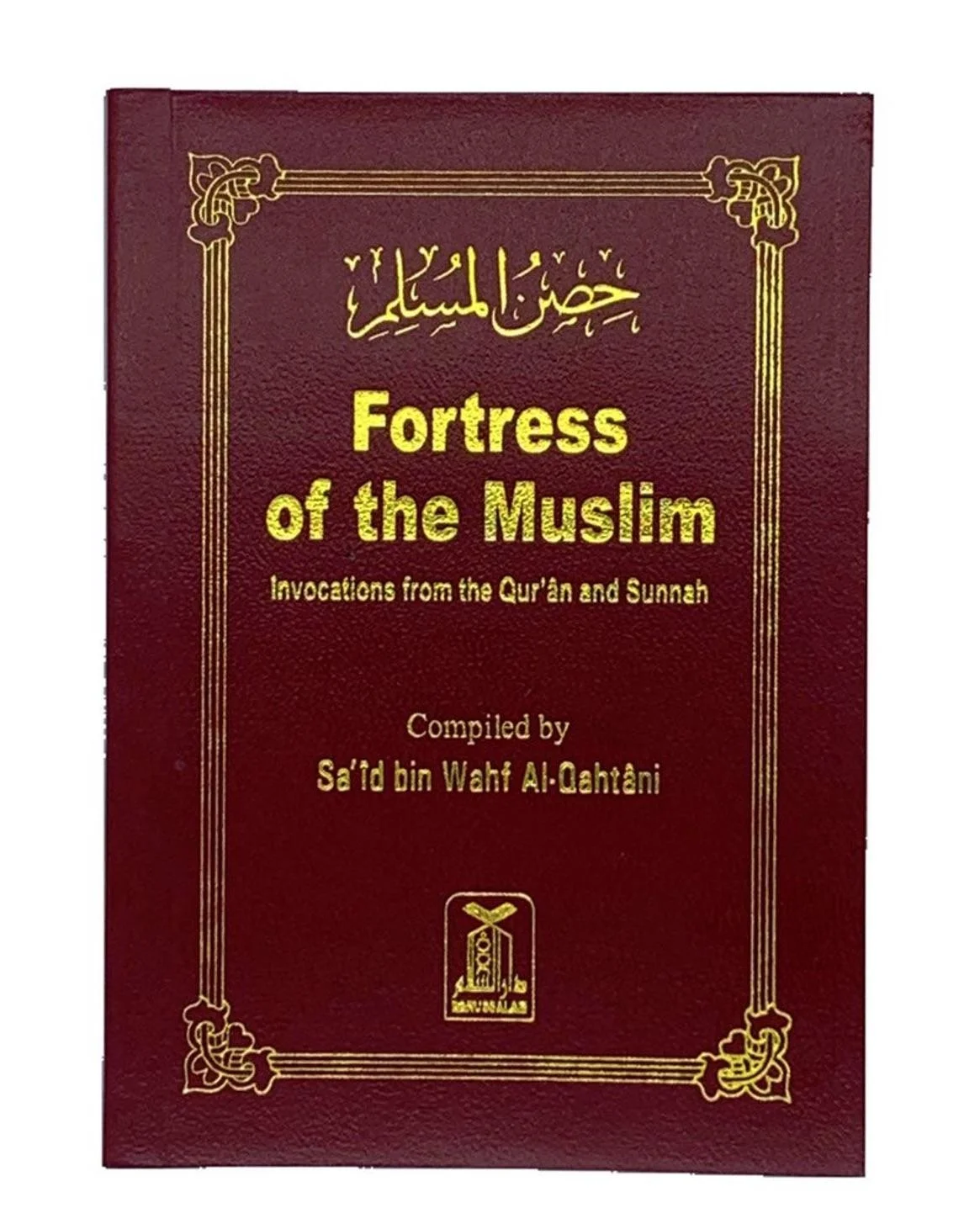
(4) Fortification of the Muslim (with supplications from the Qur'an and Sunnah) by Sa'eed Al Qahtani
A small work made popular in the 1990's, it contains short prayers gleamed from the Qur'an and Prophet's recorded practices on just about every imaginable scenario. It usually is printed in a convenient pocket size edition.
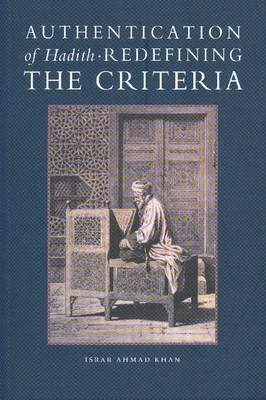
(5) Authentication of Hadith-Redefining the Criteria by Israr Ahmad Khan
Written by a highly qualified scholar, it tackles the sensitive issue of the nature of the hadeeth reports. It presents the history of compilation, the methods of judgement employed classically, and a thorough list of reports whose link to the Prophet is questionable. He does not take the extreme view advocated by some voices that want the entirety of the Sunnah thrown out, but rather that we should simply engage the tradition in an academic sense.
This work would help in clarifying seemingly problematic texts in the hadeeth literature, issues which are discussed repeatedly in a western context.
(6) The Bible, The Qur'an and Science: The holy scriptures examined in the light of modern knowledge by Dr Maurice Bucaille.
As the title suggests, it is a thorough study of both scriptures and their claims vis-a vis scientific knowledge. Highly recommended as a work that creates understanding and a strengthening of faith.
(7) Discipling the soul: Al Ghazali
Taken from the famed work Ihyaa 'Uloom Id-deen,(Revival of Religious Sciences) itself composed by the great savant Abu Haamid Muhammad Al-Ghazali, better known as Imam Al Ghazali, it presents texts related to spiritual upliftment, greed, lust, good character and much more. In truth, we recommend all of the works of this classical scholar (whose year of death was 1111), however, the English translations on the market either lack coherent presentation or are poor quality, meaning that a great deal of patience would be needed to engage it. T.J. Winters has done a good job in his presentation of an extract from the Ihyaa.
(8) The Muslim Marriage guide by Ruqaiyyah Waris Maqsood
A rather brief work on navigating marriage in Islam, the author (a British woman) succinctly presents practical advice on aspects of marriage life, replete with examples from the Qur'an and Prophetic tradition. It also, in our view, is useful in providing some framework for understanding when the couple are from different cultures.
(9) The Autobiography of Malcolm X as told to Alex Haley
Malcolm X, who eventually adopted the name Malik El-Shabazz, is a name who needs no introduction. This book details his life experiences, from his own lips, and serves as a wonderful source of insights into American history, and of course its interaction with the teachings of Islam.
There are other books on the market, some of which actually seem to wish to refute The Autobiography, proposing many other theories as to his (i.e. Malcolm X) personal life, family and political views, however, The Autobiography is still the best and most authoritative.
(10) A young Muslim's guide to the modern world by Sayyid Hossein Nasr
This work does not only benefit "the young", it benefits all, especially those with a desire to understand not only the Islamic take on certain issues, but the philosophical and religious foundations of the West. It is thought-provoking, written by a leading Muslim academic.
Footnote
(1) See Projected Changes in the Global Muslim Population | Pew Research Center
Saturday, August 24, 2024
Zionism: A briefing from an Islamic perspective
Zionism: a briefing from an Islamic perspective
By Shamsuddin Waheed
The latest round of violence to hit the Middle East has
prompted a number of questions for Western audiences, particularly Americans, regarding the core reasons
behind the conflict. While much has been
made on legacies, revenge and a host of other rhetorical devices, the core
issue is actually a political ideology known as Zionism.
Zionism, in short, is the name of an ideology of a Jewish
land for Jewish people. While this is in and of itself not necessarily an evil
goal, the way it was brought about was without due consideration to others.
This makes perfect sense when we see that the ideology itself is born out of a
colonial mindset, in which the “native” peoples are viewed as inconsequential.
The Balfour declaration of 1917, initiated by the British, had as a stated goal
the transformation of Palestine (a land already populated by what we call today
“Palestinians”) into a Jewish homeland, to the disenfranchisement of those
already there, both Arab Muslims and Christians.
While it is a political ideology (akin to Apartheid), it
does use religious language, the latter being very appealing to Christians.
There is a bit of irony present here,
because many of the early Zionist preachers of it, including its principal
founder Theodor Herzl (d. 1904) was atheist, and even today extreme Jewish
Zionists tend to dismiss Christians as idolaters. Nonetheless, Christian
Zionists believe that God has promised the land to the Jews, based on Biblical
texts (such as Gen.15:18), and that Jewish presence is necessary for the return
of Jesus. If this wasn’t bad enough, many in both Israeli and American
religious/political leadership desire that Israel grow from its current
borders. John Hagee, a leading Texas-based pastor, has stated that “the day will come when Israel owns
and control all of present-day Israel, including Jerusalem, Lebanon, the West
Bank of Jordan, and most of Syria, Iraq and Saudi Arabia..” (CAN AMERICA
SURVIVE? 10 PROPHETIC SIGNS THAT WE ARE THE TERMINAL GENERATION, PAGE 109, 2010
HOWARD BOOKS, NEW YORK).
In light of the current Genocidal policies clearly enacted
by Israeli forces, fears of Israeli expansionism are legitimate. Yet, Islam has
a totally different teaching from Zionism. Islam has morals, ethics, a recognition of human rights and
religious liberty. Allah says that his covenant will not extend to oppressors (
Q 2:124). He forbids oppression of people on the basis of religion, color or
gender (2:256, 60:8-9). Indeed, it can even be said that trying to jumpstart
Armageddon and the return of Jesus is in itself an action of idolatry (Q
16:1-2), a mentality that –if eternally held- risks generating Divine wrath.
May Allah give freedom to those who are oppressed, and may
we be protected from having the mentality of oppressors.
Tuesday, July 2, 2024
Contemplation of Divine power & Satanic weakness: a reexamination of Ayatul Kursiyy
Introduction
The Qur'an is a unique scripture for many reasons, one of them being is the multiplicity of diverse benefits and understanding. It is used as the primary source of theology (in Islam), its passages recited in prayers, its sentence structure held as THE standard insofar as Arabic grammar, its words (in its totality) memorized by millions of people, and a host of other utilities. Here, we focus on the famed Ayatul Kursiyy or the throne verse, which is one of the most popular, memorized and recited texts of the Qur'an.
Translation
"Allah: there is none deserving worship except Him. the Ever-Living, Self-supporting. He is not overtaken by either fatigue or sleep. To him belongs what is in the heavens and the Earth. Who can intercede with Him, except by His permission: He knows what is in front and behind them. None can encompass anything of his knowledge, except by His will. His throne ('Kursiyyuhu") extends (through) the heavens and the earth, He tires not in preserving them, and He is the highest, the magnificent." (Q 2:255)
Analysis of some concepts and vocabulary
Ayatul Kursiyy functions as one of the most important Quranic texts that provides an articulation of God-concept. The Ever-living (Al-Hayy), as a Divine attribute, refutes any notion of God being dead at any time(ft.1). "He is not overtaken by either fatigue nor sleep" (Laa Ta'khudhuhu sinatun wa laa nawm) places an outright denial of the Biblical language which asserts that God slept on the seventh day after creation. (ft.2).
While many take this text as evidence for shafaa'ah (intercession), a careful reading seems to suggest that shafaa'ah would not be needed, at least not in the manner popularly imagined(ft.3). The text reads: "Who can intercede (yashfa'u ) with him, except by his permission: He knows what is front and behind them." Allah already knows the actions of humanity, as well as the genesis of those actions. Moreover, the Qur'an asserts elsewhere " Say: intercession (shafaa'ah) is in the domain of Allah entirely (jamee'an). To him belongs the kingdom of the heavens and the earth, then to Him you will return." (Q 39:44)
Regarding the throne (ft.4), it seems to us that we should not take this as God literally having a chair. This is metaphorical language, a fact recognized even by early exegetes. The notions that God is literally sitting in a chair does a disservice to the Quranic presentation of God, and ultimately places Allah Subhaanahu wa ta'alaa in human terms with human limitations. Ibn 'Abbas is reported to have said that the term "His throne" referred to Divine Knowledge, while others have asserted it refers to Divine power (Qudrat). While the attribution to Ibn 'Abbas (the cousin to the Prophet, one recognized by the early Muslims for his keen Quranic insight) is admittedly disputed (as is much of the attributions to him in both Sunni and Shiite tafseer literature), I find it convincing. Another level of evidence is that the Arabic word for "notebook" (Kurrasah) comes from the same field of original meaning as Kursiyy. What is a "notebook"? A container of written information. And what is a "throne"? A throne ultimately serves as a symbol of power and authority for those who hold it. The term "throne" is used in every language in both metaphorical and physical ways. In a similar way, we have to understand God's hand (yadullah) and God's face (Wajhullaah) in metaphorical ways, they are certainly used in the Qur'an in a figurative fashion.
Message of Ayatul Kursiyy
In a broad sense, the text is speaking to us as a reminder of the omnipotence of God. Thus, it makes sense that it has taken a place within culture and liturgy. Most Muslim homes and mosques are decorated with this passage and is often recited as part of a litany of protection texts when initiating travel. As explained above, it has theological information utilized even within polemics. The Prophet Muhammad (Sall Allahu 'alayhi wa sallam) is reported to have said that if this text is recited after every salaah (prayer), that person would be granted paradise (ft.5)
As a protection from machinations of Satan: focusing on negative dreams
The Qur'an records a dialogue between Allah (The Creator) and Satan (known in this period as "Iblees" in the Quranic discourse), when the latter refused to obey the Divine order to "prostrate" before Adam (this was because of the arrogance of Iblees, seeing himself as superior lifeform). Satan actually promises to "sit and wait" and "assault" humans from every possible angle. (Q 7:15-17)
While we have discussed dreams elsewhere (ft.6) as having the possibility of coming from God (or other influences), the possibility of malevolent forces or influences cannot be easily dismissed. After all, the above Quranic passage informs us that Satan launces attacks on us from every angle! As such, we need to be reminded that the Prophet (upon whom be peace and blessings) has also suggested recitation of texts before sleeping, among them ayatul kursiyy. The recitation of these texts has proven to be affective in granting a restful sleep, devoid of many negative dreams/nightmares.
The Satanic agenda is mainly the promotion of instability, immorality and disconnecting us from God (ft.7). This is why it is important to try our best to remember Allah and to follow the teachings of the religion of Islam as much as we can. We are to support each other in these regards as well, so it's necessary to associate with those who have the mindset of Imaan (faith).
Conclusion
Ayatul Kursiyy accomplishes so much more than simply a decorative item. It helps us to remember Allah, and to remember that Satan has no authentic power over those who have faith. It is worth noting that some exegetes have asserted that ayatul kursiyy ( 2:255) cannot be fully understood or interpreted without reading verses 256 and 257. These verses assert that correct, mature attitudes prevail over muddled thinking, that God is more reliable than the false (even tyrannical) trends that dominate the discourse (taaghoot), and that God is the supporting friend of the believers, who delivers guidance from darkness into light.
Thus, we have an appropriate set of guidelines meant to provide maximum protection and benefit, if only we heed those guidelines.
Footnotes
(1) Mainstream Christianity asserts Jesus is actually God, yet it also says he was killed via crucifixion as an atonement for humanity's sins and rose from the dead three days later. Such a doctrine contradicts what is said here, i.e. that God is Ever living and never dies. Thus, Islam rejects the Christian view.
(2) Genesis 2:2-3 asserts that God rested after creating the world. While admittedly this has been interpreted by many in the Jewish tradition in metaphorical terms, nonetheless Islam, on the basis of ayatul kursiyy, rejects the idea of God resting in any sense.
(3) Most Muslims believe in shafaa'ah in some form, summarized as follows: on judgement day, the Prophet Muhammad (as well as other prophets and righteous people) will be approached and asked to intervene on behalf of their followers for admittance to paradise. In many countries, a strong culture of shafaa'ah has manifested itself in visitations to graves of prophets and righteous people, Imams etc., seeking tawassul, istighaathah and even tabarruk (using the items of the deceased such as hair etc.) as a means to reach God. It is our view that the Qur'an places God (and God only) in center-focus. Ayatul Kursiyy shows that God is already knowing the situation of His creation, thus, it seems that seeking out shafaa'ah (atleast in its popular form) is unnecessary. A type of shafaa'ah that is readily understood and acceptable by all hands is that of when we ask someone more pious than us to pray for us, for our health, etc. Praying in a mosque or "holy place" occurs because we believe that environment makes our prayers more likely to be accepted is similarly undisputable.
(4) The term "Kursiyy" in everyday Arabic (as well as other languages such as Urdu and Farsi) is used for a "chair", but here has the significance of "throne".
(5) An Nasaa-i 2:326. Quoted in Bulugh ul Maram by Ibn Hajar Al 'Asqalaanee.
(6) See Shamsuddin Waheed: Dealing with Dreams
(7) See Qur'an 24:21, 2:102, 2:268, 3:75, 4:119 and more .
Saturday, February 11, 2023
Simple and easy study methods
Introduction:
The necessity for learning is a universally accepted reality. Be it walking, talking, planting seeds, growing crops. grammar, mathematics and more, we are in a constant state of information increase, almost until the last moments of life itself.
While it is true that there are innate abilities and interests that are unique to each individual, and that learning disabilities, social conditions, and mental health conditions can have an impact on educational goals, there are simple and easy ways to develop effective skills to retain, understand, and be successful in accomplishing such needs.
Below you will find some tips which I have utilized, which have benefited me greatly. The steps below have been divided into individual scenarios.
(1) In school (High school, university, or other)
In such an environment, classes are taken within certain time frames, with rules and methods often unique to the institution or the teacher(s). In a broad sense, it is important to have time disciplines, avoiding distractions (that are readily available today via mobile phones, internet etc), adequate sleep, income, diet, and even good peers.
Some subjects we have to study are actually not interesting nor relevant to our goals, but if they are required courses (and unable to switch to more pertinent classes), they must be tackled. Lectures, reading, taking notes, asking questions from instructors, all are necessary steps.
While families should take steps to make the above easier to accomplish, it is incumbent on the student to create the environment most conducive to their own circumstances. Going to the library or park to study. Have notebooks(ft.1) dedicated to particular subjects/classes. If the subject under study is linguistic or scientific, as much immersion as possible is necessary. Living in a country where the language is spoken, study of literature, music, and the like. Attaining assistance from those capable people is also necessary.
(2) Individual study
This may be classified under informal study, in which there are no outside pressures, such as tests, deadlines, and the like are present. This could also be applicable (particularly to the elderly) in learning how to navigate the technology of the modern era.
A great deal of patience and discipline is required here, and depending on which subject, it can be relatively simple. A person can simply have instructions in a conspicuous spot that explains how to use the computer or to enroll in automatic bill pay. That could be sufficient.
However, for more complex topics, some more work would be required. Much of the advice from paragraph #1 above is applicable, but keep in mind that if no (physical) teacher is present, self-teaching a subject can result in internalizing incorrect information, because no one was there to give a correction, especially in language arts.
It is for this reason that (depending on which area of study) a teacher is highly recommended, even in self-teaching. The teacher does not always have to be an actual academic, but rather sufficient enough to assist one's growth in the subject. That teacher does not need to think on behalf of the student.
There are countless institutes in operation today on every subject imaginable, even outside of academia. The internet, and particularly in a post-COVID era, has seen the emergence of mass online learning, via ZOOM and other such platforms. While this is very useful, it is still the view of this writer that whenever possible, interactions with those giving us academic assistance should be done in person, rather than in a virtual realm.
(3) Scriptural study
For Muslims, the Qur'an is the words of God, conveyed to the Prophet Muhammad. The word Qur'an itself carries the meaning of recitation, or that which is to be repeatedly read. The title is very appropriate when we consider the role it plays in the Islamic life. It is the central source of religious guidance, used in legal and cultural roles.
Thus, we have to divide this discussion into (a) Memorization/Recitation (Hifz/Qira'aat) and (b) Understanding in a religious/academic role (tafheem/tafseer)(ft.#2)
(a) The Qur'an is the core text recited in daily prayers. Thus, all practicing Muslims memorize some portions (ft.3). If the goal is to memorize selected portions for prayers, this can be done via a teacher, repeated listening to the mosque Imam recitation during communal worship (ft.#4), as well as YOUTUBE videos, CDs while driving, cleaning, etc. The mind can retain such texts just as we retain song lyrics. If the goal is to memorize the entire text, this- in my opinion- requires a teacher, discipline, time and patience. It can take years to accomplish.
For memorization of a particular text (such as Ayatul Kursiyy, 2:255 for example), after one or two of the daily prayers, play a recording of it, and after learning it, use it inside of your prayers. Indeed, rotate various Quranic passages for usage in daily prayers (ft.5)
(b) Understanding the Qur'an: The Qur'an was given slowly to the Prophet Muhammad, Sall Allahu 'alayhi wa sallam, therefore, we must also expect that it won't reveal its treasures overnight. While teachers are useful in conveying information on it, we should take heed that it is also a text which God himself teaches (Q 55:2). While I do consult tafaseer (Quranic commentaries) in seeking to understand texts, my methods can be summarized as follows: Notebooks, in which texts, commentaries, reflections, questions are all noted down and studied. Consultation of the original Arabic text, as well as linguistic resources(ft.5). For a more exhaustive presentation on this, see This link as well as this lecture
Bible study
While I do not claim expertise in Biblical studies, I do study it, and generally follow the development of Biblical Hermeneutics as a religious and cultural field. I have found that writing notes in the back pages, highlighting passages, and notebooks have been very useful. There are also a number of Jewish and Christian scholars whose reflections are very deep in these regards.
My personal library contains almost all of the English translations and commentaries on the market, and have benefited greatly from all of them, despite my theological differences (ft.#6). Thus, I won't make any recommendations on a particular Bible translation or version.
General tips
(1) Use physical books for study when possible. Studying via e-books, audiobooks, PDF files, etc does not result in retaining the information nor in easier accessibility than physical books and notebooks.
(2) Don't be afraid to ask or acknowledge weaknesses in a particular subject.
(3) Review your written materials, as well as any lecture videos, recordings, etc., on a regular basis.
(4) Try using (or at least discussing) new information, it will help in retaining and understanding the information.
(5) Have a strong social network, particularly in spiritual affairs or religious studies.
(6) Avoid distractions during study time.
Footnotes
(1) Notebooks should be big enough to note texts, questions and the like. I suggest employing various color pens and highlighters in order to access information later. This can be done on a laptop computer as well; however, I do not suggest a phone, tablet or I-PAD for these purposes.
(2) Tafheem means "understanding" while Tafseer means "explanation", the latter being the term employed for Quranic hermeneutical literature. All the Muslim sects have produced contributions to the tafseer genre, (much of which is not available in English), yet it is my view that Tafheem is a better term, because ultimately these all represent human efforts to grasp the Divine message, and as humans we are subject to human limitations.
(3) After Al-Faatihah, the most memorized passages include chapters 112-114, because of their brevity and content, very useful for prayers. It is our suggestion that personal favorite Quranic passages be studied, memorized and used in prayers, as this has been another method for retaining knowledge. The "verse of God's light" (Q 24:35), or texts which speak of Divine mercy and the like are recommendations.
(4) The Friday prayers (Salaat al Jumu'ah) is the most obvious example, but also the fajr, maghrib and 'ishaa prayers, because in the first two standing postures of those prayers, the Quranic recitation is done aloud. (Jahri). Praying in a mosque or a communal setting during those times will allow for absorbing and memorizing texts, and eventually to employ the same texts for yourself.
(5) There are a number of works from the classical periods of Muslim history which looks at the Qur'an from a linguistic perspective mainly, such as Tafseer Al-Kashshaaf (whose author died in 1143). Resources such as Lane's Lexicon are ideal for Quranic studies (and indeed, all English translations refer to LL). However, even though LL is in English, knowledge of Arabic language is still necessary in order to access its contents. Indeed, the Qur'an itself cannot be accessed from a truly deep position without Arabic language. There are some dictionaries on the market, whose focus is on Quranic vocabulary, yet even those works have limitations. For English readers interested in a mostly linguistic approach to the Qur'an would do well to read The Message of the Qur'an, the translation and commentary by Muhammad Asad. That work relies heavily on Tafseer Al-Kashshaaf.
(6) While we have highlighted commonalities between the Bible and Qur'an in the following lecture at this link we have also shown significant differences and the reasons for that here
Monday, March 29, 2021
The Relationship between the Bible and The Qur'an (parts one and two)
Peace and blessings to you all,
Below is a lecture on various aspects of the scriptures. Part one is the lecture, part two is the Q and A session.
Both videos have timestamps, and comments are welcome.
https://www.youtube.com/watch?v=Jnzt4ldANn0&t=66s
Sunday, August 16, 2020
Pondering The Presence Of God In Our Lives
Recently I delivered a khutbah (Friday prayer sermon) in which the focus was the powerful, yet controversial Qur'anic verses which reads "To God belongs the East and the West, therefore, where ever you turn, you encounter the face of God. Indeed, God is the Expansive, the Knowledgeable."
The context of this ayah addresses the human tendency to create categorizing, labeling, and that such labeling has no impact on the Divine Being (Allah, Subhaanahu wa ta'alaa). He is not limited by the limitations we create. He is not "Our God" to the exclusion of others. The guidance of Allah can be encountered by any, regardless of their location, background or (artificial) label.(#.1)
While this article largely ignores the theological discussion surrounding the verse in question(#2) , studying this verse has prompted me to ponder upon the presence of Allah in my own life, and-likewise- I invite our readers to think about the same question.
Some people, in particular Prophets of the past, and present day saints, have encounters that impact both themselves and those around them(#3) . Due to the presence of such accounts in scriptures, this is what a goodly number of religious people desire to experience, and are left wondering if God truly cares, when such miracles have not happened.
Others think of God as the miracle worker. In the USA there are a number of Television preachers who solicit donations from viewers, promising a heavy payout, selling an illusion to desperate (and usually poor) people.
Allah can be truly experienced, as the above ayah mentions. His presence is in his replacing one situation with a better situation, with His turning grief into joy, His placing a mind and a conscious in us, in saving us from the accident, in His putting the right answers in your mind when they had been absent beforehand. His presence is known when we look at a beautiful sunrise, a full moon in a clear night, even in pets who show affection to us.
His presence is in the loved ones around us, in the prayers we offer, the supplications we make, and in the words of remembrance of Him that we recite.(#4)
A "miracle" can happen, however that is not the point. "Miracles" can likewise emerge from tricks, gadgets we are unaware of, and even from demonic forces!(#5)
The presence of God -when truly experienced- should give us strength, drive, determination, a moral compass, emotional and spiritual maturity.
It is not an overnight experience, but it can happen. And we can benefit from it.
May we all be able to experience God.
Endnotes
(1) The ayah under discussion is 2:115, but for context I would suggest vv.105-120.
(2) The controversy, particularly in the modern period, revolves around the term "face of God" (Wajh Allah). Some Muslim groups have chosen to be open to a literal reading of that expression, but with the caveat that while it is real, its nature is unknown to us. Quranic expressions such as "His Throne" "the hand of Allah", and the like have received similar treatment. However, it has been almost universally understood that these expressions are metaphorical in nature, and need not be viewed with a literal interpretation. I understand the term "face of Allah" to refer to His presence, and this is the view expressed by the majority of commentators. This controversy cannot be adequately addressed in an end note, however on related topic, see our reflections on the throne verse http://shamsuddinwaheed.blogspot.com/2008/01/divine-throne-examination-of-ayatul.html
(3) The term "saints" can admittedly be problematic for Muslim readers. The word 'Awliyaa" (singular Wali) is typically translated as "saints" or "allies (of God)" does not quite have the same religious/cultural implications as the term "saint" in Catholicism. Nor do we limit the possibility of God's direct interaction to saints. An important Quranic reference to examine on the subject of God's direct communication with humans can be found in Q 42:51.
(4) See Q 2:185, which shows that even a verbal affirmation of the Divine is sufficient to generate a real presence of Allah.
(5) The Qur'an repeatedly states that "miracles" ( as popularly understood) do not constitute a strong evidence at all. Indeed, it presents itself as a text with rational arguments and evidences of its claims.
Wednesday, July 22, 2020
Q & A session in sunday school
Although the discussion was geared towards addressing the questions of a child, I think the contents of the videos are beneficial for adults as well.
Q and A session part 1
Q and A session part 2
Friday, March 20, 2020
Inner and Outer Dimensions of Worship/Islam 101 class
The reasons behind the spiritual practices are explored. Click on the individual video descriptions to zoom in on particular topics discussed.
Inner and Outer dimensions of worship part 1
Part two with Q and A session
Saturday, January 19, 2019
GRACE IN THE DESERT EPISCOPAL CHURCH PRESENTATION
Grace in the Desert presentation part 1
Summary: An introduction to the five pillars of religion, fundamental differences between Christianity and Islam, the role of the Qur'an. At minute 11:12 sound quality improves due to use of microphone. Some of the laws of Islam are also explained, such as dress code, dietary guidelines, Jihad, terrorism.
Grace in the Desert presentation part 2
Summary: Q and A session, which explores Islam in different cultural contexts, reasons for the spread of the faith ( minute 1:25), charity (3:35), recommended English translations of the Qur'an ( 4:28), prayer method during situations such as flying ( 5:50), Non Muslims being prohibited from being in Makkah and Madinah ( 7:47), is it necessary to learn Arabic? ( 9:32), Sunni-Shiite differences (10:42), gender segregation in worship ( 12:55), religious freedom in the Muslim world and as expressed in the religion itself ( 16:10), the initial revelations to the Prophet ( 19:20), , addressing the idea that Islam borrowed from Judaism ( 21:33), Qur'an being a difficult, repetitive book ( 24:40), addressing war and relationships with Non Muslims (26:56), Explanation and demonstration of the Adhaan or prayer call ( 28:49)