Showing posts with label uswah hasanah. Show all posts

Saturday, June 17, 2023

Friday Khutbah :The Prophet's example

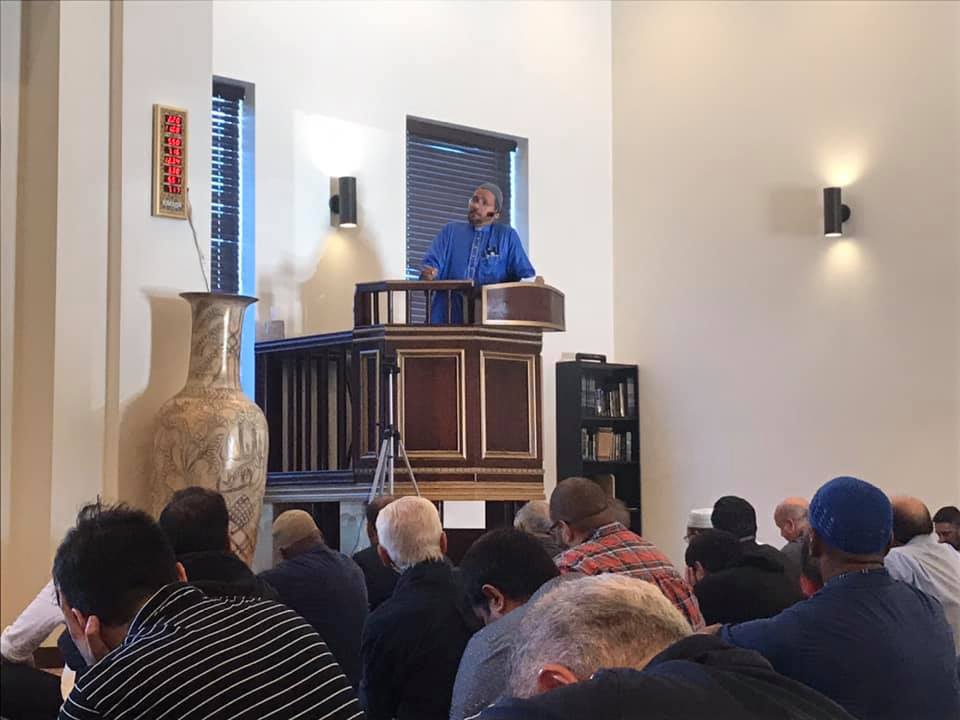
 ( Note: The following is an edited version of khutbah delivered 6/16/23 at Masjid Ibrahim of Las Vegas, Nevada. Please note that the opening Hamd (expressions of praise for God) have been omitted, as well as the verbalization of peace for the Prophets. In addition, it has been formatted into one article, rather than the traditional two sections as found within a khutbah.)


The blessing of practical guidance


As Muslims, we have as our ultimate source of guidance and information the pure, uncorrupted words of Almighty Allah within the Qur'an, however, we also possess, as a second source of guidance and information, the example of the Messenger of Allah. This did not occur as an accident or an afterthought, rather, it is the system by which Allah has made the deen, in order to convey and preserve the message of the revelation. Thus, we read in the Qur'an "Verily, you have in the messenger of Allah a goodly model, for any who has hope in Allah, the final day, and reflect upon Allah abundantly." ( Q 33:21)


لَقَدۡ کَانَ لَکُمۡ فِیۡ رَسُوۡلِ اللّٰہِ اُسۡوَۃٌ حَسَنَۃٌ لِّمَنۡ کَانَ یَرۡجُوا اللّٰہَ وَالۡیَوۡمَ الۡاٰخِرَ وَذَکَرَ اللّٰہَ کَثِیۡرًا

We have within the Prophet's practical instructions a wealth of information on addressing negative emotions. He said: "Don't look at those above you, look at those below you." (Al-Bukhari & Muslim).


Allah certainly gives and restricts for whom he wills, in accordance with his plan and wisdom, these are things we are often unable to see, and as a result of our short vision, experience jealousy and the like. 


By following the aforementioned hadeeth, it helps to remove the destructive feeling of jealousy. Envy is an emotion that invites a satanic presence, to the extent that it is discussed within the last two Quranic chapters (Al-Falaq and An-Naas).


Prophet Muhammad also sought to limit those items which arouse jealousy in others. He forbade men from wearing gold and silk (Ibn Maajah). Men are the traditional public figures, and thus by forbidding men from adoring with these two items, it limits public resentment, which can-if unchecked- translate into actual crimes and social disorder. 


Our religion has also taught that when we see examples of God's blessings, we should say Maa-shaa-Allah (as God has willed) and Alhamdulillaah (praise belongs to Allah). 

Allah gives according to his wisdom and plan, and recognition of this helps to remove envy from the hearts.


Anger

There are times when anger is not only appropriate, but also necessary. A man seeing his wife, daughter, children etc. under attack is supposed to become angry and take action to defend his family. Yet, as a general principle it is widely recognized that anger is a dangerous emotional outpouring. 


The hadeeth literature reports that a man asked the Prophet for advice, and he responds (3 times) 
Do not give in to the tendency to be angry "(the arabic text for this is Laa Taghdab) (Saheeh Muslim).


While the above sounds good, our Prophet went further. He practically stated that when angry while sitting, stand, when walking, run, go make wudoo (ablution), offer a two rak'ah (unit) prayer. (sunan Abu Dawud 7482, 7484).


In other words, removing oneself from the situation by taking these actions helps to de-escalate the matter before taking regrettable actions. This is very sound advice. 


Emotional blackmail


The Prophet as a leader, as God's messenger, was nonetheless a human being. He and his followers had been victims of Makkan oppositon for years, and upon the liberation of Makkah, he issued a general amnesty, which benefitted the leaders of that opposition such as Abu Sufyan and Hind. The latter had ordered a slave named Wahshi to kill and mutilate the Prophet's beloved uncle Hamza (Radee Allahu 'anhu).

All three of these people became Muslim and recited the shahaadah (declaration of faith) with the Prophet. With Wahshi, the assassin, he told him that while he accepts his declaration, and he is under the amnesty promised by the new order he (The Prophet) established, he did not want to see him (Wahshi) again, because he gets reminded of his uncle!


So the Prophet, while still carrying on in his role, was a human being with human emotions. He guarded himself from negativity by telling Wahshi he didn't want to see him anymore. 


The lesson is that taking actions of self-protection are perfectly valid. Naysayers and abusers often resort to emotional blackmail and manipulation of religious language to force their agendas; however, we learn from the Prophet that we are allowed to protect ourselves from such things. 


(Most of our Friday prayer and Qur'an study sessions are livestreamed on our mosque Facebook page "The Masjid Ibrahim". In addition to this website, many of our talks are to be found on YouTube on various channels, such as "Arifin Library". For updates, do follow/subscribe to those sites)


Sunday, January 15, 2017

Putting Allah in proper perspective: Friday Khutbah


( Note: The following is an edited version of the Friday Khutbah delivered 1/13/17 at Toledo Masjid Al-Islam. The opening Hamd has been omitted here.)

Pondering upon Allah's solitary nature

We begin by referencing two reports from the Prophet, upon whom be peace.

"The most virtuous (type of ) dhikr is: 'Nothing deserves worship except Allah'". افضل الذكر لا اله الا اللهHe is also reported to have said "Whosoever proclaims Laa elaaha ill Allah, has entered Paradise." من قال لا اله إلا الله دخل الجنةThere are many other ahadeeth that carry a similar message, explaining to us the benefit of له اله الا الله as a statement. However, it is as a concept that we have to deeply ponder and remember that is important.


In our Khutbahs here we typically say therein "None deserves worship except Allah, He is alone, has no partners" لا اله الا الله وحده لا شريك له  . Practically, we can recite this statement and similar statements, but what does it all mean?

In our recent spirituality session (1) we shared a powerful observation from Imam Al-Ghazzali(2). While he is admittedly speaking on the statement Allahu Akbar [recited at every movement during prayers], it is just as applicable to 'Laa elaaha ill-Allah'. Indeed, we even have it in the Sunnah that the Prophet joined these phrases [by reciting Subhaan Allah, walhamdulillaah, wa Laa elaaha ill Allah WaLLaahu Akbar].

Imam Al-Ghazali said "For example, the meaning of Allahu Akbar [God is greater]-if one does not know this meaning, he is ignorant."

This is understandable, after all, we all are ignorant of something.

The Imam continues ;" If he knows it, but there is something greater than God in his soul, he is not truthful. It will be said to him: Those words are true, but you are speaking lies! Whenever something else is more obeyed than Allah The Most High, that thing is greater to him, his object of worship, his 'god' which he serves."

Therefore, these expressions that we habitually recite: Laa elaaha ill Allah, Allahu Akbar and the like, these words must carry real meaning for us. To be Muslims, we have to truly conceptualize Allah as the only God, the only deserving of worship. This is more than simply not bowing to an idol,

After all, it can be said that Muslims bow to things. We do make our Salaah facing the Qiblah, the Ka'bah in Makkah! At Hajj, we circle the Ka'bah, we make Rukoo' and Sujood [bowing and prostrating ] in our prayers there facing that building, and because of that some critics say we take that as an idol,

We know that idea is a mistake, we don't worship the Ka'bah, and bowing does not imply worship. We seek to address that by pointing out that in many cultures there exists a custom of bowing, to teachers, to parents, elders and the like. That bowing does not imply worship!

Tauheed [perceiving God as one and alone] is more than simply not bowing to idols, and, as we should have realized, even the bowing to things is not a big deal in the long run! To uphold Tauheed, one is to take as priorities what Allah says are priorities. The worship of Allah alone translates into proper thinking and proper action.

The Qur'an says "Allah's own declaration is 'none deserves worship except him: this is the declaration of angels, the people of knowledge, standing in/for justice." [Q 3:18] ;">شَهِدَ اللّهُ أَنَّهُ لاَ إِلَـهَ إِلاَّ هُوَ وَالْمَلاَئِكَةُ وَأُوْلُواْ الْعِلْمِ قَآئِمَاً بِالْقِسْطِ

So Imaan [faith] in God alone as God is connected to angels, to angelic behavior, knowledge and science, to justice and fair play. We see here CORRECT THINKING and CORRECT ACTION.

So do take heed of Laa elaha ill Allah, because when it becomes a conscious reality, you will deserve paradise, which begins here and is fully manifested in the next life. We seek Allah's guidance, forgiveness and mercy.

Keeping our minds clear of Shirk

Often in the Qur'an, we find that Shirk is connected with injustice and even hypocrisy(3). Soorah Al-Munafiqoon [Chapter 63] and Soorat at Taubah [Chapter 9] are good places to research this. So we want to be true servants of Allah alone, we want to be people oriented upon Tauheed!

وَمَن يُطِعْ اللَّهَ وَرَسُولَهُ فَقَدْ فَازَ فَوْزًا عَظِيمًا
Whosoever obeys Allah and his messenger have achieved a mighty achievement. [Q 33:71].

How do we obey Allah? We obey by seeing him correctly as the only one deserving worship. How do we obey the Prophet, the Messenger? We obey him by emulating how the Prophet connected to his Lord.

"Indeed, you have in Allah's Messenger a goodly model for any who has hope in God, the final day, and contemplate upon God much." [Q 33:21]

لَقَدْ كَانَ لَكُمْ فِي رَسُولِ اللَّهِ أُسْوَةٌ حَسَنَةٌ لِّمَن كَانَ يَرْجُو اللَّهَ وَالْيَوْمَ الْآخِرَ وَذَكَرَ اللَّهَ كَثِيرًا

Notice the verse is speaking on those who have hope in Allah, who recall Allah and long for his presence and blessings. That teaches us that we should not take Islam for granted, that we do like the Prophet [Sall Allahu 'alayhi wa sallam] would do, continuously seek out and strengthen our ties with Allah. We work to internalize the teaching that Allah alone deserves worship, not our whims, egos or delusions.

End notes

[1] This session can be found on Youtube.com  under the title How to develop and maintain a Healthy Islam by Imam Shamsuddin Waheed.

[2] Imam Abu Haamid Muhammad Al-Ghazali [ 1058-1111] was a great scholar and spiritualist. His writings are profound and cover so many aspects of Islam that he has been given the title Hujjat Al-Islam [the evidence of Islam], a rare honorific among Sunni Muslims. Many academics have proven that Imam Al-Ghazali's works have influenced such Christian theologians such as Thomas Aquinas!

[3] This is addressed in some detail at[url] http://shamsuddinwaheed.blogspot.com/2008/10/only-one-god-forgotten-aspects-of.html[/url]

Tuesday, November 10, 2015

How to connect to the Qur'an


[ Note: This speech was delivered at the spirituality session at Toledo Masjid on November 9th, 2015. This is an edited version.]

We live in a digital age, spending much time in front of computer screens, communicating through text messages, viewing websites on our phones and the like. We have even reached the point in history where traditional print media- such as Newspapers and magazines, are at risk of becoming extinct. In addition to this reality, we all live very busy lives. Work and family occupy our every waking moment, making it difficult to offer the five daily prayers on time, let alone having time to read.

Books, for many of this generation, can no longer capture our attention. This difficulty is magnified with regards to the Qur'an, a scripture with 114 chapters, written in a language most of us don't understand. Thus, being connected to the Qur'an is a daunting challenge.

The word Qur'an [      القرآن        ] comes from the root Qa-ra-a [     قرأ     ] which means "He read". Al-Qur'aan is something that is to be read or recited repeatedly.

Despite this reality, the sad truth is that in our age, there is a disconnect  from the Book of Allah.

This "disconnect" was predicted by the Prophet Muhammad himself. He, upon whom be peace and blessings, said that in the last age "Nothing of the Qur'an will remain except its symbols" [Bayhaqi, Shu'b al Imaan]. Moreover, the Qur'an tells us that the on Judgement day, the Prophet will complain


"And the Messenger will say 'O My Lord. indeed, my people have taken this Qur'an as a thing to be abandoned." [Q 25:30]. 


So the Qur'an being abandoned in terms of being a relevant force is one of the signs of the end.

If this is the case, is hope useless?


"Say: O My Servant who have brought harm to their own souls. Do not despair of the Mercy of God." [Q 39:53]


So, even in our mistakes and sins, we should never lose hope. God is Merciful and Compassionate. Mercy is in itself a pillar by which the Universe is operated [Q 40:6].

The Qur'an itself is a Mercy to Mankind, so we should never despair or give up hope in God.


Some practical ways to approach and stay connected to the Qur'an


[1] Prayer: Salaat and Qur'an are closely connected. Reciting Al-Faatihah is an obligation, and in keeping with the Prophetic tradition, we recite other verses/Soorahs in the Salaat. Compile a list of verses or Soorahs to use in your Salaat, and use them in your Salaat. Consider switching Soorahs, or choosing particular Soorahs for particular Salawaat [Plural of Salaat]. All of us may work, so on work days we usually recite Short Soorahs in our prayers, being conscious of time constraints. However, on our days off, consider reciting longer texts, particularly in Maghrib or Fajr prayers.


[2] Technology: access to recordings of Soorahs, recited in a correct way, are now available at little or no cost, via SmartPhones, DVDs, CDs, etc. Ideally a live physical teacher would be better, but if none is available, learning the text is still accessible.

[3] Read ten verses daily at bed time. If unable to do this, ten verses weekly.

[4] Keep a notebook handy. For studious people, for memorization and study purposes, this is a very good method for retaining information. Note down verses that are interesting or that generate questions. This also allows one to note questions and perhaps research into outside sources [The Seerah, Fiqh, history, language etc..]

[5] The position of Arabic cannot be emphasized enough. The vocabulary of the Qur'an is deeply nuanced, and such nuances cannot be captured in translation. So it is vital to learn Arabic, especially if one wishes to engage in a scholarly study of the Quranic text.


Purification of the Heart

These practical steps also help in terms of keeping the heart pure and clean. A correct mentality is vital for our spiritual health.  Thus, there is wisdom in the practice of making Wudoo' before reading it. It's true that there is no Quranic verse or hadeeth that commands it, but nonetheless it is agreed among the schools of jurisprudence of Ahlus sunnah wal Jamaa'ah.

The making of Wudoo' brings a mental preparation for an important act, just as it does when we make Wudoo' before offering our prayers.


In addition, Allah says repeatedly "So when reciting Qur'an, seek refuge with Allah from Satan, the rejected." [Q 16:98]

We are to want what Allah wants us to have, rather than simply a validation of our whims.It's also helpful to read without background noise.


Taqwaaa

Our interest in the Qur'an is beyond academic. the Book of Allah is guidance for those with Taqwaaa, and cannot benefit those hearts are absent of it. This is spiritual and mental.

All of us are products of our environments, experiences, secular education and upbringing. We are all influenced by influences both good and bad. Nonetheless, Allah has made the Qur'an the ultimate filter, distinguishing between what is harmful and what is beneficial [Q 25:1].

So while we want paradise and God's favors, the guidance is to affect us in the here and now. It is to make our hearts healthier. The Prophet is reported to have said "Consult your heart".

The healthy heart is the one which can make healthy decisions, but that requires keeping the heart healthy with spiritual exercise, staying in shape and avoiding the "junk food" in terms of "Junk influences". Keep the heart healthy by remembering Allah, by reciting his names and his scripture.


Problematic texts?


The disconnect in this age between the Qur'an and the consciousness of mankind [Muslims included] has led to misapplying and explaining wrongly certain texts. Thus, people talk about "war verses". They talk about expressions such as "Allah is the best of plotters". All of these concerns can be easily addressed with just a little bit of study, but we also must remember that all of the Quranic contents are there to protect and enhance Taqwaaa, to bring overall relief and benefit to humanity.

Using this Scripture to create a picture of Tyranny, Egotism, and arrogance is to do a disservice to the text but also to mankind. It's even a disservice to the doer himself!

Allah mentions that there are those with sealed hearts, with barriers that prevent them from understanding the Qur'an. Those barriers exist because of- essentially- corrupted hearts. So we should not heed such people when they talk about Islam.


Final advice

Don't consume too quickly. Take your time in this religion. Learn how to swim before jumping at the deep end of the water.


Allah says "So read [we can understand this as also meaning 'implement'] what is easy for you of this Qur'an" [Q 73:20]


So be patient with this Deen, with the Sunnah and with this Qur'an. Be patient with it, just as God has been patient with you. Patience is something which will bring the fruits this scripture has to offer.


Monday, January 27, 2014

Actions are judged by intentions:human relationships in light of the hadeeth

The Messenger of Allah was reported to have said "Actions [al'A'maal] are only to be evaluated with regards to the intention[ft.1], and for all there is due but what he intended. So whosoever has made Hijrah for worldly considerations [Dunya], or for marriage with a woman [ft.2], his hijrah is to what he made hijrah for.[Bukhari, Kitaab Bada' al wahy, 1:1]

Introduction

This narration is perhaps the most famous hadeeth in the Muslim world. It is quoted by scholars and lay people alike. Partly, it has become so popular because it is the very first narration quoted in many small hadeeth anthologies, such as An Nawawi's Al Arba'een An Nawawiyyah [forty hadeeth], and of course it is the very first narration found in Saheeh Al Bukhari. For the sake of brevity and focus, we have omitted the chain of transmitters [Isnaad] as well as any discussion on it.

The immediate implications or understanding of this narration are obvious. Due to the lack of freedom of religion, constant persecution and dangers, the followers of the Prophet, upon whom be peace and blessings, had to make hijrah, meaning they had to migrate to places where their spiritual development would not be arrested. The first migrants went to Abyssinia, wherein the local authorities treated the Muslims with respect. Eventually, the Prophet himself, Sall Allahu 'alayhi wa sallam, went to Yathrib, which later on became known as Madinah al Munawwarrah, or Madinat un Nabi, the Prophet's city, or simply Madinah for short. It was in Madinah that the base of Islam was established.

The importance of Ikhlas, sincerely doing something because you want that act to be counted as an act of virtue or a means to attain closeness to Allah, is given here, as well as throughout the Qur'an and many other Prophetic narrations. Indeed, this teaching regarding Ikhlas is apparent in something like Prayer itself. Before prayer, one must have "intention" before reciting the opening Takbeer. "O Allah, it is my intention to offer such and such salaah for your sake" or any similar expression. This can also be done in the heart, rather than verbal. None can know when you offer the ritual of prayer or the ritual of fasting that you are truly doing it for Allah or doing it in order to be seen, to conform to social expectations.

Applying this hadeeth in human interactions

The first lines of the narration "actions are only to be evaluated with regards to intention" certainly have applications in the physical world, in the relationships between family members, spouses and friends. If the intention [Niyyah] is good within a person, then the other person making judgment on it should take that into consideration. Indeed, according to the Messenger of God, this is the only thing[ft.3] that should be used to base the judgements on. This hadeeth does not advocate being naive or a simpleton, but it does advocate what is generally taught in Islam, and that is the concept of positive conjecture, Husnudh dhann [ft.4]. When the intention is known to be good, actions that result from the intention, especially when those actions have actually have not generated any harm, should not be held against the person.

In life, all people make judgements, have egos and make mistakes. Holding things against others, especially when intention was always good, is another sign of an unhealthy spiritual situation. A situation that is best resolved by contemplation, supplication to Allah, consulting the book of Allah and people of wisdom[ft.5].

Footnotes
[1] This is my translation, but in the article title I have retained the usual English rendering. The Arabic words are Innamal 'a'maalu bin niyyat.

[2] In Saheeh Al Bukhari the words Imra-atan yatazawwajuhaa appear, whereas the text used by Imam An Nawawi has the words Imra-atan yankihuhaa. Both phrases have the same meaning, marriage with a woman.

[3] The word Innama, which is the first word in the Arabic text, is a particle of restriction [Hasr] in grammar. Thus, we have rendered it, in context, as " actions are only to be evaluated with regards to the intention". Also see footnote 1 above.

[4] This concept is explained further in http://shamsuddinwaheed.blogspot.com/2013/07/towards-healthy-spiritual-life.html.

[5] Qur'an 4:35 teaches, as an example, that when a marriage problem emerges, parties from both the husband and wife are to work to solve it. This serves many benefits, including preserving the privacy and standing of the couple.

Sunday, February 5, 2012

Muhammad the Prophet of Islam: Dispelling Some Misconceptions

As we compose this brief article, Muslims worldwide are celebrating the birthday of Muhammad ibn ‘Abdullah. Although specific details of the celebration vary from one nation to another, the Mawlud ur Rasool holiday includes poetic compositions, processions, dinners, exchange of gifts, Mosque attendance and special food for the poor.

It is important to note that Islamic religious texts [i.e. Qur’an and Prophetic narrations] do not lend any direct support for holding celebrations commemorating the Prophet’s birth, but at the same time we have to admit that we find little problem with it, in the sense that it gives an opportunity to share, especially with the youth and with those unacquainted with Islam, the Prophet’s legacy and teachings. [Ft-1 and 2]

As such, we have taken advantage of Mawlud to correct some misconceptions about the Noble Messenger of Allah, upon whom we ask God’s peace and blessings. It is also worth noting that some misconceptions and outright lies are generally propagated either by Christian missionaries of various sects or by Orientalist writers, whose agendas are obvious. Below, we present thoughts on some of those wrong ideas.

[1] Muhammad was obsessed with women

Arguably the leading accusation, this idea is presented as an alleged contrast with Christian ‘moralists’ who uphold the celibacy of Jesus Christ versus the polygamy practiced by the Messenger. What seems to get ignored when this charge is brought up is that the institute of polygamy was [and arguably still is in parts of today’s world] a means to seal political and family alliances, as a way to unite peoples and heal hostilities. In addition to this, in times of war when men would fall on the battlefield, polygamy was a means of social welfare for widows and children. The Prophet’s marriages, taking place after the death of his beloved Khadijah, must be viewed in this light. [ft.3]

[2] Blood thirsty killer

This is very far from the truth. His congenial nature was well known even before the Qur’anic revelation. When the revelation did come, he and his growing number of followers suffered persecution, and the enemy did not stop when the Prophet migrated to Madinah. Rather, they continued their plotting and their attacks. It was only in response to these that fighting for survival was finally ordered [Q 2:190]. In this regards, we must also understand that the Qur’an says “and if they [the enemy] sue for peace- then you [O Muslims] must also sue for peace, and place your trust in God, He is the Hearer, the Knower.” {Q 8:61]

[3] Relations between Muhammad and the Jewish tribes

In Madinah, when the Prophet moved there, he made treaties with the Jewish tribes there, as well as in other places, Yet, as the history books tell us, these groups, motivated by ethnic prejudices and jealousy, not only broke their treaties, they even were involved in plots to kill the Prophet! The details are beyond the scope of our article, but we refer the reader to “The life of Muhammad” by Muhammad Husayn Haykal, pp 271-283.

How should Muhammad be viewed?

His son in law and the eventual fourth Khalifah of the Muslim community after his [i.e. the Prophet’s] death, ‘Ali ibn Abi Taalib, is reported to have observed:

“He treated the [material] world disdainfully and regarded it low. He held it contemptible and hated it. He conveyed from Allah the pleas [against committing sin], counseled his people as a warner, called towards paradise as a conveyer of good tidings.” [Nahjal Balaaghah, page 71]

His wife ‘A’ishaa bint Abi Bakr says “His character was the Qur’an.” [ Saheeh Al-Bukhari ]


His student and relative Ibn ‘Abbas says “Allah’s messenger, Sall Allahu ‘alayhi wa sallam, was the most generous of people in charity…” [Saheeh Muslim]


“And We [Allah] have sent you [O Muhammad] to be nothing more except as a mercy to all nations.” [Qur’an 21:107]


Final advice

Allah Almighty preserved the Qur’an, and has said therein that the Prophet was a model “for any who hopes in Allah, the final day, and remember Allah often.” [Q 33:21]. The Qur’an has preserved just about all of the details we, as lay people, would need about the Prophet. His struggles with faith and family, marriages and leadership, even his internal thoughts are often found therein. So, for us lay people who do not have the time, patience or ability to shift through materials determining what is authentic and what is not, we need only look at the Qur’an. Look at the ‘say verses’. Look at the earliest Soorahs, which are mostly found in the last sections of the text, and you will find a man who was quite normal, who is sufficient for believers as a practical guide.

Footnotes

[1] In Al Maulud Fil Islaam: Innovation and true belief according to Qur’an and Sunna and the scholars of Islam, the author, Shaikh Hisham Kabbani, attempts to extract religious texts to justify the traditional observances of the Prophet’s birthday, yet at the beginning of his treatise he does admit “ ..other celebrations, like Mawlid, the Prophet’s birthday-peace be upon him-are neither obligatory nor forbidden.” [pg 1, Haqqani Islamic foundation, Fenton, Michigan, 1994 edition]

[2] We have attempted to be fair with regards to the issue of celebrating the Prophet’s birthday. After all, it has become a part of Muslim culture, and as long as there is no danger of idolatry, it can be a good opportunity to pass along Islamic knowledge. There are some extremes among Muslims on issues like this. Saudi Arabia is probably the only Muslim nation that does not have the Prophet’s birthday as a national holiday, and scholars from the Salafi Manhaj regularly preach against it. The opposite side of that coin is that of many Muslims who not only celebrate his birthday, but who have rather odd supernatural beliefs about him, such as his actually not being human, but having been created out of light [the Noor –e Muhammad as expressed in Urdu], that he actually joins certain groups when they pray. This personality cult and exaggerated status of a man is just the sort of thing that Islam stands against, and it is under these circumstances that we understand full well the reluctance of some authorities to allow such celebrations. It is also worth sharing that there are some among the Muslim ranks who reject ‘traditional Islam’ including the ‘Eids, and obviously Mawlud, yet the same people, in our experience at least, have no qualms issuing greetings for Christmas, St. Valentine day, and even Halloween!

[3] For the Islamic teaching on polygamy, see our “Polygamy and societal norms” at shamsuddinwaheed.blogspot.com.