Showing posts with label Toledo Masjid. Show all posts

Sunday, January 15, 2017

Putting Allah in proper perspective: Friday Khutbah


( Note: The following is an edited version of the Friday Khutbah delivered 1/13/17 at Toledo Masjid Al-Islam. The opening Hamd has been omitted here.)

Pondering upon Allah's solitary nature

We begin by referencing two reports from the Prophet, upon whom be peace.

"The most virtuous (type of ) dhikr is: 'Nothing deserves worship except Allah'". افضل الذكر لا اله الا اللهHe is also reported to have said "Whosoever proclaims Laa elaaha ill Allah, has entered Paradise." من قال لا اله إلا الله دخل الجنةThere are many other ahadeeth that carry a similar message, explaining to us the benefit of له اله الا الله as a statement. However, it is as a concept that we have to deeply ponder and remember that is important.


In our Khutbahs here we typically say therein "None deserves worship except Allah, He is alone, has no partners" لا اله الا الله وحده لا شريك له  . Practically, we can recite this statement and similar statements, but what does it all mean?

In our recent spirituality session (1) we shared a powerful observation from Imam Al-Ghazzali(2). While he is admittedly speaking on the statement Allahu Akbar [recited at every movement during prayers], it is just as applicable to 'Laa elaaha ill-Allah'. Indeed, we even have it in the Sunnah that the Prophet joined these phrases [by reciting Subhaan Allah, walhamdulillaah, wa Laa elaaha ill Allah WaLLaahu Akbar].

Imam Al-Ghazali said "For example, the meaning of Allahu Akbar [God is greater]-if one does not know this meaning, he is ignorant."

This is understandable, after all, we all are ignorant of something.

The Imam continues ;" If he knows it, but there is something greater than God in his soul, he is not truthful. It will be said to him: Those words are true, but you are speaking lies! Whenever something else is more obeyed than Allah The Most High, that thing is greater to him, his object of worship, his 'god' which he serves."

Therefore, these expressions that we habitually recite: Laa elaaha ill Allah, Allahu Akbar and the like, these words must carry real meaning for us. To be Muslims, we have to truly conceptualize Allah as the only God, the only deserving of worship. This is more than simply not bowing to an idol,

After all, it can be said that Muslims bow to things. We do make our Salaah facing the Qiblah, the Ka'bah in Makkah! At Hajj, we circle the Ka'bah, we make Rukoo' and Sujood [bowing and prostrating ] in our prayers there facing that building, and because of that some critics say we take that as an idol,

We know that idea is a mistake, we don't worship the Ka'bah, and bowing does not imply worship. We seek to address that by pointing out that in many cultures there exists a custom of bowing, to teachers, to parents, elders and the like. That bowing does not imply worship!

Tauheed [perceiving God as one and alone] is more than simply not bowing to idols, and, as we should have realized, even the bowing to things is not a big deal in the long run! To uphold Tauheed, one is to take as priorities what Allah says are priorities. The worship of Allah alone translates into proper thinking and proper action.

The Qur'an says "Allah's own declaration is 'none deserves worship except him: this is the declaration of angels, the people of knowledge, standing in/for justice." [Q 3:18] ;">شَهِدَ اللّهُ أَنَّهُ لاَ إِلَـهَ إِلاَّ هُوَ وَالْمَلاَئِكَةُ وَأُوْلُواْ الْعِلْمِ قَآئِمَاً بِالْقِسْطِ

So Imaan [faith] in God alone as God is connected to angels, to angelic behavior, knowledge and science, to justice and fair play. We see here CORRECT THINKING and CORRECT ACTION.

So do take heed of Laa elaha ill Allah, because when it becomes a conscious reality, you will deserve paradise, which begins here and is fully manifested in the next life. We seek Allah's guidance, forgiveness and mercy.

Keeping our minds clear of Shirk

Often in the Qur'an, we find that Shirk is connected with injustice and even hypocrisy(3). Soorah Al-Munafiqoon [Chapter 63] and Soorat at Taubah [Chapter 9] are good places to research this. So we want to be true servants of Allah alone, we want to be people oriented upon Tauheed!

وَمَن يُطِعْ اللَّهَ وَرَسُولَهُ فَقَدْ فَازَ فَوْزًا عَظِيمًا
Whosoever obeys Allah and his messenger have achieved a mighty achievement. [Q 33:71].

How do we obey Allah? We obey by seeing him correctly as the only one deserving worship. How do we obey the Prophet, the Messenger? We obey him by emulating how the Prophet connected to his Lord.

"Indeed, you have in Allah's Messenger a goodly model for any who has hope in God, the final day, and contemplate upon God much." [Q 33:21]

لَقَدْ كَانَ لَكُمْ فِي رَسُولِ اللَّهِ أُسْوَةٌ حَسَنَةٌ لِّمَن كَانَ يَرْجُو اللَّهَ وَالْيَوْمَ الْآخِرَ وَذَكَرَ اللَّهَ كَثِيرًا

Notice the verse is speaking on those who have hope in Allah, who recall Allah and long for his presence and blessings. That teaches us that we should not take Islam for granted, that we do like the Prophet [Sall Allahu 'alayhi wa sallam] would do, continuously seek out and strengthen our ties with Allah. We work to internalize the teaching that Allah alone deserves worship, not our whims, egos or delusions.

End notes

[1] This session can be found on Youtube.com  under the title How to develop and maintain a Healthy Islam by Imam Shamsuddin Waheed.

[2] Imam Abu Haamid Muhammad Al-Ghazali [ 1058-1111] was a great scholar and spiritualist. His writings are profound and cover so many aspects of Islam that he has been given the title Hujjat Al-Islam [the evidence of Islam], a rare honorific among Sunni Muslims. Many academics have proven that Imam Al-Ghazali's works have influenced such Christian theologians such as Thomas Aquinas!

[3] This is addressed in some detail at[url] http://shamsuddinwaheed.blogspot.com/2008/10/only-one-god-forgotten-aspects-of.html[/url]

Thursday, July 30, 2015

Eid ul Fitr Video

Toledo, Ohio had its first United 'Eid prayer service. Below is a video of the program.

[1] Minute 1:00- 3:00 Adam Smidi opening remarks.


[2] Minute 3- 5:45, Imam Farooq welcome.


[3] 5:45-12:00 Eid prayer led by Shaikh Ahmad Abou Alsayf. Notice his beautiful recitation of the Qur'an, from Soorah Al-Faatihah, Al A'laa, and Al Ghaashiyah.

[4]12:00-27:00 Eid Khutbah by Imam S.Waheed

[5] 27:00-35:00, Closing remarks and supplication by Shaikh Ibrahim.

[6] 35:00-39:00, Greetings from Toledo Mayor Paula Hudson and Mayoral candidate Sandy Collins.


Thursday, April 16, 2015

Finding Guidance in a world of Confusion


[Note: This is an edited version of our presentation at the monthly spirituality session at Toledo Masjid Al-Islam. Initially this was to be shared on video, but the recording failed half way into the presentation.]

When looking at life today, we find that almost everything is in a state of chaos, instability is the new normal. Attitudes, morals, public policies, all of them are up for grabs. "Facts" or values upheld as recently as fifty years ago are not under review worldwide.  In the religious world, this is also a problem, and confusion abounds. It can be argued that this is a greater problem for Christians than for any other religious community. Thus, under the slogans of Love, Forgiveness and Acceptance, support for everything under the sun is given, and religion ends up becoming nothing more than a label, a uniform  put on during the holidays, making religion a thing that has lost all value. Thus, we have here the basic foundation of confusion, translating into becoming lost, misguided and easily manipulated.

Allah [God, the most high] says in the Qur'an


If you obey most of those in the land, they will mislead you from the path of Allah. They [themselves] follow conjecture [Dhann], and are themselves nothing but a presumptuous lot." [Q 6:116]
6:116

We have two important phrases in this ayah. Dhann [conjecture] and yakhrusoon [root being kharasa], the latter carries, among its meanings, to have or to follow opinions without proof. It can also mean lying. So, giving obedience to lies.

Therefore, to be prepared to receive guidance, there has to be a willingness to pursue what is right. That means thinking deeply. Pondering, study, research. Guidance is NOT dictated by emotions, nor by the whims of the majority. Sociologists have long warned us of a mob mentality. The mob mentality manifests itself in obvious terms when a group of people assault or even kill a single person, but having or following the mob mentality is something preached to us on a daily basis through Television, Music, Movies, Politicians and even Social Media.  We have to be willing to accept that guidance may not always be seen or recognized by a majority.

Indeed, the Qur'an often tells us that those rejecting the Prophets of God would do so under the banner of following family or societal traditions [ among some examples, see Q 5:104 and 2:170].

Returning to conjecture, Dhann in Arabic, we also read in the Qur'an
يَا أَيُّهَا الَّذِينَ آمَنُوا اجْتَنِبُوا كَثِيرًا مِّنَ الظَّنِّ إِنَّ بَعْضَ الظَّنِّ إِثْمٌ
O Believers. avoid much conjecture, verily, sometimes conjecture is sinful. [Q 49:12].So we learn from this statement that conjecture, be it about religion or even other human beings, can be harmful. Islamophobes have fears based on conjecture. Thus, to many, a women wearing a head scarf is automatically oppressed, even if she's college educated. 

So strive hard to find truth, rather than having assumptions, because that is the gateway to receiving correct information.


Some other practical steps


Don't be lazy Muslims. Be connected to the Qur'an, consult it often. Use its verses in your prayers, have a stronger tie to it than you have to your favorite Television shows, Football teams and the like.


Be connected to people of knowledge, and to the Muslim community.


Don't let egos, jealousy, get in the way of your spiritual progression. A good practice is the regular recitation of the last two Quranic chapters [Al Falaq and An-Naas] because it can serve as a sort of spiritual protection, from other's bad intentions but also from developing those bad characteristics in one's own self.


In Islam, when we pray in congregation [Jamaa'ah] we do so standing closely to one another. The Imam is reciting texts [from  the Qur'an] that are universally accessible. The praying with others can create bonds that will overcome those bad characteristics, and it creates humility. 


In prayer, we say with every movement Allahu Akbar, God is the greatest, meaning God is bigger or more important than anything else. We proclaim his might and power in the bowing and prostrations. The Black and the White, the rich or poor, all are taught to proclaim the Divine power and thus, the fact we cannot be compared to him. We belong to God, to him is our return, and even our religion is to be for him! 


What about the actions of others?


If we are capable, we should always share whatever the truth is, especially on religious matters, but we can't force it on people. 


وَمَا جَعَلْنَاكَ عَلَيْهِمْ حَفِيظًا وَمَا أَنتَ عَلَيْهِم بِوَكِيلٍ

"And We have not made you [O Muhammad] a keeper over them, nor have you been made in charge of their affairs. [6:107]

So if we have tools for others to use in their search for guidance, we do share them freely. The doctor can write the prescription, but in the end, it is the patient's responsibility to take the medicine as prescribed.

Guidance does not require force.

Personal guidance vs communal enlightenment

For me, I am a Muslim who is firmly convinced that Islam is the perfected manifestation of the Divine Truth. I am willing to share its teachings on God-concept, spirituality, prophetic history and narrative.

But there's more to this. As a species, humans need guidance too, and that guidance is present within Islam.Guidance that all humans can benefit from, even disbelievers. Islamic teachings on economy, on race, on nationalism, ethical code, family, all of these [ and more] are required for life in today's world. These teachings need to be studied and applied in a comprehensive way. That application will be the best type of propagating, and will provide a worldly salvation for mankind.


Monday, June 30, 2014

Newspaper clipping: Sunni-Shiah divide, Iraq, ISIS

Sunni-Shia divide, conflict puts Islamic sects back in spotlight

Toledo-area Muslim figures downplay differences

BY TK BARGER
BLADE RELIGION EDITOR
Al-SaedyAl-Saedy
Enlarge
Sunni and Shia are back in the news because of the latest developments in Iraq. “Why don’t they get along today” is again the question. For the most part, they do — and Muslims in Toledo are together in denouncing the groups engaged in conflict in Iraq and Syria today.
WaheedWaheed
THE BLADEEnlarge | Buy This Photo
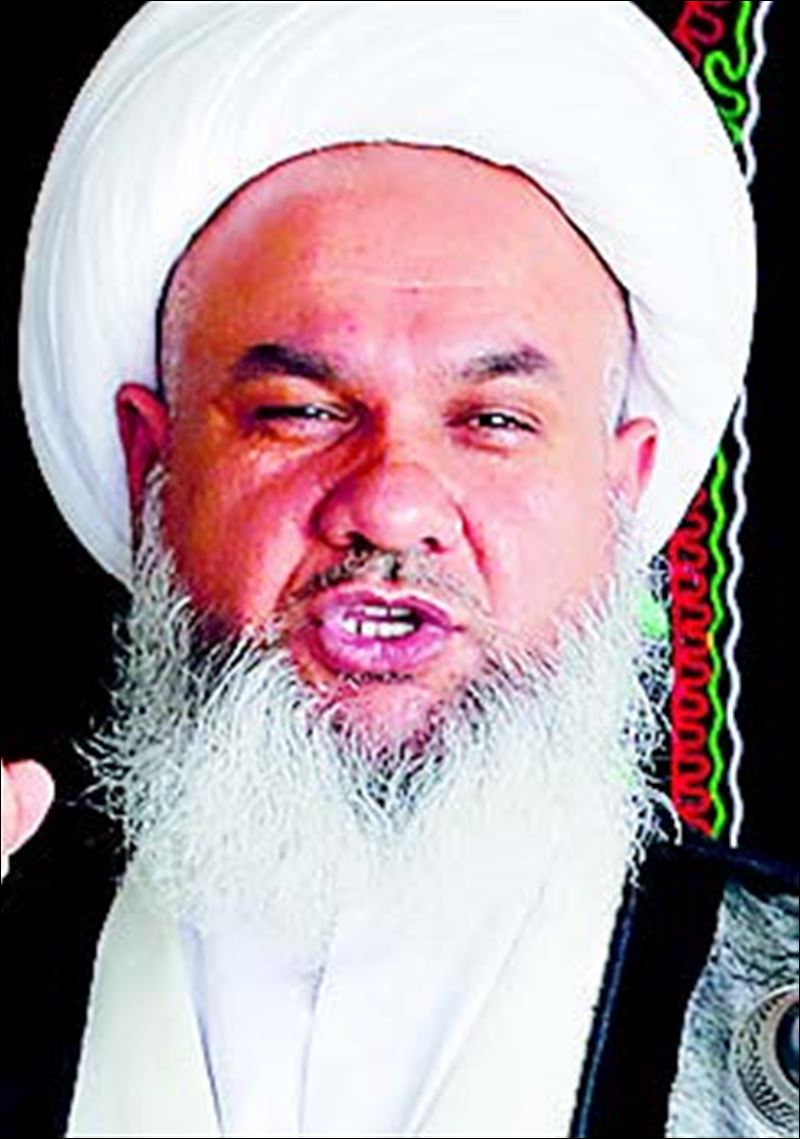
“I worry for all in the war, not just my country,” said Sheik Rahim Al-Saedy, who immigrated to the United States from Iraq and leads the Fatemah Islamic Center in Sylvania, a Shia mosque.
Abo-ElzahabAbo-Elzahab
THE BLADEEnlarge | Buy This Photo
“It’s my job,” Sheik Al-Saedy said. “I have to worry for all the people, not just Muslims. ... If they get hurt or have a problem, we pray for them and we’re upset, because we are human beings.”
AnjumAnjum
THE BLADEEnlarge | Buy This Photo
Iraqi Prime Minister Nouri al-Maliki’s efforts last year to crush protests by Sunnis complaining of discrimination under his Shiite-led government sparked a wave of violence by militants, who took over the city of Fallujah in the western, Sunni-dominated province of Anbar, and parts of the provincial capital, Ramadi.
During the last two weeks, militants have taken over the cities of Mosul and Tikrit as well as checkpoints on the Iraq-Syria border. The Islamic State of Iraq and Syria militant group is trying to create an Islamic caliphate in a vast area of both countries.
The religious ways of Sunni and Shia are different in some practices, but most are not major; one difference, however, is that many Shia are called “Twelvers,” the largest Shia group, including members of Fatemah.
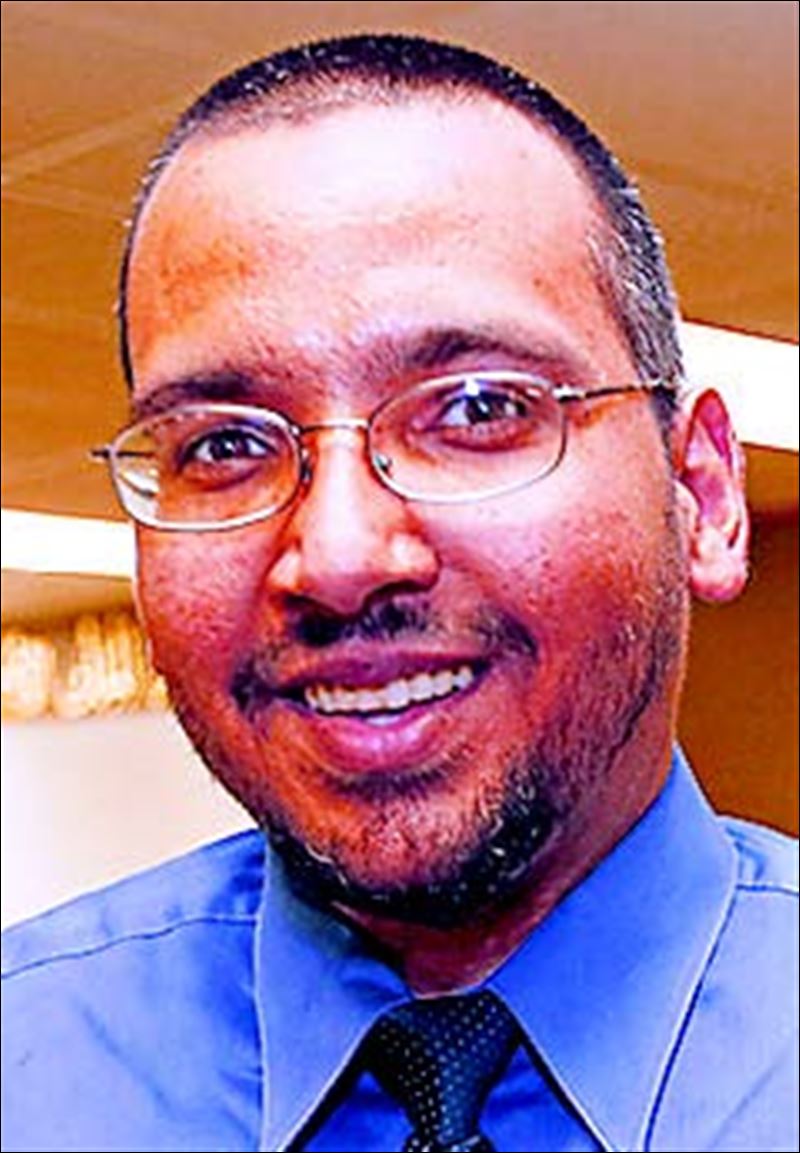
“There were 12 imams after the prophet, and the 12th one died without an heir,” said Ovamir Anjum, who holds the Imam Khattab endowed chair of Islamic Studies at the University of Toledo. The 12th is known as Mohammed al-Mahdi. “He disappeared without an heir, according to the Shiites, and he died according to the Sunni; he couldn’t have died [say the Shia] because he must have produced an heir, because the world could not continue without an infallible imam to guide — that would be unjust on behalf of God to leave the world unguided, so therefore he must have disappeared, and he is called an occultation, and he will come back toward the end of times to set all things that have gone wrong right, and to bring justice to the world, and so on.”
Some add that the Mahdi and Jesus will return. “They’re working together,” said Sheik Al-Saedy.
An early split
Sunni and Shia differences stem from a split early in Islam’s history, over who would succeed Mohammed as leader of the new faith and be caliph or supreme ruler. It started with Ali, Mohammed’s son-in-law and a close cousin. He was the fourth person to be caliph, but Shiites think he should have been the first because he had family lineage.
The determination that blood succession (Shia thought) might be better than following Mohammed’s companions (Sunni thought) came from the religion’s rapid growth, Mr. Anjum said. Security was not unheard of for the early caliphs, and “that cost two of them their lives.”
Islam took over the Persian Empire and the Eastern Roman Empire in 30 to 50 years, Mr. Anjum said, “so all of a sudden these people have to rule over such a large territory, and what is happening as a result is a different kind of government emerges.”
No more equality, consultation, and piety; it became “almost an imperial model that people are used to in the Near East.”
For the Muslims, “what happens is that two responses develop. There is a small radical minority, always, that says all is lost [the Shia in this case], wherein there is a majority that says, ‘‍But still, we have a lot’ [the Sunnis].”
Disagreements
In their religious practices, Sunnis and Shiites “do have disagreements about certain things,” said Imam Shamsuddin Waheed of Toledo Masjid of Al-Islam, a Sunni mosque, “but we have more in common than the Catholics and the Protestants have in common. We have the same book [the Qur’an]. The Protestants and the Catholics, they have different versions of the same book [the Bible]. The Catholic version has a few more books than the Protestant version. We have the same prophet [Mohammed]. We have the same rituals: the same five daily prayers, same Ramadan, same Hajj.”
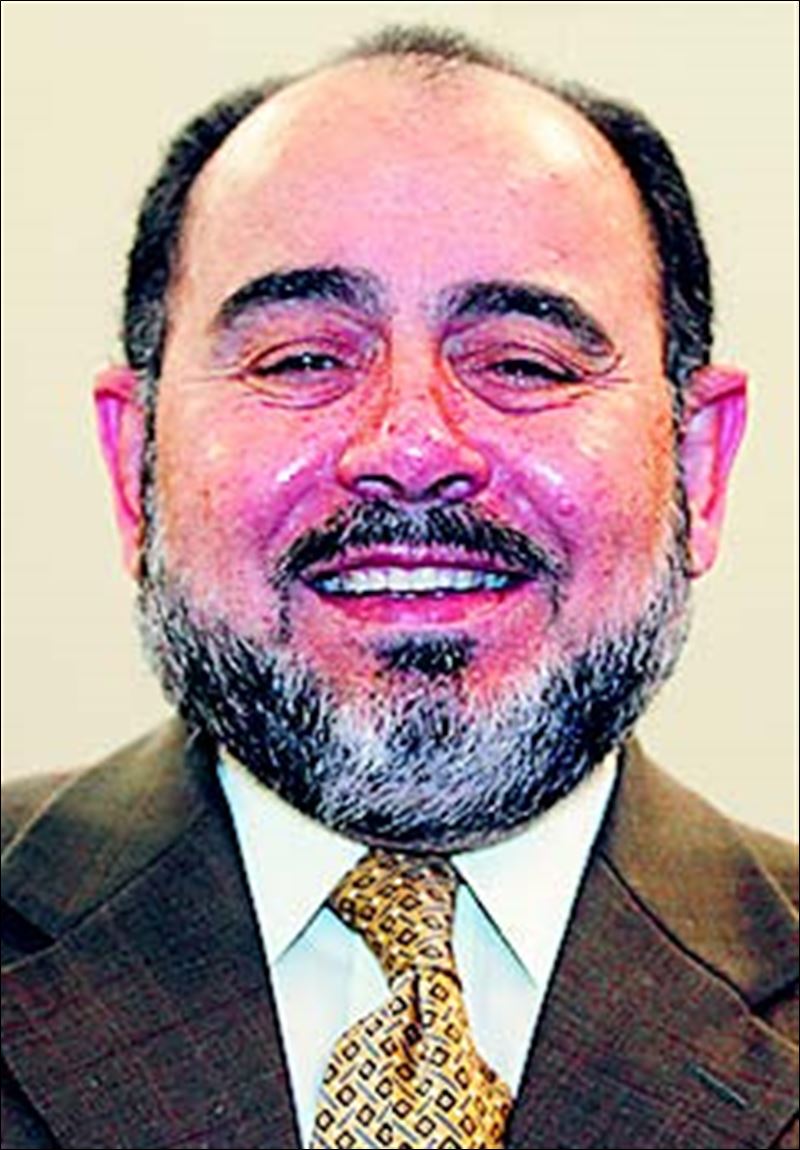
Some Muslims today minimize the differences and prioritize their faith. Imam Farooq Abo Elzahab, whose service as clergy leader of the Islamic Center of Greater Toledo will end June 30, said, “There is nothing even called Sunni in Islam. This word came as the opposite of Shia. … We [all] take religion from the Qur’an and the Sunnah and the Hadith of the lifestyle of the prophet Mohammed.”
Historically and geographically, Sunni and Shia have intermingled. “In America, it’s an interesting example, some of the young people identify themselves as Sushis, not Sunni or Shia,” Mr. Anjum said.
Political issues
But political differences are not like religious ones.
“One thing that has recently unfortunately destroyed lots of these webs of networks and relationships in all of these societies is the Syrian conflict,” Mr. Anjum said, “where again it’s more modern politics than religious conflict. It’s a small minority of a particular type of Shia [the Alawites] ... not considered legitimate even by the Twelver Shias, but for politics it doesn’t matter. ... Some would not even consider them Muslim.”
The Islamic State of Iraq and Syria is “an offshoot of al-Qaeda, and the ‘‍Islamic state’ is obviously a misnomer,” Mr. Anjum said. “They’re not a state. ... They’re a vigilante sort of group, a terrorist group.”
“We don’t know what they have,” said Sheik Al-Saedy. “They don’t like Muslim people. They don’t like Christianity. They don’t like Jewish. Right now in Iraq, they destroyed all the churches for Christianity, they destroyed mosques, and they killed anyone outside. They raped a girl. We don’t know where they come from.”
“We‘‍re reading articles in the media, even the Muslim media, [that say] a lot of the people who are going there are actually from places where there are no Shia,” Imam Waheed said.
Members of ISIS are “drawing themes that a large number of Muslims would identify with,” Mr. Anjum said. “One of them is that Muslims should not have boundaries dividing them. There’s no reason for Muslims in Iraq and Syria to be separate. These modern nation states that were created, actually, by the British and the French map makers after the First World War, they’re unnatural and destructive, and all kinds of conflicts have existed between these states, so this is almost a romantic theme among Muslim intellectuals throughout the 20th century that ‘‍we should all get back together.’ But of course the actual narrow interests of the elite in any of these countries don’t go along with that very well.”
Mr. Anjum said there is a magic solution.
“Study things. ... Knowledge and education are extremely important. One of the things that happens in our contemporary society is people have a very uncomfortable relationship with facts. ... The solution, to me, is education and community. ... Healthy communities where you can have healthy relationships within that are intact, and with other communities in faith. Christian and Muslim communities, and Shia and Sunni communities within Islam.”
Contact TK Barger: tkbarger@theblade.com, 419-724-6278 or on Twitter @TK_Barger.

Read more at http://www.toledoblade.com/Religion/2014/06/22/The-Sunni-Shia-divide-Conflictputs-Islamic-sects-back-in-spotlight.html#LzE1Z48t8APe6dHI.99

Newspaper clipping: Ramadan


Month-long observance of Ramadan starts today

BY TK BARGER
BLADE RELIGION EDITOR
Imam WaheedImam Waheed
Enlarge
Today the month of Ramadan begins for Muslims, the holy month when, through fasting and other actions, religious people live their faith with greater attention.
Imam Abo ElzahabImam Abo Elzahab
Enlarge
Observing Ramadan is one of the five pillars of the Islamic faith. Others are belief in one God, with Muhammad as God’s prophet; being charitable to the poor; and making at least one pilgrimage to Mecca if a person is able. And there is a pillar to pray, and it is customary to pray five times a day.
Sheik Al-SaedySheik Al-Saedy
Enlarge
Muslims who are able to stand, kneel, and bow do those actions in a standard way. It is a ritual, a routine of words, bowing, and kneeling that makes up a unit of prayer. The number of units of the routine varies for the different prayer times in the day. In those units there is also time for personal prayer.
The Masjid Al-Islam, a mosque on Bancroft Street in Toledo, has the Qur’an’s first Surah or chapter in Arabic script on the wall of the mosque’s prayer room. “It’s the main prayer text,” Shamsuddin Waheed said. He translated:
“It says, ‘In the name of God, the beneficent, the merciful. Praise belongs to God, the lord of the universe, the beneficent, the merciful, master of judgment day. It is you we worship, you we seek assistance from. Guide us upon the straight path, the path of those whom you have blessed; not the path of those with whom you are angry nor the path of those who are astray.’”
Imam Farooq Abo Elzahab, who ends 16 years of service this month as religious leader at the Islamic Center of Greater Toledo in Perrysburg, described the manner of prayer. “You read that first chapter in the Qur’an—’The Opening,’ ‘Al-Fatihah’—and a few verses from the Qur’an. If you memorize it or do not memorize it, that’s fine.”
There are different types of bowing, according to ritual. When bowing and kneeling, people praying say, in Arabic, “‘Glory be to God the greatest,’” Abo Elzahab said, “but in prostration it is ‘Glory be to God the highest.’ You are in the lowest position, you remember the most high one, and in this kind of position we are the closest to God. The whole body, soul, from the toes to the head, everything is surrendered to God on the mother earth that we’ve been created from. ... Now you can reveal everything to God, you can ask for anything, you can whisper to God, you can cry to God, you can beg God for forgiveness, for guidance, for health, for a cure, for unity, for love, for this, for anything you’d like to have.”
The five daily prayers are “all of them the same,” said Sheik Rahim Al-Saedy, imam of the Fatemah Islamic Center in Sylvania, “because we worship God. In the morning or afternoon or evening, it’s the same thing.” However, that doesn’t mean some people don’t have favorites.
Imam Waheed likes the dawn. After that prayer, “then the rest of your day pretty much goes smooth,” he said. “But I also find that, say, for example, I oversleep. Now you still pray, but it’s considered late, so I find … the rest of the day doesn’t go that smooth, and a lot of Muslims that I talk to say similar things. I can’t say why that’s the case but that seems to be the case.”
“The prayer described in the Qur’an is a timely obligation,” said Abo Alzahab. “Just to be standing in front of God five times a day, most likely that makes the person behave, or at least have this kind of self-criticism or self-exposure to himself and with God five times a day. So if he did his day good so far till midday or afternoon … then he’s thankful to God. If he did something wrong, then he’ll make an apology to God. So it is really to make up, it is really to correct your record five times a day. … The last one is to thank Allah or God for living my day to the best of my ability, trying to please God, trying to do what is good; so when I sleep, then I am entrusting God with my soul so far. If I have another day to live, that is great. If I do not have, I ended my day praying to God and seeking his forgiveness.”
Contact TK Barger @ tkbarger@theblade.com, 419-724-6278 or on Twitter @TK_Barger.

Read more at http://www.toledoblade.com/Religion/2014/06/28/Month-long-observance-of-Ramadan-starts-today.html#tseTas6W7mzrPf3w.99

Wednesday, February 22, 2012

Qur'an: a Scripture that is to be Examined in aFull Manner


“So [know that] Allah is the exalted, King, the Ultimate reality. And be not in haste with the Qur’an while it is coming to you. And say “O My Lord, increase my knowledge.” [Qur’an 20:114]

The Qur’an [the word itself being a verbal noun, denoting something that is put together piece by piece, and part by part] is a Divine revelation, given to the Prophet Muhammad over a twenty-three year period. It is arguably the most widely read, memorized, and studied religious text in the world. Often, we assert that the Qur’an is ever relevant, examining its contents in light of current realities, one could make a mistake in saying it came in our own period, rather than fourteen centuries ago!

The verse above, which also adorns one of the walls outside at Toledo Masjid Al-Islam, is a striking example of that situation. God is the one who is above and beyond any of our limiting conceptualizations. He is that ‘ultimate reality’ [or Al-Haqq, as the original Arabic wording states] which has ‘always’ existed, that has no beginning nor ending. This Divine source of truth and light sends down to mankind guidance in the form of scripture, prophets and messengers. The verse is telling us, via the lips and mouth of God’s messenger and Last Prophet [Muhammad, peace and blessings be on him] that the process of revelation should not be sought after in a hurried fashion. It is also telling us that random quotes and sentences, citing them in order to win arguments or to make points, is inappropriate when dealing with most things, but especially so with the words of God! Thus, we read “And be not in haste…and say: “O My Lord, increase my knowledge.”

The latter supplication is a prayer that has become a part of the Muslim liturgy and tradition. It decorates the entrances to universities, classrooms and even Mosques. Surely, it is understandable that this has occurred. Yet, as we can see, its focus is not limited to secular knowledge. Indeed, we could easily apply the message of the entire verse to our interactions with others, other religions, politicians and their statements, our friends and foes alike. Anyone can take a random quote or statement and apply some meaning not intended by the speaker, and this has happened in many quarters with the Qur’an itself! Yet, God wants us to see the entire picture, to make decisions and judgments based on complete information, rather than one piece of something. This style of presentation is found throughout the Qur’an. Another verse that is relevant is “O believers! When a ‘Faasiq’ {an immoral person who breaks the rules of normal behavior] comes to you with information, investigate it before acting upon it, lest you harm a people unknowingly and afterwards have regrets. [Q 49:6]

Let us take this Qur’an in a full way, even for those not believing in it. At least know the whole story.

[ Shamsuddin Waheed is Imam at Toledo Masjid Al-Islam, 722 East Bancroft street, Toledo Ohio 43604.]