Showing posts with label shia. Show all posts

Monday, April 4, 2016

Is there such a thing as Islamic deception: a brief examination of the idea and practice of Taqiyyah

Introduction


A number of organizations and personalities have emerged in the last two decades or so in North America, seeking to safeguard Muslim rights and to portray in the media and wider public a positive image of Islam.These figures and organizations, admittedly self-appointed in some cases, have a variety of interests, contrasting visions and ideologies, but what they all have in common is that they receive a push-back, a response or a series of responses, and among those are that these [Muslims] are simply lying![Ft.1]

Knowing that Islam [as does all religions] look down upon lying, these foes will assert that the Muslim organizations/personalities are engaging in a sort of "Holy Hypocrisy", deceiving their audiences into thinking Islam/Muslims are not a threat, and it is they who assert that Muslims are doing Taqiyyah.

Thus, one finds on the Internet statements such as this .


What is Taqiyyah

Taqiyyah  [ تقیة] comes from the root Waqaya, to save, guard or protect. Muslims will recognize that from this root we get the word Taqwaaa, which refers to one's awareness and regards to God and Godly matters.

The phrase Taqiyyah is not present in the Qur'an, and the term itself is largely unknown to the average Muslim anywhere in the world.

The concept is associated with only four verses in the entire Qur'an [Q 40:28, 28:40, 3:28 and 16:106]. A cursory look at these texts is sufficient to show that a logical response is given to a rather deadly situation. A person can-if he or she is in fear of death at the hands of belligerent foes, verbally recant the religion.


"Those who reject God [verbally] after having [accepted ] his faith, except those who are compelled {Ft.#2}[against their will], while his heart is [truly] contented with faith..." [Q 16:106] 


The Deen is not a toy, it is not to be treated flippantly. Those who treat God's guidance in such a manner open themselves up to a Divine response. This, the verse ends:


"....However, whosoever opens their chest to rejection [BilKufri], on them is anger from God, for them is a great penalty." [Q 16:106]


The Commentators are in general agreement that this verse's immediate reference is to 'Ammar ibn Yaasir, an early convert to Islam. He and his parents were captured and tortured, asked repeatedly to renounce Islam and it's Prophet. They refused, and they were murdered, in front of the eyes of 'Ammar. In order to save his life, he did verbally renounce Islam{Ft.#3}. He was freed, and afterwards came to the Prophet Muhammad himself [upon whom be peace and blessings]. 'Ammar was obviously disturbed by all this, and the Prophet reassured him, as does the revelation of this Quranic text!

This should be sufficient to show that Taqiyyah has no relation to lying for political gain in any way, shape, fashion or form. 

Has Taqiyyah been practiced by Muslims after the Prophet's time?


The Muslim civilization, like any other, has had its periods of upheavals and  strife, competing interests and internal struggles. This writer has no doubt that these things happened with both average people and elites alike. It can easily be argued that regardless of religion, peoples in the middle ages would have to- in order to save their lives- do things like that. 

In terms of something religiously mandated, it is said that Ja'far As Saadiq,[702-765]  the sixth Shi'ah Imam, after whom the Twelver sect is officially named  [Ja'fariyyah], made it an important aspect of religious practice. He was a threat to the Abbasid monopoly on power, they were persecuting him and his followers. In order to safeguard themselves, they would have to conceal their faith. Practically, this meant, for example,  praying as Sunnis in Sunni fashion [as opposed to the distinctive Shi'ah format]. This practice of resorting to Taqiyyah is found in all the Shiite sects. 

Due to its acceptance in the Shi'ah world, an unfortunate side affect has been that they have given Sunni polemicists a stick to beat them with. Thus, Shiites' insistence that they believe in the same Qur'an as Sunnis do, and that they don't attribute divinity to 'Ali is simply dismissed as Taqiyyah. Indeed, in the political realm the Iranians are thought  of as  engaging in Taqiyyah when they say that they are not after nuclear weapons and that they don't desire to capture Makkah and Madinah from the control of Saudi Arabian authorities. 


Taqiyyah today

The U.S. invasion of Iraq in 2003  led to civil war between the Sunnis and Shiites. Both formed what would be termed "death squads", searching out members of the opposite sect. Consequently, Sunnis in Shiah areas, often victims of executions and kidnap for ransom schemes, would change their names when they had an obvious Sunni name ['Umar or Abu Bakr, for example] and try to learn all the names of the Shiah Imams and the Shi'ah prayer format in case of capture. Shiites did the same thing, and undoubtedly do the same today in areas under ISIS control in both Iraq and Syria. 

In Pakistan yearly sectarian-inspired killing sprees have led both Ja'fari and Isma'ili Shiites to occasionally resort to Taqiyyah. 

Do Muslims deceive people about their religious teachings?

The idea that Muslim activists hide the truth about their religion [and, implicitly, their own intentions] is laughable when we consider that we live in an age of information and technology, where information on Islam [or any religion for that matter] is readily available at our fingertips.

Moreover, Taqiyyah is,  as we have seen, largely a Shiite practice done in order to avoid persecution at the hands of Sunni Muslims. North American Muslim activists are mostly Sunni, many of whom have no formal religious training or backround, and have themselves never even heard of Taqiyyah. How can they be engaging in something they have never heard of?


The charge of Taqiyyah, leveled by politicians and media pundits alike, is simply a pathetic response to a Muslim or Islamic organization doing their jobs well. It is also a dangerous call, designed to generate mistrust, xenophobia and political violence. 


Quranic teachings regarding lying and cheating


"Condemned are those who engage in fraud, those who, when they receive full measure, expect to get it, yet when they have to give [correct] measure, give less [i.e. cheating their customers].." { Q 83:1-3]


"O believers, be those standing, consistently, for God as witnesses for what is right. Do not allow the hatred of others make you act in a criminal fashion. BE JUST, as that is the closest to [expressing] Taqwaaa. Have Taqwaaa of Allah, indeed, Allah is aware of your actions." { Q 5:8}


"O believers, be those standing, consistently for justice, as witnesses for God, even if against your own selves, parents or close family. If they are wealthy or poor, God is nearest to them both. So do not follow inclinations, lest you deviate. If you do distort or turn away [from what is right], then [know that] Indeed, God is aware of your actions." [Q 4:135]


Footnotes

[1] One example is in Dr Zuhdi Jasser, a self described secular Muslim. He heads the American Islamic Forum for Democracy [AIFD]. Despite his right-wing political leanings and odd religious views and the fact that he is widely dismissed by the North American Muslim community as an opportunist looking for fame and fortune, he too, because of his Muslim backround [a Syrian American] is attacked as a sort of Trojan Horse soldier, engaging in Taqiyyah, by his detractors. 


[2] Ukriha is a passive verb. The structure clearly indicates that a person compelled, for fear of losing life, is allowed to verbally renounce Islam or proclaim words of Kufr. We have translated Ukriha here as "compelled".

[3] Imam Muhammad Ash-Shawkanee [ 1759-1839], author of the famous Quranic exegesis Fath ul Qadeer, explains this as "renouncing both in speech and action...such as prostrating to other than God." [ Shawkanee, Imam. Fat-h Al Qadeer, Kuwait, wazarat al awqaaf, Kuwait, 1988 edition, page 370]

Monday, June 30, 2014

Newspaper clipping: Sunni-Shiah divide, Iraq, ISIS

Sunni-Shia divide, conflict puts Islamic sects back in spotlight

Toledo-area Muslim figures downplay differences

BY TK BARGER
BLADE RELIGION EDITOR
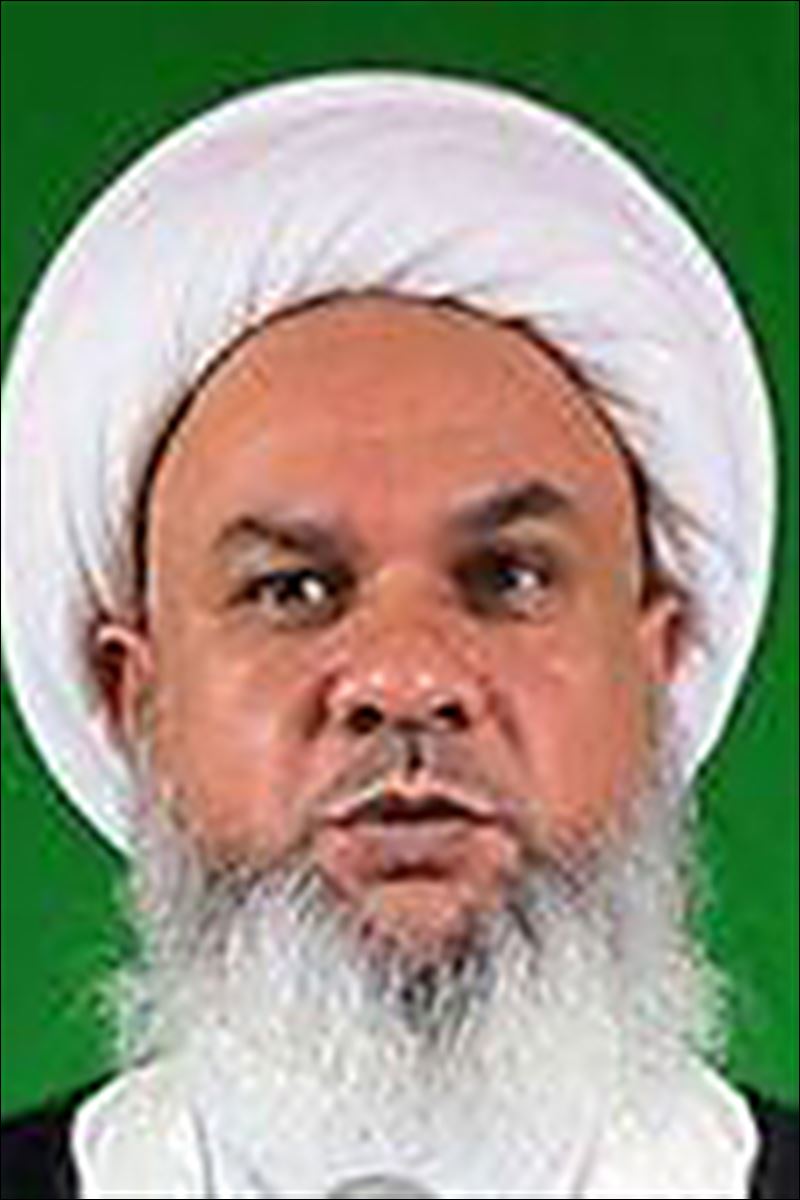
Al-SaedyAl-Saedy
Enlarge
Sunni and Shia are back in the news because of the latest developments in Iraq. “Why don’t they get along today” is again the question. For the most part, they do — and Muslims in Toledo are together in denouncing the groups engaged in conflict in Iraq and Syria today.
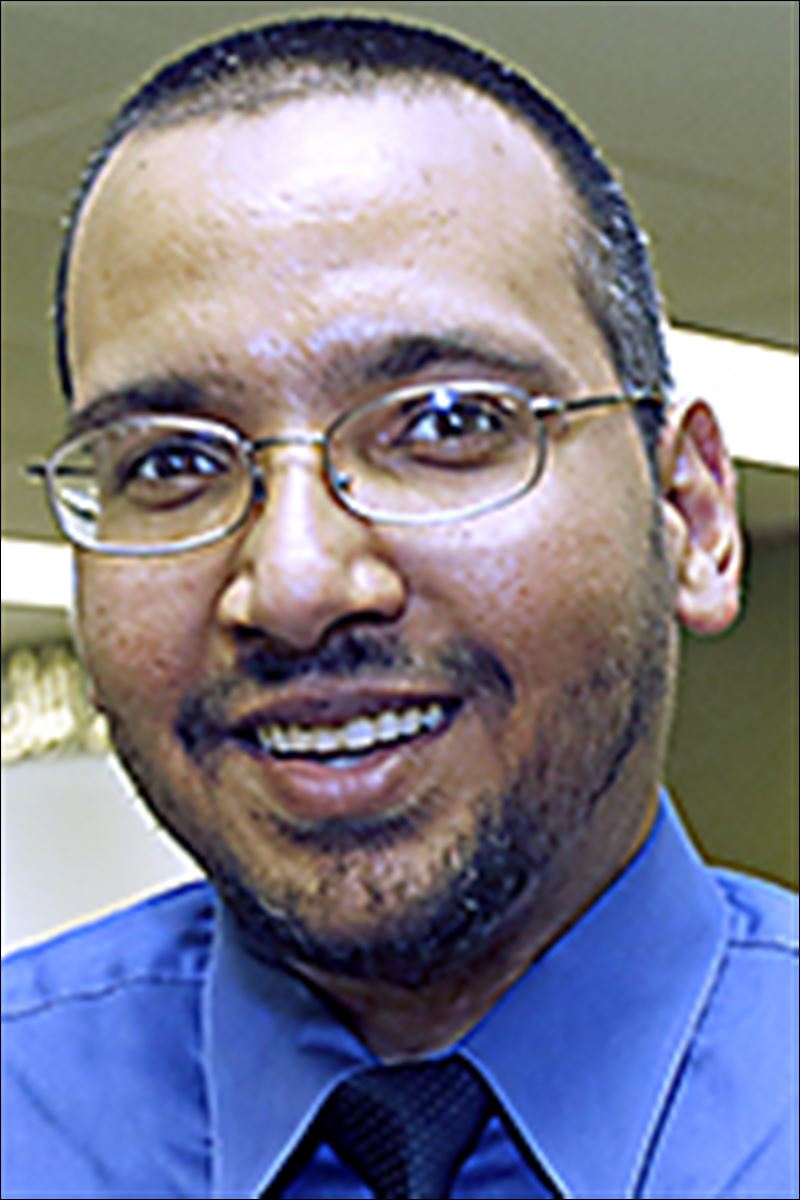
WaheedWaheed
THE BLADEEnlarge | Buy This Photo
“I worry for all in the war, not just my country,” said Sheik Rahim Al-Saedy, who immigrated to the United States from Iraq and leads the Fatemah Islamic Center in Sylvania, a Shia mosque.
Abo-ElzahabAbo-Elzahab
THE BLADEEnlarge | Buy This Photo
“It’s my job,” Sheik Al-Saedy said. “I have to worry for all the people, not just Muslims. ... If they get hurt or have a problem, we pray for them and we’re upset, because we are human beings.”
AnjumAnjum
THE BLADEEnlarge | Buy This Photo
Iraqi Prime Minister Nouri al-Maliki’s efforts last year to crush protests by Sunnis complaining of discrimination under his Shiite-led government sparked a wave of violence by militants, who took over the city of Fallujah in the western, Sunni-dominated province of Anbar, and parts of the provincial capital, Ramadi.
During the last two weeks, militants have taken over the cities of Mosul and Tikrit as well as checkpoints on the Iraq-Syria border. The Islamic State of Iraq and Syria militant group is trying to create an Islamic caliphate in a vast area of both countries.
The religious ways of Sunni and Shia are different in some practices, but most are not major; one difference, however, is that many Shia are called “Twelvers,” the largest Shia group, including members of Fatemah.
“There were 12 imams after the prophet, and the 12th one died without an heir,” said Ovamir Anjum, who holds the Imam Khattab endowed chair of Islamic Studies at the University of Toledo. The 12th is known as Mohammed al-Mahdi. “He disappeared without an heir, according to the Shiites, and he died according to the Sunni; he couldn’t have died [say the Shia] because he must have produced an heir, because the world could not continue without an infallible imam to guide — that would be unjust on behalf of God to leave the world unguided, so therefore he must have disappeared, and he is called an occultation, and he will come back toward the end of times to set all things that have gone wrong right, and to bring justice to the world, and so on.”
Some add that the Mahdi and Jesus will return. “They’re working together,” said Sheik Al-Saedy.
An early split
Sunni and Shia differences stem from a split early in Islam’s history, over who would succeed Mohammed as leader of the new faith and be caliph or supreme ruler. It started with Ali, Mohammed’s son-in-law and a close cousin. He was the fourth person to be caliph, but Shiites think he should have been the first because he had family lineage.
The determination that blood succession (Shia thought) might be better than following Mohammed’s companions (Sunni thought) came from the religion’s rapid growth, Mr. Anjum said. Security was not unheard of for the early caliphs, and “that cost two of them their lives.”
Islam took over the Persian Empire and the Eastern Roman Empire in 30 to 50 years, Mr. Anjum said, “so all of a sudden these people have to rule over such a large territory, and what is happening as a result is a different kind of government emerges.”
No more equality, consultation, and piety; it became “almost an imperial model that people are used to in the Near East.”
For the Muslims, “what happens is that two responses develop. There is a small radical minority, always, that says all is lost [the Shia in this case], wherein there is a majority that says, ‘‍But still, we have a lot’ [the Sunnis].”
Disagreements
In their religious practices, Sunnis and Shiites “do have disagreements about certain things,” said Imam Shamsuddin Waheed of Toledo Masjid of Al-Islam, a Sunni mosque, “but we have more in common than the Catholics and the Protestants have in common. We have the same book [the Qur’an]. The Protestants and the Catholics, they have different versions of the same book [the Bible]. The Catholic version has a few more books than the Protestant version. We have the same prophet [Mohammed]. We have the same rituals: the same five daily prayers, same Ramadan, same Hajj.”
Some Muslims today minimize the differences and prioritize their faith. Imam Farooq Abo Elzahab, whose service as clergy leader of the Islamic Center of Greater Toledo will end June 30, said, “There is nothing even called Sunni in Islam. This word came as the opposite of Shia. … We [all] take religion from the Qur’an and the Sunnah and the Hadith of the lifestyle of the prophet Mohammed.”
Historically and geographically, Sunni and Shia have intermingled. “In America, it’s an interesting example, some of the young people identify themselves as Sushis, not Sunni or Shia,” Mr. Anjum said.
Political issues
But political differences are not like religious ones.
“One thing that has recently unfortunately destroyed lots of these webs of networks and relationships in all of these societies is the Syrian conflict,” Mr. Anjum said, “where again it’s more modern politics than religious conflict. It’s a small minority of a particular type of Shia [the Alawites] ... not considered legitimate even by the Twelver Shias, but for politics it doesn’t matter. ... Some would not even consider them Muslim.”
The Islamic State of Iraq and Syria is “an offshoot of al-Qaeda, and the ‘‍Islamic state’ is obviously a misnomer,” Mr. Anjum said. “They’re not a state. ... They’re a vigilante sort of group, a terrorist group.”
“We don’t know what they have,” said Sheik Al-Saedy. “They don’t like Muslim people. They don’t like Christianity. They don’t like Jewish. Right now in Iraq, they destroyed all the churches for Christianity, they destroyed mosques, and they killed anyone outside. They raped a girl. We don’t know where they come from.”
“We‘‍re reading articles in the media, even the Muslim media, [that say] a lot of the people who are going there are actually from places where there are no Shia,” Imam Waheed said.
Members of ISIS are “drawing themes that a large number of Muslims would identify with,” Mr. Anjum said. “One of them is that Muslims should not have boundaries dividing them. There’s no reason for Muslims in Iraq and Syria to be separate. These modern nation states that were created, actually, by the British and the French map makers after the First World War, they’re unnatural and destructive, and all kinds of conflicts have existed between these states, so this is almost a romantic theme among Muslim intellectuals throughout the 20th century that ‘‍we should all get back together.’ But of course the actual narrow interests of the elite in any of these countries don’t go along with that very well.”
Mr. Anjum said there is a magic solution.
“Study things. ... Knowledge and education are extremely important. One of the things that happens in our contemporary society is people have a very uncomfortable relationship with facts. ... The solution, to me, is education and community. ... Healthy communities where you can have healthy relationships within that are intact, and with other communities in faith. Christian and Muslim communities, and Shia and Sunni communities within Islam.”
Contact TK Barger: tkbarger@theblade.com, 419-724-6278 or on Twitter @TK_Barger.

Read more at http://www.toledoblade.com/Religion/2014/06/22/The-Sunni-Shia-divide-Conflictputs-Islamic-sects-back-in-spotlight.html#LzE1Z48t8APe6dHI.99