Introduction
Among the struggles faced by many modern Muslims is keeping up with the rituals of Islam. This is a particularly important issue to discuss for Muslims in the Western Hemisphere and for those who have converted from a Protestant Christian background, a religious tradition that actually places a limited value to ritual.
It is our contention that the authentic Islamic activities are quite meaningful, and once understood, will serve as a balancing force for one's life and spiritual fulfillment. It is also our contention that part of the reasons behind the difficulties of the rites is that we end up focusing upon that which is, at best, traditional and optional (i/e. Sunnah/Nafl), to the point where the acts deemed obligatory get drowned out, the person becomes overwhelmed and either experiences a spiritual burnout or gives up totally.
Thus, the purpose of this article is to bring our vision to a focus, centering upon key points, and making our rituals sources of peace and contentment.
Aspects of Salaah
Qiyaam (standing position)

The daily prayers are initiated with intention (Niyyah), facing the Qiblah (the prayer direction, being the Ka'bah in Makkah), saying "Allahu Akbar" (God is the greatest) and the recitation which follows.
The obligatory text to recite is of course Soorah Al-Faatihah, the opening Quranic chapter. It is an appropriate text to invoke Allah subhaanahu wa ta'alaa on a regular basis. In it, we acknowledge God as being the Most Merciful, seeking Divine guidance and blessings on whatever state of affairs we are experiencing. (#1)
The first two rak'ahs (units) of any salaah have not only Soorah Al-Faatihah, but, in accordance with Prophetic tradition, some other Quranic passage as well. For beginners, we recommend any of the short texts, such as among the last three chapters of the Qur'an (Al-Ikhlaas, Al Falaq and An-Naas). For all, regardless of where we have started our Islamic journey, I highly recommend using Quranic texts that are meaningful and impactful to you. To accomplish that, one must have a deep connection to the Qur'an, read it often and memorize passages of particular import to you. That process of memorization can then be used inside of the salaah itself. We are also advocating that the meaning of the passages in question be understood by the person.(2)
Rukoo' and Sajdah (bowing and prostration)

The bowing and prostration are not only times when the expressions Subhaana Rab-be al 'Adheem and Subhaana Rab-be al A'laa (Glorified is my Lord the magnificent, Glorified is My Lord the Highest) respectively are recited, but these are also good times when one can invoke God for one's needs. That particular request need not be done in Arabic, and when praying alone, a person can spend as much time in those postures as desired. In particular, the sajdah (prostration) is a place where we are closest to God, at least according to the teachings of the Prophet Muhammad, upon whom be peace and blessings.

Extended sitting posture (Jalsah)
The normative practice is that a 4–5-line text is recited in the first extended sitting position, a text known as the tashahhud, and that the final sitting posture has both tashahhud and a text invoking Allah to bestow support and blessings to the cause of the Prophet and the entire Muslim community, this text is known as the durood sharif.

In particular, we have noticed that this text is difficult for many to learn in a timely manner, especially the durood sharif (which has repeating lines in Arabic). In light of this, and other factors given below, it is our recommendation that in these postures, that the core, central and obligatory factors be zoomed in upon, immediately learned and easily applied.
The Muwatta of Imam Malik has at least five different versions of the tashahhud recorded, with minor and major wording variations. All of them as well as other versions, have therein the statement of faith acknowledging Allah alone deserves worship, and that Muhammad was the messenger of God. This is what should be zoomed in upon. (3)
Similarly, if we were to zoom in on the core meaning of the durood, captured in the Arabic words Allahumma sawlee 'ala Muhammadin wa 'aala aali Muhammad, asking God to bestow support on the Prophet (as a person and as a cause) and upon his followers (the entire Muslim community), it should make things easier. (4)
Dhikr

In a ritualistic sense, dhikr- remembrance of Allah- is conducted using one's finger joints or by use of beads (known as tasbih or misbahah), reciting (either in a low or loud voice) expressions of praise for God (such as Subhaan-Allah, Alhamdulillaah, Allahu Akbar), selections from the other titles of Allah given in the Qur'an (such as Ar-Rahman, Al-Malik, etc). This is often done after salaah, and it is recognized that it can be done at any time and place.
However, it is also true that the Qur'an uses the term in a much more profound sense.
اِنَّ فِیۡ خَلۡقِ السَّمٰوٰتِ وَالۡاَرۡضِ وَاخۡتِلَافِ الَّیۡلِ وَالنَّہَارِ لَاٰیٰتٍ لِّاُولِی الۡاَلۡبَابِ
الَّذِیۡنَ یَذۡکُرُوۡنَ اللّٰہَ قِیٰمًا وَّقُعُوۡدًا وَّعَلٰی جُنُوۡبِہِمۡ وَیَتَفَکَّرُوۡنَ فِیۡ خَلۡقِ السَّمٰوٰتِ وَالۡاَرۡضِ ۚ رَبَّنَا مَا خَلَقۡتَ ہٰذَا بَاطِلًا ۚ سُبۡحٰنَکَ فَقِنَا عَذَابَ النَّارِ
"Indeed, in the creation of the heavens and the earth and the alternation of night and day are signs for people of discernment, those who remember Allah (yadhkoroona Allah) while standing, sitting, relaxing on their sides, in a state of contemplation regarding the heavens and earth (such people assert) "Our Lord, you have not created (all of) this in vain (baatilan), glorified is you, protect us from the penalty of the fire." ( Q 3:190-191)
Another text famously says, "and the remembrance of Allah (wa ladhikrullaah) is the greatest source (of inspiration and power)." ( Q 29:45). The context of this verse clearly puts dhikr as the salaah itself.
These verses should be sufficient to demonstrate that dhikr is much bigger than a ritual, be it in a solitary or communal fashion. It can happen internally, without any rites per se, yet we freely admit that the rite of salaah as well as traditional dhikr can serve the function of generating awareness of God.
Du'aa

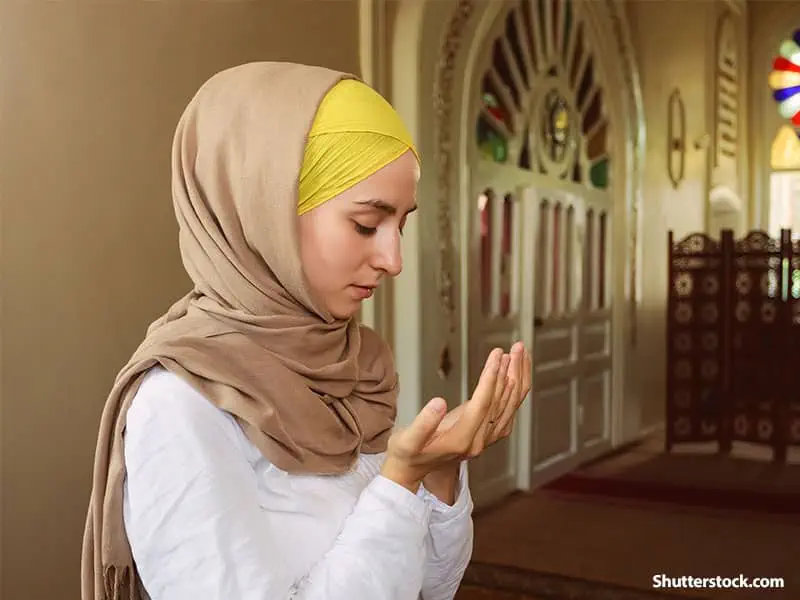
The term du'aa has the meaning of calling and is used in the sense of "prayer" that most westerners would be familiar with. Indeed, du'aa is sometimes translated as "prayer". In a ritualistic sense, we often do du'aa immediately after the conclusion of the salaah. The Qur'an and hadeeth literature both contain du'aa texts, beautiful and profound content. While we do encourage using these texts in one's calling upon God, we also acknowledge that one can (and should) invoke God with one's own heart, in one's own words, with sincerity, and that such action is beyond legislation. In other words, there are no rules for making du'aa. Traditionally it is done with open hands, with the face being wiped, ending with "ameen", however du'aa, like dhikr, need not be a ritual either. Yet, we do not see any difficulty in maintaining this action in the normative rite.
The du'aa texts of the Qur'an and hadeeth also have a benefit of teaching us what to pray for, of helping us to zoom in on the priorities. Let us take into consideration some of these texts.
" Our Lord, bestow on us that which is pleasant in this world, and that which is pleasant in the hereafter, and protect us from the penalty of the fire." (Q 2:201).
رَبَّنَاۤ اٰتِنَا فِی الدُّنۡیَا حَسَنَۃً وَّفِی الۡاٰخِرَۃِ حَسَنَۃً وَّقِنَا عَذَابَ النَّارِ
This text clearly teaches people of faith to have balance, to seek comfort in this life, while not neglecting the life to come, an existence which is cultivated by virtues such as truth, patience, faith and acting on that faith (Q 103:1-3).
"Our Lord, bestow on us mates and offspring who will be a comfort to our eyes, and make us a leader for those with reverence." (Q 25:74)
رَبَّنَا ہَبۡ لَنَا مِنۡ اَزۡوَاجِنَا وَذُرِّیّٰتِنَا قُرَّۃَ اَعۡیُنٍ وَّاجۡعَلۡنَا لِلۡمُتَّقِیۡنَ اِمَامًا
This du'aa teaches us the type of families we should seek, that we should cultivate, long term, our taqwaa. This is also indicated in the normative tashahhud text, which reads, in part "Peace be upon us, and on the righteous servants of God." (As salaamu 'alaynaa wa 'alaa 'Ibaadelaahis saaleheen).
The scholars have posited a number of recommendations when it comes to du'aa, among them is that some expression of praise for God should be made, there be an expression of seeking peace for the Prophet Muhammad, that seeking things which God has forbidden in the Islamic texts is not proper, and that one should pray for others. In other words, we should not be selfish in our du'aa. A beautiful report asserts that the Prophet himself (sall Allahu 'alayhi wa sallam) asserted that du'aa is the core of worship (Mukhkhul 'ibaadah), while another says it is-in fact- worship itself. (Ad-du'aa, huwal 'Ibaadah).(5)
Endnotes
(1) For more on Al-Faatihah, see Shamsuddin Waheed: Al-Faatihah: a re-examination (Halaqah notes)
(2) Regular reading of the Qur'an, even in translation, is very beneficial. While I have much of the text committed to memory (for which I am grateful), I only use specific Quranic content in prayers, texts on Divine mercy and the like. I suggest the same approach, use Quranic verses or chapters whose meanings are touching to your own heart.
(3) Some of the interesting variants include the expression "Peace be on the Prophet" (As salaamu 'alan nabiyy") rather than the usual "Peace be on you, Oh Prophet!" (As salaamu 'alayka ayyuhan nabiyyu..). I prefer the former, which is given in three of the reports contained in Imam Malik's Muwatta (hadeeth collection). The Shiites recite a similar tashahhud and durood, but in sequences largely unfamiliar to Sunnis, yet, in all of the variants we find the presence of the necessary elements, acknowledging God and His Messenger, praying for him and his followers.
(4) Other titles for the prayer for the Prophet and his followers include Salaat Ibrahimiyya, Salaat 'alan Nabi, and salaatwas-salaam, or simply "salawaat". I have not used those titles so as not to confuse the readers, as "salaah" is the term used for our daily worship. Durood Sharif is the title of the prayer for the Prophet in Urdu/ Farsi languages. For more on the origin and concept of invoking God for the messenger and his followers, see Shamsuddin Waheed: Conception of Salaat 'alan Nabi in light of the Qur'an and Sunnah.
(5) Both of these reports can be found in Bulugh Ul Maram, a hadeeth collection by the 14th century scholar Ibn Hajr Al-'Asqalanee. The above mentioned Muwatta of Imam Malik is considered by many scholars, including Shaikh Akram Nadwi, as having a more authoritative status than even the saheehayn, being as it is essentially the first hadeeth compilation. Imam Malik Ibn Anas was born in 711CE and it is largely upon his ideas that the Maliki school of jurisprudence is based. Born in the Prophet's city, Madinah, today his school dominates as the legal authority in much of North and West Africa.