Showing posts with label narcissism. Show all posts

Friday, September 22, 2023

The phenomenon of religious manipulation

 Emotional manipulation has been a reality universally recognized. It occurs in business, politics, and a host of other arenas. It can be found even in family dynamics. Indeed, we can even see it, to a certain extent, within business theory. Products (and ideas) are marketed in a way as to inspire maximum profit even if it is based on a lie.


Our focus is on manipulation and moral blackmail by means of religious sentiment. While it does happen among every religious community, the following examples are trends which we find common in Muslim circles. It should be noted that the list below is by no means exhaustive, and it does not even begin to touch the manipulation of religious language and imagery as done by political figures throughout the Muslim world captured in media on a daily basis. Indeed, contemporary history shows us leaders who are known to not have strong personal belief or to be impious, making sure cameras capture their occasional visit to the mosques, pilgrimage to Makkah, or sitting with religious scholars. 


(1) In the cause of Allah


The expression Fee Sabeelillaah is often used to generate a sense of duty, an obligation to be felt by the listener (often at the expense of the listener) to the benefit of the speaker. The term is used in the Qur'an to refer to the process of war, as well as for causes endorsed by the religion in a general sense. 


This term has been hijacked by those seeking funds unjustly, a tool to make someone feel guilty enough to do something that they are reluctant to do.


If this term is hurled at a weapon against you, when it involves something, you are reluctant to undertake, simply say that your entire existence operates by the will of Allah, that you already take actions that are fee sabeelillaah, and that you can't agree to whatever is being forced upon you.


In Islam it is considered much better to do a consistent action, even if it is little (such as charity), rather than a big action in one sitting. This is why in the capacity of my role as an Imam, I advocate consistent yet manageable amounts of money to be given fee sabeelillaah.


(2) Inshaa-Allah ("God-willing") actually means "NO"!


The Qur'an tells us never to assert for sure that we will do something unless we add the term "God-willing" (Q 18:23). Unfortunately, it is increasingly common to employ the term, when asked for some small sacrifice, to denote lack of interest and effort in the issue under discussion.  It has become the way to cover up that lack of interest. "Will you come here tomorrow?" "Can you call?" The "Inshaa -Allah" answer is utilized, rather than simply declining the request.


It is certainly true that the "will" of Allah prevails over our intentions, yet using the term in this format seems to be unwarranted and outright deceptive. The Qur'an has a rather simple solution to such situations.

" O you who have faith! Have taqwaa of Allah and communicate clearly." (Q 33:70).  All of us have been in awkward situations and can feel uncomfortable in certain settings. Yet, it is nonetheless important to be straightforward in expressing comfort and lack of comfort.


This is particularly true in interpersonal relationships. Ambiguity in communication can generate misunderstandings that are terminal in such settings. 


(3) Using religious rhetoric to conceal untoward activities (past and present)


This happens in particular with cults, small groups in which it is easier to get away with serious acts of abuse, corruption and the like. Reporting to the relevant authorities is frowned upon as "siding with the disbelievers" "betrayal of the Ummah" and even abandoning Islam as a faith in its entirety. 

Cult figures rely on that type of thinking to continue their activities without any fear of scrutiny. 


The Qur'an says " O you who have faith. Be consistent upholders of justice, witnesses to Allah, even if against your own selves, your parents or close relatives. If they are rich or poor, Allah has more right over them both. Thus, do not follow inclinations towards injustice..." (Q 4:135)


In the same chapter, we read the following words: "Allah does not love evil to be broadcast publicly, except when wronged ( illa man dhulima). And Allah is the ever-hearing, Knowing." (Q 4:148)


These verses show us that it is a duty to seek forth justice, particularly when victimized on a personal level.


(4) People of Taqwaa have no worldly concerns


The idea that those with some senses of piety are without worldly concerns serves as a convenient excuse to take advantage of their good nature. This point is driven home in a recent article I read on a rash of break-ins at Buddhist temples throughout the USA. One interview I saw asserted that a group was able to rob a temple of $40,000 by simply interacting (and therefore distracting) with a Buddhist priest onsite, while their cohorts stole from elsewhere on temple grounds. Apparently, the religious vows prevented the priest from taking any action.


In a Muslim context, similar things take places by things such as borrowing (with no intentions of returning) money from the pious, monopolizing their time and presence in order to either distract them or to fulfill some hidden agenda, seeking to take advantage of their wealth by using items 1 and 3 listed above, or making false promises in the name of God.


It is imperative that the person of taqwaa also acts as a person who possesses 'aaql (intelligence). The Qur'an tells us to put business agreements and loans to writing (Q 2:282). It tells us to exercise caution around those who have a bad track record ( Q  64:14). 


The people of taqwaa have bills, families, and worldly concerns just as anyone else. The trend to take advantage or even victimize them, assuming that it is acceptable, is simply ridiculous and unjust.


Sunday, September 26, 2021

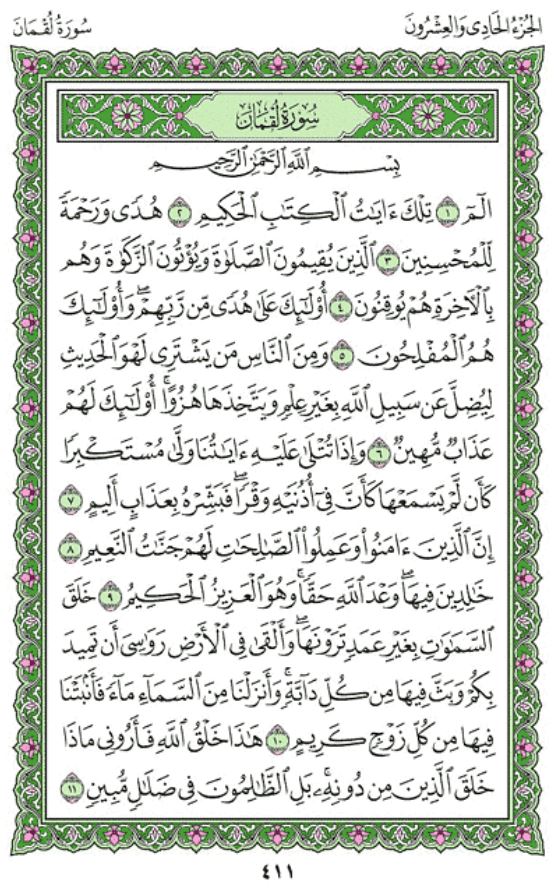
An analysis of Soorah Luqman


(Note: The following are class videos, an analysis of one of the most profound Quranic Chapters, entitled simply "Luqman". Human behavioral ethics, laws, philosophy, science and much more are present in this Soorah. )


Saturday, June 5, 2021

An analysis of Kufr

 Note: The following videos are a recent recording of a discussion as to the identity and characteristics of the Kaafir as found in the Qur'an. In summary, it is our argument that the Qur'an, when critical of the Kuffar, is expressing criticism of the "Leaders of Kufr" (a-immat al kufr, Q 9:12). Folks who embody characteristics of ungratefulness, arrogance, and destruction. It is our contention further that the average Non Muslim is not referenced by that language.


 part one


Part one has the presentation, as well as some questions.


Part two  


Q and A session. 


Part three

Q and A session conclusion.

Saturday, March 6, 2021

Relationships from an Islamic perspective

 This very important topic is smothered in cultural and personal assumptions, thus, below, you will find two recent lectures on this issue. For full context, they should be watched in order.


Taqwaa and Relationships: Salaat Al Jumu'ah Khutbah.

Note: Khutbah (sermon) begins at 2:50.

Click here


Healthy Relationships in light of the Qur'an and Sunnah

 Click here

Note: presentation begins at 2:53


Monday, May 25, 2020

Selections from Ramadan Reflections 2020

Note: During Ramadan, I shared thoughts on various topics, as well as answering various questions, on a daily basis via our YOUTUBE channel.  Below you will find selections from those videos. For the entire reflection series, go to Arifin Library . Also below you will find our 'Eid ul Fitr Khutbah, which occurs after Ramadan has concluded.


Day 1- Appearance of Guidance https://www.youtube.com/watch?v=bPY2tWO4w5o


Day 4-Taqwaa manifestations click here


Day 6- Justice and Taqwaa click here


Day 7- Self Care Click here

Day 10- Types of Speech Click here

Day 13 Toxic Friends and Family click here

Day 25 Understanding 'destiny' and Allama Iqbal click here

Day 30- Religious practices in the age of Coronavirus click here

Eid ul Fitr Khutbah - click here

(Note: For Eid service, the summary is as follows 0:30 Takbeerah chant . 27:02, Br Brent accepts Islam, shares his story. 29:25- Salaat ul 'Eid (Eid prayer). 37:34, Khutbat ul 'Eid (sermon). All of our Friday services since the emergence of the coronavirus are archived, available for viewing, at our mosque Facebook page Click here . Your support is greatly needed and appreciated, and is best achieved by donating at our secure website The Masjid Ibrahim donation page . All donations are tax deductible. )

Sunday, January 3, 2016

A Higher Purpose: reflections on Soorat al Balad, Friday Khutbah

[ Note: The following is an edited version the Friday Sermon or Khutbah at Toledo Masjid Al-Islam January 1, 2016.]

The Qur'an tells us that human life exists in toil and struggle. Rich or Poor, believer or atheist, all will have to face Kabad, and is something that all adults can understand. We have in the Qur'an a short chapter which gives us a concise and precise understanding of the main causes of Kabad. In order to find this and appreciate this, we have to examine very slowly the Quranic text.


"Nay! I swear by this Land, in which you are free, and by [the fact of] parent-child tie."[Q 90:1-3لَا أُقْسِمُ بِهَـٰذَا الْبَلَدِ ﴿١﴾ وَأَنتَ حِلٌّ بِهَـٰذَا الْبَلَدِ ﴿٢﴾ وَوَالِدٍ وَمَا وَلَدَ

Here, we have an oath, a declaration that this is the truth, being made by citing things very important. The text highlights [1] "Land" {Balad}, the land you own, your nation, city etc. [2] Your ability to move around freely. [3] Parent-Child relationship. These three can said to be the source of both happiness and stress.

Allah calls to us, suing these three main issues, to remind us " Indeed WE [Allah] have created humanity to experience travails." [ Q 90:4] لَقَدْ خَلَقْنَا الْإِنسَانَ فِي كَبَدٍ
Meaning, the previous verses show us the main avenues by which these travails are experienced. With regards to the first example, it is true that modern notions have created nation-state, making us citizens of one nation or another, or even having dual-citizenship and the like. Yet, all of us can be said to be citizens of the Planet Earth itself. In terms of the other examples, certainly we feel at ease when able to move about, to travel and stressed out when unable, such as when not having access to a vehicle. We can feel very happy for our children and our ties to our parents, or it can be the source of depression because of the weakness or tensions in that relationship.

The Soorah continues " Does that person reckon none can exercise any limits on him. [the one who] he who says 'I have destroyed vast wealth. Does [that person] reckon none see that?" [Q 90:5-7]


أَيَحْسَبُ أَن لَّن يَقْدِرَ عَلَيْهِ أَحَدٌ
يَقُولُ أَهْلَكْتُ مَالًا لُّبَدًا
أَيَحْسَبُ أَن لَّمْ يَرَهُ أَحَدٌ


"I destroy" [Ahlaktu], to squander or waste the resources given to them by God. Speaking to the materialists, the people of consumption, to the wasteful.  God is not the only one who sees that, other people see this as well!

Our lives are to be more than about fun and games. It is also to be more than about attachment to property, land, title or family.

Islam is a call that gives meaning and purpose to life, a call that can be answered equally by the Imam or by the Janitor. All are called equally to operate from the perspective of a higher purpose.

That Higher Calling is to exist beyond our selfish interests and amusements.

Examples of that higher calling

This Soorah gives us four examples of that higher calling. [1] "Liberating one in bondage" {Q 90:13}.  We think of slavery when we read this passage and similar passages, however, slavery is an institution that has been eliminated by universal agreement. So how can we understand this passage today? Fak-ku Raqabatin, to liberate the one held down, to teach others, to use your own resources to provide education or debt relief, to remove innocents from the dangers of combat zones, etc... [2] "The feeding of people during a day of starvation" . {Q 90:14}. This is arguably the most concrete example,to share one's food during tough circumstances. Alhamdulillaah, in Toledo and other places we have community gardens, which allow anyone to pick up what they need. [3] "[the feeding of ] the lonely one who is close." {Q 90:15}.Yateeman dhaa Maqrabah. Two words need to be explained, 'Yateem' and 'Maqrabah'. We think of Yateem as simply an orphan. This is also the general meaning in Urdu and Malay languages [the word for orphanage in Urdu is 'Yateem Khana"]. An orphan is a child without parents. However, we have to extend the meaning of this term to the broader usage in the Qur'an. Essentially 'Yateem" refers to the one who is alone, without any support, financial, moral, emotional, physical. The Yateem is left fending for themselves. They can also belong to religious, ethnic or social minorities, outside the mainstream social order. We see this in our world today! 

Children who enter puberty, then 'adulthood' in the eyes of the law and of society, who are still in bondage. They don't have freedom of movement because they have never been taught how to function. They haven't been taught to cook or to balance a checkbook! Their mentalities still are driven by an immature mindset. They may be thrust out into society, with no guidance, and become easy prey to the predators. This can happen in many forms, and is especially a risk for young girls.

Maqrabah, the one close, either by blood, location, culture and the like. Those who are closest have priority. That's the way God made it. The Higher Purpose is shown by giving education, guidance, shelter, to those in trouble from amongst those who are close to you in any of these ways.


Marriage is an example of solving certain problems. Marriage would definitely rescue many widows and children from the wars we see in Syria and Yemen. That example is admittedly a longer issue to be discussed at another time, but think about it.

[4] Aw Miskeenan Dhaa Matrabah [giving that liberation] to those who are poor, stuck in the mud. The handicapped. who are unable for whatever reason to take care of themselves, are deserving of that liberation.

People of the Right Hand

The Soorah here describes the people who answer the Higher Calling as people of the right hand [As-haabul Maymanah]. We see this title throughout the Qur'an. In addition, those who are not even contemplating a Higher Calling are called "People of the Left Hand", people who reject God's guidance and are, as a consequence, locked up, surrounded by Fire.[Q 90:20].

They are stuck in a life of Baatil, false and ridiculous notions, fire both here and in the next life. So let us be inspired to be "People of the Right Hand".