Showing posts with label solutions. Show all posts

Sunday, January 3, 2016

A Higher Purpose: reflections on Soorat al Balad, Friday Khutbah

[ Note: The following is an edited version the Friday Sermon or Khutbah at Toledo Masjid Al-Islam January 1, 2016.]

The Qur'an tells us that human life exists in toil and struggle. Rich or Poor, believer or atheist, all will have to face Kabad, and is something that all adults can understand. We have in the Qur'an a short chapter which gives us a concise and precise understanding of the main causes of Kabad. In order to find this and appreciate this, we have to examine very slowly the Quranic text.


"Nay! I swear by this Land, in which you are free, and by [the fact of] parent-child tie."[Q 90:1-3لَا أُقْسِمُ بِهَـٰذَا الْبَلَدِ ﴿١ وَأَنتَ حِلٌّ بِهَـٰذَا الْبَلَدِ ﴿٢ وَوَالِدٍ وَمَا وَلَدَ

Here, we have an oath, a declaration that this is the truth, being made by citing things very important. The text highlights [1] "Land" {Balad}, the land you own, your nation, city etc. [2] Your ability to move around freely. [3] Parent-Child relationship. These three can said to be the source of both happiness and stress.

Allah calls to us, suing these three main issues, to remind us " Indeed WE [Allah] have created humanity to experience travails." [ Q 90:4] لَقَدْ خَلَقْنَا الْإِنسَانَ فِي كَبَدٍ
Meaning, the previous verses show us the main avenues by which these travails are experienced. With regards to the first example, it is true that modern notions have created nation-state, making us citizens of one nation or another, or even having dual-citizenship and the like. Yet, all of us can be said to be citizens of the Planet Earth itself. In terms of the other examples, certainly we feel at ease when able to move about, to travel and stressed out when unable, such as when not having access to a vehicle. We can feel very happy for our children and our ties to our parents, or it can be the source of depression because of the weakness or tensions in that relationship.

The Soorah continues " Does that person reckon none can exercise any limits on him. [the one who] he who says 'I have destroyed vast wealth. Does [that person] reckon none see that?" [Q 90:5-7]


أَيَحْسَبُ أَن لَّن يَقْدِرَ عَلَيْهِ أَحَدٌ
يَقُولُ أَهْلَكْتُ مَالًا لُّبَدًا
أَيَحْسَبُ أَن لَّمْ يَرَهُ أَحَدٌ


"I destroy" [Ahlaktu], to squander or waste the resources given to them by God. Speaking to the materialists, the people of consumption, to the wasteful.  God is not the only one who sees that, other people see this as well!

Our lives are to be more than about fun and games. It is also to be more than about attachment to property, land, title or family.

Islam is a call that gives meaning and purpose to life, a call that can be answered equally by the Imam or by the Janitor. All are called equally to operate from the perspective of a higher purpose.

That Higher Calling is to exist beyond our selfish interests and amusements.

Examples of that higher calling

This Soorah gives us four examples of that higher calling. [1] "Liberating one in bondage" {Q 90:13}.  We think of slavery when we read this passage and similar passages, however, slavery is an institution that has been eliminated by universal agreement. So how can we understand this passage today? Fak-ku Raqabatin, to liberate the one held down, to teach others, to use your own resources to provide education or debt relief, to remove innocents from the dangers of combat zones, etc... [2] "The feeding of people during a day of starvation" . {Q 90:14}. This is arguably the most concrete example,to share one's food during tough circumstances. Alhamdulillaah, in Toledo and other places we have community gardens, which allow anyone to pick up what they need. [3] "[the feeding of ] the lonely one who is close." {Q 90:15}.Yateeman dhaa Maqrabah. Two words need to be explained, 'Yateem' and 'Maqrabah'. We think of Yateem as simply an orphan. This is also the general meaning in Urdu and Malay languages [the word for orphanage in Urdu is 'Yateem Khana"]. An orphan is a child without parents. However, we have to extend the meaning of this term to the broader usage in the Qur'an. Essentially 'Yateem" refers to the one who is alone, without any support, financial, moral, emotional, physical. The Yateem is left fending for themselves. They can also belong to religious, ethnic or social minorities, outside the mainstream social order. We see this in our world today! 

Children who enter puberty, then 'adulthood' in the eyes of the law and of society, who are still in bondage. They don't have freedom of movement because they have never been taught how to function. They haven't been taught to cook or to balance a checkbook! Their mentalities still are driven by an immature mindset. They may be thrust out into society, with no guidance, and become easy prey to the predators. This can happen in many forms, and is especially a risk for young girls.

Maqrabah, the one close, either by blood, location, culture and the like. Those who are closest have priority. That's the way God made it. The Higher Purpose is shown by giving education, guidance, shelter, to those in trouble from amongst those who are close to you in any of these ways.


Marriage is an example of solving certain problems. Marriage would definitely rescue many widows and children from the wars we see in Syria and Yemen. That example is admittedly a longer issue to be discussed at another time, but think about it.

[4] Aw Miskeenan Dhaa Matrabah [giving that liberation] to those who are poor, stuck in the mud. The handicapped. who are unable for whatever reason to take care of themselves, are deserving of that liberation.

People of the Right Hand

The Soorah here describes the people who answer the Higher Calling as people of the right hand [As-haabul Maymanah]. We see this title throughout the Qur'an. In addition, those who are not even contemplating a Higher Calling are called "People of the Left Hand", people who reject God's guidance and are, as a consequence, locked up, surrounded by Fire.[Q 90:20].

They are stuck in a life of Baatil, false and ridiculous notions, fire both here and in the next life. So let us be inspired to be "People of the Right Hand".

Wednesday, November 26, 2014

Thoughts on "Post-Racial" American society

As I write these few words, the entire nation is debating. The Grand jury in Ferguson, Missouri decision not to press charges in the death of Michael Brown, who was killed in an encounter [the details of which are highly disputed, but the outcome obviously undeniable] with a local police officer named Darren Wilson  has ignited not only protests, but it has even come down to rioting and looting. Certainly criminal elements always emerge in these type of situations, taking advantage of the atmosphere to create anarchy and steal [after all, the Brown's family church as well as places such as an  AUTOZONE store  were destroyed [ see http://www.dailymail.co.uk/news/article-2849736/Church-attended-Michael-Brown-s-family-destroyed-Monday-night-s-protests.html ].

Yet, this has been felt nationwide. Protests are taking place all across the USA. President Obama has made comments on it. On the INTERNET, we can find solidarity rallies and tweets from people worldwide. If we are such a 'post-racial' society, why is it that these things are happening?

While it is quite encouraging to see Non Blacks protesting alongside African-Americans nationwide, it's obvious that problems still exist. Quite frankly, it goes beyond this one man's death. As I see it, these problems can be summarized in the following fashion [1] A perception that Blacks and other minorities are simply criminals at nature, an image that has been sustained for decades by the entertainment industry.  [2] An increasingly alarming trend nationwide on the part of Law enforcement to use deadly force and ask questions later. [3] Community and family ties are not as strong as in the past.

This brief post cannot cover everything. In essence, this is simply a rant. But it's a rant that searches for solutions. While protests certainly generate media attention, what happens when the media goes to another story? It's certainly true that burning stores in one's own community will not bring any healthy solutions, but what can be done, practically, to prevent things like this from happening again?

I tend to think solutions include, but are not limited to [1] Deeper and stronger community ties. These ties have to cut across racial, religious, and class ties. Poverty is not some moral disease, thus poor people should not be ignored. The type of society that used to exist must be revived, wherein people know each other, neighbors look out for each other, who will address crime in their own neighborhoods and families. How can that be done? By family involvement in the lives of the youth. This should not be taken as blaming the victim [in this case, Michael Brown], but in addition to cleaning up our own neighborhoods, it would also limit our contact with situations in which police would potentially get involved. [2] There has to be a removal of stereotypes. This is easier said than done, but in all honesty, because of how we have been socialized, Blacks are quicker to be seen as dangerous than Whites! [3] On the part of law enforcement, obviously in the Ferguson context, there will have to be seen more and more Blacks and other minorities added to the police force.


Just some thoughts..


Tuesday, August 18, 2009

Problems in your Masjid? thoughts on the Mosque in Islam and Western society


The Mosque in the West

It should be noted, first and foremost, that the role of the Masjid [Mosque] in the Western context is very different from that in the Muslim world. In the Muslim world, the mosque is simply a place of prayer.Some Mosques will have funeral services, and of course students may take it as a quiet refuge to study, but essentially it ends at that.


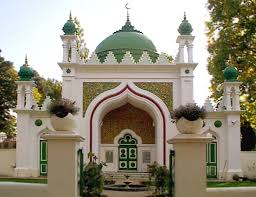
In the United states, the Mosque has these roles and much more. It serves as a symbol of Muslim presence and culture, as the picture above shows. It is of the Shah Jahan Masjid in Woking [Surrey], United Kingdom. Marriages are performed, as well as various social gatherings, dinners, counseling, community work, political organizing, and so much more.

In short, the role of the Mosque in the West is the same as that of the Church. The Imam gives advice, marriage counseling, plays a role in local politics, in the same manner as the Pastor of the local Church. It's not an issue of right or wrong, this is just a reality.


Problems in the Masjid

In the Muslim world, the Mosque is basically on every corner. Generally speaking, it is also maintained and controlled by Government ministries, so the 'average' person has no role or responsibility in the Mosque. He [and almost never 'she'] will attend Friday prayers, and perhaps some of the daily prayers, in Jama'ah at the local mosque, and leave it at that.


Sectarianism in Mosques does exist, however it's very limited and varies from nation to nation. In places such as Pakistan, where the Sunni/Shi'ah divide is multiplied by sub-divisions, political and personality issues, attending the Mosque can be actually dangerous, as repeated bombings of Mosques, prayer gatherings and funerals show.

In places such as the United states, sectarianism is further complicated by class and ethnic divisions, which is dealt with two broad solutions..

[A] In small towns, Muslims of all sects and ethnic backgrounds will worship in the same mosque.They will offer friday prayers at the most convenient location.

[B] Muslims of the same sect or group, such as Shi'ah, Salafi, upon having sufficient numbers, will form their own mosques. Now, while Muslims outside of these groups are welcome, it is understood that this particular mosque is dominated by one school or ethnic group.


What next?

In the two 'solutions' given above, at some point problems, both on an individual and communal level, develop. It is unavoidable. When people of various thinking patterns, understanding of religion, as well as having different personalities, are enclosed in small spaces, feelings get hurt. Resentments form. Sometimes there are power struggles. Such problems are almost unheard of in the Muslim world, but they are an unfortunate reality in the Western context. Such problems exist even among followers of the same sect or same ethnic group. All of us think 'our way' is the correct model of Islamic practice and theology!


At some point, it becomes necessary for us as individuals to figure out what is beneficial to us in terms of our Islamic practice and spirituality. If we go to places where we don't feel comfortable for reasons, such as those mentioned in this text, we can easily find another Mosque. Another solution can be to limit one's participation to friday prayers only [after all, Friday prayers are obligatory according to the Qur'an 62:9] and avoid the politics. Sometimes, our boards and Imams need some perspective. Give them advice.
Religion is sincere advice [or sincerity, Naseehah in Arabic], [for the cause of] Allah, to the messenger, to the leaders of the Muslims and to the general public. [Sahih Al-Bukhari, 2:42]


Remember that the entire Earth is a Mosque [Sahih Al-Bukhari,8:56], prayers can be conducted anywhere that is clean and reasonable. We living in the West, especially having children, use our Mosques not only for prayers, but as cultural hubs, as sanctuaries and the like. So, just leaving it is not easy. Deep contemplation is required, as well as knowing the situation of other Mosques, before making such decisions. Seek Allah's guidance, and he will give you direction.Consider all options.