Showing posts with label shirk. Show all posts

Friday, July 19, 2024

Guarding the soul: practical guidance from Islamic sources

 Introduction

Ours is a fast- paced world, perhaps the fastest in the history of mankind, evident not only in the relatively quick technological developments, but also in the social, political, economic and entertainment realms. It is widely acknowledged that physical goods are now built with a very limited lifespan, forcing customers to replace them on a semi-regular basis. Mobile phones, entertainment technology, and the like are obvious examples. This also has bearing on subjects such as spiritual development, relationships and statecraft. Thus, everything and everyone is now deemed replaceable if (and when) the winds of popularity change (be it organically or otherwise), presenting a level of instability that would not be imagined in times past.


It is in this backdrop that we have decided to have a look at the soul, the core of a human being, a nonphysical item that is (almost) universally acknowledged to exist even after death, that which faces some level of Divine scrutiny, an item that has been ignored, neglected, even abused. The purpose of this article is to generate thought, positive development, and the presentation of this rather complex subject in a succinct fashion. In the end, success in achieving the above-mentioned goals comes from Allah. Wa Billaahit Tawfeeq.


Soul is like a sponge


At the outset, it seems necessary to explain that we tend to use the term "soul" as synonymous with other terms such as "the self" "spirit" "mind/mental foundation" " and even "psychological foundation". (ft.1) All recognize the importance of delivering positive reinforcement, discipline, love and attention to children, and similarly understand that the experience of childhood has profound impact on the same individuals as adults. 


Thus, it is true that the soul is like a sponge, yet its arrival in our world is totally pure, without blemish or sin. Thus, Islam disagrees with the Christian notion of original sin, and further refutes the idea that the original sin would have to be dealt with through the blood atonement of Jesus (depicted as son of God, but also God himself in mainstream Christianity). Yet, over time, the soul will absorb both good and bad, beautiful and ugly, largely as a result of outside influences. 


The Qur'an says that the most successful has been the one who has been keen on purifying it, keeping it clean (Q 91:9, 87:14). Similarly, it also asserts that the biggest lost is experienced by the one who damages the soul by corrupting it (Q 91:10).


What corrupts the soul?


The world religions tend to have similar ethical considerations (i.e. murder, theft, etc.) and thus see the violation of its commandments as not only actions bringing spiritual harm, but worldly damage as well. Today's world has made these things a bit murky, in that both capitalism and individualism (worldviews that are actually cousins) have had an impact on modern religious perceptions. Thus, religion itself is widely seen as a personal journey, confined to rituals and a set of theological assumptions. 


The other side of this coin is that (wrong-headed) religion itself can be manipulated through technicalities, its rules abused, leading to ridicule and outright rejection of religion. These points, the manipulation and misuse of religion, can actually corrupt the soul.


This is partly the reason behind Almighty Allah sending forth messengers, prophets and scriptures. The New Testament presents Jesus (peace be upon him) as overturning the tables of the moneychangers in the temple, and of course the Prophet Muhammad (peace be upon him) himself removed the idols that were present at the Ka'bah, itself a sanctuary built for the worship of God by the Prophet Abraham.


Thus, among the other items in the modern world which corrupt the soul, as seen by this writer, include

(1) Narrow-mindedness: A thinking of "I am always right and cannot be wrong or ever change". A stubbornness that leads to long-term harm to self-interest. This particularly happens in family conflict (itself possibly on petty grounds). 

(2) Addictions: Intoxicants such as drugs, alcohol and the like. The Qur'an has placed gambling and even occult practices in the same realm (Wal Ansaabu wal azlaam see Q 5:90) of discussion. 

(3) Harmful entertainment: At no other time in history has entertainment been so readily available. Television programs, music, even the messages of influencers of social media and politicians themselves generate conflict, misinformation, the breakdown of family units, gender wars, can lead to harm, if not outright corruption, of the soul. This includes the so-called hookup culture and low commitment relationships. The consumption of pornography is also grouped within this heading. 



(4) Idolatry: Recognized in Islam as the one sin that-if maintained till death- has the likelihood of never being forgiven, we have placed it as number 4 on this list rather than number 1, because we tend to have a limited way of thinking of it. Shirk is not simply bowing to a statue or photo.! Rather, it can be manifested in arrogance (worship of self), racism (worship of color or clan), partisanship as well as the holding unto negative thoughts and emotions, making (false) victimization one's primary identity. This is a sort of worship (of other than God) which is harder to recognize and combat, nonetheless it is still a problem that needs to be seen and dealt with via the authentic spiritual resources. 


(5) Bad influences: The Prophet Muhammad- Sall Allahu 'alayhi wa sallam- is reported to have said " The man is upon the deen of his close friend (khalilihi), so each of you should look carefully (falyandhoor)  regarding who becomes his close friend" (At Tirmidhee). Having close friends who don't share your spiritual interests can be very damaging. In the name of friendship, questionable or outright haraam actions take place, one is influenced in the wrong direction. In an American context in particular, a phenomenon exits in which men and women in their 50's have the mentality and actions of teenagers! 


What saves the soul?


(1) Tauheed: Recognizing that God alone deserves to be worshiped. This is more than abandoning the gods of Greek or Hindu mythology. This means making Allah as primary focus in the spiritual and mental realm. In a practical sense, this entails giving priority to the priorities in the Qur'an. Notice that Tauheed is connected to justice and the acquisition of knowledge, and shirk is connected to injustice (Q 3:19, 31:30 etc.).


(2) Spiritual practices: This has to be done on a regular basis to be affective, just as bathing. The Muslim practice is five daily prayers, but there are also supplementary actions such as dhikr (which can be done at any time, in which God's name or a Divine attribute is verbalized- loudly or softly), du'aa (asking God directly), and the recognition of God in everyday activities by terms such as Inshaa Allah (God-willing), Alhamdulillaah (praise belongs to God), Maa-Shaa-Allah (this was Allah's will) and so forth. In a broad sense, we can place the five pillars under this category, three of them are spiritual practices in nature. 


(3) Actions of regular charity: As with number 2 above, zakaat is a pillar of the Islamic religion, and in the Qur'an prayer and the regular charity (zakaat) are almost always placed together. Engaging in charity, at whatever level possible, does tremendous work in delivering salvation to the soul, and it generates good feelings in the person who does it. Q 74:44 mentions that refusal to engage in charity (in this case, feeding the poor) is listed as a reason to be placed in Hell. Refusal of engaging in charity is the symbol of ultimate selfishness, a lack of care that is devastating for spiritual development. 


(4) Goodly company: In all contexts (including romantic) this is needed to attain spiritual progress. This is not only supported by texts (of the Qur'an and hadeeth) but also by real life experiences. Indeed, every culture has recognition of this at some level. Some faiths (such as early Christianity and aspects of Buddhism) seem to hold the view that spiritual growth is attained on a personal level and that other people's presence is a distraction from that goal. Islam teaches that the opposite is the case. The Prophet is reported to have said that marriage is half of one's faith, and another hadeeth asserts that praying in congregation (jamaa'ah) is twenty-seven times greater in reward than offering the same prayer in a solitary fashion. 


(5) Dropping unnecessary grudges: Negative feelings and memories can hold a person back and as seen earlier, can be a sort of idolatry! The Qur'an teaches that spiritual awareness (here a reference to taqwaa) is connected to humans dealing with one another, even to the point that it can supersede rituals (Q 4:1). While some grievances are rightly held and cannot be easily dismissed, it is often the case nowadays that a person will hold a grudge over a minor situation, to the extent that even when said issue is addressed, the 'aggrieved' party will continue to harbor ill-will, ultimately bringing harm to themselves. Islam teaches that God is Intense in delivering forgiveness and mercy (Al-Ghafoor Ar-Raheem), if we want that from God, should we not use it for ourselves? The Qur'an asserts that believers have certain characteristics, let us have a read: " And what is with Allah is better and more lasting for those who have believed and have trust in their Lord, those who abstain from sin, great and small, as well as immorality, and when angered, forgive (wa idhaa maa ghadiboo, hum yaghfiroon.)" (Q 42:36-38). The same Soorah goes on to say that those who engages in pardoning and reconciliation ('faman 'afaa wa as-laha) receive rewards from God"(Q 42:40) (ft.2).


While the above is brief, it provides a foundation for salvation, happiness in this life and the life to come. There are of course more details given in the Islamic texts, but this should be sufficient to begin the process of introspection, thought and discussion where needed. 


Footnotes


(1) There are a number of terms used within Islamic texts and amongst Muslims generally that carry slightly different meanings, such as nafs, rooh, (plural being arwaah), 'aql, 'ilmun nafs, etc. For the purpose of this article, all the slightly different concepts should be seen as being addressed here, in the sense of discussing the inner reality of man.


(2) The term 'afaa is related to the term 'afuww (coming from the same root), the latter having the connotation of 'erasing'. The latter term is in the du'aa traditionally made when seeking out the apex of the Ramadan experience known as Laylatul Qadr. If we are asking God to 'erase' our bad points or actions, would it not be expedient to do that as human beings with one another?  Q 42:37 uses the verb yaghfiroon for forgiveness being a quality of believers, this term has-at core, covering up, cutting off or being protected from bad consequences of an act. The term comes from the same root as a number of God's names in Islamic texts, such as Al-Ghaffar (The ever forgiving), Al-Ghafoor (the intense in delivering forgiveness). God is described in one text as "The forgiver of sins" Ghaafir adh-dhanb Q 40:2).  For more on Laylatul Qadr, see Shamsuddin Waheed: Las Vegas Metro Police Department presentation on Laylatul Qadr as well as Shamsuddin Waheed: Ramadan reflections: towards new beginnings


Friday, September 9, 2022

THE INTERSECTION BETWEEN THE OCCULT AND HUMAN LIFE

 Introduction


The following are just a few observations, made in light of things that I have seen (largely in the course of my work) in the last three years. The paranormal or the occult is certainly a field that I have had no prior interest in, nor have done intensive studies of, but repeated cases and situations have inspired me to seek out information from reliable sources, and to understand (and hopefully apply) the perspective as derived from Islamic sources.


This article is by no means exhaustive, nor does it claim to be authoritative. Feedback is welcomed and appreciated. I have had discussions with those who have had a deep background in the occult world and its varied aspects and have taken the time to study one important authoritative text on this subject, written by an academic sympathetic to the occult. However, this article will not cite either the persons in discussion, or the important text-source. The former is to respect the privacy of such people, who have made efforts to change their lives towards a direction of submission to God as portrayed in the Islamic faith, while the former I have opted not to share the title because I do not want to encourage reading of that text, nor of any text associated with the paranormal. I have looked at these subjects only out of necessity, as a means to understand what others are facing as well as attaining protection with God from that realm for myself. The religion of Islam has actually forbidden Muslims to interact with the paranormal, and even that which resembles that realm. Although there are many ahadeeth (sayings of the Prophet Muhammad, Sall Allahu 'alayhi wa sallam) on this subject, it seems sufficient to quote only one:   


'Abdullah ibn Mas'ood reported that the Messenger of Allah said " Indeed, spells, amulets and charms are (manifestations of) idolatry (shirkun)." (Sunan Abi Dawud 3883).


The occult in the modern world


While it is fashionable to view the occult as obscure rituals, conducted secretly in an isolated location, the reality is that those who openly worship Satan, as well as those who generally have occult interests, or a hatred of religion generally, are often placed in positions of influence, in particular the areas of entertainment, fashion, and the like. One example is the sci-fi writer Don Webb.  Another example is Michael A.Aquino, involved in the dissemination of a text known as The Satanic Bible. A quick search online can reveal that he was an academic, seemingly with a life-long interest in the occult, he reportedly saw himself as the "beast" referred to in the Book of Revelations(ft.1). Earlier in his career, he was involved in psyc-ops, using heavy metal music as torture on Vietnamese prisoners.


Many of the popular television shows are produced by agnostics, and they are not shy to share their views on religion as being a primitive force. Seth Macfarlane is a good example. Producer of shows such as FAMILY GUY, AMERICAN DAD and others. He is an open atheist, and any regular viewer of FAMILY GUY can easily recall episodes which ridicule religion.


These are just a few examples of influential figures presenting their social agendas in the guise of entertainment.


The messages coming from entertainment coinciding with occultic agendas

While it can be argued that individual producers, entertainers, etc. are not (knowingly) involved with the occult, let's take a moment to look at the messages delivered to viewers. These shows (which are actually cartoons, which would naturally be appealing to young children) promote disrespect of family structure, deviant sexual practices, hedonistic behavior, abandonment of faith, and extreme individualism. 


The above are all well established as agendas for Satanists. It has been observed that they tend to present their worldview as one which seeks an escape from social restrictions, often having their origin in religiously inspired values. 


It is my understanding that the proliferation and normalization of intoxicants, single parent homes, the hook-up culture, and so much more are in line with the devilish agenda.


Startling Quranic information on Satan that parallels with the modern world

(1) Satan "whispers" to humans, encouraging them to disrobe. (Q 7:20). 

(2) Demonic company is preferred by those without faith (Q 7:27).

(3) Devilish types are selfish by nature, and encourage others to be the same mentality, hoarding wealth, neither investing in business (which promotes economic growth broadly) nor spending in charity (acts which are done to lift up humans in need) (Q 17:27).


(4) The breaking up of families, in the name of petty jealousies and the like (Q 12:100).


(5) Satan uses people's stresses and anxiety as a means of attack. (Q 38:41)


(6) The promotion of "virtual" reality, as opposed to what is actually real (Q 6:71, 47:25).

(7) The promotion of intoxicants, gambling, and occult rituals (Q 5:90-91).


The above parallels are apparent for any who is willing to observe carefully. Thus, it is imperative that we are cognizant of the manner by which Satan inflicts damage.


What about mental health?


This article does not deny that there are many cases of legitimate mental health problems, which has its own methods of treatment. It can be argued (as it has actually been argued by the authors of Broke in America: Seeing, Understanding and Ending U.S. poverty) that many of the conditions mentioned above are in fact the reasons mental health problems exist. After all, those isolated from their families would naturally have reasons to feel insecure.


While it cannot be denied that mental health issues occur, both in a "satanic" and "non-satanic" context, treatment of it has to be physical, moral, social and spiritual. 


The occult and relationships

A recurring theme, crossing religious and cultural lines, is the usage of the occult for positive romantic relationships.  Spells, curses, amulets, voodoo dolls, and more have been employed to break up relationships, destroy families and create conditions for one person to attain the object of their romantic interest.

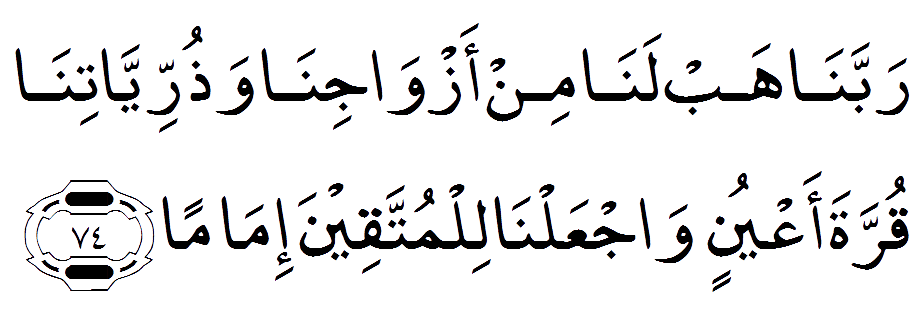
The Qur'an mentions a rather profound example of this. The passage (Q 2:102-103) mentions both the kingdom of Solomon and Babylon in connection to figures who would be involved in teaching methods to break up couples. While the passage has much that needs to be discussed further (ft.2), it should be sufficient here to say that the Islamic religion has totally outlawed such activities. Rather, one should pray to God. The Prophet Muhammad (peace be upon him) has taught famously the prayer for seeking assistance in these regards known as the Istikhaarah prayer (ft.3), and the Qur'an itself has a short du'aa (supplication) that teaches us -in a summarized fashion- that we should avoid obsessions and whimsical attachments, but rather seek that which will be a comfort in this life! For this supplication, go to Q 25:76.


Jinns

Jinns, be they positive or negative, belong to the unseen world, and can largely be associated with the occult. Islam teaches that we are to avoid interaction with that world, and the last two chapters of the Qur'an (Soorah Al Falaq and An Naas) are very affective, when recited, as protection from those invisible forces.


The hadeeth literature (saheeh Al Bukhari 61:530) has also recorded the importance of the recitation of the "throne verse" (Ayatul Kursiyy 2:255) before sleeping. The text speaks of God concept in a clear and beautiful fashion, granting a strengthening of faith, a needed component in surviving Satanic assaults throughout life!


Practical actions

The Qur'an has mentioned many practical areas in which Satan launches attacks. Indeed, in the list above, we can see that if we do the opposite of what Satan is depicted as encouraging, that goes a long way in creating protection. We have placed emphasis on good company, especially in the romantic realm, daily prayer, healthy distance from electronic distractions, exercise, abandoning un-wholesome music and entertainment. Other items, derived from the Quranic texts mentioned above, include public decency, regular acts of charity, building of faith in God, avoiding jealousy (both having it and being the object of it) and consistent reference to Allah in speech.


Jealousy is a powerful emotion. It can also be dangerous, as universally recognized. The last two chapters of the Qur'an points out that whispers can feed jealousy, which is why it functions as a text of protection from this unpredictable feeling.


I believe this is so important, that-atleast to avoid being the object of jealousy ( hasad in Quranic terminology), one should not flaunt one's blessings, especially to those without the same. This is the logic of the Prophet forbidding men from wearing gold and silk. Men are the traditional earners, in public spaces. Wearing such items invites hatred, crime and much more.  

Similarly, I think it is important here to avoid sharing too much in public about personal or family business, even if it is positive. Flaunting wealth is also something which needs to be avoided.


If one feels jealous, also recite chapters 113-114 of the Qur'an, say "Maa-shaa Allah" (thus, as God has willed) and remember what the Prophet has said. He -upon whom be peace- has stated that one should not look at the one above, but rather the one below. In other words, you have a blessing already, but you have to recognize it as such.


Footnotes


(1) The Book of Revelations is the Last book in the New Testament. While the history of the text and author is disputed, the point was that Aquino self-identified with evil, as found in the Christian scripture. 

(2) Certain terms within the text requires much discussion. Take, for example,  Sihr. It is usually translated as "magic" but can have implications that have no relation to the occult (as popularly understood) such as eloquence in speech as well as corruption. Similarly, the text speaks of two beings, who taught methods to break up a married couple. The term can be read "two angels" (malakayn) or as "malikayn" (two kings). An aspect of this is whether or not they are simple similar to (but not precisely) one of the labels mentioned above, both of which have implications in understanding the text. In any case, the text presents a lesson, i.e. that no one experiences anything unless it is by the Divine will. The text which follows (Q 2:103) also states that faith and awareness (attaqoo, i.e. taqwaa) are better, meaning that these two items provide a sufficient protection from evil.  It is perhaps these two which often get neglected in the powerful nations, thus, the reference to Solomon's kingdom and the Babylonian civilization.


(3) For more information on the Istikhaarah prayer, see Shamsuddin Waheed: Reflections on Istikhaarah: the priorities of life .


Sunday, January 15, 2017

Putting Allah in proper perspective: Friday Khutbah


( Note: The following is an edited version of the Friday Khutbah delivered 1/13/17 at Toledo Masjid Al-Islam. The opening Hamd has been omitted here.)

Pondering upon Allah's solitary nature

We begin by referencing two reports from the Prophet, upon whom be peace.

"The most virtuous (type of ) dhikr is: 'Nothing deserves worship except Allah'". افضل الذكر لا اله الا اللهHe is also reported to have said "Whosoever proclaims Laa elaaha ill Allah, has entered Paradise." من قال لا اله إلا الله دخل الجنةThere are many other ahadeeth that carry a similar message, explaining to us the benefit of له اله الا الله as a statement. However, it is as a concept that we have to deeply ponder and remember that is important.


In our Khutbahs here we typically say therein "None deserves worship except Allah, He is alone, has no partners" لا اله الا الله وحده لا شريك له  . Practically, we can recite this statement and similar statements, but what does it all mean?

In our recent spirituality session (1) we shared a powerful observation from Imam Al-Ghazzali(2). While he is admittedly speaking on the statement Allahu Akbar [recited at every movement during prayers], it is just as applicable to 'Laa elaaha ill-Allah'. Indeed, we even have it in the Sunnah that the Prophet joined these phrases [by reciting Subhaan Allah, walhamdulillaah, wa Laa elaaha ill Allah WaLLaahu Akbar].

Imam Al-Ghazali said "For example, the meaning of Allahu Akbar [God is greater]-if one does not know this meaning, he is ignorant."

This is understandable, after all, we all are ignorant of something.

The Imam continues ;" If he knows it, but there is something greater than God in his soul, he is not truthful. It will be said to him: Those words are true, but you are speaking lies! Whenever something else is more obeyed than Allah The Most High, that thing is greater to him, his object of worship, his 'god' which he serves."

Therefore, these expressions that we habitually recite: Laa elaaha ill Allah, Allahu Akbar and the like, these words must carry real meaning for us. To be Muslims, we have to truly conceptualize Allah as the only God, the only deserving of worship. This is more than simply not bowing to an idol,

After all, it can be said that Muslims bow to things. We do make our Salaah facing the Qiblah, the Ka'bah in Makkah! At Hajj, we circle the Ka'bah, we make Rukoo' and Sujood [bowing and prostrating ] in our prayers there facing that building, and because of that some critics say we take that as an idol,

We know that idea is a mistake, we don't worship the Ka'bah, and bowing does not imply worship. We seek to address that by pointing out that in many cultures there exists a custom of bowing, to teachers, to parents, elders and the like. That bowing does not imply worship!

Tauheed [perceiving God as one and alone] is more than simply not bowing to idols, and, as we should have realized, even the bowing to things is not a big deal in the long run! To uphold Tauheed, one is to take as priorities what Allah says are priorities. The worship of Allah alone translates into proper thinking and proper action.

The Qur'an says "Allah's own declaration is 'none deserves worship except him: this is the declaration of angels, the people of knowledge, standing in/for justice." [Q 3:18] ;">شَهِدَ اللّهُ أَنَّهُ لاَ إِلَـهَ إِلاَّ هُوَ وَالْمَلاَئِكَةُ وَأُوْلُواْ الْعِلْمِ قَآئِمَاً بِالْقِسْطِ

So Imaan [faith] in God alone as God is connected to angels, to angelic behavior, knowledge and science, to justice and fair play. We see here CORRECT THINKING and CORRECT ACTION.

So do take heed of Laa elaha ill Allah, because when it becomes a conscious reality, you will deserve paradise, which begins here and is fully manifested in the next life. We seek Allah's guidance, forgiveness and mercy.

Keeping our minds clear of Shirk

Often in the Qur'an, we find that Shirk is connected with injustice and even hypocrisy(3). Soorah Al-Munafiqoon [Chapter 63] and Soorat at Taubah [Chapter 9] are good places to research this. So we want to be true servants of Allah alone, we want to be people oriented upon Tauheed!

وَمَن يُطِعْ اللَّهَ وَرَسُولَهُ فَقَدْ فَازَ فَوْزًا عَظِيمًا
Whosoever obeys Allah and his messenger have achieved a mighty achievement. [Q 33:71].

How do we obey Allah? We obey by seeing him correctly as the only one deserving worship. How do we obey the Prophet, the Messenger? We obey him by emulating how the Prophet connected to his Lord.

"Indeed, you have in Allah's Messenger a goodly model for any who has hope in God, the final day, and contemplate upon God much." [Q 33:21]

لَقَدْ كَانَ لَكُمْ فِي رَسُولِ اللَّهِ أُسْوَةٌ حَسَنَةٌ لِّمَن كَانَ يَرْجُو اللَّهَ وَالْيَوْمَ الْآخِرَ وَذَكَرَ اللَّهَ كَثِيرًا

Notice the verse is speaking on those who have hope in Allah, who recall Allah and long for his presence and blessings. That teaches us that we should not take Islam for granted, that we do like the Prophet [Sall Allahu 'alayhi wa sallam] would do, continuously seek out and strengthen our ties with Allah. We work to internalize the teaching that Allah alone deserves worship, not our whims, egos or delusions.

End notes

[1] This session can be found on Youtube.com  under the title How to develop and maintain a Healthy Islam by Imam Shamsuddin Waheed.

[2] Imam Abu Haamid Muhammad Al-Ghazali [ 1058-1111] was a great scholar and spiritualist. His writings are profound and cover so many aspects of Islam that he has been given the title Hujjat Al-Islam [the evidence of Islam], a rare honorific among Sunni Muslims. Many academics have proven that Imam Al-Ghazali's works have influenced such Christian theologians such as Thomas Aquinas!

[3] This is addressed in some detail at[url] http://shamsuddinwaheed.blogspot.com/2008/10/only-one-god-forgotten-aspects-of.html[/url]