Showing posts with label Religion/spirituality. Show all posts

Sunday, August 16, 2020

Pondering The Presence Of God In Our Lives

 Recently I delivered a khutbah (Friday prayer sermon) in which the focus was the powerful, yet controversial Qur'anic verses which reads "To God belongs the East and the West, therefore, where ever you turn, you encounter the face of God. Indeed, God is the Expansive, the Knowledgeable." 


The context of this ayah addresses the human tendency to create categorizing, labeling, and that such labeling has no impact on the Divine Being (Allah, Subhaanahu wa ta'alaa). He is not limited by the limitations we create. He is not "Our God" to the exclusion of others. The guidance of Allah can be encountered by any, regardless of their location, background or (artificial) label.(#.1)


While this article largely ignores the theological discussion surrounding the verse in question(#2) , studying this verse has prompted me to ponder upon the presence of Allah in my own life, and-likewise- I invite our readers to think about the same question.


Some people, in particular Prophets of the past, and present day saints, have encounters that impact both themselves and those around them(#3) . Due to the presence of such accounts in scriptures, this is what a goodly number of religious people desire to experience, and are left wondering if God truly cares, when such miracles have not happened. 


Others think of God as the miracle worker. In the USA there are a number of Television preachers who solicit donations from viewers, promising a heavy payout, selling an illusion to desperate (and usually poor) people. 


Allah can be truly experienced, as the above ayah mentions. His presence is in his replacing one situation with a better situation, with His turning grief into joy,  His placing a mind and a conscious in us, in saving us from the accident, in His putting the right answers in your mind when they had been absent beforehand. His presence is known when we look at a beautiful sunrise, a full moon in a clear night, even in pets who show affection to us.


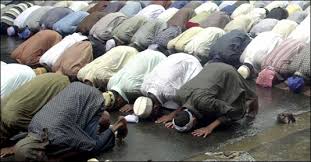
His presence is in the loved ones around us, in the prayers we offer, the supplications we make, and in the words of remembrance of Him that we recite.(#4)

A "miracle" can happen, however that is not the point. "Miracles" can likewise emerge from tricks, gadgets we are unaware of, and even from demonic forces!(#5)


The presence of God -when truly experienced- should give us strength, drive, determination, a moral compass, emotional and spiritual maturity. 


It is not an overnight experience, but it can happen. And we can benefit from it.


May we all be able to experience God.


Endnotes


(1) The ayah under discussion is 2:115, but for context I would suggest vv.105-120. 


(2) The controversy, particularly in the modern period, revolves around the term "face of God" (Wajh Allah). Some Muslim groups have chosen to be open to a literal reading of that expression, but with the caveat that while it is real, its nature is unknown to us. Quranic expressions such as "His Throne" "the hand of Allah", and the like have received similar treatment. However, it has been almost universally understood that these expressions are metaphorical in nature, and need not be viewed with a literal interpretation. I understand the term "face of Allah" to refer to His presence, and this is the view expressed by the majority of commentators. This controversy cannot be adequately addressed in an end note, however on related topic, see our reflections on the throne verse http://shamsuddinwaheed.blogspot.com/2008/01/divine-throne-examination-of-ayatul.html


(3)  The term "saints" can admittedly be problematic for Muslim readers. The word 'Awliyaa" (singular Wali) is typically translated as "saints" or "allies (of God)" does not quite have the same religious/cultural  implications  as the term "saint" in Catholicism. Nor do we limit the possibility of God's direct interaction to saints. An important Quranic reference to examine on the subject of God's direct communication with humans can be found in Q 42:51. 


(4) See Q 2:185, which shows that even a verbal affirmation of the Divine is sufficient to generate a real presence of Allah.


(5) The Qur'an repeatedly states that "miracles" ( as popularly understood) do not constitute a strong evidence at all. Indeed, it presents itself as a text with rational arguments and evidences of its claims.


Monday, May 25, 2020

Selections from Ramadan Reflections 2020

Note: During Ramadan, I shared thoughts on various topics, as well as answering various questions, on a daily basis via our YOUTUBE channel.  Below you will find selections from those videos. For the entire reflection series, go to Arifin Library . Also below you will find our 'Eid ul Fitr Khutbah, which occurs after Ramadan has concluded.


Day 1- Appearance of Guidance https://www.youtube.com/watch?v=bPY2tWO4w5o


Day 4-Taqwaa manifestations click here


Day 6- Justice and Taqwaa click here


Day 7- Self Care Click here

Day 10- Types of Speech Click here

Day 13 Toxic Friends and Family click here

Day 25 Understanding 'destiny' and Allama Iqbal click here

Day 30- Religious practices in the age of Coronavirus click here

Eid ul Fitr Khutbah - click here

(Note: For Eid service, the summary is as follows 0:30 Takbeerah chant . 27:02, Br Brent accepts Islam, shares his story. 29:25- Salaat ul 'Eid (Eid prayer). 37:34, Khutbat ul 'Eid (sermon). All of our Friday services since the emergence of the coronavirus are archived, available for viewing, at our mosque Facebook page Click here . Your support is greatly needed and appreciated, and is best achieved by donating at our secure website The Masjid Ibrahim donation page . All donations are tax deductible. )

Saturday, January 18, 2020

Coffee and Converts

( Note: below you will find our recent presentation at "Coffee and Converts" program, held at Masjid Ibrahim Las Vegas. In it, we share thoughts on navigating the challenges, both from inside and outside Muslim circles, and developing a healthy Islamic foundation. A brief Q and A session follows. This video is highly recommended to all viewers, regardless of their backround.)


COFFEE AND CONVERTS

Tuesday, August 28, 2018

Do we live according to "Allahu Akbar"

The expression "Allahu Akbar" or "God is Great" is often used and sometimes even abused. It is very important to not only recite but to live by.

This Khutbah explores mainly the importance of this expression, and serves as food for thought for the viewers.


Saturday, August 5, 2017

Common Christian Concerns regarding Islam (CCCI)

Introduction

We live in an age of false news and deliberate misrepresentations. So much information, facts and half-truths are in wide distribution via all media outlets regarding any possible subject of importance. With this in mind, we seek to address, in particular, the concerns that members of the Christian community have regarding Islamic beliefs, doctrines, and Muslims in general.

This brief article is not intended as a polemical device, nor is it sugar coating the facts. It is intended for educational purposes only, to foster proper understanding by sharing correct information. It is intended to form a basis for discussion between members of the two respective religious communities, and is composed with the supplication of Prophet Muhammad ( peace be upon him) in mind, in which he prays : "O God, show us truth as truth, and give us the ability to follow it, and show us falsehood (FT.1) as falsehood, and give us the ability to abstain from it."


What is Islam?

The term "Islam" itself is a word, a verbal noun, that means "submission to God". The one who does the act of "submission" is called a "Muslim". Notice that both of these terms are rather generic. These terms denote action, something which is far superior to a particular label. Labels have been associated with particular places and personalities, Christianity after the personage of Christ, Buddhism after the Buddha, Judaism after the Jewish tribes and so forth. Our argument, based upon the Qur'an itself, is that it is the action which is important to God. Thus, it says "Verily, the deen (Ft. 2) in God's sight is Islam" (Qur'an 3:18).

The Bible and the Qur'an

The term Bible means " a collection of books". It can also be rendered "a library". It is a collection of writings that were by and large never intended by their respective writers to be placed in a single text, and it is quite doubtful that they viewed their writings as "scripture". In any case, it has acquired a sacredness for Christians, highlighted by the text which reads "all scripture is God-breathed and useful for teaching, rebuking, correcting and training in righteousness." ( 2 Timothy 3:16, NIV).

The Qur'an is viewed by Muslims as God's own words. It is only God's words. The word Qur'an is a verbal noun, meaning "the recitation" or "the reading". One definition is "something that is to be repeatedly read". It was sent to Muhammad The Prophet over a twenty-three year period via the Angel Gabriel. It's texts are used in prayers (Ft.3) and is the main source of Islamic theology and practices.

In terms of how the Qur'an perceives the Bible, three points should be made [1] God did sent forth messages to various messengers. Among them are persons such as Jesus, Moses, Abraham, and the others, God's peace be on them all. The Qur'an says: " Say: We believe in God, in what has been sent to us, and in what has been sent to Abraham, Ishmael, Issac, Jacob and the tribes, in that given to Moses, Jesus and the Prophets from their Lord. We make no difference between them, and we belong to him as those submissive." (Q 3:84).   [2] While Muslims accept, on the basis of the above Quranic verse [as well as other verses] that God has sent teaching to these figures, and hold these persons in great reverence, the Qur'anic position is that interpolations, misunderstandings and outright misrepresentations have taken place, falsely attributed to the blessed personalities such as Jesus. Some of these things have been minor, and some quite major. This has also affected the Bible itself as a text. This is quite understandable when we consider that "Bible" itself is a collection of various writings, the authors often themselves being unknown. This is the overall conclusion of the scholars of Biblical textual criticism, and is increasingly being recognized by Christian religious leaders themselves. Even in the widely read English translation known as THE NEW INTERNATIONAL VERSION STUDY BIBLE [NIV] we read, in the preface to the book of Numbers " It is not necessary ...to claim that Numbers came from Moses' hand complete and in final form. Portions of the book were probably added by scribes or editors from later periods of Israel's history."( Ft. 4). The same source tells us of another purported source of history, that being the book of Joshua, that it was not put into writing till 800 years after the events it is supposed to be recording. (pg.288, NIV, 2002 edition).

We have to ask ourselves how a text  written almost a millennium  after the event be seen as an authoritative source?

[3] The Quranic assessment is that in light of all of this confusion, the Qur'an comes along to address the most important of points of contention [Q 27:76].  For Muslims, the Qur'an is primary source, and whatever theological teachings that go against that, it is ultimately rejected, whereas whatever goes along with it, is accepted as the probable truth! Even with that said, one will find that in general, worldwide, Muslims will treat the Bible, should they encounter it, with respect. Indeed, many Muslims find Western Christian's treatment of their text as strange, things such as throwing the book around, leaving it on the floor, writing in it, even reading it in the bathrooms.


Jesus

Muslims revere Jesus as the Messiah, as one sent by God Almighty to correct certain attitudes that the Jews of his age had. This subject has been dealt with in greater detail by this writer at http://shamsuddinwaheed.blogspot.com/2008/01/jesus-in-islam.html . For the moment, we can summarize by saying that while Muslims accept Jesus, upon whom be peace, he is not seen as God incarnate! Moreover, the metaphorical language ascribed to Jesus in the Bible as "God's son", is not used by the Qur'an or by Muslims because we seek to avoid any language which can cause confusion on God concept.

Violence

The emergence of political insurgencies in various places within the Muslim world has created the image of Islam as an inherently violent religion, ready to explode at any moment. The issue of political rebellions and terrorist groups is something beyond this article, for the simple fact that each place has it's own unique set of circumstances and historical backround. In terms of Islam as a religion, the notion that it promotes murder and mayhem is totally false.

Thus, the Qur'an says:  "And do not kill the soul, which God has eternally forbidden [Harrama], except in justice. And whoso is killed unjustly, God has given his heirs authority, [yet even then], so do not be excessive in the retribution, as he [the heir] is assisted [legally]" [Q 17: 33]".
The issues of violence in the name of religion, as well as the related issues of Jihad, have been addressed in greater detail in the panel discussion Responses To Violence In The Abrahamic Traditions  https://www.youtube.com/watch?v=AUjTm7infHI and more briefly in Spotlight On Religious Violence here.


Muhammad The Prophet


Muhammad ibn 'Abdullah, may peace be upon him,  was born in 570 C.E. in the city of Makkah, on the Arabian peninsula. Known for his exceptional honesty and trustworthiness, he received the revelation of Qur'an over a period of twenty-three years, beginning at the age of forty. He faced war, attempts on his life, the persecution of himself, family and followers. His teachings include things found revolutionary in Arabian society, such as the forbidding of female infanticide, that women are to have inheritance rights, that a life of discipline and abstinence from thing such as alcohol, intoxicants, gambling. He also was able to create a brotherhood between various peoples and classes. In his final speech, he said "There is no virtue of Arab over a Non Arab, or a white over a black, or a black over white. The only criterion for virtue is in reverence for God." 

The words of Muhammad are recorded in sources known as the literature of Hadeeth. It is important to note that they do not have the same value as the Qur'an, and that our scholars have long recognized that there are misunderstandings and fabrications in that genre that have to be pointed out. In addition to this, even accurately recorded reports in the hadeeth literature may not be always a full report, meaning that the context in which a statement was made or an action done may not be present in the particular report.

The broad details of The Prophet's life are well known and established in light of history. His battles, his marriages, his birth and death place, treaties, his particular mode of worship and the like. His merciful attitudes, his personality, all are well known. Theologically, he is seen as God's universal messenger, a Prophet who completes the process of Prophethood. He is also seen as a fulfillment of predictions made before his advent. The Bible itself reports Jesus as saying that one would come after him to "speak all truth" (John 14:26). Rather than seeing this as a vague  "holy spirit of inspiration", our reasoning is that Muhammad fits this description more than any other historical figure. Jesus's ministry was only three years, some say 6 1/2 years. He was never one who addressed political or military affairs, and barely -if we take the canonical Gospels as evidence- addressed social ills on a wide scale. Muhammad, however, did, and his successes are well recorded in the Qur'an and in historical memory.

The Qur'an depicts Muhammad as a mercy to mankind {Q 21:107} and all reports surrounding him need to be seen in that overall light. Moreover, the particular reports about particular incidents or statements, one needs to consult specialists in the subject. There is much about him and about what is attributed to him which is beyond this particular article, our suggestion would be to conduct a serious study on him. A wonderful work is The Life of Muhammad by Muhammad Husayn Haykal.


Who are Muslims ethnically?


Muslims currently make up 1/5th of the human population. The Arab world is only 20 % of the Muslim world population, so that would make Arab speakers a minority in the Muslim world. Indeed, the biggest population of Muslims in the African continent is not an Arabic-speaking nation, but rather Nigeria!

The world's largest Muslim population is Indonesia [261 million], located in South East Asia. Muslims are composed of many cultures, languages, and historical diversity.

Islam has- from it's primary sources, addressed racism in a firm way, which, in my view, has contributed to it's wide acceptance.

In an American context, it's a bit harder to quantify the number of Muslims. A 2016 estimate puts the number around 3 million [ https://en.wikipedia.org/wiki/Islam_in_the_United_States], however there are also estimates that go as high as six or seven million Muslims in the United States. 

Ethnically, it is said that 25% of American Muslims are from Asia, typically the Indian Subcontinent [India, Pakistan, and Bangladesh], whereas 24% of American Muslims are said to be African-American, and Arabs constitute 18% of American Muslims. http://muslimgirl.com/25021/majority-race-muslim-community/

Islam in the black experience has a profound and fascinating history. Figures such as Malcolm X and Muhammad Ali need no introduction.


Basic values of Islam

The basic values of Islam are also those shared by the Christian and Jewish traditions. The Qur'an says:

 Your Lord has decreed: (i) Do not worship any but Him (ii) Be good to your parents; and should both or any one of them attain old age with you, do not say to them even "fie" neither chide them, but speak to them with respect,  and be humble and tender to them and say: "Lord, show mercy to them as they nurtured me when I was small." Your Lord is best aware of what is in your hearts. If you are righteous, He will indeed forgive those who relent and revert (to serving Allah).(iii) Give to the near of kin his due, and also to the needy and the wayfarer. (iv) Do not squander your wealth wastefully, for those who squander wastefully are Satan's brothers, and Satan is ever ungrateful to his Lord. And when you must turn away from them - (that is, from the destitute, the near of kin, the needy, and the wayfarer) - in pursuit of God's Mercy which you expect to receive, then speak to them kindly.Do not keep your hand fastened to your neck nor outspread it, altogether outspread, for you will be left sitting rebuked, destitute.Certainly Your Lord makes plentiful the provision of whomsoever He wills and straitens it for whomsoever He wills. He is well-aware and is fully observant of all that relates to His servants. ( Q 17:23-30)

Footnotes

[1] The word translated as "falsehood" here is الباطل   Baatil. It carries a wide shade of meaning, including that which is ridiculous or valueless.


[2] Deen is usually translated as 'religion', however the usage in Quranic language is much greater than our typical understanding of constitutes religion. It is with regret that modern Arabic uses deen as 'religion' [with the plural being adyaan, which never appears in the Qur'an]. It is interesting that Urdu, which has the word 'deen', nonetheless does not use this term, but rather the term mazhab
[Arabic :  madh-hab], a term which, even in it's original Arabic, seems to better fit the modern understanding of what constitutes 'religion'.

[3] The core text for Muslim worship is Soorah Al- Faatihah, the first chapter of the Qur'an.

[4] Zondervan, NIV STUDY BIBLE (Grand Rapids, 2000) page 185.

Thursday, December 10, 2015

Universal Rally For Peace remarks

[ The following were my remarks given at the Universal Rally for Peace, which was held Friday December 4, 2015 at One Government Center in Toledo, Ohio]

                              In the name of God, The Compassionate, The Ever-Merciful


Good Afternoon! We have come here today to demonstrate publically that-quite frankly- to proclaim that WE ARE TIRED of what we are constantly seeing. Constantly, we are inundated with acts of violence in the name of religion or being associated with religion.


Religion teaches us that God is Just, and that likewise he demands justice in his creation. That makes sense, because God cares for all that He has created!

The Qur'an, the scripture given to the Prophet Muhammad, tells us that justice is an attribute of those who truly believe and proclaim their acknowledgement of God. For those who are interested, this statement is in chapter 3:18.

This statement is an evidence! The one who strives to bring injustice, usurping, talking away the lives of innocents, that person DOES NOT represent the Divine will.

We are here to proclaim that enough is enough. We speak not only of San Bernardino, California, but also of Beirut, Mali, Nigeria, Syria, Iraq, Ferguson, Missouri and Charleston, South Carolina!

There is a universal culture of violence in today's world. The actions and the results are the same, regardless of the identities of the victims or the perpetrators. As Dr. Martin Luther King, Jr. once said "an injustice anywhere is an injustice everywhere."

So while we have focused upon what is grabbing the headlines globally, yet there were 355 mass shootings this year alone, as Pastor Heilman as already pointed out. So it's not a Jewish or Muslim or Christian problem, it is a world problem!

We need to be humans, to act as humans and return to the healthy ethos given by God's guidance. God says in the Qur'an, as well as in the Bible, that he who takes a life, it is as if he has killed off all humanity. He also says that life has been made sacred, so it is not to be taken. God also says in the Qur'an that he has given nobility to all human beings.

So reform is needed. The Voice of Peace and Justice must be LOUD. It MUST drown out the voices of chaos, bigotry and ignorance.

So let us work for peace and justice to prevail on Earth. Let us humans, of all faiths and of no faith, return to sanity, to that which our faith ultimately calls us towards.

Thank you.


Tuesday, September 15, 2015

On the wings of Angels: Reflections on the Hadeeth of Jibreel


[Note: The following is an edited version of the lecture given in the Spirituality session at the Toledo Masjid.]

We are looking at one of the most important narrations in the Islamic tradition. Most of us know this Hadeeth already, and even if  we don't, the contents are so well known out of necessity anyways. As an obvious example, if we ask any Muslim "What are the five pillars?" he will automatically begin reciting them, without knowing this hadeeth!

This hadeeth has two versions. There are minor and major differences, but the substance is the same. [Ft.#1]. In our discussion, we will make use of both versions. This is also an important exercise because we often remember one version of a text, and think a mistake has been made when we hear another version with slightly different wordings being quoted by a speaker.[ft.#2]


A man comes to the Prophet and asks about four things. The man was a stranger, unknown to the locals, yet, the normal signs of travel were absent! We begin where the man began. [1] "What is Islam?"  [2] "What is Imaan?". So we find a difference between Islam and Imaan

The Qur'an is very clear on this. We are told:

 قَالَتِ الْأَعْرَابُ آمَنَّا
The Bedouins  say "We have Imaan."

They would tell the Prophet [Sall Allahu 'alayhi wa sallam] this. So Allah Almighty tells his Prophet to respond.

قُل لَّمْ تُؤْمِنُوا وَلَكِن قُولُوا أَسْلَمْنَا
Say: Don't proclaim Imaan, rather, say "We have submitted" [i.e. we are Muslims]

Submission, in our hadeeth here, is defined as the five pillars, all of which involve action. Even the first one, it's a verbal action, to proclaim one's acceptance of being One God worthy of worship and that Muhammad was God's messenger [Ft.#3]

The Bedouins are highlighted because they lived away from town, further away from personal interactions with the Prophet, so the development of real Imaan would be limited. In addition, they were seen as a people who were rough and dangerous. The Qur'an itself mentions, about the same people, the following:

لأَعْرَابُ أَشَدُّ كُفْرًا وَنِفَاقًا وَأَجْدَرُ أَلاَّ يَعْلَمُواْ حُدُودَ مَا أَنزَلَ اللّهُ عَلَى رَسُولِهِ وَاللّهُ عَلِيمٌ حَكِيمٌ (9:97)

The Bedouins are the most virulent in Kufr and Hypocricy, most likely to be unaware of the limits that Allah has sent upon his Messenger.

Islam is the first step, defining Imaan


Being a 'Muslim' [one who does 'Islam'] is only the first step. Many texts within both the Qur'an and Hadeeth literature show this.

"Islam" leads to Imaan.  Imaan is that which one is confident or secure about. The Prophet here mentions that it is having Imaan in God, His angels, meeting with him, his messengers, and having Imaan in the resurrection.

Once that confidence is planted in the core of the heart, that transforms the Muslim to a Mu'min!

Your Islam brings you to Imaan. That cultivation brings Allah to mind. So Islam is the first step, Imaan is the second step. Notice that the Qur'an says

إِنَّ الصَّلاَةَ كَانَتْ عَلَى الْمُؤْمِنِينَ كِتَابًا مَّوْقُوتًا
Verily, Prayer is mandated on those with Imaan at prescribed moments in time.[Q 4:103]


It doesn't say "for the Muslims". It says "for those with Imaan." So the Mu'min goes to pray when it is time. The Mu'min sees the universe as a testimony to the Divine authority. It may be worth reading the Soorah Al-Mu'minoon [Chapter 23] for a detailed description of those with Imaan as well as their responsibilities.


In addition, let us recall the Prophet's statement "None of you have Imaan until [Hattaaa] you love for your brother what you love for yourself."

[3] "What is Ihsaan?"

The Prophet's profound reply is the apex of this Hadeeth:

To worship Allah as though you seem him.


That development- to reach the state of Ihsaan, is the apex. The person who reaches Ihsaan is called a Muhsin.

إِنَّ اللّهَ يُحِبُّ الْمُحْسِنِينَ

Verily, Allah loves those who have/do Ihsaan. [Q 2:195 and 5:13]


[4] "Inform me about the hour [As-Saa'ah]!"

When this query was posed, the Prophet says "the one questioned about it doesn't know any better than the questioner."

The man replies "Then [at least ] tell me about its signs."

The Prophet is unlike the other messengers in one respect. He is the final Prophet. No other Prophets or scriptures will come, so part of his job was to deliver some indicators  of the Saa-'ah.

"The servant woman [amat] will give birth to her master, when you see barefoot, naked shepherds competing in building tall buildings."
Another version of this statement reads "You will see deaf, dumb, blind, barefoot shepherds competing in building as if they are kings."  [Ft.#4]

These- and similar Ahadeeth- have been variously interpreted throughout the ages, but we can understand the Prophet's statement here to speak on social upheaval.  Every time it occurs, when things are turning upside down, be on the lookout that judgement can be near.

With regards to the "Hour", the scholars have coined some interesting phrases. " Saa'ah al Kubraa" or the "Great hour" refers, in their terminology, to the actual day of judgement, the final day. The moment when all humans will have a public accounting.  saa'ah as Sughraa, or the "Small hour", refers to our own death!

So we can look at this hadeeth in both ways. Even looking at today's world, we can identify these indicators in our midst now, so we should be on the lookout for the GREAT HOUR!

We see the social order completely turned upside down. We live in a time when children can totally break away from their parents and vice versa, even murder each other, and it's seen as a regular occurrence.

Saheeh Al-Bukhari and Muslim both report that the Messenger of Allah [peace be upon him] said, about the final age:

Time will become short, and Fitan [trials] will become prevalent, as well as much slaughter.

This seems to describe our time very accurately!

"Barefoot, naked sheperds competing in building tall buildings" is -likewise- a perfect description of the Persian Gulf societies. Only a generation or so ago, they were goat-herders and the like, now- their societies are flush with cash.


Hadeeth Jibreel has combined four issues, like the four wheels on a car. All four are required to move from place to place, station to station. So while it does discuss theology, it also discusses action and- most importantly- consciousness!


There has been [and continues to be] people of knowledge, but no faith. People of faith, but no practice. People of form and ritual, but no substance. This Hadeeth of the Prophet tells us for the need for faith, understanding, striving to always to do better [the dictionary meaning of Ihsaan] and awareness that the hour, either the great one that will affect all mankind, or the small one that affects us as individuals, can come at any time.


These are heavenly lessons. To get them is to fly on the wings of the angels. Thus, it is apt that Jibreel, the angel of revelation, is the one who teaches this directly to the Muslim community.


Footnotes

[1] Al-Bukhari's text has the narrator as Abu Hurayrah, whereas Muslim has 'Umar ibn Al-Khattab.  Muslim has the sequence as "Islam, Imaan, Ihsaan, and Saa'ah" whereas Al-Bukhari has Imaan coming first. Also, "Meeting with him" is missing from Muslim, which, instead, has, as part of Imaan "to believe in destiny, both good and bad". Muslim's narration has a physical description of the stranger [ "White clothes, no signs of travel, excessively black hair"] identified as Gabriel, whereas Al-Bukhari has no description given.

[2] This writer quoted a hadeeth from Saheeh Muslim which reports the Prophet as saying "The hand of God is over the community" [Yadullaahi 'alal Jamaa-'ah] in a speech and was told this was incorrect, as the questioner only knew the version which says "The hand of God is WITH the community" [Yadullaaahi Maa'al Jamaa-'ah]. Both carry the same import, but it's important to recognize that there are differences in the narrations, due to a number of factors-including human error and such. These have all been recorded within the literature of the traditions.

[3] The five pillars are mentioned in this hadeeth, as well as other narrations. The pillars are recognizing the Oneness of God and the Messengership of Muhammad, Prayer, Charity, fasting in  Ramadan and the pilgrimage to Makkah.

[4] This narration is cited by Al-Hanbali, Ibn Rajab [ b.1335], in Jaami'ul 'Uloom wal Hikam.


Thursday, December 11, 2014

Selected prayers [Du'aa] from the Qur'an and Hadeeth: Text, translation, and spiritual reflections

Most of us have favorite or preferred things, and that includes Soorahs from the Qur'an. Here, I want to share some du'as that are among my favorite, that I make often.

رَبَّنَا آتِنَا فِي الدُّنْيَا حَسَنَةً وَفِي الآخِرَةِ حَسَنَةً وَقِنَا عَذَابَ النَّارِ

Our Rabb! Bestow on us the good of this life, the good of the hereafter, and protect us from the punishment of the fire. Q 2:201

This Du'a is a demonstration of the balance we are to have in life. Some people are fixated on the hereafter, wanting to attain heaven to the point of neglecting any connection or responsibilities in this world. That particular trend is itself addressed elsewhere in the Qur'an. A clear example is " And seek with that Allah has given you the home of the hereafter, yet do not forget your portion of the worldly life[dunya].." [Q 28:77]. 

Practicing Muslims will recall that this supplication is oft recited during the Jumu'ah prayers. It is also recited when invoking Allah during Tawaaf [circuling the Ka'bah] at Hajj.

The Qur'an and Hadeeth both deliver to us definitions as to what constitutes what we should view as good or a blessing. Meaning, what exactly should we seek. It can be argued that Al-Faatihah itself tells us what we should seek, but for the moment let us refer to a supplication that the Messenger of Allah [Muhammad, upon whom be peace and blessings] would make atleast twice daily . [Ft.#1]

"O Allah, I ask of you [1] Useful knowledge [2] A provision that is lawful and wholesome [Rizqan Halaalal Tayyiban] [3] Deeds that  are acceptable [to you, O Allah], by your mercy, O You who are the Most merciful of those who bestow mercy."

It's the second part of the above supplication we are concerned with here, although the whole of the Prophet's Du'a is worth examination. We are to seek that which is wholesome, that which will bring elements that will add to happiness and security. It's not enough to have a job, we are to want jobs that involve that which is lawful in God's sight. It's that job, that activity in this life that also counts for what we are to get in the next life. We abandon neither Dunya nor Aakhirah. We seek both. 

This is illustrated in the next supplication, which is another personal favorite. 


رَبَّنَا هَبْ لَنَا مِنْ أَزْوَاجِنَا وَذُرِّيَّاتِنَا قُرَّةَ أَعْيُنٍ وَاجْعَلْنَا لِلْمُتَّقِينَ إِمَامًا

Our Lord, bestow on us wives and children which will comfort our eyes, and make us leaders for those who have reverence for you. [Q 25:74]
A part of life that's very important is the family life. Men want women and women want men, and the family that comes forth from such relationships, but they are to seek that which will be true joy in life. I emphasis this here because we live in times when family ties are widely broken. The end of the above Du'a is that that family unit be examples in Taqwaa. Parents are to teach their children and the children are to listen to them. That teaching comes in words, but most importantly in actions and attitudes. [ft.2]

 رَبَّنَا لاَ تُزِغْ قُلُوبَنَا بَعْدَ إِذْ هَدَيْتَنَا وَهَبْ لَنَا مِن لَّدُنكَ رَحْمَةً إِنَّكَ أَنتَ الْوَهَّابُ
 رَبَّنَا إِنَّكَ جَامِعُ النَّاسِ لِيَوْمٍ لاَّ رَيْبَ فِيهِ إِنَّ اللّهَ لاَ يُخْلِفُ الْمِيعَادَ

Our Lord, do not make our hearts deviate after having been guided, bestow on us, from you, mercy, Verily,you are the bestower. Our Lord, Indeed you are the one who will gather all people on a day in which there is no doubt. Verily, Allah does not fail in his promise. [Q 3:8-9]

In the Qur'an these supplications are side by side. Guidance is truly there when we are cognizant of Qiyaamah, that period when all will publicly stand before God in facing judgement. We are reminded of this daily when we recite Al-Faatihah in our prayers. The last sentence of the last verse above in Arabic is Inn Allaha Laa Yukhliful Mee'aad. It's a powerful sentiment in Arabic, hard to convey well in translation, so I will just explain the word "Laa". In daily language, it simply means "No". However, in Arabic we have many particles of negation, the "Laa" is a continuous negation. Thus, we have here, simply put, that Allah has never and will never break or abandon his promise. He says clearly that Qiyaamah will come. He says clearly that judgement day will come. Not as an allegory, but as a real event in history. So, we prepare for that by praying, that invoking and seeking God, and striving to live in an ethical and moral fashion.

Say: verily, my prayer, devotional acts, my life and death are all for Allah, the Lord of the Universe [Q 6: 162]


This appears in a rather beautiful section of the Qur'an, but we are focused on this part of the supplication. This sentence is the summary of the Deeni message, that our existence be served in the best of causes. This does not mean one becomes a saint or a monk, but it does mean having this awareness of God that is so profound that it develops a person into a Muttaqi personality. It should be noted that this Du'a is, for many people, part of the opening texts recited in the beginning of Salaah [i.e. the Istiftaah] and is said to be from the Prophet's own practice. 


اللَّهُمَّ أَنْتَ رَبِّي لّا إِلَهَ إِلَّا أَنْتَ


خَلَقْتَنِي وَأَنَا عَبْدُكَ،


وَأَنَا عَلَى عَهْدِكَ وَوَعْدِكَ مَا اسْتَطَعْتَ،


أَعُوذُ بِكَ مِنْ شَرِّ مَا صَنَعْتَ،


أَبُوءُ لَكَ بِنِعْمَتِكَ


  .عَلَيَّ، وَأَبُوءُ بِذَنْبِي فَاغْفِر لِي فَإِنَّهُ لَا يَغْفِرُ  الذُّنُوبَ إِلَّا أَنْتَ”


 This is popularly known as the master of prayers said to seek forgiveness, or Sayyidul Istighfaar. The Prophet himself   صلى الله عليه وسلم
 taught this supplication, according to Saheeh Al-Bukhari [75:318] . It's translation is:


O Allah, you are my Lord, none deserves worship except you. You created me, and I am your servant, faithful to my promises and covenant to you as much as to my capacity. I seek refuge with you from all the evil I have done, I acknowledge all the blessings you have bestowed on me, and seek forgiveness from your for my sin, as none can forgive my sins except you."

What I love about this du'a is that in it you say, to God "I am faithful as much as i can". Meaning, the supplicant is not perfect. He or she does the best they can. When one seeks forgiveness from Allah, that person is also engaging in an attempt at self-forgiveness, so the Prophet's words that make this Du'a are also instructive, in a way, saying "calm down, everything is going to be fine."

Self-forgiveness is often harder to obtain than Divine forgiveness, so making this supplication often can convey to the human being that fact and, consequently, allow that person to get out of depression and self-loathing.

Footnotes

[1] The Prophet Muhammad's practice was to recite this supplication at Fajr [dawn] and Maghrib [sunset] time, the traditional beginning and end of the workday. 

[2] Here I acknowledge Imam Farooq AbouelZahab, who, in a recent lecture at our mosque, pointed out the context of this supplication. By going to 25:63, we see that humbleness is the beginning characteristic needed for a believer, along with other ethics mentioned all the way till verse 74. Meaning, those prerequisites are needed before that Du'a can be answered in a positive way. 


Tuesday, January 14, 2014

The Divine internet connection: Salaah in the life of a Muslim

Prayer is obviously important. Of this, all religions agree. Indeed, the Christian scriptures assert to "pray unceasingly" [ 1 Thessalonians 5:16]. It is a universal institution, and while differences exist between religions as to the format of prayer [and even within the same faith community], all hands are in general agreement as to its value and importance. This article seeks to take a look at prayer from an Islamic perspective.

[1] Salaah is our main connection with Allah

This is easily gleamed from the meaning of the word Salaah itself, which is related to the word silah, meaning tie or connection. It allows us to express our yearnings, our inner-most hopes and aspirations, to the Lord of all . In short, Salaah is an act that is done in order for us to see God beyond an intellectual possibility, to see God as real! It's certainly best to view God as real now, rather than on the day of judgement, because acknowledging that on the day of standing [Yawm ul Qiyaamah] will be pointless. Indeed, in the Qur'an, we are told of Pharoah, who had seen himself as Divine [ Q 79:23], finally he recognized the truth when death approached [ 10:90-91], but it was too late then. In these regards, it's important to recall that the Qur'an says:

Art thou not aware that it is God who makes the night grow longer by shortening the day, and makes the day grow longer by shortening the night, and that He has made the sun and the moon subservient [to His laws], each running its course for a term set [by Him]  and that God is fully aware of all that you do?   Thus it is, because God alone is the Ultimate Truth,  so that all that men invoke instead of Him is sheer falsehood; and because God alone is exalted, truly great![ Q 31:29-30, Muhammad Asad translation]

   [2] Why five daily salaahs?

The most important reason is that the Qur'an, the most authentic source, tells us to offer them [ Q 11:114, 17:78, 50:39, 30:17,among many verses ]. The hadith literature also tells us the Prophet [صلى الله عليه وسلم] himself mentions them. In addition to the textual evidences, the simple fact is that God is "needed" at all times. God does not take a day off! So we wish to be in regular communion with the one who is the best of providers, the Lord of this world and the next, the one who is the most forgiving and merciful. Thus, if we believe in God, it's logical to seek to be regular in our seeking of him! 

 Allah! Nothing deserves worship except He, the Self-Subsisting, Eternal. Slumber does not overtake him, neither does sleep. To Him belongs what is in the Heavens and what is in the Earth. Who possesses abilities of intercession, except by His permission? He knows what is between them, and what is behind them. None grasp of his knowledge, except by his will. His throne encompasses the Heavens and the Earth, He does not tire in protecting them both, and He is the Most High, the Magnificent”[ Q 2:255]

[3] "I'm a sinner, so it would be hypocritical to do my salaah"?

This opinion is very widespread. However, as long as we have life there is a chance to correct or to make up for whatever sin[s] we commit. Moreover, there are many ahadith [sayings of the Prophet Muhammad, upon whom be peace and blessings] which speak of salaah as a means of expiating or erasing one's sins in the presence of Allah. One hadeeth phrases it in the following manner:

Anas reported that a man came and said to the Prophet "O messenger of Allah! I have done an act that requires punishment [Hadd], so impose the punishment on me!" He [The Prophet] did not ask him regarding it, then came time for salaah [wa hadaratis salaat] , the man prayed with Allah's messenger [Fa-sallaaa Ma'a Rasoolillaah]. After salaah, the man again asked for the sentence to be done to him, to which the Prophet responded " Have you not offered salaah with us?" . The man said he had. The Prophet responded "Consequently, Indeed Allah has forgiven your sin or your [normally required act] that required punishment [Fa Inn-Allaha Qad Ghafara Laka dhanbaka aw Haddaka] [Bukhari and Muslim]
 [4] "I get distracted in Salaah!"
This is another issue, an important one. This is another reason why five salaahs daily are required. If distracted or unhappy with the salaah, that just gives more inspiration to do better in the next salaah.
[5] "I don't know how to do it all in Arabic"

Our advice is to learn the words and the format of salaah from a person, rather than in books. It's actually very easy. Moreover, if you do make mistakes in recitation or movements, be confident that you are trying, and that sincerity is what's recorded in the presence of Allah.

[6] "My work schedule doesn't permit any time for salaah"

A very real concern. In the USA and Western nations in general, there does exist allowances for lunch breaks and the like. Take that as the opportunity to pray.Moreover, if the need is such, one can pray in private, perhaps in an office or even the car, away from staring eyes ! Whatever one does, we suggest never going to bed before having completed your salaahs!

[7] Salaah while traveling

One can shorten and combine [which is usually called in arabic Jam'u baynas salaatayn] salaahs. Meaning, for example, at Dhuhr time, pray two rak'ahs of Dhuhr, and immediately afterwards pray two rak'ahs of 'Asr, even though it's Dhuhr time. You can do this also at 'Asr time. For Maghrib and 'Ishaa, you can offer the three rak'ahs of Maghrib, and right afterwards offer two Rak'ahs of 'Ishaa, even though it's Maghrib time! 

In addition, if conditions warrant, one doesn't have to offer standing, bowing and prostrating, nor face the Qiblah. Rather, one can do the acts by gestures, and face whatever direction necessary. The Qur'an says: "And to Allah belongs the east and the west. so whereever you [might] turn, there is the face of Allah. Indeed, Allah is all-encompassing and knowing." [Q 2:115 Saheeh international translation]

[8] "Handicap prevents Salaah"

The Qur'an itself recognizes that salaah can be done in any posture when the need exists [Q 4:103]. In a similar fashion, if water is unavailable for Wudoo' [ablution], using clean soil in a symbolic way can serve the same function. [ see Qur'an 5:6]. 

[9] "Difference between Du'a and Salaah"

Du'a and Salaah are usually translated by the English word "prayer". In practical terms, Du'a is an informal plea from the heart. One can use texts from the Qur'an or Hadeeth, but it's really just a plea. "God have mercy on so and so" is a Du'a! Salaah is that act of worship that does include some pleas, but it's main function is to remind us about Allah, to connect us to Allah, and to be an act that encourages us to be regular in our moral actions and to stay away from unethical conduct [ Qur'an 29:45]. So there is a difference between the two. Both should be done in a consistent manner, but the salaah itself serves the higher function.

Conclusion
This article has not explored the Fiqhi details of Salaah, and may have left many unanswered questions. Nonetheless, we hope this brief analysis has encouraged the reader to become stronger in his/her observance of Salaah. The Prophet is reported to have said that on Judgement say, it will be the first thing asked about in the Divine court [Tabaraani]. 

Wa Aakhara Da'waana anil Hamdulillaahi rabbil 'aal ameen.


Friday, October 22, 2010

Sacred Responsibility

Friday prayer lecture [Khutbah] at Masjid Al-Islam [Toledo, Ohio] on proper religious focus. Also addressed are the Quranic concepts of Judgment Day and death. Well received. Link is below, and comments are always welcome.

http://noorulislam.podomatic.com/entry/2010-10-22T08_51_11-07_00

Friday, February 13, 2009

Tolerance and Religious conviction: some thoughts on mutual respect

This has been a subject that has been on my mind for a while, but have until now found it difficult to put in words. In the United States, as well as in other nations of the world where followers of varying faiths live with each other,key words such as 'tolerance' and mutual respect would seem to be common sense, a practical reality that must be observed, leaving differences to be addressed at their proper venues.

Yet, among our most active religious leaders, we find that sometimes their statements, especially in the presence of 'the other' is vary lacking, and outright worthy of condemnation. This problem can be named with a very common title, the Foot-in mouth disease. Statements can be made which cause great hurt, and the speaker can be heedless. This is a clear symptom of the disease.

Recently I attended a funeral, the deceased being an elderly woman, the mother of several children, one of whom being a Muslim. She was not a Muslim, and from what I have been told, was not a participant in 'organized religion', but nonetheless was given a traditional, largely Christian funeral. The [Muslim] son was one of many family members to speak, and he made a passing remark about his mother's character being such, that her guidance and encouragement actually pushed him [the son] to 'the path I am on'. Any honest observer listening to his brief comments would easily testify that there was no proselytizing of Islam involved. His comments were about his mother and the relationship they enjoyed.

Later in the funeral program, the pastor officiating the funeral stood at the podium and said
This young man says he's a Mooz-lim [sic], but Jesus is for them as well.Jesus is the only path to the Father.


The family was very upset, the Muslims were obviously offended, not to mention the Muslim family members [the grandchildren of the deceased].


Certainly this caused many people to confront the Reverend, who was unapologetic.I am not faulting him for believing what he believes, as that is his right as a human being, but there is a time and a place for everything, and to choose a funeral for expressing such views was inappropriate, to say the least.


What Venues are appropriate?

Conversations with friends, visiting houses of worship or study group gatherings, wherein exchanges, learning and debating may be appropriate, are all good places to start. With the advent of the INTERNET, this is much easier, as a person can join several religious forums, where every conceivable issue can be discussed in a safe, inexpensive and private manner.

To a conscious Muslim, this advice is nothing new. This certainly falls under the category expressed by the Qur'an in the following words;

Call to your Lord's path with wisdom and articulate reminders. [Q 16:105]

Insulting people or debating them at funerals, weddings and the like do not correspond with wisdom!~

Advice to Muslims

To those of us who have an Islamic appearance [Kufi, Beard, Hijaab], know that you stand out in your workplace, when you catch the train, conducting your normal routine. You have to always be conscious of this, and attempt to always act in a friendly manner. Even if you feel mistrust on the part of others, recall the Prophet Muhammad. One disbeliever used to throw trash on a path he knew the Prophet [upon whom be peace] would walk down, on regular basis, but when this person became ill, the Prophet visited and checked up on him. This changed the man's attitude completely.


You will sometimes encounter people who wish to 'save your souls for Christ' or for some other motives or movements. They may even make you their target market, especially if you are from a Middle Eastern or South Asian background. They may visit your home, hoping to share their beliefs, and may even leave you literature in Arabic or Urdu. Others will be very ignorant, hurling insults, while others will approach you with genuine questions about your religion. In all these scenarios, the following is given as advice:

[1] Be calm, yet strong and assertive.

[2] Know your Deen before answering any questions. It is also always important to memorize and quote from Islamic texts, the most important being from the Qur'an, in dispelling any misinformation or just for the sake of sharing information.

[3] When possible, always have some literature handy, in your car, planner or purse. This will be helpful for those you are speaking with, for their future reference. The following pamphlets are available free. These brief works are straight to the point, with understandable language and Qur'anic references.

The timeless religion
http://islaminviewforum.com/index.php?act=Attach&type=post&id=537
Women in Islam
http://islaminviewforum.com/index.php?act=Attach&type=post&id=842
[The author's blog is modernmuslimwoman.com]

An introduction to the Qur'an
http://islaminviewforum.com/index.php?act=Attach&type=post&id=379
[4] Refer your listener to the local Mosque, and be sure that Mosque has relevant programs available. If not, take the initiative and start such a program, having qualified speakers and teachers.

And Allah knows best.

Saturday, December 27, 2008

The Purpose of religion


Many view religion- and particularly a faith such as Islam- in terms that are a bit misleading. It's not an ideology in the minds of many of us, but rather [A] A personal or ethnic identity marker. 'This is what my parents were, so I am as well'. [B] A way to address or even escape life and its varied hardships and responsibilities. [C] As a way to be distinct from others, allowing isolationism.


The above mentioned reasons and others not mentioned here are often highlighted-in many ways inaccurately- by elements of the media to explain the rather phenomenal spread of Islam, particularly among Women and the Middle Class in The USA, UK, etc..! Oftentimes, Islam's spread is presented as something strange, like a virus that has to be stopped at all costs, attacking the weak and vulnerable in society, those unable to deal with 'normal' life, education, money, the opposite sex, etc..at nausea.

This particular thread of propaganda became most apparent to this writer while watching an episode of Law and Order. In this episode, a woman's rights activist is killed by a young Muslim convert [who sports a beard, Kufi and Jalabiyyah] for 'blaspheming Islam'. of course, he is captured by the authorities, and while acting as his own attorney, attributes his crime to 'defending Islam' from attack. His problems with women become apparent in his dealings with the female Judge and Prosecutor and informs his audience "Allah made men superior to women" and that "American women walk the streets of our holy cities with faces unveiled". The clip below is suppose to be an analysis of his 'condition'.


His 'condition' is used against him, digging up an old girlfriend, the prosecutors threaten to use the relationship against him, compelling him to accept a guilty plea and the sentence.

The reality of conversion [or 'reversion'] is very different for most people. That is not to say that there are not people out there who accept Islam [or any other religion] for escapism or some other mental need, but in general what attracts people to Islam is its intellectual appeal. It does not demand or expect blind faith and obedience. The Qur'an and Hadeeth literature both encourage the seeking of knowledge as a prerequisite of faith and devotion, points to creation itself as a sign of God's power and existence, and is itself not based on "miracles". There is no one to die for your sins or create wine from water, it places great emphasis on personal responsibility and accountability.

In any case, we wish to explore a bit as to the purpose of religion.


Purpose: for Allah alone.

A very succinct Quranic sentence tells us "Religion is exclusively for God" [Ala Lillahid deenul Khaalis] [Q 39:3]. There is no mention of using a religion to rebel from one's parents or to seem 'hipe'. This sentence tells us that when we accept religion or embrace religion, we do so because we believe it to be the path God has blessed with correct guidance. We follow it because we have been intellectually convinced of the veracity of its claims, that it will teach us about God, God's will for our lives, in short, how to properly conceptualize God.

But what else does the statement "For God" mean? We also say things like "In the cause of God" [Fee SabeeLillaah]. When we observe prayer, we say we do it "For God the most high" {Lillaahi Ta'alaa}. What do all these phrases mean?


To understand that, we have to understand that God does not need our prayers, nor our fasting. He does not need us to feed him [Q 51:57]. So, when we say "for God" we need to understand that after conceptualizing the Divine in the correct manner, as outlined in the Qur'an [ft.1], we become obligated to act correctly. By adopting the lifestyle and worldview that is asked of us by God, by abandoning racism, classism, or any other sort of negative 'ism'.


'A'ishaa bint Abi Bakr [Radee Allahu 'Anha] spoke of Muhammad, her husband and the Last Prophet, in a beautiful way. She was asked about his character, and she responded with "His character was the Qur'an [Kaana Khuluquhul Qur'aan].

If we accomplish this, internalization of the word of God, then these sorts of neorisis would disappear. When we say we should apply the Islamic teachings, we mean to say that all of the Islamic teachings should be applied, rather than selective.[Ft.2]

To accept Islam, we don't have to hate America, or to hate Christians or other peoples. We don't have to become bad copies of other people and forget our own histories and backround. To be a Muslim, we simply have to recall the following succinct Quranic verse:

Say:Surely, my prayers, my devotional acts, my life and death are all for Allah, the Nourisher of the Universe" [Q 6;163].

Footnotes

[1] See for example our article on Ayatul Kursiyy [The Divine throne] .http://shamsuddinwaheed.blogspot.com/2008/01/divine-throne-examination-of-ayatul.html

[2] This writer was once told by a non-practicing Muslim that if he saw his sister without Hijaab, he would "without hesitation put a bullet in her head". The irony in this statement is two-fold. [A] The dress code, whose interpretation is widely disputed today, is only mentioned twice in the Qur'an [33:59 and 24:31] whereas Prayer and charity has been mentioned perhaps hundreds of times, and [B] The Qur'an does not impose a death sentence for altering dress, only for murder [17:35] and creating social chaos [5:33]

Thursday, September 18, 2008

Obsession: a documentary of hate and fear


In the Sunday edition of the Toledo Blade, readers received a surprise in the middle section, a free DVD. The title of this free gift ['beware of the Greeks, even when they bear gifts'] is 'Obsession: Radical Islam's war against the West'. It's a one hour so called documentary.

As the day went on, I learned that this 'gift' had not just been given to the good people of Toledo, cities all over the nation, [in selected states, the swing states actually] had received this DVD. Our community held a meeting to plan a response, and it was revealed there that seventy-two newspapers carried this DVD nationwide, reaching an estimated audience of twenty-eight million!

This DVD placed together a variety of disparate clips of images and statements throughout the world in an attempt to show the audience that 'Radical' Islam is out there, ready and able to destroy the Western way of life, and as such the West, the fountain of civilization and freedom, must be on guard, against "them". "They are here, among us" one speaker on this production said.

The same good 'ol boys

Among the many individuals featured or shown in this production, the most prominent are Walid Shoebat, Brigitte Gabriel, Steve Emerson and Daniel Pipes. All of these individuals are directly involved in organizations that seek funds and support for their respective agendas, usually revolve around Pro-Israeli or Zionist interests, the defense industry, and Evangelical Christian circles, those who claim a monopoly on Biblical interpretation, whose figures earn quite a bit of money from speeches, books, etc.. [One web site claims Shoebat earns over $13,000 for each speech]. Thus, people such as those featured on the DVD cannot be relied upon to give reliable, unbiased and accurate information.

Another speaker, Lamar Marcus, of Palestinian Media Watch, implies that Muslims created the myth that Jewish ritual requires the blood sacrifice of a child, when in reality this idea was founded by Europeans, Christians, in the Middle Ages.

False implications

Mr. Shoebat made the laughable assertion that Jihad [ which means 'struggle' ], explained by him as 'self-struggle', is still a dangerous concept comparable to Adolph Hitler's Mein Kampf , which means 'My struggle'. This can be compared to a person making the wrong assumption that there is a conspiracy behind the fact that the word Ingerris [Melayu for 'English'] appears so close to the 'N' word used in the USA as an insulting reference to Blacks.

In any case, a common theme throughout the documentary is the 'similarities' between Islam and Nazism. One speaker said that radical Islam is more dangerous than Nazism, and of course there were many pictures of German troops and Hitler. Much was made of a 'close' relationship between Palestinian Mufti Ikrima Sabri and Nazi Germany, but the same assertions could very well be made of the relationship between Iranian Shah Mohammed Reza Pahlavi and the United states.

It was constantly repeated that 'moderate' Muslims need to speak out against terrorism. Yet, Muslims have been doing just that. Even the events of September 11, 2001 found condemnation from Hezbollah, Syria and Iran, all opponents of US policy in the Middle East, all of whom are designated Terrorists by the US! It is very easy to confirm that the religious and political institutions of Muslims worldwide have condemned violence and murder, regardless of the identity of the victims or the perpetrators. A simple Internet search would suffice to answer that challenge. All of this is well-documented.

Induces Amnesia

A clip from an Arabic language television program is said to be especially frightening for Western audiences, in which a child is kidnapped by Jews for the purposes of sacrifice in a religious ritual. The propaganda is horrible, says this DVD. Yet, the same can be said of Hollywood films such as Death before dishonor, Seige, or Delta Force!

Every community has its bad apples, its elements who are so filled with rage that anything they say will most certainly be shocking. So, clips of representatives of the British-based group Al-Muhajiroun as well as Abu Hamza Al-Misri, former fighter in Afghanistan and also formerly of Britian making shocking statements was to be expected. That these figures are ignored by the wider Muslim community is never mentioned.

This DVD absolves the West of any responsibility for the grievances felt by people worldwide. It seeks to oversimplify the situation as 'Muslims hating the freedoms and success of the West'. While such grievances are not the subject of this particular post, nonetheless it would be wise for the reader to remember that there is two sides to every story, and that images can be decieving.

Concluding thoughts

Obsession only reinforced the stereotypes held about Arabs and Muslims. It has the potential to create a backlash of violence, even terrorism from right-wing groups and militias, against Western Muslims. Whole families can be placed in great danger as a result of this DVD. Of course, the controvery will die down, and individual Mosques and community leaders will respond to it, but nonetheless it is our feeling that the intentions of the creators and backers of Obsession have less than honorable intentions.

To our Muslim readers, we advise patience, and most importantly- do not overreact. It's a safe assumption that the producers of this so-called documentary want us to do exactly that. The propaganda war against Islam and Muslims is nothing new. It happened in the time of the Prophet Muhammad and is recorded in the Qur'an. A succinct example is given in the following words;

Is this a message that you ridicule, and you earn your money by lying about it? [Q 56:81-82].

Our long term responses to propaganda of this nature is to be better Muslims, live as Islam teaches us. Have inviting, clean Mosques, be prepared to answer questions honestly, make Islamic literature [especially the Qur'an] available to your friends, co workers and neighbors. These sort of actions will cancel out the efforts of the hateful and, God-willing, create a safer situation for ourselves and plant the seeds for greater understanding.

Monday, September 1, 2008

Ramadan readings: the expansive message of the Qur'an.

As most of our readers are aware, reading or recitation of the Qur'an is very important in the month of Ramadan. While it is not our intention to go into the particulars of how this tradition has evolved, it is nonetheless a necessity to engage in its study while observing the fast.


The study of the Qur'an is never a boring experience for the believer, and it is our view that benefiting from it is especially heightened while fasting. It is my hope to share some observations of texts I read today.

Salvation

Just about every religious group has among its adherents those who believe that Heaven, paradise, Nirvana, or whatever label applied, is limited to themselves only. The Quranic position can be described in the following text:


And they say: None enter Jannah [paradise] unless they are Jewish or Christian. These [assertions] are their desires. Say: Produce your evidence, if you are truthful [Q 2:111]


This ayah summarizes the argument made by sects and religions as to the holders of salvation. God says to those holding such views to show their proof to the followers of the Prophet Muhammad, indeed, to all mankind.

Does anyone of us have keys to heaven? Can we look inside and find out exactly who is in it? Indeed, we cannot, and those who think otherwise are just speculating, following their own desires and prejudices.

Allah has told us- in the final revelation called the Qur'an, who will be in his paradise. The answer may surprise us all:

Nay! [the one who is] completly submissive to God, a doer of good, then he has his reward with his Lord, on them shall be no fear nor grief .{ Q 2112}


No label is given. Action is required. The word 'Nay' [Bal'] negates the argument of the prior sentence. Those who think they are the only ones blessed by God are indeed incorrect. In another place, Allah has said that those who are sincere in thinking they are God's exclusives, to the detriment of others, to kill themselves, return to God and his heaven faster{ Q 62:6].

Allah is the Provider and nourisher of all. While it is true that many of us hold to theological errors, can we really say that God made people, allowed them to make these mistakes in belief, just to send them to hell for misunderstanding? The Quranic message is this: Have the right understanding of God, and act accordingly. Label has not been given that much importance.

In this same section, we are shown again how labels have little bearing on one's status before God Almighty.

Jews and Christians will never be satisfied with you until you follow their Millah. Say: Surely God's guidance is the [real] guidance... [2:120].


Allah created all people, he knows best who deserves his rewards and who does not. Also of interest is the following verse;

The Jews say: "The Christians have naught (to stand) upon; and the Christians say: "The Jews have naught (To stand) upon." Yet they (Profess to) study the (same) Book. Like unto their word is what those say who know not; but Allah will judge between them in their quarrel on the Day of Judgment. [Q 2:113]


In the end, God is the judge. Therefore, we should never judge someone's ideology and say that God will not given them anything. That's arrogance on our part.

Endnote

For a more in-depth study of some of these issues, the reader is referred to the work The language of revelation, in which this writer has explored the Quranic usage of Kaafir, Islam and Muslim. To obtain, email waheed79@yahoo.com

Monday, June 30, 2008

The continuity of God's message


All people, regardless of religious label, are guilty of holding the idea of exclusivity when it comes to their faith. Even if their practice is nonexistent, they would feel that their religious label is above those of other people, and become greatly disturbed when a family member leaves the faith and enters another one. One rather bizarre example of this can be found in an example related to me by a Muslim sister. Upon her acceptance of Islam, the sister's aunt became upset, and even struck her in the head with a Bible. Obviously, the Aunt had forgotten the various teachings in the book [aka the weapon] she yielded about forgiveness and mercy, this emotional reaction has little to do with religious sincerity, but rather family honor, embarrassment, and amazement that the Muslim sister had enough faith in God and the faith she has adopted to actually take steps to change her life from the prior manner in which she had been living.

This is not to say Muslims don't have these tendencies as well, indeed, these traits can be found among all people. The reason, in my view, is that we don't want to acknowledge that God's guidance is not restricted to "our own". The following Biblical verse is often cited to dissuade acceptance or even investigation of faiths other than the Christian sects.

John 14:6
Jesus said to him, "I am the way, and the truth, and the life; no one comes to the Father but through Me. "

Certainly this verse has been variously interpreted among Christians, but even accepting it at face-value, it does not negate God's message being continued and perfected by other teachers, Prophets and Messengers from Almighty God. If we accept one legitimate messenger of God, then we must accept them all. As Jesus was sent by God [that much can be accepted by Christians and Muslims alike], then the Biblical statement[if it's an authentic statement of Jesus] would still show the truth of our assertion above. Common sense should also come into play, if we believe in God, and accept him as the creator of the universe, of all peoples in our world, how can we say that God has favored one group of people over another, that he is un willing to send revelation, or communication, if you will, to figures other than those among the Jewish tribes in Palestine? That would indeed be senseless, especially in a world which, at that time, contained nations and peoples isolated from each other.

The Qur'an: the universal gospel

An honest reading of the Judeo-Christian texts and traditions show that its focus is mainly the Jewish people. The Old Testament, accepted by Jews and Christians as God-inspired, is mainly a collection of semi-historical narrative of varying accuracy. It does not seem to even allow the possibility of God giving spiritual guidance and assistance to those outside th Jewish people. While Monotheism [known as the 'Shema' to Jews and 'Tauheed' to Muslims] is certainly an important theme in the O.T., it still restricts God, whom they acknowledge as the creator of all nations, as a tribal or national deity!

The Qur'an, on the other hand, has from the earliest texts revealed acknowledged that God has sent guidance, in the form of messengers, Prophets and scriptures, to people everywhere. It has made acceptance of all messengers a fundamental principle, using very strong language regarding those whose acceptance is limited to one or two personalities.

Those who deny Allah and his messengers and [those who ] wish to separate Allah from his messengers, saying 'We believe in some but reject others', [those who] wish to take a course midway. Truthfully, they are Rejectors [of God] [Kaaferoon]....to those who believe in Allah and his messengers, and do not make any differences between anyone of the messengers, We [Allah] shall give their [due] rewards. Allah is forgiving, merciful [Q 4"150-152]

The above Quranic verse goes to the core of Kufr. That core is using religion as a national or cultural label, or viewing God as always being on their side. They don't want to be on God's side! This is not what God wants, and such behavior displays an actual rejection of God, their proclamation as believers is shown to be utterly hypocritical.

Muslim polemics often involve attempting to 'prove' that the Prophet Muhammad, upon whom be peace, is mentioned or predicted in the Bible. Numerous books and tracts have been produced expounding on this point. While, as a Muslim, I do believe much of these assertions to be accurate, it should not be necessary to prove it through these means. I hate to say it, but sometimes Christians have a point when they ask us the motive for our usage of Biblical texts while rejecting the bulk of it as inauthentic. Instead of focusing on the similarities between Moses and Muhammad, or explaining that the 'spirit of truth' [John 16:13] refers to him, we should convey the message itself. That message is that of a pure and uncorrupted monotheism, one that serves as a clarification and a correction of prior assertions as to the reality of God, his messengers, and the Divine message. For example, the Old Testament actually has a narration in which God wrestled with Jacob, in human form, and lost [Gen. 32:25]. We should be asking 'How can God loose? More importantly, does it make sense for the Creator of the entire universe to be engaged in a wrestling match, in human form, in the first place'?

The answers are all there, in the Qur'an! It asserts that God does not take human form, that God is a force that has neither beginning nor end, that God is dignified and Noble, and that God is the nourisher of all. [ft.1]

To have respect for God means to see his laws, his creation, in a much broader light. It means examining the message rather than scrutinizing the messenger! It means following what is right and true, regardless of the source. It means placing God as the uppermost priority in our lives, and by that we will receive blessings and support that is unimaginable.

Footnote

[1] This issue has been dealt with in great detail in the Book The language of revelation. To obtain this volume, email waheed79@yahoo.com.