Monday, May 22, 2023

Quranic Study Notes ( Soorah Al Humazah 104:1-9)

 Introduction


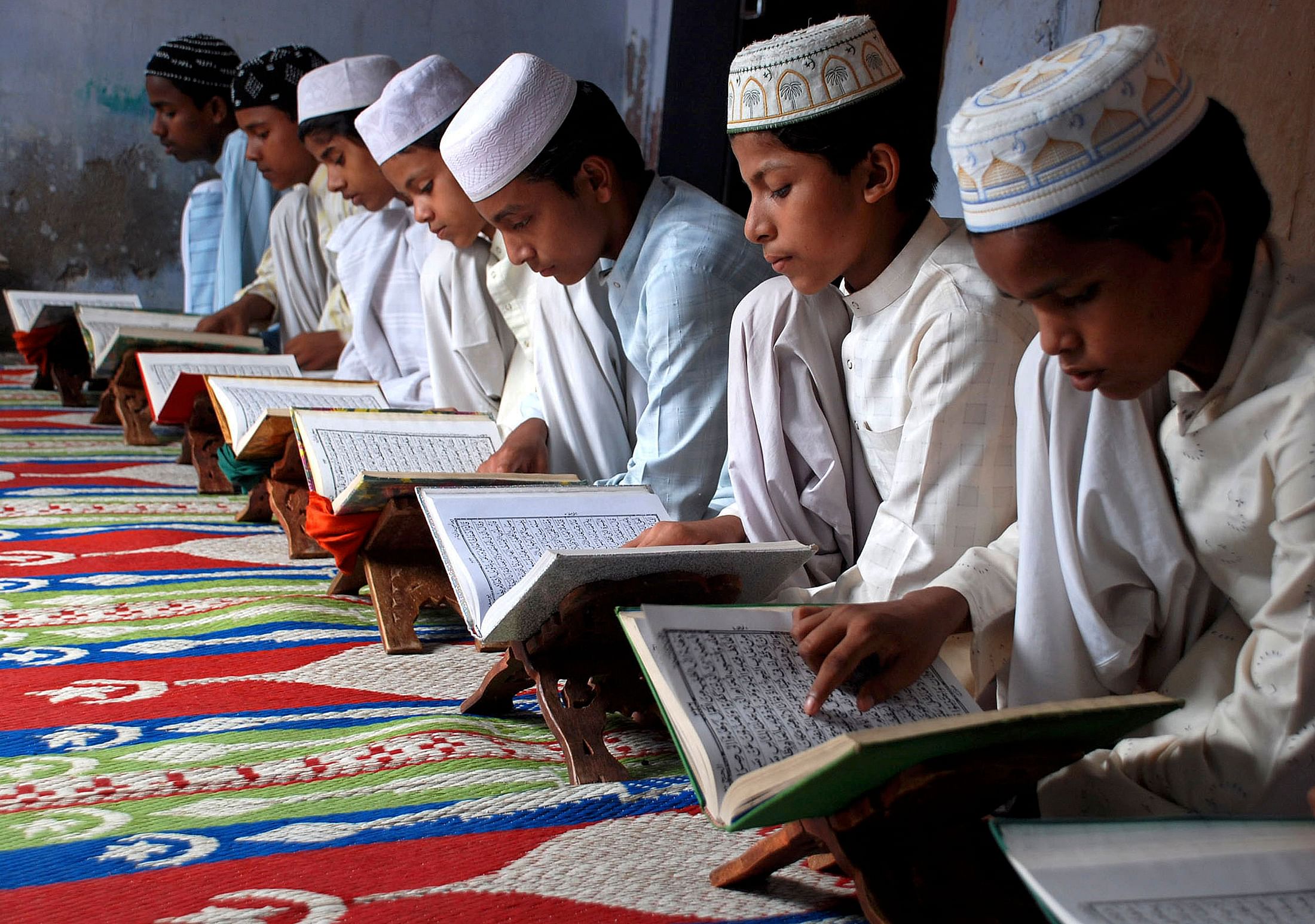
The Qur'an is a book that deserves deep, comprehensive, and consistent study. This reality even extends to texts that are usually not present on our radars. The particular Soorah briefly examined is a text which most Muslims learn as children, because of its relatively small size, rhythm and message, a few lines that are often used in worship.


This composition is added to the study notes series, in which we are simply sharing an edited, revised version of my own notes, prepared for teaching purposes. 


Two different translations

Saheeh International

(1) Woe to every scorner and mocker. (2) Who collects wealth and (continuously) counts it. (3) He thinks that his wealth will make him immortal. (4) No! He will surely be thrown into the Crusher.  (5) And what can make you know what is the Crusher?  (6) It is the fire of Allah, (eternally) fueled. (7) Which mounts directed at the hearts. (8) Indeed, Hellfire will be closed down upon them, (9) In extended columns.

Yusuf Ali 

(1) Woe to every (kind of) scandal monger and backbiter. (2) Who pileth up wealth and layeth it by. (3) Thinking that his wealth will make him last forever! (4) By no means! He will be sure to be thrown into that which breaks to pieces. (5) And what will explain to thee that which breaks to pieces? (6) (It is) the fire of the wrath of Allah kindled (to a blaze) (7) That which doth mount (right) to the hearts. (8) It shall be made into a vault over them. (9) In columns outstretched. 

Some vocabulary

"Humazah" which appears at the end of the first verse is the key expression and title of this Soorah, it is typically translated as "the backbiter", stems from the root hamaza, which carries the meaning of suggestions, whispers, goading, and is even used for insanity!


"Lumazah" is from the root lumz, which refers to negative speech, can be translated as "defamer". Saheeh international has rendered it "mocker" as noted above. It is the last term of the first verse. 

"Hutamah". Although translated above (in verse 4), a literal translation is actually unneeded here, as it becomes defined in verse 6 as "God's kindled fire". 


Overview

Even though it is said to refer to the Makkan opponents of the Prophet Muhammad (Sall Allahu 'alayhi wa sallam), who would approach visitors coming for pilgrimage and trade with false reports, with the intention of dissuading those visitors from listening to him (i.e. the Prophet), the content of this text has implications and lessons far beyond that.

Verses 2 and 3 inform us in a subtle way that those who engage in this behavior against the Prophet were powerful folks.  They had "money to burn" and, as shown repeatedly in the Quranic and historical references, incredibly selfish, greedy and blind-hearted. 

Slander, backbiting and the like seem to be the pastime of the wealthy, of those who have the power to disseminate their false news.  They do so not simply for the sake of "gossip", but for an agenda. 

In a context of a war for the minds, it becomes important here, as the observer, to find out the truth by whatever means are available, especially in those areas with religious implications. Misconceptions as well as outright false attributions are easily spread in today's world. Thus, look at both sides of an argument before deciding who is correct. Become educated in the complexities of the important subjects, personalities and ideas. 

Those who engage in what can be described as phycological warfare and disinformation are described as those who are punished with "God's kindled fire" (Naarullaahil Muuqadah) in verses 4-6.

These are folks with narcissistic tendencies, corrupted emotional output/feelings, corrupted beyond repair. We find this not only in verse 7-9, but in the Quranic description of the rejectors as found in places such as Soorah Al-Baqarah. (EN1)

This can also be said to not only refer to opponents of religious truth, but to those who like to keep drama going. Thus, it is important to avoid these things as much as possible.(EN2) and (EN3)


Endnotes

(1)  For more on this, see Foundations for proper thinking


(2) Muslims have historically struggled with issues of this kind, and in particular with similar subject matter as given in Soorah Al Hujuraat. There is agreement among scholars that "backbiting" is legitimate when done against the voices of religious misguidance, however the term itself, I think, is not appropriate for that context, as "backbiting" often involves slander and false information.  I see no problem with critiquing views, so long as the views under attack are actually being presented correctly. Often misconceptions lead to misrepresentations, themselves leading to miscarriages of justice. In addition, "personal" attacks are beyond the pale, unless there has been legitimate harm involved, in which case it becomes an issue of public safety and benefit. Qur'an 4:148 provides some clarity on this.   Today's discourse involves practices such as "doxing" and even stalking ideological foes, scrutiny of their family members, attempts to interfere with their income, etc.!   Such behavior is toxic.  

(3) Our Mosque has Quran study sessions  Sundays at 1:00 PM (PST). Most of our sessions are broadcast live, all are welcome to participate. Simply "follow" our Facebook page for notifications of livestream. The Masjid Ibrahim | Facebook


Monday, April 24, 2023

A clarification on the account of Zaynab and Prophet Muhammad

 Introduction


Among the pitfalls of historical examination is that of misunderstandings created by either  well-meaning people, or through   blatant misrepresentations of the lives and actions of important personalities. While this is a situation most regrettable in the religious realm, this certainly happens in the secular world as well.


This can happen in the lifetime of that figure, but it becomes harder to correct after the death of that figure. There are a number of examples I can think of, wherein I had accepted as historically valid a particular "fact", only to be corrected upon encountering a sounder bit of information from reliable sources. 


While this process of acceptance and rejection can be subjective, and certainly occurs in almost every field of study, some assertions deserve to be rejected automatically as ridiculous attributions! Among such claims is that having to do with the marriage of Zaynab, Radee Allahu 'anhaa, to the Prophet Muhammad, Sall Allahu 'alayhi wa sallam.


The claim in question is summarized as follows: Zaynab bint Jahsh, married to the Prophet's (adopted) son Zayd Ibn Al-Haarithah, was an exceedingly beautiful woman, and when this was noticed by the Prophet, he took actions to break up that marriage to have her for himself. Critics assert everything from seduction to incest in this scenario.


It will be demonstrated in this composition, supported by historical analysis, logic and Quranic references, that such an assertion is simply unfounded. It is our hope that this article answers this particular claim, to benefit Muslim and Non-Muslim readers alike. 


Who was Zaynab?


Zaynab bint Jahsh was actually a cousin to the Prophet. As such, she would have been well-known to the Prophet through her life. The reports around her suggest that she had a sort of aristocratic upbringing and world-view, even after she accepted the message of the Prophet Muhammad. 


Who was Zayd?


Zayd Ibn Al Haarithah was an ex-slave, who eventually became the adopted son of the Prophet Muhammad (before the Prophethood). He was known to have deep respect and loyalty to the Prophet, to the point where his actual family came looking for him, and he (Zayd) prefered to stay with his adopted father. He was known as "Zayd ibn Muhammad" (Zaid, son of Muhammad).


As an ex-slave, he would have come from a lower or despised part of society. 


What was the Prophet's agenda?


We have to remember that according to all the reports, it was the Prophet himself who pushed for a marriage between Zayd and Zaynab to take place. The reports assert that Zaynab was reluctant, yet it ultimately happened. 


The Prophet's agenda here is addressing social divisions and class warfare. He initiated a number of actions towards greater social cohesion. In Madinah, he created "pacts of brotherhood" between members of varying tribes and classes, which proved to be very successful. His message was that of unity and breaking down harmful divisions. Even in the ritual prayer (salaah), the emphasis on being closely together is given. He is reported to have said " Establish the rows, shoulder to shoulder, close gaps, be accommodating to your brothers, and leave no breaches for the devil.." (Sunan Abu Dawud 666, reported by Ibn 'Umar)(ft.1).


The Qur'anic revelation itself is the foundation for his many actions, for the sake of brevity we cite only a few  examples:


" And among His (i.e. God's) signs is the creation of the heavens and the earth, and the diversity of your tongues and colors, indeed, in that are signs for those of knowledge." (Q 30:21)


"O Humanity. Indeed, WE (God) created you from a male and female, made you into peoples and groupings, so that you will know (each other)(ft.2), Indeed, the most honorable of you in Allah's sight are those with the most taqwaa(ft.3)  in your midst, Indeed, Allah is knowing, aware" (Q 49:13)


"And marry those among you who are single, and righteous, be they among your male or female servants. If they are poor, Allah will give them from his bounty, and Allah is expansive, full of knowledge ('Aleem)" (Q 24:32)


The breakdown of the relationship between Zayd and Zaynab


It is well-established from the sources that the marriage broke down. It can be described as irreconcilable differences. In fact, it is said that Zaynab herself said she could not even bear to look at Zayd, and agreed to return the dowry paid to her by Zayd, thus ending the relationship.


What happens to Zaynab as a divorcee?


Anyone with knowledge of Arab society, both in the past and present, can testify to the hardships a divorced woman will experience. Subsequent marriage was very difficult, if not impossible. Social stigmas are attached.  


The Qur'an itself states that the Prophet had tried to save the relationship between the two (Q 33:37), but those efforts failed.  It was after that that the Prophet did marry her. 


The context of this section of Soorah Al Ahzaab shows that there was a Divine wisdom in this entire saga, which shall be explored in the sections below.


Adoption reformation

As previously mentioned, Arabian society viewed adopted children with the same lenses as biological children. While adoption, particularly of orphans, is a praiseworthy action, shown by a plethora of Quranic texts and statements of the Prophet, the actual lineage of the adopted parties must be preserved (if known) as much as possible. With the advent of DNA testing technology, this is a task made much easier. 


Q 33:5 states "Call them by (the names of ) their fathers.." Also see verse 4, 36 and 37. Islam asks that the family line, the biological ties, be preserved. As a side note, some of the salafi writers have used this argument to speak against the common practice among Western Muslims (converts to Islam from Non Muslim backrounds) of changing names to traditional Muslim names(ft.4).


The particular relevance to the Prophet's status


In this chapter we have the famous text declaring the Prophet Muhammad as the seal of the Prophets. It is important to note context as well as precision of words. 


"Muhammad is not the father of any of your males, rather, he is God's messenger, and the seal of the Prophets. And Allah has knowledge of all things." (Q 33:40).


This shows us that marriage with Zaynab has three main benefits: {a) It demonstrates that the adoption reformation has taken place, placing emphasis on  the preservation of the biological family line. (b) It removes a social stigma that was present with marriage with a divorcee. (c) It shows us that there will be no prophetic successor to Muhammad. Thus, Zayd is no longer to be called "The son of Muhammad". Indeed, the Prophet's actual biological sons died in their toddler stages. 


The latter is the most important in the Divine wisdom. While reformers and great teachers can always emerge, we are taught that the doors of Nabuwwah and scriptural revelation have come to an end, demonstrated by Q 33:40.


Concluding thoughts?


The notion that Prophet Muhammad was so in love with Zaynab that he had to create false pretexts to be with her falls flat on its face when we examine the scriptural and historical evidence. Indeed, Karen Armstrong (a Non- Muslim religious scholar) has argued that not only had the Prophet always known Zaynab, but that whatever beauty there had been would have eliminated during the Makkan boycott in the previous period, a time in which Muslims were suffering starvation. 


The story that appears in some Muslim sources (that he saw her at her home in some state of undress) is more akin to the Biblical account of David (2 Samuel 11:2) has to be dismissed as fabricated. 


There is great wisdom in what actually happened with Zaynab, Zayd and the Messenger of God, and such hikmah is seen when studied deeply.


May Allah be pleased with those who were close and faithful to the Prophet, and may Allah's peace and blessings be on all of the Prophets and messengers. 


Footnotes


(1) The Hanafi school has a more nuanced understanding of the text mentioned here, as well as the subsequent discussions on standing "foot-to-foot, shoulder to shoulder" in prayers. We have seen problems between Hanafis and Non Hanafis, the latter sometimes taking the reluctance of their Hanafi brothers to stand foot to foot as demonstrations of racism (in an American context). This issue is actually a Fiqhi difference and stems from a different understanding of the texts that surround these practices within Salaah. For a glance at this issue, please see Maulana Abdul Rahman Ibn Yusuf's article at the following link. .See here


(2) The term here is Li'ta'aarafoo, "in order to come to know" This refers to benefiting from other communities of humans, adding to the diversity of existence. This can be found in food, music, philosophy, fashion, and countless other examples. In other words, God is saying he made us intentionally different as a means for us to learn from each other. 


(3) Taqwaa is a rich word whose meaning depends on context. Here, awareness of God and other people is the appropriate rendering.


(4) While the salafi position is understandable, I think that in a Western context, changing names is reflective of wanting a new life. In addition to this, the names African Americans typically carry are names given by the slave masters of generations past. Coming into Islam is a means to create a unique identity divorced from the past social crimes. It should be noted that Islam does NOT command changing names, unless the name carries a bad meaning. Thus, the hadeeth literature mentions that the Prophet changed someone named "war" (Harb) to "Calm" (Saleem), and "Ugly" (Qabeeh) to "handsome" (Jameel).

Thursday, March 16, 2023

Personal Islam: creating a balance between public and private

 Introduction


As individuals moving through life, perhaps even in differing locations, we are forced to learn what is useful and what is superfluous. There are battles worth fighting, there are likewise times when simply moving on is best. 


In a world connected by the internet, artificial intelligence, cellphones and social media networks, our movements are open to scrutiny and criticism. This is not restricted to politicians but is now accessible to everyone. Those with sufficient abilities can hack into a stranger's correspondence and even bank accounts, even going so far as to "dox" an ideological opponent or attempt to create situations wherein individuals are "canceled". 


Much of this stems from cultural acceptance of these possibilities as byproducts of modern life, as well as downplaying the harms that come from ill-intentioned characters. Thus, victims of stalking, assault and the like, can receive little to no sympathy, their lives existing as nothing more than a source of entertainment to strangers, friends and foes alike. 


It is my assertion that it is vital for people to create balances in an ever-connected world.  The balance between being a responsible, public citizen and having privacy, a private life that should be respected by all. 


A person's Islam


The above translation of the hadeeth (which appears in collections such as Imam An Nawawi's Al Arba'oon an Nawawiyyah and subjected to great analysis in Ibn Rajab Al Hanbali's Jaami' al 'Uloom wal Hikam) is very strong. On the outset, I would render the translation as " From a person's pleasant Islamic (disposition) is his leaving (or abandoning) that which gives him no meaning." 

Either way, it shows us that nosiness, and the subsequent actions such as speculation, gossip, fake news and the like, are not characteristics that people should have or carry themselves in. 

In most of the Muslim cultures, (as an example) family affairs are deemed private, and it is deemed reprehensible for outsiders to engage in gossip and speculation on those matters, particularly if such behavior is engaged in by men. 

It would do well for Muslims and Non-Muslims alike to heed the wisdom of the Prophetic hadeeth cited above. Indeed, this narration counts as 25% of the texts necessary for a completed Islam, according to the hadeeth collector Imam Abu Dawud (d.889 C.E.). Thus, nosiness is in itself spiritually unhealthy. 

Simply put, if encountering speculation or information on a person, Our Prophet (Sall Allahu 'alayhi wa sallam) is telling us to leave it alone, even if it involves individuals on the opposite side of strongly held ideological beliefs. The exceptions would be if something forbidden by clear religious teachings, crimes, communal harm and the like. In such cases, it is necessary to do something about it.

لَا یُحِبُّ اللّٰہُ الۡجَہۡرَ بِالسُّوۡٓءِ مِنَ الۡقَوۡلِ اِلَّا مَنۡ ظُلِمَ ؕ وَکَانَ اللّٰہُ سَمِیۡعًا عَلِیۡمًا 

" Allah Loves not the expression of harm, except for those who have been wronged, Allah is the one who hears and knows." (Q 4:148)                                


Islam asks for a culture of respect.


A quick perusal of the Qur'an shows us important yet often neglected teachings. Among those tidbits of guidance, we are told not to enter into the homes of others without explicit permission, that there are times of the day when privacy is to be expected and only interrupted with consent, be cognizant of time and comfort of your host, and not to overstep one's boundaries when dealing with the family of your host. (Q 24:27, 58, 33:53, 59).


What about public figures?

Much of the Quranic texts cited above were involving the Prophet Muhammad himself, upon whom be peace. Undoubtedly, he was a public figure, as both a political leader and a person viewed by his followers as God's messenger, coming in a long line of Prophets who have graced humanity with their presence. 

Muhammad, although being a messenger of God, was still a human, with the same needs and struggles as other humans. A gentle, compassionate man by nature, he had the tendency to not vocalize if annoyed, offended, etc. 

Examples of these things are highlighted within the Qur'an in order to give lessons on human interaction. Thus, even he, as any other leaders, have the right to respect and for scrutiny/criticism not to be directed towards that which is not for the public.

Yet, what is interesting is that this happened, not only from zealous or unaware Muslims, but more importantly from his foes. The Qur'an mentions repeatedly this as coming from "hypocrites" (enemies disguised as Muslims) and those with "diseased hearts." (33:53, 59, 60 et al).

These types would find ways to harass the Prophet's wives, spread slanders and false stories. The Quranic revelation instructed his wives to have decorum in speech and dress, (33:32, 33 and 53) yet such actions from the hypocrites and those with diseased hearts continued!


Thus, Muslims are instructed that while it arguably acceptable to engage critically with the thoughts, policies and beliefs of public figures, going after their families or family matters are totally unacceptable. The concept of "doxing" is totally forbidden insofar as Islam is concerned. This prohibition is a natural extension of the prohibition of backbiting, slander and gossip (Q 49:11-12)


Does privacy exist within a family itself?


Although a difficult and debatable question, it is our understanding that this extends even within the family unit itself. Minor children should be shielded as much as possible from the problems between their parents. It is unnecessary for each clan member to know your bank account balance.

The Quranic story of Joseph (Yusuf, 'alayhis salaam) highlights that jealousy emerged from his own family to the point where his own brothers contemplated his murder, before deciding on exile. 

His father, the Prophet and patriarch Jabob (Ya'qoob 'alayhis salaam) advised him to keep certain things private, because he was cognizant of the hatred in the hearts of the other children (Q 12: 5, 7, 8-10).

Similarly, the Qur'an has wisely stated that marriage problems be dealt with through only one "judge" (hakaman) from the wife's family, and one from the husband's family. (Q 4:35)

Making such trauma bigger by involving more parties only complicates the situation. 

Conclusion

Every situation is unique, as well as every culture. Our perceptions as individuals will vary. Our perception of what should be kept under wraps may differ from that of the readers, however as general principles, we should have the religious maturity to concentrate on what actually concerns us, and not enter into other people's business. 

This is a lesson that is delivered by the Qur'an and Sunnah. Some may argue that human curiosity prevails over religious slogans, yet as Muslims it is necessary to seek conformity to our religious sources. ( Q 33:71). Looked at from a different angle, no benefit is derived from knowing another person's news, good or bad. The curious observer most likely will be unable or unwilling to help the object of their curiosity, so it is pointless to "investigate" in the first place. 

In terms of "good news", it is my view that that should also be limited in public exposure. Attention from the jealous, hateful or envious can create it's own problems. I have long believed that the prohibition (for men) of wearing gold or silk- found within the Prophetic tradition- exists in order to limit jealousy, crime and other negative reactions from others. Modesty and humbleness should be exhibited by all parties (but especially those of wealth) in public. 


Saturday, February 11, 2023

Simple and easy study methods

 Introduction:

The necessity for learning is a universally accepted reality. Be it walking, talking, planting seeds, growing crops. grammar, mathematics and more, we are in a constant state of information increase, almost until the last moments of life itself.  


While it is true that there are innate abilities and interests that are unique to each individual, and that learning disabilities, social conditions, and mental health conditions can have an impact on educational goals, there are simple and easy ways to develop effective skills to retain, understand, and be successful in accomplishing such needs.

Below you will find some tips which I have utilized, which have benefited me greatly. The steps below have been divided into individual scenarios.


(1) In school (High school, university, or other)


In such an environment, classes are taken within certain time frames, with rules and methods often unique to the institution or the teacher(s). In a broad sense, it is important to have time disciplines, avoiding distractions (that are readily available today via mobile phones, internet etc), adequate sleep, income, diet, and even good peers. 

Some subjects we have to study are actually not interesting nor relevant to our goals, but if they are required courses (and unable to switch to more pertinent classes), they must be tackled. Lectures, reading, taking notes, asking questions from instructors, all are necessary steps. 


While families should take steps to make the above easier to accomplish, it is incumbent on the student to create the environment most conducive to their own circumstances. Going to the library or park to study. Have notebooks(ft.1) dedicated to particular subjects/classes. If the subject under study is linguistic or scientific, as much immersion as possible is necessary. Living in a country where the language is spoken, study of literature, music, and the like. Attaining assistance from those capable people is also necessary.


(2) Individual study


This may be classified under informal study, in which there are no outside pressures, such as tests, deadlines, and the like are present. This could also be applicable (particularly to the elderly) in learning how to navigate the technology of the modern era. 


A great deal of patience and discipline is required here, and depending on which subject, it can be relatively simple. A person can simply have instructions in a conspicuous spot that explains how to use the computer or to enroll in automatic bill pay. That could be sufficient.


However, for more complex topics, some more work would be required. Much of the advice from paragraph #1 above is applicable, but keep in mind that if no (physical) teacher is present, self-teaching a subject can result in internalizing incorrect information, because no one was there to give a correction, especially in language arts. 


It is for this reason that (depending on which area of study) a teacher is highly recommended, even in self-teaching. The teacher does not always have to be an actual academic, but rather sufficient enough to assist one's growth in the subject. That teacher does not need to think on behalf of the student. 


There are countless institutes in operation today on every subject imaginable, even outside of academia. The internet, and particularly in a post-COVID era, has seen the emergence of mass online learning, via ZOOM and other such platforms. While this is very useful, it is still the view of this writer that whenever possible, interactions with those giving us academic assistance should be done in person, rather than in a virtual realm. 


(3) Scriptural study


For Muslims, the Qur'an is the words of God, conveyed to the Prophet Muhammad. The word Qur'an itself carries the meaning of recitation, or that which is to be repeatedly read. The title is very appropriate when we consider the role it plays in the Islamic life. It is the central source of religious guidance, used in legal and cultural roles. 


Thus, we have to divide this discussion into (a) Memorization/Recitation (Hifz/Qira'aat) and (b) Understanding in a religious/academic role (tafheem/tafseer)(ft.#2)


(a) The Qur'an is the core text recited in daily prayers. Thus, all practicing Muslims memorize some portions (ft.3). If the goal is to memorize selected portions for prayers, this can be done via a teacher, repeated listening to the mosque Imam recitation during communal worship (ft.#4), as well as YOUTUBE videos, CDs while driving, cleaning, etc. The mind can retain such texts just as we retain song lyrics. If the goal is to memorize the entire text, this- in my opinion- requires a teacher, discipline, time and patience. It can take years to accomplish. 

For memorization of a particular text (such as Ayatul Kursiyy, 2:255 for example), after one or two of the daily prayers, play a recording of it, and after learning it, use it inside of your prayers. Indeed, rotate various Quranic passages for usage in daily prayers (ft.5)


(b) Understanding the Qur'an: The Qur'an was given slowly to the Prophet Muhammad, Sall Allahu 'alayhi wa sallam, therefore, we must also expect that it won't reveal its treasures overnight. While teachers are useful in conveying information on it, we should take heed that it is also a text which God himself teaches (Q 55:2). While I do consult tafaseer (Quranic commentaries) in seeking to understand texts, my methods can be summarized as follows: Notebooks, in which texts, commentaries, reflections, questions are all noted down and studied. Consultation of the original Arabic text, as well as linguistic resources(ft.5). For a more exhaustive presentation on this, see This link as well as this lecture

Bible study


While I do not claim expertise in Biblical studies, I do study it, and generally follow the development of Biblical Hermeneutics as a religious and cultural field. I have found that writing notes in the back pages, highlighting passages, and notebooks have been very useful. There are also a number of Jewish and Christian scholars whose reflections are very deep in these regards. 


My personal library contains almost all of the English translations and commentaries on the market, and have benefited greatly from all of them, despite my theological differences (ft.#6). Thus, I won't make any recommendations on a particular Bible translation or version. 


General tips

(1) Use physical books for study when possible. Studying via e-books, audiobooks, PDF files, etc does not result in retaining the information nor in easier accessibility than physical books and notebooks.


(2) Don't be afraid to ask or acknowledge weaknesses in a particular subject.

(3) Review your written materials, as well as any lecture videos, recordings, etc., on a regular basis.

(4) Try using (or at least discussing) new information, it will help in retaining and understanding the information.

(5) Have a strong social network, particularly in spiritual affairs or religious studies.

(6) Avoid distractions during study time.


Footnotes

(1) Notebooks should be big enough to note texts, questions and the like. I suggest employing various color pens and highlighters in order to access information later. This can be done on a laptop computer as well; however, I do not suggest a phone, tablet or I-PAD for these purposes.

(2) Tafheem means "understanding" while Tafseer means "explanation", the latter being the term employed for Quranic hermeneutical literature. All the Muslim sects have produced contributions to the tafseer genre, (much of which is not available in English), yet it is my view that Tafheem is a better term, because ultimately these all represent human efforts to grasp the Divine message, and as humans we are subject to human limitations. 


(3) After Al-Faatihah, the most memorized passages include chapters 112-114, because of their brevity and content, very useful for prayers. It is our suggestion that personal favorite Quranic passages be studied, memorized and used in prayers, as this has been another method for retaining knowledge. The "verse of God's light" (Q 24:35), or texts which speak of Divine mercy and the like are recommendations. 


(4) The Friday prayers (Salaat al Jumu'ah) is the most obvious example, but also the fajr, maghrib and 'ishaa prayers, because in the first two standing postures of those prayers, the Quranic recitation is done aloud. (Jahri). Praying in a mosque or a communal setting during those times will allow for absorbing and memorizing texts, and eventually to employ the same texts for yourself. 


(5) There are a number of works from the classical periods of Muslim history which looks at the Qur'an from a linguistic perspective mainly, such as Tafseer Al-Kashshaaf  (whose author died in 1143). Resources such as Lane's Lexicon are ideal for Quranic studies (and indeed, all English translations refer to LL). However, even though LL is in English, knowledge of Arabic language is still necessary in order to access its contents. Indeed, the Qur'an itself cannot be accessed from a truly deep position without Arabic language. There are some dictionaries on the market, whose focus is on Quranic vocabulary, yet even those works have limitations. For English readers interested in a mostly linguistic approach to the Qur'an would do well to read The Message of the Qur'an, the translation and commentary by Muhammad Asad. That work relies heavily on Tafseer Al-Kashshaaf


(6) While we have highlighted commonalities between the Bible and Qur'an in the following lecture at this link we have also shown significant differences and the reasons for that here


Monday, December 5, 2022

Musa and Khidr: a brief reply to controversy


Our brothers and sisters in faith,


As salaamu 'alaikum wa rahmatullahi wa barakaatuh.  This post is meant to briefly address misunderstandings which have emerged as a result of comments I made during the Jumu'ah Khutbah two days ago in Las Vegas, Nevada.

On the outset, I would like to say that I am like any other human being. I welcome discussion and questions, so as long as they are posed with decorum (adab). Moreover, I am able to make mistakes in speech, choice of words, and even conclusions, just like anyone else. It is for this reason that Muslims always have within our speeches the expression "God knows best" (Allahu A'lam), particularly when exploring scriptural texts.


With that said, it is important to say, as a matter of personal faith, that I am a believer in the Qur'an. I am 100% convinced that it is from God!  I have no doubt that its contents are conveyed by Allah, that it is preserved and intact, from the time of revelation till now. The more information I encounter in life only reinforces this conviction. 

إِنَّمَا ٱلْمُؤْمِنُونَ ٱلَّذِينَ إِذَا ذُكِرَ ٱللَّهُ وَجِلَتْ قُلُوبُهُمْ وَإِذَا تُلِيَتْ عَلَيْهِمْ ءَايَـٰتُهُۥ زَادَتْهُمْ إِيمَـٰنًۭا وَعَلَىٰ رَبِّهِمْ يَتَوَكَّلُونَ

" Verily, believers are only those when Allah is mentioned, their hearts are moved. And when His signs (i.e. Quranic verses) are related to them, it increases them in faith (imaanan), and upon their Sustainer they have reliance" ( Q 8:2)

During the khutbah, I mentioned in passing that I am more inclined to take the account of Moses (Prophet Musa, 'alayhis salaam) encounter with the mysterious teacher known as Khidr (a name meaning "greenish", an allusion to fresh, healthy knowledge) in metaphorical terms. 


Let me clarify, metaphor does not equate fiction nor something fake. In this context, the intended meaning of my words is that there are important lessons that are being delivered to the readers by means of the account, some of which were highlighted within the khutbah itself. 


While it is acknowledged by all hands that symbolic terminology exists within the texts of the Qur'an and Sunnah, disagreements naturally arise as to which texts fall under the category of clear and which are open to interpretation. The Qur'an itself speaks on this " He it is who sent down upon you (O Muhammad) The scripture, of it are verses of decisive character (Aayaatun Muhkamaat) , they are the foundational for the scripture (ummul Kitaab), and others are flexible in understanding (mutashaabihaat)...and none knows its (ultimate) explanation (Ta'weel) except Allah and those grounded in knowledge (war raasikhoona fil 'ilm): They assert "We believe in it, all of it is from Our Lord's presence" and none grasp (all of) this except those of understanding " ( Q 3:7)


ہُوَ الَّذِیۡۤ اَنۡزَلَ عَلَیۡکَ الۡکِتٰبَ مِنۡہُ اٰیٰتٌ مُّحۡکَمٰتٌ ہُنَّ اُمُّ الۡکِتٰبِ وَاُخَرُ مُتَشٰبِہٰتٌ ؕ فَاَمَّا الَّذِیۡنَ فِیۡ قُلُوۡبِہِمۡ زَیۡغٌ فَیَتَّبِعُوۡنَ مَا تَشَابَہَ مِنۡہُ ابۡتِغَآءَ الۡفِتۡنَۃِ وَابۡتِغَآءَ تَاۡوِیۡلِہٖ ۚ؃ وَمَا یَعۡلَمُ تَاۡوِیۡلَہٗۤ اِلَّا اللّٰہُ ۘؔ وَالرّٰسِخُوۡنَ فِی الۡعِلۡمِ یَقُوۡلُوۡنَ اٰمَنَّا بِہٖ ۙ کُلٌّ مِّنۡ عِنۡدِ رَبِّنَا ۚ وَمَا یَذَّکَّرُ اِلَّاۤ اُولُوا الۡاَلۡبَابِ ﴿۸

The goal of Divine revelation is to give us direction, a firm foundation in both religious and worldly senses. It employs both direct and subtle means to accomplish this, and similarly delivers guidelines which are easily recognized. 


Is there any precedent for symbolic interpretations of Moses and Khidr account among Ahlus Sunnah wal jamaa'ah?


The account only appears in Soorat al Kahf, a text which reports in the hadeeth literature assert provides protection from false messianic figure (Al Maseeh id Dajjal) as well as a light from week to week (the latter being the source for the practice of reading it on Fridays). Thus, it has a theological, practical and phycological importance. 


While a number of thinkers and scholars within the Islamic community have, throughout the centuries, opined rather interesting allegorical interpretations, the outstanding voices within Ahlus Sunnah that shared this include figures such as Naasirudeen Al Baydawi (d. 1319 c.e.). His famous Quranic exegesis, Anwaar at tanzeel wa Asraar at-ta'weel, better known as Tasfeer Al Baydawi,  in speaking on the text which introduces the account, writes "It is said that the two oceans are Moses and Khidr, Moses was ocean of outer knowledge (ilm udh dhaahir) and Khidr was knowledge of the inner ('ilmul Baatin)." ( Tafseer Al Baydawi, vol. 3, pg. 287, Beirut, Lebanon, Mu'assat Tareeekhul 'Arabi edition).


Zamakhshari, (d. 1143) in his famed commentary (Al Kashshaaf) has said similar words. " Some of the commentaries assert "Verily, the two oceans are Moses and Khidr, for the two of them were certainly two oceans of knowledge (li-annahumaa kaanaa bahrayni fil 'ilm). (Al Kashshaaf, vol.1, pg 537, Beirut, Darul Kitaab al Arabi edition).  Remember that in the account, Moses, peace be upon him, had made a vow to travel to the junction of the two oceans. There, he meets Khidr, and the above exegetes have shared how they themselves embody those oceans, i.e., two types of knowledge, an allegorical image.


It is worth noting that the term "metaphor" is found within the Soorah itself, (32, 45, and 54). In 18:54, it tells us that the Qur'an employs "every (type of) metaphor" (kulli mathalin) to benefit people.


There is acceptable divergence allowed in hermeneutics, this is part of spiritual and intellectual growth. Nonetheless, I pray that this brief post allows that the confusion has been cleared up, wa billaahit Tawfeeq. 


Monday, November 14, 2022

Which of your faith's or tradition's beliefs do you consider to be universal?

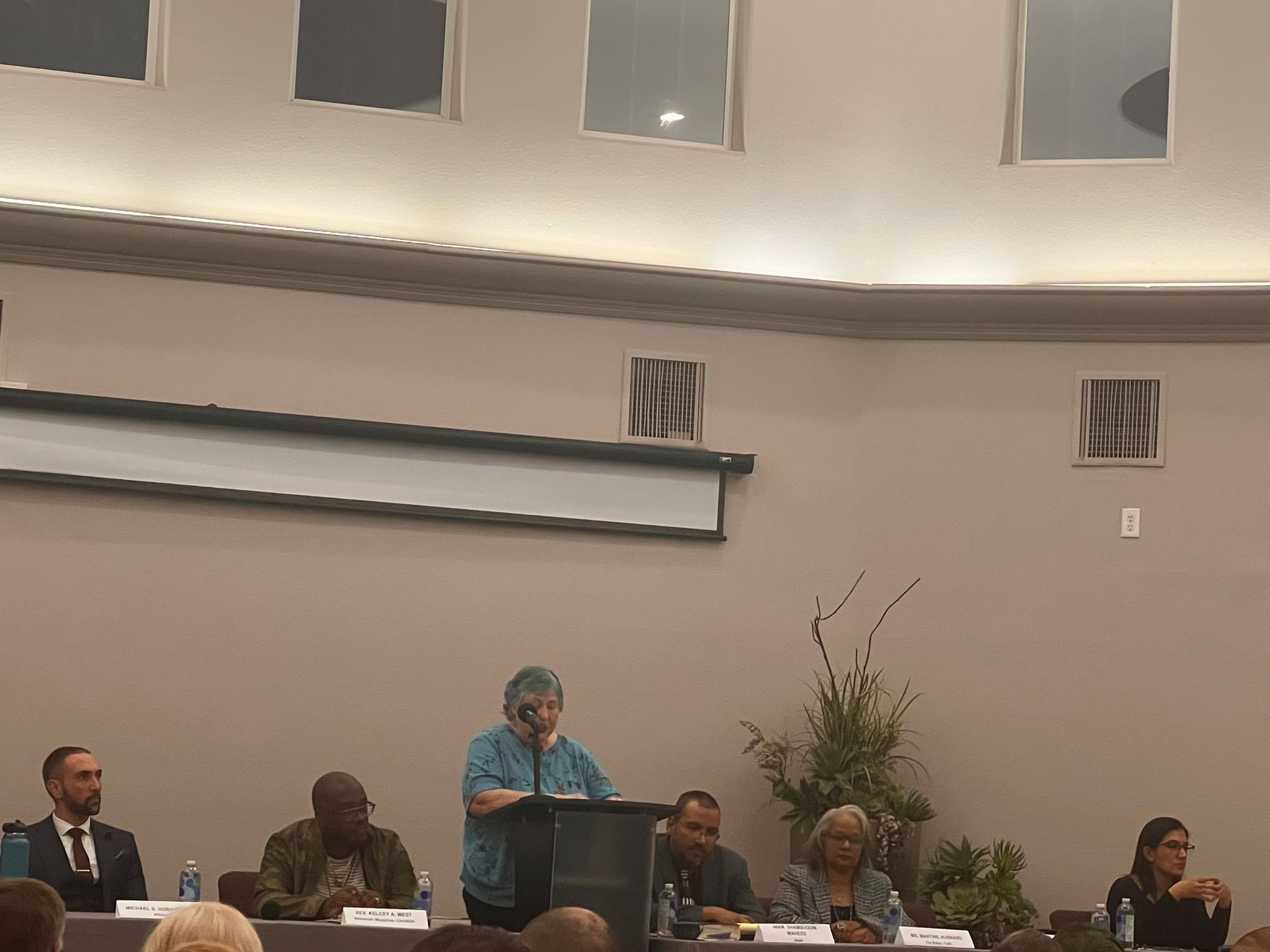
 We recently participated in a panel discussion with representatives of various faiths, sharing beliefs or values deemed universal. It was well-attended, with a robust question and answer session. 


Timestamps of the program are found below.


35:15- Aleda Nelson opening remarks 

42:40- Moderator Elham Roohani opening remarks, introducing the speakers and format.

50:43 Michael Gobaud (atheist)

59:00 Pastor Kelcey West (Christian)

1:04 Imam Shamsuddin Waheed (Islam)

1:13 Martine Hubbard (Baha'i)

1:21 Rev.Claire Summerhill (Center for Spiritual Living)

1:30- Q and A session.


The link to this program can be found Here


Some photos can be found below.


We must acknowledge the gracious hosts from the Baha'i center of Las Vegas for their hospitality. 


Saturday, November 5, 2022

The role of men in Islam: Some reflections on commonly asked questions


                   The role of men in Islam: some reflections on commonly asked questions


Introduction


While there have always been cultural differences between groups, a certain amount of uniformity existed amongst all, particularly when it comes to the biological and social functions of men and women. Men would be deemed the de facto head of the households, and women would carry responsibilities within the family.


This has certainly changed, not only in the West, but increasingly around the world. The reasons and general implications of these changes are beyond the scope of this presentation, nonetheless it is prudent to address some commonly asked questions from an Islamic perspective. I am cognizant that the following views are debatable, and I welcome respectful dialogue. I would also like to point out that this article does not endorse any actions or attitudes that bring forth familial and social disasters.


(1) Masculine leadership


The need for organization is universally recognized. In fact, we have countless examples of it in nature. Bees are organized into Queens, workers and drones. The beehive itself is set up to maximize productivity and storage. The Qur’an (16:68) actually makes a reference to their cognitive abilities and their organizational activity, referring to it as products of Divine inspiration.


In a similar fashion, the Qur’an has mentioned what a healthy structure is supposed to look like:

“The Men are responsible (Qawwamoona ‘alaa)  for the maintenance of (their) ladies: in that God has consistently delivered those (abilities) over (the same to) others, and in that they (the men) spend of their means (amwaalihim)... “Q 4:34)


The above text mentions responsibilities and places emphasis on financial arrangements. These two items certainly translate into different things for different people, and admittedly can vary from era to age. The term Qawaamoon carries the meaning of holding up, on a regular basis, a healthy establishment.


This can take the form of protection, advice, and guidance from a more rational basis. In terms of financial arrangements, ultimately this a guarantee of relative security, rather than a whimsical or temporary relationship.


(2) Polygamy

(1 


Undoubtedly a sensitive topic for women, Islam has allowed it, as illustrated in the following text:

“So marry women of your choosing: two, three or four, yet if you fear inability to be just, then one (waahidah), or from malakat aymaanukum,(ft.1)  that is most suitable to prevent injustice” ( Q 4:3).


A reading of the context reveals that the idea is simply a form of protection for those who are isolated, alone, without families or familiar support (al yataamaa). The Qur’an has not been silent on social needs, this is a faith which recognizes the realities of the world.


(3)    Is there any physical disciplining allowed in Islam?  


This topic deserves a great deal of analysis, as there are many misconceptions on this. The Qur’an summarizes the wife’s duty as “guarding what God would have them guard..” which is understood to include family wealth, private information as well as (most importantly) intimate relations. It says further that when there is risk of the above being violated, the husband is to (a) inform her tactfully (fa’idhoo-hunna),  (b) sleep separately ( ihjurununna fil madaaji’i) , and (c)  take a physical step (idribuhunna).


The “physical step” has been given in the Prophetic Sunnah as NOT domestic abuse, but rather showing displeasure by using- for an example- a tooth brush (Miswak). Moreover, we are told directly in the hadeeth literature (saheeh Muslim 2328) that Prophet Muhammad never hit a woman.


Moreover, the term idrib has a plethora of alternative meanings, both in the Qur’an itself as well as usages in Arabic, including to leave, to propose/explain (ft.2) . This has led many to suggest that the meaning is simply for the man to depart from the relationship in which the woman has showed disrespect of the basic duties (Nushooz).


Most have understood a-c above as the sequence of steps to take to resolve the negative situation, while the great jurist Imam Abu Hanifa (d. 767 C.E.) has taken the above as choices, rather than sequential steps.


There is some guidance on this aspect from the traditions of the Prophet that relate to other matters. He has categorically stated that the faces should not be struck, and that believers are not to bring harm to each other. Thus, putting all of this together, it seems to be suggesting that in those times that harmony is needed, that the healthy, mature husband is to take action to safeguard the family, to use an analogy, to push a person out of the way of an incoming vehicle, as a means to save their life.


This should never translate into domestic violence, abuse or harm of any type, as such would be inconsistent with Islamic values.

(4)    Dress


Men and women are both expected to dress with decorum and modestly in public. The precise clothing varies according to personal and cultural/environmental tastes. For more details, see Shamsuddin Waheed: Just what is allowed and not allowed in Islam? Addressing some commonly asked questions

at this link


(5)    Equality between men and women


The Qur’an certainly says that there are ways in which men and women are different, including that of physical strength. This is the typical pattern in human beings. 

However, in the most important areas, we clearly see a spiritual equality, in the sense that both genders are equal in the sight of Allah. The Qur’an says “VERILY, for all men and women who have surrendered themselves unto God, and all believing men and believing women, and all truly devout men and truly devout women, and all men and women who are true to their word, and all men and women who are patient in adversity, and all men and women who humble themselves [before God], and all men and women who give in charity, and all self-denying men and self-denying women and all men and women who are mindful of their chastity, and all men and women who remember God unceasingly: for [all of] them has God readied forgiveness of sins and a mighty reward.” (Q 33:35 Muhammad Asad translation)


The Qur’an also states that both have a chance of paradise of hellfire, contingent upon their thinking process and actions ( Q 33:73).


Footnotes

(1) The concept of milk-ul-yameen has traditionally been understood as sexual slavery: we reject that assertion, in light of Quranic evidence, for which, see Shamsuddin Waheed: Does Islam sanction slavery?  see link here


(2) For other Quranic examples, see 4:101, 3:156, 14:24, 25 and other verses.