Monday, January 24, 2022

Just what is allowed and not allowed in Islam? Addressing some commonly asked questions

               Just what is allowed in Islam? Addressing some commonly asked questions

Islamic doctrine asserts that Islam- surrender to God's will- has come forth through all messengers, finding its completion and perfection with the coming of the final scripture (Qur'an) to the final Prophet (Muhammad, Sall Allahu 'alayhi wa sallam).  In many ways, the Prophet Muhammad is like the Prophet Moses, upon both be peace, in that both have comprehensive legal systems associated with their teachings. It is the desire to obey Allah Almighty that has inspired the development of such systems. In these regards, we differ from Christianity, which largely has focused upon personal salvation, attainable through belief in the blood sacrifice of Jesus Christ on the cross.


This article does not seek to go into detail regarding legal issues, rather it will address commonly asked questions that center on issues such as dress, gender interaction, and cultural expressions. It should be noted that the premise of this article centers around two Quranic assertions, important verses which we have tended to marginalize insofar as understanding and applying Islam is concerned.


One of those verses reads:  " Say: My Lord has only consistently forbidden (harrama) immoral actions (Al-Fawaahisha), what is open as well as what is hidden (batan), sin and transgressions unjustly, that you associate with Allah that which He has sent down no authority, and that you speak about Allah what you do not know." (Q 7:33).


This shows us that God is not petty! The above text shows a general principle that Allah has prioritized that certain actions and attitudes are to be avoided, as they cause social and personal chaos. We have repeatedly presented as examples intoxicants, gambling, and the like, as contemporary problems that, if removed, would greatly benefit social stability.


The contrast is given in the text which borders the above citation, in which Almighty Allah asserts: " Say: Who has consistently forbidden (harrama) the attractive (items of) God (zeenatullah), which He has produced for his servants, and wholesome (tayyibaat) items from his provision? Say: they are for those who have faith (alladheena Aamanoo) in this life, and exclusively for them on the day of standing. Thus, We (Allah) does clarify signs for a people of knowledge." (Q 7:32)


Whatever is goodly, attractive and wholesome, that which benefits the physical, spiritual and social health of a person, this is welcomed by Allah! It is created by God for us to benefit from. If the two Quranic verses are remembered, in general we should have no problems in living by the religion of Islam.


It should be noted that cultural and personal tastes will naturally vary, so that factors in how we accept and judge things. Information on certain subjects will likewise has variance. Our judgements of what is lawful and what is lawful from a religious angle should likewise have evidence from the religious texts.


DRESS


Q1What is the dress code for Muslim women?

Islam teaches that in public, modest dress should be observed. Practically this means the hair and body. The Quranic texts assert that the reason for this dress code is to be viewed with respect (24:31), a means of protection from harassment and the like ( 33:59). A hadeeth of the Prophet further states that in public, only the hands, face and feet should be visible (Sunan Abu Dawud 4104).


Any cultural or personal style is acceptable from an Islamic perspective so long as the above requirements are met, and indeed, we find great diversity amongst Muslims in dress fashion. 


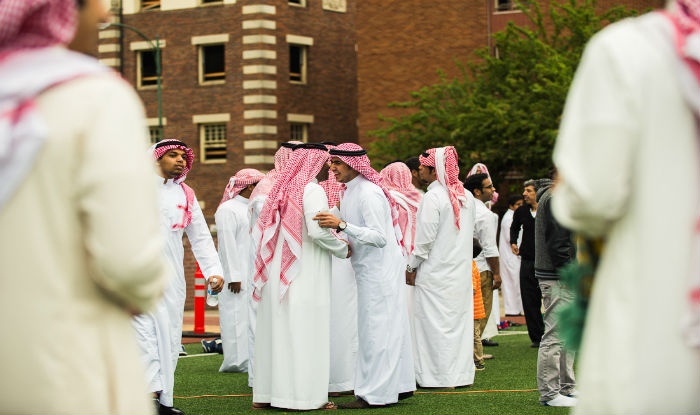
Q2 What is the dress code for men?


There is no text which directly addresses this, however there is consensus among the scholars that clothing should not be revealing, that the area between the navel and knees be covered. Many countries have laws against men going shirtless in public, and that is certainly a part of typical Muslim thinking as well. 


Q3 Do men have to wear headgear?


To our knowledge, there is nothing in the Qur'an or hadeeth literature which commands this. However, the literature does say the Prophet covered his hair, and certainly the head-coverings found in the Arab world offer protection from the weather elements. The covering of the head for men was considered (and in some places is still considered) good manners, and there has been scholars who historically considered abandonment of it to be an act of transgression (fisq). 


Moreover, there are also scholars, in particular of the Hanafi school of thought, who assert that it is preferable (mustahab) to offer prayers with a covered head. 


Yet, it is our view that the head coverings, as found in different forms throughout the Muslim world, is a cultural symbol, with little bearing on one's Islamic observance.


Q4 Are Suits and ties allowed?


There is no convincing evidence that the suit and tie is forbidden. The West has culture just as the East does, and as long as the requirements mentioned in Q2 are met, it should be fine.


Some have argued that the tie in particular is a symbol of the Christian cross, however there is no convincing proof of this. Others have taken the tie as a symbol of Western colonialism and is thusly frowned upon in places such as Iran. If one is convinced of the latter as an argument, then it is simply a matter of choice and preference, rather than religious mandate.


Q5 Pants above the ankles?


In the time of the Prophet, dragging one's garment (called isbaal in Arabic) was a way of showing off, a display of arrogance, and it is this attitude which was condemned by the Prophet. This explanation is almost universally recognized among Muslims, which is why generally full-length pants and garments are abundant.  Thus, we see no problem in this, if there is no arrogant display taking place. 


Q6 Can Muslim men wear gold and silk?

Although not mentioned in the Qur'an, it is forbidden by the Prophet in the hadeeth literature. In normal circumstances, men are the ones conducting business and activities in public life, and the wearing of gold and silk, especially in excessive fashion, can generate jealousy and even crime. Thus, we view it as forbidden (haraam), and best for Muslims to avoid.


Gender interaction


Q7 Is handshaking between the genders allowed?


In many Muslim cultures, particularly in the Middle East, South and Central Asia, it is inappropriate to have any physical contact with the opposite sex outside of one's family. 

Moreover, in the Shafi'ee school (dominant in Far East Asia), even a small touch, such as from a handshake, annuls one's ablution (Wudoo').  So, from a practical perspective, depending on one's surroundings, it may best be avoided, to prevent socially awkward situations.


There is no direct hadeeth on this issue, and the report usually cited to forbid handshaking between members of the opposite sex is disputed both in its content (matn) and its transmission (Isnaad).


In the West, as well as the professional world, it is deemed impolite to refuse a handshake. Moreover, as mentioned above, the report usually cited in order to forbid it is seriously disputed. Thus, it is our view that there's no problem with shaking hands. Those who take the Shafi'ee position (that even an accidental touch annuls one's Wudoo, as distinct from the other madhaahib who assert that it is sexual intercourse which renders purity void) find themselves at hardships in certain situations such as in Makkah and Madinah during Hajj time, when the crowds always push people towards each other. Some Shafi'ee scholars, as a result, take the position of the other schools just in that occasion.


Islam is a practical, easy faith, and it is not necessary for us to make it harder. Therefore, our advice is contingent upon location and context. In an of itself, we see handshaking as okay, this is also the fatwa from Al Azhar university, but one must be cognizant of local realities, which may demand NO handshakes or those in which handshakes would be required. 


Q8 Can a Muslim woman propose marriage to a man?


There is no problem with this.  Indeed, Khadijah (Radee Allahu 'Anhaa) did this very thing with Muhammad, a younger man, before the Prophethood.  


Q9 Is a guardian (wali) needed for a woman in marriage?


In three of the four Sunni schools yes, but in the Hanafi school it is not a requirement when the woman is deemed mature and intelligent (Baalighah Raashidah). The presence of a guardian is to look for the best interests of the female, who usually marries young and without life experiences. A woman with maturity and intelligence is free to conduct her life as she sees fit, so long as in keeping with Islamic values. Thus, the Hanafi view (as articulated in the Mukhtasar of Al Qudoori) is very logical.


Q10 Can there ever be communication/interaction between men and women?


Religiously, this is not a problem, however, this also depends upon the cultural surroundings. One must be cognizant of this, regardless of one's religious views. In any case, there is much evidence from the sources that show that interaction of this level is not a problem. Indeed, the Prophet's wife, Sayyidah 'Aa'ishaa, led an army (the battle of Jamal). There had to be communication between her and the commanders. She herself is a major source of hadeeth transmission, that would have to be communicated to men! These examples should be sufficient from a religious perspective.


Q11 What evidence is required from an Islamic perspective to prove adultery (Zinaa)?


The requirements are very strict, four witnesses (see Q 24:4,13) must see actual intercourse (dukhool). Other actions do not count as "zinaa". 

There is great wisdom in this, in that it limits false accusations to be leveled, and also allows for any potential issues to be resolved with the involved parties, rather than making a public spectacle.


Q12 Does a woman's voice constitute 'Awrah (something to be hidden)?


There is no evidence for that from the Qur'an or Sunnah. 


Cultural expressions


Q13 Is Music lawful?


There have been many authorities which consider it to be forbidden (Haraam), on the basis of some reports in the hadeeth literature, as well as an interpretation of the term Lahwil Hadeeth which appears in the Qur'an (31:6). However, the reports have been disputed since almost the very beginning of the Muslim intellectual history. Great scholars such as Imam Al Ghazali (see Ihyaa Uloom id deen )have praised the value of music, and the Quranic text mentioned above has no actual relation to music.


It is our view that immoral music is what is forbidden, as it encourages social disorder. This is the view of many great scholars and finds articulation by Shaikh Yusuf Al Qaradawi in his work Al Halaal wal Haraam Fil Islaam. 


Q 14 Can holidays other than the two Eids be observed by Muslims?


This depends on the nature of the occasion. Most occasions are secular in nature, and involve needed family and social interaction, which is encouraged by Islam. It is our view that holidays and occasions such as birthdays, national holidays, anniversaries, are not problematic at all. 


It can be argued that Christmas is a problem, but it is one easily solved. This question is particularly relevant for Muslims who have converted to Islam from a Christian background. One can join one's family in the social aspect (dinners for example), but not the religious aspect (church communion and the like). Simply skip the religious aspect, if there are any present.


Q15 What about Tattoos?


Some people get tattoos of their spouse's names, and other decorations. It is our understanding that such actions are haraam because they permanently alter one's body from its natural form. More importantly, scholars have given- as evidence for declaring it to be haraam, the Quranic assertion "Do not alter God's creation" (Q 30:30).


If one already has tattoos, it is in the past. However, we advise all readers not to get more tattoos. 


Q16 Can widows remarry?

In some cultures, this is frowned upon, however, there is nothing in the Qur'an or Sunnah which forbids it. Indeed, the Prophet Muhammad Sall Allahu 'alayhi wa sallam himself married widows.


Friday, December 10, 2021

Towards Honest self-inventory: an Islamic perspective (Friday Khutbah)

 (Note: The following is an edited version of the Friday prayer service sermon conducted 12/10/21 at Masjid Ibrahim, Las Vegas, Nevada. The opening words of praise for God (hamd) have been omitted.)


Allah has created us to be different


The Friday prayer sermons from the last two weeks have dealt broadly with the subject of self-enrichment, and have posited the argument that Allah has created us to embody differences, not just in language and skin color, but personalities, interests, tastes, habits and the like. (ft.1)  


Similarly, we have looked at Abu Bakr and 'Umar b. Al-Khattab, may Allah be pleased with them. Abu Bakr was known to be very gentle and soft-hearted, whereas 'Umar was known to have a tough personality, yet, when they became the leaders of the Muslims after the death of the Prophet ( Sall Allahu 'alayhi wa sallam), they made contributions that led to the growth of the community, despite their unique traits.


A beautiful recollection of 'Umar

Years after he became Muslim, 'Umar recalled two incidents which made him laugh and cry respectively. One was an occasion in which he had done acts of worship to dates, a food item widely available in the middle east. Later on, upon getting hungry, he consumed these dates. This story has been shared often at our Sunday School classes, using the analogy of worship of a cereal box(ft.2). 


The reason he worshiped the dates is because that was the social norm at that time in the Arab peninsula. He sincerely believed these practices were legitimate. It should be noted that idolatry (shirk) takes on many forms globally, worship of food stuff being one of them.


The above made him laugh, but what made him cry? He recalled a time in which he had buried his baby daughter alive. This was also a practice common among the Arabs of that time. Upon honest reflection, he cried at this incident.


Exposure to Islam, as taught to him by no greater a figure than the Prophet Muhammad, caused him to engage in honest self-inventory. This did not diminish his courage, intelligence and strength. Islam made him look at himself, at his own actions, despite those actions having been the norm in Jaahili times, nonetheless it shows that he corrected himself. 


Islam advocates retaining and cultivating positive traits, and limiting, if not eliminating, negative ones. The ultimate source of judging such things is Divine guidance. "Blessed is He who has sent forth the Criterion (al-Furqaan) upon his servant, so it may serve as a warning to all nations." (Q 25:1)

تَبٰرَکَ الَّذِیۡ نَزَّلَ الۡفُرۡقَانَ عَلٰی عَبۡدِہٖ لِیَکُوۡنَ لِلۡعٰلَمِیۡنَ نَذِیۡرَا

What is Islam? Second section


Islam is more than a list of allowances and prohibitions. It is the summary of Divine guidance as conveyed to all the Prophets and messengers globally, and, as a side note, not restricted to one particular section of humanity. 


It is Allah's deen which should be the most important source of worldview. This does not negate unique identity, tastes and the like, as God has created us to be unique. Once we make Divine guidance, and not necessarily social or family expectations, the ultimate source, life becomes easier.


This does not mean we become angels or saints, but it means that Allah's deen, known as Islam, provides an unmatched safety net. Thus, the Qur'an says "and Allah invites towards a peaceful abode."( 10:25)وَ اللّٰہُ یَدۡعُوۡۤا اِلٰی دَارِ السَّلٰمِ


Allah wants stability and happiness for us. Allah's guidance is for our security in this life! 


It is imperative that we incorporate Islam into our lives and our worldviews. There are some simple things we can do, such as read Qur'an, even if just a little, once a week, be consistent in daily prayers, avoid the prohibited actions and items, all of which are clear, stay away from intoxicants of any kind, regardless of their legality, surround yourself with positivity, be clean and organized.


Footnotes

(1) The Friday prayer service sermons referenced are "self -diagnosis and enrichment" part one. found here and part two, found here


(2) Masjid Ibrahim offers quality Islamic education for children 6 and up. For more information, please contact the Masjid office at (702) 395-7013 or Masjidibrahimimam@gmail.com.


Thursday, December 2, 2021

A deep dive into false ideas regarding Islam: with a focus on the Abrahamic ties


Introduction


Public discourse on any subject will always be subject to misunderstandings and intentional distortions, but   when it comes to religious affairs, this is even more problematic, because religion can be intertwined with identity and culture, thus, sensitivities and emotions become involved, without the benefit of patience and deep thought.


The Qur'an (39:3)   teaches that religion is supposed to be specifically for God. It also teaches that faith should be backed by rational arguments and evidence (22:46, 46:26, 12:1, et al).


It is with those teachings in mind that we present A deep dive into false ideas regarding Islam: with a focus on the Abrahamic ties, to function as a clarification and a reference to those in particular that are associated with the Abrahamic faiths, to address wrong and often ignorant assertions made from such quarters about the religion of Islam, some of those notions having existed for centuries, but with the advent of mass communication, made much easier with the internet and social media, have the capacity to spread further and be taken as credible, simply because of marketing.  


Below, we take a look at some of the leading false ideas that are to be found in the public discourse:


Islam is for Arabs (only)


This particular assertion is made by those who can concede that Muhammad (peace be upon him) was indeed a Prophet of God yet find his message (risaalah) relevant only to the Arabs. Such an idea comes from the assertion that Muhammad was the "founder" of Islam, and that because the scripture (Qur'an) is in Arabic, it is therefore Arab-centric with no value to the wider world.


Such a view contradicts the religious teachings   as well as historical realities regarding the Muslim community globally. (ft.1)

The Qur'an refers to Muhammad as "The seal of the Prophets" (33:40), a "mercy to all nations" (21:107) as well as a Messenger "sufficient for all people" (34:28). These references should suffice in terms of how the Prophet is portrayed insofar as his potential audience. 


Moreover, the Islamic scripture speaks very eloquently on humanity's diversity as evidence of Divine power, wisdom, and as a means for mutual growth (Q 30:22, 49:13), and the Prophet to whom it was given has himself shown clearly that racism and "chosen people" concept have no place in faith. Although there are many statements made by him recorded, his words in his famous final speech (khutbat al widaa') provide a powerful message. He has stated " An Arab carries no virtue over a non-Arab, nor does a non-Arab over an Arab, nor a white over a black, (the only criterion being) piety."


What about Ishmael and Isaac?


Another notion widespread, in particular among Jews and Christians, is that Islam functions as a religious rebellion, generated by the feud between the sons of Abraham, itself being an extension of the feud between their respective mothers (Sarah and Hagar).

This notion is further given fuel by the fact that while Judaism (and by extension Christianity) asserts that the identity of the sacrificed son is Isaac (the progenitor of the Jews) while Islam teaches that the son here would be none other than Ishmael (the progenitor of the Arabs).


While it is true that there is a difference in the identification of the particular son (ft.2), as well as the fact that the Bible (Gen.16:12) uses disrespectful language regarding Ishmael, it should be noted that the Qur'an never does the same thing to Isaac!


Isaac is viewed with reverence by Muslims, he is given in the Qur'an as one of the carriers of the Divine message (37:112 among other places), and the invocation of peace is recited by Muslims when he is referenced. 


This is also strong proof that Islam is not a tribalistic faith, nor is it centered in Arab nationalism.


Qur'an vis-a vis Bible


Seven Quranic texts are often cited by missionaries of various denominations as proof that the Qur'an is relatively useless when it comes to matters spoken of in the Judeo-Christian dispensation. Islam does teach that God has sent forth communication and even scriptures before the advent of the Qur'an to Prophet Muhammad (see the Qur'an 2:1-5, 3:1-3, among other places), however it also teaches that the Qur'an itself functions as a clarification of matters that are present in the Judeo-Christian discourse (Q 27:76).  It also sees itself as a "guardian" insofar as preserving essential truths as conveyed in the past (Q 5:48).  It portrays itself as the "best narration" (Q 39:23) and the ultimate criteria for judgement (Q 25:1).


A summary of the cited texts is given below, along with a thorough yet succinct explanation.


[1] Q 5:43. This verse requires a simple reading of verses 41-42 which precede it. The context shows the insincerity of the party approaching Prophet Muhammad for a legal ruling. It is here a bit of sarcasm when it reads " And how do they come to you (O Muhammad) for judgement, while they possess the law, therein being God's judgement, then, they turn away after a while, and they are not of those who possess faith."


[2] Q 5:44. The "Law" possessed light and guidance. Remember that the particular aspect of "law" (here being "Taurah") that is referred to is the law of retribution, mentioned in Q 5:45 as something which appears not only in the Qur'an, but in the "law" which came before. 


[3] Q 5:46-47: "Injeel" means "Good news", being the Arabic rendering of what is called in English "Gospel". It does NOT reference an actual book, let alone the largely anonymous collections of "Gospels" that came into circulation after the time of Jesus. Jesus did not carry a book with him called "The Gospel", on the contrary, he represented and embodied that "good news". Therefore, his "followers" should conduct themselves in that light. In any case, the very next verse (5:48) tells us that now we have a scripture of Divine Origin, given to the global messenger, that safeguards the core truths that were conveyed before. It is worth mentioning here that Islam teaches that God's guidance was conveyed to peoples all over the world, not limited to a semitic context, and that we have limited information currently on the history (and even identities) of them. (Q 13:7, 40:78).


[4] Q 5:66-68. They did not, in fact, stick to Divine guidance, however, with the Qur'anic revelation to Muhammad, the chance for that guidance emerges once again. 


Modern scholarship has confirmed what has been hinted at in the Qur'an (2:79) regarding the editing process of the Bible, not only in theological points, but even in texts which seemingly are innocuous. (ft.3)


Some important examples of differences 


One must keep in mind that the Qur'an is for the benefit of all God-aware human beings (Q 2:1), and a thorough reading of its contents and language will show that its general message and application can fit in any time, place and cultural context. We have chosen below some examples to illustrate the Quranic logic vis a vis the rituals and laws that are associated with the Bible or with the faiths tied to it.


[1] Sabbath: The Bible gives two different reasons for its observance: that God "rested" after the creation of the universe (Gen.2:2) and as an act of gratitude to God for liberation (of the Jews) from Egypt (Deut.5:15). (ft.4). 


In Islam, there is no concept of God having to "rest", even as a metaphorical expression! The Qur'an says directly "God, none deserves worship except him, the self-subsisting, the eternal, slumber does not overtake him, nor does sleep." (Q 2:255). 


Thus, the theological assumptions present in the Biblical language have no equivalent in the Qur'an, thus, that assumption is rejected, and no need for Muslims to observe the Sabbath. Moreover, the other reason given, as an act of gratitude, at best, is for that immediate audience, not for all of humanity.


[2] Divorce: Allowed in the Mosaic dispensation (Deut.24:1), it is said to have been forbidden by Jesus, allowed only in cases of adultery (Matthew 19:9). If the Biblical text can be taken as authoritative, it becomes apparent that divorce was too easy and too lax in Jesus' time and insofar as his audience, so he seeks to stop the abuse of the Mosaic allowance.  


Islam, as a faith for all mankind, not only allows divorce, but it also gives us regulations on it. There's an entire chapter called "Divorce" (Soorah at Talaq, 65). This is logical, in that the bulk of mankind would not necessarily face the same issues as faced by the audience of Jesus in his time.


[3] Alcoholic Consumption:  While the Bible writers have expressed language ranging from praise of it (Psalm 104:15, Ecclesiastes 9:7) to condemnation of drunken behavior (Proverbs 20:1), nonetheless it has been generally allowed in most strands of Judaism and Christianity. 


The Qur'an, given to humanity as a guide to safety and maximum benefit, has decreed that it is totally forbidden. The Qur'an simply states that the harms of alcohol outweigh its benefit (2:219. also see 5:90)


Footnotes


(1) The Arab world only constitutes 20 % of Muslims globally. They are a minority in the Muslim world, the largest nation of Muslims being Indonesia, as well as half of the African continent. Moreover, "Islam" is an Arabic word which means "surrender to God", and according to the Qur'an, submission to God has been taught by the authentic prophets and teachers of the past, in both semitic and non-semitic societies. As for faith as presented in the Bible and Qur'an, refer to the paragraph "Islam: The path of Jesus and Muhammad" in the following article. Click here


(2) There are several issues present that need to be looked at. {I} The older son of Abraham, Ishmael-the progenitor of the Arabs- would be the logical son for the sacrifice. {II} While the Bible (Gen.22) certainly names Isaac (the younger son) as to be the sacrifice, it incorrectly calls him "Your only son", which, at no time, was ever the case! The Biblical wording absolutely suggests the motivations of tribal prestige, which is totally absent from the Qur'an. It is also relevant here to mention that the covenant, often spoken of by missionaries with Biblical citations, has a totally different expression than the Quranic language. In Q 2:124, we read that God tells Abraham that he will make him a leader of global impact ("Imaaman"), Abraham asks if this extends to his descendants, to which he is told "My covenant extends not to the oppressive". Thus, Islam teaches that neither tribe or bloodlines (real or imagined) carry any weight insofar as ties with God are concerned.


(3) It has been convincingly argued, for example, that Mark's Gospel was written in Rome (and not Palestine) by citing Mark 10:12, which allows a woman to seek out divorce. Such an allowance occurred under Roman law, but not in Jewish law, which is exclusively with the man! See Barton, John A HISTORY OF THE BIBLE: THE BOOK & ITS FAITHS, Penguin books, 2019, pg.297. Many authorities, similarly, have been able to detect that the famous story of the adulteress spared by Jesus with the words "let he who is sinless cast the first stone" to be a later interpolation. See Bart D.Ehram, MISQUOTING JESUS: THE STORY BEHIND WHO CHANGED THE BIBLE AND WHY, HarperSanFrancisco, New York, 2005, pp.63-66. Even the famous "Lord's prayer", the most recited supplication in Christendom, has been dismissed as wrongly attributed to Jesus later on. See John Shelby Spong BIBLICAL LITERALISM: A GENTILE HERESY. Harper One, New York, 2016, pp.135-137. This is just the tip of the iceberg. 


(4)  Genesis 2:2 is rendered as "ceased" in the JPS translation ( TANAKH THE HOLY SCRIPTURES, pg.4, New York, 1988) but has a note that allows for "rested". Robert Alter has also used the same word in his translation (THE FIVE BOOKS OF MOSES, New York, W.W.Norton &  Company, 2004, pg.20).  While this text has different understandings among Jews and Christians respectively, Islam does not allow for even this sort of language to be used. Thus, the theological importance of the Quranic text 2:255. which is famously called the verse of the throne (Ayatul Kursiyy). A brief examination of that text can be found here


Wednesday, November 17, 2021

Sacred spaces/ Holy places Panel discussion video

 Salaam.


Please see below panel discussion from the Interfaith Council of Southern Nevada's forum on the subject "Sacred spaces/Holy places".


Timestamps of speakers are below:


15:36 Candace Kant/Pagan

25:38 Rabbi Sanford Askelrad/Judaism

36:37 Imam Shamsuddin Waheed/Islam

44:22 Upinder Singh/ Sikh

55:13 Doug Hedger/ CLDS

1:00:04 Q and A session


Holy places panel click here


The Qur'an with Christian Commentary: A critical review

 Below are some videos we have done which briefly explores some of the topics explained in the book "The Quran With Christian Commentary: A Guide To Understanding The Scripture Of Islam" by Gordon Nickel. 


A critical review part one

Briefly explores the assertion of  "versions" of the Qur'an. A practical, easily understood demonstration of how this is an incorrect notion is given.


Part 1


A critical review part two

Explores the idea that the Qur'an indirectly advocates the worship of Muhammad. The blog article referenced in the video can be found here


Part two video


A critical review part three

A detailed reply to the notion shared in the work that Islam advocates blanket killing of Non Muslims.


Part 3


While this work and subject matter may seem trivial or unimportant to some, it is my view that such publications, aimed at Christian readers who maybe inclined to investigate Islamic teachings, does a disservice by disseminating factually incorrect ideas about the faith, and it hampers both education and relations between faith communities. I have NO problem with a person adhering to their faith and their claims of religious truths, however, it is a serious calamity when ideas about "the other" is faulty. 


We recommend to all Non Muslim readers who are interested in the Qur'an to actually read the Qur'an for themselves. There are a number of good translations and commentaries available in English. One need not rely upon works produced by Orientalists or Christian missionary publishing houses.


A Critical Review part four


The work has suggested that Muslims in fact worship an entity different from the God of Abraham, Issac and Jacob. It has indicated that this is shown by a sort of indifference that the "Islamic God" has vis-a vis the Loving gentle nature of God in Christianity. Numerous Quranic verses are shared on this topic.


Part four

Saturday, November 6, 2021

Sacred Spaces/Holy Places

 Salaam,

Please see flyer below for panel discussion tomorrow night., 11/7/21 @ 7:00 P.M. (PST) . All are welcome,  registration is required.


Forum flyer registration


Monday, October 4, 2021

Reflections on Interfaith Friendships (Pastor Ed Heilman and Imam Shamsuddin Waheed

 ( The following is a  partial recording of a recent discussion on friendships that cross theological divides, that took place with Pastor Ed Heilman, of the Park United Church in Toledo, Ohio. He is a leading figure in social justice causes in the NorthWest Ohio area.)


Reflections on Interfaith friendships