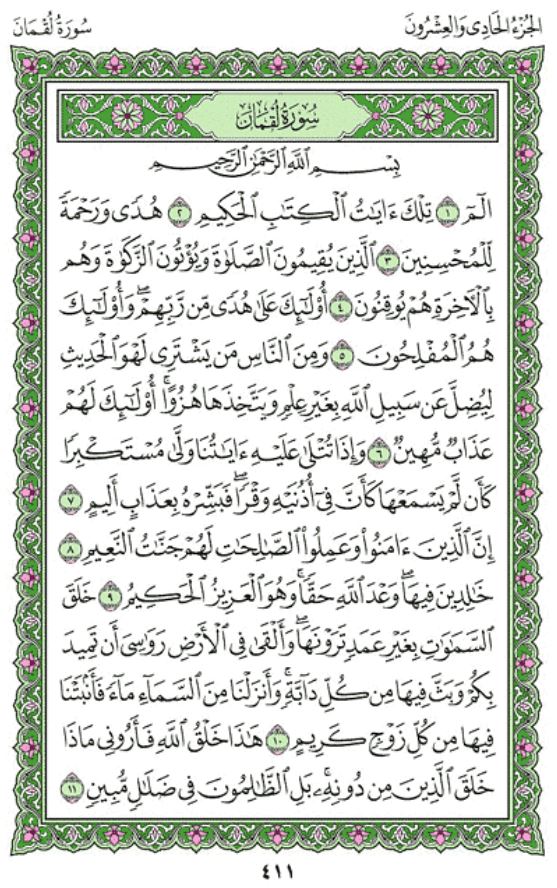
(Note: The following are class videos, an analysis of one of the most profound Quranic Chapters, entitled simply "Luqman". Human behavioral ethics, laws, philosophy, science and much more are present in this Soorah. )

The subject of Ribaa is not merely an academic discussion, rather, it is one which can be generate frustration. Most items related to economic theory, politics and ideological projects, are actually much more complex and nuanced than usually imagined, and our subject is no different.
The Qur'an says that God allows trade, yet forbids Ribaa (Q 2:275). It also says that if it is not abandoned, the result would be to expect "war from God and His Messenger" ( Q 2:279). Therefore,it is important to understand what constitutes Ribaa, and to discover if any guidance exists within the Islamic teachings on economic subjects.
What is Ribaa?
As a word, it has to do with an unwarranted increase of wealth. It has been used to express theft or even oppression. Typically, it is rendered simply as "interest", or as "usury", the latter term meaning an extraordinarily high amount of interest to be paid to the creditor, in addition to the principal.
Admittedly, the terms "interest" and "usury" carry different meanings, so while the latter word is very clear, the former, in its popular usage, has caused a great deal of confusion.
How does the Qur'an address Ribaa?
There are only four sections of the Qur'an that addresses clearly the subject of Ribaa. A selection from each section, as well as contextual explanation and analysis, is given below:
(1) "Allah will deprive Ribaa(ft.1) of all growth, But will give increase for deeds of charity, for He loveth not creatures ungrateful and wicked." (Q 2:276)
Context:
Starting from Q 2:261, we have a discussion on the importance of charity (sadaqa). Almost as a contrast to that, Q 2:275 says that those consuming Ribaa stand as if touched by Satan. VV. 278-279 informs us that people of faith are supposed to abandon Ribaa, and are told to be aware of war from God, and not to act in an oppressive manner. Also of interest here is 2:280, which says that the one experiencing hardship (dhu- 'usratin) should be given time to pay by the creditor, yet that forgiving the debt is better.
Analysis:
The main target of this discussion is to provide a contrast between charity and profiteering. Q 2:275 tells us that while God has indeed allowed business, He has not allowed Ribaa. Trade is done for benefit, profit. Ribaa, similarly, is (mainly) profit driven(ft.2). What is the difference between "business" and "Ribaa"? Indeed, this very question is raised in the opening words of Q 2:275.
The context shows a wider societal problem, one which has parallels in today's world. With almost no exception, we are all under financial constraints, with limited access to funds for both immediate and long term needs. Thus, we are obliged to use credit cards, take out loans, and be subjected to ridiculous interest payments. This occurs on levels both small and great.
School loans has repeatedly been an issue in American politics, with many voices calling for a general debt forgiveness. A person can spend as much as fifteen, twenty years, paying off not only the principal amount, but the interest rates, seemingly never escaping that cycle. While there are certainly attempts to regulate these things, in general what is perhaps more disturbing is that the majority of us think of this as a normal occurrence.
(2) "O you who believe! Do not consume Ribaa, multiplied, doubled, rather, have reverence for God, so that perhaps you will be successful." (Q 3:130).
Context:
There are a number of disparate items in context here, including discussions on Jesus and the battle of Badr. The lack of engaging in Ribaa is associated with Taqwaa and "success". Q 3:134 describes those with Taqwaa, deserving of paradise, as those who "spend freely..restrain anger, pardons, who repent to God when they have wronged their own selves."
Analysis:
This is directed towards people of faith (alladheena Aamanoo), rich folks who, prior to the revelation addressing this, engaged in Ribaa alongside their Non Muslim countrymen. This verse, alongside Q 2:279, shows us that the job of Islam is not limited to theology and ritual. It is meant to be a means to remove oppression, tyranny, and ignorance that is harmful to society.
The "money-lenders" are viewed as profiting from the misery of others, taking advantage of them, in order to make themselves richer. The Prophet-Messiah Jesus, upon whom be peace, is said to have actually turned over, violently, the money changers tables within the temple (Matt. 21:12).
To plant the seeds for destruction, and thereafter benefit from it, is clearly another form of Ribaa that is condemned within this Quranic verse.
(3) "And they took Ribaa, though they were forbidden from it, consumed people's wealth in Baatil (ft.3), and We (Allah) have prepared for the Kaafireen a great punishment" (Q 4:161)
Context:
This is given in context of Jews who attempted to crucify Jesus, opposing his mission. Q 4:160 states that they "blocked many from the path of Allah". This would seem to suggest that they used their ill-gotten wealth to fund disinformation campaigns.
Analysis:
Jewish law allowed the charging of interest to Non Jews, but prohibited it when dealing with each other ( Deut.23:19, Leviticus 25:36). Interest was seen as taboo in Christian Europe (until relatively recently), thus, Jewish money-lenders were the ones that would issue loans needed by governments to wage wars, among other things. This-in part- was the reason that Christian Europeans viewed them with such hostility, often leading to violence and persecution.
The religious or ethnic/racial identity of powerful forces, who engage in oppression and disinformation campaigns, is actually not that much of an issue. Good people and bad people can be found in every community. Indeed, the Qur'an, in the very next verse ( 4:162) makes it clear that the previous description does not describe the group in their entirety. The Qur'an is very careful not to stereotype.
It states therein that there are Jews of knowledge and piety, who are rewarded by Allah. This is also found in Q 2:62 and Q 5:69.
(4)
" That which ye lay out for increase through the property of (other) people, will have no increase with Allah: But that which ye lay out for charity....it is those who will get a recompense multiplied."( Q 30:39, Yusuf Ali translation).
The word Ribaa appears in the original Arabic, as well as a present tense verbal form (liyarboo) which Yusuf Ali has translated as "increase". The context starts at verse 38, which speaks of the importance of charity.
Analysis:
We can go to verse 33 to 39, which speaks of man's dual nature of gratitude (when in need), and stingy (when armed with plenty), and God's overall provision. A greater sense of social responsibility is placed on people of faith, that their focus should be more upon Allah than it is for wealth.
Summary of above verses:
It is apparent that the religion of Islam seeks not only to free people from being slaves to heartless entities, it seeks to instill within its followers a sense of deep social responsibilities, particularly when they are blessed with wealth and power.
These verses seem to speak mainly on loan transactions, and shows that the mentality of the lender should not be of profit, but rather of humanitarian gesture. The lender certainly deserves his money back when the person in debt has it to return, however it should not be with the motivations of profit.
Modern life questions introduction
Since interest, at some level, is almost impossible to escape, a number of questions emerge. Our research of the writings of the scholars, as well as fatwa websites encompassing Muslims of various theological leanings, reveal that there are very different answers to the same queries. One example is that of obtaining a mortgage in order to own a house. Some scholars argue that it is fine, so long as it is only one house (arguing that housing is a necessity), therefore obtaining a second house, for profit, by securing a loan from a financial institution (the second home seemingly to either sell or rent out for profit) would be sinful. Others argue that, in fact, no mortgage is lawful, ever, that it is better to rent out an apartment for the remainder of one's life, than it would be to own one's home by securing a loan which would be paid back with interest.
While I will share some answers to queries of this nature, there are important observations that must be made first.
(a) In both a Western and Eastern context, Ribaa cannot be avoided unless we are willing to think outside of the box. I have long been an advocate of families and friends pulling their resources together to buy a house, all the parties having an agreement beforehand as to the home's use, maintenance and the like. In this way, ribaa could be avoided. Even from a worldly perspective, avoiding Ribaa also entails avoiding extra costs.
(b) The prohibition of alcohol, gambling, and intoxicants, by extension, forbids a number of other items associated with them, and those guidelines being in place goes a long way in having some financial stability, being able to make sound decisions.
(c) Qur'an 17:26-31 gives financial guidelines. In essence, we are neither to be wasteful nor stingy.
(d) In seeking funds for a business investment, consider seeking out an individual or group who would be willing to invest in a partnership, where all parties can either earn profit or suffer loss. When such investments are made, it goes a long way in creating a healthy economy for masses of people, as well as encouraging the investors to act with intelligence, planning and the like. Seeking the same from a bank or other financial institution would result in that institution getting back their principle investment, as well as interest, regardless of the success or failure of the business venture.
(e) All of these have to be put together if Ribaa is to be eliminated. As mentioned in point (a), thinking outside the box. The Somali community in the Minneapolis area have done work in this regards, a summary of which can be found at https://thetransformseries.net/2019/07/22/bypassing-banks-disrupting-mortgages-with-somalis/ . Another initiative taken by four sisters, to eliminate credit and school debt totally $182,000 in just two years, https://www.simplemost.com/four-sisters-got-rid-182000-debt-just-two-years/. (ft.4)
Modern life questions: some answers
We invite the reader to keep in mind that not every answer applies to every reader, this article is designed to make us think about alternatives to how we generally handle these affairs.
School Loans
While foundational education is free in the United States, colleges and universities are not. Most students, even from high income families, obtain, at some point, loans to pay their tuition fees. If interest bearing loans can be avoided, all the better, however if this is not possible for an individual student, it seems there would be no choice but to seek out interest bearing loans from financial institutions.
Mortgages/House loans
I think this depends on the unique situation of the buyer. Some people can easily save money, while others may not have access to that sort of income. It is without doubt that owning one's home is better than renting out, in that there is a stronger sense of security in the former. One argument is that mortgages are in fact lawful. They have always been seen as lawful in Islamic jurisprudence, minus the interest. Indeed, one argument I encountered that the "interest" labeled on a house purchase is actually not interest at all, but rather profit, which is allowed. One writer, Mahmoud Abu Saud(ft.5), cites Q 2:283 as evidence. After all, the value of a house can fluctuate, so a glaring injustice can emerge.
In any case, it seems to me that if sufficient funds are not available for outright purchase, the buyer can seek out a loan from an institution, with the intention of paying it off in a timely manner. However, the buyer has to be informed of the risks involved in such a transaction, and God knows best!
Car Loans
It is my view that this should be the least difficult of affairs. In an American context, buying a car without interest is relatively easy. Inexpensive,used vehicles are widely available, and even cars can be purchased without interest, if paid off in a timely manner.
Certainly, everyone's circumstances are unique. Those circumstances must be factored in before taking out a loan for a vehicle.
Credit cards

Most credit cards will not incur any interest if the balances are paid off within thirty days. Therefore, if the holder is a responsible person, there is no problem in using them.
Concluding thoughts
The modern economic system is not Divine. It has its many drawbacks. As individuals, as communities, I encourage my readers to think outside of the box. Islam certainly has elements which, if applied in a healthy and wise fashion, could eliminate many of the pitfalls mankind is currently experiencing. However, wisdom, and an awareness of our realities on the ground, are needed. For some of us, it is Islamically valid to eat pork, because we are in famine, but for others, it is totally forbidden. We have to look at our own realities, in order to find the answer that fits.
Footnotes
(1) The translation was taken from Yusuf Ali, with the exception that I kept the original Arabic word Ribaa.
(2) Sometimes Ribaa is employed as a means to bring forth enslavement, particularly in the international realm. A brief article explaining the International Monetary Fund (IMF) projects in these regards can be found at https://dailytimes.com.pk/280820/enslaved-by-debt/
(3) Baatil is a very rich and nuanced word. It can be false, weak, even ridiculous. In the Quranic verse cited, it carries the meaning of wealth being misused, misappropriated, spent to either "fool the masses" or to provide a false narrative.
(4) I wrote a brief article during the 99% movement's rise in 2011 which can be found https://shamsuddinwaheed.blogspot.com/2011/12/99-percent-movement-handwriting-on-wall.html
(5) The book is called Masaa-il Iqtisaadiyyah Mu'aasirah by Mahmoud Abu Saud ( Ohio, 1986, Zakat Research Foundation)
Note: The following videos are a recent recording of a discussion as to the identity and characteristics of the Kaafir as found in the Qur'an. In summary, it is our argument that the Qur'an, when critical of the Kuffar, is expressing criticism of the "Leaders of Kufr" (a-immat al kufr, Q 9:12). Folks who embody characteristics of ungratefulness, arrogance, and destruction. It is our contention further that the average Non Muslim is not referenced by that language.
Part one has the presentation, as well as some questions.
Q and A session.
Q and A session conclusion.
The latest round of violence which has occurred in the Middle East has prompted much discussion on the origins of the tensions. There is a great deal of disinformation regarding both the contemporary problems, as well as their origins, deliberate and outright evil attempts to control the narrative, to brainwash the next generation of human beings to be in favor of a system that is inherently unjust.
One of the theories that is often cited, especially in the last two weeks, is that the "Middle East conflict" is simply an extension of an old family feud, a feud between two brothers, themselves, while having different mothers, bear the same father. Indeed, Islam itself is claimed by those who hold that view to be a creation born from that feud!

Abraham
According to the scriptures, Abraham ("father of many nations") was blessed by God to received guidance, delivery from idol-worship, and was given a covenant. Broadly speaking, this is agreed upon by the adherents of Judaism, Christianity and Islam. Indeed, these faiths are referred to as the Abrahamic religions, as they see themselves as having their roots in Abraham's experiences.
The Bible (Gen. 16:1-9) asserts that a wife of Abraham, by the name of Sarai (also known as Sarah) unable to give birth on her own, encouraged him to have a relationship with her "maidservant" (known as Hagar), conceive with her, so that the family line would go on. However, problems developed between the two women, causing the latter to leave.(#1)
The two sons from the Bible

Hagar gives birth to Ishmael, who is seen as the progenitor of the Arabs, whereas years later, Sarai gives birth to Isaac, viewed as the progenitor of the Hebrew group.
The problems between their mothers were visited upon the sons, as the story goes. The Bible, while acknowledging that Hagar has not done anything wrong, nonetheless asserts that Hagar was told that her son, who is the progenitor of the Arabs, would be "a wild donkey of a man".(Gen.16:12).
Isaac, although younger, is said to embody the covenant. Ishmael is disinherited from that. It is interesting that throughout the Bible, expressions such as "The Lord God of the house of Israel" and "The Lord God of Abraham, Issac and Jacob" are common.
The two sons from the Qur'an

The Qur'an does not entertain any problems between the two sons. They are both mentioned with respect (Q 6:84, 14:39-41, 2:136 and other places), and it is common practice to say "peace be upon him" when referencing both.
There is never a disrespectful passage in the Qur'an about Issac, even though he is viewed as the progenitor of the Jews. Indeed, Isaac is viewed as a recipient of Divine guidance.
It is important here to note that the Qur'an contrasts from the Biblical style in that it NEVER uses racist or nationalistic language. It refers to God as the "Caretaker of the universe" (Q 1:2), and never as being restricted or exclusively connected to Arabs.
Religious rhetoric has certainly been exploited throughout the "Middle East conflict". Arabs are routinely portrayed as savages, and antisemitism is a charge regularly made by the supporters of the state of Israel, as a means to disarm criticism. Indeed, the ghosts of the holocaust are routinely resurrected to accomplish this, even though the Arabs and Muslim world had no relation to the Nazi-led holocaust that occurred (in Christian Europe) during the days of the second world war.
Evangelical figure John Hagee, in almost all of his speeches and writing, has exemplified this pattern, as well as stated in no uncertain terms that he expects a time in the near future when "Israel will own an control all of present-day Israel, including Jerusalem, Lebanon, The West Bank of Jordan, and most of Syria, Iraq and Saudi Arabia".(#2)
Such rhetoric cannot be ignored, especially when it is backed by financial and political drive. One need only conduct a google search to see the reach this figure and this trend has.
If there ever was conflict between Isaac and Ishmael, or between Hagar and Sarah, that conflict is no excuse to perpetuate oppression. Moreover, in the spiritual realm, it is Islam, which has been conveyed via the Qur'an to Muhammad, which has stated clearly that blood ties has no bearing on one's ties to God. It is Islam which has clearly stated that respect and love be had not only for one son of Abraham, but the other one as well.
This post has only been some brief thoughts, meant to convey that the Islamic position is actually very reasonable, for any who use reason, when it comes to issues surrounding the descendants of Abraham(#3).In conclusion, we pray "Glorified is Your Lord, the Lord of honor and glory, he is above what is wrongly attributed to him, peace be upon the messengers, and praise belongs to God, the caretaker of the universe." ( Q 37:180-182).
Endnotes
(1) Robert Alter, in his Torah translation THE FIVE BOOKS OF MOSES ( New York, Norton& Company Limited, 2004) pg.78 uses the word "harassed" to describe Sarah's attitude towards Hagar.
(2) This quotation is taken from John Hagee's book CAN AMERICA SURVIVE? 10 PROPHETIC SIGNS THAT WE ARE THE TERMINAL GENERATION ( New York, Howard Books, 2010) pg.109.
(3) The following article has a thorough explanation of the Muslim understanding of issue such as the covenant, sacrifice, etc.. associated with Abraham. http://www.why-christians-convert-to-islam.com/nice201.htm
As salaamu 'alaikum! Peace and blessings of God be upon you.
Below you will find two new lectures. They can be accessed on Facebook, and does not require any log-in ID to listen to them.
Where do we go from here?
(Thursday, May 13, 2021 at Masjid Ibrahim, Las Vegas, Nevada)
This is a recording of the Eid prayer service, which commemorates the end of the month of Ramadan. The recording includes The Takbeer chant, salaat al 'eid (starts at 21:30) and the Khutbah (sermon), which starts at 28:00)
The Priorities of and within Revelation
(Friday, May 14th, 2021 at Masjid Ibrahim, Las Vegas, Nevada.)
This is a recording of Friday Khutbah, which argues mainly that the religion has priorities built therein, and that those priorities are what should be focused on. Lessons from Ramadan are also explored in this Khutbah. Khutbah starts at 2:50)
The Priorites of and within Revelation khutbah
( Note: the following is an edited version of my presentation and supplication at the United Peace Federation USA weekly session, on the theme of healing.)

The subject of healing is a topic that translates into different results, depending on the nature of the illness.
As a student of faith and the social sciences, I believe that the majority of the illnesses that we face are actually of the thinking type.
Therefore, our worldview must be correct and balanced, in order for healing to take place.
Prophet Muhammad as foundation for civilization revival
The Qur'an speaks of the necessity of correct & balanced worldview by pointing to Muhammad, the seal of the Prophets (peace be upon them), as a person who emerges amongst a people who had been unexposed to scriptural knowledge, yet that audience received, by Divine grace, those things.
That foundation- scripture and wisdom (Q 62:2-4) became the foundation for a new civilization to emerge, leading to countless benefits, such as the great translation projects initiated by the Muslims, which revived the various Greek, Persian and Indian scientific and philosophical works previously lost or neglected. Translated into Arabic (starting in the eight century ) , these works were subsequently the foundation for the European Renaissance.
The foundation for right thinking can be summarized as faith, justice, and charity.
Also of interest is the Arabic word Imaan, translated as faith, is related to security and certainty. Faith is the best ground to stand upon both physically and mentally.
The prayer of Prophet Muhammad, peace be upon him, is relevant for our theme.
"O God, show us truth as truth, and give us the ability to follow it, and show us vanity as vanity, and give us the ability to abstain therefrom."

(Introduction: The following is an edited version of a presentation recently given on the subject Character Building in Islam.)
Creation
The Qur'an uses the passive verb Khuliqa ("He was created") in connection to humanity, in carrying certain seemingly negative built-in aspects, such as" anxiety/impatience" (Q 70:19),"haste" (Q 21:37) and twice as "weak" (Q 4:28, 30:54).
In Arabic grammar, the presence of a passive verb would also require that the one who carried out the verb (faa'il) goes unmentioned. The doer would be assumed, or simply be unknown. Q 30:54 does not fit the above pattern, but rather the past tense verb, with the doer mentioned ("God is the one who created you all with some weakness.").
Some words of interest for this subject which stem from the same root include Akhlaaq ("character" or "manners") and "Akhlaq" ("Most appropriate" "Most natural").
The four seemingly negative tendencies mentioned above, "created" in us by God, are items that all of us have to deal with, and it is our dealing with those things which actually benefits us, as individuals as well as a species. Our dealing with those characteristics builds us up, it is on the job training, to allow us to do our job as stewards on the earth better.
There are general behavioral codes which are globally accepted, i.e. don't kill, don't steal, etc, but those are external manifestations, yet the above-mentioned Quranic verses are speaking to internal conditions.
Ramadan and Character building

The month of Ramadan is the perfect opportunity to faithful people to engage in character building. Some examples of this are summarized below:
* Anxiety/impatience (Haloo'a). Listening to Quranic recitation, reading the text during the fasting period, helps to sooth anxiety.
*Hastiness. The desire for immediate satisfaction, as opposed to delayed gratification, is addressed by the discipline building of fasting, of holding back from the satisfaction of hunger and needs during the daylight hours of the month.
* Weakness, be it physical or mental, is addressed through exercise, diet, and conscientious behavior. We often emphasis the Quranic prohibitions of gambling and alcohol. Those items are clearly forbidden in Islam, and is agreed upon in the Muslim community. There are other addictions which are worth asking about, such as tobacco, sugar, pornography, salt, and food addictions. Indeed, there are even those of us who are unable to function without a mobile phone!
Obviously the Qur'an and Sunnah don't directly speak on those items, the benefit vs.harms aspects are widely discussed, and on the above items Muslims reach different conclusions.
We are not, for the purpose of this presentation, addressing their legal status in Islam, we are only saying that the Ramadan experience forces us to evaluate those items in our lives, to examine questions such as figuring out what is positive for us, and what is toxic for us, in light of Divine guidance.
The Prophet Muhammad (peace be upon him) is reported to have said that he has come to perfect morals. He does this by teaching "Scripture and Wisdom" (Q 62:2), which, when integrated into the mind and hearts of believers, gives them the tools needed for the perfections of morals.
