Thursday, May 14, 2009

Label wars: the image of Muslims


Although an on-going issue, the recent developments in Swat valley in NorthWest Pakistan, in which there is a state of actual war between the government and the "Taleban" [an issue far beyond the scope of this particular post] has once again brought into focus a more subtle conflict; the assumptions automatically made when certain labels are used when it comes to anything relating to Islam or Muslims.

Take for instance Miss Irshad Manji. An open lesbian of Indian backround, she is tauted as a "Muslim reformer" or "liberal". In her book The trouble with Islam, she expresses her feelings that parts of the Qur'an are not really from God, that the Prophet Muhammad [Peace be upon him] was a violent warlord, she has said publically that she does not observe daily prayers, yet she is tauted as "modern" "forward looking" in additon to "Muslim"! It is as if this is the image many would like to adopt as the acceptable Muslim!


So, if someone like Ms. Manji is an acceptable Muslim, an example for all to follow, then it stands to reason that anything else, such as daily prayers, attempting to live according to the values and guidelines found in the Qur'an and Uswah Hasanah [goodly model] of the Prophet Muhammad, God's last prophet and universal messenger, are all examples of "radicalism" "extremist" and 'fundamentalist thinking. A person who does not frequent the bars on Friday night, abstains from alcohol and casinos is a potential terrorist, a radical whose behaviour must be observed carefully by law enforcement agencies. A woman who dresses in a modest fashion must be oppressed, another victim of Radical Islam. One Muslim sister was asked while at a barber shop if she 'Liked' Islam! As if she would never want to, out of sheer conviction, be an observant Muslim!


It is very strange that all that is antithetical to Islam is promoted by those with certain social, financial and political motivations as the ideal for Muslim progress, both societal and as individuals, and that we should, in essence, be cultural Muslims, whose only practices should be avoiding eating pork, attending 'Eid prayers only [and having a Budweiser afterwards! ] and politically apathetic.


The struggle

We have briefly outlined the broad details of the label wars. The battle is taking place on websites, newspapers, books and op-ed pages. The goal is the minds and hearts of the Muslims everywhere, of all sects, races and educational backrounds.

I agree that there is an internal struggle within the Muslim Ummah in terms of defining extremism. I agree that many people have differing views on what extent one practice takes place over another, and on how we should live and conduct ourselves in society. This blog post here http://ibnatalhidayah.blogspot.com/2009/05/balance.html is a very good perspective on how to be a Muslim while at the same time maintaining equilibrium.

But none of that means we should just ignore the basic values given in religion. Certainly, those who intentionally and unregrettably preach ideals and conduct themselves in terms that are clearly outside of Islamic teachings should not be imposed upon us as models for "progressive" "reformist" Islam.

The basic values are outlined in the Qur'an. It was not sent to sit on the shelves and decorate the walls of our houses. It is a guide, something that is to be read again and again [which is clearly implied in the name Al-Qur'an itself]. There is a difference between honest disagreements in terms of its understanding and application versus deliberate attempts to make Muslims ignorant of their religion, to turn us into cultural Muslims only, having little or no connection to its teachings, practices or values.

Don't be a victim in the label war. Be armed with faith, practice and knowledge. Arm one's self with the actual, practical values of Islam. That is the best approach in handling this. This is the advice to our Muslim readers.

To our non-Muslim readers, we would like to remind you that Muslims are humans as well, with different perspectives, mental and social abilities. We may or may not represent the best of what Islam teaches. Therefore, do not judge Islam on what you hear or see from Muslims in the news, or from what they want you to hear.Judge on the basis of the logic and teaching found in the text, mainly the Qur'an. Do not read isolated verses. Seriously read it, examine the context of whatever desired texts in order to have a better perspective on the message. At the very least, it is our hope that such reading will allow the reader to ignore the label war all together, to not be fooled by oversimplistic assertions.

Thursday, April 23, 2009

Multifaith council of Northwest Ohio's dinner


Held at the Congregation B'nai Israel in neighboring Sylvania, about 300 guests attended, and included tables and presenters from the Muslim community, Christians of various sects, Sikhs, Jains, Hindus and a variety of other religious groups.

It was a very warm environment and enlightening experience, I learned much from discussions with the various leaders.

Now, describing the pictures a bit, from top left is myself giving comments and benediction, the sanctuary of the Synagogue, the flame at the top of the picture is symbolic of God speaking to Moses [ Musa 'Alayhis salaam]. Bottom left, with Miss Ann, one of the organizers, and at the bottom right, with our friends and activists Ahmed Kadri and wife Amirah.


The guest speaker was Peter Adriance, an NGO liason for the U.S.Bahais, who spoke on the relationship between religious communities and efforts for environmental causes.


There is more I could say, but don't know where to begin. Needless to say, these sort of events are good ways to learn about others, but also to share information about Islam. We show ourselves as humans, and not fanatical monsters. That goes a long way.

Peace.

Friday, April 3, 2009

Christian/Muslim identity? thoughts on Rev.Ann Holmes Redding


The Reverend Ann Holmes Redding was recently fired from her post of two decades as an Episcopal minister. Certainly this was not unexpected, due to the fact that for the last three years or so, she has been a practicing Muslim, having taken her Shahaadah [declaration of faith, which acknowledges God's oneness and Muhammad as God's messenger and Last Prophet], and saw no conflict between Christianity and Islam. She is quoted as saying " When I took my shahada, I said there's no God but God and that Mohammed is God's prophet or messenger. Neither of those statements, neither part of that confession or profession denies anything about Christianity." [ http://www.cnn.com/2009/US/04/02/muslim.minister.defrocked/#cnnSTCText].

Sister Redding is to be commended for standing for her principles and her beliefs. It is also understandable that the Episcopal Church would take the step of removing her status as a minister, and it seems they did so in a respectful way. They referred to her as a person of "great integrity".


Dual identity?

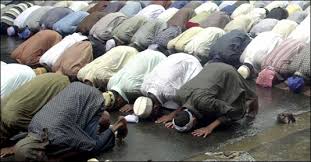
Although I must admit to a bit of confusion, it seems as if Sister Redding's approach to religion is one that combines elements of both traditional Christianity and Islam [as popularly understood] in forming her thoughts and practices. Until her sacking, she still conducted services at the Church, while she also observed the Muslim prayers [Salaah] at a local Mosque [see image above].

I also must confess ignorance as to whether or not she holds any of the views that are considered "orthodox" within Christendom, i.e. the divinity of Christ, the blood atonement, etc..! Regardless of her understanding of these controversial theological issues, her acceptance of Islam while maintaining a link to her Christian heritage does bring in mind questions as to whether dual identity in religion is acceptable, which this post seeks to address. It is my hope that the thoughts expressed in this post will generate much discussion and dialogue, as well as investigation into Islamic texts and theology by our Non-Muslim friends. We will avoid speaking from a Christian perspective, as a Muslim I would certainly be unqualified to do that. Rather, we will attempt to address these issues from a Qur'anic-bases perspective.


Islam: the path of Jesus and Muhammad

The name Islam or Al-Islam ["The Islam"] is not a proper noun, at least from the Quranic context. It is a Gerund [Masdar] in Arabic grammar. This means that is more of a description, rather than a proper noun. As a word, it means "surrender" or "submission" to God. This word Islam is very unique, as the linguistic meaning is not tied up in the personality or religion of a particular people [unlike "Christianity" which revolves around Christ, "Judaism" around the Jewish tribes, "Buddhism" around the Buddha, and so forth]. In the Bible itself, as it is today, we can still find Islam being taught therein. This may sound strange to both Christians and Muslims, but we would like to offer the following Biblical texts as examples of Jesus Christ teaching Islam. All Biblical quotes below are from the New International Version {NIV] Study Bible. [Zondervan, 2002 Grand Rapids, Michigan]

Now a man came up to Jesus and asked "Teacher, what good things must I do to get eternal life?". "Why do you ask me about what is good?". Jesus replied. "There is only One who is good, if you want to enter life, obey the commandments." 'Which ones, the man inquired. Jesus replied "Do not murder, do not commit adultery, do not steal, do not give false testimony, honor your father and mother, and love your neighbor as yourself. Matt. 19:16-19.


The same source says that he was asked about the greatest commandment in the law. the response was "Love the Lord your God with all your heart, and all of your soul, and all of your mind. This is the first and greatest commandment. And the second is like it 'love your neighbor as yourself. All the law and the Prophets hang on these two commandments." [Matt. 22: 36-40]


The commandments are a list of things to do and things to avoid. In other words, it's a list of actions that constitute Islam ["Submission"] and what falls outside of it! In this regards, it is very clear that Jesus [peace be upon him] taught Islam and was himself a "Muslim" [One who was submissive to God]!


The popular understanding of the words "Islam" and "Muslim" identifies with the followers of Muhammad and the Qur'an alone. However, the Qur'an itself shows us that there has never been any religion in God's sight other than Islam [ Q 3:19], and that an integral part of being a Muslim is to believe in all of the messengers of God without distinction [Q 2:285]{Ft.#1].

The issue of a 'dual identity' becomes mute if one understands the Biblical Jesus as one who taught submission to God. It becomes mute when we understand that Muhammad himself was teaching submission to God. The religion is the same one, albeit expressed in differing terms. One Hadeeth attributed to the Prophet Muhammad [Peace be upon him] himself states that the prophets are all from the same father, only having different mothers.[ [Sunan Abî Dâwûd (4324) and Musnad Ahmad (8902)].


Is there a difference between 'Biblical Islam' and 'Qur'anic Islam'?

To approach this question, it is important to know that most, if not all, of the various traditions within the bulk of Christianity [or popular Christianity] has little resemblance to anything Jesus said or did. Countless books, essays and position papers have been published by both Non-Muslim and Muslim writers on various topics. The Qur'an itself takes the position that the scripture of the Jews and Christians themselves have been subject to intense editing, to the point where it becomes almost unrecognizable as a book from God [Q 2:79]. In such circumstances, we have to say that the Bible we have today gives glimpses of what can be termed 'Biblical Islam' but ends at that. So much other material has been placed therein that the average person has no ability to distinguish what is indeed from "the presence of God" and what is not.


Despite that, the Qur'an has repeatedly told us that the Christians [and other people of religious traditions and scripture] will be rewarded twice [Q 28:52-54] meaning that God looks at their actions, intentions and faith, blesses them for it, and gives a double blessing by that person accepting and conforming to the Islam that is found in the Qur'an and preached by the Prophet Muhammad. When we see figures such as our sister Redding, the following beautiful Quranic passage comes to mind.

And when they hear the revelation sent to the messenger [Muhammad, meaning the Qur'an sent to him], you see their eyes with tears, for they recognize truth from their lord. They say "Our Lord, We believe, so write us down as among the witnesses.' And why should we not believe in God, in the truth which has come to us, as we hope that Our Lord will allow us to enter the company of righteous people. And so, God rewarded them with Gardens, with rivers flowing underneath, to dwell in it for eternity. And this is the reward of those who do good. Q 5:83-85


The Qur'anic Islam is one which is from God without any corruptions therein. The Book of Allah itself serves as the main item by which we distinguish corruption from Divine truth. The Qur'anic Islam is perfected [Q 5:3] and completed in the time of the Messenger himself, meaning there will be no other scripture from God, nor a prophet after the Prophet Muhammad. That boat has sailed, and while it is true that communication and guidance can still come in some ways, in terms of world prophets and scriptures, that will not happen again. The Qur'an is the final say on the position of Christ and all the other theological questions that continue to haunt Christendom. Sister Redding seems to have found that, and we hope that God blesses her as a result, and bless us with guidance, mercy and love. We don't have to label ourselves with various adjectives and hyphenated names. Jesus did not call himself a "Christian". If he were to accept any label, it would be as a submitter to God, or in Arabic, Muslim.

Footnote
#1= The meaning of Islam, Muslim, Kaafir and the Qur'anic style have all been addressed by this writer in essays published in The language of revelation. For details, contact the author.

Friday, February 13, 2009

Tolerance and Religious conviction: some thoughts on mutual respect

This has been a subject that has been on my mind for a while, but have until now found it difficult to put in words. In the United States, as well as in other nations of the world where followers of varying faiths live with each other,key words such as 'tolerance' and mutual respect would seem to be common sense, a practical reality that must be observed, leaving differences to be addressed at their proper venues.

Yet, among our most active religious leaders, we find that sometimes their statements, especially in the presence of 'the other' is vary lacking, and outright worthy of condemnation. This problem can be named with a very common title, the Foot-in mouth disease. Statements can be made which cause great hurt, and the speaker can be heedless. This is a clear symptom of the disease.

Recently I attended a funeral, the deceased being an elderly woman, the mother of several children, one of whom being a Muslim. She was not a Muslim, and from what I have been told, was not a participant in 'organized religion', but nonetheless was given a traditional, largely Christian funeral. The [Muslim] son was one of many family members to speak, and he made a passing remark about his mother's character being such, that her guidance and encouragement actually pushed him [the son] to 'the path I am on'. Any honest observer listening to his brief comments would easily testify that there was no proselytizing of Islam involved. His comments were about his mother and the relationship they enjoyed.

Later in the funeral program, the pastor officiating the funeral stood at the podium and said
This young man says he's a Mooz-lim [sic], but Jesus is for them as well.Jesus is the only path to the Father.


The family was very upset, the Muslims were obviously offended, not to mention the Muslim family members [the grandchildren of the deceased].


Certainly this caused many people to confront the Reverend, who was unapologetic.I am not faulting him for believing what he believes, as that is his right as a human being, but there is a time and a place for everything, and to choose a funeral for expressing such views was inappropriate, to say the least.


What Venues are appropriate?

Conversations with friends, visiting houses of worship or study group gatherings, wherein exchanges, learning and debating may be appropriate, are all good places to start. With the advent of the INTERNET, this is much easier, as a person can join several religious forums, where every conceivable issue can be discussed in a safe, inexpensive and private manner.

To a conscious Muslim, this advice is nothing new. This certainly falls under the category expressed by the Qur'an in the following words;

Call to your Lord's path with wisdom and articulate reminders. [Q 16:105]

Insulting people or debating them at funerals, weddings and the like do not correspond with wisdom!~

Advice to Muslims

To those of us who have an Islamic appearance [Kufi, Beard, Hijaab], know that you stand out in your workplace, when you catch the train, conducting your normal routine. You have to always be conscious of this, and attempt to always act in a friendly manner. Even if you feel mistrust on the part of others, recall the Prophet Muhammad. One disbeliever used to throw trash on a path he knew the Prophet [upon whom be peace] would walk down, on regular basis, but when this person became ill, the Prophet visited and checked up on him. This changed the man's attitude completely.


You will sometimes encounter people who wish to 'save your souls for Christ' or for some other motives or movements. They may even make you their target market, especially if you are from a Middle Eastern or South Asian background. They may visit your home, hoping to share their beliefs, and may even leave you literature in Arabic or Urdu. Others will be very ignorant, hurling insults, while others will approach you with genuine questions about your religion. In all these scenarios, the following is given as advice:

[1] Be calm, yet strong and assertive.

[2] Know your Deen before answering any questions. It is also always important to memorize and quote from Islamic texts, the most important being from the Qur'an, in dispelling any misinformation or just for the sake of sharing information.

[3] When possible, always have some literature handy, in your car, planner or purse. This will be helpful for those you are speaking with, for their future reference. The following pamphlets are available free. These brief works are straight to the point, with understandable language and Qur'anic references.

The timeless religion
http://islaminviewforum.com/index.php?act=Attach&type=post&id=537
Women in Islam
http://islaminviewforum.com/index.php?act=Attach&type=post&id=842
[The author's blog is modernmuslimwoman.com]

An introduction to the Qur'an
http://islaminviewforum.com/index.php?act=Attach&type=post&id=379
[4] Refer your listener to the local Mosque, and be sure that Mosque has relevant programs available. If not, take the initiative and start such a program, having qualified speakers and teachers.

And Allah knows best.

Saturday, December 27, 2008

The Purpose of religion


Many view religion- and particularly a faith such as Islam- in terms that are a bit misleading. It's not an ideology in the minds of many of us, but rather [A] A personal or ethnic identity marker. 'This is what my parents were, so I am as well'. [B] A way to address or even escape life and its varied hardships and responsibilities. [C] As a way to be distinct from others, allowing isolationism.


The above mentioned reasons and others not mentioned here are often highlighted-in many ways inaccurately- by elements of the media to explain the rather phenomenal spread of Islam, particularly among Women and the Middle Class in The USA, UK, etc..! Oftentimes, Islam's spread is presented as something strange, like a virus that has to be stopped at all costs, attacking the weak and vulnerable in society, those unable to deal with 'normal' life, education, money, the opposite sex, etc..at nausea.

This particular thread of propaganda became most apparent to this writer while watching an episode of Law and Order. In this episode, a woman's rights activist is killed by a young Muslim convert [who sports a beard, Kufi and Jalabiyyah] for 'blaspheming Islam'. of course, he is captured by the authorities, and while acting as his own attorney, attributes his crime to 'defending Islam' from attack. His problems with women become apparent in his dealings with the female Judge and Prosecutor and informs his audience "Allah made men superior to women" and that "American women walk the streets of our holy cities with faces unveiled". The clip below is suppose to be an analysis of his 'condition'.


His 'condition' is used against him, digging up an old girlfriend, the prosecutors threaten to use the relationship against him, compelling him to accept a guilty plea and the sentence.

The reality of conversion [or 'reversion'] is very different for most people. That is not to say that there are not people out there who accept Islam [or any other religion] for escapism or some other mental need, but in general what attracts people to Islam is its intellectual appeal. It does not demand or expect blind faith and obedience. The Qur'an and Hadeeth literature both encourage the seeking of knowledge as a prerequisite of faith and devotion, points to creation itself as a sign of God's power and existence, and is itself not based on "miracles". There is no one to die for your sins or create wine from water, it places great emphasis on personal responsibility and accountability.

In any case, we wish to explore a bit as to the purpose of religion.


Purpose: for Allah alone.

A very succinct Quranic sentence tells us "Religion is exclusively for God" [Ala Lillahid deenul Khaalis] [Q 39:3]. There is no mention of using a religion to rebel from one's parents or to seem 'hipe'. This sentence tells us that when we accept religion or embrace religion, we do so because we believe it to be the path God has blessed with correct guidance. We follow it because we have been intellectually convinced of the veracity of its claims, that it will teach us about God, God's will for our lives, in short, how to properly conceptualize God.

But what else does the statement "For God" mean? We also say things like "In the cause of God" [Fee SabeeLillaah]. When we observe prayer, we say we do it "For God the most high" {Lillaahi Ta'alaa}. What do all these phrases mean?


To understand that, we have to understand that God does not need our prayers, nor our fasting. He does not need us to feed him [Q 51:57]. So, when we say "for God" we need to understand that after conceptualizing the Divine in the correct manner, as outlined in the Qur'an [ft.1], we become obligated to act correctly. By adopting the lifestyle and worldview that is asked of us by God, by abandoning racism, classism, or any other sort of negative 'ism'.


'A'ishaa bint Abi Bakr [Radee Allahu 'Anha] spoke of Muhammad, her husband and the Last Prophet, in a beautiful way. She was asked about his character, and she responded with "His character was the Qur'an [Kaana Khuluquhul Qur'aan].

If we accomplish this, internalization of the word of God, then these sorts of neorisis would disappear. When we say we should apply the Islamic teachings, we mean to say that all of the Islamic teachings should be applied, rather than selective.[Ft.2]

To accept Islam, we don't have to hate America, or to hate Christians or other peoples. We don't have to become bad copies of other people and forget our own histories and backround. To be a Muslim, we simply have to recall the following succinct Quranic verse:

Say:Surely, my prayers, my devotional acts, my life and death are all for Allah, the Nourisher of the Universe" [Q 6;163].

Footnotes

[1] See for example our article on Ayatul Kursiyy [The Divine throne] .http://shamsuddinwaheed.blogspot.com/2008/01/divine-throne-examination-of-ayatul.html

[2] This writer was once told by a non-practicing Muslim that if he saw his sister without Hijaab, he would "without hesitation put a bullet in her head". The irony in this statement is two-fold. [A] The dress code, whose interpretation is widely disputed today, is only mentioned twice in the Qur'an [33:59 and 24:31] whereas Prayer and charity has been mentioned perhaps hundreds of times, and [B] The Qur'an does not impose a death sentence for altering dress, only for murder [17:35] and creating social chaos [5:33]

Tuesday, November 4, 2008

Voting for the first time: A Muslim's thoughts

I have a confession to make; today was my first time ever voting! I have been registered to vote for years, and have even been summoned to Jury duty [which I have yet to do, as logistics have prevented me in the past] as a result of being a registered voter, but today was a first for me. This may be strange to both Muslim and Non-Muslim readers, hearing how a Muslim woke up very early [about 5:30 am], showered and offered morning prayers [Salaat al-Fajr] and walked to a nearby Church with his Hijab-clad wife to cast the ballot.

The actual experience

The Polling station opens at 7:00 A.M., and I was expecting long lines, but we only waited about fifteen minutes, in contrast to reports I have heard from friends and brothers throughout the country, who waited for 2-3 hours in line to cast their votes. It seems that while irregularities have been reported here and there, in general the process has gone smooth across the board.

Why did I vote now?

In the past, I have been had an apathetic approach to politics. While I enjoy its study in theory, I had the belief, as do most Americans [even if they don't admit it] and others in the world [who will gladly admit it if there's not a Policeman nearby] that Politicians are deceptive in general, that the whole system is very corrupt, and that there is no hope of change at all. My vote will not count anyways, I believed, and in addition to this, I have flirted with the view that Voting in such a system may be allowed Islamically, but only by a thin thread.

I voted now because I believe that the conditions are apt for change, because people really want it! With the U.S. engaged in two wars, which benefits only weapon contractors, the economy in shambles, Insurance problems and Credit becoming increasingly harder to obtain, people are finally beginning to feel the pressures that others worldwide feel on a regular basis, and do not wish to continue on this course. Let us hope that our hopes for change are not in vain.


What about Islam: does it really endorse representative democracy?

Before I go into this subject, I think it necessary to add this observation; i.e. that while voting does take place in much of the Muslim world, it is a widely disgraced practice, as there may only be one candidate on the ballot, your 'no' vote to the ruling party magically [Cough, cough] turns to 'yes', and those who dare attempt to vote for another party or candidate will be visited in a day or so by some really mean looking gentlemen wishing to 'enlighten' that disaffected person. So, I believe that with such a background, it is easy for 'Ulamaa residing in the Arab world or in another location to tell Muslims living in the West to not vote. Here are some of the usual arguments:

[A] Islamic law does not endorse decision making by the masses anyways. There is only one law and system, the Shari'ah and/or the Khilaafah! Voting in the US or Britain constitutes Kufr! Allah is the only law-giver, and Muslims should rally around a khalifah!

[B] If we do vote, it should be only with regards to 'Muslim issues', such as Palestine and Iraq! Otherwise, let the Kaafireen worry about themselves! In this connection, I should mention that this position was adopted in Apartheid South Africa by some leading Muslim scholars, and fatawa were issued disowning Muslims in the anti-apartheid movement, on the grounds that the system in place at that time placed no restriction on Muslims offering prayers in the Mosques! In addition, 'working with the Kuffar' was also a catch-phrase accusation leveled at Muslims involved in Anti-Apartheid activities.


There are some other arguments out there, position papers and books detailing these sorts of views, but in general all of them revolve around the points noted above.

[A] The Qur'an has categorically endorsed collective decision making. Believers, we are told, are :

42:38 Those who hearken to their Lord, and establish regular Prayer; who (conduct) their affairs by mutual Consultation; who spend out of what We bestow on them for Sustenance.


The wording "Wamrahoom Shuraa Baynahum" appears here, in connection with prayer, which in many instances is a collective exercise in the Muslim community, and charity, distributed to the needy society. There is no restriction given here about where and how this should be practiced. In other words, just as Jumu'ah prayers are equally valid in San Francisco or Saudi Arabia, participating in the decision making processes are valid whatever the system, as long as there are safeguards to prevent injustices and such. This is not to say that injustice does not exist, we can see this even in systems of government that applies Islamic laws [Taliban in Afghanistan as well as the old Nizam-e-Mustafa system in Pakistan are good examples of misapplication], but it does not mean that just because a system has its origins or popular usage among Non-Muslims that it automatically becomes Un-Islamic or unacceptable to the Muslim community.

As for the wish to have a Khilaafah system, perhaps that may happen in the future, but I won't be holding my breath. It does seem prudent that Muslim nations form something analogous to the European Union [UN], this could be a body Khalifah. Organizations such as the OIC [Organization of Islamic conference] can very well act in this capacity, giving a united voice, free trade, loans and grants to each other, and a variety of other actions that will greatly improve our conditions, but perhaps that is also something that will not happen anytime soon. In any case, it seems that having a figure such as a Sultan or Khalifah for all Muslims is a unrealistic expectation.

Getting back to collective decision making, we are also given in the Qur'an instructions not to allow anyone to feel marginalized, to allow them at least a voice and a seat at the table. See Q 58:11.

[B] 'Muslim issues' is very limited, and actually acts as self-marginalization. Why should we not vote on issues that will affect our health care, local services such as Police, Fire departments, schools etc..? Muslims should have a say on all these issues, at the very least because the Qur'an and Sunnah likewise have something to say about all issues. As the Qur'an says "And we have omitted nothing from the Book" [Q 6:38] as well as "Today have I perfected your religious law for you, and have bestowed upon you the full measure of My blessings, and willed that self-surrender unto Me shall be your religion."[Q 5:3].


Using the example of South African Muslims, the issue of Race discrimination has always been a priority of Islam. Looking at the Qur'an, and seeing the many practical examples from the Prophet's own life. and his final address to the Muslims show us that those opposing Muslim participation in the Anti-Apartheid movement had actually internalized those racial ideas preached by the Racists! Islam is not just applicable when Muslims are a majority, but also while living as a minority! Wherever Muslims live, we should have the light of Islam in our actions and attitude. Our influence will, God-willing, act as a guiding force that will make for positive change and contribution to the society and world we live in. The Prophet Muhammad may be a mercy to believers, but he is also a mercy to all nations [Q 21:107]. The Muslims, his followers, should likewise be the same.


Conclusion

The arguments I have presented here may not be convincing for all, so my advice is this: follow whatever your conscious and your understanding of the will of Allah Ta'alaa is. Just remember that Muslim behavior and ethics can be a light whereever we are, and that the will of Allah cannot be overturned. Allah's promises are true, even though those promises are sometimes hard to recognize.

Thursday, October 16, 2008

Only one God: forgotten aspects of Tauheed and its application


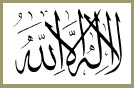
It is well known that the most important declaration is the essential truth that nothing deserves worship except Allah, Laa e-laa ha ill Allah. This sentence, known as Tahleel, is recited during prayers, on occasions of happiness and sadness {ft.1}, and even during the process of dying when possible.{ft.2} Certainly there is much that can be said [and has been said] about the Tahleel, Islam's unique creedal statement{ft.3}, however, it seems that there are some aspects of Islam's creed that need to be made publically known, for the benefit of Muslims and Non-Muslims alike.


Justice

It is obvious that the Quranic account of the mission of the Prophets have more social implications, and is not limited to theological arguments. Although many examples can be cited, the account of Moses and Aaron should be sufficient. For further details, we recommend reading the Qur'an [20:42-50].

Returning to the Tahleel, we are informed by the Qur'an:

The 'Shahaadah' of Allah is 'there is no deity except him' {Laa e laa ha illa Huwa}. As well as [being the declaration of] angels, and people of knowledge who stand for justice..[Q 3:19]


Here, Tauheed, or the oneness of God, is given as the basis or the foundation for God's dominion of the universe. There is no injustice from God, nor are there any random occurrences. It also shows us that those who uphold Tauheed have an interest in the preservation and cultivation of knowledge, technical ability, sciences and so forth. These people also have an interest in seeing the application of fair-play, preservationof the rights of others, in short, justice universally applied.

This aspect of Tauheed can also be discerned from the Hadeeth literature:

Whosoever of you sees an evil action, let him change it with his hand, and if he is not able to do so, then with his tongue, and if he is unable to do so, then with his heart, and this is the weakest of faith. [Reported by Muslim, Al-Nawawi's Forty Hadith, Ezzedinne Ibrahim, Denys Johnson Davies, page 110. Holy Koran publishing house, Beirut, 1979].


For those who uphold a conviction that God is one, fairness for all is a pillar of faith that will not be abandoned, one that must be translated into action when needed. Otherwise, our declarations of faith will be empty words, revealing only our hypocrisy.

Standing for justice [Qaa'iman Bil Qist] does not equate making rash, emotional decisions, nonetheless it should be in the minds of the Muwahhidoon [Those who believe in God's oneness].

Hast thou ever considered [the kind of man] who gives the lie to all moral law? Behold, it is this [kind of man] that thrusts the orphan away, and feels no urge to feed the needy. Woe the, unto those praying. Whose hearts are remote, those who want only to be seen and praised. And, withal, deny all assistance [to their fellow-man]. {Q 107:1-7, Muhammad Asad translation, The message of the Qur'an, 1980, Dar al andalus, Gibraltar.


Idolatry: Injustice to God and man

Some Muslim writers correctly assert that God has rights, just as humans do, and those rights should not be violated. Yet, even in that, it is also true that we cannot hurt God. The Qur'an presents a concept of the Divine that is strong, showing God as wise, independent, and powerful. In other words, our neglect of prayers does not harm him, it only harms ourselves. Allah says

I do not want from them any provision, nor do I want them to feed me. [Q 51:57]

We don't sustain Allah, he sustains us. We recite this fact daily in prayer with the line "Praise be to Allah, Nourisher of the universe" [Q 1:2].

To worship something other than God, an action known to Muslims as Shirk, is given in the Qur'an as the greatest crime imaginable [Q 31:13]. It is not because God needs our worship, nor is he hurt by our misplaced devotion{ft.4]. Shirk is in fact the foundation or basis by which other crimes are committed!

A policy of ethnic or religious genocide, in which one group of people see themselves as better or more deserving than the other wipe out the latter, or deny them rights, is a classic example of Shirk! Worship of one's prejudice and arrogance-shirk- led to the crime of genocide, such as in Rwanda, Bosnia and other places.

Theologically, seeing an individual as God-incarnate is also considered Shirk, mainly for two reasons;

[1] God is something greater than a human, actually a reality that can not be fully conceptualized [Q 42:11].

[2] The one viewed as "God in person' invariably commits crimes and abuse of both his followers and others.

Portraits of Jesus Christ [viewed by Christians as God incarnate and God's son] that display in homes, Churches and Bible printings worldwide as a Caucasian has the subtle effect of portraying Europeans as sharing Divinity. As a result of this, another trend has arisen in which Jesus is portrayed in Bible printings and films as Black!

Colonialism, Slavery, and many other forms of injustice can be traced back to Shirk!


Intercession

Many of us believe that at some point, personalities, be they alive or dead, will intercede with God on our behalf. Traditions have beec created to support this view, and the situation is now that almost every religious group worldwide accepts this doctrine in one form or another.

In the outset, it should be said that there is no harm in asking someone to pray for you. That, however, vastly differs from invoking a dead or absent personality. In any case, the Qur'an informs us that God's decisions are in his hands alone, therefore it makes more sense to invoke him alone.

Say: Intercession [Shafa'ah] is in the domain of Allah entirely {Jamee'an}. To him belongs the kingdom of the heavens and the earth, then to him you will return. [Q 39:44].


Acknowledgment of God's messengers constitute Shirk?


It has been asserted by many in recent years that the statement "Muhammad is the messenger of Allah" [Muhammad ar Rasool Allah] is idolatry. Insincere people make this statement, we are sometimes told. The supporters of this view quote the following verse as evidence;

When the hypocrites come to you [O Muhammad] they say: We testify that you are indeed Allah's messenger...[Q 63:1]

However, the verse goes on to say that "And Allah knows that you are truly his messenger." If Muhammad, upon whom be peace and blessings, was a false messenger, then the theory would hold some merit. However, the Qur'an shows us that he was a true prophet and messenger, so why would acknowledging a true fact be idolatry?

Moreover, the Qur'an tells us that God himself acknowledges that he sent Muhammad as his messenger, with the Qur'an.

However, Allah makes Shahaadah [Allahu Yash-hadu] as to what he has to you [O Muhammad], sent to you from his knowledge ['ilmihi]. And the angels [also declare this] [Yash-hadoon]. And Allah is sufficient as a witness. {Q 4:166}


Conclusion

Tauheed is very important, not just as some abstract notion, but in terms of seeing life correctly, our place in it right, and in terms of our own consciousness as humans. For God to assist us and accept our prayers, we should conceptualize him in the manner as given throughout the Qur'an, and also use our hands, our tongues, our money, our very selves, to give justice, both for us and others, regardless of their label, class or ethicity!

God does not die, is all kind and merciful. He hears the calls of those who call on him, so he should be invoked, rather than other figures. Nothing should divert us from Allah!

Shirk is not limited to theological error. It is the root of all evil. Racism, arrogance, murder, all can be traced back to Shirk!

Footnotes

[1] One will notice when living in various parts of the Muslim world that Laa elaha ill Allah is said at different times, depending on the particular culture.

[2] Abu Dawud 3/190.

[3] See http://shamsuddinwaheed.blogspot.com/2008/01/tauheed-understanding-divine-monotheism.html

[4] Some religions, such as Hinduism, have rituals which involve a devotee leaving rice as an offering to the deity.