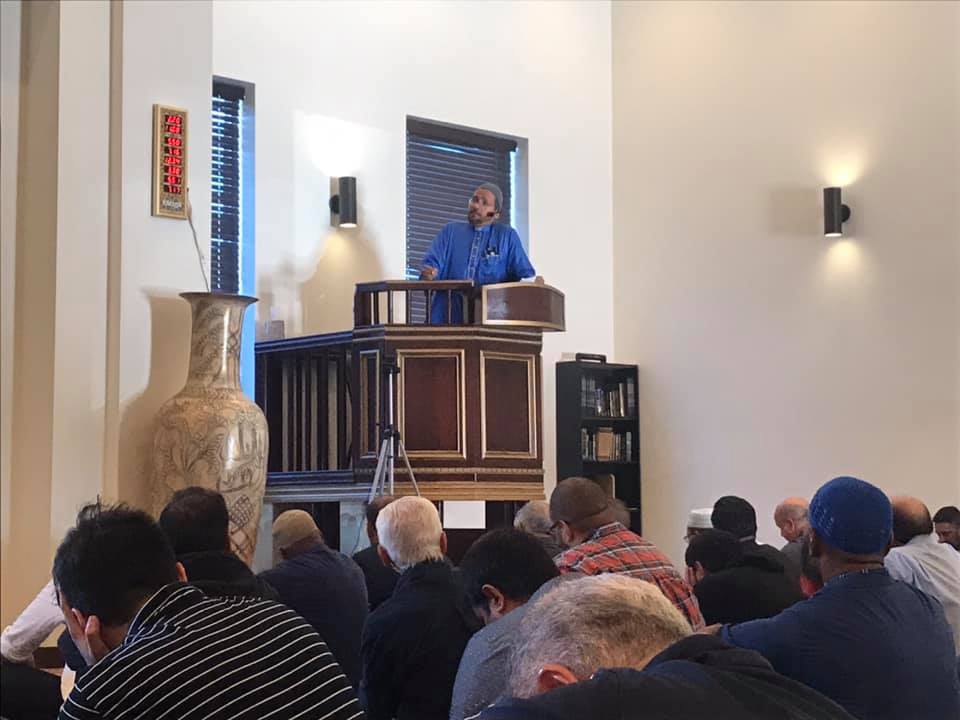
Friday, September 22, 2023

The phenomenon of religious manipulation

 Emotional manipulation has been a reality universally recognized. It occurs in business, politics, and a host of other arenas. It can be found even in family dynamics. Indeed, we can even see it, to a certain extent, within business theory. Products (and ideas) are marketed in a way as to inspire maximum profit even if it is based on a lie.


Our focus is on manipulation and moral blackmail by means of religious sentiment. While it does happen among every religious community, the following examples are trends which we find common in Muslim circles. It should be noted that the list below is by no means exhaustive, and it does not even begin to touch the manipulation of religious language and imagery as done by political figures throughout the Muslim world captured in media on a daily basis. Indeed, contemporary history shows us leaders who are known to not have strong personal belief or to be impious, making sure cameras capture their occasional visit to the mosques, pilgrimage to Makkah, or sitting with religious scholars. 


(1) In the cause of Allah


The expression Fee Sabeelillaah is often used to generate a sense of duty, an obligation to be felt by the listener (often at the expense of the listener) to the benefit of the speaker. The term is used in the Qur'an to refer to the process of war, as well as for causes endorsed by the religion in a general sense. 


This term has been hijacked by those seeking funds unjustly, a tool to make someone feel guilty enough to do something that they are reluctant to do.


If this term is hurled at a weapon against you, when it involves something, you are reluctant to undertake, simply say that your entire existence operates by the will of Allah, that you already take actions that are fee sabeelillaah, and that you can't agree to whatever is being forced upon you.


In Islam it is considered much better to do a consistent action, even if it is little (such as charity), rather than a big action in one sitting. This is why in the capacity of my role as an Imam, I advocate consistent yet manageable amounts of money to be given fee sabeelillaah.


(2) Inshaa-Allah ("God-willing") actually means "NO"!


The Qur'an tells us never to assert for sure that we will do something unless we add the term "God-willing" (Q 18:23). Unfortunately, it is increasingly common to employ the term, when asked for some small sacrifice, to denote lack of interest and effort in the issue under discussion.  It has become the way to cover up that lack of interest. "Will you come here tomorrow?" "Can you call?" The "Inshaa -Allah" answer is utilized, rather than simply declining the request.


It is certainly true that the "will" of Allah prevails over our intentions, yet using the term in this format seems to be unwarranted and outright deceptive. The Qur'an has a rather simple solution to such situations.

" O you who have faith! Have taqwaa of Allah and communicate clearly." (Q 33:70).  All of us have been in awkward situations and can feel uncomfortable in certain settings. Yet, it is nonetheless important to be straightforward in expressing comfort and lack of comfort.


This is particularly true in interpersonal relationships. Ambiguity in communication can generate misunderstandings that are terminal in such settings. 


(3) Using religious rhetoric to conceal untoward activities (past and present)


This happens in particular with cults, small groups in which it is easier to get away with serious acts of abuse, corruption and the like. Reporting to the relevant authorities is frowned upon as "siding with the disbelievers" "betrayal of the Ummah" and even abandoning Islam as a faith in its entirety. 

Cult figures rely on that type of thinking to continue their activities without any fear of scrutiny. 


The Qur'an says " O you who have faith. Be consistent upholders of justice, witnesses to Allah, even if against your own selves, your parents or close relatives. If they are rich or poor, Allah has more right over them both. Thus, do not follow inclinations towards injustice..." (Q 4:135)


In the same chapter, we read the following words: "Allah does not love evil to be broadcast publicly, except when wronged ( illa man dhulima). And Allah is the ever-hearing, Knowing." (Q 4:148)


These verses show us that it is a duty to seek forth justice, particularly when victimized on a personal level.


(4) People of Taqwaa have no worldly concerns


The idea that those with some senses of piety are without worldly concerns serves as a convenient excuse to take advantage of their good nature. This point is driven home in a recent article I read on a rash of break-ins at Buddhist temples throughout the USA. One interview I saw asserted that a group was able to rob a temple of $40,000 by simply interacting (and therefore distracting) with a Buddhist priest onsite, while their cohorts stole from elsewhere on temple grounds. Apparently, the religious vows prevented the priest from taking any action.


In a Muslim context, similar things take places by things such as borrowing (with no intentions of returning) money from the pious, monopolizing their time and presence in order to either distract them or to fulfill some hidden agenda, seeking to take advantage of their wealth by using items 1 and 3 listed above, or making false promises in the name of God.


It is imperative that the person of taqwaa also acts as a person who possesses 'aaql (intelligence). The Qur'an tells us to put business agreements and loans to writing (Q 2:282). It tells us to exercise caution around those who have a bad track record ( Q  64:14). 


The people of taqwaa have bills, families, and worldly concerns just as anyone else. The trend to take advantage or even victimize them, assuming that it is acceptable, is simply ridiculous and unjust.


Monday, September 4, 2023

Demonstration of Taqwaa: some surprising examples in the Qur'an

 The theme of taqwaa is a consistent theme within the Qur'an, a fact that is apparent to even a cursory reader of the text. While we tend to understand this term as "piety" in a religious sense, it is often used in a variety of other senses, but what concerns us here is its rather mundane or secular application.


This brief post seeks to look at specific examples found in rather famous examples. We seek to generate contemplation within the reader, which, indeed, is one of the goals of scripture itself.


Taqwaa is shown in dealing with others:


Allah, as being the Caretaker of the universe, has no need of sustenance from any of his creatures. Indeed, Allah is not "fed" in any means. Some imagine that religious rituals are needed by God for actual sustenance, an idea that has been advanced not only by ancient philosophical tangents, but by popular culture as well. (ft.#1). The truth of the matter is that rituals such as the daily salaah (prayers) are actually for our benefit, in that they connect us to the Allah, as well as serving as a reminder of Divine principles, thus placing internal limits on the violation of those principles. (ft.#2).


The Qur'an says "O Humanity, have taqwaa of Your Caretaker, who has created you all from a single soul, created from it it's made, and has made from them both to emerge multitudes of men and women. Have taqwaa of Allah, through whom you seek (rights) as well as the (establishment of) family ties. Indeed, Allah is ever watchful over you." (Q 4:1)

So, we see here that taqwaa is having awareness of God's care for his creation, and awareness of his Omnipresence. Awareness is demonstrated by acting in a good, just way, with those others created by the same God. 


Taqwaa demonstrated by looking at the big picture.


While popular depictions of taqwaa is seen as individual piety, the Qur'an has given a somewhat different picture, a painting that only becomes visible through the lenses of contextual studies. 

" O you who have faith! Have proper taqwaa of Allah (Haqqa Tuqaahihi) and die not except as submissive to him (Wa Laa Tamuutunna illa wa antum Muslimoon)" (Q 3:102).

While the verse alone easily demonstrates its call towards looking at bigger picture priorities, the context demonstrates this in a thorough fashion.  If we start from Q 3:98, it shows the pitfalls that the people of scripture entered into, by denial and altering of the Divine message for sectarian or political reasons, that Muslims are to avoid that acknowledging that God has sent forth scriptures and prophets other than that received by the Muslims, that holding firm to the pure scripture and putting aside personal squabbles in order to strive in Allah's cause represents caring for the bigger picture ( see Q 3:98-109).


Seeing the bigger picture is also demonstrated by those who reject racism, sexism and destructive tribalism (Q 49:13). 


Taqwaa demonstrated by careful speech and actions.


Finally, the Qur'an says "O you who have faith! Have taqwaa of Allah and communicate clearly. He will rectify for you your actions, and forgive you your sins, and whomsoever obeys Allah and his Messenger, achieve a mighty achievement." (Q 33:70-71)

Here, we have that clear communication skills are demonstrative of proper taqwaa. Indeed, from historical as well as anecdotal evidence, we have seen how those inspired by Islam have taken it upon themselves to become better at communication skills! Malcolm X (El-Hajj Malik El-Shabazz) had copied by hand the entire English dictionary, improved his handwriting skills, while serving a prison sentence, and, despite very little formal education, went on not only to represent the Nation of Islam(NOI) in media, but in academic settings as well. His impact on American life is well-known. (ft.#3). 


Indeed, while working in the corrections system, I came to know an inmate who had accepted Islam shared that he had to work hard to rid himself of unhealthy attitudes, and that Islam had inspired him- someone serving a long prison term who had virtually no reading abilities, to teach himself how to read English, but also Arabic and Urdu languages!


This text is not limited to communication skills in the above senses. It is showing us that there should be no ambiguity in communication, that clarity is needed in order to avoid confusion, especially in dealing with other human beings.  Muhammad Asad points out in his comments the following "The expression Qawl Sadid signifies, literally " a saying that hits the mark" i.e. is truthful, relevant and to the point." ( The Message of the Qur'an, 1980, pg.652)


Another way of looking at the aforementioned text is that one's "speech" is not (simply to be) verbal, but rather by actions. Taqwaa guides the lips as well as the hands. If taqwaa guides those two, it results in God actually fixing one's situations and delivering forgiveness and success. 


It should be noted that these verses are traditionally recited in the wedding ceremony and are similarly often cited in the Friday prayer sermon (khutbah).  They are appropriate occasions for the reminders these verses contain. May Allah make us among those who have taqwaa


Footnotes

(1)  Greek mythology is filled with examples of literally "feeding" the objects of worship, and to a certain extent this still is done within Hinduism, in which rice offerings are left at the idol. Popular cultural references include the Science fiction TV program called Stargate SG-1, which depicted one alien race (known as the Go-a'uld) who had a parasitical relationship with their human worshipers, as well as another race (known as the ORI) who actually were sustained through the prayers of their followers!   

(2) The Qur'an says, for example, that the remembrance of God and prayers function as empowering the people of faith, as well as "forbidding immorality and repugnant actions" Q 29:45.

(3)        Countless books, documentaries, and popular films   show these facts regarding Malcolm X, in both his pre-NOI and Sunni Muslim life. I suggest reading his famous rendering The autobiography of Malcolm X as told to Alex Haley.                                                                                                                                               


Wednesday, August 2, 2023

Thoughts on religious polemics

Introduction


Customers in search of one (or several) items will go to a shopping mall, a marketplace wherein they may end up acquiring various items from different businesses. It is often the case that the different businesses are actually selling the same product and thus the need to compete with each other in order to make sales. 


Although crude and lacking elegance, this example reflects the relationship between self-appointed representatives of religions. It not only involves refutations of opposing doctrinal positions, but it can get very emotional. While most recently an Iraqi Christian  named   Salwan Momika in Sweden had at least two incidents in which the Qur'an was targeted (even outside a Stockholm mosque during Eid services), perhaps not as well-known are the actions of an American Christian figure David Wood, who has made his career by producing video content critical of Islam, who actually ate pages from the Qur'an during a livestream interview with another critic best known by his nickname  Apostate Prophet (or AP). It seems to me that the reason behind such ridiculous actions is that of generating business, more so than any other motivation.


Debate

As an academic exercise, it is fascinating both as a spectator and a participant to engage in a debate. In some settings, students will be made to defend positions they themselves do not agree with. This is useful in the development of communication skills, critical thinking, understanding the topic better, and much more.


However, in a religious context, while it can function in ways as noted above, it often proves to be counterproductive. Parties may lie, make strawman arguments, or deliberately seek to provoke their opponent via personal insults, as a means to "win". It becomes little more than entertainment, each side seeking applause (and money) from their audience (both in person and online). Evidence for this is easily observable in places such as the United Kingdom's famous "Speakers Corner". Most of the participants have YOUTUBE channels, PATREON accounts which solicit donations to "continue the cause". 


Moreover, religious debates are more than about theology, they are about identity and often intersecting with current political conflicts, thus, producing emotional outbursts which actually makes people blind to the argument advanced by the other party.


Dialogue


Discussion is a much better way to go in understanding the religious teachings of others. Dialogue should take place in a calm environment. Laymen interested in a particular topic should attend discussions in which qualified, recognized scholars or authorities have the opportunity to present their arguments and engage in addressing questions. 


Islamic guidelines

Undoubtedly Islam presents itself as the completed picture of God's truth, and views particular doctrines held by other faith traditions as erroneous, nonetheless it has guidelines therein that are realistic and respectful.


Among those teachings is that the acceptance of religion be a conscious choice (Q 2:255, 18:29), that items deemed sacrosanct are not to be ridiculed (Q 6:108), that it be presented in a rational fashion, demonstrating wisdom (Q 16:125).


Religious differences, even within the same religious community, are a part of life, and need not lead to enmity or conflict. They can be passionately discussed, and it is possible to benefit from such a discussion, but if those discussions, or any discussions for that matter, degenerate to a very low point, it is better to withdraw from them (Q 4:140, 25:63 and also see 2:83). Ultimately, it is on Judgement Day that God himself will state the truth on all the issues we disagree about (Q 6:164).


Thursday, July 6, 2023

What EVERY Muslim needs to know about Islam


Introduction

The acquisition of knowledge is a noble undertaking, yet it is one which takes time, patience and hard work. An organized system of presenting information will have periodic tasks, exams and tests to determine the student's abilities and retention of the data that had been delivered during the course of academic period. 


With religion, particularly the religion of Islam, a great deal of tradition, texts and opinions are available, all of which have a level of attraction and arguments, which can lead to a great deal of confusion and outright dysfunction on a basic religious level. This is demonstrated occasionally within self-study. A person who has, on their own, studied the Japanese language, memorizing vocabulary and grammar to a point where they deem themselves as having mastered it   will often be lacking the most basic of necessary information, and when confronted, will lose credibility. While this is not intended to belittle self-study(ft.1), it is something to be cognizant of.


The title of this article is taken from the maxim coined by Muslim scholars as a teaching tool. That maxim is "The knowledge of religion that is necessary to possess" (Al Ma'loom min ad deeni bid-Daroorah). This expression is typically used in a theological sense to emphasis what Muslims are obligated to understand and believe in.


This article departs from the normative theological uses (while not denying the legitimacy of that usage) in order to focus on the more practical applications which are often neglected or even ignored, precisely because of lack of understanding their importance. 


We recognize that there is a certain level of legitimate differences of opinions, beliefs and judgement calls within the Muslim community (which shall be addressed below), so we have focused on matters that are largely deemed agreed upon (Ijmaa') by all parties. 


The Five pillars


While the five pillars are indeed well-known because of one hadeeth (ft.2), there are details that are necessary to put into place in order for these pillars to actually construct something beautiful. Four out of five of those pillars are in the practical realm, rather than theological(ft.3), and are addressed below.


(I) Salaah: daily prayers


While it is well-known that one is to face Makkah (the Qiblah), it is also necessary to be in a clean state, physically and mentally. This is known as Tahaarah!  The place of prayer should also be clean and the salaah should not be offered in a place such as a restroom. The process of ablution (Wudoo') should occur before prayers, and the state of wudoo' becomes necessary to renew after using the restroom, flatulence, deep sleep, and of course intimacy requires a full bath (ghusl) before salaah.


The necessary texts to recite in the prayers are of course Soorah Al-Faatihah-the opening chapter of the Qur'an (with a high emphasis on any other Quranic texts as well), the terms of glorification recited in the bowing (rukoo'), prostration (sajdah), the testimony of faith (tashahhud) and the pleading for the Messenger and all believers (Salaat 'alan Nabi) done in the final sitting posture. (ft.4)

For Muslim men, we also want to add that the men function as prayer leader (or Imam) in the family. We must know (and teach, particularly our sons) the above, as well as the call to prayer (adhaan), the immediate summons (Iqaamah), the number of units (rak'ahs) for each prayer(ft.5), and how to organize for communal prayer (with family and friends). These things are relatively easy. Other details come as time goes on, as needed. However, in terms of necessary knowledge regarding the salaah, the above cannot be dispensed with. (ft.6))


(II) Fasting:


Every able-bodied Muslim is expected to observe the fast from dawn (fajr) to Sunset (maghrib) during the month of Ramadan. Exemptions are made for the ill, the traveler (musaafir), menstruating women and the like.  A common misconception in the West is that the fasting period starts at sunrise (shorooq). 

The starting and ending times of the fast are very important to observe. It is also a good time to observe more prayer, charity and Qur'an reading. 


(III) Zakaat:


The Qur'an connects prayer and charity (Zakaah) in multiple places, easily observed by even a cursory glance at the scripture. Unfortunately, this pillar is unnecessarily neglected.

It should be made a priority; in the same way our monthly bills are a priority. With the emergence of the internet and automatic withdrawals, paying it should be an easy task. For more on this, see Shamsuddin Waheed: Zakaat: Reflections on its application in the Western world


(IV) Hajj pilgrimage:


This pilgrimage to Makkah, the site of the Ka'bah, is contingent upon physical and financial abilities. Many people worry about the pilgrimage rites (manaasik) years before making the intentions to actually go, yet our advice is to simply wait until it is near time to go, when the travel arrangements have been made. 


Malaysian and Indonesian pilgrims, upon getting the visa, actually go through classes in preparation of it, in a very organized fashion. Moreover, pilgrims travel in groups, and most travel agencies will have a guide in the group to help with the rites. Indeed, when I was blessed to go on the Hajj, our group had a power-point presentation preceding our entry into the pilgrimage. 


Sunnah

The term "Sunnah" in a technical sense refers to the established tradition of the Prophet Muhammad (Sall Allahu 'alayhi wa sallam). The term is widely used to highlight the Prophet's unique worship practices that fall outside of those deemed obligatory. For example, before offering the obligatory dhuhr prayer (which consists of four units), he would do a voluntary salaah consisting of four units. People would call these "sunnah prayers" or simply "sunnah". 


Sometimes the term is seen as synonymous with Naafil, which means voluntary, however in a technical sense this would be an incorrect application, because a person can do an action on their own volition, and it has no immediate reference to something done by the Prophet.


Sects

Between 85-90% of Muslims globally fall under the category of Sunni (Ahlus sunnah wal Jamaa'ah). In a broad sense, the appellation means that they take from the Prophet Muhammad's tradition, as conveyed through his companions and family, for legal precedence. 

15% (some estimates are as high as 20%) of Muslims belong to the Shiite community. They have a number of sub-groups, but the main difference is that they assert that they take from a select few from the Prophet's family (Ahlul Bayt) for legal and theological information. 


While there are some deep and significant differences between the two groups, it should be mentioned that both agree on the fundamentals of faith as well as most secondary points.


Schools of thought


While both sects have varying schools of thought, our focus is on the four which remain among the Sunni community. These schools, known as madh-habs (the correct Arabic plural is Madhaahib), have slightly different methodologies in evaluating and applying Islamic texts in a legal application. 


The Hanafi school dominates South East and central Asia, as well as Eastern Europe, The Shafi's in Far Asia, parts of the Arab world. The Maliki school (although founded in Madinah) commands loyalty in North and Western Africa, and Hanbali in Saudi Arabia. 


As a result of slightly different methodologies, conclusions on certain legal minutia vary. In prayers, the Shafi'ees raise their hands (raf' yadayn) at every movement of prayer, while the Hanafis do so only when initiating the prayer (Takbeeratul Ihraam).

These things should not be viewed as issues to result in division. It should also be noted that the divisions above (among the Sunni schools) are not theological. The term used for jurisprudence, for deriving texts for legal (and often ritual application) is Fiqh.


Culture

Healthy and wholistic practices are welcome in the Muslim community. The Muslim world is actually very diverse in these regards, and while Muslims have much in common as a result of the religion, we also acknowledge the richness in variety of languages, foods, history and perspective.


From an Islamic perspective, we only "reject" that which is contrary to the Qur'an and Prophetic legacy. In other words, the values and clear guidance of the religion is primary reference for us, even if the culture says something else. A good example is the caste system. It perpetuates oppression and separation. Islam teaches equality of all before God (Q 49:13), thus, we follow Islam, not the cultural attitudes. 


Conclusion

The content of this article should function as a foundation for seeing where we need to be in a religious sense. It omits many details and follow up questions/comments are always welcome.


Footnotes

(1) For thought on study, see Shamsuddin Waheed: Simple and easy study methods


(2) The narration is reported by 'Abdullah b.Umar, and is found in Bukhari and Muslim's collections, however, there are other reports with similar content.


(3) The first pillar is the shahaadah, declaring belief in the One and only God (Allah) and acknowledging that Muhammad (peace be upon him) was God's messenger. 


(4) This is also known by names such as Durood Sharif, Salaat Ibrahimiyyah etc. I explain the significance of this invocation at around minute 13 in my recent 'Eid ul Ad-haa sermon, to be found Here: Eid-ul ad-haa 2023 


(5) For the daily obligatory prayers, the units are as follows: Fajr is two rak'ahs, dhuhr is 4, as is 'Asr. Maghrib is 3, and 'Ishaa is four rak'ahs. On Fridays, if in a mosque, the dhuhr is replaced with Friday (jum'ah) prayer, itself having two rak'ahs. The daily prayers can be prayed in congregation (Jama'ah), whereas most "Sunnah" prayers-if observed- are done on an individual basis.


(6) All of the schools recognize the need for Al-Faatihah to be within the prayers, and most recognize that the addition of additional Quranic content as constituting Sunnah (and Not obligatory). With that said, the universal practice is following this structure: Al-Faatihah, followed by another Quranic text, in the first two units of the salaah. Thus, it is important for all Muslims, especially men, to have more Qur'an committed to memory. The last section of the Qur'an (Juz' 'amma) contains short chapters and are thus ideal for use in the prayers. At a minimum, I would recommend learning by heart at least the final three Quranic chapters (112-114) and rotate them in your prayers. It also has the effect of making your salaah more impactful.


Saturday, June 17, 2023

Friday Khutbah :The Prophet's example

 ( Note: The following is an edited version of khutbah delivered 6/16/23 at Masjid Ibrahim of Las Vegas, Nevada. Please note that the opening Hamd (expressions of praise for God) have been omitted, as well as the verbalization of peace for the Prophets. In addition, it has been formatted into one article, rather than the traditional two sections as found within a khutbah.)


The blessing of practical guidance


As Muslims, we have as our ultimate source of guidance and information the pure, uncorrupted words of Almighty Allah within the Qur'an, however, we also possess, as a second source of guidance and information, the example of the Messenger of Allah. This did not occur as an accident or an afterthought, rather, it is the system by which Allah has made the deen, in order to convey and preserve the message of the revelation. Thus, we read in the Qur'an "Verily, you have in the messenger of Allah a goodly model, for any who has hope in Allah, the final day, and reflect upon Allah abundantly." ( Q 33:21)


لَقَدۡ کَانَ لَکُمۡ فِیۡ رَسُوۡلِ اللّٰہِ اُسۡوَۃٌ حَسَنَۃٌ لِّمَنۡ کَانَ یَرۡجُوا اللّٰہَ وَالۡیَوۡمَ الۡاٰخِرَ وَذَکَرَ اللّٰہَ کَثِیۡرًا

We have within the Prophet's practical instructions a wealth of information on addressing negative emotions. He said: "Don't look at those above you, look at those below you." (Al-Bukhari & Muslim).


Allah certainly gives and restricts for whom he wills, in accordance with his plan and wisdom, these are things we are often unable to see, and as a result of our short vision, experience jealousy and the like. 


By following the aforementioned hadeeth, it helps to remove the destructive feeling of jealousy. Envy is an emotion that invites a satanic presence, to the extent that it is discussed within the last two Quranic chapters (Al-Falaq and An-Naas).


Prophet Muhammad also sought to limit those items which arouse jealousy in others. He forbade men from wearing gold and silk (Ibn Maajah). Men are the traditional public figures, and thus by forbidding men from adoring with these two items, it limits public resentment, which can-if unchecked- translate into actual crimes and social disorder. 


Our religion has also taught that when we see examples of God's blessings, we should say Maa-shaa-Allah (as God has willed) and Alhamdulillaah (praise belongs to Allah). 

Allah gives according to his wisdom and plan, and recognition of this helps to remove envy from the hearts.


Anger

There are times when anger is not only appropriate, but also necessary. A man seeing his wife, daughter, children etc. under attack is supposed to become angry and take action to defend his family. Yet, as a general principle it is widely recognized that anger is a dangerous emotional outpouring. 


The hadeeth literature reports that a man asked the Prophet for advice, and he responds (3 times) 
Do not give in to the tendency to be angry "(the arabic text for this is Laa Taghdab) (Saheeh Muslim).


While the above sounds good, our Prophet went further. He practically stated that when angry while sitting, stand, when walking, run, go make wudoo (ablution), offer a two rak'ah (unit) prayer. (sunan Abu Dawud 7482, 7484).


In other words, removing oneself from the situation by taking these actions helps to de-escalate the matter before taking regrettable actions. This is very sound advice. 


Emotional blackmail


The Prophet as a leader, as God's messenger, was nonetheless a human being. He and his followers had been victims of Makkan oppositon for years, and upon the liberation of Makkah, he issued a general amnesty, which benefitted the leaders of that opposition such as Abu Sufyan and Hind. The latter had ordered a slave named Wahshi to kill and mutilate the Prophet's beloved uncle Hamza (Radee Allahu 'anhu).

All three of these people became Muslim and recited the shahaadah (declaration of faith) with the Prophet. With Wahshi, the assassin, he told him that while he accepts his declaration, and he is under the amnesty promised by the new order he (The Prophet) established, he did not want to see him (Wahshi) again, because he gets reminded of his uncle!


So the Prophet, while still carrying on in his role, was a human being with human emotions. He guarded himself from negativity by telling Wahshi he didn't want to see him anymore. 


The lesson is that taking actions of self-protection are perfectly valid. Naysayers and abusers often resort to emotional blackmail and manipulation of religious language to force their agendas; however, we learn from the Prophet that we are allowed to protect ourselves from such things. 


(Most of our Friday prayer and Qur'an study sessions are livestreamed on our mosque Facebook page "The Masjid Ibrahim". In addition to this website, many of our talks are to be found on YouTube on various channels, such as "Arifin Library". For updates, do follow/subscribe to those sites)


Monday, May 22, 2023

Quranic Study Notes ( Soorah Al Humazah 104:1-9)

 Introduction


The Qur'an is a book that deserves deep, comprehensive, and consistent study. This reality even extends to texts that are usually not present on our radars. The particular Soorah briefly examined is a text which most Muslims learn as children, because of its relatively small size, rhythm and message, a few lines that are often used in worship.


This composition is added to the study notes series, in which we are simply sharing an edited, revised version of my own notes, prepared for teaching purposes. 


Two different translations

Saheeh International

(1) Woe to every scorner and mocker. (2) Who collects wealth and (continuously) counts it. (3) He thinks that his wealth will make him immortal. (4) No! He will surely be thrown into the Crusher.  (5) And what can make you know what is the Crusher?  (6) It is the fire of Allah, (eternally) fueled. (7) Which mounts directed at the hearts. (8) Indeed, Hellfire will be closed down upon them, (9) In extended columns.

Yusuf Ali 

(1) Woe to every (kind of) scandal monger and backbiter. (2) Who pileth up wealth and layeth it by. (3) Thinking that his wealth will make him last forever! (4) By no means! He will be sure to be thrown into that which breaks to pieces. (5) And what will explain to thee that which breaks to pieces? (6) (It is) the fire of the wrath of Allah kindled (to a blaze) (7) That which doth mount (right) to the hearts. (8) It shall be made into a vault over them. (9) In columns outstretched. 

Some vocabulary

"Humazah" which appears at the end of the first verse is the key expression and title of this Soorah, it is typically translated as "the backbiter", stems from the root hamaza, which carries the meaning of suggestions, whispers, goading, and is even used for insanity!


"Lumazah" is from the root lumz, which refers to negative speech, can be translated as "defamer". Saheeh international has rendered it "mocker" as noted above. It is the last term of the first verse. 

"Hutamah". Although translated above (in verse 4), a literal translation is actually unneeded here, as it becomes defined in verse 6 as "God's kindled fire". 


Overview

Even though it is said to refer to the Makkan opponents of the Prophet Muhammad (Sall Allahu 'alayhi wa sallam), who would approach visitors coming for pilgrimage and trade with false reports, with the intention of dissuading those visitors from listening to him (i.e. the Prophet), the content of this text has implications and lessons far beyond that.

Verses 2 and 3 inform us in a subtle way that those who engage in this behavior against the Prophet were powerful folks.  They had "money to burn" and, as shown repeatedly in the Quranic and historical references, incredibly selfish, greedy and blind-hearted. 

Slander, backbiting and the like seem to be the pastime of the wealthy, of those who have the power to disseminate their false news.  They do so not simply for the sake of "gossip", but for an agenda. 

In a context of a war for the minds, it becomes important here, as the observer, to find out the truth by whatever means are available, especially in those areas with religious implications. Misconceptions as well as outright false attributions are easily spread in today's world. Thus, look at both sides of an argument before deciding who is correct. Become educated in the complexities of the important subjects, personalities and ideas. 

Those who engage in what can be described as phycological warfare and disinformation are described as those who are punished with "God's kindled fire" (Naarullaahil Muuqadah) in verses 4-6.

These are folks with narcissistic tendencies, corrupted emotional output/feelings, corrupted beyond repair. We find this not only in verse 7-9, but in the Quranic description of the rejectors as found in places such as Soorah Al-Baqarah. (EN1)

This can also be said to not only refer to opponents of religious truth, but to those who like to keep drama going. Thus, it is important to avoid these things as much as possible.(EN2) and (EN3)


Endnotes

(1)  For more on this, see Foundations for proper thinking


(2) Muslims have historically struggled with issues of this kind, and in particular with similar subject matter as given in Soorah Al Hujuraat. There is agreement among scholars that "backbiting" is legitimate when done against the voices of religious misguidance, however the term itself, I think, is not appropriate for that context, as "backbiting" often involves slander and false information.  I see no problem with critiquing views, so long as the views under attack are actually being presented correctly. Often misconceptions lead to misrepresentations, themselves leading to miscarriages of justice. In addition, "personal" attacks are beyond the pale, unless there has been legitimate harm involved, in which case it becomes an issue of public safety and benefit. Qur'an 4:148 provides some clarity on this.   Today's discourse involves practices such as "doxing" and even stalking ideological foes, scrutiny of their family members, attempts to interfere with their income, etc.!   Such behavior is toxic.  

(3) Our Mosque has Quran study sessions  Sundays at 1:00 PM (PST). Most of our sessions are broadcast live, all are welcome to participate. Simply "follow" our Facebook page for notifications of livestream. The Masjid Ibrahim | Facebook


Monday, April 24, 2023

A clarification on the account of Zaynab and Prophet Muhammad

 Introduction


Among the pitfalls of historical examination is that of misunderstandings created by either  well-meaning people, or through   blatant misrepresentations of the lives and actions of important personalities. While this is a situation most regrettable in the religious realm, this certainly happens in the secular world as well.


This can happen in the lifetime of that figure, but it becomes harder to correct after the death of that figure. There are a number of examples I can think of, wherein I had accepted as historically valid a particular "fact", only to be corrected upon encountering a sounder bit of information from reliable sources. 


While this process of acceptance and rejection can be subjective, and certainly occurs in almost every field of study, some assertions deserve to be rejected automatically as ridiculous attributions! Among such claims is that having to do with the marriage of Zaynab, Radee Allahu 'anhaa, to the Prophet Muhammad, Sall Allahu 'alayhi wa sallam.


The claim in question is summarized as follows: Zaynab bint Jahsh, married to the Prophet's (adopted) son Zayd Ibn Al-Haarithah, was an exceedingly beautiful woman, and when this was noticed by the Prophet, he took actions to break up that marriage to have her for himself. Critics assert everything from seduction to incest in this scenario.


It will be demonstrated in this composition, supported by historical analysis, logic and Quranic references, that such an assertion is simply unfounded. It is our hope that this article answers this particular claim, to benefit Muslim and Non-Muslim readers alike. 


Who was Zaynab?


Zaynab bint Jahsh was actually a cousin to the Prophet. As such, she would have been well-known to the Prophet through her life. The reports around her suggest that she had a sort of aristocratic upbringing and world-view, even after she accepted the message of the Prophet Muhammad. 


Who was Zayd?


Zayd Ibn Al Haarithah was an ex-slave, who eventually became the adopted son of the Prophet Muhammad (before the Prophethood). He was known to have deep respect and loyalty to the Prophet, to the point where his actual family came looking for him, and he (Zayd) prefered to stay with his adopted father. He was known as "Zayd ibn Muhammad" (Zaid, son of Muhammad).


As an ex-slave, he would have come from a lower or despised part of society. 


What was the Prophet's agenda?


We have to remember that according to all the reports, it was the Prophet himself who pushed for a marriage between Zayd and Zaynab to take place. The reports assert that Zaynab was reluctant, yet it ultimately happened. 


The Prophet's agenda here is addressing social divisions and class warfare. He initiated a number of actions towards greater social cohesion. In Madinah, he created "pacts of brotherhood" between members of varying tribes and classes, which proved to be very successful. His message was that of unity and breaking down harmful divisions. Even in the ritual prayer (salaah), the emphasis on being closely together is given. He is reported to have said " Establish the rows, shoulder to shoulder, close gaps, be accommodating to your brothers, and leave no breaches for the devil.." (Sunan Abu Dawud 666, reported by Ibn 'Umar)(ft.1).


The Qur'anic revelation itself is the foundation for his many actions, for the sake of brevity we cite only a few  examples:


" And among His (i.e. God's) signs is the creation of the heavens and the earth, and the diversity of your tongues and colors, indeed, in that are signs for those of knowledge." (Q 30:21)


"O Humanity. Indeed, WE (God) created you from a male and female, made you into peoples and groupings, so that you will know (each other)(ft.2), Indeed, the most honorable of you in Allah's sight are those with the most taqwaa(ft.3)  in your midst, Indeed, Allah is knowing, aware" (Q 49:13)


"And marry those among you who are single, and righteous, be they among your male or female servants. If they are poor, Allah will give them from his bounty, and Allah is expansive, full of knowledge ('Aleem)" (Q 24:32)


The breakdown of the relationship between Zayd and Zaynab


It is well-established from the sources that the marriage broke down. It can be described as irreconcilable differences. In fact, it is said that Zaynab herself said she could not even bear to look at Zayd, and agreed to return the dowry paid to her by Zayd, thus ending the relationship.


What happens to Zaynab as a divorcee?


Anyone with knowledge of Arab society, both in the past and present, can testify to the hardships a divorced woman will experience. Subsequent marriage was very difficult, if not impossible. Social stigmas are attached.  


The Qur'an itself states that the Prophet had tried to save the relationship between the two (Q 33:37), but those efforts failed.  It was after that that the Prophet did marry her. 


The context of this section of Soorah Al Ahzaab shows that there was a Divine wisdom in this entire saga, which shall be explored in the sections below.


Adoption reformation

As previously mentioned, Arabian society viewed adopted children with the same lenses as biological children. While adoption, particularly of orphans, is a praiseworthy action, shown by a plethora of Quranic texts and statements of the Prophet, the actual lineage of the adopted parties must be preserved (if known) as much as possible. With the advent of DNA testing technology, this is a task made much easier. 


Q 33:5 states "Call them by (the names of ) their fathers.." Also see verse 4, 36 and 37. Islam asks that the family line, the biological ties, be preserved. As a side note, some of the salafi writers have used this argument to speak against the common practice among Western Muslims (converts to Islam from Non Muslim backrounds) of changing names to traditional Muslim names(ft.4).


The particular relevance to the Prophet's status


In this chapter we have the famous text declaring the Prophet Muhammad as the seal of the Prophets. It is important to note context as well as precision of words. 


"Muhammad is not the father of any of your males, rather, he is God's messenger, and the seal of the Prophets. And Allah has knowledge of all things." (Q 33:40).


This shows us that marriage with Zaynab has three main benefits: {a) It demonstrates that the adoption reformation has taken place, placing emphasis on  the preservation of the biological family line. (b) It removes a social stigma that was present with marriage with a divorcee. (c) It shows us that there will be no prophetic successor to Muhammad. Thus, Zayd is no longer to be called "The son of Muhammad". Indeed, the Prophet's actual biological sons died in their toddler stages. 


The latter is the most important in the Divine wisdom. While reformers and great teachers can always emerge, we are taught that the doors of Nabuwwah and scriptural revelation have come to an end, demonstrated by Q 33:40.


Concluding thoughts?


The notion that Prophet Muhammad was so in love with Zaynab that he had to create false pretexts to be with her falls flat on its face when we examine the scriptural and historical evidence. Indeed, Karen Armstrong (a Non- Muslim religious scholar) has argued that not only had the Prophet always known Zaynab, but that whatever beauty there had been would have eliminated during the Makkan boycott in the previous period, a time in which Muslims were suffering starvation. 


The story that appears in some Muslim sources (that he saw her at her home in some state of undress) is more akin to the Biblical account of David (2 Samuel 11:2) has to be dismissed as fabricated. 


There is great wisdom in what actually happened with Zaynab, Zayd and the Messenger of God, and such hikmah is seen when studied deeply.


May Allah be pleased with those who were close and faithful to the Prophet, and may Allah's peace and blessings be on all of the Prophets and messengers. 


Footnotes


(1) The Hanafi school has a more nuanced understanding of the text mentioned here, as well as the subsequent discussions on standing "foot-to-foot, shoulder to shoulder" in prayers. We have seen problems between Hanafis and Non Hanafis, the latter sometimes taking the reluctance of their Hanafi brothers to stand foot to foot as demonstrations of racism (in an American context). This issue is actually a Fiqhi difference and stems from a different understanding of the texts that surround these practices within Salaah. For a glance at this issue, please see Maulana Abdul Rahman Ibn Yusuf's article at the following link. .See here


(2) The term here is Li'ta'aarafoo, "in order to come to know" This refers to benefiting from other communities of humans, adding to the diversity of existence. This can be found in food, music, philosophy, fashion, and countless other examples. In other words, God is saying he made us intentionally different as a means for us to learn from each other. 


(3) Taqwaa is a rich word whose meaning depends on context. Here, awareness of God and other people is the appropriate rendering.


(4) While the salafi position is understandable, I think that in a Western context, changing names is reflective of wanting a new life. In addition to this, the names African Americans typically carry are names given by the slave masters of generations past. Coming into Islam is a means to create a unique identity divorced from the past social crimes. It should be noted that Islam does NOT command changing names, unless the name carries a bad meaning. Thus, the hadeeth literature mentions that the Prophet changed someone named "war" (Harb) to "Calm" (Saleem), and "Ugly" (Qabeeh) to "handsome" (Jameel).