Showing posts with label hadeeth. Show all posts

Monday, September 9, 2024

Rasoolullaah: some examples on how I benefit from Prophet Muhammad


Introduction.                                                                                                                     

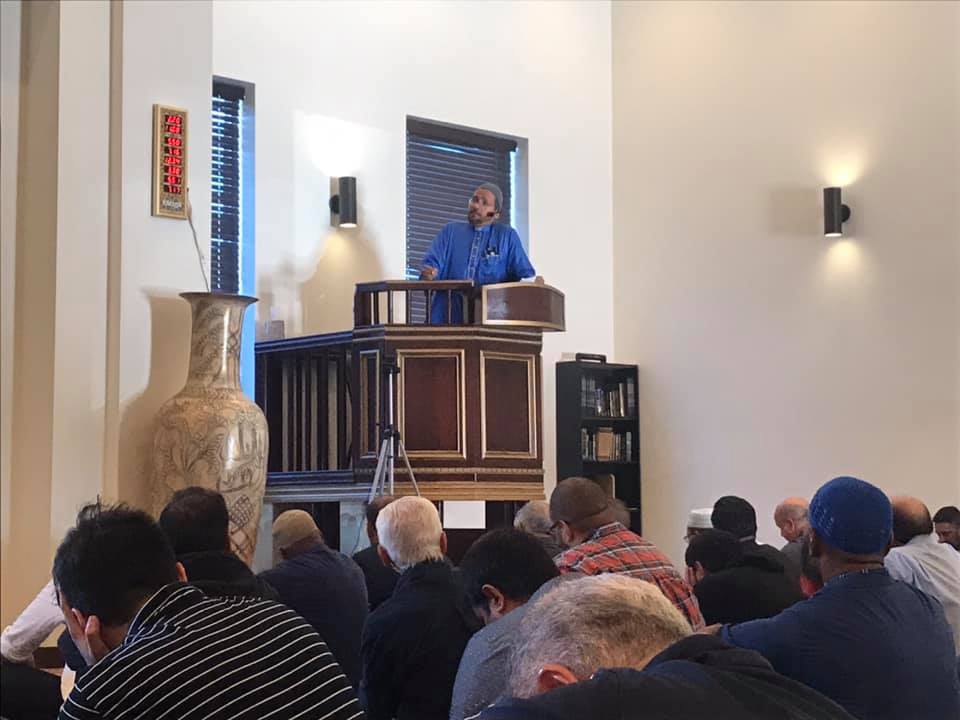
In a theoretical sense, we read about the Prophet, his life and overall tradition (sunnah). We hear stories about him from the Imams during the Khutbatul Jumu'ah and are expected to recite Sall Allahu 'alayhi wa sallam whenever we hear his name said. 


Reference to his role is made every time the call to prayers (adhaan) is made, and every time a person accepts Islam. Muhammadar Rasoolullaah- Muhammad is the messenger of God. The Muslim literature, as well as oral tradition, actually carries a plethora of detail regarding his life, and as all Muslims know, the discussions on the details are enough to fill entire libraries. It is not my intention to rehash any of those points, rather, my aim is to share examples of how information regarding him and his teachings have impacted my personality and my actions. 


This does not imply sainthood on my part. I am very aware of my own human weaknesses and failings and am similarly aware that none can get to the level of the Prophet, let alone surpass it. Indeed, Allah says that the Prophet is a creature of magnificent standards (Q 68:4). I am sharing-in order to allow readers a glimpse of what impacts me (which of course would generate a better understanding of my thinking process) as well as generating an interest in the possibility that the readers can similarly be impacted. Ultimately, that was the role of the Prophet, upon whom we invoke Allah for the best of blessings, peace and reward.


Tolerance


"It is of God's mercy that you (O Muhammad) have had leniency with them. If you had been cruel or harsh hearted with them, they would have abandoned you, so do forgive (ft.1) them..." (Qur'an 3:159)


The Prophet had so much tolerance for people, even those who occasionally disregarded his orders or otherwise caused him annoyance. In Saheeh Al-Bukhari, we read a report attributed to his servant (Khaadim)(ft.2) Anas ibn Malik that states " I served (khadamtu) the Prophet for ten years, and he never said a disparaging word (uffin) to me, nor blamed me by saying "why did or didn't you do such and such" ( Saheeh Al Bukhari 68:78).  In addition to the above texts, a particular incident recorded in the biographical data has impacted how I deal with people. That famous incident is that of a Bedouin ('A'raabi)(ft.3) who comes to the mosque and publicly urinates in front of the entire congregation, including the Prophet. The crowd was ready to beat him, but the Prophet did not allow them. Rather, he (a) Allowed the man to continue. (b) Told the man afterwards that the mosque was not a place to do that (c) The Prophet himself cleaned up the urine with water. (Saheeh Muslim 30:285, also reported by Anas).


What are the lessons from the above report? The man, being a Bedouin, was used to relieving himself wherever he had to as the need arose. After all, the Bedouins are nomads, in constant move through the desert. In other words, the Prophet understood the man's cultural background, and that understanding allowed him to teach the man, to protect him. This report impacts me to the extent that I strive to understand the family, cultural dynamics of those I encounter. Thus, I am a student of the social sciences, of phycology, sociology, and other related fields. I strive to understand people, to get where they are coming from.  


People in the time of Prophet Muhammad knew his tolerant nature. They would even call him "an ear", meaning he was used to hearing out people, rich or poor, to the point where his opponents deemed this a weakness. It is not a weakness to hear people out, it is a strength, and a blessing to those whom the Prophet would entertain to at least hear them out. This has impacted how I deal with people.


Humility and self-reliance

When the Prophet made the migration (hijrah) along with Abu Bakr from Makkah to Madinah, his arrival was highly anticipated. Upon arrival, the Madinans celebrated, however- because most had never seen the Prophet, they mistook Abu Bakr (Radee Allahu 'anhu) to be the Prophet, because Abu Bakr was wearing nicer, more distinct clothing. Similarly. the Prophet would fix his own shoes, repair his own clothes, even engage in shopping and milking his own goats. He would be in the battlefield, at least sometimes, he was digging the ditch around Madinah along with his men. In short, he would do what he commands others to do. He was a messenger of God, but he acted just like everyone else.  These sentiments have impacted me insofar as being largely self-reliant & avoiding snobbish behavior. I dress and have the appearance of "everyone else". I do own nice clothing and wear apparel I deem appropriate for the situation, but I don't go out of my way to boss people around or to strut as a model. I also don't engage in spouting fatawaa or engaging in unnecessary polemics.  In past times, brothers would be a bit critical of seeing me doing things such as cleaning or food preparation at communal events, they view it as low for my status in the community. I appreciate the love and support in those regards, however in general the above reports from the behavior of Allah's messenger, Sall Allahu 'alayhi wa sallam, has impacted me to act as described. 


Attempting to see the big picture-long term


The Prophet had enemies in both the Makkan and Madinan period. Among them was figures such as 'Umar ibn Al-Khattab and Khalid ibn al Waleed. They felt that the Prophet was undermining Arabian society, yet the Prophet prayed for 'Umar to embrace Islam. Ultimately, he did, even though it was initiated through an act of domestic violence(ft.4). Similarly, Khalid b. Al-Waleed even was on the battlefield against the Muslims, the battle of Uhud-where the Muslims faced great losses. Yet, Allah guided Khalid to Islam, to the extent that Khalid himself takes his shahadah with the Prophet in Madinah, removing his expensive jewelry to be given in charity. 


'Umar ibn Al-Khattab eventually becomes the second leader (khalifah) of the Muslims after the death of the Prophet, and Khalid b. Al-Waleed becomes a great military commander for the Muslim forces, showing that the title given to him by the Prophet- Sayfullah (the sword of God) was indeed an appropriate appellation, May God be pleased with them both. 


I try to see the big picture, even in those with whom I disagree on some points, be it theological or otherwise. I try to see the big picture of growth, goodness and benefit. This impacts how I interact and deal with them, even when differences are present. This is a lesson from the Rasool.  I am almost always hopeful for Divine guidance, for myself and others, in particular that others can see what I see as big picture priorities. 


Spiritual benefit

There are things that I do that imitate the Prophet's own actions, even if I view them under the lense of personal or cultural traditions and not that necessarily associated with religious mandates(ft.5). One such action of the Prophet is that he would use the miswak (a piece of wood used to clean teeth) often, particularly before offering prayers.  My imitation of this is to brush my teeth (with toothbrush and toothpaste) before making wudoo (ablution), at least five times daily. There are times when I don't do this, but in general I am cognizant of this because it was reported from the Prophet's practices (Saheeh Al Bukhari 72:40).


Cleanliness is a part of faith, says our Prophet( Saheeh Muslim 223), this is for body, mind and general environment. It is needed for prayers, and inside the prayers (salaah) I follow the Prophet not only in those parts of the prayer that are deemed essential, but in choosing what to do in the prayers. I make du'aa (supplication) in the prostration (sajdah) because the Prophet did that. In the post-salaah du'aa, I also invoke God, in my own words, for my own particular needs, but also, I ask Allah often using the teachings of the Prophet and even in the very words he would ask Allah. 


The words he -upon whom be peace- would use are pregnant with meaning. After Fajr and Maghrib, the report goes, he would invoke God:  "O Allah: I ask you for useful knowledge, and a halal, wholesome provision, and that my deeds are acceptable". Fajr (dawn) and Maghrib
(sunset) are the traditional beginning and ending of the workday. Thus, it's appropriate to ask God for knowledge that would help you (and not useless knowledge such as that of gossip etc.), that one's food and income are blessed through the beginning and end of the day, and that God accepts all of our efforts. 


Another of his prayers which has impacted my thinking is known as the sayyidul Istighfaar, the line "I am faithful to my covenant and promise to you as much as I can" (wa anaa 'ala 'ahdika wa wa'dika maas'ta'ta'tu). This line shows that even when seeking God's forgiveness, we are acknowledging our limitations. If we-as individuals- can do that in the presence of Allah, can't we do that with each other? Can't we do that within ourselves, as in self-forgiveness? 


Conclusion

There are many other examples, but I hope the above has provided some glimpses into how the Prophet Muhammad has impacted me-as it is reported from the hadeeth and seerah literature. These words should not be seen as limiting the Qur'an on me, not at all. The Qur'an is my primary source, and it is largely through the Divine Book that we get pointed to the gems that exist in the actions of the Messenger of Allah. 

The Prophet exemplified the scripture, and I cannot begin to exhaust the examples of how all of that impacts my thinking, my actions, my life. I don't claim perfection, sainthood or infinite knowledge. I am imperfect like everyone else. God alone is perfect (Al Kamaalu Lillaahi Wahdah). 

The Prophet functions as a role model for those who have hope in God and the final day (Liman Kaana Yarjoo LLaaha wal yawmil Aakhir Qur'an 33:21). Thus, whatever our faults, we have that hope. Hope in God and the final day. Hope - nay- an assurance that at the conclusion of it all, the efforts of those who have faith will not be wasted, hope that life will be better both in dunya and akhirah, and that those with any good within them will be guided aright, and those with NO good in them, who exercise tryanny and conceit,  will be dealt with appropriately in the Divine court. Wa Billaahit Tawfeeq.


Footnotes

(1) The term Faa'fu  conveys the sense of erasing. In other words, the Prophet is told to, as said in American colloquial English, "just forget it". God seems to be telling his messenger to look at the big picture. Isn't that what good parents do? Parents aren't expected to hold grudges against their children for their mistakes. It is healthier to move on, and that is what the Prophet is told to do. Throughout the Qur'an and hadeeth literature we find examples of similar wordings and teachings, in particular the du'aa associated with Laylatul Qadr, for which see Shamsuddin Waheed: Ramadan reflections: towards new beginnings


(2) Khaadim is wrongly translated as "slave". It does, however, denote someone tasked with chores, in much the same way we see housekeeping and maintenance in hotels etc. In Saheeh Muslim 2727, we have a report that states the Prophet's daughter asked for a khaadim for her home, for which he replied he would give her something better, i.e. the sentence "Soobhaan-Allah, Wal Hamdulillaah, wa laa elaaha ill-Allah, wa Allahu akbar" (Glorified is God, praise belongs to Allah, none deserves worship except Allah, Allah is the greatest). This shows that the Prophet was not someone who was materialistic, and taught avoidance of material gain as being the primary goal of life. This has also impacted me in a general sense, and the expression above is also one I recite often and occasionally use it within the Friday sermons. 


(3) A'raab is different from 'Arab. The latter denotes Arabians of the cities, while the former is the name of nomadic Arabs who are constantly moving from water source to water source. The nature of nomadic life is different from settled life, thus, there will be naturally differences between behavior accepted in the isolated deserts and actions acceptable in city life.


(4) The report is that 'Umar b.Al-Khattab was on his way to kill the Prophet when he heard the news his own sister and brother-in-law had accepted Islam. He went to their home, finding them reading a manuscript of Quranic revelation, proceeds to physically assault them both. However, on calming down, he reads the manuscript and becomes convinced of the veracity of the Islamic message. 


(5) Some do view miswak under the realm of religious necessities, to the extent that because the Prophet used it, any ridicule of the miswak's use would constitute rejection of Islam. (see Kitaabul Imaan by Mujlisul Ulama of South Africa, pg. 72, Bilal Books publishers, Bombay, India)  In any case, we view it, at best, as from the traditions and taste of the Prophet as an Arabian man, a product of his society, the technical term being "the cultural sunnah" (sunnat al 'aadaa), whereas actions associated with religion and spirituality fall under the title "The guided sunnah" (Sunnat al hudaa). 


Saturday, May 11, 2024

Dealing with Dreams

 Introduction


Recently, a person told me of a dream in which centered around me. This would not be noteworthy, except that the person shared information that they would have no access to, information not available to them by any means, including an exact description of yet another person that would likewise be unavailable to the dreamer. While I have no intention of sharing the content of that dream, it did prompt me to look at information from the primary Islamic sources on this phenomenon


This post does not present itself as authoritative, merely as some fresh observations and reflections on the Islamic texts.


Can dreams really be from God?


The answer to this is a clear affirmation. The Qur'an directly provides examples wherein Allah Soobhaanahu wa ta'alaa has communicated via dreams to Prophets, Non-Prophets, believers and even disbelievers. 


It mentions how God delivered to Joseph (Yusuf, 'alayhis salaam) a vision in which the heavenly bodies prostrate before him, and when he informs his father Jacob (Ya'qub 'alayhis salaam), the latter advises him to be this experience a secret from his own family (Q 12:5-7). The same Quranic chapter tells us of two (seemingly non-believing, at least initially) prisoners having dreams (which Joseph interprets) and of the ruler of Egypt having a vivid dream, the former asks Joseph for his interpretation, and such interpretation actually ended up saving Egypt from the extremes of famine (Q 12:12:36-42 and also see 12:43-50, also see 53-57)


Can dreams be just a product of an active mind, stress and the like?


This is also within the realm of possibility. There is a wealth of research and anecdotal evidence to show that the content of dreams can be influenced by such things as background noise, watching television or one's electronic device, and even meals before bed (ft.1.) Stress is another added factor to this equation, in that the stressful matters that are on one's mind can carry themselves into your sleep, manifesting through dreams while asleep(ft.2).


Are there ways to distinguish between Divinely inspired visions and dreams that are "unimportant"?

This is a difficult query; however, it seems logical that if God does in fact send communication via a dream, that the "end conclusion" or "inspiration" would be something good and beneficial, especially for the wider society. There have been people who have had dreams which pushed them to engage in activities whose benefit outlived even themselves. The founder of the Tablighi Jamaa'h movement (ft.3), Maulana Ilyas Kandhlawi (popularly known as Maulana Muhammad Ilyas) is said to have started his efforts as a result of a dream. 


For "unimportant" dreams, it seems that such would be product of any mental influences, and even if remembered for a long time, would have no impact on one's life. 


Dreams as a part of prophethood


As Muslims, we believe the doors of prophethood, and scripture has been closed with Muhammad- Sall Allahu 'alayhi wa sallam- and the Qur'an. Yet, it has been recognized almost universally that dreams and visions can be directed to blessed individuals from Allah. It is the Prophet Muhammad who is reported to have said that "nothing remains of nabuwwat except 'al mubashshiraat'(Good news). They (companions) said "and what is "good news". He replied "The correct dream" (Ar-Ru-yaa As-saalehat). (Saheeh Al Bukharee 91:9). Yet another narration asserts that "the vision of a believer is one of the forty-six parts of prophethood." ( Saheeh Al Bukharee 92:4).


The meaning of this (which appears to have support from the Qur'an) (ft.4) seems to be that for believers in general, they are provided access to a divine support and inspiration that has the qualities of nabuwwah- in the sense that the impact of such support is profound, with long term good impact, while actually not having any function of nabuwwah, since Allah has decreed that nabuwwah concludes with the mercy to all nations, Muhammad ibn 'Abdullah, upon whom be peace and blessings. 


Can Satan inspire bad visions?

The Qur'an depicts Satan as a cunning whisperer, a behind-the-scenes influencer, who even attacks humans (his prey) from all directions (see Q 11:16-17). In light of that description, it is reasonable that Satan would plant the seeds of destruction under the guise of a vision or would- conversely- (and more commonly) use our own negative thoughts, suspicions and anxieties as a means to derail us-in the name of "good sense" or "sincere advice". 


An account attributed to the Sufi figure 'Abdul-Qaadir Al Jilani (d.1166) is quite telling: He was praying, and a voice comes to him proclaiming: "I am your Lord, I make lawful to you that I have made unlawful to others". Al-Jilani asks if this is God (Allah). The voice only says, "I am your Lord". Al-Jilani replies "I know this is Satan". The voice confirms this and asks how was he (Satan) recognized? Al-Jilani replies that (a) You never identified yourself as God. (b) God would not make lawful for me what he made unlawful for others. The voice, now identified as Satan, asserts that through that trick (of a sort of spiritual hijacking) He had been able to fool thousands of people. 


Sleep hygiene

The stresses of the coronavirus era produced an acute awareness of obscure health issues, including popularizing the term sleep hygiene, which refers to actions such as a dark room, no lights, no phones nearby during sleep and the like, but- in keeping with well-known prophetic traditions, it is important that when one sleeps, one makes a habit of reciting Qur'anic texts or supplication (du'aa). My normative practice is reciting the expression "None deserves worship except God, Oh Allah, in your name do I die and live" (Laa elaaha ill-Allah, Allaahumma Bismika Amootu wa ahyaa') as well as Ayatul Kursiyy (Qur'an 2:255).


The fact that we have the above (and some other practices) from the Islamic sources is indicative that we are at our most vulnerable, physically and spiritually, during sleep. There is a level of protection and safety needed to not only sleep, but to be protected from Satan. 


When others have dreams about you

The inspiration for this article was a person having a very detailed dream about me and my life, with information that could not have been known to that person. Disturbed at first, it occurred to me that perhaps Allah was conveying-through this person- some information or insight that I really needed to hear. 


When others have a dream about you, and they share it, it is possible that the dream occurs as a product of the subconscious, that somehow, especially after a long time of distance, the person dreams about you, indicating unconscious thoughts. Dreams in which specific authentic details are present, especially private information that, I think, should be taken seriously. The dreamer's interpretation is important to take heed of, but also your (if you are the object or make appearance in that person's dream) own understanding. It may take time to think about, but in light of the Islamic texts, it is possible that it is indeed God conveying some important indicators of guidance. 


The Islamic tradition has some words of advice, including that a person's dream (if shared with a dream interpreter) should not become the source of gossip, and that overly negative dreams should not be shared in public!


Many Muslims claim to have dreams of the Prophet-that he (the Prophet) instructs this or that, and we have a tradition stating that Satan cannot take on the Prophet's form. While this tradition may in fact be true, for modern people it does not provide that much assistance because we don't actually have a photograph of him. Perhaps the best thing to do, if we do have a dream and get the feeling that the Prophet Muhammad (Sall Allahu 'alayhi wa sallam) is in it, communicating with us, is to analyze the message, if it has inspiration of a good message and does not contradict what we know for certain ('ilmal yaqeen) from the Qur'an and Prophetic model, we can take something good out of that experience. Otherwise, if it goes against what we have sure knowledge of, we will have to see the possibility of Satan's hand in it.


Dreams as expressions of delusional thinking


This is also a possibility, particularly lucid dreams as a side-effect of illness or medicine. Narcissistic people can also fool themselves, justifying their own actions via delusional expressions. If a person reports an experience that is "delusional", understand that that "delusion" has very little to do with you. We all have life experiences and interpretations of events that not only vary but are -by their nature-subjective. 


It may be prudent to limit what one says in public regarding dreams, but also spiritual experiences in general. We are all on different levels of faith, practice and understanding. Spirituality is a deep field, a person can have a rich inner life which is misunderstood by others, even by the clerical class. 


It is important to have a clean life, devoid of intoxicants and sinful behavior, and to be consistent in asking God for protection from being deluded. Before reading Qur'an itself, we say "I seek refuge with Allah from Satan, the rejected enemy" (A 'oodhuu billaahi minash-shaytaanir rajeem). Another supplication reads "God, show us truth as truth, and give us the ability to follow it, and show us falsehood as falsehood, and give us the ability to abstain therefrom." Goodly company, even wholistic food, is also a necessity in terms of avoiding the pitfalls of delusions, as delusions can bring forth unnecessary destruction. 


Footnotes

(1) See  Food's Impact on Dreams - Sleep Academy for a brief discussion on influence of food for dreams. 

(2) For the influence of stress on dreams, see Stress Dreams: Causes and Prevention Tips (psychcentral.com)


(3) The Tablighi Jama'at (TJ) was founded in the Indian subcontinent in the 1920's with a strategy of combating Hindu influence on Muslims. They are famously apolitical, and practically function as a missionary, largely organic circle whose focus is on Muslims, thus, they visit Muslims in their homes, encourage participation in communal mosque prayers, etc. They have evolved to be a global trend, hosting events such as convention (ijtimaa') in Bangladesh which attracts millions every year.


(4) The Qur'an (42:51) says that God communicates through three primary ways, by "revelation" (wahy) or "from behind a veil" (min waraa-i hijaaban). The two ways highlighted here could be indicative of dreams, as "wahy" is sometimes used to indicate "true dreams". The primary usage of "wahy" is inspiration. Other words used for dreams include "Ru'yaa" (this is the main Quranic term) and "Ahlam". 


Saturday, June 17, 2023

Friday Khutbah :The Prophet's example

 ( Note: The following is an edited version of khutbah delivered 6/16/23 at Masjid Ibrahim of Las Vegas, Nevada. Please note that the opening Hamd (expressions of praise for God) have been omitted, as well as the verbalization of peace for the Prophets. In addition, it has been formatted into one article, rather than the traditional two sections as found within a khutbah.)


The blessing of practical guidance


As Muslims, we have as our ultimate source of guidance and information the pure, uncorrupted words of Almighty Allah within the Qur'an, however, we also possess, as a second source of guidance and information, the example of the Messenger of Allah. This did not occur as an accident or an afterthought, rather, it is the system by which Allah has made the deen, in order to convey and preserve the message of the revelation. Thus, we read in the Qur'an "Verily, you have in the messenger of Allah a goodly model, for any who has hope in Allah, the final day, and reflect upon Allah abundantly." ( Q 33:21)


لَقَدۡ کَانَ لَکُمۡ فِیۡ رَسُوۡلِ اللّٰہِ اُسۡوَۃٌ حَسَنَۃٌ لِّمَنۡ کَانَ یَرۡجُوا اللّٰہَ وَالۡیَوۡمَ الۡاٰخِرَ وَذَکَرَ اللّٰہَ کَثِیۡرًا

We have within the Prophet's practical instructions a wealth of information on addressing negative emotions. He said: "Don't look at those above you, look at those below you." (Al-Bukhari & Muslim).


Allah certainly gives and restricts for whom he wills, in accordance with his plan and wisdom, these are things we are often unable to see, and as a result of our short vision, experience jealousy and the like. 


By following the aforementioned hadeeth, it helps to remove the destructive feeling of jealousy. Envy is an emotion that invites a satanic presence, to the extent that it is discussed within the last two Quranic chapters (Al-Falaq and An-Naas).


Prophet Muhammad also sought to limit those items which arouse jealousy in others. He forbade men from wearing gold and silk (Ibn Maajah). Men are the traditional public figures, and thus by forbidding men from adoring with these two items, it limits public resentment, which can-if unchecked- translate into actual crimes and social disorder. 


Our religion has also taught that when we see examples of God's blessings, we should say Maa-shaa-Allah (as God has willed) and Alhamdulillaah (praise belongs to Allah). 

Allah gives according to his wisdom and plan, and recognition of this helps to remove envy from the hearts.


Anger

There are times when anger is not only appropriate, but also necessary. A man seeing his wife, daughter, children etc. under attack is supposed to become angry and take action to defend his family. Yet, as a general principle it is widely recognized that anger is a dangerous emotional outpouring. 


The hadeeth literature reports that a man asked the Prophet for advice, and he responds (3 times) 
Do not give in to the tendency to be angry "(the arabic text for this is Laa Taghdab) (Saheeh Muslim).


While the above sounds good, our Prophet went further. He practically stated that when angry while sitting, stand, when walking, run, go make wudoo (ablution), offer a two rak'ah (unit) prayer. (sunan Abu Dawud 7482, 7484).


In other words, removing oneself from the situation by taking these actions helps to de-escalate the matter before taking regrettable actions. This is very sound advice. 


Emotional blackmail


The Prophet as a leader, as God's messenger, was nonetheless a human being. He and his followers had been victims of Makkan oppositon for years, and upon the liberation of Makkah, he issued a general amnesty, which benefitted the leaders of that opposition such as Abu Sufyan and Hind. The latter had ordered a slave named Wahshi to kill and mutilate the Prophet's beloved uncle Hamza (Radee Allahu 'anhu).

All three of these people became Muslim and recited the shahaadah (declaration of faith) with the Prophet. With Wahshi, the assassin, he told him that while he accepts his declaration, and he is under the amnesty promised by the new order he (The Prophet) established, he did not want to see him (Wahshi) again, because he gets reminded of his uncle!


So the Prophet, while still carrying on in his role, was a human being with human emotions. He guarded himself from negativity by telling Wahshi he didn't want to see him anymore. 


The lesson is that taking actions of self-protection are perfectly valid. Naysayers and abusers often resort to emotional blackmail and manipulation of religious language to force their agendas; however, we learn from the Prophet that we are allowed to protect ourselves from such things. 


(Most of our Friday prayer and Qur'an study sessions are livestreamed on our mosque Facebook page "The Masjid Ibrahim". In addition to this website, many of our talks are to be found on YouTube on various channels, such as "Arifin Library". For updates, do follow/subscribe to those sites)


Thursday, March 16, 2023

Personal Islam: creating a balance between public and private

 Introduction


As individuals moving through life, perhaps even in differing locations, we are forced to learn what is useful and what is superfluous. There are battles worth fighting, there are likewise times when simply moving on is best. 


In a world connected by the internet, artificial intelligence, cellphones and social media networks, our movements are open to scrutiny and criticism. This is not restricted to politicians but is now accessible to everyone. Those with sufficient abilities can hack into a stranger's correspondence and even bank accounts, even going so far as to "dox" an ideological opponent or attempt to create situations wherein individuals are "canceled". 


Much of this stems from cultural acceptance of these possibilities as byproducts of modern life, as well as downplaying the harms that come from ill-intentioned characters. Thus, victims of stalking, assault and the like, can receive little to no sympathy, their lives existing as nothing more than a source of entertainment to strangers, friends and foes alike. 


It is my assertion that it is vital for people to create balances in an ever-connected world.  The balance between being a responsible, public citizen and having privacy, a private life that should be respected by all. 


A person's Islam


The above translation of the hadeeth (which appears in collections such as Imam An Nawawi's Al Arba'oon an Nawawiyyah and subjected to great analysis in Ibn Rajab Al Hanbali's Jaami' al 'Uloom wal Hikam) is very strong. On the outset, I would render the translation as " From a person's pleasant Islamic (disposition) is his leaving (or abandoning) that which gives him no meaning." 

Either way, it shows us that nosiness, and the subsequent actions such as speculation, gossip, fake news and the like, are not characteristics that people should have or carry themselves in. 

In most of the Muslim cultures, (as an example) family affairs are deemed private, and it is deemed reprehensible for outsiders to engage in gossip and speculation on those matters, particularly if such behavior is engaged in by men. 

It would do well for Muslims and Non-Muslims alike to heed the wisdom of the Prophetic hadeeth cited above. Indeed, this narration counts as 25% of the texts necessary for a completed Islam, according to the hadeeth collector Imam Abu Dawud (d.889 C.E.). Thus, nosiness is in itself spiritually unhealthy. 

Simply put, if encountering speculation or information on a person, Our Prophet (Sall Allahu 'alayhi wa sallam) is telling us to leave it alone, even if it involves individuals on the opposite side of strongly held ideological beliefs. The exceptions would be if something forbidden by clear religious teachings, crimes, communal harm and the like. In such cases, it is necessary to do something about it.

لَا یُحِبُّ اللّٰہُ الۡجَہۡرَ بِالسُّوۡٓءِ مِنَ الۡقَوۡلِ اِلَّا مَنۡ ظُلِمَ ؕ وَکَانَ اللّٰہُ سَمِیۡعًا عَلِیۡمًا 

" Allah Loves not the expression of harm, except for those who have been wronged, Allah is the one who hears and knows." (Q 4:148)                                


Islam asks for a culture of respect.


A quick perusal of the Qur'an shows us important yet often neglected teachings. Among those tidbits of guidance, we are told not to enter into the homes of others without explicit permission, that there are times of the day when privacy is to be expected and only interrupted with consent, be cognizant of time and comfort of your host, and not to overstep one's boundaries when dealing with the family of your host. (Q 24:27, 58, 33:53, 59).


What about public figures?

Much of the Quranic texts cited above were involving the Prophet Muhammad himself, upon whom be peace. Undoubtedly, he was a public figure, as both a political leader and a person viewed by his followers as God's messenger, coming in a long line of Prophets who have graced humanity with their presence. 

Muhammad, although being a messenger of God, was still a human, with the same needs and struggles as other humans. A gentle, compassionate man by nature, he had the tendency to not vocalize if annoyed, offended, etc. 

Examples of these things are highlighted within the Qur'an in order to give lessons on human interaction. Thus, even he, as any other leaders, have the right to respect and for scrutiny/criticism not to be directed towards that which is not for the public.

Yet, what is interesting is that this happened, not only from zealous or unaware Muslims, but more importantly from his foes. The Qur'an mentions repeatedly this as coming from "hypocrites" (enemies disguised as Muslims) and those with "diseased hearts." (33:53, 59, 60 et al).

These types would find ways to harass the Prophet's wives, spread slanders and false stories. The Quranic revelation instructed his wives to have decorum in speech and dress, (33:32, 33 and 53) yet such actions from the hypocrites and those with diseased hearts continued!


Thus, Muslims are instructed that while it arguably acceptable to engage critically with the thoughts, policies and beliefs of public figures, going after their families or family matters are totally unacceptable. The concept of "doxing" is totally forbidden insofar as Islam is concerned. This prohibition is a natural extension of the prohibition of backbiting, slander and gossip (Q 49:11-12)


Does privacy exist within a family itself?


Although a difficult and debatable question, it is our understanding that this extends even within the family unit itself. Minor children should be shielded as much as possible from the problems between their parents. It is unnecessary for each clan member to know your bank account balance.

The Quranic story of Joseph (Yusuf, 'alayhis salaam) highlights that jealousy emerged from his own family to the point where his own brothers contemplated his murder, before deciding on exile. 

His father, the Prophet and patriarch Jabob (Ya'qoob 'alayhis salaam) advised him to keep certain things private, because he was cognizant of the hatred in the hearts of the other children (Q 12: 5, 7, 8-10).

Similarly, the Qur'an has wisely stated that marriage problems be dealt with through only one "judge" (hakaman) from the wife's family, and one from the husband's family. (Q 4:35)

Making such trauma bigger by involving more parties only complicates the situation. 

Conclusion

Every situation is unique, as well as every culture. Our perceptions as individuals will vary. Our perception of what should be kept under wraps may differ from that of the readers, however as general principles, we should have the religious maturity to concentrate on what actually concerns us, and not enter into other people's business. 

This is a lesson that is delivered by the Qur'an and Sunnah. Some may argue that human curiosity prevails over religious slogans, yet as Muslims it is necessary to seek conformity to our religious sources. ( Q 33:71). Looked at from a different angle, no benefit is derived from knowing another person's news, good or bad. The curious observer most likely will be unable or unwilling to help the object of their curiosity, so it is pointless to "investigate" in the first place. 

In terms of "good news", it is my view that that should also be limited in public exposure. Attention from the jealous, hateful or envious can create it's own problems. I have long believed that the prohibition (for men) of wearing gold or silk- found within the Prophetic tradition- exists in order to limit jealousy, crime and other negative reactions from others. Modesty and humbleness should be exhibited by all parties (but especially those of wealth) in public. 


Thursday, June 16, 2022

Reflections on Istikhaarah: the priorities of life


Muslims have a tradition that when facing options in which there is no clarity, to make the above supplication. As a ritual, the basic procedure is to offer a two-unit (rak'ahs) prayer and make the above supplication. 


A full examination of the Istikhaarah rite                                                                                                                                  
The tradition is based on the following report " On the authority of Jaabir b.'Abdullah, Radee Allahu 'anhu: The Prophet (Muhammad) Sall Allahu 'alayhi wa sallam would instruct us to pray for guidance in all of our concerns, just as he would teach us a chapter of the Qur'an! He, Sall Allahu 'alayhi wa sallam, would say "if any of you intends to undertake a matter, let him pray two -units of voluntary prayer, and afterwards supplicate (the istikhaarah supplication)."

There are some interesting elements of the practice that are present in the above hadeeth, which are addressed below

Pray for guidance in all concerns. 

 The Muslims are instructed to offer five daily prayers, give in charity, and fast as necessary elements in our attempts to be close to the Creator.   The rite of offering two- unit salaah, in which Soorah Al-Faatihah (Ft.1) is recited, as well as the other normative worship texts (Tasbeeh, Tahmeed, Tashahhud, Salaat 'alan nabi etc) shows us that there is to be an attitude of submission, and acceptance to the Divine plan! We don't always know what that plan is, but we are expected to integrate ourselves to it.

The Qur'anic revelation states: " So, where will you go?  It (Qur'an itself) is none except a reminder to all nations, for whosoever amongst you that wants to go straight, and you are not to will, except as Allah has willed, (he is) the caretaker of the universe." (Q 81:26-29)

This supplication (du'aa) was taught just as the Qur'an was taught


This is very telling. The Prophet Muhammad, upon whom be peace and blessings, made the teaching of this supplication a priority, in the same fashion that Quranic education was a priority! The Qur'an itself teaches that God hears all supplications (Q 2:186), while also asserting that He knows the contents of one's heart (Q 3:154, 5:7, 8:43, 67:13-14 and many other texts). 

So, what is the purpose of reciting a specific supplication? Why recite a supplication at all, if God already knows what we are in need of in the first place? 

The answer is that the Istikhaarah supplication is done, primarily, as an act of worship (ta'abudi), and worship itself has a way of addressing one's concerns by its very nature. A person develops a closer tie to the Almighty through worship and supplication, the stronger that tie is, the weaker the particular problem will be, until that problem gets resolved.

Translation of the supplication

O Allah, I seek your guidance by your knowledge. strength by your power, I ask from your magnificent bounty, you have power, while I don't have power. You know, and I do not know, and you are the full knower of the hidden ('allaamal Ghuyoob). 

O Allah, if you know this issue (and mention the issue) to be best for me in my faith (deeni), my life (ma'aashi), my ending ('aaqibati amri), then decree it for me, make it easy for me, then bless me in it.

And if you know this issue (haadhal Amr) is harmful for me (sharrun li) in my faith, life and ending, then remove it from me and me from it, decree for me what is best (khayr) wherever it is and make me satisfied with it." 

The supplication teaches bullet points of priorities

The supplication texts of both the Qur'an and Prophetic tradition serve as more than ritualized recitations, rather, they serve as items conveying lessons. In this case, after telling us repeatedly about the Divine power and knowledge, this du'aa teaches that what we are to look for, when trying to make a decision that has long term consequences, is if that issue for which we are indecisive, if it will be the vehicle for religious/spiritual growth, enhance one's worldly life/happiness, and be a source of peace when the end of life comes.


What happens after Istikhaarah?

This can be followed up with seeking advice on the matter from trusted sources, as well as writing out a list of pros and cons on the matter. Ultimately, the supplicant has to live with their choices, but the supplication gives us core things to look for. Many people limit the Istikhaarah supplication to marriage, however it can be offered when facing other choices as well, such as career, moving, business, etc. 

Many depend on "a good feeling", intuitive understanding, afterwards, or seeking out a dream or a miracle as a sign from God in favor or against. While we cannot say for certain what Allah will do, we can be assured that the supplication helps us to make the decision on our own. 

After all, God has given us minds, hearts, arms and legs by which to make decisions and to be able to make those decisions come into reality.

Footnotes 

(1) Soorah Al-Faatihah, the opening chapter of the Qur'an, is the necessary text for every unit of prayer. There is consensus (Ijmaa') on this. It is a text of both worship and supplication.