Showing posts with label prayer. Show all posts

Monday, March 22, 2021

Conception of Salaat 'alan Nabi in light of the Qur'an and Sunnah

 Introduction


 One of the practices universally observed in Muslim culture is- when referencing Prophet Muhammad, to recite statements such as Sall Allahu 'alayhi wa sallam after his name. Similarly, neglect of reciting this term can be viewed as disrespectful by some observers. The practice is called by various names worldwide, such as Salaat 'alan Nabi, Durood Sharif, salaat wa salaam,  and even salawaat.


Several questions emerge as a result of this practice, among them being : (1) Does the religion require this to be recited frequently, or simply on occasion?  ( 2) Does this practice elevate Prophet Muhammad to an object of worship ? (3) Is there a distinction being created for him-in contradistinction to the other Prophets? 

While this article does not seek to answer those questions, it does seek-by analysis of the Islamic texts, to provide an understanding of the foundations behind the practice, and take away a deeper cognition of the texts themselves.


Salaat 'Alan Nabi in the Qur'an

 A solitary Quranic text forms the strongest evidence for the practice. The verse itself is often recited as a prelude to Salaat 'alan nabi itself, as well as Mawlid events, poems, and supplications. The text reads

اِنَّ اللّٰہَ وَ مَلٰٓئِکَتَہٗ یُصَلُّوۡنَ عَلَی النَّبِیِّ ؕ یٰۤاَیُّہَا الَّذِیۡنَ اٰمَنُوۡا صَلُّوۡا عَلَیۡہِ وَ سَلِّمُوۡا تَسۡلِیۡمًا

"Indeed, Allah and His angels Yusalloona upon the Prophet. People of faith, do salaah on him, and give obedient submission" (Q 33:56)

The verb yusallona is typically translated as "send blessings". However, contextual understanding is very important. This Soorah, Al Ahzab - as a whole- discusses issues related to conflict, as well as domestic  issues, and inspirational material. When read in context, especially in considering the term "Indeed Allah and His angels", it becomes apparent that Yusalloona means that God, through the agency of his angels, give the Prophet what he needs for success, and that the believers are told to do the same thing, i.e. to give their support, be it morally, physically, financially, to the Prophet, in order that the cause he is standing upon is successful.


It is worth noting here that the same Soorah has the same sentiment, with the same wording, as applied to believers. "It is He (God) who  is conveying upon you the meeting of your needs (yusalli 'alaikum), and the angels (are involved in this process), in order to remove you from darkness to light, and God is merciful to people of faith." ( Q 33:43).

 ہُوَ الَّذِیۡ یُصَلِّیۡ عَلَیۡکُمۡ وَ مَلٰٓئِکَتُہٗ لِیُخۡرِجَکُمۡ مِّنَ الظُّلُمٰتِ اِلَی النُّوۡرِ ؕ وَ کَانَ بِالۡمُؤۡمِنِیۡنَ رَحِیۡمًا


Salaat 'alan Nabi in the hadeeth literature

There are a number of reports in the hadeeth literature that place emphasis on reciting salaat 'alaa Nabi, one of them saying that for every time it is done, Allah will send ten blessings on that person. (saheeh Muslim, Sunan Abu Dawud). These reports have varying degrees of authenticity, but nonetheless has always been acted upon, in particular in the final sitting posture in prayers.


The general wording is as follows:


(1) "O Allah, send upon (salli 'ala) Muhammad the necessities, and upon the followers of Muhammad, as you did upon Abraham, and the followers of Abraham, Indeed, You are praiseworthy, glorious."


(2) "O Allah, give blessings upon (Baarik 'ala) Muhammad, and upon the followers of Muhammad as you did give blessings to Abraham and the followers of Abraham, Indeed, You are praiseworthy, glorious." 


What is interesting is that in the hadeeth literature, we find that the Prophet himself, upon whom be peace, used the same phraseology in connection to other people:


" 'Abdullah b. Abi Awfaa related that whenever a people would bring their charity (sadaqatihim) to the Prophet, he would say "O Allah, send upon the people of so and so their necessities (Allahumma salli 'ala Aal Fulaan)." 

The same report says the Prophet would make the same invocation- the one traditionally made by Muslims on his behalf- for the behalf of specific individuals when they gave their charities (Saheeh Al Bukhari and Muslim )


Do Muslims worship   the Prophet?

Some critics assert that the practice of Salaat 'alan Nabi constitutes worship of the Prophet. They further assert this because the term Sall Allahu 'alayhi wa sallam has been translated by some as "prayers and peace be upon him".


The term Salaat is used for prayer, as in the prayers Muslims do on a daily basis. However, I hope it has been seen that the term, as thousands of other terms in every language, do not always the same meaning every time. One laughable critic has claimed that Islam teaches that "God prays to Muhammad", citing the expression Sall Allahu 'alayhi wa sallam as evidence. 


Other important points

(1) The Muslims generally have agreement of the necessity of doing Salaat 'alan nabi inside the prayers, in the final sitting position. The first part, in Arabic Allahumma Salli 'ala Muhammadin wa 'alaa  aali Muhammad.. is viewed as necessary, whereas the second part, wherein Baaraka is mentioned, is deemed as, at best, a Sunnah. 

(2) There is an important distinction between the two parts of the supplication given in the "Salaat 'alan Nabi in the hadeeth literature" section above. The first part shows us a prayer for the necessities, the tools for success, be met, and that the Qur'an and hadeeth both use it in that sense, whereas the second one is for extras, for those things that, while unneeded for survival, enhances one's life and general happiness.

(3) There are narrations, including above, which speak of both aspects being extended not only to the Prophet, but to his followers (Aal Muhammad). This shows that even in worship, one has positive desires for others, as well as that we seek Divine help for the cause that the Prophet represented. After all, the Prophet is dead, and receives his rewards from his Lord, Allah Almighty. So "Muhammad" inside the sitting posture of prayer represents advocating or praying for the cause the Prophet stood for!


(4) The Shiites apply the term Aal Muhammad to the Prophet's family. This is a different understanding of a linguistic point, which should not be a point in polemics. 


Conclusion

There are many concepts in religion which take on a cultural dimension, and while this is not a problem, it is good to examine, with as much open-mindedness as possible, the sources of these concepts, to see the original intent behind them.

Salaat 'alan Nabi is clearly used in the Qur'an as an exhortation to physically, morally, and financially, to the believers, to assist the Prophet, to support him in his cause.

We believe the Prophet did also ask for a verbal supplication be made for him in prayers. However, the hadeeth literature is clear that he would do the same supplication, in the same wordings (Qaala: Allahumma salli 'ala 'alayh.) for people who would come to him.

We certainly are not advocating changing the practice of reciting Sall Allahu 'alayhi wa sallam (or expressions of a similar import) after the Prophet's name, we are simply stating, in light of the Qur'an and Hadeeth literature, that the Quranic verse which serves as the primary textual support for this- that verse (Q 33:56) has a deeper message than usually imagined.


 

Monday, November 18, 2019

Methods And Goals Of Contemplative Practices In My Faith (Panel Discussion )

(The following is an edited version of my presentation for the 2019 Interfaith Forums, organized by the Interfaith Council of Southern Nevada, held November 10th, 2019 at Masjid Ibrahim.)

Introduction


The Qur'an tells us "Indeed, prayer restrains from immorality and repugnant actions" ( Q 29:45). The word translated as "prayer" is "Salaah". In our faith, it is observed at least five times daily, during specific times of the day. The Salaah ritual has therein recitation of Quranic texts, bowing and prostration. God does NOT need that we do this, or any other act of worship, rather, it is we who need it.

The Salaah ritual is regulated, offered in a particular fashion, and is deemed a religious obligation. The spiritual and physical benefits of Salaah have been widely recognized. The Prophet Muhammad (peace be upon him) identified it as the main exercise which distinguished between faith and lack of faith.

The Qur'an reminds us that there will be a time in which we are held accountable before God, and the salaah essentially reminds us of that, therefore it becomes important to do as much positive works as we can. Thus, the Qur'an connects the ritual of salaah to the giving of a portion of one's wealth to the benefit of worthy causes, such as uplifting the poor. Similarly, the Qur'an expresses criticism of those who do ritual worship, yet are neglectful of needy human beings.


Dhikr- The remembrance of God


Another ritual act done is known as dhikr! Traditionally, this includes the recitation of  God's names, formulas of praise and glorification. As a ritual, it is not deemed in an obligatory sense- the important exercise is the mental one here. The Qur'an says "The remembrance of God is the greatest (source of inspiration and power)" .

Dhikr as a ritual often takes place after the Salaah, and can be offered at any time without any preconditions. If we engage in this act (be it in a ritual or non ritual fashion)- it helps us to internalize the very hopes we seek from God. In other words, if we invoke and recall God as The Ever-Forgiving (Al-Ghaffar), forgiveness should become a part of our character as well.


Miracles

The actions of Salaah and dhikr produce a sort of barrier against mental and spiritual attacks, and is the main ways by which we connect ourselves to the Almighty.

With that said, what is perhaps most curious on this point is that miracles and mystical experiences are NOT the goals of these actions! THIS does not negate that miracles can take place, and that people can experience mystical moments, yet the fact of the matter is is that such things are subjective and ultimately do not provide any evidence beyond an individual level.

This is illustrated in the experiences of the 12th century figure, Shaikh Abdul-Qaadir Al-Jilani.  Once while he was praying, a voice comes to him, saying "I am your Lord".  The Shaikh replies "Are you God?" After repeated questioning, this voice says "I am making  lawful for you what I made unlawful for others". The Shaikh replied "You are Satan, because I know God would not make lawful for me what He has made unlawful for others".

Miracles are not what we need, because they can themselves be misleading. What we need is the inspiration derived from worship to be able to recognize truth and produce in this world, that is the formula for success in this life, with springs to enjoy in the life to come.


Tuesday, August 28, 2018

Do we live according to "Allahu Akbar"

The expression "Allahu Akbar" or "God is Great" is often used and sometimes even abused. It is very important to not only recite but to live by.

This Khutbah explores mainly the importance of this expression, and serves as food for thought for the viewers.


Tuesday, January 14, 2014

The Divine internet connection: Salaah in the life of a Muslim

Prayer is obviously important. Of this, all religions agree. Indeed, the Christian scriptures assert to "pray unceasingly" [ 1 Thessalonians 5:16]. It is a universal institution, and while differences exist between religions as to the format of prayer [and even within the same faith community], all hands are in general agreement as to its value and importance. This article seeks to take a look at prayer from an Islamic perspective.

[1] Salaah is our main connection with Allah

This is easily gleamed from the meaning of the word Salaah itself, which is related to the word silah, meaning tie or connection. It allows us to express our yearnings, our inner-most hopes and aspirations, to the Lord of all . In short, Salaah is an act that is done in order for us to see God beyond an intellectual possibility, to see God as real! It's certainly best to view God as real now, rather than on the day of judgement, because acknowledging that on the day of standing [Yawm ul Qiyaamah] will be pointless. Indeed, in the Qur'an, we are told of Pharoah, who had seen himself as Divine [ Q 79:23], finally he recognized the truth when death approached [ 10:90-91], but it was too late then. In these regards, it's important to recall that the Qur'an says:

Art thou not aware that it is God who makes the night grow longer by shortening the day, and makes the day grow longer by shortening the night, and that He has made the sun and the moon subservient [to His laws], each running its course for a term set [by Him]  and that God is fully aware of all that you do?   Thus it is, because God alone is the Ultimate Truth,  so that all that men invoke instead of Him is sheer falsehood; and because God alone is exalted, truly great![ Q 31:29-30, Muhammad Asad translation]

   [2] Why five daily salaahs?

The most important reason is that the Qur'an, the most authentic source, tells us to offer them [ Q 11:114, 17:78, 50:39, 30:17,among many verses ]. The hadith literature also tells us the Prophet [صلى الله عليه وسلم] himself mentions them. In addition to the textual evidences, the simple fact is that God is "needed" at all times. God does not take a day off! So we wish to be in regular communion with the one who is the best of providers, the Lord of this world and the next, the one who is the most forgiving and merciful. Thus, if we believe in God, it's logical to seek to be regular in our seeking of him! 

 “Allah! Nothing deserves worship except He, the Self-Subsisting, Eternal. Slumber does not overtake him, neither does sleep. To Him belongs what is in the Heavens and what is in the Earth. Who possesses abilities of intercession, except by His permission? He knows what is between them, and what is behind them. None grasp of his knowledge, except by his will. His throne encompasses the Heavens and the Earth, He does not tire in protecting them both, and He is the Most High, the Magnificent”[ Q 2:255]

[3] "I'm a sinner, so it would be hypocritical to do my salaah"?

This opinion is very widespread. However, as long as we have life there is a chance to correct or to make up for whatever sin[s] we commit. Moreover, there are many ahadith [sayings of the Prophet Muhammad, upon whom be peace and blessings] which speak of salaah as a means of expiating or erasing one's sins in the presence of Allah. One hadeeth phrases it in the following manner:

Anas reported that a man came and said to the Prophet "O messenger of Allah! I have done an act that requires punishment [Hadd], so impose the punishment on me!" He [The Prophet] did not ask him regarding it, then came time for salaah [wa hadaratis salaat] , the man prayed with Allah's messenger [Fa-sallaaa Ma'a Rasoolillaah]. After salaah, the man again asked for the sentence to be done to him, to which the Prophet responded " Have you not offered salaah with us?" . The man said he had. The Prophet responded "Consequently, Indeed Allah has forgiven your sin or your [normally required act] that required punishment [Fa Inn-Allaha Qad Ghafara Laka dhanbaka aw Haddaka] [Bukhari and Muslim]
 [4] "I get distracted in Salaah!"
This is another issue, an important one. This is another reason why five salaahs daily are required. If distracted or unhappy with the salaah, that just gives more inspiration to do better in the next salaah.
[5] "I don't know how to do it all in Arabic"

Our advice is to learn the words and the format of salaah from a person, rather than in books. It's actually very easy. Moreover, if you do make mistakes in recitation or movements, be confident that you are trying, and that sincerity is what's recorded in the presence of Allah.

[6] "My work schedule doesn't permit any time for salaah"

A very real concern. In the USA and Western nations in general, there does exist allowances for lunch breaks and the like. Take that as the opportunity to pray.Moreover, if the need is such, one can pray in private, perhaps in an office or even the car, away from staring eyes ! Whatever one does, we suggest never going to bed before having completed your salaahs!

[7] Salaah while traveling

One can shorten and combine [which is usually called in arabic Jam'u baynas salaatayn] salaahs. Meaning, for example, at Dhuhr time, pray two rak'ahs of Dhuhr, and immediately afterwards pray two rak'ahs of 'Asr, even though it's Dhuhr time. You can do this also at 'Asr time. For Maghrib and 'Ishaa, you can offer the three rak'ahs of Maghrib, and right afterwards offer two Rak'ahs of 'Ishaa, even though it's Maghrib time! 

In addition, if conditions warrant, one doesn't have to offer standing, bowing and prostrating, nor face the Qiblah. Rather, one can do the acts by gestures, and face whatever direction necessary. The Qur'an says: "And to Allah belongs the east and the west. so whereever you [might] turn, there is the face of Allah. Indeed, Allah is all-encompassing and knowing." [Q 2:115 Saheeh international translation]

[8] "Handicap prevents Salaah"

The Qur'an itself recognizes that salaah can be done in any posture when the need exists [Q 4:103]. In a similar fashion, if water is unavailable for Wudoo' [ablution], using clean soil in a symbolic way can serve the same function. [ see Qur'an 5:6]. 

[9] "Difference between Du'a and Salaah"

Du'a and Salaah are usually translated by the English word "prayer". In practical terms, Du'a is an informal plea from the heart. One can use texts from the Qur'an or Hadeeth, but it's really just a plea. "God have mercy on so and so" is a Du'a! Salaah is that act of worship that does include some pleas, but it's main function is to remind us about Allah, to connect us to Allah, and to be an act that encourages us to be regular in our moral actions and to stay away from unethical conduct [ Qur'an 29:45]. So there is a difference between the two. Both should be done in a consistent manner, but the salaah itself serves the higher function.

Conclusion
This article has not explored the Fiqhi details of Salaah, and may have left many unanswered questions. Nonetheless, we hope this brief analysis has encouraged the reader to become stronger in his/her observance of Salaah. The Prophet is reported to have said that on Judgement say, it will be the first thing asked about in the Divine court [Tabaraani]. 

Wa Aakhara Da'waana anil Hamdulillaahi rabbil 'aal ameen.


Wednesday, April 27, 2011

How to form a relationship with Allah [Subhanaahu wa Ta'alaa]

Clip from the lecture with the above title. Special rate is available


[url]http://www.youtube.com/watch?v=5lN7U32iJKo[/url]

$5.95 plus 2.50 shipping/handling. To order, please contact

Arifin Imports
P O box 70617
Toledo, Oh 43607
419-246-9697
Admin@arifinimports.com

www.arifinimports.com

If above links does not work, then go to youtube and search for "Relationship with Allah" "Shamsuddin Waheed".

Saturday, July 25, 2009

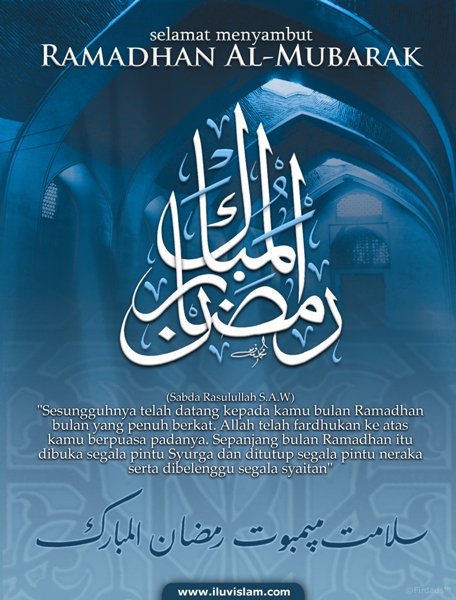
Ramadan Al-Mubaarak: thoughts on the fasting month


The above Arabic title stems from the traditional greeting "Blessed Ramadan" [Ramadan Mubaarak]. Certainly even the most non-observant Muslim finds the month of Ramadan to be one of great joy, laughter and family gatherings. Perhaps its cultural impact can be compared to the feelings Americans, even Non-Christians, have during the Thanksgiving and Christmas holidays.

We are always questioned by our colleagues on the type of fasting, the motivations behind it, and finally "How can you do it?". It is seen as an exercise in futility,unnecessary hardship and outright ridiculous by many people. It is my hope to share some useful information on this institution found in Islam.


Fasting

We abstain from food, drink and sexual contact during the daylight for a month-long period. This is an obligation on every Muslim, with exceptions for the ill, those who cannot survive without consuming something [such as diabetics], and a few others. The Qur'an gives the following command regarding the fast [called Siyaam in Arabic] as well as the reason behind its legislation;

O you who believe, fasting is ordained for you, as it was on those before you, so that perhaps you will become [more] God-respecting [La'allakoom Tattaqoon][2:183]


The focus is on Taqwaa, a word that is very hard to translate with just one or two English semi-equivalents. It is usually rendered as piety, however as a word, piety is very limiting. Taqwaa carries the meaning of respect, fear, duty, responsibilities, and caution.

Fasting is a very private form of worship, in the sense that a person can easily hide the fact he is not fasting, and just as equally hide the fact that he is fasting.

So, we see why the fasting has been ordained.


The traditional practices

In order to be able to function through the day, we are encouraged to have a meal before dawn, when the fasting officially starts. This breakfast is called Suhoor [Sehri in Urdu]. At sunset, when the fasting period ends, a snack of dates [or some other fruits and vegetables] precedes the dinner. Eating dates is not an obligation, but it has entered our practice on the basis of the Prophet Muhammad's manner of breaking the fast. The dinner itself is usually called Iftar.


As the Qur'an's first revelation to the Prophet [upon whom be peace] occurred in Ramadan , we also generally make it our business to read the entire Qur'an in the month. Besides that, people offer prayers more, and give more in charity.


Effect of fasting

One must understand that fasting in Ramadan is not for diet reasons, to follow some hype, rather the motivations are spiritual. Reading the Qur'an while fasting makes us re-examine our lives in light of what God instructs us. We are to avoid even those things we knowingly engage in, such as gossip, arguments, backbiting, immoral surroundings [that can be found in Television, Music etc..] lust and the like.

Fasting with consciousness makes the person a better human being. It also makes him spiritually stronger, which can influence the physical strength as well, even though the intake of food/drink has been limited. Muslim history is full of victories on the battlefield happening during that month.

That is what I want this year, to be able to gain from reading the Qur'an while fasting, to strengthen morals and get rid of any vices. To engage in an honest self-assessment. May Allah give us all the same. Ameen!

Sunday, August 17, 2008

Lectures available online.


We have available Friday prayer lectures [Khutbahs] on CD for $10.00 each plus shipping and handling. Our titles include

[A] Quranic spirituality.

[B] Joseph and the New Egypt [mainly discussing a radical interpretation of the Qur'an Soorah 12].

[C] Khilaafah and 'Ibaadah . [ The Islamic teaching on the purpose of life, worship and concept of God]

[D] Allah's plan:Tauheed and Taqwa [ Thoughts on various trends in religious circles to force God's hand regarding Judgement, as well as a thorough discussion on 16:1]

[E] Follow the best thereof [Powerful explanation of the Quranic and Biblical Solomon, and priorities in Islam].

[F] Al-Faatihah and the Prophets [Detailed explanation of the Quran's first chapter, along with explanation of various Biblical topics and characters and their relation to Quran itself].

and much more.

To obtain, email waheed79@yahoo.com


Free online lectures

Jesus in Islam

Prayer and Morality:Dhikr and Suurah al -Faatihah

Goodly competition

http://www.esnips.com/web/shamsuddinwsStuff


Feedback welcome.