Showing posts with label mental health. Show all posts

Friday, September 9, 2022

THE INTERSECTION BETWEEN THE OCCULT AND HUMAN LIFE

 Introduction


The following are just a few observations, made in light of things that I have seen (largely in the course of my work) in the last three years. The paranormal or the occult is certainly a field that I have had no prior interest in, nor have done intensive studies of, but repeated cases and situations have inspired me to seek out information from reliable sources, and to understand (and hopefully apply) the perspective as derived from Islamic sources.


This article is by no means exhaustive, nor does it claim to be authoritative. Feedback is welcomed and appreciated. I have had discussions with those who have had a deep background in the occult world and its varied aspects and have taken the time to study one important authoritative text on this subject, written by an academic sympathetic to the occult. However, this article will not cite either the persons in discussion, or the important text-source. The former is to respect the privacy of such people, who have made efforts to change their lives towards a direction of submission to God as portrayed in the Islamic faith, while the former I have opted not to share the title because I do not want to encourage reading of that text, nor of any text associated with the paranormal. I have looked at these subjects only out of necessity, as a means to understand what others are facing as well as attaining protection with God from that realm for myself. The religion of Islam has actually forbidden Muslims to interact with the paranormal, and even that which resembles that realm. Although there are many ahadeeth (sayings of the Prophet Muhammad, Sall Allahu 'alayhi wa sallam) on this subject, it seems sufficient to quote only one:   


'Abdullah ibn Mas'ood reported that the Messenger of Allah said " Indeed, spells, amulets and charms are (manifestations of) idolatry (shirkun)." (Sunan Abi Dawud 3883).


The occult in the modern world


While it is fashionable to view the occult as obscure rituals, conducted secretly in an isolated location, the reality is that those who openly worship Satan, as well as those who generally have occult interests, or a hatred of religion generally, are often placed in positions of influence, in particular the areas of entertainment, fashion, and the like. One example is the sci-fi writer Don Webb.  Another example is Michael A.Aquino, involved in the dissemination of a text known as The Satanic Bible. A quick search online can reveal that he was an academic, seemingly with a life-long interest in the occult, he reportedly saw himself as the "beast" referred to in the Book of Revelations(ft.1). Earlier in his career, he was involved in psyc-ops, using heavy metal music as torture on Vietnamese prisoners.


Many of the popular television shows are produced by agnostics, and they are not shy to share their views on religion as being a primitive force. Seth Macfarlane is a good example. Producer of shows such as FAMILY GUY, AMERICAN DAD and others. He is an open atheist, and any regular viewer of FAMILY GUY can easily recall episodes which ridicule religion.


These are just a few examples of influential figures presenting their social agendas in the guise of entertainment.


The messages coming from entertainment coinciding with occultic agendas

While it can be argued that individual producers, entertainers, etc. are not (knowingly) involved with the occult, let's take a moment to look at the messages delivered to viewers. These shows (which are actually cartoons, which would naturally be appealing to young children) promote disrespect of family structure, deviant sexual practices, hedonistic behavior, abandonment of faith, and extreme individualism. 


The above are all well established as agendas for Satanists. It has been observed that they tend to present their worldview as one which seeks an escape from social restrictions, often having their origin in religiously inspired values. 


It is my understanding that the proliferation and normalization of intoxicants, single parent homes, the hook-up culture, and so much more are in line with the devilish agenda.


Startling Quranic information on Satan that parallels with the modern world

(1) Satan "whispers" to humans, encouraging them to disrobe. (Q 7:20). 

(2) Demonic company is preferred by those without faith (Q 7:27).

(3) Devilish types are selfish by nature, and encourage others to be the same mentality, hoarding wealth, neither investing in business (which promotes economic growth broadly) nor spending in charity (acts which are done to lift up humans in need) (Q 17:27).


(4) The breaking up of families, in the name of petty jealousies and the like (Q 12:100).


(5) Satan uses people's stresses and anxiety as a means of attack. (Q 38:41)


(6) The promotion of "virtual" reality, as opposed to what is actually real (Q 6:71, 47:25).

(7) The promotion of intoxicants, gambling, and occult rituals (Q 5:90-91).


The above parallels are apparent for any who is willing to observe carefully. Thus, it is imperative that we are cognizant of the manner by which Satan inflicts damage.


What about mental health?


This article does not deny that there are many cases of legitimate mental health problems, which has its own methods of treatment. It can be argued (as it has actually been argued by the authors of Broke in America: Seeing, Understanding and Ending U.S. poverty) that many of the conditions mentioned above are in fact the reasons mental health problems exist. After all, those isolated from their families would naturally have reasons to feel insecure.


While it cannot be denied that mental health issues occur, both in a "satanic" and "non-satanic" context, treatment of it has to be physical, moral, social and spiritual. 


The occult and relationships

A recurring theme, crossing religious and cultural lines, is the usage of the occult for positive romantic relationships.  Spells, curses, amulets, voodoo dolls, and more have been employed to break up relationships, destroy families and create conditions for one person to attain the object of their romantic interest.

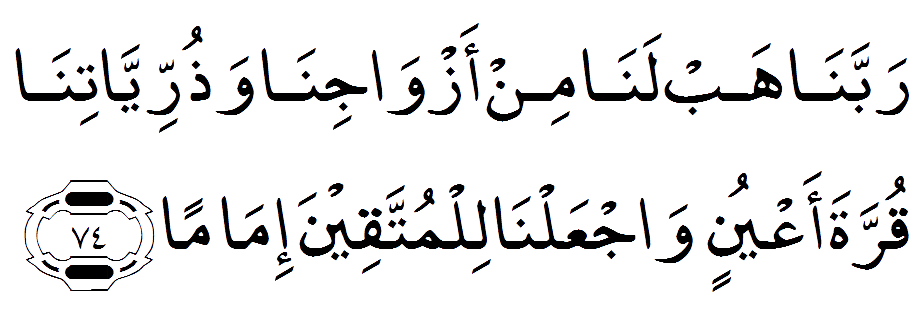
The Qur'an mentions a rather profound example of this. The passage (Q 2:102-103) mentions both the kingdom of Solomon and Babylon in connection to figures who would be involved in teaching methods to break up couples. While the passage has much that needs to be discussed further (ft.2), it should be sufficient here to say that the Islamic religion has totally outlawed such activities. Rather, one should pray to God. The Prophet Muhammad (peace be upon him) has taught famously the prayer for seeking assistance in these regards known as the Istikhaarah prayer (ft.3), and the Qur'an itself has a short du'aa (supplication) that teaches us -in a summarized fashion- that we should avoid obsessions and whimsical attachments, but rather seek that which will be a comfort in this life! For this supplication, go to Q 25:76.


Jinns

Jinns, be they positive or negative, belong to the unseen world, and can largely be associated with the occult. Islam teaches that we are to avoid interaction with that world, and the last two chapters of the Qur'an (Soorah Al Falaq and An Naas) are very affective, when recited, as protection from those invisible forces.


The hadeeth literature (saheeh Al Bukhari 61:530) has also recorded the importance of the recitation of the "throne verse" (Ayatul Kursiyy 2:255) before sleeping. The text speaks of God concept in a clear and beautiful fashion, granting a strengthening of faith, a needed component in surviving Satanic assaults throughout life!


Practical actions

The Qur'an has mentioned many practical areas in which Satan launches attacks. Indeed, in the list above, we can see that if we do the opposite of what Satan is depicted as encouraging, that goes a long way in creating protection. We have placed emphasis on good company, especially in the romantic realm, daily prayer, healthy distance from electronic distractions, exercise, abandoning un-wholesome music and entertainment. Other items, derived from the Quranic texts mentioned above, include public decency, regular acts of charity, building of faith in God, avoiding jealousy (both having it and being the object of it) and consistent reference to Allah in speech.


Jealousy is a powerful emotion. It can also be dangerous, as universally recognized. The last two chapters of the Qur'an points out that whispers can feed jealousy, which is why it functions as a text of protection from this unpredictable feeling.


I believe this is so important, that-atleast to avoid being the object of jealousy ( hasad in Quranic terminology), one should not flaunt one's blessings, especially to those without the same. This is the logic of the Prophet forbidding men from wearing gold and silk. Men are the traditional earners, in public spaces. Wearing such items invites hatred, crime and much more.  

Similarly, I think it is important here to avoid sharing too much in public about personal or family business, even if it is positive. Flaunting wealth is also something which needs to be avoided.


If one feels jealous, also recite chapters 113-114 of the Qur'an, say "Maa-shaa Allah" (thus, as God has willed) and remember what the Prophet has said. He -upon whom be peace- has stated that one should not look at the one above, but rather the one below. In other words, you have a blessing already, but you have to recognize it as such.


Footnotes


(1) The Book of Revelations is the Last book in the New Testament. While the history of the text and author is disputed, the point was that Aquino self-identified with evil, as found in the Christian scripture. 

(2) Certain terms within the text requires much discussion. Take, for example,  Sihr. It is usually translated as "magic" but can have implications that have no relation to the occult (as popularly understood) such as eloquence in speech as well as corruption. Similarly, the text speaks of two beings, who taught methods to break up a married couple. The term can be read "two angels" (malakayn) or as "malikayn" (two kings). An aspect of this is whether or not they are simple similar to (but not precisely) one of the labels mentioned above, both of which have implications in understanding the text. In any case, the text presents a lesson, i.e. that no one experiences anything unless it is by the Divine will. The text which follows (Q 2:103) also states that faith and awareness (attaqoo, i.e. taqwaa) are better, meaning that these two items provide a sufficient protection from evil.  It is perhaps these two which often get neglected in the powerful nations, thus, the reference to Solomon's kingdom and the Babylonian civilization.


(3) For more information on the Istikhaarah prayer, see Shamsuddin Waheed: Reflections on Istikhaarah: the priorities of life .


Saturday, April 4, 2020

Las Vegas Muslim Community Unites In Response to Covid-19 Virtual Town Hall

This past Thursday the Muslim community had a "Virtual Town Hall", the first of its kind, which brought together politicians, Imams, and medical professionals.


The Video description below has all the presentation details.

2:55- Congresswoman Susie Lee . Shares government initiatives meant to address the Covid-19 Virus and the fallback from it.

15:23 Dr.Asher Shahzad. Infectious diseases, shares commonly asked queries on the virus.

19:50 Imam Manzarul Islam- Fiqh of funerals, narrations on plaque in the early Islamic period.

31:55 Imam Fateen Seifullah- Experiences of funerals for victims, community safety.

43:24-Imam Shamsuddin Waheed- Islamic guidelines for addressing depression, anxiety, as well as how to observe Ramadan without a mosque.

1:03-Dr Faisal Suba- Mental Health, coping mechanisms during self-isolation.

1:16-1:58- Q and A session.

Virtual Town Hall YouTube video

In case YouTube is not accessible, you can also view this from Facebook.

Virtual Town Hall Las Vegas Zoom/Facebook link


Wednesday, July 11, 2018

Mental & Spiritual Heath: An Islamic Perspective

( Note: The following is an edited version of my presentation at this month's spirituality session. The participants all had-at q& a time- very insightful observations, and while initially we planned on posting the entire recording on the internet, we decided this format would be better, as it would allow for more sustained thinking and discussion, plus the core of the presentation is best preserved in this format. The wording has been edited to reflect a written article, rather than repeating verbatim the presentation. )


Questioning or having doubts on one's faith/Islam

There are a number of issues, that range from theoretical, historical, as well as practical, which can cause doubts in one's faith. It has to be mentioned that personal problems and mental stress can likewise influence this situation, but that is admittedly not always the case.

Some examples include doubts about the existence of God ( Almighty Allah), theory of evolution, role of women in the texts as well as within the community, having difficulties observing the Ramadan fast, lack of benefit from prayer ( Salaah), Muslim community politics, terrorism and so forth.

I admit these diverse subjects, and others like them, can be very complex, and simply doing internet searches will often only add to the confusion, in light of the contradictory answers out there.

On the subjects mentioned above, there are answers to be found within the Qur'an and Sunnah, but sometimes we either can't find the answers or we don't understand properly those answers.

There are some steps we have to take in order to deal with those issues which we struggle with. Those steps are

[1] Consult trusted authorities

The Qur'an says "So ask the people of knowledge, if you do not know" ( Q 16:43 among other verses). The meaning of this teaching is that one has to consult an authority, a person whose knowledge on that particular subject is trustworthy, who understands not only the subject but who understands your own unique backround and situation.

This is the way we do with our medical doctors. Usually we have our own doctors, a general practitioner or family doctor, a person we have a personal relation with, who understands all of our medical history, and who will deal with us in a trustworthy manner, who will safeguard our medical information, who will give us advice in a succinct fashion.

The same should be applied to issues of faith. The person giving the answer should know what he/she is talking about, they should understand how to give that information, they should be sure to give accurate and succinct information.

We place emphasis on having a trustworthy tie to the one you are asking information from, contrasting to simply looking on the internet for an answer. The internet is a platform which often has untrustworthy and unreliable assertions, particularly on Islamic subjects.

[2] Engage more in worship ( 'Ibaadah)

The power of prayer is universally recognized, in particular we have to emphasis communal prayer, as well as engaging more in personal invocation and supplication to Allah ('Azza wa Jall). The Prophet Muhammad     صلى الله عليه وسلم         says "The hand of Allah is over the community"(ft.1). He is also famously reported to have said that prayer in congregation is twenty-seven times more virtuous than prayer alone. We emphasis the Friday prayer (Salaat Al Jumu'ah), as well as Fajr, Maghrib and 'Ishaa prayers, because in those prayers, the Imam is reciting the Quranic texts aloud. The recitation of the Qur'an, aloud, in worship of God, has an affect. It not only touches the soul, but prayer in congregation also creates ties of brotherhood which has no replica in any other worldly example. In other words, "community" and all that goes with it really does strengthen faith.

[3] Recognize that we have limitations to our understanding and comprehension

There are things, subjects and items which we will not always be able to get a complete understanding . That does not negate it's authenticity or importance. The Qur'an describes itself as a guide for the God-aware, who have qualities which include being "those who believe in the unseen"( Q 2: 3). The "unseen" (Ghayb) include things such as angels and Jinn, and even God! It is true that popular culture depicts all of these in some fashion, but the majority of those depictions are baseless, even if those depictions enter into the religious literature. (ft.2)

(4) Invoke Allah via du'aa

One of the salient features of Ramadan for most of us is Salaat At-Taraweeh. The Imam recites long Quranic passages, and typically offers Salaat Al-Witr, which has therein the Du'aa Al-Qunoot(ft.3).

I strongly recommend increasing in making du'aa. The supplications you make don't have any particular rules ( contrasting to the more formal salaah). They can be done at any time, place, in any language or format. The Prophet Muhammad ( peace and blessings of Allah be on him) says that du'aa is the core of worship. He also says that it is the "weapon of the believer" and is actually worship in and of itself.(ft.4).

We have in the Qur'an and hadeeth literature many supplications, which we can invoke God with. Those supplications not only are useful for invoking God, but they are useful in creating good feelings and in teaching us morals to be both internalized and expressed within the public life.


Mental Health Issues

There are many factors which create mental health issues, both internal as well as being created by external factors. Indeed, even watching the news on television can create stress. Spiritual doubts can be because of this as well, however we must emphasis that that is not always the case.

The external factors can include things beyond our control, such as societal breakdown due to war and economic hardships. Personal failures, legal issues, etc.

Recently we have had the suicide of a famous celebrity chef, Anthony Bourdain. His decision to end his own life led to a flurry of discussions in the media on mental health issues, depression and suicide. Indeed, the Muslim community worldwide was shocked at the June 9th suicide at the Haram (Makkah Al-Mukarramah, the Masjid Al-Haram). Perhaps getting less attention, yet another person did the same less than a week later ( for which, see here) 

There are taboos against seeking out medical help, but those taboos are misplaced. If a person has to take certain medicines to deal with depression, to seek out therapy and the like, that is precisely what they have to do.


While the medical aspect has to be stated, we would also like to be considered the spiritual aspect. The Qur'an states "Say: it { Qur'an} is- for those with faith-  a guide and a healing" ( Q 41:44). It begins with Imaan, the spiritual foundation which recognizes the existence and power presence of Allah. If we have faith in God, that faith will be a help in whatever issues we are facing.

The ayah referenced above describes the Qur'an as "a guide" . This means that the Qur'an is a roadmap, a GPS of sorts. It does NOT tell us every single address, but it tells us in general what behavior to embrace and what behavior to   avoid. It has commands and prohibitions that are not arbitrary, they are for our long-term benefit.  In that sense, it is a "worldly guidance". But it is also a "religious guidance" in the sense that it tells us the religious truths that we are to be aware of, such as that God alone deserves worship, that the hereafter is true, that Allah has indeed sent prophets, etc.

So the worldly and the religious guidance both provide a broad protection. The follower of the Qur'an not only understands God-concept in a correct form, but he or she should also- as a consequence- have a healthy life, following what the Qur'an says.

Using the Qur'an to heal

The verse ( 41:44) also says it is a "healing" (shifaa). The process of healing happens at many levels, but I am suggesting here that the process of healing can be helped along by reciting the Qur'an, whatever Soorah or verses you know, and simply listening to its recitation. Youtube is a wonderful resource in terms of having beautiful voices reciting the words of Allah. It is true that Prophet Muhammad puts emphasis on particular texts ( such as Ayatul Kursiyy and the last three Soorahs of the Qur'an) but any other verses and texts work as well.

In dealing with depression, or with other mental stresses, please remember the Prophet Muhammad.  The Qur'an says about him

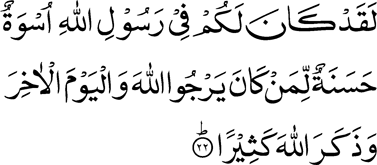
"Indeed, you have in the Messenger of God, a goodly model, for any who has hope in Allah, the final day, and contemplate on Allah much." ( Q 33:21).

In other words, if you feel all is hopeless, remember the Prophet. Allah- in essence- says "Look at MY Rasool".  The life of Muhammad was filled with turmoils. His mother died when he was six, and his father before his birth. At critical times, important people such as his wife (Khadijah) and uncle ('Abdul Muttalib) died. All of his children , with one exception (Fatimah), preceded him in death. This does not even take into consideration the various plots and enmity of the disbelievers after he began preaching the Quranic message.

Yet, he did not become bitter. It did not warp or damage him. He lived a healthy life. He forgave his enemies, and even did the funeral prayer (Salaat Al Janazah) for the leader of the hypocrites. His wives and children, the children of his followers, his community, all loved him and he them. There are so many examples of all of this, but the point is that the Prophet- by Allah's help and guidance, ultimately overcame his turmoils.

I would recommend taking a look at the chapters which make up the last section of the Qur'an. Many of them are Allah's communication to the Prophet in times of grief.

Among them are Soorah Ash sharh (chapter 94) and Ad-Duhaa ( chapter 93). Read the entirety of those short Soorahs, and try to recite them when feeling down.

Other ways to maintain mental and spiritual health include having goodly company, avoiding the company of the hateful and jealous types, community service ( such as feeding people), charity work and reconnecting to nature, such as trips to the beach, the park, cleaning one's living spaces, making them look pleasant. These are proven to be very effective.


Footnotes

(1) Another version of this hadeeth is "The hand of Allah is with the community". This version is more quoted in today's discourse, because of the presence of "with (Ma'a) " as opposed to" 'Alaa (Upon)". This writer prefers the version quoted, and pays no heed to the supposed theological problems with the term "upon". After all, the Qur'an uses the same sort of  expression "The  hand of Allah is over their hands "[Yadullahi Fawqa Aydeehim]. ( Q 48:10). None should see these terms in literal, physical fashion, so we need not be bothered with the debate over which preposition is appropriate, as both convey the same meaning, that God's help and guidance is for those who seek him.

(2) By "religious literature" we refer to some of the commentaries, particularly those penned in the middle ages, which may include fanciful legends to explain things in the Qur'an.  As a general principle, the Qur'an is very clear and does a wonderful job of self-explanation.

(3) The usage of Du'aa Qunoot varies according to the school of jurisprudence. The Shafi'ee school uses it in Fajr prayers as well as Witr prayer, but only on the last ten nights of Ramadan. The Hanafis recite it in Witr prayers, but so do silently (Sirri). The other Sunni schools recite it in Witr aloud (Jahri), and the Shiites recite Qunoot in every prayer. The word Qunoot basically means devotion and sincerity. Although tradition has ascribed the term Qunoot to a couple of beautiful Prophetic supplications, in fact any du'aa can be used, and indeed, many Imams do recite other Quranic supplications, supplications from the hadeeth literature and even of their own. All of the schools have their arguments and justifications for their practice , and- in my view- deserve respect.

(4) The hadeeth alluded to says "Du'aa is in fact worship" {Ad-du'aa u, Huwal Ibaadah).