Showing posts with label 'ibaadah. Show all posts

Friday, February 9, 2024

Importance reflections on worship: a focused vision

 Introduction


Among the struggles faced by many modern Muslims is keeping up with the rituals of Islam. This is a particularly important issue to discuss for Muslims in the Western Hemisphere and for those who have converted from a Protestant Christian background, a religious tradition that actually places a limited value to ritual.


It is our contention that the authentic Islamic activities are quite meaningful, and once understood, will serve as a balancing force for one's life and spiritual fulfillment. It is also our contention that part of the reasons behind the difficulties of the rites is that we end up focusing upon that which is, at best, traditional and optional (i/e. Sunnah/Nafl), to the point where the acts deemed obligatory get drowned out, the person becomes overwhelmed and either experiences a spiritual burnout or gives up totally. 


Thus, the purpose of this article is to bring our vision to a focus, centering upon key points, and making our rituals sources of peace and contentment. 


Aspects of Salaah


Qiyaam (standing position)


The daily prayers are initiated with intention (Niyyah), facing the Qiblah (the prayer direction, being the Ka'bah in Makkah), saying "Allahu Akbar" (God is the greatest) and the recitation which follows.


The obligatory text to recite is of course Soorah Al-Faatihah, the opening Quranic chapter. It is an appropriate text to invoke Allah subhaanahu wa ta'alaa on a regular basis. In it, we acknowledge God as being the Most Merciful, seeking Divine guidance and blessings on whatever state of affairs we are experiencing. (#1)


The first two rak'ahs (units) of any salaah have not only Soorah Al-Faatihah, but, in accordance with Prophetic tradition, some other Quranic passage as well. For beginners, we recommend any of the short texts, such as among the last three chapters of the Qur'an (Al-Ikhlaas, Al Falaq and An-Naas). For all, regardless of where we have started our Islamic journey, I highly recommend using Quranic texts that are meaningful and impactful to you. To accomplish that, one must have a deep connection to the Qur'an, read it often and memorize passages of particular import to you. That process of memorization can then be used inside of the salaah itself. We are also advocating that the meaning of the passages in question be understood by the person.(2)


Rukoo' and Sajdah (bowing and prostration)


The bowing and prostration are not only times when the expressions Subhaana Rab-be al 'Adheem and Subhaana Rab-be al A'laa (Glorified is my Lord the magnificent, Glorified is My Lord the Highest) respectively are recited, but these are also good times when one can invoke God for one's needs. That particular request need not be done in Arabic, and when praying alone, a person can spend as much time in those postures as desired. In particular, the sajdah (prostration) is a place where we are closest to God, at least according to the teachings of the Prophet Muhammad, upon whom be peace and blessings. 


Extended sitting posture (Jalsah)

The normative practice is that a 4–5-line text is recited in the first extended sitting position, a text known as the tashahhud, and that the final sitting posture has both tashahhud and a text invoking Allah to bestow support and blessings to the cause of the Prophet and the entire Muslim community, this text is known as the durood sharif.


In particular, we have noticed that this text is difficult for many to learn in a timely manner, especially the durood sharif (which has repeating lines in Arabic).  In light of this, and other factors given below, it is our recommendation that in these postures, that the core, central and obligatory factors be zoomed in upon, immediately learned and easily applied. 


The Muwatta of Imam Malik has at least five different versions of the tashahhud recorded, with minor and major wording variations. All of them as well as other versions, have therein the statement of faith acknowledging Allah alone deserves worship, and that Muhammad was the messenger of God. This is what should be zoomed in upon. (3)


Similarly, if we were to zoom in on the core meaning of the durood, captured in the Arabic words Allahumma sawlee 'ala Muhammadin wa 'aala aali Muhammad, asking God to bestow support on the Prophet (as a person and as a cause) and upon his followers (the entire Muslim community), it should make things easier. (4)


Dhikr


In a ritualistic sense, dhikr- remembrance of Allah- is conducted using one's finger joints or by use of beads (known as tasbih or misbahah), reciting (either in a low or loud voice) expressions of praise for God (such as Subhaan-Allah, Alhamdulillaah, Allahu Akbar), selections from the other titles of Allah given in the Qur'an (such as Ar-Rahman, Al-Malik, etc). This is often done after salaah, and it is recognized that it can be done at any time and place.


However, it is also true that the Qur'an uses the term in a much more profound sense. 

اِنَّ فِیۡ خَلۡقِ السَّمٰوٰتِ وَالۡاَرۡضِ وَاخۡتِلَافِ الَّیۡلِ وَالنَّہَارِ لَاٰیٰتٍ لِّاُولِی الۡاَلۡبَابِ

الَّذِیۡنَ یَذۡکُرُوۡنَ اللّٰہَ قِیٰمًا وَّقُعُوۡدًا وَّعَلٰی جُنُوۡبِہِمۡ وَیَتَفَکَّرُوۡنَ فِیۡ خَلۡقِ السَّمٰوٰتِ وَالۡاَرۡضِ ۚ رَبَّنَا مَا خَلَقۡتَ ہٰذَا بَاطِلًا ۚ سُبۡحٰنَکَ فَقِنَا عَذَابَ النَّارِ

"Indeed, in the creation of the heavens and the earth and the alternation of night and day are signs for people of discernment, those who remember Allah (yadhkoroona Allah) while standing, sitting, relaxing on their sides, in a state of contemplation regarding the heavens and earth (such people assert) "Our Lord, you have not created (all of) this in vain (baatilan), glorified is you, protect us from the penalty of the fire." ( Q 3:190-191)


Another text famously says, "and the remembrance of Allah (wa ladhikrullaah) is the greatest source (of inspiration and power)." ( Q 29:45). The context of this verse clearly puts dhikr as the salaah itself. 

These verses should be sufficient to demonstrate that dhikr is much bigger than a ritual, be it in a solitary or communal fashion. It can happen internally, without any rites per se, yet we freely admit that the rite of salaah as well as traditional dhikr can serve the function of generating awareness of God. 


Du'aa


The term du'aa has the meaning of calling and is used in the sense of "prayer" that most westerners would be familiar with. Indeed, du'aa is sometimes translated as "prayer". In a ritualistic sense, we often do du'aa immediately after the conclusion of the salaah. The Qur'an and hadeeth literature both contain du'aa texts, beautiful and profound content. While we do encourage using these texts in one's calling upon God, we also acknowledge that one can (and should) invoke God with one's own heart, in one's own words, with sincerity, and that such action is beyond legislation. In other words, there are no rules for making du'aa. Traditionally it is done with open hands, with the face being wiped, ending with "ameen", however du'aa, like dhikr, need not be a ritual either. Yet, we do not see any difficulty in maintaining this action in the normative rite. 


The  du'aa texts of the Qur'an and hadeeth also have a benefit of teaching us what to pray for, of helping us to zoom in on the priorities. Let us take into consideration some of these texts.


" Our Lord, bestow on us that which is pleasant in this world, and that which is pleasant in the hereafter, and protect us from the penalty of the fire." (Q 2:201).

رَبَّنَاۤ اٰتِنَا فِی الدُّنۡیَا حَسَنَۃً وَّفِی الۡاٰخِرَۃِ حَسَنَۃً وَّقِنَا عَذَابَ النَّارِ

This text clearly teaches people of faith to have balance, to seek comfort in this life, while not neglecting the life to come, an existence which is cultivated by virtues such as truth, patience, faith and acting on that faith (Q 103:1-3).


"Our Lord, bestow on us mates and offspring who will be a comfort to our eyes, and make us a leader for those with reverence." (Q 25:74) 

رَبَّنَا ہَبۡ لَنَا مِنۡ اَزۡوَاجِنَا وَذُرِّیّٰتِنَا قُرَّۃَ اَعۡیُنٍ وَّاجۡعَلۡنَا لِلۡمُتَّقِیۡنَ اِمَامًا

This du'aa teaches us the type of families we should seek, that we should cultivate, long term, our taqwaa.  This is also indicated in the normative tashahhud text, which reads, in part "Peace be upon us, and on the righteous servants of God." (As salaamu 'alaynaa wa 'alaa 'Ibaadelaahis saaleheen).


The scholars have posited a number of recommendations when it comes to du'aa, among them is that some expression of praise for God should be made, there be an expression of seeking peace for the Prophet Muhammad, that seeking things which God has forbidden in the Islamic texts is not proper, and that one should pray for others. In other words, we should not be selfish in our du'aa.  A beautiful report asserts that the Prophet himself (sall Allahu 'alayhi wa sallam) asserted that du'aa is the core of worship (Mukhkhul 'ibaadah), while another says it is-in fact- worship itself. (Ad-du'aa, huwal 'Ibaadah).(5)


Endnotes

(1) For more on Al-Faatihah, see Shamsuddin Waheed: Al-Faatihah: a re-examination (Halaqah notes)


(2) Regular reading of the Qur'an, even in translation, is very beneficial. While I have much of the text committed to memory (for which I am grateful), I only use specific Quranic content in prayers, texts on Divine mercy and the like. I suggest the same approach, use Quranic verses or chapters whose meanings are touching to your own heart.


(3) Some of the interesting variants include the expression "Peace be on the Prophet" (As salaamu 'alan nabiyy") rather than the usual "Peace be on you, Oh Prophet!" (As salaamu 'alayka ayyuhan nabiyyu..). I prefer the former, which is given in three of the reports contained in Imam Malik's Muwatta (hadeeth collection). The Shiites recite a similar tashahhud and durood, but in sequences largely unfamiliar to Sunnis, yet, in all of the variants we find the presence of the necessary elements, acknowledging God and His Messenger, praying for him and his followers.


(4) Other titles for the prayer for the Prophet and his followers include Salaat Ibrahimiyya, Salaat 'alan Nabi, and salaatwas-salaam, or simply "salawaat". I have not used those titles so as not to confuse the readers, as "salaah" is the term used for our daily worship. Durood Sharif is the title of the prayer for the Prophet in Urdu/ Farsi languages. For more on the origin and concept of invoking God for the messenger and his followers, see Shamsuddin Waheed: Conception of Salaat 'alan Nabi in light of the Qur'an and Sunnah.


(5) Both of these reports can be found in Bulugh Ul Maram, a hadeeth collection by the 14th century scholar Ibn Hajr Al-'Asqalanee.  The above mentioned Muwatta of Imam Malik is considered by many scholars, including Shaikh Akram Nadwi, as having a more authoritative status than even the saheehayn, being as it is essentially the first hadeeth compilation. Imam Malik Ibn Anas was born in 711CE and it is largely upon his ideas that the Maliki school of jurisprudence is based. Born in the Prophet's city, Madinah, today his school dominates as the legal authority in much of North and West Africa. 


Friday, March 20, 2020

Inner and Outer Dimensions of Worship/Islam 101 class

Note: The following are links to our recent presentation on different aspects of worship, with emphasis on the five daily prayers, for new Muslims.

The reasons behind the spiritual practices are explored. Click on the individual video descriptions to zoom in on particular topics discussed.

Inner and Outer dimensions of worship part 1

Part two with Q and A session

Wednesday, July 11, 2018

Mental & Spiritual Heath: An Islamic Perspective

( Note: The following is an edited version of my presentation at this month's spirituality session. The participants all had-at q& a time- very insightful observations, and while initially we planned on posting the entire recording on the internet, we decided this format would be better, as it would allow for more sustained thinking and discussion, plus the core of the presentation is best preserved in this format. The wording has been edited to reflect a written article, rather than repeating verbatim the presentation. )


Questioning or having doubts on one's faith/Islam

There are a number of issues, that range from theoretical, historical, as well as practical, which can cause doubts in one's faith. It has to be mentioned that personal problems and mental stress can likewise influence this situation, but that is admittedly not always the case.

Some examples include doubts about the existence of God ( Almighty Allah), theory of evolution, role of women in the texts as well as within the community, having difficulties observing the Ramadan fast, lack of benefit from prayer ( Salaah), Muslim community politics, terrorism and so forth.

I admit these diverse subjects, and others like them, can be very complex, and simply doing internet searches will often only add to the confusion, in light of the contradictory answers out there.

On the subjects mentioned above, there are answers to be found within the Qur'an and Sunnah, but sometimes we either can't find the answers or we don't understand properly those answers.

There are some steps we have to take in order to deal with those issues which we struggle with. Those steps are

[1] Consult trusted authorities

The Qur'an says "So ask the people of knowledge, if you do not know" ( Q 16:43 among other verses). The meaning of this teaching is that one has to consult an authority, a person whose knowledge on that particular subject is trustworthy, who understands not only the subject but who understands your own unique backround and situation.

This is the way we do with our medical doctors. Usually we have our own doctors, a general practitioner or family doctor, a person we have a personal relation with, who understands all of our medical history, and who will deal with us in a trustworthy manner, who will safeguard our medical information, who will give us advice in a succinct fashion.

The same should be applied to issues of faith. The person giving the answer should know what he/she is talking about, they should understand how to give that information, they should be sure to give accurate and succinct information.

We place emphasis on having a trustworthy tie to the one you are asking information from, contrasting to simply looking on the internet for an answer. The internet is a platform which often has untrustworthy and unreliable assertions, particularly on Islamic subjects.

[2] Engage more in worship ( 'Ibaadah)

The power of prayer is universally recognized, in particular we have to emphasis communal prayer, as well as engaging more in personal invocation and supplication to Allah ('Azza wa Jall). The Prophet Muhammad     صلى الله عليه وسلم         says "The hand of Allah is over the community"(ft.1). He is also famously reported to have said that prayer in congregation is twenty-seven times more virtuous than prayer alone. We emphasis the Friday prayer (Salaat Al Jumu'ah), as well as Fajr, Maghrib and 'Ishaa prayers, because in those prayers, the Imam is reciting the Quranic texts aloud. The recitation of the Qur'an, aloud, in worship of God, has an affect. It not only touches the soul, but prayer in congregation also creates ties of brotherhood which has no replica in any other worldly example. In other words, "community" and all that goes with it really does strengthen faith.

[3] Recognize that we have limitations to our understanding and comprehension

There are things, subjects and items which we will not always be able to get a complete understanding . That does not negate it's authenticity or importance. The Qur'an describes itself as a guide for the God-aware, who have qualities which include being "those who believe in the unseen"( Q 2: 3). The "unseen" (Ghayb) include things such as angels and Jinn, and even God! It is true that popular culture depicts all of these in some fashion, but the majority of those depictions are baseless, even if those depictions enter into the religious literature. (ft.2)

(4) Invoke Allah via du'aa

One of the salient features of Ramadan for most of us is Salaat At-Taraweeh. The Imam recites long Quranic passages, and typically offers Salaat Al-Witr, which has therein the Du'aa Al-Qunoot(ft.3).

I strongly recommend increasing in making du'aa. The supplications you make don't have any particular rules ( contrasting to the more formal salaah). They can be done at any time, place, in any language or format. The Prophet Muhammad ( peace and blessings of Allah be on him) says that du'aa is the core of worship. He also says that it is the "weapon of the believer" and is actually worship in and of itself.(ft.4).

We have in the Qur'an and hadeeth literature many supplications, which we can invoke God with. Those supplications not only are useful for invoking God, but they are useful in creating good feelings and in teaching us morals to be both internalized and expressed within the public life.


Mental Health Issues

There are many factors which create mental health issues, both internal as well as being created by external factors. Indeed, even watching the news on television can create stress. Spiritual doubts can be because of this as well, however we must emphasis that that is not always the case.

The external factors can include things beyond our control, such as societal breakdown due to war and economic hardships. Personal failures, legal issues, etc.

Recently we have had the suicide of a famous celebrity chef, Anthony Bourdain. His decision to end his own life led to a flurry of discussions in the media on mental health issues, depression and suicide. Indeed, the Muslim community worldwide was shocked at the June 9th suicide at the Haram (Makkah Al-Mukarramah, the Masjid Al-Haram). Perhaps getting less attention, yet another person did the same less than a week later ( for which, see here) 

There are taboos against seeking out medical help, but those taboos are misplaced. If a person has to take certain medicines to deal with depression, to seek out therapy and the like, that is precisely what they have to do.


While the medical aspect has to be stated, we would also like to be considered the spiritual aspect. The Qur'an states "Say: it { Qur'an} is- for those with faith-  a guide and a healing" ( Q 41:44). It begins with Imaan, the spiritual foundation which recognizes the existence and power presence of Allah. If we have faith in God, that faith will be a help in whatever issues we are facing.

The ayah referenced above describes the Qur'an as "a guide" . This means that the Qur'an is a roadmap, a GPS of sorts. It does NOT tell us every single address, but it tells us in general what behavior to embrace and what behavior to   avoid. It has commands and prohibitions that are not arbitrary, they are for our long-term benefit.  In that sense, it is a "worldly guidance". But it is also a "religious guidance" in the sense that it tells us the religious truths that we are to be aware of, such as that God alone deserves worship, that the hereafter is true, that Allah has indeed sent prophets, etc.

So the worldly and the religious guidance both provide a broad protection. The follower of the Qur'an not only understands God-concept in a correct form, but he or she should also- as a consequence- have a healthy life, following what the Qur'an says.

Using the Qur'an to heal

The verse ( 41:44) also says it is a "healing" (shifaa). The process of healing happens at many levels, but I am suggesting here that the process of healing can be helped along by reciting the Qur'an, whatever Soorah or verses you know, and simply listening to its recitation. Youtube is a wonderful resource in terms of having beautiful voices reciting the words of Allah. It is true that Prophet Muhammad puts emphasis on particular texts ( such as Ayatul Kursiyy and the last three Soorahs of the Qur'an) but any other verses and texts work as well.

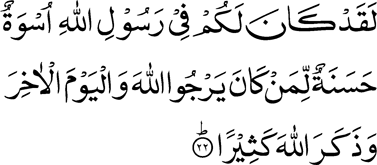
In dealing with depression, or with other mental stresses, please remember the Prophet Muhammad.  The Qur'an says about him

"Indeed, you have in the Messenger of God, a goodly model, for any who has hope in Allah, the final day, and contemplate on Allah much." ( Q 33:21).

In other words, if you feel all is hopeless, remember the Prophet. Allah- in essence- says "Look at MY Rasool".  The life of Muhammad was filled with turmoils. His mother died when he was six, and his father before his birth. At critical times, important people such as his wife (Khadijah) and uncle ('Abdul Muttalib) died. All of his children , with one exception (Fatimah), preceded him in death. This does not even take into consideration the various plots and enmity of the disbelievers after he began preaching the Quranic message.

Yet, he did not become bitter. It did not warp or damage him. He lived a healthy life. He forgave his enemies, and even did the funeral prayer (Salaat Al Janazah) for the leader of the hypocrites. His wives and children, the children of his followers, his community, all loved him and he them. There are so many examples of all of this, but the point is that the Prophet- by Allah's help and guidance, ultimately overcame his turmoils.

I would recommend taking a look at the chapters which make up the last section of the Qur'an. Many of them are Allah's communication to the Prophet in times of grief.

Among them are Soorah Ash sharh (chapter 94) and Ad-Duhaa ( chapter 93). Read the entirety of those short Soorahs, and try to recite them when feeling down.

Other ways to maintain mental and spiritual health include having goodly company, avoiding the company of the hateful and jealous types, community service ( such as feeding people), charity work and reconnecting to nature, such as trips to the beach, the park, cleaning one's living spaces, making them look pleasant. These are proven to be very effective.


Footnotes

(1) Another version of this hadeeth is "The hand of Allah is with the community". This version is more quoted in today's discourse, because of the presence of "with (Ma'a) " as opposed to" 'Alaa (Upon)". This writer prefers the version quoted, and pays no heed to the supposed theological problems with the term "upon". After all, the Qur'an uses the same sort of  expression "The  hand of Allah is over their hands "[Yadullahi Fawqa Aydeehim]. ( Q 48:10). None should see these terms in literal, physical fashion, so we need not be bothered with the debate over which preposition is appropriate, as both convey the same meaning, that God's help and guidance is for those who seek him.

(2) By "religious literature" we refer to some of the commentaries, particularly those penned in the middle ages, which may include fanciful legends to explain things in the Qur'an.  As a general principle, the Qur'an is very clear and does a wonderful job of self-explanation.

(3) The usage of Du'aa Qunoot varies according to the school of jurisprudence. The Shafi'ee school uses it in Fajr prayers as well as Witr prayer, but only on the last ten nights of Ramadan. The Hanafis recite it in Witr prayers, but so do silently (Sirri). The other Sunni schools recite it in Witr aloud (Jahri), and the Shiites recite Qunoot in every prayer. The word Qunoot basically means devotion and sincerity. Although tradition has ascribed the term Qunoot to a couple of beautiful Prophetic supplications, in fact any du'aa can be used, and indeed, many Imams do recite other Quranic supplications, supplications from the hadeeth literature and even of their own. All of the schools have their arguments and justifications for their practice , and- in my view- deserve respect.

(4) The hadeeth alluded to says "Du'aa is in fact worship" {Ad-du'aa u, Huwal Ibaadah).

Sunday, January 22, 2017

What is the point of invoking Allah ? Friday Khutbah

( Note: The following is an edited version of a Friday Khutbah delivered 1/20/17 at Toledo Masjid Al-Islam. Much of the references in Arabic language have been omitted here, as has the opening Hamd.]

Does God answer our prayers?

A common question is that if a person believes in God and prays to him, why doesn't he answer his prayers? A person invokes Allah for this or that particular thing, and the opposite happens! The core of these questions is actually the query "If God is All-knowing, Omnipotent and Omnipresent, why pray to him in the first place?".

The meaning of the core question is simple: if God already knows what we want and need, why even bother invoking him at all? The answers to these queries are found within the Qur'an and the Sunnah.

The Prophet Muhammad صلى الله عليه وسلم  has said "Du'aa [invocation] is the core of worship.";الدعاء مخ العبادة. He is also reported to have stated "Du'aa is worship". Therefore, we are to learn from these statements of the Messenger [Peace and blessings be upon him] that asking Allah, invoking him is an indicator, a strong sign, of being truly connected to him. 

It is true that the Qur'an teaches that God is all knowing, all aware, all seeing and is even all good [the latter is found within another hadeeth]. He knows what you want and what you need, yet the need still exists to invoke him.

If that is the case, why does he not answer?

Allah hears all supplications


Allah does respond. The Qur'an tells us directly Allah's statement on this issue: "I respond to the du'aa of the caller when he calls Me." اجيب دعوة الداع اذا دعان . So Allah does hear, he does see, and he even responds, however, it is not always the response we want!

Your child asks you for candy. There are times you give it to them, however out of concern for their health or other issues, you restrict it, even though the child is asking for it. The child does not always understand the wisdom you possess, but is forced to accept your parental veto,

It is because Allah is the All-knowing and the all aware that he does not always answer our du'aas the way we want them answered. 

In these regards, we need to ponder upon Allah's statement : "The human makes du'aa for bad [harmful] when he should be doing so for good, Indeed, man is hasty." و يدع الانسان بالشر دعاءه بالخير وكان الانسان عجولا

This ayah gives us another teaching, supplications to Allah can be spontaneous, however they should as a general rule be thought out, and connected to genuine human efforts. After all, if God grants all we ask at the moments we ask and in the precise measurements we ask, that would breed laziness, stagnation and stunt creativity.

When can we call upon Allah

Call upon Allah.The Prophet Muhammad has taught us that good opportunities are found in the rukoo', the sujood, after the Tasleem [the concluding act of the formal salaah], and Fridays. Whenever you make du'aa, be sincere therein, and think deeply on what you want to invoke him for. 

When bad things happen


Natural disasters and oppression by man sometimes causes people to either deny God's existence or to view him as cruel and capricious. Philosophers and theologians of every religions have been discussing this for countless generations. 

Facing catastrophes, bey they natural or otherwise, have the effect of bringing us closer to Allah and to each other. It is said that it is only when facing disasters that one discover's one's true friends.

Other related texts on this subject include these following profound Quranic verses. "Praise belongs to Allah, who has created the heavens and the earth, and made darkness and light." [Q 6:1]. We also read : "Say: I seek refuge with the Lord of daybreak, from the 'sharr' he has created." [Q 113:1-2].

The term 'sharr', usually translated as 'evil', can also be rendered as 'harm' 'source of injury', even 'fires of youth'. So these things happen by God's will within the Sunnah of Allah, with a wisdom therein which we can't immediately see, but often see later on in life!

Allah's Sunnah is to give us lessons by using our selves or by seeing the lessons in the experiences of other people.

So if we think we are experiencing problems, we should address them by turning closer to Allah Our Lord, and to our deen.

When our supplications aren't answered in the way we want, consider that the thing we are praying for may be harmful in the long term.

Sins stopping one from acts of worship

Some people think that weaknesses or sins are a barrier to worship, that any acts of worship they do would end up being hypocritical, so they consequently will not pray.

Such thinking is understandable but misplaced. The Qur'an says "Indeed, prayer [salaat] restrains from indecenies and repugnant acts, the remembrance of Allah is the greatest [source of inspiration and power] and Allah knows what you produce." [Q 29:45]

ان الصلاة تنهى عن الفحشاء والمنكر ولذكر الله اكبر ولله يعلم ما تصنعون

Eventually, the effects of salaat enter our hearts, our arms and our legs, so don't let weaknesses or sins discourage you from Allah, from remembering and worship of him. 


Wednesday, April 27, 2011

How to form a relationship with Allah [Subhanaahu wa Ta'alaa]

Clip from the lecture with the above title. Special rate is available


[url]http://www.youtube.com/watch?v=5lN7U32iJKo[/url]

$5.95 plus 2.50 shipping/handling. To order, please contact

Arifin Imports
P O box 70617
Toledo, Oh 43607
419-246-9697
Admin@arifinimports.com

www.arifinimports.com

If above links does not work, then go to youtube and search for "Relationship with Allah" "Shamsuddin Waheed".