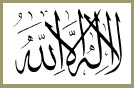
Showing posts with label Tauheed. Show all posts

Friday, July 19, 2024

Guarding the soul: practical guidance from Islamic sources

 Introduction

Ours is a fast- paced world, perhaps the fastest in the history of mankind, evident not only in the relatively quick technological developments, but also in the social, political, economic and entertainment realms. It is widely acknowledged that physical goods are now built with a very limited lifespan, forcing customers to replace them on a semi-regular basis. Mobile phones, entertainment technology, and the like are obvious examples. This also has bearing on subjects such as spiritual development, relationships and statecraft. Thus, everything and everyone is now deemed replaceable if (and when) the winds of popularity change (be it organically or otherwise), presenting a level of instability that would not be imagined in times past.


It is in this backdrop that we have decided to have a look at the soul, the core of a human being, a nonphysical item that is (almost) universally acknowledged to exist even after death, that which faces some level of Divine scrutiny, an item that has been ignored, neglected, even abused. The purpose of this article is to generate thought, positive development, and the presentation of this rather complex subject in a succinct fashion. In the end, success in achieving the above-mentioned goals comes from Allah. Wa Billaahit Tawfeeq.


Soul is like a sponge


At the outset, it seems necessary to explain that we tend to use the term "soul" as synonymous with other terms such as "the self" "spirit" "mind/mental foundation" " and even "psychological foundation". (ft.1) All recognize the importance of delivering positive reinforcement, discipline, love and attention to children, and similarly understand that the experience of childhood has profound impact on the same individuals as adults. 


Thus, it is true that the soul is like a sponge, yet its arrival in our world is totally pure, without blemish or sin. Thus, Islam disagrees with the Christian notion of original sin, and further refutes the idea that the original sin would have to be dealt with through the blood atonement of Jesus (depicted as son of God, but also God himself in mainstream Christianity). Yet, over time, the soul will absorb both good and bad, beautiful and ugly, largely as a result of outside influences. 


The Qur'an says that the most successful has been the one who has been keen on purifying it, keeping it clean (Q 91:9, 87:14). Similarly, it also asserts that the biggest lost is experienced by the one who damages the soul by corrupting it (Q 91:10).


What corrupts the soul?


The world religions tend to have similar ethical considerations (i.e. murder, theft, etc.) and thus see the violation of its commandments as not only actions bringing spiritual harm, but worldly damage as well. Today's world has made these things a bit murky, in that both capitalism and individualism (worldviews that are actually cousins) have had an impact on modern religious perceptions. Thus, religion itself is widely seen as a personal journey, confined to rituals and a set of theological assumptions. 


The other side of this coin is that (wrong-headed) religion itself can be manipulated through technicalities, its rules abused, leading to ridicule and outright rejection of religion. These points, the manipulation and misuse of religion, can actually corrupt the soul.


This is partly the reason behind Almighty Allah sending forth messengers, prophets and scriptures. The New Testament presents Jesus (peace be upon him) as overturning the tables of the moneychangers in the temple, and of course the Prophet Muhammad (peace be upon him) himself removed the idols that were present at the Ka'bah, itself a sanctuary built for the worship of God by the Prophet Abraham.


Thus, among the other items in the modern world which corrupt the soul, as seen by this writer, include

(1) Narrow-mindedness: A thinking of "I am always right and cannot be wrong or ever change". A stubbornness that leads to long-term harm to self-interest. This particularly happens in family conflict (itself possibly on petty grounds). 

(2) Addictions: Intoxicants such as drugs, alcohol and the like. The Qur'an has placed gambling and even occult practices in the same realm (Wal Ansaabu wal azlaam see Q 5:90) of discussion. 

(3) Harmful entertainment: At no other time in history has entertainment been so readily available. Television programs, music, even the messages of influencers of social media and politicians themselves generate conflict, misinformation, the breakdown of family units, gender wars, can lead to harm, if not outright corruption, of the soul. This includes the so-called hookup culture and low commitment relationships. The consumption of pornography is also grouped within this heading. 



(4) Idolatry: Recognized in Islam as the one sin that-if maintained till death- has the likelihood of never being forgiven, we have placed it as number 4 on this list rather than number 1, because we tend to have a limited way of thinking of it. Shirk is not simply bowing to a statue or photo.! Rather, it can be manifested in arrogance (worship of self), racism (worship of color or clan), partisanship as well as the holding unto negative thoughts and emotions, making (false) victimization one's primary identity. This is a sort of worship (of other than God) which is harder to recognize and combat, nonetheless it is still a problem that needs to be seen and dealt with via the authentic spiritual resources. 


(5) Bad influences: The Prophet Muhammad- Sall Allahu 'alayhi wa sallam- is reported to have said " The man is upon the deen of his close friend (khalilihi), so each of you should look carefully (falyandhoor)  regarding who becomes his close friend" (At Tirmidhee). Having close friends who don't share your spiritual interests can be very damaging. In the name of friendship, questionable or outright haraam actions take place, one is influenced in the wrong direction. In an American context in particular, a phenomenon exits in which men and women in their 50's have the mentality and actions of teenagers! 


What saves the soul?


(1) Tauheed: Recognizing that God alone deserves to be worshiped. This is more than abandoning the gods of Greek or Hindu mythology. This means making Allah as primary focus in the spiritual and mental realm. In a practical sense, this entails giving priority to the priorities in the Qur'an. Notice that Tauheed is connected to justice and the acquisition of knowledge, and shirk is connected to injustice (Q 3:19, 31:30 etc.).


(2) Spiritual practices: This has to be done on a regular basis to be affective, just as bathing. The Muslim practice is five daily prayers, but there are also supplementary actions such as dhikr (which can be done at any time, in which God's name or a Divine attribute is verbalized- loudly or softly), du'aa (asking God directly), and the recognition of God in everyday activities by terms such as Inshaa Allah (God-willing), Alhamdulillaah (praise belongs to God), Maa-Shaa-Allah (this was Allah's will) and so forth. In a broad sense, we can place the five pillars under this category, three of them are spiritual practices in nature. 


(3) Actions of regular charity: As with number 2 above, zakaat is a pillar of the Islamic religion, and in the Qur'an prayer and the regular charity (zakaat) are almost always placed together. Engaging in charity, at whatever level possible, does tremendous work in delivering salvation to the soul, and it generates good feelings in the person who does it. Q 74:44 mentions that refusal to engage in charity (in this case, feeding the poor) is listed as a reason to be placed in Hell. Refusal of engaging in charity is the symbol of ultimate selfishness, a lack of care that is devastating for spiritual development. 


(4) Goodly company: In all contexts (including romantic) this is needed to attain spiritual progress. This is not only supported by texts (of the Qur'an and hadeeth) but also by real life experiences. Indeed, every culture has recognition of this at some level. Some faiths (such as early Christianity and aspects of Buddhism) seem to hold the view that spiritual growth is attained on a personal level and that other people's presence is a distraction from that goal. Islam teaches that the opposite is the case. The Prophet is reported to have said that marriage is half of one's faith, and another hadeeth asserts that praying in congregation (jamaa'ah) is twenty-seven times greater in reward than offering the same prayer in a solitary fashion. 


(5) Dropping unnecessary grudges: Negative feelings and memories can hold a person back and as seen earlier, can be a sort of idolatry! The Qur'an teaches that spiritual awareness (here a reference to taqwaa) is connected to humans dealing with one another, even to the point that it can supersede rituals (Q 4:1). While some grievances are rightly held and cannot be easily dismissed, it is often the case nowadays that a person will hold a grudge over a minor situation, to the extent that even when said issue is addressed, the 'aggrieved' party will continue to harbor ill-will, ultimately bringing harm to themselves. Islam teaches that God is Intense in delivering forgiveness and mercy (Al-Ghafoor Ar-Raheem), if we want that from God, should we not use it for ourselves? The Qur'an asserts that believers have certain characteristics, let us have a read: " And what is with Allah is better and more lasting for those who have believed and have trust in their Lord, those who abstain from sin, great and small, as well as immorality, and when angered, forgive (wa idhaa maa ghadiboo, hum yaghfiroon.)" (Q 42:36-38). The same Soorah goes on to say that those who engages in pardoning and reconciliation ('faman 'afaa wa as-laha) receive rewards from God"(Q 42:40) (ft.2).


While the above is brief, it provides a foundation for salvation, happiness in this life and the life to come. There are of course more details given in the Islamic texts, but this should be sufficient to begin the process of introspection, thought and discussion where needed. 


Footnotes


(1) There are a number of terms used within Islamic texts and amongst Muslims generally that carry slightly different meanings, such as nafs, rooh, (plural being arwaah), 'aql, 'ilmun nafs, etc. For the purpose of this article, all the slightly different concepts should be seen as being addressed here, in the sense of discussing the inner reality of man.


(2) The term 'afaa is related to the term 'afuww (coming from the same root), the latter having the connotation of 'erasing'. The latter term is in the du'aa traditionally made when seeking out the apex of the Ramadan experience known as Laylatul Qadr. If we are asking God to 'erase' our bad points or actions, would it not be expedient to do that as human beings with one another?  Q 42:37 uses the verb yaghfiroon for forgiveness being a quality of believers, this term has-at core, covering up, cutting off or being protected from bad consequences of an act. The term comes from the same root as a number of God's names in Islamic texts, such as Al-Ghaffar (The ever forgiving), Al-Ghafoor (the intense in delivering forgiveness). God is described in one text as "The forgiver of sins" Ghaafir adh-dhanb Q 40:2).  For more on Laylatul Qadr, see Shamsuddin Waheed: Las Vegas Metro Police Department presentation on Laylatul Qadr as well as Shamsuddin Waheed: Ramadan reflections: towards new beginnings


Friday, July 29, 2022

The benefit of true worship (friday Khutbah)

 (Note: the following is an edited version of our khutbah at Masjid Ibrahim, Las Vegas, Nevada. The opening words of praise for God have been omitted).


Lessons from Ilyaas


The Qur'an briefly tells us about a Prophet of God that is not often discussed, known as Ilyaas (Elijah), a messenger of God whose main audience was the Levantine region(ft.1). The Qur'an often presents prophets as conveying similar arguments, despite having variety in listeners. It tells us:


" When he (Ilyaas) said to his people ' will you not have taqwaa

Do you call upon Ba'al and abandon the best of creators?

 (namely) Allah, your Lord and the Lord of your past ancestors?" (Q 37:124-126) 

اِذۡ قَالَ لِقَوۡمِہٖۤ اَلَا تَتَّقُوۡنَ

اَتَدۡعُوۡنَ بَعۡلًا وَّتَذَرُوۡنَ اَحۡسَنَ الۡخَالِقِیۡنَ

اللّٰہَ رَبَّکُمۡ وَرَبَّ اٰبَآئِکُمُ الۡاَوَّلِیۡنَ

The first statement in this summary is that of taqwaa. It carries here the meaning of consciousness, awareness. It is not simply a verbal assertion. Taqwaa here conveys awareness of not only God, but his power, cognizant of other human beings as well as of the realities of this world. Notice that all the Quranic verses the Prophet Muhammad (Sall Allahu 'alayhi wa sallam) would recite in the wedding ceremony all express this meaning (Q 4:1, 3:102, 33:70-71). 


We can further understand or summarize the call to Taqwaa as expressed by Ilyaas (peace be upon him) (al-laaa Tattaqoon) as simply to be awake, to not fall asleep at the wheel, as there is much out there that makes us unfocused. 


Why was Ba'al worshiped? 


Ilyaas was sent to a region in which worship of idols was common, the chief one being a 'god' of fertility, Ba'al. Indeed, there is a Lebanese city is called Baalbek because it was the site of an important shrine dedicated to Ba'al. 

"Calling upon Ba'al" (Tad'oona Ba'laan) is certainly a form of worship, and Ilyaas ('alayhis salaam) was addressing this. . Globally, all sorts of historical figures, as well as mythical personalities were worshipped, be it the pre-Islamic idols of the Arabs such as Al-laat, Al Manaat and Al 'Uzza, or even former U.S. President Donald Trump in recent times (ft.2).


These figures were "worshiped" because of some feeling of benefit, real or imagined, as well as a sense of cultural or loyalty to one's tradition. The Qur'an repeatedly speaks against conformity based upon such reasons. (ft.3). Moreover, the harm of idolatry, just as with many other items, outweighs any perceived benefits. 


Allah: The only deserving of worship


Allah is the only one who is ever-living, omnipotent and omnipresent. Indeed, in one sentence recited in the sitting part of prayer, we say "I testify that none deserves worship except Allah, alone, without any partner" (Ash-hadoo an Laa elaaha ill Allah, wahdadu Laa Shareeka Lah.). If we accept these assertions as correct, there is no need then to worship any other than him. 


Being awake


I am reminded of a famous speech given by Malcolm X (Al Hajj Malik El Shabazz) (ft.4) speaking in his context, states "... This is what they do! They send drugs in Harlem down here to pacify us. They send alcohol down here to pacify us! They send prostitution down here to pacify us." 


His examples are relevant for our subject in that authentic taqwaa breeds awareness of not only the reality of God, but the realities around us, and presents a good foundation to understand how to interact with the realities around us. 


Islam: a realistic faith 


The Qur'an has highlighted items such as gambling and intoxicants as not only harmful, but as distractions. If we are able to avoid the distractions, we can see the realities very clearly, and act accordingly. This requires the discipline, balanced, intelligent life that Islam asks us to live, as well as care as to what we let into our homes, phones, television screens, bodies, minds and hearts. 


Notice that Ilyaas refers to God as "The best of creators" (Ahsaan al Khaaliqeen). The Qur'an also refers to God as "The wisest of judges" (Ahkaam al Haakimeen). This tells us that there are others who create, and others who judge, be they among humans or other creatures. However, they cannot be equated to God. Allah is above and beyond them all, and is the only deserving of worship. The Qur'an rightly states that "Nothing is comparable to him"(Q 42:11).


Thus, it is necessary that we use Islam correctly, as the item which cleanses our hearts and minds, and rectifies our actions, provides protection from being manipulated.


Footnotes

(1) The Levant (shaam in arabic) refers to modern day Palestine, Syria, Jordan and Lebanon).

(2) An Indian national actually became famous for engaging in open Trump worship. See Here

(3) See Qur'an 2:170, 31:21, 5:104, 105 and many other verses. 

(4) Malcolm X (1924-1965) was the product of an oppressive and racist white America, who came to embrace Islam. His biographical details are well known, it is sufficient to say that awareness and discipline went a long way in informing his worldview and subsequent impact on the human race. While there are many detailed books on his life and the evolution of his worldview, the best one we recommend is his own autobiography (The Autobiography of Malcolm X as told to Alex Haley). 


Tuesday, May 15, 2018

Remarks at the Divine Feminine gathering

[Note: The following is an edited version of my remarks at the MFC organized monthly gathering, held Sunday May 13, 2018 at Trinity Episcopal Church. ]

Good evening:

In terms of the theological aspect of this subject, the religion of Islam has a very clear and straightforward teaching. The ninth century Sunni Islamic theologian named Abu Ja'far Ahmad b. Muhammad At-Tahawi, better known simply as Imam Tahawi writes " Indeed, God is one, without partner, nothing is like him, nothing is beyond his power, He is eternal, without a beginning point, everlasting, without end...nothing occurs except what He wills, He does not resemble the creation, He lives and dies not, self-supporting who sleeps not, He creates and is never in need.." ['Aqeedat At-Tahawiyyah]


The contemporary discussions surrounding the phraseology and particular  pronouns to use for The Divine Reality have no Islamic equivalent. While it is true that God is referred to as "He", it is also true that the use of such pronouns does not imply natural gender. Muslim scholars also understand the name "Allah" as being the the unique name of the Divine, and thus do not view Allah has being neither male nor female."Allah" is unique and unparalleled.

Human cultures universally have associated the feminine with characteristics such as Nurturing, Loving, Patient, Beautiful, and Forgiving. Those attributes are certainly known within Islam as being among the 99 names of Allah. Also worth noting is that contrary to popular belief, Islam at it's core demands respect for women.  One of the chapters of the Qur'an is called "Women", and both genders have the same spiritual potentials.  Prophet Muhammad tells us that "Paradise lies under the feet of mothers"- a good narration in light of mother's day.

The Qur'an speaks of God throughout the text, among them are

"He is Allah, besides whom none deserves worship but Him. The one who knows the unseen and the seen, He is the Merciful, The Compassionate. He is Allah, Besides whom none deserves worship but Him, The Sovereign, The Sacred, The Source of Peace, The Protector, The Mighty, The Powerful, ..." [Q 59:22-23]

"Say: He is Allah alone, Allah the Eternal. He does not give birth to any, nor was He given birth to, and there is nothing like Him." [Q 112:1-4].

Thank you.

Sunday, January 15, 2017

Putting Allah in proper perspective: Friday Khutbah


( Note: The following is an edited version of the Friday Khutbah delivered 1/13/17 at Toledo Masjid Al-Islam. The opening Hamd has been omitted here.)

Pondering upon Allah's solitary nature

We begin by referencing two reports from the Prophet, upon whom be peace.

"The most virtuous (type of ) dhikr is: 'Nothing deserves worship except Allah'". افضل الذكر لا اله الا اللهHe is also reported to have said "Whosoever proclaims Laa elaaha ill Allah, has entered Paradise." من قال لا اله إلا الله دخل الجنةThere are many other ahadeeth that carry a similar message, explaining to us the benefit of له اله الا الله as a statement. However, it is as a concept that we have to deeply ponder and remember that is important.


In our Khutbahs here we typically say therein "None deserves worship except Allah, He is alone, has no partners" لا اله الا الله وحده لا شريك له  . Practically, we can recite this statement and similar statements, but what does it all mean?

In our recent spirituality session (1) we shared a powerful observation from Imam Al-Ghazzali(2). While he is admittedly speaking on the statement Allahu Akbar [recited at every movement during prayers], it is just as applicable to 'Laa elaaha ill-Allah'. Indeed, we even have it in the Sunnah that the Prophet joined these phrases [by reciting Subhaan Allah, walhamdulillaah, wa Laa elaaha ill Allah WaLLaahu Akbar].

Imam Al-Ghazali said "For example, the meaning of Allahu Akbar [God is greater]-if one does not know this meaning, he is ignorant."

This is understandable, after all, we all are ignorant of something.

The Imam continues ;" If he knows it, but there is something greater than God in his soul, he is not truthful. It will be said to him: Those words are true, but you are speaking lies! Whenever something else is more obeyed than Allah The Most High, that thing is greater to him, his object of worship, his 'god' which he serves."

Therefore, these expressions that we habitually recite: Laa elaaha ill Allah, Allahu Akbar and the like, these words must carry real meaning for us. To be Muslims, we have to truly conceptualize Allah as the only God, the only deserving of worship. This is more than simply not bowing to an idol,

After all, it can be said that Muslims bow to things. We do make our Salaah facing the Qiblah, the Ka'bah in Makkah! At Hajj, we circle the Ka'bah, we make Rukoo' and Sujood [bowing and prostrating ] in our prayers there facing that building, and because of that some critics say we take that as an idol,

We know that idea is a mistake, we don't worship the Ka'bah, and bowing does not imply worship. We seek to address that by pointing out that in many cultures there exists a custom of bowing, to teachers, to parents, elders and the like. That bowing does not imply worship!

Tauheed [perceiving God as one and alone] is more than simply not bowing to idols, and, as we should have realized, even the bowing to things is not a big deal in the long run! To uphold Tauheed, one is to take as priorities what Allah says are priorities. The worship of Allah alone translates into proper thinking and proper action.

The Qur'an says "Allah's own declaration is 'none deserves worship except him: this is the declaration of angels, the people of knowledge, standing in/for justice." [Q 3:18] ;">شَهِدَ اللّهُ أَنَّهُ لاَ إِلَـهَ إِلاَّ هُوَ وَالْمَلاَئِكَةُ وَأُوْلُواْ الْعِلْمِ قَآئِمَاً بِالْقِسْطِ

So Imaan [faith] in God alone as God is connected to angels, to angelic behavior, knowledge and science, to justice and fair play. We see here CORRECT THINKING and CORRECT ACTION.

So do take heed of Laa elaha ill Allah, because when it becomes a conscious reality, you will deserve paradise, which begins here and is fully manifested in the next life. We seek Allah's guidance, forgiveness and mercy.

Keeping our minds clear of Shirk

Often in the Qur'an, we find that Shirk is connected with injustice and even hypocrisy(3). Soorah Al-Munafiqoon [Chapter 63] and Soorat at Taubah [Chapter 9] are good places to research this. So we want to be true servants of Allah alone, we want to be people oriented upon Tauheed!

وَمَن يُطِعْ اللَّهَ وَرَسُولَهُ فَقَدْ فَازَ فَوْزًا عَظِيمًا
Whosoever obeys Allah and his messenger have achieved a mighty achievement. [Q 33:71].

How do we obey Allah? We obey by seeing him correctly as the only one deserving worship. How do we obey the Prophet, the Messenger? We obey him by emulating how the Prophet connected to his Lord.

"Indeed, you have in Allah's Messenger a goodly model for any who has hope in God, the final day, and contemplate upon God much." [Q 33:21]

لَقَدْ كَانَ لَكُمْ فِي رَسُولِ اللَّهِ أُسْوَةٌ حَسَنَةٌ لِّمَن كَانَ يَرْجُو اللَّهَ وَالْيَوْمَ الْآخِرَ وَذَكَرَ اللَّهَ كَثِيرًا

Notice the verse is speaking on those who have hope in Allah, who recall Allah and long for his presence and blessings. That teaches us that we should not take Islam for granted, that we do like the Prophet [Sall Allahu 'alayhi wa sallam] would do, continuously seek out and strengthen our ties with Allah. We work to internalize the teaching that Allah alone deserves worship, not our whims, egos or delusions.

End notes

[1] This session can be found on Youtube.com  under the title How to develop and maintain a Healthy Islam by Imam Shamsuddin Waheed.

[2] Imam Abu Haamid Muhammad Al-Ghazali [ 1058-1111] was a great scholar and spiritualist. His writings are profound and cover so many aspects of Islam that he has been given the title Hujjat Al-Islam [the evidence of Islam], a rare honorific among Sunni Muslims. Many academics have proven that Imam Al-Ghazali's works have influenced such Christian theologians such as Thomas Aquinas!

[3] This is addressed in some detail at[url] http://shamsuddinwaheed.blogspot.com/2008/10/only-one-god-forgotten-aspects-of.html[/url]

Thursday, October 16, 2008

Only one God: forgotten aspects of Tauheed and its application


It is well known that the most important declaration is the essential truth that nothing deserves worship except Allah, Laa e-laa ha ill Allah. This sentence, known as Tahleel, is recited during prayers, on occasions of happiness and sadness {ft.1}, and even during the process of dying when possible.{ft.2} Certainly there is much that can be said [and has been said] about the Tahleel, Islam's unique creedal statement{ft.3}, however, it seems that there are some aspects of Islam's creed that need to be made publically known, for the benefit of Muslims and Non-Muslims alike.


Justice

It is obvious that the Quranic account of the mission of the Prophets have more social implications, and is not limited to theological arguments. Although many examples can be cited, the account of Moses and Aaron should be sufficient. For further details, we recommend reading the Qur'an [20:42-50].

Returning to the Tahleel, we are informed by the Qur'an:

The 'Shahaadah' of Allah is 'there is no deity except him' {Laa e laa ha illa Huwa}. As well as [being the declaration of] angels, and people of knowledge who stand for justice..[Q 3:19]


Here, Tauheed, or the oneness of God, is given as the basis or the foundation for God's dominion of the universe. There is no injustice from God, nor are there any random occurrences. It also shows us that those who uphold Tauheed have an interest in the preservation and cultivation of knowledge, technical ability, sciences and so forth. These people also have an interest in seeing the application of fair-play, preservationof the rights of others, in short, justice universally applied.

This aspect of Tauheed can also be discerned from the Hadeeth literature:

Whosoever of you sees an evil action, let him change it with his hand, and if he is not able to do so, then with his tongue, and if he is unable to do so, then with his heart, and this is the weakest of faith. [Reported by Muslim, Al-Nawawi's Forty Hadith, Ezzedinne Ibrahim, Denys Johnson Davies, page 110. Holy Koran publishing house, Beirut, 1979].


For those who uphold a conviction that God is one, fairness for all is a pillar of faith that will not be abandoned, one that must be translated into action when needed. Otherwise, our declarations of faith will be empty words, revealing only our hypocrisy.

Standing for justice [Qaa'iman Bil Qist] does not equate making rash, emotional decisions, nonetheless it should be in the minds of the Muwahhidoon [Those who believe in God's oneness].

Hast thou ever considered [the kind of man] who gives the lie to all moral law? Behold, it is this [kind of man] that thrusts the orphan away, and feels no urge to feed the needy. Woe the, unto those praying. Whose hearts are remote, those who want only to be seen and praised. And, withal, deny all assistance [to their fellow-man]. {Q 107:1-7, Muhammad Asad translation, The message of the Qur'an, 1980, Dar al andalus, Gibraltar.


Idolatry: Injustice to God and man

Some Muslim writers correctly assert that God has rights, just as humans do, and those rights should not be violated. Yet, even in that, it is also true that we cannot hurt God. The Qur'an presents a concept of the Divine that is strong, showing God as wise, independent, and powerful. In other words, our neglect of prayers does not harm him, it only harms ourselves. Allah says

I do not want from them any provision, nor do I want them to feed me. [Q 51:57]

We don't sustain Allah, he sustains us. We recite this fact daily in prayer with the line "Praise be to Allah, Nourisher of the universe" [Q 1:2].

To worship something other than God, an action known to Muslims as Shirk, is given in the Qur'an as the greatest crime imaginable [Q 31:13]. It is not because God needs our worship, nor is he hurt by our misplaced devotion{ft.4]. Shirk is in fact the foundation or basis by which other crimes are committed!

A policy of ethnic or religious genocide, in which one group of people see themselves as better or more deserving than the other wipe out the latter, or deny them rights, is a classic example of Shirk! Worship of one's prejudice and arrogance-shirk- led to the crime of genocide, such as in Rwanda, Bosnia and other places.

Theologically, seeing an individual as God-incarnate is also considered Shirk, mainly for two reasons;

[1] God is something greater than a human, actually a reality that can not be fully conceptualized [Q 42:11].

[2] The one viewed as "God in person' invariably commits crimes and abuse of both his followers and others.

Portraits of Jesus Christ [viewed by Christians as God incarnate and God's son] that display in homes, Churches and Bible printings worldwide as a Caucasian has the subtle effect of portraying Europeans as sharing Divinity. As a result of this, another trend has arisen in which Jesus is portrayed in Bible printings and films as Black!

Colonialism, Slavery, and many other forms of injustice can be traced back to Shirk!


Intercession

Many of us believe that at some point, personalities, be they alive or dead, will intercede with God on our behalf. Traditions have beec created to support this view, and the situation is now that almost every religious group worldwide accepts this doctrine in one form or another.

In the outset, it should be said that there is no harm in asking someone to pray for you. That, however, vastly differs from invoking a dead or absent personality. In any case, the Qur'an informs us that God's decisions are in his hands alone, therefore it makes more sense to invoke him alone.

Say: Intercession [Shafa'ah] is in the domain of Allah entirely {Jamee'an}. To him belongs the kingdom of the heavens and the earth, then to him you will return. [Q 39:44].


Acknowledgment of God's messengers constitute Shirk?


It has been asserted by many in recent years that the statement "Muhammad is the messenger of Allah" [Muhammad ar Rasool Allah] is idolatry. Insincere people make this statement, we are sometimes told. The supporters of this view quote the following verse as evidence;

When the hypocrites come to you [O Muhammad] they say: We testify that you are indeed Allah's messenger...[Q 63:1]

However, the verse goes on to say that "And Allah knows that you are truly his messenger." If Muhammad, upon whom be peace and blessings, was a false messenger, then the theory would hold some merit. However, the Qur'an shows us that he was a true prophet and messenger, so why would acknowledging a true fact be idolatry?

Moreover, the Qur'an tells us that God himself acknowledges that he sent Muhammad as his messenger, with the Qur'an.

However, Allah makes Shahaadah [Allahu Yash-hadu] as to what he has to you [O Muhammad], sent to you from his knowledge ['ilmihi]. And the angels [also declare this] [Yash-hadoon]. And Allah is sufficient as a witness. {Q 4:166}


Conclusion

Tauheed is very important, not just as some abstract notion, but in terms of seeing life correctly, our place in it right, and in terms of our own consciousness as humans. For God to assist us and accept our prayers, we should conceptualize him in the manner as given throughout the Qur'an, and also use our hands, our tongues, our money, our very selves, to give justice, both for us and others, regardless of their label, class or ethicity!

God does not die, is all kind and merciful. He hears the calls of those who call on him, so he should be invoked, rather than other figures. Nothing should divert us from Allah!

Shirk is not limited to theological error. It is the root of all evil. Racism, arrogance, murder, all can be traced back to Shirk!

Footnotes

[1] One will notice when living in various parts of the Muslim world that Laa elaha ill Allah is said at different times, depending on the particular culture.

[2] Abu Dawud 3/190.

[3] See http://shamsuddinwaheed.blogspot.com/2008/01/tauheed-understanding-divine-monotheism.html

[4] Some religions, such as Hinduism, have rituals which involve a devotee leaving rice as an offering to the deity.