( Note: The following is a recent Friday prayer sermon -Khutbah- in which the Islamic concept of life's trials are examined. Thoughtful comments and discussion are welcome)
Showing posts with label understanding. Show all posts
Showing posts with label understanding. Show all posts
Thursday, September 10, 2020

Thursday, February 11, 2016
The Psychology of Family and Spirituality in Islam

Let us begin by asking how 'family' is defined? Or even the term 'spirituality' for that matter. In this age, we think of the Nuclear Family unit when it comes to family. The Nuclear Family unit is a married couple, with three children maximum. Admittedly this does still get extended to include grandparents, cousins etc.
Traditional cultures tend to expand these family groupings to include clan, tribe or a feeling of loyalty to locality.
Families have shared bloodlines and history. They also develop over long periods shared experiences, pains and laughter. This is a bond that is usually unbreakable.
"And have Taqwaa of Allah, through whom you ask each other [O humans] [of your rights], and the family [as well], Indeed, Allah is Ever-Watchful over you." [Q 4:1]The family bond is natural, and Taqwaa is expressed by respecting that bond.
يَا أَيُّهَا النَّاسُ اتَّقُواْ رَبَّكُمُ الَّذِي خَلَقَكُم مِّن نَّفْسٍ وَاحِدَةٍ وَخَلَقَ مِنْهَا زَوْجَهَا وَبَثَّ مِنْهُمَا رِجَالاً كَثِيرًا وَنِسَاء وَاتَّقُواْ اللّهَ الَّذِي تَسَاءلُونَ بِهِ وَالأَرْحَامَ إِنَّ اللّهَ كَانَ عَلَيْكُمْ رَقِيبًا
The soul and the family in New Testament tradition
Some religions have a shaky view when it comes to the ties between the family and the soul. Paul [1 Cor. 7:8] says it is better to not marry. The New Testament has Jesus ['Isa, 'alayhis salaam] say that he has come to divide family members [Matt.10:35]. So we have these two New Testament assertions that place family as something that can destroy the soul, and that the family must be sacrificed for the welfare of the soul!
Issues that need to be addressed from the Islamic perspective
[1] God placed you with your blood family. The blood ties, shared experiences, all creates bonds which are not to be broken. Indeed, Allah says that even if our disbelieving parents try to induce us towards false worship, we are not to do that. however we are to keep strong ties with them in life. [ Q 31:15]
[2] The blood family is the first school wherein we learn about God, worship, 'aqeedah etc.
The Prophet said "Marriage is half of the deen" {Bayhaqi}. Why does he, 'alayhis salaatu was salaam, say this? Because from that, a Jamaa'ah has the potential to be born, born to worship Allah. Even the relationship between two people, with it's ups and downs, can bring them closer to Allah in giving thanks as well as calling on him during times of difficulty. When one has a family, the believer spends much time praying [Du'aa] for them. According to the Messenger of Allah [Sall Allahu 'alayhi wa sallam], this counts as worship.
"Du'aa is the core of worship," [ Tirmidhee]. "Du'aa is worship" [ Abu Dawud and Tirmidhee].
[3] The concept of 'family' is very much expanded in Islam. Allah says the believers are nothing more than a brotherhood. "Brotherhood" [Ikhwah] is nothing more than a fancy term for family. [ Q 49:10]
Healthy people care about their family, they are careful with regards to the feelings and health of their family, they look for the interests of their family. Muslims are supposed to be concerned about each other. This is even reflected in the small act of watching the news whenever we come across a news item involving other Muslims. Even without knowing the Ahadeeth or Quranic verses on this subject, Muslims do this, they do this because caring for other Muslims is something which is built-in into the daily practice of this Deen!

In the sitting posture of Salaah, we pray "O Allah, make the needs of Muhammad and his people be met." We also pray "O Allah, send blessings on Muhammad and his people." We are praying for the cause of Muhammad, the person of Muhammad, but also for his followers, that they have not only their needs, but blessings as well. That they have not only their immediate needs, but to have extra things, happiness in their existence.
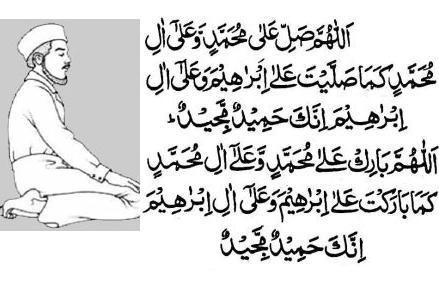
Moreover, we 'officially' end the Salaah by turning to the right and the left, reciting the Tasleem [As salaamu 'alaykum wa rahmatullah, may the peace and mercy of Allah be on you].

Even praying alone, we still do this, and it's not restricted to communal prayers. It is said that we do this in order to greet the angels. Another way of looking at this, however, is that this serves as a training. In the midst of our worship of Allah, we are conditioned to care about other people.
In addition, in the family the family prays together in Jamaa'ah. They pray for each other and with each other. So we have here family connected by blood, but also connected [i.e. formed] by their shared belief in Almighty Allah.
This should bring us to a better understanding of the Prophet's statement [peace and blessings be on him] "None of you have Imaan until [Hattaaa] you love for your brother what you love for yourself." [Muslim].
Faith in God is deficient unless it is accompanied by- at minimum- concern for one's brother. This is a value Islam seeks to develop within its followers.
What to do when family members are detrimental for our spiritual development
This scenario is one faced very often, by Muslims with Non Muslim family members, as well as Muslims dealing with [Muslim] family with different ideas of what it means to practice the religion.
The Qur'an gives us a powerful set of guidelines to answer this query.
"O believers, Indeed, some of your wives and your children are enemies to you." [Q 64:14]
We have to stop for a moment. Enemies is an extreme term to use. It means that they [the family members] have the potential to bring you harm when they are not on the same page spiritually. The verse continues to give us instructions.
ا أَيُّهَا الَّذِينَ آمَنُوا إِنَّ مِنْ أَزْوَاجِكُمْ وَأَوْلَادِكُمْ عَدُوًّا لَّكُمْ فَاحْذَرُوهُمْ وَإِن تَعْفُوا وَتَصْفَحُوا وَتَغْفِرُوا فَإِنَّ اللَّهَ غَفُورٌ رَّحِيمٌ
[1] Beware of them[Fah-dharhum].
Knowing that they can bring harm, one takes precautions. If they go in a direction that seeks to take you to Haraam, or to that which brings harm, even though they may not realize the harm they are bringing, be on the lookout!
In modern times we talk about toxic people or narcissistic personalities. Included in this are folks who are emotionally manipulative or even guilty of emotional blackmail. We are told to limit our interactions with these types. Extend this to, for example, those who constantly backbite or gossip. In Islam, the listener is also deemed as guilty as the speaker. So if we know these types, when they start, change the subject or leave the conversation. Similarly, if they offer you drugs, alcohol and the like, simply decline and avoid that environment.
[2] "If you pardon" [wa in Ta'foo]
Try to be understanding of their situation or condition. Try to excuse them, even though you are taking precautions to limit their harm to you.
[3] "Overlook" [wa tas-fahoo]
To be forbearing, to put up with it all to a point. To be patient. One need not turn everything into an argument.
In the age of internet and mass communication, we often hear about the Haraam Police. This is a nickname give to Muslims who are always so preoccupied with the issues of other people. They will police your clothes and your Facebook posts. They will critique your beard, women's Hijaab and the like. They have stations everywhere, and will even spend time critiquing Imams. They will analyze speeches of Imams and scholars, especially the famous ones, for theological mistakes, for mispronunciation of Qur'anic sentences. They will even publish books of 'refutations' regarding these personalities "deviance" and YouTube videos will follow suit.
We can understand the command to overlook in that sense as well. Don't let it bother you. You don't need to become the Haraam police yourselves, Take precautions, yet be understanding and overlook their issues. Strive to be better yourself, and avoid becoming judgmental. You may end up becoming a positive influence on them. This is precisely the way of the Prophet.
The great Egyptian scholar, Shaikh Muhammad Al-Ghazzali [1917-1996] was once asked "What is the ruling about one who has abandoned prayers? The questioner was probably expecting that the Shaikh would declare such a person a disbeliever and the like. However, the Shaikh gave a beautiful response. He says "His ruling is that YOU take him WITH YOU to the mosque."
To take someone with you is a sign of caring, and that care may indeed change that person's condition and you can become the best of friends. Remember Khalid ibn al-Waleed, who fought the Muslims at Uhud, or Umar ibn al-Khattab, Radee Allahu 'anhumaa. These were foes to Islam and the Prophet himself, yet became the greatest champions of the deen.
[3] "And forgive" [wa taghfiruu]
Forgiveness is the last response in this series of steps. The Prophet practiced this many times, the most important being when he issued an amnesty for all those who had led a two decade bloody campaign against him.
Forgiveness is difficult but doable. It is also one of the main pillars of a high spiritual position, to be yourself forgiving, and not just asking Allah for his forgiveness.
The verse ends "So Indeed, Allah is the Forgiver, Compassionate"
Your 'foes' and yourself receive forgiveness from God. God is intensely forgiving. He does so often. He is the Constantly Merciful.
Understanding Mercy and Forgiveness
Enmity which is causing you stress, coming from whatever quarter, bringing into your life negative energy, striving to take you away from God and what is healthy, Allah can still deal with them. He can bring people to guidance. Allah can heal such people, here in this life.
That is an equation that we best remember.
By the same token, Allah says the Qur'an itself is a healer. He also says to "Make Jihaad against them [the rejectors] with it [i.e. Qur'an], and a mighty Jihaad it is." [Q 25:52]
Allah's healing can come to others by your own hands. To those with bad habits, share with them what the Qur'an says on that habit. To those who oppose Islam based on misinformation, share with them what the Qur'an says on that subject. If necessary, given them a Qur'an to read for themselves.
A Realistic Religion
This deen addresses all angles and all sides. If the majority of human beings could be influenced by only a third of what it teaches, the world would surely be better off. The Muslims have forgotten much of these teachings, that is the only logical explanation behind the many wars being fought in Muslim lands.
May Allah make us stronger as a body of believers, and increase in our our understanding of others, and understanding of our own needs.
Sunday, January 16, 2011
Divine punishment: Qur'anic teaching

"
Say: Have you considered [Ara-aytaakum], if the punishment of Allah comes to you [In Ataakum 'Adhaabullaah] unexpectedly or manifestly [Jahratan], will any be destroyed, except the wrongdoing people [Hal Yuhlaku illa Qawmidh-dhaalimeen]?" [Q 6:47]
The context in which this ayah appears speaks of God's authority being rejected by those who are misguided, who have engaged consistently in a pattern of abuse and Dhulm in the world. In fact, we are told that Satan [ Q 6:43] makes their actions seem attractive. Repeatedly, God says, these people should have examined and considered the Ayaaat of Allah [ Subhaanahu wa Ta'alaa] [Q 6:46].
Finally, we come to the verse which is the center of this brief article. Allah Ta'alaa says that ONLY the Dhaalimeen are punished, no one else. This verse refutes such ideas that are found in the religious traditions of others such as original sin, or the notion that God punishes 'seven generations" of descendants for the crimes of a particular society!
If such a notion was true- that God punished the descendants of a criminal, then the son of 'Abdullah Ibn Ubayy, the leader of the Madeenan hypocrites, who engaged in many intrigues against the Prophet Muhammad- upon whom be peace and blessings- and the Islamic state- should have been punished by Allah, and indeed by the Prophet himself- who was God's representative on earth. Yet, we know that the son was not punished, and even 'Abdullah ibn Ubayy himself was never tried or punished in this world.
This section of the Qur'an speaks to the important picture, the broad fate of civilizations who have not articulated spiritual values into their conduct or culture.
For those, living both within and outside of a spiritual [or spiritually lacking] environment, who have able to internalize the Divine principles, Allah says:
"... So whoever has Imaan {faith} and reforms, they shall have no fear, and they shall [have no reason to] grieve." { Q 6:48}
Friday, February 13, 2009
Tolerance and Religious conviction: some thoughts on mutual respect
This has been a subject that has been on my mind for a while, but have until now found it difficult to put in words. In the United States, as well as in other nations of the world where followers of varying faiths live with each other,key words such as 'tolerance' and mutual respect would seem to be common sense, a practical reality that must be observed, leaving differences to be addressed at their proper venues.
Yet, among our most active religious leaders, we find that sometimes their statements, especially in the presence of 'the other' is vary lacking, and outright worthy of condemnation. This problem can be named with a very common title, the Foot-in mouth disease. Statements can be made which cause great hurt, and the speaker can be heedless. This is a clear symptom of the disease.
Recently I attended a funeral, the deceased being an elderly woman, the mother of several children, one of whom being a Muslim. She was not a Muslim, and from what I have been told, was not a participant in 'organized religion', but nonetheless was given a traditional, largely Christian funeral. The [Muslim] son was one of many family members to speak, and he made a passing remark about his mother's character being such, that her guidance and encouragement actually pushed him [the son] to 'the path I am on'. Any honest observer listening to his brief comments would easily testify that there was no proselytizing of Islam involved. His comments were about his mother and the relationship they enjoyed.
Later in the funeral program, the pastor officiating the funeral stood at the podium and said
The family was very upset, the Muslims were obviously offended, not to mention the Muslim family members [the grandchildren of the deceased].
Certainly this caused many people to confront the Reverend, who was unapologetic.I am not faulting him for believing what he believes, as that is his right as a human being, but there is a time and a place for everything, and to choose a funeral for expressing such views was inappropriate, to say the least.
What Venues are appropriate?
Conversations with friends, visiting houses of worship or study group gatherings, wherein exchanges, learning and debating may be appropriate, are all good places to start. With the advent of the INTERNET, this is much easier, as a person can join several religious forums, where every conceivable issue can be discussed in a safe, inexpensive and private manner.
To a conscious Muslim, this advice is nothing new. This certainly falls under the category expressed by the Qur'an in the following words;
Insulting people or debating them at funerals, weddings and the like do not correspond with wisdom!~
Advice to Muslims
To those of us who have an Islamic appearance [Kufi, Beard, Hijaab], know that you stand out in your workplace, when you catch the train, conducting your normal routine. You have to always be conscious of this, and attempt to always act in a friendly manner. Even if you feel mistrust on the part of others, recall the Prophet Muhammad. One disbeliever used to throw trash on a path he knew the Prophet [upon whom be peace] would walk down, on regular basis, but when this person became ill, the Prophet visited and checked up on him. This changed the man's attitude completely.
You will sometimes encounter people who wish to 'save your souls for Christ' or for some other motives or movements. They may even make you their target market, especially if you are from a Middle Eastern or South Asian background. They may visit your home, hoping to share their beliefs, and may even leave you literature in Arabic or Urdu. Others will be very ignorant, hurling insults, while others will approach you with genuine questions about your religion. In all these scenarios, the following is given as advice:
[1] Be calm, yet strong and assertive.
[2] Know your Deen before answering any questions. It is also always important to memorize and quote from Islamic texts, the most important being from the Qur'an, in dispelling any misinformation or just for the sake of sharing information.
[3] When possible, always have some literature handy, in your car, planner or purse. This will be helpful for those you are speaking with, for their future reference. The following pamphlets are available free. These brief works are straight to the point, with understandable language and Qur'anic references.
The timeless religion
http://islaminviewforum.com/index.php?act=Attach&type=post&id=537
Women in Islam
http://islaminviewforum.com/index.php?act=Attach&type=post&id=842
[The author's blog is modernmuslimwoman.com]
An introduction to the Qur'an
http://islaminviewforum.com/index.php?act=Attach&type=post&id=379
[4] Refer your listener to the local Mosque, and be sure that Mosque has relevant programs available. If not, take the initiative and start such a program, having qualified speakers and teachers.
And Allah knows best.
Yet, among our most active religious leaders, we find that sometimes their statements, especially in the presence of 'the other' is vary lacking, and outright worthy of condemnation. This problem can be named with a very common title, the Foot-in mouth disease. Statements can be made which cause great hurt, and the speaker can be heedless. This is a clear symptom of the disease.
Recently I attended a funeral, the deceased being an elderly woman, the mother of several children, one of whom being a Muslim. She was not a Muslim, and from what I have been told, was not a participant in 'organized religion', but nonetheless was given a traditional, largely Christian funeral. The [Muslim] son was one of many family members to speak, and he made a passing remark about his mother's character being such, that her guidance and encouragement actually pushed him [the son] to 'the path I am on'. Any honest observer listening to his brief comments would easily testify that there was no proselytizing of Islam involved. His comments were about his mother and the relationship they enjoyed.
Later in the funeral program, the pastor officiating the funeral stood at the podium and said
This young man says he's a Mooz-lim [sic], but Jesus is for them as well.Jesus is the only path to the Father.
The family was very upset, the Muslims were obviously offended, not to mention the Muslim family members [the grandchildren of the deceased].
Certainly this caused many people to confront the Reverend, who was unapologetic.I am not faulting him for believing what he believes, as that is his right as a human being, but there is a time and a place for everything, and to choose a funeral for expressing such views was inappropriate, to say the least.
What Venues are appropriate?
Conversations with friends, visiting houses of worship or study group gatherings, wherein exchanges, learning and debating may be appropriate, are all good places to start. With the advent of the INTERNET, this is much easier, as a person can join several religious forums, where every conceivable issue can be discussed in a safe, inexpensive and private manner.
To a conscious Muslim, this advice is nothing new. This certainly falls under the category expressed by the Qur'an in the following words;
Call to your Lord's path with wisdom and articulate reminders. [Q 16:105]
Insulting people or debating them at funerals, weddings and the like do not correspond with wisdom!~
Advice to Muslims
To those of us who have an Islamic appearance [Kufi, Beard, Hijaab], know that you stand out in your workplace, when you catch the train, conducting your normal routine. You have to always be conscious of this, and attempt to always act in a friendly manner. Even if you feel mistrust on the part of others, recall the Prophet Muhammad. One disbeliever used to throw trash on a path he knew the Prophet [upon whom be peace] would walk down, on regular basis, but when this person became ill, the Prophet visited and checked up on him. This changed the man's attitude completely.
You will sometimes encounter people who wish to 'save your souls for Christ' or for some other motives or movements. They may even make you their target market, especially if you are from a Middle Eastern or South Asian background. They may visit your home, hoping to share their beliefs, and may even leave you literature in Arabic or Urdu. Others will be very ignorant, hurling insults, while others will approach you with genuine questions about your religion. In all these scenarios, the following is given as advice:
[1] Be calm, yet strong and assertive.
[2] Know your Deen before answering any questions. It is also always important to memorize and quote from Islamic texts, the most important being from the Qur'an, in dispelling any misinformation or just for the sake of sharing information.
[3] When possible, always have some literature handy, in your car, planner or purse. This will be helpful for those you are speaking with, for their future reference. The following pamphlets are available free. These brief works are straight to the point, with understandable language and Qur'anic references.
The timeless religion
http://islaminviewforum.com/index.php?act=Attach&type=post&id=537
Women in Islam
http://islaminviewforum.com/index.php?act=Attach&type=post&id=842
[The author's blog is modernmuslimwoman.com]
An introduction to the Qur'an
http://islaminviewforum.com/index.php?act=Attach&type=post&id=379
[4] Refer your listener to the local Mosque, and be sure that Mosque has relevant programs available. If not, take the initiative and start such a program, having qualified speakers and teachers.
And Allah knows best.
Subscribe to:
Posts (Atom)