Showing posts with label seerah. Show all posts

Thursday, September 3, 2026

New Series: Life of the Prophet Muhammad (peace and blessings of Allah be upon him) lecture 1

 As salaamu 'alaikum! Below is a link to the 1st lecture in a  weekly series, hosted by Masjid As Sabur of Las Vegas, in which we are teaching the important details on the life of the Prophet Muhammad, Sall Allahu 'alayhi wa sallam .


It should be noted that around minute 7:50 of the recording, the presentation (which focuses on the first words of Quranic revelation received by the Prophet) has within it excerpts from our work "Engaging The Qur'an", which is available in hardback and E-book version. Information on that book is found below.


This series will take place every Wednesday after Maghrib prayers at Masjid As-Sabur of Las Vegas, Nevada. It will also be broadcast via Livestream and will be re-shared by my own Youtube channel. 

The link to the first session is found At this link 


Saturday, June 17, 2023

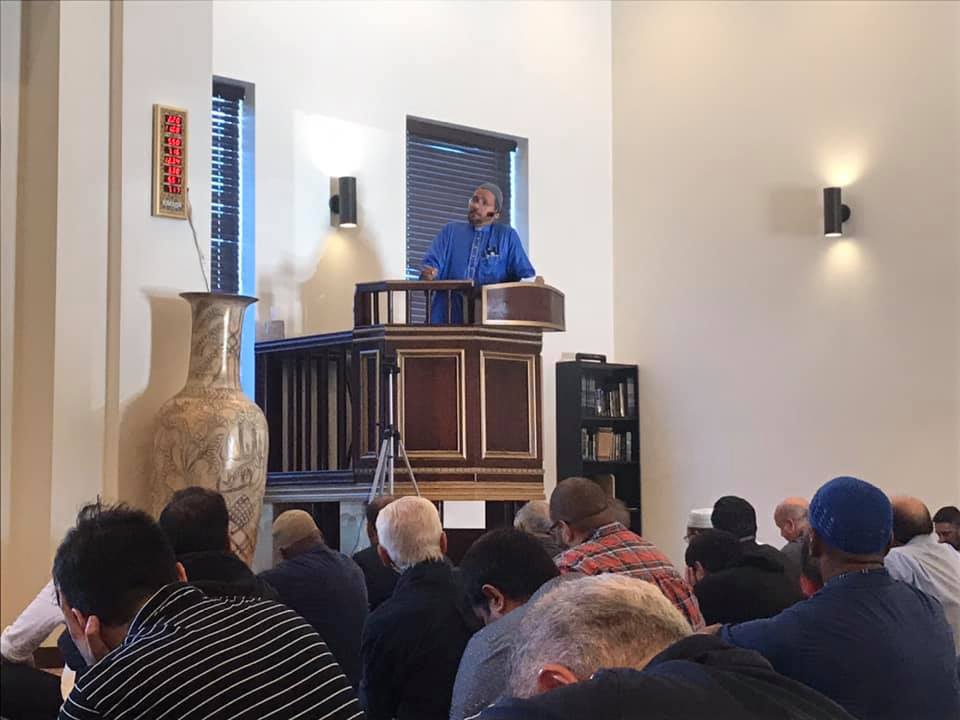
Friday Khutbah :The Prophet's example

 ( Note: The following is an edited version of khutbah delivered 6/16/23 at Masjid Ibrahim of Las Vegas, Nevada. Please note that the opening Hamd (expressions of praise for God) have been omitted, as well as the verbalization of peace for the Prophets. In addition, it has been formatted into one article, rather than the traditional two sections as found within a khutbah.)


The blessing of practical guidance


As Muslims, we have as our ultimate source of guidance and information the pure, uncorrupted words of Almighty Allah within the Qur'an, however, we also possess, as a second source of guidance and information, the example of the Messenger of Allah. This did not occur as an accident or an afterthought, rather, it is the system by which Allah has made the deen, in order to convey and preserve the message of the revelation. Thus, we read in the Qur'an "Verily, you have in the messenger of Allah a goodly model, for any who has hope in Allah, the final day, and reflect upon Allah abundantly." ( Q 33:21)


لَقَدۡ کَانَ لَکُمۡ فِیۡ رَسُوۡلِ اللّٰہِ اُسۡوَۃٌ حَسَنَۃٌ لِّمَنۡ کَانَ یَرۡجُوا اللّٰہَ وَالۡیَوۡمَ الۡاٰخِرَ وَذَکَرَ اللّٰہَ کَثِیۡرًا

We have within the Prophet's practical instructions a wealth of information on addressing negative emotions. He said: "Don't look at those above you, look at those below you." (Al-Bukhari & Muslim).


Allah certainly gives and restricts for whom he wills, in accordance with his plan and wisdom, these are things we are often unable to see, and as a result of our short vision, experience jealousy and the like. 


By following the aforementioned hadeeth, it helps to remove the destructive feeling of jealousy. Envy is an emotion that invites a satanic presence, to the extent that it is discussed within the last two Quranic chapters (Al-Falaq and An-Naas).


Prophet Muhammad also sought to limit those items which arouse jealousy in others. He forbade men from wearing gold and silk (Ibn Maajah). Men are the traditional public figures, and thus by forbidding men from adoring with these two items, it limits public resentment, which can-if unchecked- translate into actual crimes and social disorder. 


Our religion has also taught that when we see examples of God's blessings, we should say Maa-shaa-Allah (as God has willed) and Alhamdulillaah (praise belongs to Allah). 

Allah gives according to his wisdom and plan, and recognition of this helps to remove envy from the hearts.


Anger

There are times when anger is not only appropriate, but also necessary. A man seeing his wife, daughter, children etc. under attack is supposed to become angry and take action to defend his family. Yet, as a general principle it is widely recognized that anger is a dangerous emotional outpouring. 


The hadeeth literature reports that a man asked the Prophet for advice, and he responds (3 times) 
Do not give in to the tendency to be angry "(the arabic text for this is Laa Taghdab) (Saheeh Muslim).


While the above sounds good, our Prophet went further. He practically stated that when angry while sitting, stand, when walking, run, go make wudoo (ablution), offer a two rak'ah (unit) prayer. (sunan Abu Dawud 7482, 7484).


In other words, removing oneself from the situation by taking these actions helps to de-escalate the matter before taking regrettable actions. This is very sound advice. 


Emotional blackmail


The Prophet as a leader, as God's messenger, was nonetheless a human being. He and his followers had been victims of Makkan oppositon for years, and upon the liberation of Makkah, he issued a general amnesty, which benefitted the leaders of that opposition such as Abu Sufyan and Hind. The latter had ordered a slave named Wahshi to kill and mutilate the Prophet's beloved uncle Hamza (Radee Allahu 'anhu).

All three of these people became Muslim and recited the shahaadah (declaration of faith) with the Prophet. With Wahshi, the assassin, he told him that while he accepts his declaration, and he is under the amnesty promised by the new order he (The Prophet) established, he did not want to see him (Wahshi) again, because he gets reminded of his uncle!


So the Prophet, while still carrying on in his role, was a human being with human emotions. He guarded himself from negativity by telling Wahshi he didn't want to see him anymore. 


The lesson is that taking actions of self-protection are perfectly valid. Naysayers and abusers often resort to emotional blackmail and manipulation of religious language to force their agendas; however, we learn from the Prophet that we are allowed to protect ourselves from such things. 


(Most of our Friday prayer and Qur'an study sessions are livestreamed on our mosque Facebook page "The Masjid Ibrahim". In addition to this website, many of our talks are to be found on YouTube on various channels, such as "Arifin Library". For updates, do follow/subscribe to those sites)


Monday, April 24, 2023

A clarification on the account of Zaynab and Prophet Muhammad

 Introduction


Among the pitfalls of historical examination is that of misunderstandings created by either  well-meaning people, or through   blatant misrepresentations of the lives and actions of important personalities. While this is a situation most regrettable in the religious realm, this certainly happens in the secular world as well.


This can happen in the lifetime of that figure, but it becomes harder to correct after the death of that figure. There are a number of examples I can think of, wherein I had accepted as historically valid a particular "fact", only to be corrected upon encountering a sounder bit of information from reliable sources. 


While this process of acceptance and rejection can be subjective, and certainly occurs in almost every field of study, some assertions deserve to be rejected automatically as ridiculous attributions! Among such claims is that having to do with the marriage of Zaynab, Radee Allahu 'anhaa, to the Prophet Muhammad, Sall Allahu 'alayhi wa sallam.


The claim in question is summarized as follows: Zaynab bint Jahsh, married to the Prophet's (adopted) son Zayd Ibn Al-Haarithah, was an exceedingly beautiful woman, and when this was noticed by the Prophet, he took actions to break up that marriage to have her for himself. Critics assert everything from seduction to incest in this scenario.


It will be demonstrated in this composition, supported by historical analysis, logic and Quranic references, that such an assertion is simply unfounded. It is our hope that this article answers this particular claim, to benefit Muslim and Non-Muslim readers alike. 


Who was Zaynab?


Zaynab bint Jahsh was actually a cousin to the Prophet. As such, she would have been well-known to the Prophet through her life. The reports around her suggest that she had a sort of aristocratic upbringing and world-view, even after she accepted the message of the Prophet Muhammad. 


Who was Zayd?


Zayd Ibn Al Haarithah was an ex-slave, who eventually became the adopted son of the Prophet Muhammad (before the Prophethood). He was known to have deep respect and loyalty to the Prophet, to the point where his actual family came looking for him, and he (Zayd) prefered to stay with his adopted father. He was known as "Zayd ibn Muhammad" (Zaid, son of Muhammad).


As an ex-slave, he would have come from a lower or despised part of society. 


What was the Prophet's agenda?


We have to remember that according to all the reports, it was the Prophet himself who pushed for a marriage between Zayd and Zaynab to take place. The reports assert that Zaynab was reluctant, yet it ultimately happened. 


The Prophet's agenda here is addressing social divisions and class warfare. He initiated a number of actions towards greater social cohesion. In Madinah, he created "pacts of brotherhood" between members of varying tribes and classes, which proved to be very successful. His message was that of unity and breaking down harmful divisions. Even in the ritual prayer (salaah), the emphasis on being closely together is given. He is reported to have said " Establish the rows, shoulder to shoulder, close gaps, be accommodating to your brothers, and leave no breaches for the devil.." (Sunan Abu Dawud 666, reported by Ibn 'Umar)(ft.1).


The Qur'anic revelation itself is the foundation for his many actions, for the sake of brevity we cite only a few  examples:


" And among His (i.e. God's) signs is the creation of the heavens and the earth, and the diversity of your tongues and colors, indeed, in that are signs for those of knowledge." (Q 30:21)


"O Humanity. Indeed, WE (God) created you from a male and female, made you into peoples and groupings, so that you will know (each other)(ft.2), Indeed, the most honorable of you in Allah's sight are those with the most taqwaa(ft.3)  in your midst, Indeed, Allah is knowing, aware" (Q 49:13)


"And marry those among you who are single, and righteous, be they among your male or female servants. If they are poor, Allah will give them from his bounty, and Allah is expansive, full of knowledge ('Aleem)" (Q 24:32)


The breakdown of the relationship between Zayd and Zaynab


It is well-established from the sources that the marriage broke down. It can be described as irreconcilable differences. In fact, it is said that Zaynab herself said she could not even bear to look at Zayd, and agreed to return the dowry paid to her by Zayd, thus ending the relationship.


What happens to Zaynab as a divorcee?


Anyone with knowledge of Arab society, both in the past and present, can testify to the hardships a divorced woman will experience. Subsequent marriage was very difficult, if not impossible. Social stigmas are attached.  


The Qur'an itself states that the Prophet had tried to save the relationship between the two (Q 33:37), but those efforts failed.  It was after that that the Prophet did marry her. 


The context of this section of Soorah Al Ahzaab shows that there was a Divine wisdom in this entire saga, which shall be explored in the sections below.


Adoption reformation

As previously mentioned, Arabian society viewed adopted children with the same lenses as biological children. While adoption, particularly of orphans, is a praiseworthy action, shown by a plethora of Quranic texts and statements of the Prophet, the actual lineage of the adopted parties must be preserved (if known) as much as possible. With the advent of DNA testing technology, this is a task made much easier. 


Q 33:5 states "Call them by (the names of ) their fathers.." Also see verse 4, 36 and 37. Islam asks that the family line, the biological ties, be preserved. As a side note, some of the salafi writers have used this argument to speak against the common practice among Western Muslims (converts to Islam from Non Muslim backrounds) of changing names to traditional Muslim names(ft.4).


The particular relevance to the Prophet's status


In this chapter we have the famous text declaring the Prophet Muhammad as the seal of the Prophets. It is important to note context as well as precision of words. 


"Muhammad is not the father of any of your males, rather, he is God's messenger, and the seal of the Prophets. And Allah has knowledge of all things." (Q 33:40).


This shows us that marriage with Zaynab has three main benefits: {a) It demonstrates that the adoption reformation has taken place, placing emphasis on  the preservation of the biological family line. (b) It removes a social stigma that was present with marriage with a divorcee. (c) It shows us that there will be no prophetic successor to Muhammad. Thus, Zayd is no longer to be called "The son of Muhammad". Indeed, the Prophet's actual biological sons died in their toddler stages. 


The latter is the most important in the Divine wisdom. While reformers and great teachers can always emerge, we are taught that the doors of Nabuwwah and scriptural revelation have come to an end, demonstrated by Q 33:40.


Concluding thoughts?


The notion that Prophet Muhammad was so in love with Zaynab that he had to create false pretexts to be with her falls flat on its face when we examine the scriptural and historical evidence. Indeed, Karen Armstrong (a Non- Muslim religious scholar) has argued that not only had the Prophet always known Zaynab, but that whatever beauty there had been would have eliminated during the Makkan boycott in the previous period, a time in which Muslims were suffering starvation. 


The story that appears in some Muslim sources (that he saw her at her home in some state of undress) is more akin to the Biblical account of David (2 Samuel 11:2) has to be dismissed as fabricated. 


There is great wisdom in what actually happened with Zaynab, Zayd and the Messenger of God, and such hikmah is seen when studied deeply.


May Allah be pleased with those who were close and faithful to the Prophet, and may Allah's peace and blessings be on all of the Prophets and messengers. 


Footnotes


(1) The Hanafi school has a more nuanced understanding of the text mentioned here, as well as the subsequent discussions on standing "foot-to-foot, shoulder to shoulder" in prayers. We have seen problems between Hanafis and Non Hanafis, the latter sometimes taking the reluctance of their Hanafi brothers to stand foot to foot as demonstrations of racism (in an American context). This issue is actually a Fiqhi difference and stems from a different understanding of the texts that surround these practices within Salaah. For a glance at this issue, please see Maulana Abdul Rahman Ibn Yusuf's article at the following link. .See here


(2) The term here is Li'ta'aarafoo, "in order to come to know" This refers to benefiting from other communities of humans, adding to the diversity of existence. This can be found in food, music, philosophy, fashion, and countless other examples. In other words, God is saying he made us intentionally different as a means for us to learn from each other. 


(3) Taqwaa is a rich word whose meaning depends on context. Here, awareness of God and other people is the appropriate rendering.


(4) While the salafi position is understandable, I think that in a Western context, changing names is reflective of wanting a new life. In addition to this, the names African Americans typically carry are names given by the slave masters of generations past. Coming into Islam is a means to create a unique identity divorced from the past social crimes. It should be noted that Islam does NOT command changing names, unless the name carries a bad meaning. Thus, the hadeeth literature mentions that the Prophet changed someone named "war" (Harb) to "Calm" (Saleem), and "Ugly" (Qabeeh) to "handsome" (Jameel).

Monday, January 26, 2015

Free speech and sensitivities: some thoughts

In the hours following the attack on the Charlie Hebdo offices in Paris, debates were ignited as to the limitations on speech. Catch phrases were inserted throughout the world media discourse such as "freedom of speech" "Human rights" "democratic values". As if on a pre-arranged schedule, videos emerged in which Al-Qa'eda's Yemeni branch took credit. In addition to this, oddly enough, one of the attackers in the Paris fiasco did a video in which he declared his loyalty to ISIS [ft.1].

From the wider Muslim world, we saw condemnations of the attacks as well as Muslims marching to protest the initial caricatures of the Prophet in the first place. In Grozny, Chechnya, for example, there was a reported 800,000 Muslim protestors condemning the rather crude, distasteful cartoons.

There is a polarization taking place, it has been happening for a long time now. Radicals on all sides of any issue are the ones which get the media attention and it is they who are, unfortunately, defining the parameters of the argument. Nuances are lost, distortions and emotional outbursts are what's prevalent in the public discourse.

Flagrant hypocrisy

Making fun of Muslims and their Prophet [Muhammad, upon whom be peace and blessings] in the name of free speech is very hypocritical, especially when one considers that holocaust denial in EU nations [and other places] is a crime, even to dispute the official numbers of the victims is deemed offensive and worthy of prosecution. [ft.2]

These cartoons were clearly designed to provoke responses, inflame the Muslim street. Perhaps there are more sinister hands at play here, seeking to create controlled chaos, in order to achieve short and long term political goals.[ft.3]

So just how should Muslims respond?

The Qur'an tells us that the Prophet was insulted, and it even records some of those insults, but it says that a Muslim should simply leave the company of the mockers until they return to their senses [Q 4:140].  It also states that Muslims should respond with 'peace' when confronted by ignorant people [Q 25:63]. Indeed, the Qur'an even instructs Muslims in their behavior with Non believers, telling us not to even ridicule idols, because that may enrage the idolaters when there is no need to do so. [Q 6:108]

The Muslims have to realize that not  every insult deserves a response. Frankly, this was one of those times. Any sensible reader would look at the cartoons and take away from that a disgust with the publishers, as it was all in bad taste and beyond civilized behavior.

Moreover, the 'Ulamaa [Muslim scholars], whom we are told in tradition act as the inheritors of the Prophets, have a responsibility to engage in education and outreach. This is especially true in Western nations. Mosques should arrange tours, open houses, speeches and presentations in the wider society, in venues such as universities, Churches, and the like. The Muslim scholars should submit articles to local and international newspapers on Islamic teachings, on the life of the Prophet, and other issues.  If the media won't publish their articles, write letters. One is bound to be published. In addition, Muslims should show their faces, get themselves involved in local communities, with like-minded Non Muslims who have interest in issues relating to social justice, reconciling parties, and so forth. Religion is more than theological truisms, it is something that creates positive energies in the wider society.

The common Muslim should display the highest standards of conduct, and if unable to answer questions on the faith, direct the questioners to correct sources. These responses, while admittedly humble, will go a long way. It is also in line with the broad message of the Qur'an and Prophetic Sunnah.

Footnotes

[1] There is great irony here, because ISIS and Al-Qa'eda are foes. This tidbit makes us question the whole scenario.

[2] For more on Holocaust denial laws, see a summary http://en.wikipedia.org/wiki/Laws_against_Holocaust_denial

[3] I shared a similar thought when the "Innocence of Muslims" was released. See http://shamsuddinwaheed.blogspot.com/2012/09/defending-prophet-methodology-of-quran.html

Sunday, February 5, 2012

Muhammad the Prophet of Islam: Dispelling Some Misconceptions

As we compose this brief article, Muslims worldwide are celebrating the birthday of Muhammad ibn ‘Abdullah. Although specific details of the celebration vary from one nation to another, the Mawlud ur Rasool holiday includes poetic compositions, processions, dinners, exchange of gifts, Mosque attendance and special food for the poor.

It is important to note that Islamic religious texts [i.e. Qur’an and Prophetic narrations] do not lend any direct support for holding celebrations commemorating the Prophet’s birth, but at the same time we have to admit that we find little problem with it, in the sense that it gives an opportunity to share, especially with the youth and with those unacquainted with Islam, the Prophet’s legacy and teachings. [Ft-1 and 2]

As such, we have taken advantage of Mawlud to correct some misconceptions about the Noble Messenger of Allah, upon whom we ask God’s peace and blessings. It is also worth noting that some misconceptions and outright lies are generally propagated either by Christian missionaries of various sects or by Orientalist writers, whose agendas are obvious. Below, we present thoughts on some of those wrong ideas.

[1] Muhammad was obsessed with women

Arguably the leading accusation, this idea is presented as an alleged contrast with Christian ‘moralists’ who uphold the celibacy of Jesus Christ versus the polygamy practiced by the Messenger. What seems to get ignored when this charge is brought up is that the institute of polygamy was [and arguably still is in parts of today’s world] a means to seal political and family alliances, as a way to unite peoples and heal hostilities. In addition to this, in times of war when men would fall on the battlefield, polygamy was a means of social welfare for widows and children. The Prophet’s marriages, taking place after the death of his beloved Khadijah, must be viewed in this light. [ft.3]

[2] Blood thirsty killer

This is very far from the truth. His congenial nature was well known even before the Qur’anic revelation. When the revelation did come, he and his growing number of followers suffered persecution, and the enemy did not stop when the Prophet migrated to Madinah. Rather, they continued their plotting and their attacks. It was only in response to these that fighting for survival was finally ordered [Q 2:190]. In this regards, we must also understand that the Qur’an says “and if they [the enemy] sue for peace- then you [O Muslims] must also sue for peace, and place your trust in God, He is the Hearer, the Knower.” {Q 8:61]

[3] Relations between Muhammad and the Jewish tribes

In Madinah, when the Prophet moved there, he made treaties with the Jewish tribes there, as well as in other places, Yet, as the history books tell us, these groups, motivated by ethnic prejudices and jealousy, not only broke their treaties, they even were involved in plots to kill the Prophet! The details are beyond the scope of our article, but we refer the reader to “The life of Muhammad” by Muhammad Husayn Haykal, pp 271-283.

How should Muhammad be viewed?

His son in law and the eventual fourth Khalifah of the Muslim community after his [i.e. the Prophet’s] death, ‘Ali ibn Abi Taalib, is reported to have observed:

“He treated the [material] world disdainfully and regarded it low. He held it contemptible and hated it. He conveyed from Allah the pleas [against committing sin], counseled his people as a warner, called towards paradise as a conveyer of good tidings.” [Nahjal Balaaghah, page 71]

His wife ‘A’ishaa bint Abi Bakr says “His character was the Qur’an.” [ Saheeh Al-Bukhari ]


His student and relative Ibn ‘Abbas says “Allah’s messenger, Sall Allahu ‘alayhi wa sallam, was the most generous of people in charity…” [Saheeh Muslim]


“And We [Allah] have sent you [O Muhammad] to be nothing more except as a mercy to all nations.” [Qur’an 21:107]


Final advice

Allah Almighty preserved the Qur’an, and has said therein that the Prophet was a model “for any who hopes in Allah, the final day, and remember Allah often.” [Q 33:21]. The Qur’an has preserved just about all of the details we, as lay people, would need about the Prophet. His struggles with faith and family, marriages and leadership, even his internal thoughts are often found therein. So, for us lay people who do not have the time, patience or ability to shift through materials determining what is authentic and what is not, we need only look at the Qur’an. Look at the ‘say verses’. Look at the earliest Soorahs, which are mostly found in the last sections of the text, and you will find a man who was quite normal, who is sufficient for believers as a practical guide.

Footnotes

[1] In Al Maulud Fil Islaam: Innovation and true belief according to Qur’an and Sunna and the scholars of Islam, the author, Shaikh Hisham Kabbani, attempts to extract religious texts to justify the traditional observances of the Prophet’s birthday, yet at the beginning of his treatise he does admit “ ..other celebrations, like Mawlid, the Prophet’s birthday-peace be upon him-are neither obligatory nor forbidden.” [pg 1, Haqqani Islamic foundation, Fenton, Michigan, 1994 edition]

[2] We have attempted to be fair with regards to the issue of celebrating the Prophet’s birthday. After all, it has become a part of Muslim culture, and as long as there is no danger of idolatry, it can be a good opportunity to pass along Islamic knowledge. There are some extremes among Muslims on issues like this. Saudi Arabia is probably the only Muslim nation that does not have the Prophet’s birthday as a national holiday, and scholars from the Salafi Manhaj regularly preach against it. The opposite side of that coin is that of many Muslims who not only celebrate his birthday, but who have rather odd supernatural beliefs about him, such as his actually not being human, but having been created out of light [the Noor –e Muhammad as expressed in Urdu], that he actually joins certain groups when they pray. This personality cult and exaggerated status of a man is just the sort of thing that Islam stands against, and it is under these circumstances that we understand full well the reluctance of some authorities to allow such celebrations. It is also worth sharing that there are some among the Muslim ranks who reject ‘traditional Islam’ including the ‘Eids, and obviously Mawlud, yet the same people, in our experience at least, have no qualms issuing greetings for Christmas, St. Valentine day, and even Halloween!

[3] For the Islamic teaching on polygamy, see our “Polygamy and societal norms” at shamsuddinwaheed.blogspot.com.