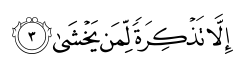
Let us begin by asking how 'family' is defined? Or even the term 'spirituality' for that matter. In this age, we think of the Nuclear Family unit when it comes to family. The Nuclear Family unit is a married couple, with three children maximum. Admittedly this does still get extended to include grandparents, cousins etc.
Traditional cultures tend to expand these family groupings to include clan, tribe or a feeling of loyalty to locality.
Families have shared bloodlines and history. They also develop over long periods shared experiences, pains and laughter. This is a bond that is usually unbreakable.
"And have Taqwaa of Allah, through whom you ask each other [O humans] [of your rights], and the family [as well], Indeed, Allah is Ever-Watchful over you." [Q 4:1]The family bond is natural, and Taqwaa is expressed by respecting that bond.
يَا أَيُّهَا النَّاسُ اتَّقُواْ رَبَّكُمُ الَّذِي خَلَقَكُم مِّن نَّفْسٍ وَاحِدَةٍ وَخَلَقَ مِنْهَا زَوْجَهَا وَبَثَّ مِنْهُمَا رِجَالاً كَثِيرًا وَنِسَاء وَاتَّقُواْ اللّهَ الَّذِي تَسَاءلُونَ بِهِ وَالأَرْحَامَ إِنَّ اللّهَ كَانَ عَلَيْكُمْ رَقِيبًا
The soul and the family in New Testament tradition
Some religions have a shaky view when it comes to the ties between the family and the soul. Paul [1 Cor. 7:8] says it is better to not marry. The New Testament has Jesus ['Isa, 'alayhis salaam] say that he has come to divide family members [Matt.10:35]. So we have these two New Testament assertions that place family as something that can destroy the soul, and that the family must be sacrificed for the welfare of the soul!
Issues that need to be addressed from the Islamic perspective
[1] God placed you with your blood family. The blood ties, shared experiences, all creates bonds which are not to be broken. Indeed, Allah says that even if our disbelieving parents try to induce us towards false worship, we are not to do that. however we are to keep strong ties with them in life. [ Q 31:15]
[2] The blood family is the first school wherein we learn about God, worship, 'aqeedah etc.
The Prophet said "Marriage is half of the deen" {Bayhaqi}. Why does he, 'alayhis salaatu was salaam, say this? Because from that, a Jamaa'ah has the potential to be born, born to worship Allah. Even the relationship between two people, with it's ups and downs, can bring them closer to Allah in giving thanks as well as calling on him during times of difficulty. When one has a family, the believer spends much time praying [Du'aa] for them. According to the Messenger of Allah [Sall Allahu 'alayhi wa sallam], this counts as worship.
"Du'aa is the core of worship," [ Tirmidhee]. "Du'aa is worship" [ Abu Dawud and Tirmidhee].
[3] The concept of 'family' is very much expanded in Islam. Allah says the believers are nothing more than a brotherhood. "Brotherhood" [Ikhwah] is nothing more than a fancy term for family. [ Q 49:10]
Healthy people care about their family, they are careful with regards to the feelings and health of their family, they look for the interests of their family. Muslims are supposed to be concerned about each other. This is even reflected in the small act of watching the news whenever we come across a news item involving other Muslims. Even without knowing the Ahadeeth or Quranic verses on this subject, Muslims do this, they do this because caring for other Muslims is something which is built-in into the daily practice of this Deen!

In the sitting posture of Salaah, we pray "O Allah, make the needs of Muhammad and his people be met." We also pray "O Allah, send blessings on Muhammad and his people." We are praying for the cause of Muhammad, the person of Muhammad, but also for his followers, that they have not only their needs, but blessings as well. That they have not only their immediate needs, but to have extra things, happiness in their existence.
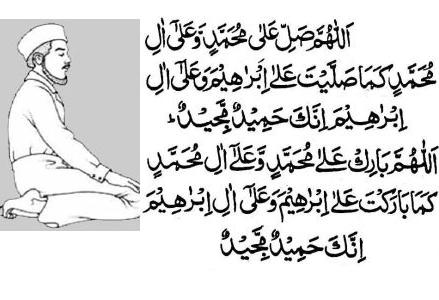
Moreover, we 'officially' end the Salaah by turning to the right and the left, reciting the Tasleem [As salaamu 'alaykum wa rahmatullah, may the peace and mercy of Allah be on you].

Even praying alone, we still do this, and it's not restricted to communal prayers. It is said that we do this in order to greet the angels. Another way of looking at this, however, is that this serves as a training. In the midst of our worship of Allah, we are conditioned to care about other people.
In addition, in the family the family prays together in Jamaa'ah. They pray for each other and with each other. So we have here family connected by blood, but also connected [i.e. formed] by their shared belief in Almighty Allah.
This should bring us to a better understanding of the Prophet's statement [peace and blessings be on him] "None of you have Imaan until [Hattaaa] you love for your brother what you love for yourself." [Muslim].
Faith in God is deficient unless it is accompanied by- at minimum- concern for one's brother. This is a value Islam seeks to develop within its followers.
What to do when family members are detrimental for our spiritual development
This scenario is one faced very often, by Muslims with Non Muslim family members, as well as Muslims dealing with [Muslim] family with different ideas of what it means to practice the religion.
The Qur'an gives us a powerful set of guidelines to answer this query.
"O believers, Indeed, some of your wives and your children are enemies to you." [Q 64:14]
We have to stop for a moment. Enemies is an extreme term to use. It means that they [the family members] have the potential to bring you harm when they are not on the same page spiritually. The verse continues to give us instructions.
ا أَيُّهَا الَّذِينَ آمَنُوا إِنَّ مِنْ أَزْوَاجِكُمْ وَأَوْلَادِكُمْ عَدُوًّا لَّكُمْ فَاحْذَرُوهُمْ وَإِن تَعْفُوا وَتَصْفَحُوا وَتَغْفِرُوا فَإِنَّ اللَّهَ غَفُورٌ رَّحِيمٌ
[1] Beware of them[Fah-dharhum].
Knowing that they can bring harm, one takes precautions. If they go in a direction that seeks to take you to Haraam, or to that which brings harm, even though they may not realize the harm they are bringing, be on the lookout!
In modern times we talk about toxic people or narcissistic personalities. Included in this are folks who are emotionally manipulative or even guilty of emotional blackmail. We are told to limit our interactions with these types. Extend this to, for example, those who constantly backbite or gossip. In Islam, the listener is also deemed as guilty as the speaker. So if we know these types, when they start, change the subject or leave the conversation. Similarly, if they offer you drugs, alcohol and the like, simply decline and avoid that environment.
[2] "If you pardon" [wa in Ta'foo]
Try to be understanding of their situation or condition. Try to excuse them, even though you are taking precautions to limit their harm to you.
[3] "Overlook" [wa tas-fahoo]
To be forbearing, to put up with it all to a point. To be patient. One need not turn everything into an argument.
In the age of internet and mass communication, we often hear about the Haraam Police. This is a nickname give to Muslims who are always so preoccupied with the issues of other people. They will police your clothes and your Facebook posts. They will critique your beard, women's Hijaab and the like. They have stations everywhere, and will even spend time critiquing Imams. They will analyze speeches of Imams and scholars, especially the famous ones, for theological mistakes, for mispronunciation of Qur'anic sentences. They will even publish books of 'refutations' regarding these personalities "deviance" and YouTube videos will follow suit.
We can understand the command to overlook in that sense as well. Don't let it bother you. You don't need to become the Haraam police yourselves, Take precautions, yet be understanding and overlook their issues. Strive to be better yourself, and avoid becoming judgmental. You may end up becoming a positive influence on them. This is precisely the way of the Prophet.
The great Egyptian scholar, Shaikh Muhammad Al-Ghazzali [1917-1996] was once asked "What is the ruling about one who has abandoned prayers? The questioner was probably expecting that the Shaikh would declare such a person a disbeliever and the like. However, the Shaikh gave a beautiful response. He says "His ruling is that YOU take him WITH YOU to the mosque."
To take someone with you is a sign of caring, and that care may indeed change that person's condition and you can become the best of friends. Remember Khalid ibn al-Waleed, who fought the Muslims at Uhud, or Umar ibn al-Khattab, Radee Allahu 'anhumaa. These were foes to Islam and the Prophet himself, yet became the greatest champions of the deen.
[3] "And forgive" [wa taghfiruu]
Forgiveness is the last response in this series of steps. The Prophet practiced this many times, the most important being when he issued an amnesty for all those who had led a two decade bloody campaign against him.
Forgiveness is difficult but doable. It is also one of the main pillars of a high spiritual position, to be yourself forgiving, and not just asking Allah for his forgiveness.
The verse ends "So Indeed, Allah is the Forgiver, Compassionate"
Your 'foes' and yourself receive forgiveness from God. God is intensely forgiving. He does so often. He is the Constantly Merciful.
Understanding Mercy and Forgiveness
Enmity which is causing you stress, coming from whatever quarter, bringing into your life negative energy, striving to take you away from God and what is healthy, Allah can still deal with them. He can bring people to guidance. Allah can heal such people, here in this life.
That is an equation that we best remember.
By the same token, Allah says the Qur'an itself is a healer. He also says to "Make Jihaad against them [the rejectors] with it [i.e. Qur'an], and a mighty Jihaad it is." [Q 25:52]
Allah's healing can come to others by your own hands. To those with bad habits, share with them what the Qur'an says on that habit. To those who oppose Islam based on misinformation, share with them what the Qur'an says on that subject. If necessary, given them a Qur'an to read for themselves.
A Realistic Religion
This deen addresses all angles and all sides. If the majority of human beings could be influenced by only a third of what it teaches, the world would surely be better off. The Muslims have forgotten much of these teachings, that is the only logical explanation behind the many wars being fought in Muslim lands.
May Allah make us stronger as a body of believers, and increase in our our understanding of others, and understanding of our own needs.