Showing posts with label Hadith. Show all posts

Monday, January 24, 2022

Just what is allowed and not allowed in Islam? Addressing some commonly asked questions

               Just what is allowed in Islam? Addressing some commonly asked questions

Islamic doctrine asserts that Islam- surrender to God's will- has come forth through all messengers, finding its completion and perfection with the coming of the final scripture (Qur'an) to the final Prophet (Muhammad, Sall Allahu 'alayhi wa sallam).  In many ways, the Prophet Muhammad is like the Prophet Moses, upon both be peace, in that both have comprehensive legal systems associated with their teachings. It is the desire to obey Allah Almighty that has inspired the development of such systems. In these regards, we differ from Christianity, which largely has focused upon personal salvation, attainable through belief in the blood sacrifice of Jesus Christ on the cross.


This article does not seek to go into detail regarding legal issues, rather it will address commonly asked questions that center on issues such as dress, gender interaction, and cultural expressions. It should be noted that the premise of this article centers around two Quranic assertions, important verses which we have tended to marginalize insofar as understanding and applying Islam is concerned.


One of those verses reads:  " Say: My Lord has only consistently forbidden (harrama) immoral actions (Al-Fawaahisha), what is open as well as what is hidden (batan), sin and transgressions unjustly, that you associate with Allah that which He has sent down no authority, and that you speak about Allah what you do not know." (Q 7:33).


This shows us that God is not petty! The above text shows a general principle that Allah has prioritized that certain actions and attitudes are to be avoided, as they cause social and personal chaos. We have repeatedly presented as examples intoxicants, gambling, and the like, as contemporary problems that, if removed, would greatly benefit social stability.


The contrast is given in the text which borders the above citation, in which Almighty Allah asserts: " Say: Who has consistently forbidden (harrama) the attractive (items of) God (zeenatullah), which He has produced for his servants, and wholesome (tayyibaat) items from his provision? Say: they are for those who have faith (alladheena Aamanoo) in this life, and exclusively for them on the day of standing. Thus, We (Allah) does clarify signs for a people of knowledge." (Q 7:32)


Whatever is goodly, attractive and wholesome, that which benefits the physical, spiritual and social health of a person, this is welcomed by Allah! It is created by God for us to benefit from. If the two Quranic verses are remembered, in general we should have no problems in living by the religion of Islam.


It should be noted that cultural and personal tastes will naturally vary, so that factors in how we accept and judge things. Information on certain subjects will likewise has variance. Our judgements of what is lawful and what is lawful from a religious angle should likewise have evidence from the religious texts.


DRESS


Q1What is the dress code for Muslim women?

Islam teaches that in public, modest dress should be observed. Practically this means the hair and body. The Quranic texts assert that the reason for this dress code is to be viewed with respect (24:31), a means of protection from harassment and the like ( 33:59). A hadeeth of the Prophet further states that in public, only the hands, face and feet should be visible (Sunan Abu Dawud 4104).


Any cultural or personal style is acceptable from an Islamic perspective so long as the above requirements are met, and indeed, we find great diversity amongst Muslims in dress fashion. 


Q2 What is the dress code for men?


There is no text which directly addresses this, however there is consensus among the scholars that clothing should not be revealing, that the area between the navel and knees be covered. Many countries have laws against men going shirtless in public, and that is certainly a part of typical Muslim thinking as well. 


Q3 Do men have to wear headgear?


To our knowledge, there is nothing in the Qur'an or hadeeth literature which commands this. However, the literature does say the Prophet covered his hair, and certainly the head-coverings found in the Arab world offer protection from the weather elements. The covering of the head for men was considered (and in some places is still considered) good manners, and there has been scholars who historically considered abandonment of it to be an act of transgression (fisq). 


Moreover, there are also scholars, in particular of the Hanafi school of thought, who assert that it is preferable (mustahab) to offer prayers with a covered head. 


Yet, it is our view that the head coverings, as found in different forms throughout the Muslim world, is a cultural symbol, with little bearing on one's Islamic observance.


Q4 Are Suits and ties allowed?


There is no convincing evidence that the suit and tie is forbidden. The West has culture just as the East does, and as long as the requirements mentioned in Q2 are met, it should be fine.


Some have argued that the tie in particular is a symbol of the Christian cross, however there is no convincing proof of this. Others have taken the tie as a symbol of Western colonialism and is thusly frowned upon in places such as Iran. If one is convinced of the latter as an argument, then it is simply a matter of choice and preference, rather than religious mandate.


Q5 Pants above the ankles?


In the time of the Prophet, dragging one's garment (called isbaal in Arabic) was a way of showing off, a display of arrogance, and it is this attitude which was condemned by the Prophet. This explanation is almost universally recognized among Muslims, which is why generally full-length pants and garments are abundant.  Thus, we see no problem in this, if there is no arrogant display taking place. 


Q6 Can Muslim men wear gold and silk?

Although not mentioned in the Qur'an, it is forbidden by the Prophet in the hadeeth literature. In normal circumstances, men are the ones conducting business and activities in public life, and the wearing of gold and silk, especially in excessive fashion, can generate jealousy and even crime. Thus, we view it as forbidden (haraam), and best for Muslims to avoid.


Gender interaction


Q7 Is handshaking between the genders allowed?


In many Muslim cultures, particularly in the Middle East, South and Central Asia, it is inappropriate to have any physical contact with the opposite sex outside of one's family. 

Moreover, in the Shafi'ee school (dominant in Far East Asia), even a small touch, such as from a handshake, annuls one's ablution (Wudoo').  So, from a practical perspective, depending on one's surroundings, it may best be avoided, to prevent socially awkward situations.


There is no direct hadeeth on this issue, and the report usually cited to forbid handshaking between members of the opposite sex is disputed both in its content (matn) and its transmission (Isnaad).


In the West, as well as the professional world, it is deemed impolite to refuse a handshake. Moreover, as mentioned above, the report usually cited in order to forbid it is seriously disputed. Thus, it is our view that there's no problem with shaking hands. Those who take the Shafi'ee position (that even an accidental touch annuls one's Wudoo, as distinct from the other madhaahib who assert that it is sexual intercourse which renders purity void) find themselves at hardships in certain situations such as in Makkah and Madinah during Hajj time, when the crowds always push people towards each other. Some Shafi'ee scholars, as a result, take the position of the other schools just in that occasion.


Islam is a practical, easy faith, and it is not necessary for us to make it harder. Therefore, our advice is contingent upon location and context. In an of itself, we see handshaking as okay, this is also the fatwa from Al Azhar university, but one must be cognizant of local realities, which may demand NO handshakes or those in which handshakes would be required. 


Q8 Can a Muslim woman propose marriage to a man?


There is no problem with this.  Indeed, Khadijah (Radee Allahu 'Anhaa) did this very thing with Muhammad, a younger man, before the Prophethood.  


Q9 Is a guardian (wali) needed for a woman in marriage?


In three of the four Sunni schools yes, but in the Hanafi school it is not a requirement when the woman is deemed mature and intelligent (Baalighah Raashidah). The presence of a guardian is to look for the best interests of the female, who usually marries young and without life experiences. A woman with maturity and intelligence is free to conduct her life as she sees fit, so long as in keeping with Islamic values. Thus, the Hanafi view (as articulated in the Mukhtasar of Al Qudoori) is very logical.


Q10 Can there ever be communication/interaction between men and women?


Religiously, this is not a problem, however, this also depends upon the cultural surroundings. One must be cognizant of this, regardless of one's religious views. In any case, there is much evidence from the sources that show that interaction of this level is not a problem. Indeed, the Prophet's wife, Sayyidah 'Aa'ishaa, led an army (the battle of Jamal). There had to be communication between her and the commanders. She herself is a major source of hadeeth transmission, that would have to be communicated to men! These examples should be sufficient from a religious perspective.


Q11 What evidence is required from an Islamic perspective to prove adultery (Zinaa)?


The requirements are very strict, four witnesses (see Q 24:4,13) must see actual intercourse (dukhool). Other actions do not count as "zinaa". 

There is great wisdom in this, in that it limits false accusations to be leveled, and also allows for any potential issues to be resolved with the involved parties, rather than making a public spectacle.


Q12 Does a woman's voice constitute 'Awrah (something to be hidden)?


There is no evidence for that from the Qur'an or Sunnah. 


Cultural expressions


Q13 Is Music lawful?


There have been many authorities which consider it to be forbidden (Haraam), on the basis of some reports in the hadeeth literature, as well as an interpretation of the term Lahwil Hadeeth which appears in the Qur'an (31:6). However, the reports have been disputed since almost the very beginning of the Muslim intellectual history. Great scholars such as Imam Al Ghazali (see Ihyaa Uloom id deen )have praised the value of music, and the Quranic text mentioned above has no actual relation to music.


It is our view that immoral music is what is forbidden, as it encourages social disorder. This is the view of many great scholars and finds articulation by Shaikh Yusuf Al Qaradawi in his work Al Halaal wal Haraam Fil Islaam. 


Q 14 Can holidays other than the two Eids be observed by Muslims?


This depends on the nature of the occasion. Most occasions are secular in nature, and involve needed family and social interaction, which is encouraged by Islam. It is our view that holidays and occasions such as birthdays, national holidays, anniversaries, are not problematic at all. 


It can be argued that Christmas is a problem, but it is one easily solved. This question is particularly relevant for Muslims who have converted to Islam from a Christian background. One can join one's family in the social aspect (dinners for example), but not the religious aspect (church communion and the like). Simply skip the religious aspect, if there are any present.


Q15 What about Tattoos?


Some people get tattoos of their spouse's names, and other decorations. It is our understanding that such actions are haraam because they permanently alter one's body from its natural form. More importantly, scholars have given- as evidence for declaring it to be haraam, the Quranic assertion "Do not alter God's creation" (Q 30:30).


If one already has tattoos, it is in the past. However, we advise all readers not to get more tattoos. 


Q16 Can widows remarry?

In some cultures, this is frowned upon, however, there is nothing in the Qur'an or Sunnah which forbids it. Indeed, the Prophet Muhammad Sall Allahu 'alayhi wa sallam himself married widows.

                                                  

Sunday, September 26, 2021

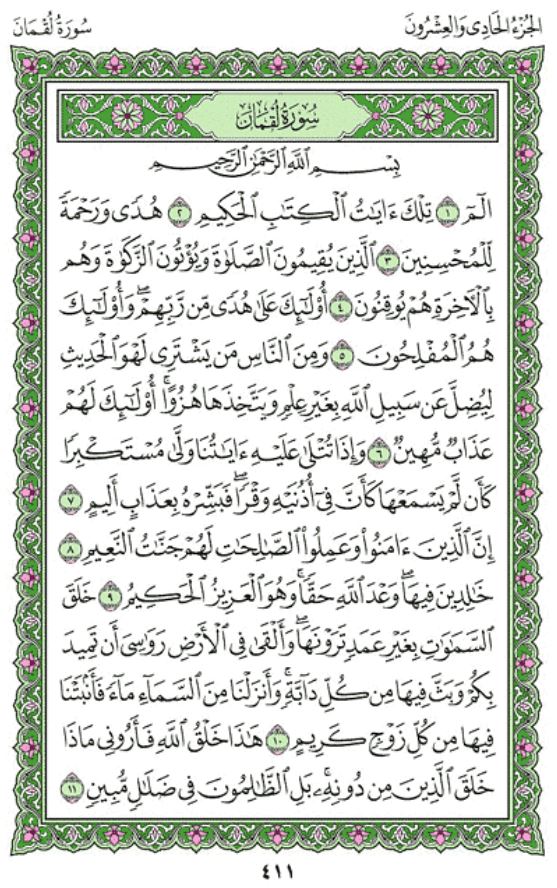
An analysis of Soorah Luqman


(Note: The following are class videos, an analysis of one of the most profound Quranic Chapters, entitled simply "Luqman". Human behavioral ethics, laws, philosophy, science and much more are present in this Soorah. )


Thursday, October 15, 2020

Satan Series

 Note: The following are recordings from our recent Friday Khutbah's in which various aspects of Satan- as depicted in the Qur'an and Hadeeth, are explored. 


[1] Understanding Taaghoot: separating fact from fiction: 

https://www.facebook.com/watch/live/?v=323628222309729&ref=watch_permalink

Summary: A foundation for understanding Devilish intentions and interactions, as well as an examination of the importance of Divine protection. 


[2] The emergence of Satanic influence

https://www.facebook.com/154152348017299/videos/989328314916485

 Summary: An analysis, based within the Qur'an, of what Satanic influence actually entails, as well as the consequences for heeding his call. This Khutbah is a very important introduction to this subject, for a religious as well as Non religious observer. 


(3) Worship and Satanic distractions:

Summary: While worship is a tool for moral and physical development, Satan influences us to be wasteful, irresponsible, and the like. This is a follow up from the 2nd Khutbah. 

https://www.facebook.com/154152348017299/videos/656326395005562 


(4) The Real Jihad: building internal resistance

Summary: Prophet Muhammad (Sall Allahu 'alayhi wa sallam) teaches the importance of building one's internal capacity to combat Satan. 


https://www.facebook.com/154152348017299/videos/254047672640131


It is recommended to watch these lectures in the above order. Thoughts and feedback are welcome.


Thursday, December 27, 2018

Muhammad: Man and Prophet

{ Note: The following is our address on the occasion of the birth of Prophet Muhammad, peace be upon him, given in Las Vegas, Nevada. Mawlid un Nabi , Rabi Al Awwal 12, 1420, November 20, 2018)


Muhammad: Man and Prophet

Sunday, September 24, 2017

Are Activists allowed happiness?

Introduction

This weekend has been a flurry of activity on Socia Media within the Muslim community worldwide, because of accusations leveled against a certain well-known Muslim personality. The said person released statements denying the accusations, and obviously his ideological foes have hooked themselves strongly to the accusations.

It is worth noting that the said person has not been accused by anyone of doing anything illegal, rather, at worst, of exercising poor judgement,  and I am actually not going to address that at all, as I find that such would be useless and unproductive. Rather, I would like to go to an even bigger issue, one which, I must confess, I have struggled for a very long time to be able to contemplate, let alone put into words. 

This bigger issue is not restricted to famous personalities and political figures. This issue is also an issue with anyone- well known or anonyomous- who has sincere belief in a certain cause and sacrifices for that cause, be it religious, social, national, global, etc.

People of dedication to meaningful causes or to living according to a serious code tend to have a number of struggles, in that they are attempting to do right and live right, according to their sincere understanding of that code, even going against their own impulses to those things which seems to bring them happiness, security, comfort and peace.Such folks, it seems, even unconsciously sabotage whatever efforts they do make at attaining that which can bring forth happiness, because of these struggles.

This is not restricted to issues of intimate relationships. This can also refer to living comfortably, nice homes, clothing and finances, or a combination of all the above. There are a great deal of complexities involved in thinking and speaking about subjects of this nature, as well as differences vis a vis public figures and regular citizens, as such, we will divide our thoughts broadly between the two categories of people, even though it is true that much overlapping can (and does) take place.

The Sincere have every right to happiness and comfort in this life

"Say: Who has eternally forbidden (Harrama) God's pleasant (things) [ft.1] which He has produced for his servants, as well as that which is wholesome from His (own) provsion? Say: They are for those who believe, in this life, as well as [being manifested ] specially on the Day of Resurrection. Thus, We (Allah) explain signs to a people of knowledge." ( Q 7:32)


This verse alone should be sufficient as an evidence that having a pleasant existence in this world does not negate any righteous cause, nor does it destroy one's chances with God in the next life. I think the idea that believers or people dedicated to certain goodly causes are to have mariginal existence here in this life stems from Christian rhetoric. After all, the Bible and Christian tradition depicts Jesus ( believed to be God incarnate as well as God's son) as unmarried, totally against material or financial comforts of any sort. That thinking has filtered down to the culture, creating attitudes such as swearing off the opposite sex as well as children and material comforts, even among Non Christians! 


Two famous supplications from the Qur'an below illustrate that the Islamic religion teaches a balanced approach to all these sorts of issues. 

Our Lord! Give on us that which is pleasant in this life, as well as that which is pleasant in the after-life, and protect us from the punishment of the fire[ft.2]  ( Q 2:201)
Our Lord! Bestow on us from our spouses and offspring that which will be a source of comfort for our eyes, and make us leading for those who are holding God in awe." ( Q 25:74)

There are many ahadeeth or sayings of the Prophet Muhammad, upon whom be peace and blessings, which can be cited. Often his sayings discuss the issues of marriage because, as the reports are presented, there was a desire among many to swear off dealing with the opposite sex, even wanting to be castrated.  Perhaps this was done out of the convert's zeal, wanting to totally abandon the distractions present in the days of ignorance that preceded the Prophetic preaching in Arabia. Yet, The Prophet says "I fast and I break my fast, and I marry women." He says, further, "Marriage is my Sunnah, and whosever abandons My Sunnah, is not of me." [Sunan Ibn Maajah, Kitaab an Nikaah, narrated by 'A'ishaa].


There are many other verses of the Qur'an that speak to the privacy of the Prophet Muhammad needing to be respected. People were repeatedly told not to monopolize his time, to have  respect  for his household, even to pay something in the public charitable fund before making private appointments with him ( 33: 53-53, 58:13, among other verses). His time is valuable, and should not be abused. 


These are principles which can be applied to any public figure. Imams and teachers should be paid for their services, especially those in which more work and mental energies would be needed in order to address said situation. It is not that the teacher or the worker is greedy, but it does show respect as well as appreciation. The worker is human, has his own bills and needs for happiness just like anyone else. 

It is an odd situation in today's world in which people pay a therapist, psychcologist or counselor for one hour sessions gladly, burdening that person with all of their problems with the hopes that the person will be able provide some solutions, yet will not consider the same situation for their religious consultant. This does not only happen with Imams in the Muslim community, it happens with many of my clergy friends from across the religious aisle! Calling them at all hours of the night, text messages and social media messages asking all sorts of queries, seeking resolutions. 

That consultant does not only deserve a honorable financial compensation. He or she also deserves that they be allowed a private life, a life that has happiness therein. To demand that such persons live as hermits,overworked and underappreciated,  while their flock is busy in pursuit of dunya, is unreasonable and unrealistic.


Respecting the privacy of others

The Qur'an instructs that a home cannot be entered if permission has not been obtained from its resident ( 24:27-28). While this may seem to be common sense, a figurative way of looking at this command shows us that it can also mean that we should stay out of people's inner lives. Indeed, the only authentic reason where this may not be a workable situation is if there is a risk of public damage or health! 

In private, people can pursue Halaal as well as Haraam, but when others enter into private affairs, those distinctions get blurred, depending upon the prejudices and thinking pattern of those doing the meddling. 

A very interesting Quranic text reads "O Believers! Avoid much conjecture, because sometimes conjecture is sinful, spy not on one another, and do not backbite one another..." [Q 49:12]

This verse has in it the concept of Husnudh dhann, which basically means to assume the best before assuming the worst. An example is this real scenario. A person sees a Muslim, dressed in Muslim attire, entering a bar. To someone looking on, the Muslim is doing a Haraam act, about to consume alcohol.  However, as it turns out, that Muslim is a salesman, selling colones and perfumes, which is perfectly Halaal. The same person could be delivering food! 

The verse says not to engage in bad assumptions in opening observations, but it also prohibits spying on one another. There maybe skeletons in your brother's closet, or, at mimimum, private issues he would rather stay private. It is not an issue of what is Halaal or what is Haraam. It could be that the thing in question's Islamic status is unclear, or it could simply be no one else's business. 

This, I would say, is for public figures and regular citizens alike. We live in a sensationalized, staged world, with Television programs such as Jerry Springer and The Maury Povich show show viewers the most intimate and embarrasing details of families unknown to us. We have become accustomed to knowing and gossiping about private affairs, issues which may not even be crimes or religiously unlawful, that we forget the Islamic guidelines!


Jealousy of another's successess is a spiritual disease and can cause damage to the object of envy


Much of the Quranic treatment of scandals and social niceties also has therein mention of "hypocrites" or "those with diseased hearts". Indeed, Muslim women in general [Q 24:31] as well as the Prophet's own wives [Q 33:59-60 among other places]  are told to behave in such a way as to minimize gossip from detractors and those with incorrect thoughts on matters. This writer recalls that Michelle Obama, wife of then US president Barack Obama, causing controversy by wearing a sleveless dress. The critics themselves supported personalities who dress in much more revealing ways, however their attacks were not motivated by genuine concern on the morals of the inhabitants of The White House, rather, it was motivated by jealousy!

The Prophet Muhammad Sall Allahu 'alayhi wa sallam is reported to have said the following words:
"Do not be jealous of each other, do not inflate prices on each others, do not have  hatred of each other, do not turn away from each other, do not undercut each other, and be, O servants of Allah, brothers.." [Saheeh Muslim]


I find it interesting that the hadeeth here connects these issues, viz jealousy, price fixing etc..

Those with diseased hearts are people who have so much envy buried within that they seek to actually destroy the object of their envy! 

The ideal condition is that people should be happy at the success of others, especially if that success was earned lawfully and correctly, and that success is translating into good results, felt by many. However, not all people are thinking correctly.

In these regards, it is best to avoid, as much as within one's ability, showing off, especially if you become aware of jealousy surrounding you. The rich person should not brag about his riches or the food he wasted in front of a hungry, poor person. One's clothes should be modest, not just in regards to decency, but in displays that could possibly cause resentment. The Prophet's commands for men to not wear gold and silver are good places to start. In addition, one should treat all, rich and poor alike, equally and with justice. 

If you find that there are those around you who have resentment towards due to your perceived success, and that your efforts to dissuade them of their fears have come to naught, it maybe time to limit contact, if not break ties all together. One must look for one's own health, especially one's spiritual health, with great care.

It can happen, and seems to have happened in this public fiasco, that jealosy of a person's success can cause the "family" or "friends" around them to seek to knock them down, "put them in their place"- as the saying goes. 

This is why it is important, vital, to have the company of believers, of sincere and God-fearing folks, particularly in intimate situations.

I read a quotation in a book on marriage which has really been profound. In it, it says that a wise man once divorced his wife, who then remarried. Upon being asked why he divorced his wife, the wise man said "how can you ask me about another man's wife?"

In other words, despite whatever situation that emerged in his life, he had enough sense to simply keep that situation private. 


Conclusion

Regarding the scandal which has taken Muslims by storm on social media outlets, whatever happened does not seem to warrant the attention it has received. A mixture of motivations for many parties is the real reason this has been blown out of purportion, but it did inspire me to think about the overall bigger questions about activists and ordinary folks alike attempting to navigate between their feelings and what they believe to be religious commands/truths. 


Everyone has a right to privacy. That is recognized not only in Islamic teachings, but under US law. We should be careful and we should always seek to obey the commandments of our faith, we should exercise good judgement and discretion, to avoid the appearance of doing something wrong, however that does not negate the fact that everyone has a life that has private aspects, that such things should be respected. It's perfectly fine in Islam for a man to pursue a woman ( or a woman to pursue a man for that matter, as we know that Prophet Muhammad was the one proposed to by Khadijah), and unless some serious crime has occured, such as rape, incest, sexual harrasment, pedophilia or something along those, personal business should be left personal. 

The Prophet Muhammad (Sall Allahu 'alayhi wa sallam) is reported to have said "Among the pleasant [aspects of] Islam [is] to leave alone that which does not have meaning for you." 

That hadeeth, and ahadeeth like it, are more relevant now than at the time those words were originally uttered. 

I would like to conclude this post with another important verse from the Qur'an, regarding prohibitions

Say: The only items eternally forbidden by My Lord are shameful acts, public and private, sins, transgressing unjustly, associating to God which you have no authority, and speaking about God what you do not know." [Q 7:34]


Footnotes

[1] The phrase Zeenah [not to be confused with Zinaa, which means adultery] is used here. It has shades of meaning that all have to do with pretty or pleasantries, sometimes "glitter". Here, we have rendered it as "pleasant (things)".

[2] Imam W. Deen Mohammed (1933-2008) renders wa qina 'adhaaban Naar as "protect us from the fires of sin". 


Wednesday, June 7, 2017

Are Muslims going crazy? An attempt to make sense of recent events

The last two weeks, despite it being the month of Ramadan, a time of prayer, fasting, introspection and charity, it seems that the Muslims worldwide  has been set afire! The car and knife attacks in London last week are well known, as well as an incident in which a young man attacked a police officer in Paris, but also we have had the same sort of incidents in places within the Muslim world, such as Kabul, and today we are witnessing the aftermath of attacks on the Iranian Parliament and the shrine of Ayatullah Ruhullah Khomeini.

The London attack brought to my mind nothing from Muslim history, or even civilization memories of long ago, but rather, a television show produced by FOX. Called simply THE FOLLOWING, it depicts a serial killer named Joe Carrol, a former university professor who focuses on classical literature [in particular the writings of Edgar Allen Poe] who manages, even after his initial capture, to gather, via the internet, numerous followers, hailing from diverse racial and economic backrounds. Throughout the series, any and all excuse was given to fulfill the bloodlust of this figure, and, of course, the series had also exposed in their story line different sets of villains, motivations, organizations, plots and twists.Copy cat killers and desperate personalities seeking fame and glory, as well as political intrigue, also played their parts. ISIS and its likes are precisely the same way, and it would not come as a surprise to this writer that ISIS members are found to have viewed this program and programs like it on a regular basis.

Is it really Islam which motivates killing sprees?

It's important to understand that anyone can make just about any claim as to their own motivations. The French writer Gabriel Meurier aptly observes: " He who excuses himself, accuses himself."

The human mind has great abilities to both see the truth and to hide it, to explain away and to justify, to rationalize bad decisions.  Moreover, as individuals we are extremely complex, full of  paradoxes which we are not always able to understand ourselves or to be adequately understood by others.

As a person who has been studying these subjects for many years, it is my view that it is wrong to simply say "Islam is the cause". The cause[s] vary from place to place and person to person. I think such actions, when taking place in clearly defined war contexts or on the battlefield, is universally understood, even if disliked by some and approved of by others.

However, how does that work in London, Paris, Orlando, and let us not forget, Charleston, South Carolina [where Dylann Roof shot to death nine people in an African American Church in  the hopes of starting a race war]?

In those cases, one cannot simply look at the religion, race or even class of the perpetrator. One can and should look at his stated motivations, but also at what is hidden, what is behind the image. That is mainly the job of sociologists, psychologists and those in similar fields.

What does Islam say about violence?

The first source is, of course, The Qur'an, the Islamic scripture. It is seen as God's word and no other source is seen as superior to it. In it, we read a very long list of basic principles, similar to what Christians call the Ten Commandments (ft.1), and among the directives, we have "And do not kill the soul, which God has eternally forbidden [Harrama], except in justice. And whoso is killed unjustly, God has given his heirs authority, [yet even then], so do not be excessive in the retribution, as he [the heir] is assisted [legally]" [Q 17: 33]

In other words, killing is seen as forbidden, and if and when it does happen, from the perspective of Islamic laws, the family of the victim has the right to demand capital punishment, to have financial compensation. Moreover, when capital punishment is applied or sought after, it is not to become a  free for all. This is particularly important in feudalistic societies, where cycles of revenge taking can last generations.

The above Quranic command is also alluded to in 2:178. There, it clearly states that regardless of the status of the victim or the killer, capital punishment remains an option if that is what the victim's family demands. It is worthy of emphasis that the victim's  family has more say on the matter than the state in normative Islamic jurisprudence.

In another place within the scripture the principle has been given that is well known to the Judeo-Christian tradition, "...Whosoever kills a soul..it is like he has killed all of mankind, and if he saves a life, it is as if he has saved all of mankind." [Q 5:32].

In the same verse, as well as in 5:33, we have rather severe options given to deal with murder, as well as creating social chaos in general.

What about Jihad?

The term Jihad simply refers to struggle, and can be used in war and non war contexts. While we don't dispute that it has been used in war contexts, it is worth noting that Jihad as a war cannot be simply launched by anyone. Killing random people on the streets, innocents who have nothing to do with anything, cannot be justified in the name of Islam. Indeed, it seems to us that such actions fall under what is mentioned as "chaos" in 5:33, bringing forth a potential severe punishment from the authorities.

It is clear that the brains behind the acts in Paris, London, Kabul, Egypt, Syria, and other places have in mind spreading chaos. They want people to be afraid. They also seem to want Muslim minorities in Western nations to be in a state of fear, to be viewed with suspicion by the wider society.

It does not matter the religious or ethnic identity of the masterminds, I have no qualms in calling them out as evil, as people who are far away from religion, as folks who are master manipulators with desires for greatness, who serve their own egos rather than serving Allah, the Lord of creation.

Suicide bombings/attacks


This has been almost universally condemned in the Muslim world by Muslim scholars. Countless books, pamphlets, articles, position papers and speeches have been composed by scholars within every sect and orientation within Islam on this subject. In the modern age it is said that the ones who started this particular tactic was not Muslims, but rather Tamil Tiger rebels on the Indian subcontinent. Later, it was picked up by Muslim groups of various places and persuasions, in places such as Lebanon and Palestine.

In legitimate war contexts, all kinds of things can and do happen. Indeed, in the USA and other places we have what are called war movies, either fictionalized or depictions of real historical battles, in which soldiers sacrifice their lives.

Whatever one thinks of this, this is still not the same as what we are continually witnessing. Suicide bombings on Christian Church services in Egypt, or suicide attacks on Shiite worshipers offering prayers in Pakistani mosques, or at nightclubs and the like.

The Qur'an says "and do not take your own hands as to bring forth [your own]  destruction.." (Q 2:195].

An even more clear sentence in the scripture says "And do not kill yourselves." [Q 4:29].

So if both murder and suicide have been condemned in the Qur'an, how about killing one's own self along with innocent others? The answer should be obvious, it is not allowed!

Looking at all of this from the perspective of belief in the texts of Islam

The hadeeth literature, texts which tell of of reports emanating from the Prophet Muhammad, relate to us that the Prophet, upon whom be Allah's peace and blessings, gave several signs as indicators of the coming day of Judgement. It is a day that, the Qur'an says, none should have any doubt about its eventual arrival [ Q 3: 9]. We have discussed many of them in the past (ft.2), but one of them is the emergence of what is called Maseeh id Dajjal, or simply"Dajjal".

Al Maseeh Ad Dajjal is translated usually as "The False Christ" or simply "Anti-Christ". The issues surrounding eschatology are complicated and highly debated, and while others focus on a particular personality to fit the description, this writer looks at it from the term Dajjal. In everyday Arabic, it is used for deceiver, and is often associated with a tyrannical ruler.

In other words, one of the signs of the age close to the Day of Judgement is that great deceptions will take place. Guidance will be lost, not just in religious affairs, but in the social and political arena. People, often damaged by the vices and soul crushing aspects of the modern world, will look for peace and meaning in all the wrong places. Another hadeeth words the situation as "Knowledge will be of low account, ignorance will be abundant" [Yaqillul 'ilmu, wa yaktharul Jahl]. Indeed, we even have a hadeeth which reports the Prophet as saying that killing would be so abundant that neither the killer nor the victim will understand why it is happening!

Dajjalic influences are not simply felt on Non Muslims! It is universally felt. The deceivers fool everyone in different ways and at different areas. The hadeeth literature speaks on social upheavals as well as violent confrontation between groups of powerful entities. The evil influences are widespread, so that today people can kill in the name of religion and in the name of race/ nation alike, as we saw recently with Jeremy Joseph Christian, in Portland, Oregon, expressed pride in killing two men who had come to the defense of Muslim women.(ft.3)


So what can do, if this is the age of great deception

A comprehensive answer cannot be given in this brief composition. The suggestions we have largely come from Islamic teachings themselves, but also from my own views, hopefully shaped in a correct way by Islam itself. These tips are also useful for Non Muslim readers.

[1] Be consistent in prayer: Strive to connect to God in a regular way and on a regular basis.

[2] Be studious: In this age, it is needed to stay informed and educated. Dedicate a part of your budget to the purchase of books [and not simply websites and news channels] on important social, economic and political subjects. If possible, learn another language in addition to your own native tongue. Don't be afraid to stand corrected on a topic you were previously misinformed on.

[3] Have good company and family ties: Spend time outside with your family, seek out mates and company of decent people.

[4] Avoid intoxicants and obsessions with vices: Weaknesses can be easily exploited and themselves be the foundation of becoming a victim.

[5] Be willing to travel: for your own health and sanity, it may become necessary to not only travel, but to move to another place.

This is by no means comprehensive, but nonetheless a good place to start.(ft.4)

Footnotes

[1] Robert Alter, in his Bible commentary and translation The Five Books of Moses ( 2004, New York, W.W. Norton & Company] gives a brief summary of the ten commandments not actually, in the original text, adding up to that number. Nonetheless, it has become a great part of Western thinking and legal foundations.

[2] Among the places we have addressed Judgement day, see "Considering the day of Judgement" at [url] http://shamsuddinwaheed.blogspot.com/2017/02/considering-day-of-judgement-is-it-close.html[/url] , "Judgement day: lessons from the Qur'an and Sunnah" [url] http://shamsuddinwaheed.blogspot.com/2017/04/judgement-day-lessons-from-quran-and.html[/url] and "Signs of Judgement day" at [url] https://www.youtube.com/watch?v=PMMq_mmjUXY[/url].

[3] On a Portland train, Christian was yelling at two women, one of whom was a Muslim. Three men came to the defense of the young ladies, and Christian reacted by repeatedly stabbing all three, two of whom died. Unfortunately, this event, which happened in May, has yet to get the wide attention that it deserves. In court, Christian yelled out, in part, "This is America, get out if you don't like free speech.". A little more information can be found at [url] http://www.independent.co.uk/news/world/americas/portland-us-murder-train-islamophobic-ramadan-racist-extremist-hate-crime-a7771231.html[/url]

[4] I am compelled here to mention that we must be careful in accepting claims at first glance. That is not only common sense, but it is a Quranic command [Q 49:6]. Many writers associate great deceptions with everything from terms such as the Illuminati to victims brainwashed to do certain actions in a Manchurian Candidate style event. We simply don't know which, if any, of those particular scenarios apply to the overall issues under discussion. We should simply exercise caution in accepting as truth anything that is presented to us, regardless of the source.

Saturday, April 8, 2017

Exploring our age in light of Islamic texts: Friday Khutbah

[Note: The following is an edited version of Khutbah delivered 4/7/17 at Toledo Masjid Al-Islam. The opening Hamd has been omitted, as well as other comments made. It should also be noted here that this Khutbah serves as an introduction to an upcoming lecture called 'Day of Judgement: Lessons from the Qur'an and Sunnah".]

We have indicators in the Islamic primary texts as to the indicators of the approach of Judgement Day. One of the Prophetic narrations [reported by Aby Hurayrah and found in Tirmidhee's collection] has it that those indicators include (1) The man will obey his wife  [literally 'his woman'] و اطاع الرجل امراته   

2] Disregard his mother. (3) Closest to his friend (4) Yet the most distant from his father [Aqsaa Abaahu]. (5) And [the trend of the ] emergence of loud talking in the mosques [places of worship] (Ft.1)

We are emphasising these five items as found in the hadeeth because they show the breakdown of the natural family structure, a situation we are seeing in today's world in the name of the follies of youth and "freedom". 

This does not absolve that there are parents out there who have been horrible to their children or children who have been horrible with their families, however we are simply relating the hadeeth here without fault-finding, putting all of the pieces together. We are looking at the Prophet's words with the hope of finding guidance. 

We should learn from this hadeeth that we have to strengthen our family ties, even if the famiy is Non Muslim or Non Practicing as Muslims! If Parents have made severe mistakes in their treatment of their children, then it becomes incumbent on them to find a way to repair the damage!

The last item mentioned in the narration tells us that loud voices would be heard or emenating from the mosques. THIS shows us that the places of worship have, in the age closest to Qiyaamah, become little more than social clubs, in which people have forgotten the solemn nature of the mosque. The Mosque [Masjid], the house of Allah, particularly the prayer area (musalla) is for prayer, reflection, study, reading the Qur'an, not for gossip!

I find it interesting that the Prophet صلى الله عليه وسلم placed these five items together. In short, we are called upon to strengthen, to have proper ties, to Allah and to our families [see Qur'an 4:1]. Such ties are necessary if we are to survive and to be sane in the age which is seemigly close to Judgement day. 

Prophet Muhammad is misrepresented in the age near to Judgement Day

Another hadeeth, found in Saheeh Muslim, tells us "The lying decievers will come at you with 'ahadeeth' which neither you nor your ancestors have heard of..." 
ان دجالون كذبون ياتونكم من الاحاديث بمالم تسمعوا انتم ولا اباوكم

THIS informs us that the Muslims will be the victims of great decievers, coming at us with deliberate misrepresentations of the final Prophet.

The Lying Dajjals [Dajjaloon Kadhdhaboon] cannot do that with the Qur'an, because the Qur'an has been protected by God [ see Q 15:9]. This is not only from a faith-based perspective, but from a physical and historical realistic perspective. Since the decievers cannot do that with the Quranic text, which is accessible and very well known, they target hadeeth, which is not as  widely known (ft.2).

This has happened both literally and figuratively. People quote 'hadeeth' or make assertions that portray Prophet Muhammad as stern, fanatical, harsh and rigid. The Prophet ends up being extremly misrepresented. 

Our best weapon against the lying decievers is the Qur'an itself. The evidence for this is that we have atleast two narrations [Muslim and Abu Dawud] that speak of texts from Soorah Al Kahf [chapter 18 of the Qur'an] as protection from Dajjal(ft.3). We read in that Soorah that God deserves praise for not allowing any deviation to be placed within the Quranic scripture [Q 18:1]. So we have to make time to read it, to study it, to memorize it, use its text in our prayers but most importantly to live by it. The Qur'an is not a book for the dead, rather it is a book for the living! 


The hearts of those firmly grounded in the Book of Allah will not have signifigant influence from the deceptions of the decievers [Dajjaloon].

Concluding thoughts

Constant introspection, examining our family ties and our ties with God and with God's revelation is the only way to go in order to find guidance. Complacency will only become the doorway for misguidance. We want to be open to truth. So be regular in worship, in supplication [du'aa] and keep in mind the Prophet's supplication; " O Allah, show us truth as truth, and give us the ability to follow it. Show us Baatil as Baatil, and give us the ability to abstain therefrom."

We should also pray from protection from the 'fitnah' of the deceiver. It does not matter if 'Fitnah' is translated as 'trial' or 'test' or 'tribulation'. We don't want any of it!

Rather, we are to desire guidance for ourselves and our families, not to be deluded.


Footnotes

(1) In Arabic the word for Mosque [Masjid] literally means "place of prostration". It is on a pattern indicating the a noun of place and time ( Ism Zamaan wa Makaan]. We have explained 'masjid' here to include even a broader possibility, and that is that all places of worship, regardless of religious affiliation, in the age nearest to Judgement day, would become nothing more than social clubs in which authentic searching for spirituality would be absent. This writer has in mind Qur'an 22:40 which contains recognition [even though the Qur'an obviously refutes some religious ideas] that places such as monasteries, Churches and Synagogues function as places wherein the congregants are seeking out God.

(2) The evidence for this assertion is that the Qur'an has been widely memorized and acted upon even by lay Muslims throughout history. The science of hadeeth ['Ilm ul hadeeth] is very complex and is full of scholarly disagreements on criterion for judging the authenticity of this or that narration, not to mention the chain of transmission [Sanad]. So while most Muslims have the Qur'an, only the scholarly class have in their personal libraries the many volumes of hadeeth. With the emergence of the internet, all of the traditions have been recorded by many websites and made available, however that does not mean it would be as understood and seen correctly as the Qur'an has. It is the opinion of this author that the scholarly class spend their time in deep research into the sciences of hadeeth, that lay Muslims have in their own libraries and in their hearts Prophetic sayings as found in books such as Riyadhus Saaliheen or Forty Hadeeth, statements that are inspirational and push us towards goodly relations with God and neighbor etc, and that the Qur'an remains the primary source for  religious truths.

(3) I see these narrations as indicative of not necessarily the last ten or the first ten verses of Soorah Al-Kahf as serving as protection from Dajjal. but rather the entire Soorah itself. In the Soorah, we find a number of accounts and morals that provide-if internalized, a proper respect for Allah, faith in Allah, the true state of humanity, and much more. The stories of Moses and the teacher [known as Khidhr], the believers who escape persecution by going to the cave, the parable of the believer and the disbeliever, are among the highlights of the Soorah. In general, the overall message of the Qur'an itself provides both personal and communal protection from the forces of deception. This subject cannot be fully explained adequately in a footnote, nonetheless we hope this provides a desire to study and consider the Qur'an itself, with emphasis on Soorah Al Kahf.


Saturday, October 15, 2016

Virtues of Friday: Surprising observations from the Qur'an and Sunnah

[ The following is an edited version of the Friday Khutbah delivered 10/14/16 at Toledo Masjid Al-Islam. The opening Hamd has been omitted.]

Judgement day

The Prophet Muhammad [Sall Allahu 'alayhi wa sallam] is reported to have said "And the hour [i.e. judgement] will not be established except on Friday." [Saheeh Muslim].

There are many other ahadeeth which outline the virtues of Friday, such as one which states that Allah accepting the supplication of a supplicant on this day, about it being the leading day in God's sight [ Inna Yaumal Jumu'ati Sayyidul Ayyami wa A'athamuhaa 'IndaLLaah], and we are even told in the hadeeth literature in at least two narrations that Adam was created on a Friday!

Why do we have all of this emphasis on Friday [Yawmul Jumu'ah]? The answer to this is found in the Qur'anic command

O Believers! When the call is made for Friday prayers, rush forth to the remembrance of Allah, and leave off trade. That is best for you, if you do but know." [Q 62:9].

Thus, remembering Allah, being reminded via the Adhaan, Khutbah, prayer and Qur'an references the speaker inevitably makes, all of this has the power to transform!

"And the remembrance of Allah is the greatest [source of inspiration and power], and Allah knows what you manufacture." [Q 29:45]

So the experience of Jumu'ah is supposed to be empowering!

Empowerment to do what?

What should experience of Jumu'ah empower us to do? We have to return to the first hadeeth mentioned. "The hour of Judgment will be established on the day of Jumu'ah."

At foremost, Jumu'ah reminds us of the reality of standing before Allah. Sir Francis Bacon said "Knowledge is power".

Knowledge is itself power, knowledge or awareness of being in the future standing in the presence of God.

Another benefit would be empowerment in thinking. Allah's reminders create a transformed thinking, mentality, worldview!

In every single way, authentic Islam as presented in the Qur'an and the life of Allah's Messenger promotes balance, healthy interactions and community feeling.

The one reminded of Allah should be reminded to abandon the terrible ways of thinking and acting that included misogyny, sexism, racism and xenophobia.

The reminders of Allah even are displayed in the small areas of the Prophetic Sunan that are emphasized on Fridays. The Friday 'Sunan' [plural of Sunnah] include bathing before Jumu'ah, dressing in nice clothing, cutting nails. Before the start of the Khutbah, we engage in personal reflections on Allah, reading the Qur'an, and even after the congregational prayers, we pray two Rak'ahs.

So we have in these -both great and small- expressions of authentic spirituality.

Being reminded about Allah has an impact on the here and now.

"[Believers are ] those when afflicted by calamity, say :"Indeed, we belong to Allah, and to him is our return". It is such people that have on them blessings [salawaat] from their Lord, and mercy [as well]. and it is they who have received guidance." [ Q 2: 156-157]

So while we are to take Friday prayers seriously, we should take the deen seriously in general. Use the Qur'an as it is supposed to be used, to examine but also to reform one's own actions and worldview. The opportunity to become serious exists so long as you have life.

Standing in prayer [Qiyaam] and Standing before Allah [Qiyaamah]


In Salaah, we recite Al-Faatihah, the first Quranic chapter. In that Soorah's recitation, we pray not only for religious guidance, but we pray that which produces Ni'mah [grace, bounties] in the real world, and avoiding that which produces Divine anger and takes us away from that Ni'mah!

We begin our Salaah by Qiyaam. We are standing as the first act of the prayer. That act of Qiyaam should remind us standing before Allah on judgement day, known as Yawmul Qiyaamah, the day of standing or resurrection.

"Our Lord, Verily, You are the Gatherer of Mankind on a day in which there is no doubt. Indeed, Allah does not fail in his promise." [Q 3:9]

So Prayer, be it on Fridays or other days, should inspire us to become more aligned with what is authentic and healthy, which in turn will court Divine Mercy.

Monday, September 19, 2016

Organized Spirituality: lessons from Abraham post-Eid

[ Note: The following is an edited version of a Friday Khutbah 9/16/16 at Toledo Masjid. The opening Hamd has been omitted, as has much of the Quranic and hadeeth quotes in Arabic.]


Building, not destroying

During the 'Eid ul Ad-haa, which just passed, our speakers usually focus on the willingness of Abraham [Ibrahim, 'alayhis salaam] to sacrifice his son because he saw that as being God's command. Indeed, the entire holiday centers around that premise.

However, there is yet another aspect we should ponder upon.

"And when Abraham raised the foundations of the House, and Ishmael as well [they prayed]: Our Lord, accept from us, surely, You are the All-Hearing, All-Knowing." [Q 2:127].

Abraham and his son [Ismaa'il, 'alayhis salaam] are associated here with building, and not destroying! They built [or re-built] the Ka'bah. That place is described as Baytul 'Ateeq or the ancient house, Baytun Naas which means the house for all people, and the Qur'an describes it as "a blessing and a guidance for all nations" [Q 3:96].

So Abraham and his son built something, and building something takes planning, thinking, mapping out appropriate strategies,

For a home, we have to plan our finances, and all of this takes time, patience. This is what Abraham [upon whom be peace] and his son did! This 'house' outlived them.

At every moment, thousands and often millions are circling the Ka'bah, reciting the Talbiyah, calling upon Allah, often in the very words used by Abraham himself "Our Lord, accept from us, Surely, You are the All-Hearing, All-Knowing."Rabbana Taqqabbal Minna, Innaka Antas Samee'ul 'Aleem.

So being organized and strategic in our religious priorities, indeed within all aspects of our lives, is arguably the most important lesson for us to take.

Going for job interview requires having prepared a resume', appropriate clothes and language.

So what about prayer [Du'aa]? When you make du'aa, you should think about who and what to make du'aa for.Ahadeeth. Take lessons from Soorah al Faatihah and from the other obligatory aspects of the Salaah as to what or who we should pray for. When we offer salaah, particularly alone, think about the meanings of what is to be recited.
Take some lessons from the supplications present in the Qur'an and Sunnah.

What can we do or how can we benefit in our lives from what we are to recite in prayer, and how can we build upon that to create something wonderful and lasting as Abraham did?

The Ka'bah and Abraham's station

About the Ka'bah, Allah says "In it are clear signs and Abraham's station." [Q 3:96]. This teaches us that the Ka'bah is a blessed symbol and is itself a testimony to Abraham's position [Maqaam Ibrahim] with Allah. It is a symbol or a goal we can work to, and the important term here is "work". Work wisely, work sincerely, for Allah, not for ego or fame or wealth. To go against the philosophy of Abraham is actually to show foolishness [Q 3:109]. May Allah accept from us.


The Ka'bah as Qiblah and at Hajj

The great symbol called the Ka'bah becomes the focus during Hajj. In addition to this, it is the Qiblah, the direction we are to face during worship.

Allah says to the Prophet: " We [Allah] see you [O Muhammad] turning your face to the sky,,," [Q 2:144].

Before the revelation of the above statement, it is said that the Qiblah faced by the Muslims was that which was associated with the Prophets of old, i.e. Jerusalem. Here, we are told the Prophet [Sall Allahu 'alayhi wa sallam] was facing the sky. The exact meaning of this is a debated point among the Mufassiroon.

Let us consider this as a possible meaning: after years of persecution in Makkah itself [the enemy capital] - The Prophet is now in stable Madinah, and he sees the need to become better focused, to be oriented correctly and to be organized spiritually.
God answers that concern by directing him not towards the sky, but rather to that symbol constructed by the great Patriarch, Abraham. 

So the Ka'bah is our Qiblah because it focuses us. It's very existence encourages us to build, to build or to fortify our hearts, to fill our minds with useful information, to build in this world, to add, not to destroy!

The Prophet Muhammad [upon whom be peace and blessings] said that if you see the world ending around you while your planting a tree, continue to plant that tree!

So let us be intelligent in our lives, and intelligent in our Islam. Let us be like Abraham, willing to  obey Allah even in the most difficult of circumstances.

Saturday, March 19, 2016

Useful Knowledge, Provision and acceptable deeds- learning from the Prophet's prayer

[ Note: The following is an edited version of a recent Friday Khutbah at Toledo Masjid. The opening Hamd has been omitted, and both sections of the Khutbah have been merged into one article.]


Prophet Muhammad as a teacher

In the Hadeeth literature, we read about the supplications [Ad'iyah] that the Prophet -Sall Allahu 'alayhi wa sallam, would make. These are not only prayers to Allah- they are also instructions in and of themselves. This is logical, when we consider that the Prophet is a teacher, so there are lessons or teachings present in his supplications.


We are told in the hadeeth literature that he, upon whom be peace and blessings, would make these supplications at Fajr [Dawn] and Maghrib [sunset], the traditional beginning and end of the workday.

"O Allah, I ask you for useful knowledge"

This is the first line. Allahumma innee as-alooka 'Ilman Naafe'an. The Prophet asks God for knowledge that will bring benefit.

In the Qur'an we have the Du'a "My Lord, increase me knowledge " [Rabbi Zidnee 'Ilmaa]. While the Quranic verse is general, the hadeeth here specifies the sort of knowledge as being useful knowledge. In order for knowledge to be useful, a goal or a series of goals has to be made. A person seeking entry into medicine, he or she is required to study certain subjects and have under his or her belt certain actions to meet this goal, A person wanting to do business in Japan would perhaps have to study Japanese language. These are examples of useful knowledge [Ilman Naafe'an].

As Muslims, we should be seeking, above all other goals, knowledge that will make our character better, that will smooth over the rough edges. Knowledge that will touch the heart and bring positive influences.


"And a provision that is lawful and wholesome"

The du'a continues "and a wholesome, lawful provision" [Wa Rizqan Halaalal Tayyiban]. Rizq is money, food, clothing. We want that which is healthy and lawful in Allah's sight. In today's world, knowledge and provision are increasingly interconnected. But perhaps the Rizq here is also spiritual. I admit this is speculation, a thought. Rizq , that sustenance or provision can come in many ways. We are sustained by our friends, our surroundings, the television programs we watch, the music we listen to and the figures, both religious and political, we follow. Look at Donald Trump, he does sustain his followers. They get something from listening to him. They receive "provision", however it is not healthy!

Even physically, a person can eat chips and cookies daily, and survive. Yet, we know that this is not healthy sustenance.

We are to desire sustenance that nourishes the soul, that is Halaal and wholesome. Parents seek to limit their children's contact with certain things, such as foods, immoral television programs and the like. This can likewise be applied to us, as adults, building self-discipline.


"And that [my] deeds are acceptable"

The Prophet's du'a continues "and that [my] actions be acceptable" [Wa 'amalan Mutaqabbalan]. Obviously, some actions are unacceptable.  In the Qur'an, we have the du'a "Our Lord, accept this Du'a". We have "Our Lord, accept from us".

Our actions in God's sight, and even in wider society, are acceptable if they are in keeping with what is Halaal, wholesome and beneficial. These are all connected with the heart.

Shaikh Muhammad Al-Ghazzali said "and when the human conscious [Dameerul Insaan] has died, it will not even be of benefit his memorization of the Qur'an."

So we pray that Allah makes us of those whom benefit from useful knowledge, may he give us goodly provision and may our actions be acceptable in his sight.


What we need to derive from the Sunnah

This du'a is an example of what we need to take from the Prophet's Sunnah in order to make this deen more than a collection of books, opinions and traditions. We want to make Islam a living reality, a force that truly benefits life.

This is how the Prophet functions, even after his death [peace be upon him] as Rahmatul lil 'aal ameen, a mercy to all nations [Q 21:107]. We need to get away from minimizing the Sunnah to things such as the Prophet's toothbrush [Miswak] and his clothes. His Sunnah is above and beyond such reductionist issues!

In a similar way, Allah sent a book called the Qur'an. It has not been sent to decorate your living room, simply to be recited at funerals and weddings.  It is a book that has been given to benefit a people who ponder deeply [Qawmin Yatafakkaroon]. God says directly that the Qur'an has been sent as a pure recitation, in order that "perhaps you will use your mind." [La'allakum Ta'qiloon] [Q 12:2 and 43:3]

It is true that our interests will differ, and our conclusions will differ, however, if we stay firmly grounded in Allah's deen and in the inspiration from the Prophet, we can be dynamic, change our lives for the better and have an impact upon others.

So it is important not only to memorize this du'a, but the lesson and impact behind it.


Saturday, February 6, 2016

Accessing our lost spiritual wealth

The following is an edited version of the address given at the spirituality session at Toledo Masjid Al-Islam January 11th, 2016.]


We have to begin this subject by referring to the Qur'an. It says that the essence of every human being acknowledges their Lord. Alastu  Berabbikum? Qaaloo Balaa Shahidnaa. "Am I not your Lord", God asks. "Yes, we testify", is the response. It goes on to say that on judgement day, the excuse of "simply" adhering to family/social conventions will not be acceptable in the Divine Court.[ Q 7:172-173]

We also have the hadeeth in which the Prophet reportedly says " Every child is born upon the Fitrah." . This part of the hadeeth can be seen as Tafseer on the verses mentioned earlier. The hadeeth continues "His parents make him a Jew, a Christian, or a Zoroastrian." [Bukhari and Muslim]. So what do we learn?

[1] All humans possess, to use the language of tonight's program- that treasure, or at least they possess the potential to access that treasure.

[2] That treasure is bright, it is shiny and attractive, and is at its brightest in children, especially the very young. This fact is universally know, across religions and cultures. The Bible has it that Jesus says "You shall not enter heaven until you become like these little children." [Matt. 18:3]

Across human cultures, the statements and smiles of children are seen as reflecting an essential goodness and purity. Indeed, adults are often judged by other adults based upon their children's impressions. That is just a fact! In Islamic terminology, this is called Fitrah, the term highlighted in the hadeeth cited earlier.

Moreover, across human societies, crimes against children are seen as among the most horrible of crimes.


[3] Children are raised, influenced by their societies, to become adults with the thinking of that society or their surroundings. Thus, the import of the second part of the hadeeth "the parents make him a Jew, Christian or Zoroastrian".  This part of the hadeeth highlights  for us that treasure becoming lost or, to use another term, buried.


When the treasure gets buried, the consequences are profound. Faith in fellow man as well as faith in God weakens, if not totally dies! Ties between peoples become little more than business transactions. Trust is destroyed. A Vacuum is created, a hole is made. Some attempt to fill it by using drugs. Some turn to alcohol. Some will turn to other items. Others may seek to fill that hole by harming themselves, or others, even going to the route of committing suicide. Others still will turn to materialism as their god, or fill that hole in their own soul by seeking to dominate other human being, seeking after power and authority. They will often proclaim belief in empty, meaningless expressions. They make their lives' mission the acquisition of the biggest phones, the biggest cars. They risk becoming a people dedicated to nothing but indulgence.


Why tell us about the original acknowledgement?

After God says all of Adam's children recognize, in their own core, we are told

"Thus, do we [Allah] explain clearly the signs so that perhaps they will return " { Q 7:174]

وَكَذَلِكَ نُفَصِّلُ الآيَاتِ وَلَعَلَّهُمْ يَرْجِعُونَ
This means that Allah has told us this in order that we may return to it. He has told us a treasure exists and has even given us a map.


Continuing with this analogy. By stages, we are taught how to read the map. Messengers of God come to give us tips, to instruct us as to its symbols. There is even a discipline that must be adhered to if we are going to read the map correctly.

The  role of ritual

All religions have the rituals of worship, fasting and prayer, in some sense or another. These concepts have survived the corruptions that have taken place over the countless generations. However, in Islam we have Al Kitaab Al Mubeen, The Clear Scripture and we also have the Straight Path. "All paths lead to God", the popular saying goes. However, the Islam of the Qur'an and Prophet Muhammad constitutes the straight path. The shortest distance between two points is a straight line. That is Islam. Islam is the path that gets you there quick.

We have prayer and fasting, but we also have a discipline. This is shown in what the religion says about pork. Yes, Allah created pigs, yet he also says we are not to consume them. God created grapes, yet he says we are not to consume wine. These are NOT petty injunctions. These are examples of the discipline needed to study that map and bring out the treasure which has been hidden for so long!

So all of the authentic teachings and rules of Islam are present for our benefit and welfare.


Can antiquity be our guide?

When we talk about guidance, we tend to look at the past. For Muslims of all shades and madhaahib, we will look to the time of the Prophet. For Christians, they will focus upon the person of Christ. In this practice, we are indirectly acknowledging that there are deficiencies in today's way of thinking.

There is truth in this, however we can also view this in another way. Our Recent past, as recently as our parents and grandparents, can likewise provide us with keys to unlocking that treasure. Our recent past includes people we admire in our family line or in our society. I am not talking about actors and politicians. I am talking about figures who were truly about what is right, especially those we saw personally and was able to access personally.

Think about what you admire and love within them. Perhaps they were hard working, courageous. People dedicated to prayer, overcoming serious problems. These positive things are also a source of guidance. After all, Allah does not make mistakes. He placed you in your family and in your unique set of circumstances as a foundation.


Contemporary mindset very evil

The prevalent mindset in today's world is directed by evil forces. In politics, social order, even in the imagery of religion. The prevalent mindset promotes violence, xenophobia, racism, enmity between communities, selfishness, distrust, greed and paranoia. It promotes individualism in an unhealthy way, making us easier prey. Moreover, the prevalent mindset is against education.

Education should give us knowledge as well as cultivation, to make us better people. But today there are moves that seek to go against making us better people, In short, the prevalent mindset seeks to lock us out of the treasure.


Be courageous

Don't be afraid to be "weird". The Muslim should particularly be "weird" in the sense that our thinking and mindset be directed by this religion more so than any other consideration.

"And whosoever obeys Allah and his Messengerr have already acheived a mighty acheivement.{ Q 33:71}
وَمَن يُطِعْ اللَّهَ وَرَسُولَهُ فَقَدْ فَازَ فَوْزًا عَظِيمًا
Every child is born upon the Fitrah

Children don't know fiqh or religious labels. They don't even care about that. They do, however, love. They share. They trust. They bring out things in adults. They worship without any urging from their parents.

Watch your toddlers put down a rug and make Sajdah. They do so with joy, and brings joy to the hearts of nearby adults.

The Prophet's grandchildren [Hasan and Husseein] used to climb on his blessed back when he was in Sajdah, and it has happened to us all. Even within the animal kingdom, at the Haram [Makkah, site of the Ka'bah], birds are always circling the Ka'bah [i.e. Tawaf] and never make any droppings on the pilgrims.

Children and animals both exists in a state which recognizes God. For children, the older they get the easier it gets to be taken into another direction, which is mentioned in the hadeeth.


Job of Parents

Parents have to strive to bring up their children right, and the children also push their parents in the right direction, having the correct attitude. The children can give us keys to the treasure, and even tips on how to read the map. When that map is read with the distractions of ego, anger, insecurity, past hurts and the like, you will go in the wrong direction.

So it's more than having a map or even the treasure. It has to be read correctly and the treasure has to be utilized correctly.

Qur'an

"So when you read the Qur'an, seek refuge with Allah from Satan, the rejected enemy." [ Q 16:98]

فَإِذَا قَرَأْتَ الْقُرْآنَ فَاسْتَعِذْ بِاللّهِ مِنَ الشَّيْطَانِ الرَّجِيمِ
We don;t just say 'Bismillah"! People can [and do] be horrible in the name of God. We have to say A 'oodhoo Bellaahee Minash shaytaanir Rajeem.

In a similar way, money cannot solve our problems unless we know how to use it!

As life goes on, the more knowledge and experience we get under our belt, the easier it should be to use that map and utilize the treasure. If we don't have the knowledge/experience, we have to follow those who do.

"So ask the people opf reminder, i.e. knowledge, if you don't know" { Qur'an 16:43, 21:7]
فَاسْأَلُواْ أَهْلَ الذِّكْرِ إِن كُنتُمْ لاَ تَعْلَمُونَ
The guides can take us there, or at least show us where to look and what to zoom in upon.

Addressing our unique needs

All of us have some common needs, but there are needs that are unique. A person needing evidence that God exists is not the same as one needing to learn the details of the salaat. The first person is skeptical, while the other simply needs technical support.

Moreover, an astray person, in need of guidance, yet attempts to always argue with the guide or put on a show for the guide, that person needs hidaayah the most, and if the guide cannot deal with them, it is to the loss of that astray person.

In the Seerah literature, we have a report which states that a man came to the Prophet [peace and blessings of Allah be upon him]  complaining that he [the Prophet] was  not giving out wealth correctly. The man said to the Prophet "Fear Allah, O Muhammad" [as the exact wording says Faqaala "AttaqqiLLaah, Yaa Muhammad"].

The man didn't even call him "Prophet or Messenger" . He says "Muhammad". The Prophet responded "who is more in obedience to God that me, who is more trustworthy than me?" [Bukhari and Muslim].

The hadeeth says the man walked away. That man, tradition says, is the progenitor of the Khawaarij [Kharijites], the first terrorists group in the Muslim communitty. This emerged in Iraq, where ISIS has likewise, also emerged.

So when the guides are marginalized or ignored due to ego, the consequences can be devastating, both physically and spiritually.

The same hadeeth goes on to talk about a people who recite the Qur'an, but it doesn't go beyond their throats. They leave the religion the way an arrow leaves the bow when shot out [thus, the name Khawaarij, from the root kharaja 'he left']

While we see this hadeeth as predicting a political rebellion, this can also be seen in a spiritual sense. God knows what he's doing. He sent prophets and guides as well. He sent guidance. He sent a map. So don't underestimate the guide. Let him help you, and you help him,

Let us use the map, let us access the treasure for our benefit, and whatever level we are at now. May Alllah be our protector and guide.