Showing posts with label justice. Show all posts

Monday, October 27, 2025

World peace (presentation at THE 38th ANNUAL INTERFAITH FORUM SERIES)

 (As salaamu 'alaikum. Greetings of peace. Below is our presentation at the Annual Interfaith Forum series sponsored by the Interfaith Council Of Southern Nevada. In addition to the text, video and photos of the event are to be found. Many thanks to the Muslim community for its support as well as the SGI Buddhist Center for hosting the event.)


WORLD PEACE


                                              Can Peace be our future? 


(Presentation at the thirty-eighth annual Interfaith forum series, sponsored by the Interfaith Council of Southern Nevada, October 26, 2025 Las Vegas, Nevada.)


In the name of God, The Compassionate, The Ever-Merciful


Our topic can be viewed as theoretical, yet it  can also be seen as the most important topic of this  era, particularly in a Western context, where we have viewed ourselves as  largely immune from the conflicts and turmoil experienced overseas. Recent events in the  contemporary  political climate have placed those sort of assumptions   into question. 


“Peace” as a word, can carry diverse meanings in the minds of people. For most, the popular meaning is the end of war. Yet, wars are fought for both good and bad reasons. The African-American theologian and social reformer Dr. Martin Luther King, Jr (d.1968) has famously written “ True peace is not merely the absence of tension: it is the presence of justice.” 


Islam has placed great emphasis on justice. Peace is a by-product of not only justice, but a correct mentality. It stands against racism in the strongest terms. It calls for economic justice, the removal of oppression, a healthy and sober society in which  the environment and natural resources are protected, where  minorities are not subjected to exploitation and abuse. It is  when these conditions are addressed, peace will naturally follow. 


The Qur’an says “ And God invites towards the abode of peace, He guides to a straight path whom He wills.” ( Q 10:25). The ultimate “abode of peace” is in the next life. This world will always have some sort of problems, but we do our best to bring forth what is beneficial to mankind. The Qur’an says “Indeed, God orders justice and excellent conduct, giving to those closest to you, He forbids immorality, repugnant acts and wickedness. He gives you admonition, so that perhaps you will take heed.” ( Q 16:90).


The Quranic verse cited last is actually very important on this overarching topic. It presents the foundations for authentic peace, be it within a person, society, or between opposing sides. “Justice” (Al-’Adl) is the proper balancing within all situations, “Excellent conduct” (Al-Ihsaan) denotes beautiful embellishments, of people and places, of the soul and body. The Qur’an says further to “give to those close to you.” This doesn’t mean charity only, it denotes having an attitude of communal benefit,  which captures  the big picture of human needs , not just individualistic or limited interests. Much of the impediments to peace, even the peace of a person’s soul, is linked to lack of true balances, failure to engage in authentic introspection, and the unavailability of a support system. These impediments can be caused not only by individual trauma but also emerge from structural injustice.


These points cannot be ignored if we are serious in seeking peace, be it the peace within an individual or between different groups of humans in our world. There is a global trend today, heavily represented within political discourse, which obscures the realities which we have shared by resorting to scapegoating, xenophobia and calls to irrational behavior. We have to be strong enough and have enough education to resist that trend. There are things all of us can do  for our own selves, which includes activities such as attending sessions of this kind, reading physical books, travel to diverse areas, and of course spiritual efforts and a baseline moral foundation. We have the ability for growth, we say that God has placed the capacity within us. 


We say that if a proper mentality is instilled deep within us, through the examples of effort which was highlighted earlier, peace will come to us as individuals, and if justice is truly the interest for those who yield power, peace on earth is attainable.


Thank you.


Click here for video


Saturday, June 22, 2024

"Guide us on the straight path" -a brief look at Hidaayah

 Introduction


Daily, the practicing Muslim asks Allah for guidance during the recitation of Soorah Al-Faatihah. The text goes on to summarize what "the straight path" (As seeraat al mustaqeem) as the path which generates blessings from God (an'amta 'alayhim), provides immunization from that which brings forth Divine anger (al maghdoobi 'alayhim) as well as from that which will divert from God's plan (wa lad daal-leen)(ft.#1).


Soorah Al-Faatihah, being the first chapter of the Qur'an, functions as a preface to the rest of the scripture, as well as its obvious usage in prayer and supplication. While the subjects of divine anger and diversion from Allah are both topics of interest, it is prudent to focus on hidaayah. This word means "guidance", the most important gift that can be bestowed, particularly from the Creator. (ft.#2).


There are aspects of hidaayah that are highlighted in the Qur'an, these points are necessary to explore, because-seeing as the Qur'an is the words of Allah- such knowledge will prove very useful in identifying authentic guidance- in contrast to being totally lost. The scripture contains much more data in these regards, but we have- for this article- chosen points from selected references. 


Proper theological foundation


Repeatedly we face within the scripture the importance of understanding that God is the only one that deserves to be worshiped, that He has sent forth messengers and prophets to convey ethical and theological points. 


"So, if they (Ahlil Kitaab ft.#3) believe similar to what you (O Muslims) believe in, then they have received guidance..." (Q 2:137).

Just before the above text, an even more telling verse informs us "and they assert "be Jews or Christians, then you will be guided'. Say: Nay, (guidance is on) the path of Abraham (millat ibrahim), the upright, he was not of those who ascribe partners to God (mushrikeen) (ft.#4).


In a particular context (Q 6:88), we see that God's guidance is delivered by the messengers (starting from verse 84) and that ignoring that has the consequence of making one's actions useless in the Divine kingdom.


Some surprising elements that demonstrate hidaayah:

(1) Standing for justice.

(2) Abandonment of wrong cultural practices/thinking

(3) Seeing God's hand in all things.

(4) Traveling.

(5) Dignified appearance/dress and behavior. 

Some of the references for the above assertions can be found in the Qur'an in the following locations: 

(Q 7:30, 16:35-37, 20:50, 20:82, 5:8).


While all the above are important, I would like to place some emphasis on points 2, 4 and 5. The Prophets not only spoke on the spiritual, but they also have teachings that impact the earthly issues. They were often opposed because their teachings contradicted the social norms and expectations. The Prophet Muhammad taught against female infanticide, idolatry, and selfishness, all of which were problems in his community. Jesus taught against the abuse of mosaic law, which was used to disenfranchise and make people so rigid as to lose their humanity. 


Thus, by following the trend of the Prophets (upon whom be peace and blessings), we open ourselves to hidaayah.  On dress, the Qur'an says that the best of appearance is that which demonstrates awareness of God (Libaasut taqwaa, dhaalika khair Q 7:26). There is to be dignity in appearance and behavior.


Travel allows us to be exposed to that which we have not seen, it benefits the mind, body and soul, it exposes us to Allah's creation, to needed historical lessons, and countless other benefits. It also helps to destroy the trends of racism, xenophobia, and ignorance in general. The Qur'an has repeatedly stated that travel is something to be embarked upon. 


May Allah guide us among those who have been guided, bless us among those He has blessed.


Footnotes

(1) For more on Al-Faatihah itself, see Shamsuddin Waheed: Al-Faatihah: a re-examination (Halaqah notes)


(2) While hidaayah is the commonly used term for "guidance" in Arabic (and other languages), the Qur'an often uses the term "hudaa". 


(3) "Ahlil Kitaab" means "people of scripture", a term applied to Jews and Christians (although jurists applied it to followers of other faiths as well). The interpolation is present based on the text in Q 2:135-(as well as overall context) which clearly addresses these religious groups. Q 2:137 is saying that if these folks accept what Muslims accept, i.e. that God's communications also include the Qur'anic revelation to the Prophet Muhammad, this would be a clear-cut indicator that they have been guided. 


(4) "Shirk" is not limited to idolatry. Consistently, the Qur'an connects it to being unjust in the world. For which, see 3:18 as well as Shamsuddin Waheed: Only one God: forgotten aspects of Tauheed and its application


Monday, April 4, 2016

Is there such a thing as Islamic deception: a brief examination of the idea and practice of Taqiyyah

Introduction


A number of organizations and personalities have emerged in the last two decades or so in North America, seeking to safeguard Muslim rights and to portray in the media and wider public a positive image of Islam.These figures and organizations, admittedly self-appointed in some cases, have a variety of interests, contrasting visions and ideologies, but what they all have in common is that they receive a push-back, a response or a series of responses, and among those are that these [Muslims] are simply lying![Ft.1]

Knowing that Islam [as does all religions] look down upon lying, these foes will assert that the Muslim organizations/personalities are engaging in a sort of "Holy Hypocrisy", deceiving their audiences into thinking Islam/Muslims are not a threat, and it is they who assert that Muslims are doing Taqiyyah.

Thus, one finds on the Internet statements such as this .


What is Taqiyyah

Taqiyyah  [ تقیة] comes from the root Waqaya, to save, guard or protect. Muslims will recognize that from this root we get the word Taqwaaa, which refers to one's awareness and regards to God and Godly matters.

The phrase Taqiyyah is not present in the Qur'an, and the term itself is largely unknown to the average Muslim anywhere in the world.

The concept is associated with only four verses in the entire Qur'an [Q 40:28, 28:40, 3:28 and 16:106]. A cursory look at these texts is sufficient to show that a logical response is given to a rather deadly situation. A person can-if he or she is in fear of death at the hands of belligerent foes, verbally recant the religion.


"Those who reject God [verbally] after having [accepted ] his faith, except those who are compelled {Ft.#2}[against their will], while his heart is [truly] contented with faith..." [Q 16:106] 


The Deen is not a toy, it is not to be treated flippantly. Those who treat God's guidance in such a manner open themselves up to a Divine response. This, the verse ends:


"....However, whosoever opens their chest to rejection [BilKufri], on them is anger from God, for them is a great penalty." [Q 16:106]


The Commentators are in general agreement that this verse's immediate reference is to 'Ammar ibn Yaasir, an early convert to Islam. He and his parents were captured and tortured, asked repeatedly to renounce Islam and it's Prophet. They refused, and they were murdered, in front of the eyes of 'Ammar. In order to save his life, he did verbally renounce Islam{Ft.#3}. He was freed, and afterwards came to the Prophet Muhammad himself [upon whom be peace and blessings]. 'Ammar was obviously disturbed by all this, and the Prophet reassured him, as does the revelation of this Quranic text!

This should be sufficient to show that Taqiyyah has no relation to lying for political gain in any way, shape, fashion or form. 

Has Taqiyyah been practiced by Muslims after the Prophet's time?


The Muslim civilization, like any other, has had its periods of upheavals and  strife, competing interests and internal struggles. This writer has no doubt that these things happened with both average people and elites alike. It can easily be argued that regardless of religion, peoples in the middle ages would have to- in order to save their lives- do things like that. 

In terms of something religiously mandated, it is said that Ja'far As Saadiq,[702-765]  the sixth Shi'ah Imam, after whom the Twelver sect is officially named  [Ja'fariyyah], made it an important aspect of religious practice. He was a threat to the Abbasid monopoly on power, they were persecuting him and his followers. In order to safeguard themselves, they would have to conceal their faith. Practically, this meant, for example,  praying as Sunnis in Sunni fashion [as opposed to the distinctive Shi'ah format]. This practice of resorting to Taqiyyah is found in all the Shiite sects. 

Due to its acceptance in the Shi'ah world, an unfortunate side affect has been that they have given Sunni polemicists a stick to beat them with. Thus, Shiites' insistence that they believe in the same Qur'an as Sunnis do, and that they don't attribute divinity to 'Ali is simply dismissed as Taqiyyah. Indeed, in the political realm the Iranians are thought  of as  engaging in Taqiyyah when they say that they are not after nuclear weapons and that they don't desire to capture Makkah and Madinah from the control of Saudi Arabian authorities. 


Taqiyyah today

The U.S. invasion of Iraq in 2003  led to civil war between the Sunnis and Shiites. Both formed what would be termed "death squads", searching out members of the opposite sect. Consequently, Sunnis in Shiah areas, often victims of executions and kidnap for ransom schemes, would change their names when they had an obvious Sunni name ['Umar or Abu Bakr, for example] and try to learn all the names of the Shiah Imams and the Shi'ah prayer format in case of capture. Shiites did the same thing, and undoubtedly do the same today in areas under ISIS control in both Iraq and Syria. 

In Pakistan yearly sectarian-inspired killing sprees have led both Ja'fari and Isma'ili Shiites to occasionally resort to Taqiyyah. 

Do Muslims deceive people about their religious teachings?

The idea that Muslim activists hide the truth about their religion [and, implicitly, their own intentions] is laughable when we consider that we live in an age of information and technology, where information on Islam [or any religion for that matter] is readily available at our fingertips.

Moreover, Taqiyyah is,  as we have seen, largely a Shiite practice done in order to avoid persecution at the hands of Sunni Muslims. North American Muslim activists are mostly Sunni, many of whom have no formal religious training or backround, and have themselves never even heard of Taqiyyah. How can they be engaging in something they have never heard of?


The charge of Taqiyyah, leveled by politicians and media pundits alike, is simply a pathetic response to a Muslim or Islamic organization doing their jobs well. It is also a dangerous call, designed to generate mistrust, xenophobia and political violence. 


Quranic teachings regarding lying and cheating


"Condemned are those who engage in fraud, those who, when they receive full measure, expect to get it, yet when they have to give [correct] measure, give less [i.e. cheating their customers].." { Q 83:1-3]


"O believers, be those standing, consistently, for God as witnesses for what is right. Do not allow the hatred of others make you act in a criminal fashion. BE JUST, as that is the closest to [expressing] Taqwaaa. Have Taqwaaa of Allah, indeed, Allah is aware of your actions." { Q 5:8}


"O believers, be those standing, consistently for justice, as witnesses for God, even if against your own selves, parents or close family. If they are wealthy or poor, God is nearest to them both. So do not follow inclinations, lest you deviate. If you do distort or turn away [from what is right], then [know that] Indeed, God is aware of your actions." [Q 4:135]


Footnotes

[1] One example is in Dr Zuhdi Jasser, a self described secular Muslim. He heads the American Islamic Forum for Democracy [AIFD]. Despite his right-wing political leanings and odd religious views and the fact that he is widely dismissed by the North American Muslim community as an opportunist looking for fame and fortune, he too, because of his Muslim backround [a Syrian American] is attacked as a sort of Trojan Horse soldier, engaging in Taqiyyah, by his detractors. 


[2] Ukriha is a passive verb. The structure clearly indicates that a person compelled, for fear of losing life, is allowed to verbally renounce Islam or proclaim words of Kufr. We have translated Ukriha here as "compelled".

[3] Imam Muhammad Ash-Shawkanee [ 1759-1839], author of the famous Quranic exegesis Fath ul Qadeer, explains this as "renouncing both in speech and action...such as prostrating to other than God." [ Shawkanee, Imam. Fat-h Al Qadeer, Kuwait, wazarat al awqaaf, Kuwait, 1988 edition, page 370]


Sunday, September 21, 2014

Islam is part of the communal hope for peace: remarks at the United Park Church

[ Note: below is the edited version of my remarks given in context of  the Compassion games, see flyer for program, held at the Park United Church in Toledo, Ohio. Clergy from Christian, Buddhist, Sikh, Hindu and Baha'i were invited to give brief presentations. If there is a video of the speeches made available we will post it.]


In the name of God, the Most Compassionate, the Most Merciful. The idea of community building is something that all the prophets, teachers and messengers that we read about in scripture emphasized.

It's especially important in today's world, noting that Toledo itself has been officially declared a city of compassion, largely due to the efforts of Judy and Woody Trautman [ see /Toledo declared compassionate city] .
s
One of Pastor Heilman's[ft.1] favorite Biblical verses is "Do unto others as you would have them do unto you". Another one he often cites "Love your neighbor as yourself". Powerful words, especially the last passage, To love your neighbor the same way you love yourself, to be for their welfare as you are for your own, that's dynamic, something that tears down divisions and borders, where people are able to see others in the same light as themselves.

Prophet Muhammad [upon whom be peace and blessings]  said: " None of you are believers till you LOVE for your brother what you LOVE for yourself." He also said "you are not a believer when you go to sleep full while your neighbor is hungry." Indeed, in our tradition we have it that the Prophet was instructed so much about neighbors that he thought that it would become a Divine commandment to include the neighbor in the wills.

So "community" means to be an organized body, joined together for the common good, especially in issues such as hunger, for peoples of all types to see themselves as family, to build bonds in a way that blood families do.

I'm specifically asked to address how and why Islam is part of the communal hope for peace. To accomplish that, we must look at the Prophet Muhammad [d.632 C.E.]. Upon becoming established in Madinah, he set about establishing ties of brotherhood, where two different men were paired as brothers, to the point where they would include each others in their wills. It was very successful. He also established what we can call the world's first constitution, which included clauses for mutual defense and freedom of religion.  This was something agreed upon by Muslims, Jews and other Non Muslim parties.

There are many other examples from the teachings and history of the Prophet we could cite, nonetheless our main point is that to establish peace, there must be universal security, economic and political justice. These are values integral to the message of Islam. They are connected to the worship of God, and to stand for these values are themselves acts of worship. Thank you.

Ft.1 Ed Heilman is Pastor of Park United Church.

Thursday, October 16, 2008

Only one God: forgotten aspects of Tauheed and its application


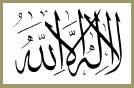
It is well known that the most important declaration is the essential truth that nothing deserves worship except Allah, Laa e-laa ha ill Allah. This sentence, known as Tahleel, is recited during prayers, on occasions of happiness and sadness {ft.1}, and even during the process of dying when possible.{ft.2} Certainly there is much that can be said [and has been said] about the Tahleel, Islam's unique creedal statement{ft.3}, however, it seems that there are some aspects of Islam's creed that need to be made publically known, for the benefit of Muslims and Non-Muslims alike.


Justice

It is obvious that the Quranic account of the mission of the Prophets have more social implications, and is not limited to theological arguments. Although many examples can be cited, the account of Moses and Aaron should be sufficient. For further details, we recommend reading the Qur'an [20:42-50].

Returning to the Tahleel, we are informed by the Qur'an:

The 'Shahaadah' of Allah is 'there is no deity except him' {Laa e laa ha illa Huwa}. As well as [being the declaration of] angels, and people of knowledge who stand for justice..[Q 3:19]


Here, Tauheed, or the oneness of God, is given as the basis or the foundation for God's dominion of the universe. There is no injustice from God, nor are there any random occurrences. It also shows us that those who uphold Tauheed have an interest in the preservation and cultivation of knowledge, technical ability, sciences and so forth. These people also have an interest in seeing the application of fair-play, preservationof the rights of others, in short, justice universally applied.

This aspect of Tauheed can also be discerned from the Hadeeth literature:

Whosoever of you sees an evil action, let him change it with his hand, and if he is not able to do so, then with his tongue, and if he is unable to do so, then with his heart, and this is the weakest of faith. [Reported by Muslim, Al-Nawawi's Forty Hadith, Ezzedinne Ibrahim, Denys Johnson Davies, page 110. Holy Koran publishing house, Beirut, 1979].


For those who uphold a conviction that God is one, fairness for all is a pillar of faith that will not be abandoned, one that must be translated into action when needed. Otherwise, our declarations of faith will be empty words, revealing only our hypocrisy.

Standing for justice [Qaa'iman Bil Qist] does not equate making rash, emotional decisions, nonetheless it should be in the minds of the Muwahhidoon [Those who believe in God's oneness].

Hast thou ever considered [the kind of man] who gives the lie to all moral law? Behold, it is this [kind of man] that thrusts the orphan away, and feels no urge to feed the needy. Woe the, unto those praying. Whose hearts are remote, those who want only to be seen and praised. And, withal, deny all assistance [to their fellow-man]. {Q 107:1-7, Muhammad Asad translation, The message of the Qur'an, 1980, Dar al andalus, Gibraltar.


Idolatry: Injustice to God and man

Some Muslim writers correctly assert that God has rights, just as humans do, and those rights should not be violated. Yet, even in that, it is also true that we cannot hurt God. The Qur'an presents a concept of the Divine that is strong, showing God as wise, independent, and powerful. In other words, our neglect of prayers does not harm him, it only harms ourselves. Allah says

I do not want from them any provision, nor do I want them to feed me. [Q 51:57]

We don't sustain Allah, he sustains us. We recite this fact daily in prayer with the line "Praise be to Allah, Nourisher of the universe" [Q 1:2].

To worship something other than God, an action known to Muslims as Shirk, is given in the Qur'an as the greatest crime imaginable [Q 31:13]. It is not because God needs our worship, nor is he hurt by our misplaced devotion{ft.4]. Shirk is in fact the foundation or basis by which other crimes are committed!

A policy of ethnic or religious genocide, in which one group of people see themselves as better or more deserving than the other wipe out the latter, or deny them rights, is a classic example of Shirk! Worship of one's prejudice and arrogance-shirk- led to the crime of genocide, such as in Rwanda, Bosnia and other places.

Theologically, seeing an individual as God-incarnate is also considered Shirk, mainly for two reasons;

[1] God is something greater than a human, actually a reality that can not be fully conceptualized [Q 42:11].

[2] The one viewed as "God in person' invariably commits crimes and abuse of both his followers and others.

Portraits of Jesus Christ [viewed by Christians as God incarnate and God's son] that display in homes, Churches and Bible printings worldwide as a Caucasian has the subtle effect of portraying Europeans as sharing Divinity. As a result of this, another trend has arisen in which Jesus is portrayed in Bible printings and films as Black!

Colonialism, Slavery, and many other forms of injustice can be traced back to Shirk!


Intercession

Many of us believe that at some point, personalities, be they alive or dead, will intercede with God on our behalf. Traditions have beec created to support this view, and the situation is now that almost every religious group worldwide accepts this doctrine in one form or another.

In the outset, it should be said that there is no harm in asking someone to pray for you. That, however, vastly differs from invoking a dead or absent personality. In any case, the Qur'an informs us that God's decisions are in his hands alone, therefore it makes more sense to invoke him alone.

Say: Intercession [Shafa'ah] is in the domain of Allah entirely {Jamee'an}. To him belongs the kingdom of the heavens and the earth, then to him you will return. [Q 39:44].


Acknowledgment of God's messengers constitute Shirk?


It has been asserted by many in recent years that the statement "Muhammad is the messenger of Allah" [Muhammad ar Rasool Allah] is idolatry. Insincere people make this statement, we are sometimes told. The supporters of this view quote the following verse as evidence;

When the hypocrites come to you [O Muhammad] they say: We testify that you are indeed Allah's messenger...[Q 63:1]

However, the verse goes on to say that "And Allah knows that you are truly his messenger." If Muhammad, upon whom be peace and blessings, was a false messenger, then the theory would hold some merit. However, the Qur'an shows us that he was a true prophet and messenger, so why would acknowledging a true fact be idolatry?

Moreover, the Qur'an tells us that God himself acknowledges that he sent Muhammad as his messenger, with the Qur'an.

However, Allah makes Shahaadah [Allahu Yash-hadu] as to what he has to you [O Muhammad], sent to you from his knowledge ['ilmihi]. And the angels [also declare this] [Yash-hadoon]. And Allah is sufficient as a witness. {Q 4:166}


Conclusion

Tauheed is very important, not just as some abstract notion, but in terms of seeing life correctly, our place in it right, and in terms of our own consciousness as humans. For God to assist us and accept our prayers, we should conceptualize him in the manner as given throughout the Qur'an, and also use our hands, our tongues, our money, our very selves, to give justice, both for us and others, regardless of their label, class or ethicity!

God does not die, is all kind and merciful. He hears the calls of those who call on him, so he should be invoked, rather than other figures. Nothing should divert us from Allah!

Shirk is not limited to theological error. It is the root of all evil. Racism, arrogance, murder, all can be traced back to Shirk!

Footnotes

[1] One will notice when living in various parts of the Muslim world that Laa elaha ill Allah is said at different times, depending on the particular culture.

[2] Abu Dawud 3/190.

[3] See http://shamsuddinwaheed.blogspot.com/2008/01/tauheed-understanding-divine-monotheism.html

[4] Some religions, such as Hinduism, have rituals which involve a devotee leaving rice as an offering to the deity.