Qur’an: a Foundation for Education and Diversity
The first words of revelation bestowed to the Prophet [PBUH] were “Iqraa” [“Read”]. Commentators, activists and educators spend a great deal of time expounding this phrase, as well as the statements following it in Soorah Al-‘Alaq. Our focus here is a bit different from our predecessors, in that we want to get a feeling of how the Qur’an impacted the Prophet.
Muhammad the man was an ummi Prophet. This phrase is generally understood as meaning “illiterate”. While we do accept this traditional understanding (because of the fact that in those days, especially in an Arabian context, very few people could read or write), another way of looking at this designation ummi is that he, Muhammad, was uneducated in religion and philosophy as well as untrained in the sciences and fields of knowledge that would raise a society. Yet, here he is in a cave, commanded to “Read, in the name of Your Lord who has created” [Q 96:1]. This normal man is now in the process of personal elevation, growth beyond his immediate experiences and surroundings. A native of a desert environment that had all but isolated from the rest of the world is now commanded to examine, comprehend and interpret that same world.
Certainly, Muhammad, peace be upon him, was unique. He was Allah’s messenger, and the seal (last) of the Prophets. He was given a scripture over a twenty-three year period. The process of that revelation can provide Muslims with great lessons. Allah wants the believers to become a people who can appreciate diversity, who can be comfortable in all goodly settings, whose knowledge and understanding goes beyond one’s immediate social, economic and class experiences. Basically, to be a people who, as a whole, reach their intellectual and spiritual zenith.
Accepting Islam in its totality includes accepting knowledge/wisdom/guidance from any reliable source. Xenophobia is like a huge boulder which is blocking a cave exit, trapping its inhabitants to a dark, cold and lonely fate. Islam has been given to mankind to broaden perspectives, to create a worldview that can see and even appreciate the diversity in all things, benefitting from that. The Prophet’s audience, the collective Ummiyyeen, had that boulder removed, and went on to become the founders of many civilizations, creating countless blessings for all mankind. Let us do the same.
[Shamsuddin Waheed is Imam at Toledo Masjid Al-Islam, Toledo, Ohio. A writer and lecturer, he can be contacted via email at waheed79@yahoo.com. More of his writings can be found at shamsuddinwaheed.blogspot.com.]
Showing posts with label growth. Show all posts
Showing posts with label growth. Show all posts
Wednesday, November 2, 2011

Saturday, July 25, 2009
Ramadan Al-Mubaarak: thoughts on the fasting month
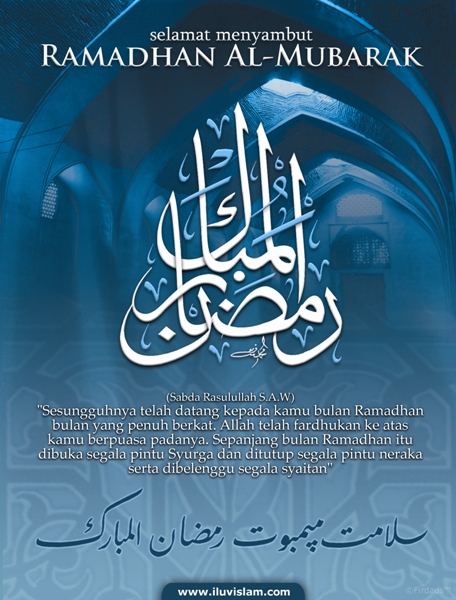
The above Arabic title stems from the traditional greeting "Blessed Ramadan" [Ramadan Mubaarak]. Certainly even the most non-observant Muslim finds the month of Ramadan to be one of great joy, laughter and family gatherings. Perhaps its cultural impact can be compared to the feelings Americans, even Non-Christians, have during the Thanksgiving and Christmas holidays.
We are always questioned by our colleagues on the type of fasting, the motivations behind it, and finally "How can you do it?". It is seen as an exercise in futility,unnecessary hardship and outright ridiculous by many people. It is my hope to share some useful information on this institution found in Islam.
Fasting
We abstain from food, drink and sexual contact during the daylight for a month-long period. This is an obligation on every Muslim, with exceptions for the ill, those who cannot survive without consuming something [such as diabetics], and a few others. The Qur'an gives the following command regarding the fast [called Siyaam in Arabic] as well as the reason behind its legislation;
O you who believe, fasting is ordained for you, as it was on those before you, so that perhaps you will become [more] God-respecting [La'allakoom Tattaqoon][2:183]
The focus is on Taqwaa, a word that is very hard to translate with just one or two English semi-equivalents. It is usually rendered as piety, however as a word, piety is very limiting. Taqwaa carries the meaning of respect, fear, duty, responsibilities, and caution.
Fasting is a very private form of worship, in the sense that a person can easily hide the fact he is not fasting, and just as equally hide the fact that he is fasting.
So, we see why the fasting has been ordained.
The traditional practices
In order to be able to function through the day, we are encouraged to have a meal before dawn, when the fasting officially starts. This breakfast is called Suhoor [Sehri in Urdu]. At sunset, when the fasting period ends, a snack of dates [or some other fruits and vegetables] precedes the dinner. Eating dates is not an obligation, but it has entered our practice on the basis of the Prophet Muhammad's manner of breaking the fast. The dinner itself is usually called Iftar.
As the Qur'an's first revelation to the Prophet [upon whom be peace] occurred in Ramadan , we also generally make it our business to read the entire Qur'an in the month. Besides that, people offer prayers more, and give more in charity.
Effect of fasting
One must understand that fasting in Ramadan is not for diet reasons, to follow some hype, rather the motivations are spiritual. Reading the Qur'an while fasting makes us re-examine our lives in light of what God instructs us. We are to avoid even those things we knowingly engage in, such as gossip, arguments, backbiting, immoral surroundings [that can be found in Television, Music etc..] lust and the like.
Fasting with consciousness makes the person a better human being. It also makes him spiritually stronger, which can influence the physical strength as well, even though the intake of food/drink has been limited. Muslim history is full of victories on the battlefield happening during that month.
That is what I want this year, to be able to gain from reading the Qur'an while fasting, to strengthen morals and get rid of any vices. To engage in an honest self-assessment. May Allah give us all the same. Ameen!
Subscribe to:
Posts (Atom)