Showing posts with label Taqwaa. Show all posts

Thursday, November 6, 2025

Conscientious Apparel: addressing some misconceptions on a Muslim's public appearance

The identity of a Muslim is primarily expressed in theological & ethical realms. The Muslim is one who believes and practices the five pillars, accepts the Qur'an and the final revealed scripture, whose behavior is recognized for general honestly. sobriety, and generosity. The above attributes of a Muslim are universally acknowledged, even by the enemies of Islam!  It is in this sense that Islam is truly a religion and a message that is for all mankind, at least those people who are striving to have God-centered lives.


Yet, when we say "Muslim", we have a certain mental image that comes up, and when that image does not always coincide with our assumptions, it generates reactions ranging from shock to outright insults! As of recently we have seen these reactions in abundance, to the extent that it is necessary to share the following information derived from Islamic sources that hopefully generate thought and a better appreciation for what we do have.


The purpose of clothing

یٰبَنِیۡۤ اٰدَمَ قَدۡ اَنۡزَلۡنَا عَلَیۡکُمۡ لِبَاسًا یُّوَارِیۡ سَوۡاٰتِکُمۡ وَرِیۡشًا ؕ وَلِبَاسُ التَّقۡوٰی ۙ ذٰلِکَ خَیۡرٌ ؕ ذٰلِکَ مِنۡ اٰیٰتِ اللّٰہِ لَعَلَّہُمۡ یَذَّکَّرُوۡنَ


"O Children of Adam! We have given you a raiment that covers your nakedness and is a source of (your) elegance and protection. Yet the raiment that guards against evils, that is the best (of robes). That is one of the commandments of Allah so that they may attain eminence." ( Q 7:26 Amatul Rahman Omar translation)


The two items that display the logic of wearing clothes is given in this text, items which are arguably undeniable. Clothing is created by use of local elements, be it cotton, wool etc, derived from animals or even from leaves. The natural elements (as well as synthetics such as polyester and nylon), with countless possibilities for designs, coloring, cuts, and the like.  Clothing provides necessary protection of the body from the weather elements, keeping us warm or cool. 


Thus, needs as based on the environment transforms into distinct styles and more broadly- cultural expression. Thus, the baseball cap, worn by baseball players for vision protection from sunlight evolves into a variety of colors, styles, and sizes, adorning the heads of countless in a variety of settings.  This is an example of the "elegance and protection" (ft.1) mentioned in the above Qur'anic text.


What should be covered in public?


For women, the Islamic texts are clear that the entire body should be covered, meaning not to be made into a display in public. The Qur'an (24:31) indicates that a headscarf was used by the Arabs of the Prophet's time, and the text itself states that the scarf be used to cover up the chest area (walyadribna bikhumuri-hinna 'ala juyuubihinn). Yet another place within the Qur'an asserts that the dress code for ladies has the purpose of identification and limiting harms, such as being subjected to improper harassment and the like (Q 33: 59).


The hadeeth of Asmaa articulates all of this in a summarized form, in which she asked the Prophet (Sall Allahu 'alayhi wa sallam) about what should be covered in public. He replies that everything except the face and hands (ft.2)  (Sunan Abu Dawud 4104).


I would like to return to the subject of the headscarf (commonly known as Hijaab). Q 24:31 is clear on a head covering being worn, but the emphasis is using it to cover up the breasts. A scarf need not be worn, any type of covering will do, so long as the goal of public modesty is established, with a greater emphasis on the well-known sensitive areas of the woman's body being covered, so as not to invite unwanted attention. Similarly, a Jilbaab, Abaya etc are not necessarily mandated, any clothing, in any style, is acceptable as long as the body is covered and not made into a display!


Men's clothing


While there are no texts to my knowledge from the Qur'an and hadeeth literature which speak on a man's clothing style, it is the long established norm among Muslims that men should cover up as well, at least having covered up the area between the navel and the knees. In practical terms, in Muslim societies, often the men and women are dressing alike-in that the body is covered with similar garments.


Cap


The tradition exists in majority of Muslim societies of men wearing a cap, the styles, colors etc varying from society to society. The norm ('urf) is so strong that some scholars of the past used to consider a person who violates this norm to be a flagrant transgressor (Faasiq) whose testimony in legal matters would not be acceptable. 


There is not text within the Qur'an or hadeeth that commands wearing a  cap, even within prayer, despite the cultures which has an opposite practice (ft.3). Nonetheless, because of the norm, particularly in African and Asian Muslim societies, it is recommended to maintain that tradition in that environment. In addition, in venues in which Islam/Muslims need to be represented, to display faith in Islamic theology and identity, the cap provides that function very well.


The beard


The Qur'an makes no mention of facial grooming, however, there are some texts on this in the hadeeth literature, one of which simply states "be different from the idolaters by growing the beard and trimming the mustache." It seems apparent from this narration (and other similar reports) that a need was felt by the Muslims to be distinguished from other communities. Without doubt the Prophets themselves had beards, and beards have long been seen as symbols of masculinity, honor and wisdom. Yet, we are also forced to admit that adorning one's face with a beard is no longer associated with the Prophets or even Islam. It is something that has become stylish, crossing religious and cultural boundaries. 


Our perspective is that, at most, the beard is a Sunnah, a highly emphasized Prophetic tradition, but does not reach the level of religious obligation (Fard).  The Shafi'ee school of jurisprudence, which included such luminaries as the great hadeeth scholar Imam An-Nawawi (d.1277) and the towering Imam Al-Ghazali ( d.1111) have held the view that shaving the beard, while not recommended, is not a forbidden action at all. 


Robe


The Muslim societies have various sorts of clothing that is now associated with religious identity. By "robe"we are mainly referencing the clothing in the Arab world known by names such as the Jalabiyyah, Jubbah or Thobe. Certainly the robe fulfills the Islamic requirements for  covering up in public, has elegance and is useful for the weather conditions present in the Middle East and North Africa (MENA). However, we must understand that  it is not necessarily an "Islamic dress". Many people argue that the robe is in fact the Sunnah, however in the interest of honesty that it is at best Sunnatul 'Aadah (the culture) and not  Sunnatul Hudaa (the Sunnah of religious guidance). The Prophet's enemies wore the same clothing as him, complete with turbans (used for shielding the face from the sun). 


In other words, the robe as a clothing was used by all peoples in the MENA region, and are technically religiously neutral, just as the baseball cap (devoid of any symbols) is a religiously neutral item.


                                                  The best dress is that of Taqwaa

                                                                وَلِبَاسُ ٱلتَّقْوَىٰ ذَٰلِكَ خَيْرٌۭ ۚ

The title of this section of the article is a more literal translation of the expression wa libaasut Taqwaa dhaalika khayr, found in Q 7:26 cited above. The overarching point is that when one has awareness of Allah, of responsibilities in this world, that is actually the best dress. It implies more than clothing. In essence, it implies that Muslims, readers of the Qur'an, are supposed to put on their best face in public. The qualities of intelligence, cleanliness, compassion, strength of character and a moral compass. 


Taqwaa is more than piety or even righteousness. It is awareness, and discernment. Bold, yet aware of surroundings. Determined, yet patient. Brave, yet smart.  This is a clothing (libaas) that is worn not only outside, but within the home. Not only on the body, but within the soul.  This clothing is unisex, necessary for both genders. This style of dress should be taught to our children, particularly in this age in which emotional instability and social anarchy are actually promoted by politicians and YOU-TUBE content creators without apology or regard to the long term consequences. 


Having Taqwaa limits our sins and our mistakes in judgement. It generates more safety and security. It brings forth stronger family values and places necessary boundaries. It allows us to see the big picture and delivers spiritual and mental cultivation. This is why the Qur'an asserts that the best outcome is experienced by those who truly have Taqwaa ( Q 7:128, 28:83)


Footnotes

(1) The term used in the aforementioned text is Reeshan. 


(2) A variant report adds "feet" to the items allowed to be seen on a woman in public. In a desert environment this makes sense.


(3) It is widely believed by Muslims in the Indian subcontinent that covering one's hair (for men) is a necessity, or at least highly recommended, during prayers in the mosque. This seems to reflect regional norms that are also found among some Hindus in their temples. Sikhs also have this custom when inside the Gurdwara. Most Jewish synagogues also require men to cover their heads. 


Monday, September 4, 2023

Demonstration of Taqwaa: some surprising examples in the Qur'an

 The theme of taqwaa is a consistent theme within the Qur'an, a fact that is apparent to even a cursory reader of the text. While we tend to understand this term as "piety" in a religious sense, it is often used in a variety of other senses, but what concerns us here is its rather mundane or secular application.


This brief post seeks to look at specific examples found in rather famous examples. We seek to generate contemplation within the reader, which, indeed, is one of the goals of scripture itself.


Taqwaa is shown in dealing with others:


Allah, as being the Caretaker of the universe, has no need of sustenance from any of his creatures. Indeed, Allah is not "fed" in any means. Some imagine that religious rituals are needed by God for actual sustenance, an idea that has been advanced not only by ancient philosophical tangents, but by popular culture as well. (ft.#1). The truth of the matter is that rituals such as the daily salaah (prayers) are actually for our benefit, in that they connect us to the Allah, as well as serving as a reminder of Divine principles, thus placing internal limits on the violation of those principles. (ft.#2).


The Qur'an says "O Humanity, have taqwaa of Your Caretaker, who has created you all from a single soul, created from it it's made, and has made from them both to emerge multitudes of men and women. Have taqwaa of Allah, through whom you seek (rights) as well as the (establishment of) family ties. Indeed, Allah is ever watchful over you." (Q 4:1)

So, we see here that taqwaa is having awareness of God's care for his creation, and awareness of his Omnipresence. Awareness is demonstrated by acting in a good, just way, with those others created by the same God. 


Taqwaa demonstrated by looking at the big picture.


While popular depictions of taqwaa is seen as individual piety, the Qur'an has given a somewhat different picture, a painting that only becomes visible through the lenses of contextual studies. 

" O you who have faith! Have proper taqwaa of Allah (Haqqa Tuqaahihi) and die not except as submissive to him (Wa Laa Tamuutunna illa wa antum Muslimoon)" (Q 3:102).

While the verse alone easily demonstrates its call towards looking at bigger picture priorities, the context demonstrates this in a thorough fashion.  If we start from Q 3:98, it shows the pitfalls that the people of scripture entered into, by denial and altering of the Divine message for sectarian or political reasons, that Muslims are to avoid that acknowledging that God has sent forth scriptures and prophets other than that received by the Muslims, that holding firm to the pure scripture and putting aside personal squabbles in order to strive in Allah's cause represents caring for the bigger picture ( see Q 3:98-109).


Seeing the bigger picture is also demonstrated by those who reject racism, sexism and destructive tribalism (Q 49:13). 


Taqwaa demonstrated by careful speech and actions.


Finally, the Qur'an says "O you who have faith! Have taqwaa of Allah and communicate clearly. He will rectify for you your actions, and forgive you your sins, and whomsoever obeys Allah and his Messenger, achieve a mighty achievement." (Q 33:70-71)

Here, we have that clear communication skills are demonstrative of proper taqwaa. Indeed, from historical as well as anecdotal evidence, we have seen how those inspired by Islam have taken it upon themselves to become better at communication skills! Malcolm X (El-Hajj Malik El-Shabazz) had copied by hand the entire English dictionary, improved his handwriting skills, while serving a prison sentence, and, despite very little formal education, went on not only to represent the Nation of Islam(NOI) in media, but in academic settings as well. His impact on American life is well-known. (ft.#3). 


Indeed, while working in the corrections system, I came to know an inmate who had accepted Islam shared that he had to work hard to rid himself of unhealthy attitudes, and that Islam had inspired him- someone serving a long prison term who had virtually no reading abilities, to teach himself how to read English, but also Arabic and Urdu languages!


This text is not limited to communication skills in the above senses. It is showing us that there should be no ambiguity in communication, that clarity is needed in order to avoid confusion, especially in dealing with other human beings.  Muhammad Asad points out in his comments the following "The expression Qawl Sadid signifies, literally " a saying that hits the mark" i.e. is truthful, relevant and to the point." ( The Message of the Qur'an, 1980, pg.652)


Another way of looking at the aforementioned text is that one's "speech" is not (simply to be) verbal, but rather by actions. Taqwaa guides the lips as well as the hands. If taqwaa guides those two, it results in God actually fixing one's situations and delivering forgiveness and success. 


It should be noted that these verses are traditionally recited in the wedding ceremony and are similarly often cited in the Friday prayer sermon (khutbah).  They are appropriate occasions for the reminders these verses contain. May Allah make us among those who have taqwaa. 


Footnotes

(1)  Greek mythology is filled with examples of literally "feeding" the objects of worship, and to a certain extent this still is done within Hinduism, in which rice offerings are left at the idol. Popular cultural references include the Science fiction TV program called Stargate SG-1, which depicted one alien race (known as the Go-a'uld) who had a parasitical relationship with their human worshipers, as well as another race (known as the ORI) who actually were sustained through the prayers of their followers!   

(2) The Qur'an says, for example, that the remembrance of God and prayers function as empowering the people of faith, as well as "forbidding immorality and repugnant actions" Q 29:45.

(3)        Countless books, documentaries, and popular films   show these facts regarding Malcolm X, in both his pre-NOI and Sunni Muslim life. I suggest reading his famous rendering The autobiography of Malcolm X as told to Alex Haley.                                                                                                                                               


Monday, May 25, 2020

Selections from Ramadan Reflections 2020

Note: During Ramadan, I shared thoughts on various topics, as well as answering various questions, on a daily basis via our YOUTUBE channel.  Below you will find selections from those videos. For the entire reflection series, go to Arifin Library . Also below you will find our 'Eid ul Fitr Khutbah, which occurs after Ramadan has concluded.


Day 1- Appearance of Guidance https://www.youtube.com/watch?v=bPY2tWO4w5o


Day 4-Taqwaa manifestations click here


Day 6- Justice and Taqwaa click here


Day 7- Self Care Click here

Day 10- Types of Speech Click here

Day 13 Toxic Friends and Family click here

Day 25 Understanding 'destiny' and Allama Iqbal click here

Day 30- Religious practices in the age of Coronavirus click here

Eid ul Fitr Khutbah - click here

(Note: For Eid service, the summary is as follows 0:30 Takbeerah chant . 27:02, Br Brent accepts Islam, shares his story. 29:25- Salaat ul 'Eid (Eid prayer). 37:34, Khutbat ul 'Eid (sermon). All of our Friday services since the emergence of the coronavirus are archived, available for viewing, at our mosque Facebook page Click here . Your support is greatly needed and appreciated, and is best achieved by donating at our secure website The Masjid Ibrahim donation page . All donations are tax deductible. )

Wednesday, April 15, 2020

Pre-Ramadan Reflections in the age of Corona Virus

Ramadan 1441/2020  will be the most difficult period of fasting we have ever experienced. Almost globally, the normal communal activities, such as evening prayers (Salaat At Taraweeh), meals and visits to the mosques, have been banned by government decree, meant to decrease the spread of the Corona Virus (#COVID-19).

The situation is seemingly so bad that there have been voices in the Muslim community that have suggested that the fast be abandoned this year. While this is- in my view- an extreme overreaction- the situation, in particular the  cultural or traditional aspects of the month that will have to be modified or abandoned out of necessity this year, does warrant us to take a look at what our priorities should be.


Fasting: A means to connect to the Almighty

یٰۤاَیُّہَا الَّذِیۡنَ اٰمَنُوۡا کُتِبَ عَلَیۡکُمُ الصِّیَامُ کَمَا کُتِبَ عَلَی الَّذِیۡنَ مِنۡ قَبۡلِکُمۡ لَعَلَّکُمۡ تَتَّقُوۡنَ

"O people of Secure commitment! Fasting is ordained on you, as it was on those before you, so that perhaps you will attain Taqwaa" ( Qur'an 2:185)


The above Quranic sentence is the core explanation of what fasting in Ramadan is about. It is about Taqwaa, that sense of reverence, awe of God. The cultural elements, such as the various foods served at dinner and mornings before dawn, presents and the like, all are certainly beneficial in their adding to the experience, however the goal is the attainment of Taqwaa.

Fasting is often called an invisible form of worship because it is one of the few actions which cannot be known precisely by anyone except the person and Allah. A person could fast, inside and outside of the month, without it being public knowledge, and conversely, break or disregard the fast in the privacy of his home.

If the primary goal is remembered, Ramadan won't be a burden this year.


The removal of distractions


The traditional observations, the details of which vary from place to place, will obviously not take place in their usual forms. Yet, there are things which will still be available which would distract us from the goals of the month. There are certain dramas, television shows/movies etc, which are released in the Muslim world during Ramadan, most of which have little or no spiritual content.

The fact that the majority of us have to work from our homes and be unable to attend dinners and communal activities can-in fact- force us to take a step back, to reexamine our priorities.

Taqwaa is developed mainly through efforts. Contemplation, prayer, reflection, study. Too many of us go through the month with all the financial, family and communal obligations- so much so that it drains us spiritually. THIS month will be different, God-willing. This month will be the time for Taqwaa to truly flourish.

There is a Hadeeth Qudsi (Sacred tradition) which summarizes this as God saying "The reward of fasting is ME". 


Actions we can do

I would suggest using Ramadan as an opportunity to reconnect with loved ones via the various communication platforms now available. Take a group of numbers each day, call or message them. Warmth, care and love are all positive emotions which can be found lacking when being unable to meet for dinners or for evening prayers.

There is a fear of social isolation because of the virus. Quarantines, social distancing guidelines, even being unable to shake hands (let alone hug) are truly heartbreaking, in particular for those who are elderly. We should be cognizant of this, and reach out as much as possible.

Reach out to those you have lost touch with. Let them know you care. You don't have to say those words, just reaching out will be sufficient.

Religious actions we can do

Taraweeh prayers can still be offered, just  offer them in your home. You can still read the Qur'an. Study it in your home. If you want to hear the entire Qur'an, recited by a talented Hafiz or Qari, there are countless YOUTUBE videos and Apps which are available. Indeed, on my television, I have at least three channels saved dedicated to the Qur'an (its Tarteel and Tafseer). I would also suggest Tahajjud prayers, observed late in the evenings. (#1)


Maintain a positive attitude. Have gratitude to Allah. Be thankful to be able to experience the month.

May Allah accept our prayer, fasting, and any good actions we are able to do. May He guide us, and protect us from those things which are detrimental to our health, in particular our spiritual health.

Endnote

[1] Salaat At Tahajjud, also known as Qiyam ul Layl ("Standing in the evening") was a prayer that was offered in the late hours of the night that was observed by Prophet Muhammad صلى الله عليه وسلم

It is observed in precisely the same manner as Salaat At Taraweeh, leading some to conclude that it in fact the same prayer, that Taraweeh is simply another name given for Tahajjud to be observed in communal fashion during the fasting month. 

It is universally acknowledged that Tahajjud can be offered year round. Whatever one's views, both opinions recognize the value of praying at night.


Friday, June 21, 2019

Imaan: The Bigger Picture In Troubled Times {Friday Khutbah}

Note: Below is an edited version of our Friday Khutbah 6/21/19 at Masjid Ibrahim, Las Vegas, Nevada. The opening Hamd ( expressions of praise for Allah) as well as expressions of peace for the Prophets have been omitted here for space reasons.


Amana Ar Rasool- more than a statement of creed

The Qur'an contains a summary of that which the Prophet teaches. It reads "The Messenger ( Muhammad) believes in what has been sent forth to him from his Lord, as does those who have faith. All of them believe in Allah, HIS angels, HIS Scriptures, HIS messengers.." ( Q 2:286)

اٰمَنَ الرَّسُوۡلُ بِمَاۤ اُنۡزِلَ اِلَیۡہِ مِنۡ رَّبِّہٖ وَ الۡمُؤۡمِنُوۡنَ ؕ کُلٌّ اٰمَنَ بِاللّٰہِ وَ مَلٰٓئِکَتِہٖ وَ کُتُبِہٖ وَ رُسُلِہٖ

While we do view this as a summary of belief, this verse also contains an acknowledgement that Allah is involved in the affairs of humanity. Beginning with belief in God, it then says "HIS angels".

"Angels" (Malaa-ikah) are given power by Allah to act in the affairs of man. Indeed, the meaning of "being given power" is present in both Arabic and Hebrew. They act according to the Divine Order ( Q 66:6).

Allah Almighty sent forth scriptures- HIS scriptures- texts that help man to function with Taqwaa and morals. Allah backs this up process further by sending forth of messengers- HIS messengers (Rusulihi).

These items ( angels, scriptures, messengers) point to the fact that Allah is present, involved. His hand reaches, pushes and points to that which He wills.

"His Throne ( i.e. dominion/knowledge) encompasses the Heavens and the Earth.." ( Q 2:256)

 وَسِعَ کُرۡسِیُّہُ السَّمٰوٰتِ وَ الۡاَرۡضَ ۚ

How does this relate to current events?

It is a reasonable question to ask the purpose behind this seemingly theoretical  talk in light of the things which are haunting the Muslim Ummah and the wider world in general, such as concerns over President Trump, Iran, Syria, Egypt, China, Mali, and other such places.

In fact, we are not talking about these places and events, but we are also talking about YOUR OWN personal struggles, your own quest for happiness, success and security. We
are likewise talking about your own moments of joy and pain.

The global issues are very important examples of why Imaan (faith) is vital. We keep in mind that the Qur'an repeatedly instructs to exercise Taqwaa to the best of our capacity ( Q 64:16 among other places), which means that while we work according to wise planning, intelligence and ability to address those things, as we do address our own issues in our own lives, we keep in mind that Allah's hand is still present.

"Do you not know that to Allah belongs the dominion of the Heavens and the Earth, and that other than Him you have none to give you protection, nor any to give you victory." ( Q 2:107)

 اَلَمۡ تَعۡلَمۡ اَنَّ اللّٰہَ لَہٗ مُلۡکُ السَّمٰوٰتِ وَ الۡاَرۡضِ ؕ وَ مَا لَکُمۡ مِّنۡ دُوۡنِ اللّٰہِ مِنۡ وَّلِیٍّ وَّ لَا نَصِیۡرٍ

"And Allah encompasses (even ) those who reject faith." ( Q 2:19)
 وَ اللّٰہُ مُحِیۡطٌۢ بِالۡکٰفِرِیۡنَ

"They (the opposition) plot, and Allah (likewise) plots, and Allah is the best of those who plot." ( Q 8:30)

وَ یَمۡکُرُوۡنَ وَ یَمۡکُرُ اللّٰہُ ؕ وَ اللّٰہُ خَیۡرُ الۡمٰکِرِیۡنَ


Prophet Muhammad: The Exemplar of faith

The religion of Islam has not only a Scripture, it also has a Prophet who exemplifies that scripture. The Qur'an says "Indeed, in the Messenger of God you have a goodly model, for any who has hope in Allah, the final day, and who contemplate upon Allah in abundance" ( Q 33:21)

لَقَدۡ کَانَ لَکُمۡ فِیۡ رَسُوۡلِ اللّٰہِ اُسۡوَۃٌ حَسَنَۃٌ لِّمَنۡ کَانَ یَرۡجُوا اللّٰہَ وَ الۡیَوۡمَ الۡاٰخِرَ وَ ذَکَرَ اللّٰہَ کَثِیۡرًا

All the Prophets certainly have the above-mentioned characteristics, however Muhammad is emphasized because he not only faced opposition and persecution (which obviously Prophets in general would face, peace be upon them all) but he likewise faced the same normal struggles of life that are experienced by other human beings, such as domestic life, financial worries and such. This is why Allah commands his Prophet "Say: ( O Muhammad!) I am a human similar to yourselves." (Q 18:110). Thus he functions as a practical and relatable example.

Keep faith in the overall plan of God. for it is HE who created you and created all. Be grateful for what Allah has given you, observe HIS blessings in your own life and in the lives of those around you.

Make plans, both political and personal, have good intentions, be intelligent and act according to the overall Maslaha (public health), but still keep faith in the One who is above all.


Thursday, December 11, 2014

Selected prayers [Du'aa] from the Qur'an and Hadeeth: Text, translation, and spiritual reflections

Most of us have favorite or preferred things, and that includes Soorahs from the Qur'an. Here, I want to share some du'as that are among my favorite, that I make often.

رَبَّنَا آتِنَا فِي الدُّنْيَا حَسَنَةً وَفِي الآخِرَةِ حَسَنَةً وَقِنَا عَذَابَ النَّارِ

Our Rabb! Bestow on us the good of this life, the good of the hereafter, and protect us from the punishment of the fire. Q 2:201

This Du'a is a demonstration of the balance we are to have in life. Some people are fixated on the hereafter, wanting to attain heaven to the point of neglecting any connection or responsibilities in this world. That particular trend is itself addressed elsewhere in the Qur'an. A clear example is " And seek with that Allah has given you the home of the hereafter, yet do not forget your portion of the worldly life[dunya].." [Q 28:77]. 

Practicing Muslims will recall that this supplication is oft recited during the Jumu'ah prayers. It is also recited when invoking Allah during Tawaaf [circuling the Ka'bah] at Hajj.

The Qur'an and Hadeeth both deliver to us definitions as to what constitutes what we should view as good or a blessing. Meaning, what exactly should we seek. It can be argued that Al-Faatihah itself tells us what we should seek, but for the moment let us refer to a supplication that the Messenger of Allah [Muhammad, upon whom be peace and blessings] would make atleast twice daily . [Ft.#1]

"O Allah, I ask of you [1] Useful knowledge [2] A provision that is lawful and wholesome [Rizqan Halaalal Tayyiban] [3] Deeds that  are acceptable [to you, O Allah], by your mercy, O You who are the Most merciful of those who bestow mercy."

It's the second part of the above supplication we are concerned with here, although the whole of the Prophet's Du'a is worth examination. We are to seek that which is wholesome, that which will bring elements that will add to happiness and security. It's not enough to have a job, we are to want jobs that involve that which is lawful in God's sight. It's that job, that activity in this life that also counts for what we are to get in the next life. We abandon neither Dunya nor Aakhirah. We seek both. 

This is illustrated in the next supplication, which is another personal favorite. 


رَبَّنَا هَبْ لَنَا مِنْ أَزْوَاجِنَا وَذُرِّيَّاتِنَا قُرَّةَ أَعْيُنٍ وَاجْعَلْنَا لِلْمُتَّقِينَ إِمَامًا

Our Lord, bestow on us wives and children which will comfort our eyes, and make us leaders for those who have reverence for you. [Q 25:74]
A part of life that's very important is the family life. Men want women and women want men, and the family that comes forth from such relationships, but they are to seek that which will be true joy in life. I emphasis this here because we live in times when family ties are widely broken. The end of the above Du'a is that that family unit be examples in Taqwaa. Parents are to teach their children and the children are to listen to them. That teaching comes in words, but most importantly in actions and attitudes. [ft.2]

 رَبَّنَا لاَ تُزِغْ قُلُوبَنَا بَعْدَ إِذْ هَدَيْتَنَا وَهَبْ لَنَا مِن لَّدُنكَ رَحْمَةً إِنَّكَ أَنتَ الْوَهَّابُ
 رَبَّنَا إِنَّكَ جَامِعُ النَّاسِ لِيَوْمٍ لاَّ رَيْبَ فِيهِ إِنَّ اللّهَ لاَ يُخْلِفُ الْمِيعَادَ

Our Lord, do not make our hearts deviate after having been guided, bestow on us, from you, mercy, Verily,you are the bestower. Our Lord, Indeed you are the one who will gather all people on a day in which there is no doubt. Verily, Allah does not fail in his promise. [Q 3:8-9]

In the Qur'an these supplications are side by side. Guidance is truly there when we are cognizant of Qiyaamah, that period when all will publicly stand before God in facing judgement. We are reminded of this daily when we recite Al-Faatihah in our prayers. The last sentence of the last verse above in Arabic is Inn Allaha Laa Yukhliful Mee'aad. It's a powerful sentiment in Arabic, hard to convey well in translation, so I will just explain the word "Laa". In daily language, it simply means "No". However, in Arabic we have many particles of negation, the "Laa" is a continuous negation. Thus, we have here, simply put, that Allah has never and will never break or abandon his promise. He says clearly that Qiyaamah will come. He says clearly that judgement day will come. Not as an allegory, but as a real event in history. So, we prepare for that by praying, that invoking and seeking God, and striving to live in an ethical and moral fashion.

Say: verily, my prayer, devotional acts, my life and death are all for Allah, the Lord of the Universe [Q 6: 162]


This appears in a rather beautiful section of the Qur'an, but we are focused on this part of the supplication. This sentence is the summary of the Deeni message, that our existence be served in the best of causes. This does not mean one becomes a saint or a monk, but it does mean having this awareness of God that is so profound that it develops a person into a Muttaqi personality. It should be noted that this Du'a is, for many people, part of the opening texts recited in the beginning of Salaah [i.e. the Istiftaah] and is said to be from the Prophet's own practice. 


اللَّهُمَّ أَنْتَ رَبِّي لّا إِلَهَ إِلَّا أَنْتَ


خَلَقْتَنِي وَأَنَا عَبْدُكَ،


وَأَنَا عَلَى عَهْدِكَ وَوَعْدِكَ مَا اسْتَطَعْتَ،


أَعُوذُ بِكَ مِنْ شَرِّ مَا صَنَعْتَ،


أَبُوءُ لَكَ بِنِعْمَتِكَ


  .عَلَيَّ، وَأَبُوءُ بِذَنْبِي فَاغْفِر لِي فَإِنَّهُ لَا يَغْفِرُ  الذُّنُوبَ إِلَّا أَنْتَ”


 This is popularly known as the master of prayers said to seek forgiveness, or Sayyidul Istighfaar. The Prophet himself   صلى الله عليه وسلم
 taught this supplication, according to Saheeh Al-Bukhari [75:318] . It's translation is:


O Allah, you are my Lord, none deserves worship except you. You created me, and I am your servant, faithful to my promises and covenant to you as much as to my capacity. I seek refuge with you from all the evil I have done, I acknowledge all the blessings you have bestowed on me, and seek forgiveness from your for my sin, as none can forgive my sins except you."

What I love about this du'a is that in it you say, to God "I am faithful as much as i can". Meaning, the supplicant is not perfect. He or she does the best they can. When one seeks forgiveness from Allah, that person is also engaging in an attempt at self-forgiveness, so the Prophet's words that make this Du'a are also instructive, in a way, saying "calm down, everything is going to be fine."

Self-forgiveness is often harder to obtain than Divine forgiveness, so making this supplication often can convey to the human being that fact and, consequently, allow that person to get out of depression and self-loathing.

Footnotes

[1] The Prophet Muhammad's practice was to recite this supplication at Fajr [dawn] and Maghrib [sunset] time, the traditional beginning and end of the workday. 

[2] Here I acknowledge Imam Farooq AbouelZahab, who, in a recent lecture at our mosque, pointed out the context of this supplication. By going to 25:63, we see that humbleness is the beginning characteristic needed for a believer, along with other ethics mentioned all the way till verse 74. Meaning, those prerequisites are needed before that Du'a can be answered in a positive way. 


Wednesday, November 4, 2009

Enhancement: the goal of Islam

"The best of you in [the days of] Islam is also the best of you in the days of ignorance" [Hadeeth, related in Bukhari, Al Adab al Mufrad 7: 71:129]


There is a great emphasis on change in today's world. It's a powerful word that everyone uses. The winning slogan in [then] Presidential candidate Barack Obama's campaign was his assertion "Don't tell me we can't change."

For those who have a distrust of Islam and Muslims, change is something to fear. They assert that when people accept Islam, they "change" into candidates for violence. At the very least, when dietary practices, dress and even names are altered by Muslim converts, these folks express fears even about those changes. I can recall reading online a statement that all who accept Islam freely "must have mental problems."

Muslim writers and leaders often adopt quite the opposite approach. They are quick to say "Actions must change." This or that "must change"!

Certainly all of this is in the eye of the beholder. We hope to examine a bit the foundation of Islamic practice, as found in four of the five pillars [ the first pillar will not be examined in this post, however we do recommend reading Shamsuddinwaheed.blogspot.com/2008/10/only-one-god-forgotten-aspects-of.html]

The best of you in Islam was also the best during the period without Islam

The Hadeeth quoted at the beginning of this post shows us that Islam is not [by necessity, anyways] about change. It is about enhancement. Its distinguishing characteristics are the pillars of Islamic practice, and it will be seen that all of them serve to emphasis- in some fashion or another- various morals, ethics and practical benefit, they are not without meaning.


Salaah
Offered a minimum of five times daily [dawn, noon, mid-afternoon, sunset and evening], it is described by the Qur'an itself as having the ability to "restrain from hateful, shameful activity" [Q 29:45]. Apparently, a person who offers the Salaah with full awareness and consciousness will be less likely to enter into activities that are illicit, immoral or otherwise harmful. There is no coercion involved here. No fear of the police or of vigilantes. The person's awareness of God is enhanced by connecting with the Divine reality by the method of Salaah, a connection or awareness not easily dismissed or forgotten. In addition to this, there are some other benefits as well;

[A] Discipline: Salaah is to be observed at stated times, if offered at other times, it is considered "late" and not having the same merit or blessing as when performed at the stated times. If a Muslim can have the discipline to offer prayers five times daily, which also involves physical preparations [i.e. being in a clean state and making Wudoo' [ablution] beforehand], then he or she can have the discipline for any secular pursuit in life as well. A Muslim conscious of praying "on time" will also be "on time" for work, completing study/work tasks in a timely manner.

[B] Education: In Salaah, we mainly recite the Qur'an. This is very powerful, especially in congregation [Jamaa'ah][ft.1], when the prayer leader [Imam] recites texts that may be unfamiliar to the ones praying behind him. The Qur'an speaks to many subjects, and actually integrates seemingly unrelated subjects, so the prayers act as a sort of learning session, making the Musalli [the one praying] learn, become more well rounded. This is especially true of the Taraweeh prayers, offered in the evenings during Ramadan, wherein the entire Qur'an is often recited.[ft.2]

[C] Feeling of brotherhood

Much like the Hajj, Salaah is an equalizer. Rich and poor, black and White, all standing shoulder to shoulder, performing the same actions, reciting the same texts, the same rituals in the same language. In fact, there are several narrations in the Hadeeth literature which has the Prophet Muhammad instructing that there should be no gap between the praying people, because Satan can take advantage of that. Meaning, it's something that brings people close, whereas Satan seeks to divide.

Zakaah


The spiritual an societal benefits of paying 2 1/2% of one's wealth are obvious.

The offerings given for the sake of God are [meant] only for the poor and the needy, and those who are in charge thereof, and those whose hearts are to be won over, and for the freeing of human beings from bondage, and [for] those who are over burdened with debts, and [for every struggle] in God's cause, and [for] the wayfarer: [this is] an ordinance from God - and God is all-knowing, wise.[ Q 9:60, Muhammad Asad translation]


In an Islamic society, this can be collected as a tax and distributed according to he guidelines of the above Qur'anic text. In a Non-Muslim society, the Zakaah is usually given to Mosques or organizations who then distribute it according to the guidelines of the above verse. I believe it's especially meaningful to pay Zakaat while living in a Non-Muslim environment, because it makes the Muslim think, contemplate on who and what is most deserving of these funds.

Zakaah has the meaning of purification. Islam teaches that all personal wealth, even when legally and morally acquired, has a societal due. Hoarding is something not looked on favorably in the spiritual realm. The Bible reports Jesus, upon whom be peace, as saying
Sell your posessions and give to the poor…For where your treasure is, there your heart will be also.“ Luke 12:22-34.


The distribution of Zakaah goes a long way in combating starvation, famine and the like. In addition to this, Zakaah funds can be used to address societal needs as well, such as education. Resources dedicated to this purpose are generally given the name Sadaqah Jareeyah [perpetual charity].

Funds that exceed the minimum requirements, called Sadaqah, are also given during times not generally considered. The Qur'an gives a "remedy" to personal transgressions by engaging one's wealth in Sadaqah. Below is a verse speaking about Dhihaar, a divorce practice observed by the Pre-Islamic Arabs in which a woman was denied both marital rights as well as the right to seek another marriage, leaving her in a limbo. Now, the Qur'an outlawed this practice, and gives the following guidelines to those Muslims who had done this.

And those [men] who pronounced Dhihaar to their wives and recant their declaration, they must [A] Free a captive before touching each other. This is what you are admonished to do, and Allah is aware of your actions. So, those who do not find [the means to free a captive] should [B] Fast two months before touching each other. Those unable to do that should [C] feed sixty poor people [Sitteena Miskeena]..."{ Q 58:3-4}


Thus, Islam joins personal salvation with societal development and assistance.

Siyaam-Fasting

The Qur'an [2:183-185] tells Muslims to fast in the daylight hours of the lunar month of Ramadan. Fasting encourages us to be more conscious of the struggles others face to even eat once a day, thus, encouraging us to be charitable and distribute food to the needy.

Fasting is also a discipline building exercise. It should teach us to give up excess waste, junk food, cigarettes, vain talk, and strengthen personal morals. All of this and more can be found in the Quranic statement regarding the purpose of fasting, given in the words La'allakum Tattaqoon [So that perhaps you will gain Taqwa. Q 2:185]. The word La'alla shows us that there is a possibility of failure in accomplishing this goal, which is why we are to fast again and again. The Qur'an mandates the Ramadan fast, but we can also engage in voluntary fasting, to build up our morals, and above all the main thrust of Taqwa, to become closer to God.


Hajj


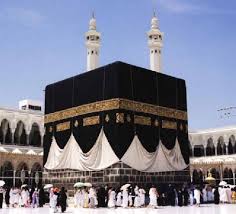
This is the last, and arguably a conditional pillar of Islamic practice, in the sense that one is obligated to make the pilgrimage to the site of the Ka'bah, built by Abraham and his son for the purpose of worshiping God, when financial and physical means are available. The Ka'bah is located in Makkah, in the Kingdom of Saudi Arabia.

During Hajj, we are once again made equals. The White seamless wraps, called the Ihram, does not allow that one's financial or education status be recognized. The King and the pauper both endure the same struggles, performing the same rituals, and each learning something, be it about others and their needs, or of a personal nature, that they were suppose to learn. This is why we have a tradition in Islam, attributed to no greater a figure than the Prophet Muhammad himself, upon whom be peace and blessings, that a successful Hajj [pilgrimage] wipes out prior sins, a person is renewed, pure as if a new born baby.

A recent study shows that returning pilgrims are 22% more likely to see Non-Muslims as equals, twice as likely to condemn terrorism, and 8% more likely to hope their daughters would adopt professional careers. [ "Muslim pilgrimage; a journey towards Tolerance?" Think; the magazine of Case Western Reserve University, Fall/Winter 2009 edition, page 18]

Conclusion

The foundation of Islamic practice is one that places emphasis on personal development, enlightenment, charity, sobriety and every other good characteristic. Islam is wrongly associated with violence and criminal activity. The recent death of a Detroit Imam, Luqman Abdullah, and the arrest of several of his supporters has once again brought the idea that Islam and criminality are linked to the public. One charge alleges that Abdullah gave legitimacy to theft, on the grounds that as long as they prayed and the thefts "benefits Islam", it was legitimate. Given the public works and reputation of the deceased Abdullah, the charges are very suspect, but nonetheless in terms of what Islam teaches, it's pillars hold up people's hearts and minds to always be conscious of Allah, of one's personal responsibilities and societal responsibilities.

Islam is a tool from God that can enlighten all who wish it, who actively seek it. This does not mean we will become monks, nor does it require that we give up enjoyment in life or comforts. It simply means that we train, that we refine the goodness that is present in the hearts of all humanity, utilize that goodness, apply it in both a systematic and random manner. Random acts of violence can become random acts of kindness.


Footnotes

[1] Congregational prayers are highly preferred, especially the obligatory ones, which can be done in a Mosque or with a group anywhere. One Hadeeth describes it as being "twenty-seven times greater than prayer alone." [ Bukhari, 10:30]

[2] The Shi'ah Muslims do not follow this practice, instead, their tradition places emphasis on individual prayer at night [in contrast to communal]. They do, however, gather together in Mosques to read the Qur'an together in the nights of the Ramadan month.

Saturday, July 25, 2009

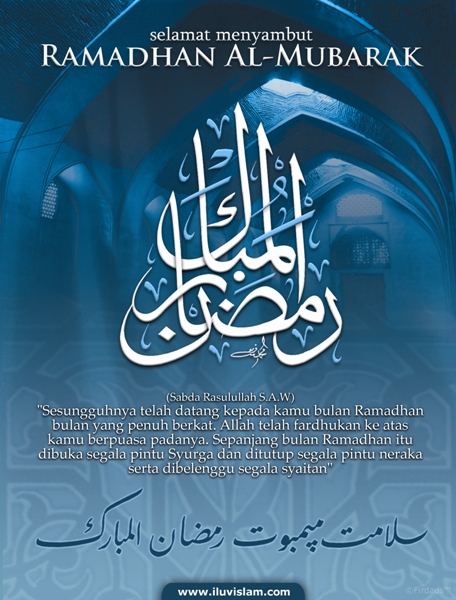
Ramadan Al-Mubaarak: thoughts on the fasting month


The above Arabic title stems from the traditional greeting "Blessed Ramadan" [Ramadan Mubaarak]. Certainly even the most non-observant Muslim finds the month of Ramadan to be one of great joy, laughter and family gatherings. Perhaps its cultural impact can be compared to the feelings Americans, even Non-Christians, have during the Thanksgiving and Christmas holidays.

We are always questioned by our colleagues on the type of fasting, the motivations behind it, and finally "How can you do it?". It is seen as an exercise in futility,unnecessary hardship and outright ridiculous by many people. It is my hope to share some useful information on this institution found in Islam.


Fasting

We abstain from food, drink and sexual contact during the daylight for a month-long period. This is an obligation on every Muslim, with exceptions for the ill, those who cannot survive without consuming something [such as diabetics], and a few others. The Qur'an gives the following command regarding the fast [called Siyaam in Arabic] as well as the reason behind its legislation;

O you who believe, fasting is ordained for you, as it was on those before you, so that perhaps you will become [more] God-respecting [La'allakoom Tattaqoon][2:183]


The focus is on Taqwaa, a word that is very hard to translate with just one or two English semi-equivalents. It is usually rendered as piety, however as a word, piety is very limiting. Taqwaa carries the meaning of respect, fear, duty, responsibilities, and caution.

Fasting is a very private form of worship, in the sense that a person can easily hide the fact he is not fasting, and just as equally hide the fact that he is fasting.

So, we see why the fasting has been ordained.


The traditional practices

In order to be able to function through the day, we are encouraged to have a meal before dawn, when the fasting officially starts. This breakfast is called Suhoor [Sehri in Urdu]. At sunset, when the fasting period ends, a snack of dates [or some other fruits and vegetables] precedes the dinner. Eating dates is not an obligation, but it has entered our practice on the basis of the Prophet Muhammad's manner of breaking the fast. The dinner itself is usually called Iftar.


As the Qur'an's first revelation to the Prophet [upon whom be peace] occurred in Ramadan , we also generally make it our business to read the entire Qur'an in the month. Besides that, people offer prayers more, and give more in charity.


Effect of fasting

One must understand that fasting in Ramadan is not for diet reasons, to follow some hype, rather the motivations are spiritual. Reading the Qur'an while fasting makes us re-examine our lives in light of what God instructs us. We are to avoid even those things we knowingly engage in, such as gossip, arguments, backbiting, immoral surroundings [that can be found in Television, Music etc..] lust and the like.

Fasting with consciousness makes the person a better human being. It also makes him spiritually stronger, which can influence the physical strength as well, even though the intake of food/drink has been limited. Muslim history is full of victories on the battlefield happening during that month.

That is what I want this year, to be able to gain from reading the Qur'an while fasting, to strengthen morals and get rid of any vices. To engage in an honest self-assessment. May Allah give us all the same. Ameen!