Showing posts with label Ramadan. Show all posts

Monday, April 12, 2021

Lecture notes: Building Character in Islam


(Introduction: The following is an edited  version of a presentation recently given on the subject Character Building in Islam.)

Creation


The Qur'an uses the passive  verb Khuliqa ("He was created") in connection to humanity, in carrying certain seemingly negative built-in aspects, such as" anxiety/impatience" (Q  70:19),"haste" (Q 21:37) and twice as "weak" (Q 4:28, 30:54).


In Arabic grammar, the presence of a passive verb would also require that the one who carried out the verb (faa'il) goes unmentioned. The doer would be assumed, or simply be unknown. Q 30:54 does not fit the above pattern, but rather the past tense verb, with the doer mentioned ("God is the one who created you all with some weakness.").


Some words of interest for this subject which stem from the same root include Akhlaaq ("character" or "manners") and "Akhlaq" ("Most appropriate" "Most natural"). 

The four seemingly negative tendencies mentioned above, "created" in us by God, are items that all of us have to deal with, and it is our dealing with those things which actually benefits us, as individuals as well as a species. Our dealing with those characteristics builds us up, it is on the job training, to allow us to do our job as stewards on the earth better. 

There are general behavioral codes which are globally accepted, i.e. don't kill, don't steal, etc, but those are external manifestations, yet the above-mentioned Quranic verses are speaking to internal conditions.


Ramadan and Character building


The month of Ramadan is the perfect opportunity to faithful people to engage in character building. Some examples of this are summarized below:

* Anxiety/impatience (Haloo'a). Listening to Quranic recitation, reading the text during the fasting period, helps to sooth anxiety.

*Hastiness. The desire for immediate satisfaction, as opposed to delayed gratification, is addressed by the discipline building of fasting, of holding back from the satisfaction of hunger and needs during the daylight hours of the month. 


* Weakness, be it physical or mental, is addressed through exercise, diet, and conscientious behavior. We often emphasis the Quranic prohibitions of gambling and alcohol. Those items are clearly forbidden in Islam, and is agreed upon in the Muslim community. There are other addictions which are worth asking about, such as tobacco, sugar, pornography, salt, and food addictions. Indeed, there are even those of us who are unable to function without a mobile phone!

Obviously the Qur'an and Sunnah don't directly speak on those items, the benefit vs.harms aspects are widely discussed, and on the above items Muslims reach different conclusions. 

We are not, for the purpose of this presentation, addressing their legal status in Islam, we are only saying that the Ramadan experience forces us to evaluate those items in our lives, to examine questions such as figuring out what is positive for us, and what is toxic for us, in light of Divine guidance.


The Prophet Muhammad (peace be upon him) is reported to have said that he has come to perfect morals. He does this by teaching "Scripture and Wisdom" (Q 62:2), which, when integrated into the mind and hearts of believers, gives them the tools needed for the perfections of morals.


Wednesday, April 15, 2020

Pre-Ramadan Reflections in the age of Corona Virus

Ramadan 1441/2020  will be the most difficult period of fasting we have ever experienced. Almost globally, the normal communal activities, such as evening prayers (Salaat At Taraweeh), meals and visits to the mosques, have been banned by government decree, meant to decrease the spread of the Corona Virus (#COVID-19).

The situation is seemingly so bad that there have been voices in the Muslim community that have suggested that the fast be abandoned this year. While this is- in my view- an extreme overreaction- the situation, in particular the  cultural or traditional aspects of the month that will have to be modified or abandoned out of necessity this year, does warrant us to take a look at what our priorities should be.


Fasting: A means to connect to the Almighty

یٰۤاَیُّہَا الَّذِیۡنَ اٰمَنُوۡا کُتِبَ عَلَیۡکُمُ الصِّیَامُ کَمَا کُتِبَ عَلَی الَّذِیۡنَ مِنۡ قَبۡلِکُمۡ لَعَلَّکُمۡ تَتَّقُوۡنَ

"O people of Secure commitment! Fasting is ordained on you, as it was on those before you, so that perhaps you will attain Taqwaa" ( Qur'an 2:185)


The above Quranic sentence is the core explanation of what fasting in Ramadan is about. It is about Taqwaa, that sense of reverence, awe of God. The cultural elements, such as the various foods served at dinner and mornings before dawn, presents and the like, all are certainly beneficial in their adding to the experience, however the goal is the attainment of Taqwaa.

Fasting is often called an invisible form of worship because it is one of the few actions which cannot be known precisely by anyone except the person and Allah. A person could fast, inside and outside of the month, without it being public knowledge, and conversely, break or disregard the fast in the privacy of his home.

If the primary goal is remembered, Ramadan won't be a burden this year.


The removal of distractions


The traditional observations, the details of which vary from place to place, will obviously not take place in their usual forms. Yet, there are things which will still be available which would distract us from the goals of the month. There are certain dramas, television shows/movies etc, which are released in the Muslim world during Ramadan, most of which have little or no spiritual content.

The fact that the majority of us have to work from our homes and be unable to attend dinners and communal activities can-in fact- force us to take a step back, to reexamine our priorities.

Taqwaa is developed mainly through efforts. Contemplation, prayer, reflection, study. Too many of us go through the month with all the financial, family and communal obligations- so much so that it drains us spiritually. THIS month will be different, God-willing. This month will be the time for Taqwaa to truly flourish.

There is a Hadeeth Qudsi (Sacred tradition) which summarizes this as God saying "The reward of fasting is ME". 


Actions we can do

I would suggest using Ramadan as an opportunity to reconnect with loved ones via the various communication platforms now available. Take a group of numbers each day, call or message them. Warmth, care and love are all positive emotions which can be found lacking when being unable to meet for dinners or for evening prayers.

There is a fear of social isolation because of the virus. Quarantines, social distancing guidelines, even being unable to shake hands (let alone hug) are truly heartbreaking, in particular for those who are elderly. We should be cognizant of this, and reach out as much as possible.

Reach out to those you have lost touch with. Let them know you care. You don't have to say those words, just reaching out will be sufficient.

Religious actions we can do

Taraweeh prayers can still be offered, just  offer them in your home. You can still read the Qur'an. Study it in your home. If you want to hear the entire Qur'an, recited by a talented Hafiz or Qari, there are countless YOUTUBE videos and Apps which are available. Indeed, on my television, I have at least three channels saved dedicated to the Qur'an (its Tarteel and Tafseer). I would also suggest Tahajjud prayers, observed late in the evenings. (#1)


Maintain a positive attitude. Have gratitude to Allah. Be thankful to be able to experience the month.

May Allah accept our prayer, fasting, and any good actions we are able to do. May He guide us, and protect us from those things which are detrimental to our health, in particular our spiritual health.

Endnote

[1] Salaat At Tahajjud, also known as Qiyam ul Layl ("Standing in the evening") was a prayer that was offered in the late hours of the night that was observed by Prophet Muhammad صلى الله عليه وسلم

It is observed in precisely the same manner as Salaat At Taraweeh, leading some to conclude that it in fact the same prayer, that Taraweeh is simply another name given for Tahajjud to be observed in communal fashion during the fasting month. 

It is universally acknowledged that Tahajjud can be offered year round. Whatever one's views, both opinions recognize the value of praying at night.


Saturday, April 4, 2020

Las Vegas Muslim Community Unites In Response to Covid-19 Virtual Town Hall

This past Thursday the Muslim community had a "Virtual Town Hall", the first of its kind, which brought together politicians, Imams, and medical professionals.


The Video description below has all the presentation details.

2:55- Congresswoman Susie Lee . Shares government initiatives meant to address the Covid-19 Virus and the fallback from it.

15:23 Dr.Asher Shahzad. Infectious diseases, shares commonly asked queries on the virus.

19:50 Imam Manzarul Islam- Fiqh of funerals, narrations on plaque in the early Islamic period.

31:55 Imam Fateen Seifullah- Experiences of funerals for victims, community safety.

43:24-Imam Shamsuddin Waheed- Islamic guidelines for addressing depression, anxiety, as well as how to observe Ramadan without a mosque.

1:03-Dr Faisal Suba- Mental Health, coping mechanisms during self-isolation.

1:16-1:58- Q and A session.

Virtual Town Hall YouTube video

In case YouTube is not accessible, you can also view this from Facebook.

Virtual Town Hall Las Vegas Zoom/Facebook link


Thursday, August 16, 2018

The attributes of a healthy Islamic community

Below is link to presentation during the month of Ramadan on the needed elements for a healthy Islamic community. Q and A follows.


Monday, July 11, 2016

Keeping the feeling of Ramadan alive

[ Note: The following is an edited version of a Friday Khutbah given July 8, 2016 at Toledo Masjid Al-Islam. The opening Hamd as well as much of the Arabic textual quotations have been omitted.]

Introduction

Ramadan, the month of fasting, worship and introspection, has left us. It was that month that we are told in the traditions that the demons [Shayateen] are locked away, even though we are forced to admit that their mouths were still active. The month of Ramadan has passed us, and now the Shayateen are out in full force. We are to ask ourselves "how can we  keep the spirit of Ramadan alive"?

Fasting outside of Ramadan


To answer this question, we have to refer to Allah's Messenger [ Sall Allahu 'alayhi wa sallam]. His normative practice was to fast six days of Shawwal, the month which comes after Ramadan [Sittu min shawwal]. Scholars differ as to whether those six days need to be observed consecutively  or by simply picking days out of the month, either way, we have here, from the Prophetic Sunnah, an option. He also used to be consistent in fasting twice a week [Mondays and Thursdays].

Fasting is an obvious way to keep the spirit of Ramadan alive. There are other things as well that help in these regards.


Taraweeh transformed into Tahajjud

In the evenings, we were praying Salaat At-Taraweeeh.  We can keep that alive by praying Salaat At-Tahajjud. The Tahajjud prayers are offered in the same basic format as Taraweeh, a fact that has led a minority of Muslim thinkers to the conclusion that they are in fact the same prayer, albeit with different names, Taraweeh  being simply an encouragement for the masses. Most importantly, Tahajjud is a prayer which is referred to in the Qur'an itself [ Q 17:79, 73:1-6].

Most of us have very tight schedules, so how can we pray Tahajjud when we struggle to offer the five obligatory prayers? My recommendation is to offer the Salaat at Tahajjud once a week, on the night that precedes your day off work.

The goal is Allah

Islam is a faith that has many checks and balances. The overall goal is Allah, but Allah has made us all to carry some responsibilities and the manner in which we carry out those responsibilities is also a form of worship, a means by which we seek to connect to the Almighty. Working to sustain our families and to have communal safety or correcting our wrong ideas or thinking, all of this are characteristics of faith.

Many of us were disturbed this Ramadan by news from all over the Islamic world and even from the events taking place in our society today. Even news from Madinah, the site of the Prophet's tomb itself, was that which caused disturbance in our hearts.  We may have had to be defensive, especially those among us who are well-known to the press and the masses. In addition, we have had to deal with internal political issues.  So it can be reasonably said that most of faced a difficult month. However, by recognizing this, we can atleast be in a better position to deal with it in future Ramadans.

Qur'an reading

Allah says "Indeed, We have sent it as a Pure recitation, so that perhaps you will use your mind." [Q 12:2].  He also says "Do they not deeply consider this Qur'an" [Afala Yatadabbarun ul Qur'aan]  [Q 4:82].

While it is true that Allah has began sending the Qur'an in Ramadan, we are not to restrict our reading of it simply during the fasting month. We are to make Tadabbur of it, consider its contents deeply and with thought, for our own growth.

Ramadan should have only intensified what we as Muslims are already doing. If we have not been strong in our practice, then we need to change that, because tomorrow is not guaranteed. 

We want to leave Ramadan stronger than when we entered into it. We want to be mature, competent, closer to God. May Allah strengthen our hearts upon this deen.


What does Submission entail?

Islam is not about massaging our egos, nor is it about personality worship. It is about surrendering all to the will of Allah [Soobhaanahu wa ta'alaaa]. Believers are to submit to that which has been decreed by God and his Prophet.

That 'submission' entails giving up false ideologies, destructive behavior, Baatil of every type. Look at Bilqees, the queen of Sheba. She is guided, by the efforts of Solomon [Sulaymaan 'alayhis salaam] and she asserts "Indeed, I have done wrong to my own soul, and I have submitted with Solomon to Allah, the Caretaker of the Universe." [Q 27:44] .
إِنِّي ظَلَمْتُ نَفْسِي وَأَسْلَمْتُ مَعَ سُلَيْمَانَ لِلَّهِ رَبِّ الْعَالَمِينَ
'Submission" to God is never negative. When you respond to Allah you become a better person. When  you get better in your submission, you become a better human being.

Submission often comes before understanding

Many people feel that they need to understand all of the wisdom of God before surrendering to him. There are radical feminists today who not only rebel against Hijaab, but  who take drastic measures to counter both Christian and Muslim morality. One such group of misguided young women went to a Russian Church and stripped naked, yelling slogans, during Church services a few years ago [ http://www.huffingtonpost.com/scott-macdougall/pussy-riot-russian-orthodox-church-its-complicated_b_3397674.html]. The same people did a similar move outside a mosque in Tunis, the Tunisian capital .

So such people, even if they have Muslim names, don;t see the value in God's moral system. There is a wisdom and reason[s] behind the commands in the Qur'an regarding dress. Even if we cannot see the wisdom, we still have to submit. After all, you don't tell your children why they can't swim to the deep end of the water or to not play with electricity. They have to obey, even without understanding.

Thus, we should always strive to obey God, even when we don't understand.

What is the wisdom of offering five daily prayers? Why not two, or twenty? Why pray a certain number of Rak'ahs for each Salaah? Just because we don't always know, that doesn't mean we are not to obey. Believers hear and obey Allah.

So let us be believers, who hear and obey Allah [SWT].


Saturday, June 25, 2016

Forgiveness of Ramadan: Reflections on the second part of the fasting month


[Note: The following is an edited version of the Friday Khutbah at Toledo Masjid Al-Islam on July 17th, 2016 at Toledo Masjid Al-Islam. The opening Hamd has been omitted.]

Ramadan quickly ending

As hard as it is to imagine, we are nearly half-way finished with Ramadan. There is a hadeeth of the Prophet, in which he divides the month into three parts, each part consisting of ten days. The first ten days are mercy, the second forgiveness, and the third emancipation from Hell-fire. The initial entry into Ramadan itself, for a believer, is in itself a mercy from God. The second part [forgiveness] is where we want to focus. All religions teach their adherents to seek out Allah's forgiveness, and indeed, the Qur'an and the Sunnah are filled with such pleas. Another approach to take in this regards  is ourselves being forgiving towards each other.

This is also found throughout the Qur'an, Ahadeeth, and the teachings of other faith traditions. Thus, while Ramadan is certainly a personal journey, it is experienced in a wide community of fellow travelers. The travelers all share a bus, a train or an airplane, but upon leaving that mode of transport will go to different places and varied interests.

Forgiveness of others is important because holding onto anger, bitterness and resentfulness can be quite damaging. Most importantly, these things can become ever-consuming and limits spiritual growth, even if knowledge is present.

Look at the Prophet Muhammad, Sall Allahu 'alayhi wa sallam. He entered Makkah, the enemy capital, after years of persecution, war, slander, assassination attempts and the murder of his family members and followers. One would imagine that he would at least have some individuals executed. However, he declared an amnesty, one which even extended to those responsible for the death and mutilation of his uncle, Hamza. The Prophet did not hold on to that bitterness.

How can we apply this Sunnah today? It's easy to apply the Sunnah associated with things such as dress and beard, and even the Sunan associated with worship, but how can we repeat the actions of the Prophet here? By avoiding being overly judgemental, critical and argumentative. Be more accepting, forgiving and tolerant.

Self-Forgiveness

Another aspect worth exploring is self-forgiveness. We can be very hard on ourselves. Well, we all have baggage in life, and the past cannot be changed.  We can only hope to do better in the future.

Many of us take a very wrong approach. We declare ourselves absolved of sins and dedicate ourselves to be judges over other people's sins and issues. Yet we have to look at the Prophet's statement. He says : "Among the pleasant aspects of Islam is to leave that which has no meaning for him.


This is shorthand for the American expression "mind your own business". This is not simply for protecting an individual's right to privacy, even though we admit that such teaching is found throughout the Qur'an and Sunnah [ Soorat an Noor and Soorat al Hujuraat for example] , it is a teaching useful for our own spiritual state. We need to address our own issues and conditions. May this month be a period wherein we can accomplish that.

Demons are locked away yet their mouths are still at work

The demons [Shayateen], we are told, are locked up in the month of Ramadan.  While it is understood that their bodies are locked up, yet their voices are still heard.  Indeed, Allah says in the Qur'an that the Kuffar seek to blow out God's light with their mouths.

So this Ramadan, we have to recognize that there are voices out there who seek to call us, distract us away from Allah, from self-reflection and improvement. They want us to be stagnant, weak and always on the defensive. The strong among us will only be slightly affected by these voices. There are those among us who are affected in a great way by these voices, and these are the weak among us. If we are affected, we have to ask why, we have to ask where our weaknesses are. Ramadan should be the time when we are asking these tough questions. We need more prayer, more reflection [Tadabbur] on the Qur'anic verses. We need to be serious in finding the spiritual truths that are relevant to us, and learn to act upon those truths, as taught by the Prophet [peace and blessings be upon him]


Speaking without knowledge

Many people today speak on subjects without having even an elementary knowledge of that subject. Among them are the majority of our media pundits and politicians. Speaking without knowledge is very dangerous. Thus, the Qur'an repeatedly says "And do not speak about Allah what you do not know" as well as "So ask the people of knowledge if you don't know."


If we really don't know, there is no shame in being silent or asking those who do have information on that subject. We live in a culture that asserts that all opinions are equal and valued, but this is simply a Cultural lie!

We cannot take scientific opinions from a factory worker, simply because they have not studied or mastered this branch of knowledge. Common sense would tell us that we would trust a scientist when teaching on his field, rather than someone who has not taken the time to even a minimum of information. Let this Ramadan be a time of the removal of all self-delusions, when we can become, by hard work, a people that deserve Allah's paradise.

Thursday, July 30, 2015

Eid ul Fitr Video

Toledo, Ohio had its first United 'Eid prayer service. Below is a video of the program.

[1] Minute 1:00- 3:00 Adam Smidi opening remarks.


[2] Minute 3- 5:45, Imam Farooq welcome.


[3] 5:45-12:00 Eid prayer led by Shaikh Ahmad Abou Alsayf. Notice his beautiful recitation of the Qur'an, from Soorah Al-Faatihah, Al A'laa, and Al Ghaashiyah.

[4]12:00-27:00 Eid Khutbah by Imam S.Waheed

[5] 27:00-35:00, Closing remarks and supplication by Shaikh Ibrahim.

[6] 35:00-39:00, Greetings from Toledo Mayor Paula Hudson and Mayoral candidate Sandy Collins.


Monday, June 30, 2014

Newspaper clipping: Ramadan


Month-long observance of Ramadan starts today

BY TK BARGER
BLADE RELIGION EDITOR
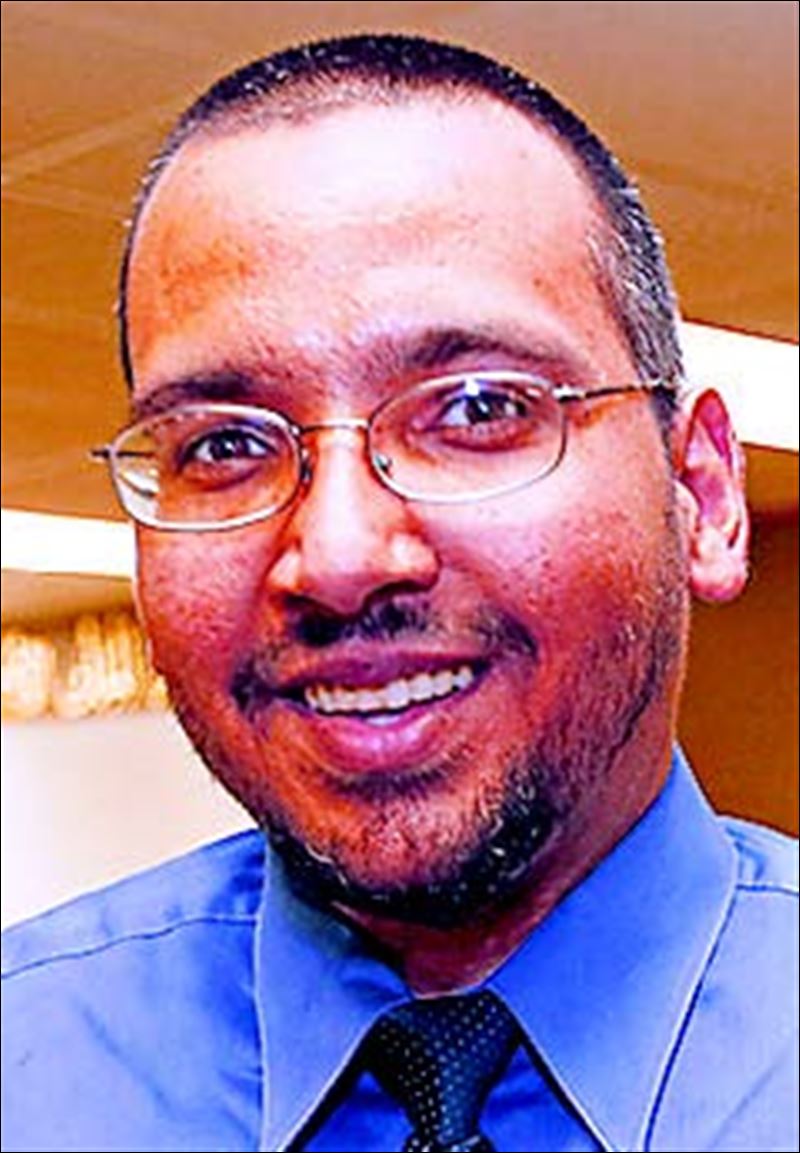
Imam WaheedImam Waheed
Enlarge
Today the month of Ramadan begins for Muslims, the holy month when, through fasting and other actions, religious people live their faith with greater attention.
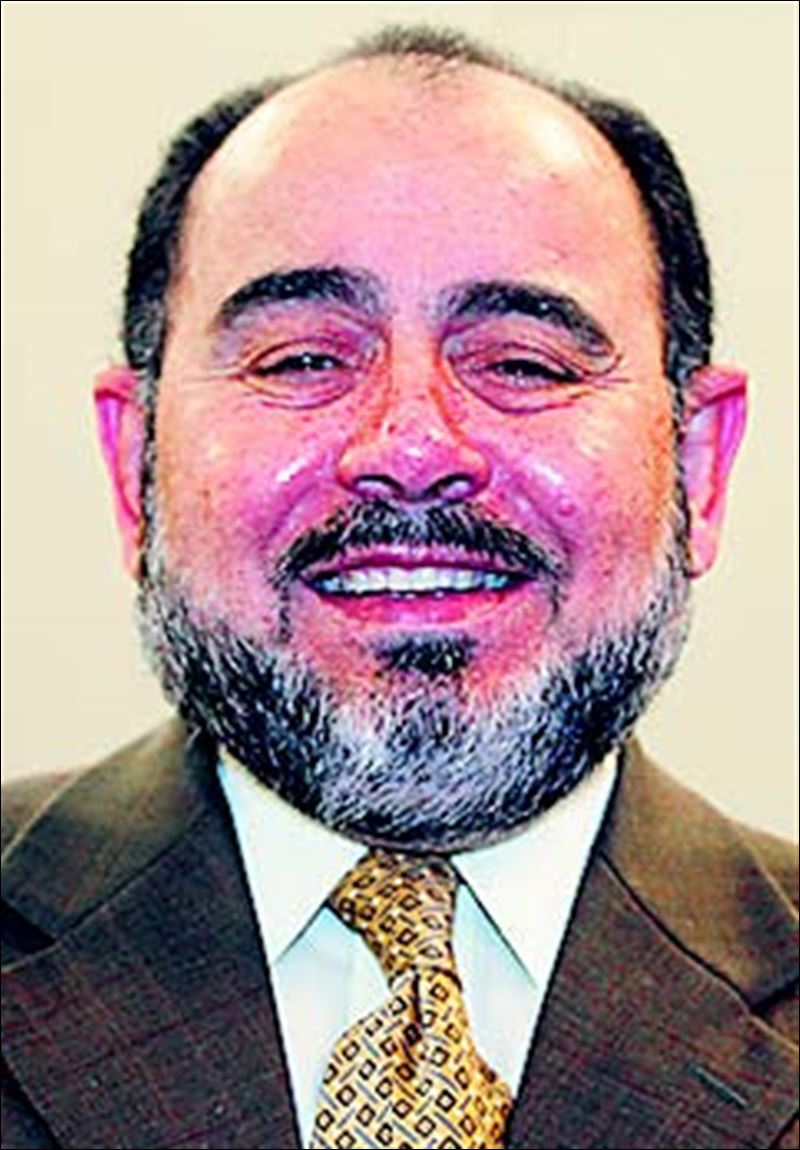
Imam Abo ElzahabImam Abo Elzahab
Enlarge
Observing Ramadan is one of the five pillars of the Islamic faith. Others are belief in one God, with Muhammad as God’s prophet; being charitable to the poor; and making at least one pilgrimage to Mecca if a person is able. And there is a pillar to pray, and it is customary to pray five times a day.
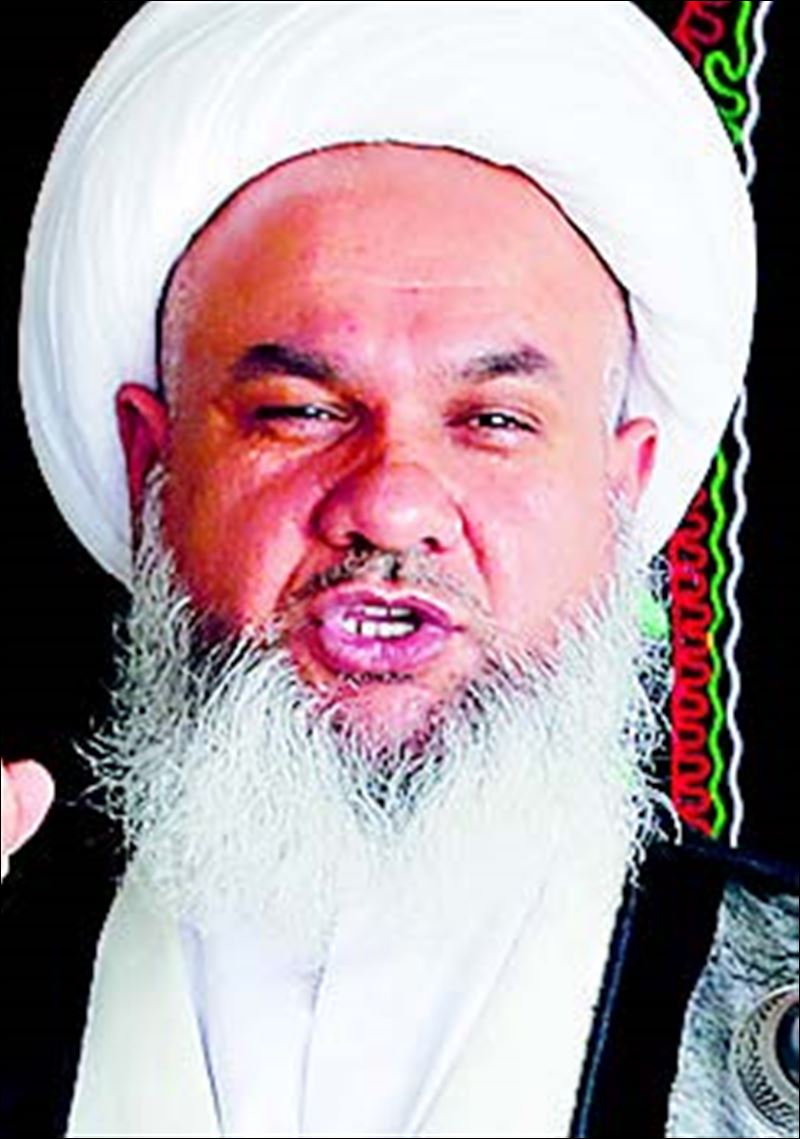
Sheik Al-SaedySheik Al-Saedy
Enlarge
Muslims who are able to stand, kneel, and bow do those actions in a standard way. It is a ritual, a routine of words, bowing, and kneeling that makes up a unit of prayer. The number of units of the routine varies for the different prayer times in the day. In those units there is also time for personal prayer.
The Masjid Al-Islam, a mosque on Bancroft Street in Toledo, has the Qur’an’s first Surah or chapter in Arabic script on the wall of the mosque’s prayer room. “It’s the main prayer text,” Shamsuddin Waheed said. He translated:
“It says, ‘In the name of God, the beneficent, the merciful. Praise belongs to God, the lord of the universe, the beneficent, the merciful, master of judgment day. It is you we worship, you we seek assistance from. Guide us upon the straight path, the path of those whom you have blessed; not the path of those with whom you are angry nor the path of those who are astray.’”
Imam Farooq Abo Elzahab, who ends 16 years of service this month as religious leader at the Islamic Center of Greater Toledo in Perrysburg, described the manner of prayer. “You read that first chapter in the Qur’an—’The Opening,’ ‘Al-Fatihah’—and a few verses from the Qur’an. If you memorize it or do not memorize it, that’s fine.”
There are different types of bowing, according to ritual. When bowing and kneeling, people praying say, in Arabic, “‘Glory be to God the greatest,’” Abo Elzahab said, “but in prostration it is ‘Glory be to God the highest.’ You are in the lowest position, you remember the most high one, and in this kind of position we are the closest to God. The whole body, soul, from the toes to the head, everything is surrendered to God on the mother earth that we’ve been created from. ... Now you can reveal everything to God, you can ask for anything, you can whisper to God, you can cry to God, you can beg God for forgiveness, for guidance, for health, for a cure, for unity, for love, for this, for anything you’d like to have.”
The five daily prayers are “all of them the same,” said Sheik Rahim Al-Saedy, imam of the Fatemah Islamic Center in Sylvania, “because we worship God. In the morning or afternoon or evening, it’s the same thing.” However, that doesn’t mean some people don’t have favorites.
Imam Waheed likes the dawn. After that prayer, “then the rest of your day pretty much goes smooth,” he said. “But I also find that, say, for example, I oversleep. Now you still pray, but it’s considered late, so I find … the rest of the day doesn’t go that smooth, and a lot of Muslims that I talk to say similar things. I can’t say why that’s the case but that seems to be the case.”
“The prayer described in the Qur’an is a timely obligation,” said Abo Alzahab. “Just to be standing in front of God five times a day, most likely that makes the person behave, or at least have this kind of self-criticism or self-exposure to himself and with God five times a day. So if he did his day good so far till midday or afternoon … then he’s thankful to God. If he did something wrong, then he’ll make an apology to God. So it is really to make up, it is really to correct your record five times a day. … The last one is to thank Allah or God for living my day to the best of my ability, trying to please God, trying to do what is good; so when I sleep, then I am entrusting God with my soul so far. If I have another day to live, that is great. If I do not have, I ended my day praying to God and seeking his forgiveness.”
Contact TK Barger @ tkbarger@theblade.com, 419-724-6278 or on Twitter @TK_Barger.

Read more at http://www.toledoblade.com/Religion/2014/06/28/Month-long-observance-of-Ramadan-starts-today.html#tseTas6W7mzrPf3w.99

Tuesday, August 14, 2012

Concluding the month of RAMADAN:some thoughts on the benefits of the fasting month

In beginning this article, it is necessary to share the Prophetic tradition that beautifully describes some of the benefits of Ramadan. It reads " This is a month, the first part of which brings the mercy of Allah, the middle part bringing Allah's forgiveness, the last part bringing emancipation from hellfire." [Saheeh Al-Bukhari]

As this month comes to an end, we would like to share some thoughts on other benefits, or perhaps lessons is a better expression, on this blessed occasion.

[1] Gratitude.

The Qur'an speaks repeatedly of gratitude. Indeed, it is one of the real signs of a believer. From the Quranic viewpoint as well as the usage given in the Arabic language [the language of the Qur'an], Kaafir has the meaning of one who is ungrateful, who covers up the fact that he or she has been given something [in this case, by God]. Here, we wish to share just one small sentence from the Islamic scripture. "And recall the favors of God to you..." [ Q 3:82].

It is our view that the first thing to be grateful to Allah for is [A] Having access to Islam. Even if we are not good Muslims all the time, nonetheless we have access to the Qur'an, to Muhammad's example , may Allah's peace and blessings be on him. Thus, the Qur'an says " They consider it a favor to you that they have accepted Islam. Say, "Do not consider your Islam a favor to me. Rather, Allah has conferred favor upon you that He has guided you to the faith, if you should be truthful."[ Q 49:17, Saheeh international translation].

[B] Be grateful for all that you have. Prophet Muhammad [Sall Allahu 'alayhi wa sallam] says to assert "praise belongs to Allah, in every situation". Knowing this is overused, nonetheless we have the famous saying about the man who complained about not having shoes, until he met a man who had no feet!

[2] Discipline:

Fasting, in a way, is an exercise in self-control. If we can do that in Ramadan, we can do that all the time. Cigarettes are a perfect example. While we do admit that among the Muslim jurists [Fuqahaa'] there are differences of opinion as to whether smoking is Halaal or Haraam, nonetheless all hands admit its overall harm. Giving it up in the fasting period can teach us to give it up totally!

[3] Laylatul Qadr

"Laylatul Qadr[ft.1] is more beneficial than a thousand months" says the Qur'an [97:3]. The religious aspect of it we are to observe, search for it during the last ten nights of Ramadan. We search for it via extra prayers, Qur'anic reading and recitation, spending the nights in remembrance and contemplation on Allah. There is also the social manifestation of Laylatul Qadr, in the sense that it can be life changing. The Laylatul Qadr can be the climax of the fasting month, in which we have decided to abandon sin, bad habits and the like [as described above when speaking on smoking], which, in turn, invites more of a Godly, spiritual presence in our lives. " The angels and the Spirit descend therein by permission of their Lord for every matter" Q 97:4, Saheeh international translation].

[4] Forgiveness

As cited above, forgiveness is a quality of this month, as narrated in the hadeeth literature. If we are seeking God's forgiveness in this month, expecting and hoping for his forgiveness, we can also forgive others! In addition to this, there is also the aspect of self-forgiveness. We can be hard on ourselves, whereas God does not wish that. Forgiveness can be a means to move forward, both mentally and spiritually!

There is a Prophetic supplication which teaches us to say "O Allah, make my reckoning an easy reckoning". The hadeeth goes further to say this means that we hope for no questions to be asked of us by God on the day of resurrection, but even if we omit this particular part of the narrative, there is a lesson in this Du'a! If we want God to be easy with us, we should be easy with others. Stop attacking so much, being critical and argumentative with others. Smile more, accept people where they are more, display forgiveness in action!

In this regards, we wish to conclude by sharing another Prophetic supplication, traditionally called the "leader in prayers seeking forgiveness" [Sayyid ul Istighfaar]. The entire supplication reads " O Allah, you are my Lord, none is to be worshiped except you. You created me, I am your servant and I am faithful to my covenant and promises to you as much as I can. I seek refuge with you from all the evil I have done, I acknowledge before you all the blessings you have bestowed on me, as well as my sin, so forgive me, none forgives [sins] except you." 

We would like to emphasis the line " ..I am faithful to my covenant..as much as I can." In this Du'a, the Prophet teaches us to pray to Allah acknowledging that we are not perfect, that we have weaknesses and faults. Nonetheless, we ask for Divine forgiveness.

So, seek Maghfirah from God, bestow Maghfirah on one another, and upon one's own self. 


Footnotes

[1] Laylatul Qadr is usually translated "night of power" or "destiny". We prefer the rendering "Night of decree or measure", with preference to the latter word.The overwhelming majority of Mufassireen [Qur'an commentators] give, in their explanation of Soorah Al Qadr [#97], the religious ritual aspect of Laylatul Qadr. The social manifestation of it should also be given, which we have done here in this article. It is also important to remember that Allah began the revelation to the Prophet Muhammad in the month of Ramadan, on a blessed night. The Qur'an itself served as a genesis for great social change, not only for the immediate companions of the Prophet, or even just the Arabian peninsula, rather, for all mankind. Countless benefits and blessings were bestowed when Qur'an came into the picture. And God knows best.

Friday, August 20, 2010

Blessed Ramadan

As we enter the 10th day of the blessed month, let us take advantage of it while we can. Ramadan is the month in which the revelation of the Qur'an commenced, it is, according to Hadeeth narrations, a time of forgiveness, mercy and freedom from Hell. It's a time of deep introspection, and of improving our spiritual condition.

One of its most salient features is the Laylatul Qadr. A period, which we are told, is "better than a thousand months" [Khayrum min alfi shahr]. this expression, which appears in the Qur'an 97:3, denotes a benefit from a certain period that can last a lifetime, or even more than that.


We seek this period in the last ten nights of Ramadan specifically [although many suggest other times, even outside of Ramadan], but we have to be prepared for it. Fasting, charity, good deeds, more prayers and Qur'an reading all prepare ourselves for that opportunity, to have access to spiritual forces that can give us greater faith, confidence, drive in life, and- in addition, God-willing, Paradise.


May Allah allow us to get prepared, forgive our sins, accept our repentance, fasting and acts of worship.

Saturday, July 25, 2009

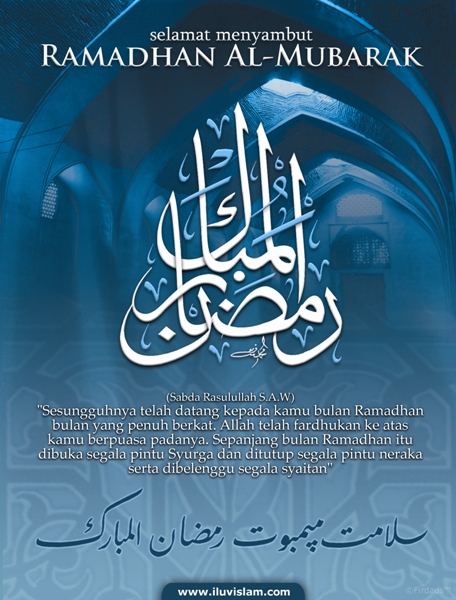
Ramadan Al-Mubaarak: thoughts on the fasting month


The above Arabic title stems from the traditional greeting "Blessed Ramadan" [Ramadan Mubaarak]. Certainly even the most non-observant Muslim finds the month of Ramadan to be one of great joy, laughter and family gatherings. Perhaps its cultural impact can be compared to the feelings Americans, even Non-Christians, have during the Thanksgiving and Christmas holidays.

We are always questioned by our colleagues on the type of fasting, the motivations behind it, and finally "How can you do it?". It is seen as an exercise in futility,unnecessary hardship and outright ridiculous by many people. It is my hope to share some useful information on this institution found in Islam.


Fasting

We abstain from food, drink and sexual contact during the daylight for a month-long period. This is an obligation on every Muslim, with exceptions for the ill, those who cannot survive without consuming something [such as diabetics], and a few others. The Qur'an gives the following command regarding the fast [called Siyaam in Arabic] as well as the reason behind its legislation;

O you who believe, fasting is ordained for you, as it was on those before you, so that perhaps you will become [more] God-respecting [La'allakoom Tattaqoon][2:183]


The focus is on Taqwaa, a word that is very hard to translate with just one or two English semi-equivalents. It is usually rendered as piety, however as a word, piety is very limiting. Taqwaa carries the meaning of respect, fear, duty, responsibilities, and caution.

Fasting is a very private form of worship, in the sense that a person can easily hide the fact he is not fasting, and just as equally hide the fact that he is fasting.

So, we see why the fasting has been ordained.


The traditional practices

In order to be able to function through the day, we are encouraged to have a meal before dawn, when the fasting officially starts. This breakfast is called Suhoor [Sehri in Urdu]. At sunset, when the fasting period ends, a snack of dates [or some other fruits and vegetables] precedes the dinner. Eating dates is not an obligation, but it has entered our practice on the basis of the Prophet Muhammad's manner of breaking the fast. The dinner itself is usually called Iftar.


As the Qur'an's first revelation to the Prophet [upon whom be peace] occurred in Ramadan , we also generally make it our business to read the entire Qur'an in the month. Besides that, people offer prayers more, and give more in charity.


Effect of fasting

One must understand that fasting in Ramadan is not for diet reasons, to follow some hype, rather the motivations are spiritual. Reading the Qur'an while fasting makes us re-examine our lives in light of what God instructs us. We are to avoid even those things we knowingly engage in, such as gossip, arguments, backbiting, immoral surroundings [that can be found in Television, Music etc..] lust and the like.

Fasting with consciousness makes the person a better human being. It also makes him spiritually stronger, which can influence the physical strength as well, even though the intake of food/drink has been limited. Muslim history is full of victories on the battlefield happening during that month.

That is what I want this year, to be able to gain from reading the Qur'an while fasting, to strengthen morals and get rid of any vices. To engage in an honest self-assessment. May Allah give us all the same. Ameen!

Monday, September 1, 2008

Ramadan readings: the expansive message of the Qur'an.

As most of our readers are aware, reading or recitation of the Qur'an is very important in the month of Ramadan. While it is not our intention to go into the particulars of how this tradition has evolved, it is nonetheless a necessity to engage in its study while observing the fast.


The study of the Qur'an is never a boring experience for the believer, and it is our view that benefiting from it is especially heightened while fasting. It is my hope to share some observations of texts I read today.

Salvation

Just about every religious group has among its adherents those who believe that Heaven, paradise, Nirvana, or whatever label applied, is limited to themselves only. The Quranic position can be described in the following text:


And they say: None enter Jannah [paradise] unless they are Jewish or Christian. These [assertions] are their desires. Say: Produce your evidence, if you are truthful [Q 2:111]


This ayah summarizes the argument made by sects and religions as to the holders of salvation. God says to those holding such views to show their proof to the followers of the Prophet Muhammad, indeed, to all mankind.

Does anyone of us have keys to heaven? Can we look inside and find out exactly who is in it? Indeed, we cannot, and those who think otherwise are just speculating, following their own desires and prejudices.

Allah has told us- in the final revelation called the Qur'an, who will be in his paradise. The answer may surprise us all:

Nay! [the one who is] completly submissive to God, a doer of good, then he has his reward with his Lord, on them shall be no fear nor grief .{ Q 2112}


No label is given. Action is required. The word 'Nay' [Bal'] negates the argument of the prior sentence. Those who think they are the only ones blessed by God are indeed incorrect. In another place, Allah has said that those who are sincere in thinking they are God's exclusives, to the detriment of others, to kill themselves, return to God and his heaven faster{ Q 62:6].

Allah is the Provider and nourisher of all. While it is true that many of us hold to theological errors, can we really say that God made people, allowed them to make these mistakes in belief, just to send them to hell for misunderstanding? The Quranic message is this: Have the right understanding of God, and act accordingly. Label has not been given that much importance.

In this same section, we are shown again how labels have little bearing on one's status before God Almighty.

Jews and Christians will never be satisfied with you until you follow their Millah. Say: Surely God's guidance is the [real] guidance... [2:120].


Allah created all people, he knows best who deserves his rewards and who does not. Also of interest is the following verse;

The Jews say: "The Christians have naught (to stand) upon; and the Christians say: "The Jews have naught (To stand) upon." Yet they (Profess to) study the (same) Book. Like unto their word is what those say who know not; but Allah will judge between them in their quarrel on the Day of Judgment. [Q 2:113]


In the end, God is the judge. Therefore, we should never judge someone's ideology and say that God will not given them anything. That's arrogance on our part.

Endnote

For a more in-depth study of some of these issues, the reader is referred to the work The language of revelation, in which this writer has explored the Quranic usage of Kaafir, Islam and Muslim. To obtain, email waheed79@yahoo.com