Showing posts with label american Muslims. Show all posts

Monday, December 26, 2016

Are there limits in giving and accepting opinions? Thoughts on Shaykh Hamza Yusuf's controversial statements

" O Mankind! Indeed, We ( i.e. Allah) created you from a single male and a single female, made you into nations and tribes So that you will know ( and benefit) from each other. Indeed, the most noble of you- in the sight of God- are those with the most reverence, Indeed, Allah is the All-knowing, All-Aware." ( Q 49:13)


The yearly Revival of the Islamic spirit [RIS] conference attracts thousands to Toronto from all over North America. While previous events have been the source of some controversy, this year's RIS has generated-within only two days- perhaps the biggest firestorm to date-  universal discussion and arguments between Muslims. It has opened wounds and disputes on social media.

Shaykh Hamza Yusuf - in the course of an interview with Mehdi Hasan, made some controversial statements about issues ranging from Black Lives Matter movement [BLM], Police shootings, and seemingly equated The Muslim Brotherhood [Al Ikhwan Al Muslimoon] with ISIS. At one point, he asserted that the biggest problem faced by African Americans was the breakdown of the family. This particular assertion has been the object of the greatest amount of criticism on social media. ( 1)

This post is not intended to be a rehash of what he said. From many angles, Muslim leaders as well as average people have been composing posts, articles, videos and tweets on Twitter either defending or attacking him, and of course this has also opened the door for sectarian and racist minded folks to preach their divisive messages.

Another well known personality, Imam Suhaib Webb [who is White American]- sharing the stage at the RIS event, felt compelled to compose a lengthy refutation of Sh.Yusuf on his Facebook page.


Subsequently, Sh. Yusuf delivered a speech yesterday  apologizing for any "miscommunication" and at length explained precisely what he meant.(2)

I listened to that speech twice, and while I have my own reaction to his comments, it raised for me the question of whether or not individuals "of privilege"  are allowed to speak on subjects that they themselves seemingly have not experienced.

In essence, the majority of refutations against him argue that because he is white, he is automatically unqualified to speak on affairs involving African Americans. His critics acknowledge that both his family and himself have been deeply involved in the Civil Rights Movement, that he has been a defender of African American causes, and most critics even acknowledge that he is not personally a holder of any racist views, nonetheless, they assert, his white skin prevents him from having any understanding of these issues or any useful advice!


Race as a criterion for judgement

Let's change around the dynamics a bit. A White  patient is in the hospital with a medical situation that requires immediate, emergency treatment. That patient discovers that his doctor is African-American!

The White patient's refusal of treatment at the hands of his Black doctor would rightfully be seen as stupid, and an indicator of racist beliefs. This scenario is not a conjured, hypothetical situation. This has happened many times, per discussions with three African-American doctors I know. I'm sure that our readers will likewise know of similar situations in their professional lives, where services have been declined, even needed ones such as medical treatment, until a Non Black individual( or whatever desired)  would turn up to provide the needed service.


Refutations of views- be they political, social, religious, etc. should not be based upon skin color. A believer in God is to know that God created all the colors and all the languages intentionally. The Prophet of Islam, Muhammad [ Sall Allahu 'alayhi wa sallam] is known to have said that there is no virtue in being one thing or another. The Prophet in his final address also said that "all of them are from Adam, and Adam was from dust."

 Truth should be the criterion for judgement

We can simply use another word rather than truth, as that sounds too religious. We can use the word facts, or the word data.

It does not bother me that anyone's viewpoints are debated, rejected and refuted. That is a part of anyone's life, especially a person serving any public capacity. In many respects, scholars, scientists, and academics make their careers by analyzing and dissecting arguments of other figures.

A person's usage of data, their interpretation of evidence, that is what should be addressed. It should never get personal, never hit under the belt with foul language and name-calling.

Moreover, if we are serving any public capacity, we should be open to accepting knowledge, regardless of the source. The Prophet is reported to have said that knowledge is the lost property of a believer. He also is reported to have said that one should seek knowledge even into China.

In cooking, music, clothing styles, humans have always taken from each other, deleting and adding as they see fit. This creates the diversity of life that makes life so interesting.

A person- even if they are seemingly on the outside, can be a vessel for good advice and guidance. That is the way Allah made things.

To assert that  guidance is restricted  to one's racial or ethnic [or even madh-hab!] grouping  is nothing short of adopting a Chosen people mentality. Moreover, it acts as a barrier from receiving God's blessings, simply because one does not like the packaging. The Qur'an ( 2:91, among other verses) indicates that there were Jews who rejected Muhammad as God's Prophet only because of Muhammad's ethnicity.

The Prophet's supplication is quite succinct in the lesson it conveys. He prays "O Allah, show us truth as truth, and give us the ability to follow it. And show us falsehood as falsehood, and give us the ability to abstain therefrom."

So the issue should not be the packaging of the message. The issue should be deciphering what is truthful and beneficial, distinguishing it from what is vain and useless.

Endnotes

(1) Sh.Hamza Yusuf's initial interview can be found here. [url] https://www.youtube.com/watch?v=4tjV64JMv-I[/url]

(2) His second speech, which included an apology, can be viewed here. [url] https://www.youtube.com/watch?v=Q2jB_GpY9jo[/url]




Thursday, November 10, 2016

Trump presidency: thoughts on the immediate and distant future

We begin this composition with a confession, and that is-simply put- that we never imagined that the Trump campaign was little more than a bad joke that had no chance of success due to the numerous accusations, outright racism and clear personality problems that are displayed in his recorded statements and behavior.

The success of the Trump campaign has essentially blindsided all of us, it has negated all the predictions of the pundits and it feels like we are now living in a parallel universe that Science Fiction programs such as Star Trek and Fringe have displayed, a world that is very similar to the world we know and are accustomed to, yet filled with glaring examples of differences, enough to make one panic and desire a quick escape.


Why is Donald Trump so troubling?


His entire platform has been one insult after another. However, our focus is not simply on this. His campaign has been one which tells the voters what they want to hear, however upon close examination there is actually no substance at all behind his rhetoric.


Whether it is call for  building a wall between Mexico and the Southern United States [which he asserts that he will make Mexico pay for], threatening Muslims, insulting African Americans, or an unclear plan to strengthen the US economy, any of these things, which are well documented, should be sufficient enough to find his election to this nation's highest office to be a frightening turn of events.

The following link has a good summary of why this is a terrible development. http://reverbpress.com/politics/seven-reasons-donald-trump-make-terrible-president/

If he's so bad, then why was he elected to the highest office?

The answer to this is even more troubling. Despite Trump's many issues in terms of not having any substantive plans and his crass statements regarding women, the handicapped, immigrants, minorities and the like, he has been successful. Those things did not work against him, rather, they worked for him.

I recall an interview I heard on NPR, the one being interviewed was a Gay Latino from New York. He thought of Donald Trump as a personal success story, narrating about the latter's homes, wealth and all the trappings of success he already displayed.

A succinct article in The Guardian [ Anti-Intellectualism taking over the US] explains this very well. This is increasingly becoming a culture that places no value on education [except of course in the practical fields such as Engineering].

Education is more than a piece of paper or the ability to count numbers and decipher symbols . Education is meant to instill respect for certain values and to nurture- at the least- a foundation for understanding the world around the student.

Yet, despite the presence of universities and the Internet, ignorance of even basic facts still is the prevalent situation. An economics professor doing work while taking a flight was pulled off a plane and interrogated by authorities. Apparently, he was mistaken for an Arab and his work notebook's contents "strange writings" was simply math equations. [ https://www.rawstory.com/2016/05/penn-professor-booted-from-plane-after-passenger-identified-him-as-a-terrorist-for-doing-math/#.Vy6cfuYVTDw.facebook].

This utter ignorance and dismay for personal and communal growth breeds irrational fear and unsubstantiated beliefs, particularly for the "other". African Americans have long been the victims of this thread of thinking, and are thus generally more understanding of this side of America!


The other unspoken reason that Mr. Trump has now become our president is that the demographics  are rapidly changing from the White Anglo Saxon Protestant equation. There is a great deal of growth of Non-White communities, and this of course translates into political and economic changes, not to even mention the social impact.

Indeed, the demographer William H.Frey in his book Diversity Explosion predicts that after 2040, whites will no longer be the majority population in this country. This is a future that is not pleasant to think about for many Americans.

We have ignored Mrs. Hillary Rodham-Clinton up to this point. Many analysts have explained her failure to win the Oval office due to the E-mail scandal or a frustration with the system in general. It is the view of this writer that those issues are only a minor part of it. In other words, it would not have even mattered if Jesus Christ himself was the candidate of the Democratic party, the chance to stem the social changes and to express deeply-held sentiments was simply too much to pass up.

What should Muslim do?

Since the issue of Muslims' religion and presence in this country was a campaign issue for President-elect Trump, it seems prudent to direct this to Muslims, however, this is equally valid for all Americans who feel that we have now entered seriously dangerous political territory and fear for the future of this nation!

Our response to this should include, but not be limited to:

[1] Coalition building: This means more than an occasional dinner. Muslims-particularly the leadership, have to become better involved in their local communities and become stewards of universal justice, which is itself a Quranic command [Q 4: 135]. This means that -for example- when a person is unjustly killed by law enforcement, Muslims have to be there standing for what is right. This means greater civil involvement.

[2] Become deeply involved in other parties: Currently this nation is dominated by a two party system. While other parties do exist, they have little to no influence at all. We have to join the voices of those seeking real change, and not simply hope our few dollars to entrenched politicians will produce results on our limited interests. Our interests must be bigger than Palestine, Hijaab and holidays.

As a whole, disaffected Americans can take a lesson from other nations such as India [the most populous Democratic nation as it likes to call itself]. It has about eight big active parties such as AITC and INC, but arguable hundreds of smaller ones.

We don't have to limit ourselves to this two party system. We have to think bigger and in longer terms.

[3] For Muslims, to do more to  have  our voices heard. Write to the local newspaper when stories are published. Become educated enough to answer questions on Islam. Share the Qur'an or Islamic materials with people, refer them to the mosque or to accurate websites.

[4] Americans, both Muslim and Non Muslim alike, should be encouraged to travel, in order to broaden their horizons and perspectives. This is also a Quranic teaching [ Q 29:20 is just one example]. Keep a valid passport at all times.

I hope this brief article generates much discussion and deep thinking. After all, this is the time to be rational and calm. Actions born out of frustrations and anger almost never produce a positive outcome.

Monday, September 28, 2015

Struggling to submit: thoughts on what it means to be a Muslim

Daily we encounter examples that illustrate the hardships faced by those who are conscientious of their faith. It's true that Muslims are not the only ones with these struggles, as recently demonstrated by Kim Davis, a Kentucky county clerk who refused to issue marriage licenses for homosexuals, however Muslims, especially in a Western context, have much more to deal with, especially considering that Islam is widely seen as a foreign religion  that is incompatible with Modern values, and often Muslims in the West are ethnic and racial minorities who automatically generate scrutiny.


At least for the "born Muslims", there exists more social support. "Born Muslims" have a backround in some Islamic culture somewhere. All of their family members are Muslims and are, even if not practicing, comfortable at home and in their professions. But what about the person who spent time investigating religion, perhaps going through a crisis of faith, and discovers Islam for themselves? Surely, such persons will have a different struggle. In many ways their struggle will be even more rough than the born Muslim in the West. The person who accepts Islam on their own has to deal with family dynamic, that will be reflected in problems both big and small.


Recently the media highlighted the case of Charee Stanley, an airline flight attendant. As a "new" Muslim, she has been learning about her faith and applying it, and upon learning about the religion's prohibitions on alcohol [which includes serving it], she stopped serving it on flights. What she would do was to have co-workers serve it. Eventually, a detractor raised an issue, and she was subsequently suspended from her job at ExpressJet.[ See Stanley's interview on The View. https://search.yahoo.com/yhs/search?p=charee+stanly+on+the+view&ei=UTF-8&hspart=mozilla&hsimp=yhs-002].


How this particular case will play out in the airline world and perhaps the courts remains to be seen, but what was interesting to this writer is the diversity of views, even surprising ones from unexpected sources, such as Sheikh Yasir Qadhi [head of the Al-Maghrib institute], who found her position "clearly unreasonable" , creating future hurdles in accommodating "reasonable issues" such as Hijaab and beard.

So, what about the worker in a business that sells alcohol? In some places in USA, most of such businesses are owned and operated by Muslims. Similarly, Muslims work in the stock market, in the banking system, restaurants, hotels and the like.
On issues relating to alcohol and drugs, this writer feels very strongly that these are categorically Haraam and that Muslims are to not enter into such activities for their livelihood. Yet, the truth is that people-including Muslims- need to earn an income. Even attaining a degree usually requires acquiring loans, in which interest will always be a component.

So what do we do? On a personal level, there may or may not be easy solutions. Some may be able to get along very well without attaining a college degree, to buy their vehicles without resorting to loans, while for others this may very well be impossible. The same can be said of those in other businesses or sources of income that are questionable or clearly Haraam.

While we have concentrated on income, the struggle can capture many other areas of life. Persons in relationships that are not marriages. Marriage with Non Muslims, family dynamics, struggling with the social life, and many other areas.

Institutional building is needed


If we are going to live in the West, we have to recognize that these situations will not simply go away. These types of problems will continuously pop up, and-in fact- will endure. On an individual level, Muslims may be able to control their diet, the moments they pray, the clothes they wear. This person may even be blessed with a magical solution to all of their issues,yet, we must say, that American Muslims of all sects, nationalities and orientations, must work together to create united efforts to minimize [if not totally eliminate] the need to find our bread and butter in questionable occupations. That means Muslims must form their own banks/credit unions, they must create funds and open up housing for New Muslims, they must cooperate, live in their own neighborhoods, form strong bonds that will have an impact both socially and politically.

Personal level- do what you can

To use an analogy, all of us look at the ingredients when shopping at a grocery store. Mainly, we search to make sure our food is not Haraam, but some mistakes may end up being committed along the way, out of ignorance or necessity. But we have to keep making effort to make sure our food is actually lawful.


If a person is in a questionable  business, he or she should strive to find a better -Halaal-job. Make some effort. Allah says that he provides from sources a person cannot even imagine, if that person has Taqwaaa. [Q 65:2-3]. If he or she has a relationship that's not marriage, the solution, if love and compatibility are there, to get married. In terms of income issues and education, housing etc, a family can work together- share all the expenses, and end up avoiding Ribaa, paying off loans, paying for an education. But all of this requires patience, discipline, foresight, and intelligence. It also requires thinking as family, thinking as community, thinking and acting based upon the interests of the big picture.

Consider the story of the Barrientos sisters. These four Texas sisters were able to eliminate $180,000 in debt in just eighteen months by sharing the load[ see http://abcnews.go.com/Business/texas-sisters-erased-182k-debt-18-months/story?id=33485609]

Islam sees the spiritual and the material as connected to each other. Even our food can affect our souls. Our financial situation can color our relationship with God. That's a simple fact, regardless of whether we like it or not. So we have to have faith, use the minds given to us by Allah, take some actions and go from there.

Wednesday, November 26, 2014

Thoughts on "Post-Racial" American society

As I write these few words, the entire nation is debating. The Grand jury in Ferguson, Missouri decision not to press charges in the death of Michael Brown, who was killed in an encounter [the details of which are highly disputed, but the outcome obviously undeniable] with a local police officer named Darren Wilson  has ignited not only protests, but it has even come down to rioting and looting. Certainly criminal elements always emerge in these type of situations, taking advantage of the atmosphere to create anarchy and steal [after all, the Brown's family church as well as places such as an  AUTOZONE store  were destroyed [ see http://www.dailymail.co.uk/news/article-2849736/Church-attended-Michael-Brown-s-family-destroyed-Monday-night-s-protests.html ].

Yet, this has been felt nationwide. Protests are taking place all across the USA. President Obama has made comments on it. On the INTERNET, we can find solidarity rallies and tweets from people worldwide. If we are such a 'post-racial' society, why is it that these things are happening?

While it is quite encouraging to see Non Blacks protesting alongside African-Americans nationwide, it's obvious that problems still exist. Quite frankly, it goes beyond this one man's death. As I see it, these problems can be summarized in the following fashion [1] A perception that Blacks and other minorities are simply criminals at nature, an image that has been sustained for decades by the entertainment industry.  [2] An increasingly alarming trend nationwide on the part of Law enforcement to use deadly force and ask questions later. [3] Community and family ties are not as strong as in the past.

This brief post cannot cover everything. In essence, this is simply a rant. But it's a rant that searches for solutions. While protests certainly generate media attention, what happens when the media goes to another story? It's certainly true that burning stores in one's own community will not bring any healthy solutions, but what can be done, practically, to prevent things like this from happening again?

I tend to think solutions include, but are not limited to [1] Deeper and stronger community ties. These ties have to cut across racial, religious, and class ties. Poverty is not some moral disease, thus poor people should not be ignored. The type of society that used to exist must be revived, wherein people know each other, neighbors look out for each other, who will address crime in their own neighborhoods and families. How can that be done? By family involvement in the lives of the youth. This should not be taken as blaming the victim [in this case, Michael Brown], but in addition to cleaning up our own neighborhoods, it would also limit our contact with situations in which police would potentially get involved. [2] There has to be a removal of stereotypes. This is easier said than done, but in all honesty, because of how we have been socialized, Blacks are quicker to be seen as dangerous than Whites! [3] On the part of law enforcement, obviously in the Ferguson context, there will have to be seen more and more Blacks and other minorities added to the police force.


Just some thoughts..


Monday, December 2, 2013

Keeping it real: some thoughts on the struggles of the Islamic 'convert'.


Islam is the fastest growing religion in the world . This is something acknowledged by friend and foe alike, despite the fact that there are actually very limited [if any] organized efforts at missionary work, of the kind that Christian missionaries engage in. There are many reasons behind this growth, far beyond the scope of this article, but nonetheless there are certain commonalities in terms of the struggles the new Muslim may find themselves in, especially in Western countries. Below are some guidelines, important for both the 'convert' and the Muslim community activists, Imams, employees and teachers.

[1] Muslim: first and foremost

Within the Islamic community as well as the media, titles such as 'convert' or 'revert'[ft.#1] are commonly used. It is our view that such titles, to be used even for people who have been Muslims for over 20 years, are artificial, and, most dangerously, makes an implication that Muslims born into the faith or whose origins are from Islamic nations are more authentic and superior to the newcomer. These sort of assumptions are incorrect and are contrary to the teachings of the Qur'an and Prophetic Sunnah. It should be sufficient to cite the following Quranic assertion:
" Verily, in Allah's sight the most honorable are those with the highest amount of Taqwaa in your midst." [Q 49:13]

[2] Intra community relations

It is often the case that the new Muslim feels alone in the mosque. In  the United States, most of the mosques are filled with a mixture of ethnic groups, sectarian tendencies and even generational differences.The new Muslim may feel disheartened, lonely. It is incumbent on the community to not only be welcoming, but to be accommodating, have classes on the necessities of practice, to build real social relations, but also to have respect for the new Muslim. Know that the new Muslim is not, NOT, required to adopt the attitudes, food and clothing of a different culture. Corrections of each other should never be done in arrogance or spite.
There is suppose to exist a relation of respect and equality between Muslims, regardless of racial backround or history.
"The believing men and women are protecting allies of one another, commanding what is right [by universal standards ] [ft.#2], forbid what is disgusting [Munkar], establishing prayers, pay Zakaat, obey Allah and his messenger, it is they whom Allah bestows mercy, verily Allah is powerful, wise." [Q 9:71]

[3] In the wider society: family and friends

There are a number of trends, both healthy and otherwise, that are found in the enthusiastic brother or sister who has accepted Islam. Indeed, the  struggle to do right and resist the influences of  the pre-Islamic lifestyle are in a tug-of war, being most visible during holidays and in social interactions. Below is a summary of issues and an Islamic response.

[A] Name change

Very often Muslims change their names. While this is acceptable, let it be known that the only names that have to be changed are names that have a bad meaning or names that imply worship of something other than God. In Sunan Abu Dawood, the blessed Prophet Muhammad [sall Allahu 'alayhi wa sallam] is said to have changed a person named shaytaan [satan] to another name, or of a person named Harb [war] to Salm [calmness], and the like. In the Prophet's days, and even today among Bedouins, a rough or ugly name was seen as toughening up the child to survive in a harsh world. But it is the messengers of God who teach that a goodly name is among the best things parents give to their children.

[B] Religious differences creating family tensions

From our side, we are to keep to our religion, but strive to keep good relations with family. The Qur'an itself asserts
[Revere thy parents;] yet should they endeavour to make thee ascribe divinity, side by side with Me, to something which thy mind cannot accept [as divine],  obey them not; but [even then] bear them company in this world’s life with kindness, and follow the path of those who turn towards Me. In the end, unto Me you all must return; and thereupon I shall make you [truly] understand all that you were doing [in life].’'[ Q 31:15, Muhammad Asad translation]
[C] Holidays [Christmas, Thanksgiving, Easter etc]

This is probably the most sensitive of issues, because it is during the holiday seasons that serve as the bonding periods among families. Our advice is to not participate in the religious aspects of these activities. After all, Christmas [to highlight an example] celebrates the birth of Jesus, whom Christians believe to be God and the son of God. As Muslims we obviously don't accept these doctrines, so it would make no sense to celebrate it. But we see no harm in dining with the family in this time. Family relations are very important in Islam. So, in the dinners, if pork and alcohol are served, simply don't eat those items. Similarly, if the family observes Non Islamic religious rituals, such as going to Christmas services, don't go to that, but catch up with them later.[ft.#3]

Footnotes

[1] The term "revert" stems from an understanding that Islam is something innate in human beings, therefore, when we accept Islam, we are not changing, rather, we are "reverting" back to our original nature. This understanding itself is based on the hadeeth:  " Every child is born upon the natural disposition [Al-Fitrah], his parents make him Jewish, Christian or Zoroastrian." [Bayhaqi]

[2] Al-Ma'roof: Those healthy, recognized and accepted universal values that are needed for every society.

[3] It is well known that many of the holidays, including the religious holidays such as Christmas and Easter, have origins in pagan culture and belief. Be that as it may, in the West these occasions are observed and families take advantage of them by having family gatherings. It is the family gatherings that we are emphasizing here. It is often argued that even to do this is to engage in compromising one's Islam and pollute the faith with innovations [Bid'ah]. But we find this reasoning to be flawed for a number of reasons. [1] We accept to be paid extra  to work at these times. [2] We shop on 'black friday'[the day after thanksgiving], looking for deals. [3] Most of us are off work on Saturdays and Sundays, which are the sabbath periods for Jews and Christians respectively, and even the mosques, taking advantage of the day of rest and worship in the West, have major activities on both days.

It is for each person to make their own decisions based on their own conscious when it comes to issues of this kind. For a discussion on Thanksgiving, see Shaykh Luqman Ahmad's article [2http://imamluqman.wordpress.com/2013/11/20/the-islamic-ruling-regarding-celebrating-thanksgiving-day-by-shaykh-abu-laith-luqman-ahmad-2//[/url] . For an opposing view, as well as an interesting analysis of popular television programs, music and even Biblical texts, see the book Symbolism, Holidays, Myths and Signs by Imam Alauddin Shabazz [ 1993, New Mind Publications, Jersey City, New Jersey]

Wednesday, January 13, 2010

Issues of the day

These days it is very common to see aspects of "Islamic law" [Sharee'ah] brought up in media outlets and discussions with anti-Muslim elements [indeed, even among some Muslims on occasion], as a way to embarrass or ridicule the overall message of Islam itself, while at the same time maintain the "superiority" of the "Western' way of doing things.

Islam as religious practice and as a Political ideology are both seen as inherently inflexible, unable to function in modern society.Our intransigence has made us hateful, we are told, of the physical accomplishments of the Non-Muslim world, and manifests itself in "our" women wearing various "Islamic clothing" [everything from the Khimaar to the Niqaab], by 'fanatically' clinging onto five daily prayers, by having 'distinctive' architecture [ take for example the minarets traditionally attached to the Mosques, now made illegal in Switzerland] and eventually this intransigence leads to violence against some innocent third parties.

It is our intention here to present in a condensed form some thoughts on these issues, as well as what we perceive to be the genesis of the above.

Islamic Law vs. "Western" law [democracy/secularism]

Obviously, "law" to a Muslim encompasses a great number of things. It can refer to the prayer format [i.e. Qur'an recitation, prostrations, etc...] to the prohibition of Alcohol and Pork, all the way to the penalties for murder.

We acknowledge that the "democratic" legal tradition can be argued to be lacking when compared to the Islamic law in some respects, after all, with the exception of Murder mentioned above, there are no laws in any Western nation regulating prayer methods and dietary practices yet we have to also admit that the Qur'an does not give direct rulings on every single legal issue. Certainly, it contains prohibitions and punishments regarding theft, murder, embezzlement, etc... and does give some punishments that would be deemed unacceptable in a multicultural, modern world as ours. Cutting the hand of the [perpetual] thief, execution of rapists, a physical penalty for Zinaa are some examples.

The message of the Qur'an, the practice and the spirituality that emanates from the Qur'an, should not be misinterpreted or summarized just in the presence of exemplary punishments. That would be over simplistic. Every legal tradition evolved in a unique set of circumstances, and the presence of exemplary [or 'harsh'] punishments in the legal texts [for Muslims, the ultimate source is the Qur'an itself] only shows that there has to be some remedy available for extreme circumstances. Indeed, this has been historically recognized, in that theft [for example] was only to be punished by cutting the hand when a certain amount was taken, all of which depending on the particular case itself. This is the Muslim scholars approach. Even in the early days, during the reign of the Khalifah 'Umar ibn Al-khattab [d. 644 C.E.], famine swept the Arabian peninsula, so he [the Khalifah] deemed it unjust to punish theft, especially of food items, knowing full well the citizenry was in dire straits. May God be pleased with him, one of the wisest and most fair rulers of all time. The point being the Islamic message need not be seen as "rigid" and inflexible.

Besides, any legal system imposes limitations on what is allowed and what is not. If there were no such limitations in place, the system would be meaningless. So why is it that only the Muslims or their religion is seen as 'rigid'?

Muslims and Islam are sometimes two different things

This author has a "Muslim look" [beard, olive skin complexion], and a while back I was asked by some random guy on the street "why do you kill your women?' He also asked me "why do you force your women to wear all black?" It is true the guy was looking for an argument, but even in such circumstances I tried to be reasonable. Some women wear black as part of their cultural expression, but such choices are not mandated by the Qur'an at all. There is nothing inherently Islamic or Un-Islamic by wearing black. It is a neutral issue, a moot point, as far as the Islamic texts are concerned. This is the answer I provided for the guy, and also for you, our noble reader.

To outsiders, and sometimes even among us, cultural or personal choices are mistaken for Islamic! This has always been the case, and will continue to be the case, as long as humans remain human. Fortunately, we have access to the Qur'an, and in the modern world even access to the canonical works of Hadeeth, Fiqh, etc.. [thanks to the internet, book companies, otherwise such works would only be available to the scholars and specialists], so we can find out rather easily what is authentic according to Islam and what is spurious.

It is commonly assumed that 'honor killings" is sanctioned by Islam. Now, while segments of both Muslim and Non-Muslim societies accept it [ one only need to look at Egyptian Christians who engage in the same], no where in the Qur'an or Hadeeth literature can there be found any justification.

Sexual relationships are a sensitive issue, and the Qur'an advocates that such can be engaged in only within certain confines. It also tells us a legal punishment for those who violate that restriction, but it is apparent that the punishment is only in some extreme circumstances. This is because [A] To even make the charge in an Islamic judicial system, a minimum of four witnesses are required. If such are unavailable [and unless the act is taking place in public, they are never available anyways] then the one who makes the charge will be deemed unreliable as a witness for any future cases, and is open to punishment themselves. Please see Qur'an 24:4 [Ft.1].

[B] The Qur'anic punishment is suppose to be for both parties [provided of course the requirements are met as mentioned above]. The wording of the verse is Az-Zaaniyatu waz Zaaniy 'The woman and the man who has done Zinaa..'[Q 24:2], yet it is often imagined [and indeed, when 'honor killings' take place] that the female alone is to be punished. Besides all of this, there is no death penalty given for this.

So, even when there is guilt, when no evidence is available, legally nothing can be done about it. This is God's wisdom, which allows all the parties/families involved to address the issue internally, one way or the other. There is no need for putting all the dirty laundry out there. This wisdom is applicable anywhere, any place and any time. Alhamdulillaah!

Applying Islamic laws in the West?

There is a great fear that the Muslims in the West are a third column, ready to march on capitals, cutting off heads, whipping and amputating. This fear led the Swiss voters to recently ban minarets on Mosques in their country, even though its purpose is only for architecture. Some posters distributed by the supporters of the law asserted that minarets are ''symbols of Islamic fascism". The specter of fear was waved so much that people actually thought the Muslims in Switzerland were ready to take over and impose Islamic laws, even though the Muslims there are a minority.


Well, despite their fears, Muslims are already conducting themselves on the basis of Islamic laws. Our Marriages, funerals, rituals, fasting, etc.. are all done according to Islam, not according to the whims of voters. But as for the laws mentioned earlier in this post, i.e. for theft, Zinaa, etc.. no Muslim in his or her right mind would dream of such a thing in a Western context, for many, many reasons. The least of those reasons is that even in the traditional sense, Non-Muslims were exempted from Islamic laws anyways. Moreover, there are reasons that Muslims living in the West participate in the legal system prevalent.[ft.2]


Concluding thoughts

There are many elements out there, seeking to publish their views and push their agendas. In a world with so much information readily available, it is important that all people remain informed, educated and well-rounded. Such a position can actually reduce tensions, hatred and violence. Mutual understanding and wisdom in dealing with things are needed more so than armies, intelligence agencies and law enforcement. As the Qur'an says "Do not let hatred of a people towards you swerve you away from justice" [ Q 5:8].


Footnotes

[1] It should be noted that the Quranic verse actually says "and those who throw[Yarmoona] [the public accusation of Zinaa] against Al-Muhsanaat.."[Q 24:4] the latter word means "the goodly women", translated as "The chaste women" by both A.Yusuf 'Ali and the Saheeh international translations, shows that the principle here is 'innocent until proved guilty'.

[2] Please see our "Voting for the first time" at http://shamsuddinwaheed.blogspot.com/2008/11/voting-for-first-time-muslims-thoughts.html. Also of interest is this discussion at the Islaminviewforum site, called "Islam and Corporal punishment" http://islaminviewforum.com/index.php?showtopic=1040. This discussion is still open, to contribute to it, become a member of the forum.

Wednesday, November 4, 2009

Enhancement: the goal of Islam

"The best of you in [the days of] Islam is also the best of you in the days of ignorance" [Hadeeth, related in Bukhari, Al Adab al Mufrad 7: 71:129]


There is a great emphasis on change in today's world. It's a powerful word that everyone uses. The winning slogan in [then] Presidential candidate Barack Obama's campaign was his assertion "Don't tell me we can't change."

For those who have a distrust of Islam and Muslims, change is something to fear. They assert that when people accept Islam, they "change" into candidates for violence. At the very least, when dietary practices, dress and even names are altered by Muslim converts, these folks express fears even about those changes. I can recall reading online a statement that all who accept Islam freely "must have mental problems."

Muslim writers and leaders often adopt quite the opposite approach. They are quick to say "Actions must change." This or that "must change"!

Certainly all of this is in the eye of the beholder. We hope to examine a bit the foundation of Islamic practice, as found in four of the five pillars [ the first pillar will not be examined in this post, however we do recommend reading Shamsuddinwaheed.blogspot.com/2008/10/only-one-god-forgotten-aspects-of.html]

The best of you in Islam was also the best during the period without Islam

The Hadeeth quoted at the beginning of this post shows us that Islam is not [by necessity, anyways] about change. It is about enhancement. Its distinguishing characteristics are the pillars of Islamic practice, and it will be seen that all of them serve to emphasis- in some fashion or another- various morals, ethics and practical benefit, they are not without meaning.


Salaah
Offered a minimum of five times daily [dawn, noon, mid-afternoon, sunset and evening], it is described by the Qur'an itself as having the ability to "restrain from hateful, shameful activity" [Q 29:45]. Apparently, a person who offers the Salaah with full awareness and consciousness will be less likely to enter into activities that are illicit, immoral or otherwise harmful. There is no coercion involved here. No fear of the police or of vigilantes. The person's awareness of God is enhanced by connecting with the Divine reality by the method of Salaah, a connection or awareness not easily dismissed or forgotten. In addition to this, there are some other benefits as well;

[A] Discipline: Salaah is to be observed at stated times, if offered at other times, it is considered "late" and not having the same merit or blessing as when performed at the stated times. If a Muslim can have the discipline to offer prayers five times daily, which also involves physical preparations [i.e. being in a clean state and making Wudoo' [ablution] beforehand], then he or she can have the discipline for any secular pursuit in life as well. A Muslim conscious of praying "on time" will also be "on time" for work, completing study/work tasks in a timely manner.

[B] Education: In Salaah, we mainly recite the Qur'an. This is very powerful, especially in congregation [Jamaa'ah][ft.1], when the prayer leader [Imam] recites texts that may be unfamiliar to the ones praying behind him. The Qur'an speaks to many subjects, and actually integrates seemingly unrelated subjects, so the prayers act as a sort of learning session, making the Musalli [the one praying] learn, become more well rounded. This is especially true of the Taraweeh prayers, offered in the evenings during Ramadan, wherein the entire Qur'an is often recited.[ft.2]

[C] Feeling of brotherhood

Much like the Hajj, Salaah is an equalizer. Rich and poor, black and White, all standing shoulder to shoulder, performing the same actions, reciting the same texts, the same rituals in the same language. In fact, there are several narrations in the Hadeeth literature which has the Prophet Muhammad instructing that there should be no gap between the praying people, because Satan can take advantage of that. Meaning, it's something that brings people close, whereas Satan seeks to divide.

Zakaah


The spiritual an societal benefits of paying 2 1/2% of one's wealth are obvious.

The offerings given for the sake of God are [meant] only for the poor and the needy, and those who are in charge thereof, and those whose hearts are to be won over, and for the freeing of human beings from bondage, and [for] those who are over burdened with debts, and [for every struggle] in God's cause, and [for] the wayfarer: [this is] an ordinance from God - and God is all-knowing, wise.[ Q 9:60, Muhammad Asad translation]


In an Islamic society, this can be collected as a tax and distributed according to he guidelines of the above Qur'anic text. In a Non-Muslim society, the Zakaah is usually given to Mosques or organizations who then distribute it according to the guidelines of the above verse. I believe it's especially meaningful to pay Zakaat while living in a Non-Muslim environment, because it makes the Muslim think, contemplate on who and what is most deserving of these funds.

Zakaah has the meaning of purification. Islam teaches that all personal wealth, even when legally and morally acquired, has a societal due. Hoarding is something not looked on favorably in the spiritual realm. The Bible reports Jesus, upon whom be peace, as saying
Sell your posessions and give to the poor…For where your treasure is, there your heart will be also.“ Luke 12:22-34.


The distribution of Zakaah goes a long way in combating starvation, famine and the like. In addition to this, Zakaah funds can be used to address societal needs as well, such as education. Resources dedicated to this purpose are generally given the name Sadaqah Jareeyah [perpetual charity].

Funds that exceed the minimum requirements, called Sadaqah, are also given during times not generally considered. The Qur'an gives a "remedy" to personal transgressions by engaging one's wealth in Sadaqah. Below is a verse speaking about Dhihaar, a divorce practice observed by the Pre-Islamic Arabs in which a woman was denied both marital rights as well as the right to seek another marriage, leaving her in a limbo. Now, the Qur'an outlawed this practice, and gives the following guidelines to those Muslims who had done this.

And those [men] who pronounced Dhihaar to their wives and recant their declaration, they must [A] Free a captive before touching each other. This is what you are admonished to do, and Allah is aware of your actions. So, those who do not find [the means to free a captive] should [B] Fast two months before touching each other. Those unable to do that should [C] feed sixty poor people [Sitteena Miskeena]..."{ Q 58:3-4}


Thus, Islam joins personal salvation with societal development and assistance.

Siyaam-Fasting

The Qur'an [2:183-185] tells Muslims to fast in the daylight hours of the lunar month of Ramadan. Fasting encourages us to be more conscious of the struggles others face to even eat once a day, thus, encouraging us to be charitable and distribute food to the needy.

Fasting is also a discipline building exercise. It should teach us to give up excess waste, junk food, cigarettes, vain talk, and strengthen personal morals. All of this and more can be found in the Quranic statement regarding the purpose of fasting, given in the words La'allakum Tattaqoon [So that perhaps you will gain Taqwa. Q 2:185]. The word La'alla shows us that there is a possibility of failure in accomplishing this goal, which is why we are to fast again and again. The Qur'an mandates the Ramadan fast, but we can also engage in voluntary fasting, to build up our morals, and above all the main thrust of Taqwa, to become closer to God.


Hajj


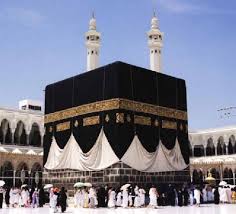
This is the last, and arguably a conditional pillar of Islamic practice, in the sense that one is obligated to make the pilgrimage to the site of the Ka'bah, built by Abraham and his son for the purpose of worshiping God, when financial and physical means are available. The Ka'bah is located in Makkah, in the Kingdom of Saudi Arabia.

During Hajj, we are once again made equals. The White seamless wraps, called the Ihram, does not allow that one's financial or education status be recognized. The King and the pauper both endure the same struggles, performing the same rituals, and each learning something, be it about others and their needs, or of a personal nature, that they were suppose to learn. This is why we have a tradition in Islam, attributed to no greater a figure than the Prophet Muhammad himself, upon whom be peace and blessings, that a successful Hajj [pilgrimage] wipes out prior sins, a person is renewed, pure as if a new born baby.

A recent study shows that returning pilgrims are 22% more likely to see Non-Muslims as equals, twice as likely to condemn terrorism, and 8% more likely to hope their daughters would adopt professional careers. [ "Muslim pilgrimage; a journey towards Tolerance?" Think; the magazine of Case Western Reserve University, Fall/Winter 2009 edition, page 18]

Conclusion

The foundation of Islamic practice is one that places emphasis on personal development, enlightenment, charity, sobriety and every other good characteristic. Islam is wrongly associated with violence and criminal activity. The recent death of a Detroit Imam, Luqman Abdullah, and the arrest of several of his supporters has once again brought the idea that Islam and criminality are linked to the public. One charge alleges that Abdullah gave legitimacy to theft, on the grounds that as long as they prayed and the thefts "benefits Islam", it was legitimate. Given the public works and reputation of the deceased Abdullah, the charges are very suspect, but nonetheless in terms of what Islam teaches, it's pillars hold up people's hearts and minds to always be conscious of Allah, of one's personal responsibilities and societal responsibilities.

Islam is a tool from God that can enlighten all who wish it, who actively seek it. This does not mean we will become monks, nor does it require that we give up enjoyment in life or comforts. It simply means that we train, that we refine the goodness that is present in the hearts of all humanity, utilize that goodness, apply it in both a systematic and random manner. Random acts of violence can become random acts of kindness.


Footnotes

[1] Congregational prayers are highly preferred, especially the obligatory ones, which can be done in a Mosque or with a group anywhere. One Hadeeth describes it as being "twenty-seven times greater than prayer alone." [ Bukhari, 10:30]

[2] The Shi'ah Muslims do not follow this practice, instead, their tradition places emphasis on individual prayer at night [in contrast to communal]. They do, however, gather together in Mosques to read the Qur'an together in the nights of the Ramadan month.

Sunday, May 24, 2009

Are Muslims really collective ostrichs?


{ft.1}

Introduction

Thursday evening I received a telephone call from a Muslim brother in another location. He expressed indignation at the recent arrest of four Muslim men in the state of New York for an alleged plot to shoot down planes and attack a Jewish Synagogue.

His concerns were, in essence, two-fold. [A] Our Masaajid [Mosques] are not speaking about a rise in violent extremism among members of the Muslim community. In his words "we only talk about the Qur'an and the Sunnah?" [B] Islam is spreading among people who have issues with modern life, 'anti-american folks' as he termed it. In addressing point B, It is sufficient to note both from personal experience as well as statistics that Islam is being embraced, more and more, by a comfortable middle-class. One example of a stable person embracing Islam has already been discussed . Certainly, one does not need to have a bias towards America to embrace Islam.


Do we really ignore the rise of violence prone extremism?


The answer to this is a resounding NO! Blogs, webforums, books, position papers and lectures produced by Muslims are all full of various conclusions on this phenomenon.This writer has personally sat in the audience of many Friday Khateebs delivering the khutbah addressing this problem, usually from a religious viewpoint, all calling for an end to religiously inspired violence.

I told the brother that perhaps at his Masjid the issue is not discussed because the Imams there do not see it as relevant to the needs of their particular audience. Moreover, an audience does not want to hear about negative issues every Friday at the Masjid from the Imam or Khateeb. It can be argued that the Friday Jumu'ah Khutbah should keep these sort of issues, if discussed at all, to a very limited few minutes, leaving the issue to be discussed in a more appropriate setting.{Ft.2}

So, Yes we are discussing this problem. The level of discourse will of course vary from one group to another, and the proposes solutions will also vary. Most of us always assert that the solution is a "return to the Qur'an and Sunnah", some say we have to become 'modern', but nonetheless the problem of religiously-inspired violence is on the radar.

Just what is the solution?

In the context of the broader Muslim world, if we want events such as suicide bombings to end, more justice and opportunities must be forthcoming from the elites. Poverty and oppression is the daily experience of many people, especially in Palestine. Such circumstance will naturally produce reactions. Just attacking the symptoms will not due, the causes must be addressed, with an interest in fair play. Occupation of many Muslim lands by foreign armies, such as in Iraq and Afghanistan, must also end, and allow for a truly independent government to be formed, one which will address the heightened tensions in their society.

It is worth noting that there will always be "crazies" out there, but in terms of addressing the root causes, they will have to be marginalized while the root causes are examined and addressed.


The latest plot

Returning to the Bronx arrests, I have to express my doubts as to exactly how serious was the threat. After all, we all know the expression about the boy who cried wolf. Take, for instance, the following paragraph from Friday's newspaper.

According to a criminal complaint unsealed Wednesday night, federal officials had been aware of the plot for almost a year and had an informant working with the crew. The FBI arranged for the alleged plotters to receive a non-functioning missile and bogus C-4 explosives. [USA Today, 5/22/09, page 3A '4 held without bail in chilling plot']

Does it really take one year for an attack on a place of worship? For the government to 'arrange' for them to take possession of these items seems a bit like entrapment. Moreover, the Imam of a Mosque attended by some of the alleged plotters occasionally was quoted in the same article as asserting that they were "poor and needy". Do poor and needy people have the time, interest, money or training to acquire, store and use these devices? Moreover, what benefit would they have gained for such an insane and immoral attack?

Certainly we don't know all the facts, but nonetheless I think these are legitimate concerns. Fear is a motivator, and on the surface, this appears to be one of those occasions. Perhaps it is conceivable that one or two individuals among them spoke of their frustrations [they were all convicted of crimes in the past] which led to their entrapment. Below is another article explaining a similar view.

Yet Another Bogus ‘Terror’ Plot
by Robert Dreyfuss

By now it's maddeningly familiar. A scary terrorist plot is announced. Then it's revealed that the suspects are a hapless bunch of ne'er-do-wells or run-of-the-mill thugs without the slightest connection to any terrorists at all, never mind to Al Qaeda. And finally, the last piece of the puzzle: The entire plot is revealed to have been cooked up by a scummy government agent-provocateur.

I've seen this movie before.

In this case, the alleged perps -- Onta Williams, James Cromitie, David Williams, and Laguerre Payen -- were losers, ex-cons, drug addicts. Al Qaeda they're not. Without the assistance of the agent who entrapped them, they would never have dreamed of committing political violence, nor would they have had the slightest idea about where to acquire plastic explosives or a Stinger missile. That didn't stop prosecutors from acting as if they'd captured Osama bin Laden himself. Noted the Los Angeles Times:

Prosecutors called it the latest in a string of homegrown terrorism plots hatched after Sept. 11. "It's hard to envision a more chilling plot," Assistant U.S. Atty. Eric Snyder said in court Thursday. He described all four suspects as "eager to bring death to Jews."

Actually, it's hard to imagine a stupider, less competent, and less important plot. The four losers were ensnared by a creepy FBI agent who hung around the mosque in upstate New York until he found what he was looking for. Here's the New York Times account:

Salahuddin Mustafa Muhammad, the imam at the mosque where the authorities say the confidential informant first encountered the men, said none of the men were active in the mosque. ...

Mr. Cromitie was there last June, and he met a stranger.

He had no way of knowing that the stranger's path to the mosque began in 2002, when he was arrested on federal charges of identity theft. He was sentenced to five years' probation, and became a confidential informant for the F.B.I. He began showing up at the mosque in Newburgh around 2007, Mr. Muhammad said.

The stranger's behavior aroused the imam's suspicions. He invited other worshipers to meals, and spoke of violence and jihad, so the imam said he steered clear of him.

"There was just something fishy about him," Mr. Muhammad said. Members "believed he was a government agent."

Mr. Muhammad said members of his congregation told him the man he believed was the informant offered at least one of them a substantial amount of money to join his "team."

So a creepy thug buttonholes people at a mosque foaming at the mouth about violence and jihad? This is law enforcement? Just imagine if someone did this at a local church, or some synagogue. And the imam says the people "believed he was a government agent."

Preying on these losers -- none of whom were apparently actual Muslims -- the "confidential informant" orchestrated the acquisition of a disabled Stinger missile to shoot down military planes and cooked up a wild scheme about attacking a Jewish center in the Bronx.

But according to a Los Angeles Times report, it is even more pathetic:

The only one of the four suspects who appears to have aroused any suspicion was Payen, a Haitian native who attended the Newburgh mosque. Assistant imam Hamid Rashada said his dishevelment and odd behavior disturbed some members, said the assistant imam, Hamid Rashada.

When Payen appeared in court, defense attorney Marilyn Reader described him as "intellectually challenged" and on medication for schizophrenia. The Associated Press said that when he was asked if he understood the proceedings, Payen replied: "Sort of."

Despite the pompous statements from New York Mayor Bloomberg and other politicians, including Representative Peter King, the whole story is bogus.

The four losers may have been inclined to violence, and they may have harbored a virulent strain of anti-Semitism. But it seems that the informant whipped up their violent tendencies and their hatred of Jews, cooked up the plot, incited them, arranged their purchase of weapons, and then had them busted. To ensure that it made headlines, the creepy informant claimed to be representing a Pakistani extremist group, Jaish-e Muhammad, a bona fide terrorist organization. He wasn't, of course.

It is disgusting and outrageous that the FBI is sending provocateurs into mosques.
The headlines reinforce the very fear that Dick Cheney is trying to stir up. The story strengthens the narrative that the "homeland" is under attack. It's not. As I've written repeatedly, since 9/11 not a single American has even been punched in the nose by an angry Muslim, as far as I can tell.

Plot after plot -- the destruction of the Brooklyn Bridge! bombing the New York Subways! taking down the Sears Tower! bombing the Prudential building in Newark! -- proved to be utter nonsense.


Robert Dreyfuss is a contributing editor to The Nation magazine, and the author of Devil's Game: How the United States Helped Unleash Fundamentalist Islam (Metropolitan).

Copyright © 2009 The Nation -- distributed by Agence Global


In any case, I hope this case will be watched carefully.

Footnotes

[1] One word for Ostrich in Arabic is Dhaaleem. The Ostrich bird puts his head in the sand, as shown above, so the name Dhaaleem implies a self-oppression or self-delusion.

[2] The Friday prayer's main purpose, according to the Qur'an, is "the remembrance of Allah" [Q 62:9]. Some argue that we should keep to a religious theme in the khutbah and avoid politics and the like all together. However, this position seems at variance with the practice of both the Prophet and early Khulafaa', who had no problems using it as an opportunity to share non-religious information of societal consequence. Many scholars say this is precisely why we traditionally divide the Khutbah into two parts, the latter part being used to discuss societal or communal concerns.