Showing posts with label Salaah. Show all posts

Thursday, July 6, 2023

What EVERY Muslim needs to know about Islam


Introduction

The acquisition of knowledge is a noble undertaking, yet it is one which takes time, patience and hard work. An organized system of presenting information will have periodic tasks, exams and tests to determine the student's abilities and retention of the data that had been delivered during the course of academic period. 


With religion, particularly the religion of Islam, a great deal of tradition, texts and opinions are available, all of which have a level of attraction and arguments, which can lead to a great deal of confusion and outright dysfunction on a basic religious level. This is demonstrated occasionally within self-study. A person who has, on their own, studied the Japanese language, memorizing vocabulary and grammar to a point where they deem themselves as having mastered it   will often be lacking the most basic of necessary information, and when confronted, will lose credibility. While this is not intended to belittle self-study(ft.1), it is something to be cognizant of.


The title of this article is taken from the maxim coined by Muslim scholars as a teaching tool. That maxim is "The knowledge of religion that is necessary to possess" (Al Ma'loom min ad deeni bid-Daroorah). This expression is typically used in a theological sense to emphasis what Muslims are obligated to understand and believe in.


This article departs from the normative theological uses (while not denying the legitimacy of that usage) in order to focus on the more practical applications which are often neglected or even ignored, precisely because of lack of understanding their importance. 


We recognize that there is a certain level of legitimate differences of opinions, beliefs and judgement calls within the Muslim community (which shall be addressed below), so we have focused on matters that are largely deemed agreed upon (Ijmaa') by all parties. 


The Five pillars


While the five pillars are indeed well-known because of one hadeeth (ft.2), there are details that are necessary to put into place in order for these pillars to actually construct something beautiful. Four out of five of those pillars are in the practical realm, rather than theological(ft.3), and are addressed below.


(I) Salaah: daily prayers


While it is well-known that one is to face Makkah (the Qiblah), it is also necessary to be in a clean state, physically and mentally. This is known as Tahaarah!  The place of prayer should also be clean and the salaah should not be offered in a place such as a restroom. The process of ablution (Wudoo') should occur before prayers, and the state of wudoo' becomes necessary to renew after using the restroom, flatulence, deep sleep, and of course intimacy requires a full bath (ghusl) before salaah.


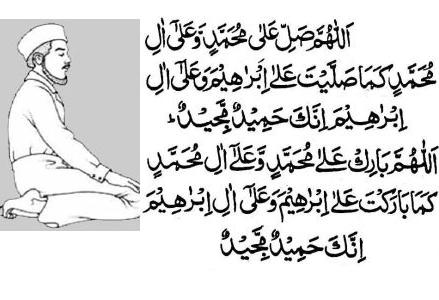
The necessary texts to recite in the prayers are of course Soorah Al-Faatihah-the opening chapter of the Qur'an (with a high emphasis on any other Quranic texts as well), the terms of glorification recited in the bowing (rukoo'), prostration (sajdah), the testimony of faith (tashahhud) and the pleading for the Messenger and all believers (Salaat 'alan Nabi) done in the final sitting posture. (ft.4)

For Muslim men, we also want to add that the men function as prayer leader (or Imam) in the family. We must know (and teach, particularly our sons) the above, as well as the call to prayer (adhaan), the immediate summons (Iqaamah), the number of units (rak'ahs) for each prayer(ft.5), and how to organize for communal prayer (with family and friends). These things are relatively easy. Other details come as time goes on, as needed. However, in terms of necessary knowledge regarding the salaah, the above cannot be dispensed with. (ft.6))


(II) Fasting:


Every able-bodied Muslim is expected to observe the fast from dawn (fajr) to Sunset (maghrib) during the month of Ramadan. Exemptions are made for the ill, the traveler (musaafir), menstruating women and the like.  A common misconception in the West is that the fasting period starts at sunrise (shorooq). 

The starting and ending times of the fast are very important to observe. It is also a good time to observe more prayer, charity and Qur'an reading. 


(III) Zakaat:


The Qur'an connects prayer and charity (Zakaah) in multiple places, easily observed by even a cursory glance at the scripture. Unfortunately, this pillar is unnecessarily neglected.

It should be made a priority; in the same way our monthly bills are a priority. With the emergence of the internet and automatic withdrawals, paying it should be an easy task. For more on this, see Shamsuddin Waheed: Zakaat: Reflections on its application in the Western world


(IV) Hajj pilgrimage:


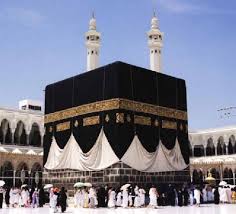
This pilgrimage to Makkah, the site of the Ka'bah, is contingent upon physical and financial abilities. Many people worry about the pilgrimage rites (manaasik) years before making the intentions to actually go, yet our advice is to simply wait until it is near time to go, when the travel arrangements have been made. 


Malaysian and Indonesian pilgrims, upon getting the visa, actually go through classes in preparation of it, in a very organized fashion. Moreover, pilgrims travel in groups, and most travel agencies will have a guide in the group to help with the rites. Indeed, when I was blessed to go on the Hajj, our group had a power-point presentation preceding our entry into the pilgrimage. 


Sunnah

The term "Sunnah" in a technical sense refers to the established tradition of the Prophet Muhammad (Sall Allahu 'alayhi wa sallam). The term is widely used to highlight the Prophet's unique worship practices that fall outside of those deemed obligatory. For example, before offering the obligatory dhuhr prayer (which consists of four units), he would do a voluntary salaah consisting of four units. People would call these "sunnah prayers" or simply "sunnah". 


Sometimes the term is seen as synonymous with Naafil, which means voluntary, however in a technical sense this would be an incorrect application, because a person can do an action on their own volition, and it has no immediate reference to something done by the Prophet.


Sects

Between 85-90% of Muslims globally fall under the category of Sunni (Ahlus sunnah wal Jamaa'ah). In a broad sense, the appellation means that they take from the Prophet Muhammad's tradition, as conveyed through his companions and family, for legal precedence. 

15% (some estimates are as high as 20%) of Muslims belong to the Shiite community. They have a number of sub-groups, but the main difference is that they assert that they take from a select few from the Prophet's family (Ahlul Bayt) for legal and theological information. 


While there are some deep and significant differences between the two groups, it should be mentioned that both agree on the fundamentals of faith as well as most secondary points.


Schools of thought


While both sects have varying schools of thought, our focus is on the four which remain among the Sunni community. These schools, known as madh-habs (the correct Arabic plural is Madhaahib), have slightly different methodologies in evaluating and applying Islamic texts in a legal application. 


The Hanafi school dominates South East and central Asia, as well as Eastern Europe, The Shafi's in Far Asia, parts of the Arab world. The Maliki school (although founded in Madinah) commands loyalty in North and Western Africa, and Hanbali in Saudi Arabia. 


As a result of slightly different methodologies, conclusions on certain legal minutia vary. In prayers, the Shafi'ees raise their hands (raf' yadayn) at every movement of prayer, while the Hanafis do so only when initiating the prayer (Takbeeratul Ihraam).

These things should not be viewed as issues to result in division. It should also be noted that the divisions above (among the Sunni schools) are not theological. The term used for jurisprudence, for deriving texts for legal (and often ritual application) is Fiqh.


Culture

Healthy and wholistic practices are welcome in the Muslim community. The Muslim world is actually very diverse in these regards, and while Muslims have much in common as a result of the religion, we also acknowledge the richness in variety of languages, foods, history and perspective.


From an Islamic perspective, we only "reject" that which is contrary to the Qur'an and Prophetic legacy. In other words, the values and clear guidance of the religion is primary reference for us, even if the culture says something else. A good example is the caste system. It perpetuates oppression and separation. Islam teaches equality of all before God (Q 49:13), thus, we follow Islam, not the cultural attitudes. 


Conclusion

The content of this article should function as a foundation for seeing where we need to be in a religious sense. It omits many details and follow up questions/comments are always welcome.


Footnotes

(1) For thought on study, see Shamsuddin Waheed: Simple and easy study methods


(2) The narration is reported by 'Abdullah b.Umar, and is found in Bukhari and Muslim's collections, however, there are other reports with similar content.


(3) The first pillar is the shahaadah, declaring belief in the One and only God (Allah) and acknowledging that Muhammad (peace be upon him) was God's messenger. 


(4) This is also known by names such as Durood Sharif, Salaat Ibrahimiyyah etc. I explain the significance of this invocation at around minute 13 in my recent 'Eid ul Ad-haa sermon, to be found Here: Eid-ul ad-haa 2023 


(5) For the daily obligatory prayers, the units are as follows: Fajr is two rak'ahs, dhuhr is 4, as is 'Asr. Maghrib is 3, and 'Ishaa is four rak'ahs. On Fridays, if in a mosque, the dhuhr is replaced with Friday (jum'ah) prayer, itself having two rak'ahs. The daily prayers can be prayed in congregation (Jama'ah), whereas most "Sunnah" prayers-if observed- are done on an individual basis.


(6) All of the schools recognize the need for Al-Faatihah to be within the prayers, and most recognize that the addition of additional Quranic content as constituting Sunnah (and Not obligatory). With that said, the universal practice is following this structure: Al-Faatihah, followed by another Quranic text, in the first two units of the salaah. Thus, it is important for all Muslims, especially men, to have more Qur'an committed to memory. The last section of the Qur'an (Juz' 'amma) contains short chapters and are thus ideal for use in the prayers. At a minimum, I would recommend learning by heart at least the final three Quranic chapters (112-114) and rotate them in your prayers. It also has the effect of making your salaah more impactful.


Monday, March 22, 2021

Conception of Salaat 'alan Nabi in light of the Qur'an and Sunnah

 Introduction


 One of the practices universally observed in Muslim culture is- when referencing Prophet Muhammad, to recite statements such as Sall Allahu 'alayhi wa sallam after his name. Similarly, neglect of reciting this term can be viewed as disrespectful by some observers. The practice is called by various names worldwide, such as Salaat 'alan Nabi, Durood Sharif, salaat wa salaam,  and even salawaat.


Several questions emerge as a result of this practice, among them being : (1) Does the religion require this to be recited frequently, or simply on occasion?  ( 2) Does this practice elevate Prophet Muhammad to an object of worship ? (3) Is there a distinction being created for him-in contradistinction to the other Prophets? 

While this article does not seek to answer those questions, it does seek-by analysis of the Islamic texts, to provide an understanding of the foundations behind the practice, and take away a deeper cognition of the texts themselves.


Salaat 'Alan Nabi in the Qur'an

 A solitary Quranic text forms the strongest evidence for the practice. The verse itself is often recited as a prelude to Salaat 'alan nabi itself, as well as Mawlid events, poems, and supplications. The text reads

اِنَّ اللّٰہَ وَ مَلٰٓئِکَتَہٗ یُصَلُّوۡنَ عَلَی النَّبِیِّ ؕ یٰۤاَیُّہَا الَّذِیۡنَ اٰمَنُوۡا صَلُّوۡا عَلَیۡہِ وَ سَلِّمُوۡا تَسۡلِیۡمًا

"Indeed, Allah and His angels Yusalloona upon the Prophet. People of faith, do salaah on him, and give obedient submission" (Q 33:56)

The verb yusallona is typically translated as "send blessings". However, contextual understanding is very important. This Soorah, Al Ahzab - as a whole- discusses issues related to conflict, as well as domestic  issues, and inspirational material. When read in context, especially in considering the term "Indeed Allah and His angels", it becomes apparent that Yusalloona means that God, through the agency of his angels, give the Prophet what he needs for success, and that the believers are told to do the same thing, i.e. to give their support, be it morally, physically, financially, to the Prophet, in order that the cause he is standing upon is successful.


It is worth noting here that the same Soorah has the same sentiment, with the same wording, as applied to believers. "It is He (God) who  is conveying upon you the meeting of your needs (yusalli 'alaikum), and the angels (are involved in this process), in order to remove you from darkness to light, and God is merciful to people of faith." ( Q 33:43).

 ہُوَ الَّذِیۡ یُصَلِّیۡ عَلَیۡکُمۡ وَ مَلٰٓئِکَتُہٗ لِیُخۡرِجَکُمۡ مِّنَ الظُّلُمٰتِ اِلَی النُّوۡرِ ؕ وَ کَانَ بِالۡمُؤۡمِنِیۡنَ رَحِیۡمًا


Salaat 'alan Nabi in the hadeeth literature

There are a number of reports in the hadeeth literature that place emphasis on reciting salaat 'alaa Nabi, one of them saying that for every time it is done, Allah will send ten blessings on that person. (saheeh Muslim, Sunan Abu Dawud). These reports have varying degrees of authenticity, but nonetheless has always been acted upon, in particular in the final sitting posture in prayers.


The general wording is as follows:


(1) "O Allah, send upon (salli 'ala) Muhammad the necessities, and upon the followers of Muhammad, as you did upon Abraham, and the followers of Abraham, Indeed, You are praiseworthy, glorious."


(2) "O Allah, give blessings upon (Baarik 'ala) Muhammad, and upon the followers of Muhammad as you did give blessings to Abraham and the followers of Abraham, Indeed, You are praiseworthy, glorious." 


What is interesting is that in the hadeeth literature, we find that the Prophet himself, upon whom be peace, used the same phraseology in connection to other people:


" 'Abdullah b. Abi Awfaa related that whenever a people would bring their charity (sadaqatihim) to the Prophet, he would say "O Allah, send upon the people of so and so their necessities (Allahumma salli 'ala Aal Fulaan)." 

The same report says the Prophet would make the same invocation- the one traditionally made by Muslims on his behalf- for the behalf of specific individuals when they gave their charities (Saheeh Al Bukhari and Muslim )


Do Muslims worship   the Prophet?

Some critics assert that the practice of Salaat 'alan Nabi constitutes worship of the Prophet. They further assert this because the term Sall Allahu 'alayhi wa sallam has been translated by some as "prayers and peace be upon him".


The term Salaat is used for prayer, as in the prayers Muslims do on a daily basis. However, I hope it has been seen that the term, as thousands of other terms in every language, do not always the same meaning every time. One laughable critic has claimed that Islam teaches that "God prays to Muhammad", citing the expression Sall Allahu 'alayhi wa sallam as evidence. 


Other important points

(1) The Muslims generally have agreement of the necessity of doing Salaat 'alan nabi inside the prayers, in the final sitting position. The first part, in Arabic Allahumma Salli 'ala Muhammadin wa 'alaa  aali Muhammad.. is viewed as necessary, whereas the second part, wherein Baaraka is mentioned, is deemed as, at best, a Sunnah. 

(2) There is an important distinction between the two parts of the supplication given in the "Salaat 'alan Nabi in the hadeeth literature" section above. The first part shows us a prayer for the necessities, the tools for success, be met, and that the Qur'an and hadeeth both use it in that sense, whereas the second one is for extras, for those things that, while unneeded for survival, enhances one's life and general happiness.

(3) There are narrations, including above, which speak of both aspects being extended not only to the Prophet, but to his followers (Aal Muhammad). This shows that even in worship, one has positive desires for others, as well as that we seek Divine help for the cause that the Prophet represented. After all, the Prophet is dead, and receives his rewards from his Lord, Allah Almighty. So "Muhammad" inside the sitting posture of prayer represents advocating or praying for the cause the Prophet stood for!


(4) The Shiites apply the term Aal Muhammad to the Prophet's family. This is a different understanding of a linguistic point, which should not be a point in polemics. 


Conclusion

There are many concepts in religion which take on a cultural dimension, and while this is not a problem, it is good to examine, with as much open-mindedness as possible, the sources of these concepts, to see the original intent behind them.

Salaat 'alan Nabi is clearly used in the Qur'an as an exhortation to physically, morally, and financially, to the believers, to assist the Prophet, to support him in his cause.

We believe the Prophet did also ask for a verbal supplication be made for him in prayers. However, the hadeeth literature is clear that he would do the same supplication, in the same wordings (Qaala: Allahumma salli 'ala 'alayh.) for people who would come to him.

We certainly are not advocating changing the practice of reciting Sall Allahu 'alayhi wa sallam (or expressions of a similar import) after the Prophet's name, we are simply stating, in light of the Qur'an and Hadeeth literature, that the Quranic verse which serves as the primary textual support for this- that verse (Q 33:56) has a deeper message than usually imagined.


Friday, March 20, 2020

Inner and Outer Dimensions of Worship/Islam 101 class

Note: The following are links to our recent presentation on different aspects of worship, with emphasis on the five daily prayers, for new Muslims.

The reasons behind the spiritual practices are explored. Click on the individual video descriptions to zoom in on particular topics discussed.

Inner and Outer dimensions of worship part 1

Part two with Q and A session

Monday, November 18, 2019

Methods And Goals Of Contemplative Practices In My Faith (Panel Discussion )

(The following is an edited version of my presentation for the 2019 Interfaith Forums, organized by the Interfaith Council of Southern Nevada, held November 10th, 2019 at Masjid Ibrahim.)

Introduction


The Qur'an tells us "Indeed, prayer restrains from immorality and repugnant actions" ( Q 29:45). The word translated as "prayer" is "Salaah". In our faith, it is observed at least five times daily, during specific times of the day. The Salaah ritual has therein recitation of Quranic texts, bowing and prostration. God does NOT need that we do this, or any other act of worship, rather, it is we who need it.

The Salaah ritual is regulated, offered in a particular fashion, and is deemed a religious obligation. The spiritual and physical benefits of Salaah have been widely recognized. The Prophet Muhammad (peace be upon him) identified it as the main exercise which distinguished between faith and lack of faith.

The Qur'an reminds us that there will be a time in which we are held accountable before God, and the salaah essentially reminds us of that, therefore it becomes important to do as much positive works as we can. Thus, the Qur'an connects the ritual of salaah to the giving of a portion of one's wealth to the benefit of worthy causes, such as uplifting the poor. Similarly, the Qur'an expresses criticism of those who do ritual worship, yet are neglectful of needy human beings.


Dhikr- The remembrance of God


Another ritual act done is known as dhikr! Traditionally, this includes the recitation of  God's names, formulas of praise and glorification. As a ritual, it is not deemed in an obligatory sense- the important exercise is the mental one here. The Qur'an says "The remembrance of God is the greatest (source of inspiration and power)" .

Dhikr as a ritual often takes place after the Salaah, and can be offered at any time without any preconditions. If we engage in this act (be it in a ritual or non ritual fashion)- it helps us to internalize the very hopes we seek from God. In other words, if we invoke and recall God as The Ever-Forgiving (Al-Ghaffar), forgiveness should become a part of our character as well.


Miracles

The actions of Salaah and dhikr produce a sort of barrier against mental and spiritual attacks, and is the main ways by which we connect ourselves to the Almighty.

With that said, what is perhaps most curious on this point is that miracles and mystical experiences are NOT the goals of these actions! THIS does not negate that miracles can take place, and that people can experience mystical moments, yet the fact of the matter is is that such things are subjective and ultimately do not provide any evidence beyond an individual level.

This is illustrated in the experiences of the 12th century figure, Shaikh Abdul-Qaadir Al-Jilani.  Once while he was praying, a voice comes to him, saying "I am your Lord".  The Shaikh replies "Are you God?" After repeated questioning, this voice says "I am making  lawful for you what I made unlawful for others". The Shaikh replied "You are Satan, because I know God would not make lawful for me what He has made unlawful for others".

Miracles are not what we need, because they can themselves be misleading. What we need is the inspiration derived from worship to be able to recognize truth and produce in this world, that is the formula for success in this life, with springs to enjoy in the life to come.


Monday, March 11, 2019

Allah: the source of education and growth (Videos)

Note: Below you will find our recent Friday Khutbah (sermon). It is divided into three parts


Allah: The source of education and growth part one

Summary: Being truly connected to God will result in being open minded and less dogmatic.Practical examples of differences in prayer among Sunni Muslims are briefly explained, and argued that such differences should not lead to actual division.

God actually created us to embody differences, and that's okay.

part two

Summary: Humility before God a necessary characteristic. Some discussions on particular supplications at the Hajj pilgrimage.

part three

Summary: Briefly looks at the Prophetic supplication "O Allah, show us truth as truth, and give us the ability to follow it, and falsehood as falsehood, and give us the ability to abstain therefrom. Concluding remarks.

Sunday, January 22, 2017

What is the point of invoking Allah ? Friday Khutbah

( Note: The following is an edited version of a Friday Khutbah delivered 1/20/17 at Toledo Masjid Al-Islam. Much of the references in Arabic language have been omitted here, as has the opening Hamd.]

Does God answer our prayers?

A common question is that if a person believes in God and prays to him, why doesn't he answer his prayers? A person invokes Allah for this or that particular thing, and the opposite happens! The core of these questions is actually the query "If God is All-knowing, Omnipotent and Omnipresent, why pray to him in the first place?".

The meaning of the core question is simple: if God already knows what we want and need, why even bother invoking him at all? The answers to these queries are found within the Qur'an and the Sunnah.

The Prophet Muhammad صلى الله عليه وسلم  has said "Du'aa [invocation] is the core of worship.";الدعاء مخ العبادة. He is also reported to have stated "Du'aa is worship". Therefore, we are to learn from these statements of the Messenger [Peace and blessings be upon him] that asking Allah, invoking him is an indicator, a strong sign, of being truly connected to him. 

It is true that the Qur'an teaches that God is all knowing, all aware, all seeing and is even all good [the latter is found within another hadeeth]. He knows what you want and what you need, yet the need still exists to invoke him.

If that is the case, why does he not answer?

Allah hears all supplications


Allah does respond. The Qur'an tells us directly Allah's statement on this issue: "I respond to the du'aa of the caller when he calls Me." اجيب دعوة الداع اذا دعان . So Allah does hear, he does see, and he even responds, however, it is not always the response we want!

Your child asks you for candy. There are times you give it to them, however out of concern for their health or other issues, you restrict it, even though the child is asking for it. The child does not always understand the wisdom you possess, but is forced to accept your parental veto,

It is because Allah is the All-knowing and the all aware that he does not always answer our du'aas the way we want them answered. 

In these regards, we need to ponder upon Allah's statement : "The human makes du'aa for bad [harmful] when he should be doing so for good, Indeed, man is hasty." و يدع الانسان بالشر دعاءه بالخير وكان الانسان عجولا

This ayah gives us another teaching, supplications to Allah can be spontaneous, however they should as a general rule be thought out, and connected to genuine human efforts. After all, if God grants all we ask at the moments we ask and in the precise measurements we ask, that would breed laziness, stagnation and stunt creativity.

When can we call upon Allah

Call upon Allah.The Prophet Muhammad has taught us that good opportunities are found in the rukoo', the sujood, after the Tasleem [the concluding act of the formal salaah], and Fridays. Whenever you make du'aa, be sincere therein, and think deeply on what you want to invoke him for. 

When bad things happen


Natural disasters and oppression by man sometimes causes people to either deny God's existence or to view him as cruel and capricious. Philosophers and theologians of every religions have been discussing this for countless generations. 

Facing catastrophes, bey they natural or otherwise, have the effect of bringing us closer to Allah and to each other. It is said that it is only when facing disasters that one discover's one's true friends.

Other related texts on this subject include these following profound Quranic verses. "Praise belongs to Allah, who has created the heavens and the earth, and made darkness and light." [Q 6:1]. We also read : "Say: I seek refuge with the Lord of daybreak, from the 'sharr' he has created." [Q 113:1-2].

The term 'sharr', usually translated as 'evil', can also be rendered as 'harm' 'source of injury', even 'fires of youth'. So these things happen by God's will within the Sunnah of Allah, with a wisdom therein which we can't immediately see, but often see later on in life!

Allah's Sunnah is to give us lessons by using our selves or by seeing the lessons in the experiences of other people.

So if we think we are experiencing problems, we should address them by turning closer to Allah Our Lord, and to our deen.

When our supplications aren't answered in the way we want, consider that the thing we are praying for may be harmful in the long term.

Sins stopping one from acts of worship

Some people think that weaknesses or sins are a barrier to worship, that any acts of worship they do would end up being hypocritical, so they consequently will not pray.

Such thinking is understandable but misplaced. The Qur'an says "Indeed, prayer [salaat] restrains from indecenies and repugnant acts, the remembrance of Allah is the greatest [source of inspiration and power] and Allah knows what you produce." [Q 29:45]

ان الصلاة تنهى عن الفحشاء والمنكر ولذكر الله اكبر ولله يعلم ما تصنعون

Eventually, the effects of salaat enter our hearts, our arms and our legs, so don't let weaknesses or sins discourage you from Allah, from remembering and worship of him. 


Thursday, February 11, 2016

The Psychology of Family and Spirituality in Islam

[Note: This is an edited version of the address given at the February 2016  Tazkiyatun Nafs program at Toledo Masjid Al-Islam.]


Let us begin by asking how 'family' is defined? Or even the term 'spirituality' for that matter. In this age, we think of the Nuclear Family unit when it comes to family. The Nuclear Family unit is a married couple, with three children maximum. Admittedly this does still get extended to include grandparents, cousins etc.

Traditional cultures tend to expand these family groupings to include clan, tribe or a feeling of loyalty to locality.

Families have shared bloodlines and history. They also develop over long periods shared experiences, pains and laughter. This is a bond that is usually unbreakable.

"And have Taqwaa of Allah, through whom you ask each other [O humans] [of your rights], and the family [as well], Indeed, Allah is Ever-Watchful over you." [Q 4:1]
يَا أَيُّهَا النَّاسُ اتَّقُواْ رَبَّكُمُ الَّذِي خَلَقَكُم مِّن نَّفْسٍ وَاحِدَةٍ وَخَلَقَ مِنْهَا زَوْجَهَا وَبَثَّ مِنْهُمَا رِجَالاً كَثِيرًا وَنِسَاء وَاتَّقُواْ اللّهَ الَّذِي تَسَاءلُونَ بِهِ وَالأَرْحَامَ إِنَّ اللّهَ كَانَ عَلَيْكُمْ رَقِيبًا
The family bond is natural, and Taqwaa is expressed by respecting that bond.

The soul and the family in New Testament tradition

Some religions have a shaky view when it comes to the ties between the family and the soul. Paul [1 Cor. 7:8]  says it is better to not marry. The New Testament has Jesus ['Isa, 'alayhis salaam] say that he has come to divide family members [Matt.10:35]. So we have these two New Testament assertions that place family as something that can destroy the soul, and that the family must be sacrificed  for the welfare of the soul!

Issues that need to be addressed from the Islamic perspective

[1] God placed you with your blood family. The blood ties, shared experiences, all creates bonds which are not to be broken. Indeed, Allah says that even if our disbelieving parents try to induce us towards false worship, we are not to do that. however we are to keep strong ties with them in life. [ Q 31:15]

[2] The blood family is the first school wherein we learn about God, worship, 'aqeedah etc.

The Prophet said "Marriage is half of the deen" {Bayhaqi}. Why does he, 'alayhis salaatu was salaam, say this? Because from that, a Jamaa'ah has the potential to be born, born to worship Allah. Even the relationship between two people, with it's ups and downs, can bring them closer to Allah in giving thanks as well as calling on him during times of difficulty. When one has a family, the believer spends much time praying [Du'aa] for them. According to the Messenger of Allah [Sall Allahu 'alayhi wa sallam], this counts as worship.

"Du'aa  is the core of worship," [ Tirmidhee].  "Du'aa is worship" [ Abu Dawud and Tirmidhee].

[3] The concept of 'family' is very much expanded in Islam. Allah says the believers are nothing more than a brotherhood. "Brotherhood" [Ikhwah] is nothing more than a fancy term for family. [ Q 49:10]

Healthy people care about their family, they are careful with regards to the feelings and health of their family, they look for the interests of their family. Muslims are  supposed to be concerned about each other. This is even reflected in the small act of watching the news whenever we come across a news item involving other Muslims. Even without knowing the Ahadeeth or Quranic verses on this subject, Muslims do this, they do this because caring for other Muslims is something which is built-in into the daily practice of this Deen!


In the sitting posture of Salaah, we pray "O Allah, make the needs of Muhammad and his people be met." We also pray "O Allah, send blessings on Muhammad and his people." We are praying for the cause of Muhammad, the person of Muhammad, but also for his followers, that they have not only their needs, but blessings as well. That they have not only their immediate needs, but to have extra things, happiness in their existence.


Moreover, we 'officially' end the Salaah by turning to the right and the left, reciting the Tasleem [As salaamu 'alaykum wa rahmatullah, may the peace and mercy of Allah be on you].

Even praying alone, we still do this, and it's not restricted to communal prayers. It is said that we do this in order to greet the angels. Another way of looking at this, however, is that this serves as a training. In the midst of our worship of Allah, we are conditioned to care about other people.

In addition, in the family the family prays together in Jamaa'ah. They pray for each other and with each other. So we have here family connected by blood, but also connected [i.e. formed] by their shared belief in Almighty Allah.

This should bring us to a better understanding of the Prophet's statement [peace and blessings be on him] "None of you have Imaan until [Hattaaa] you love for your brother what you love for yourself." [Muslim].

Faith in God is deficient unless it is accompanied by- at minimum-  concern for one's brother. This is a value Islam seeks to develop within its followers.

What to do when family members are detrimental for our spiritual development

This scenario is one faced very often, by Muslims with Non Muslim family members, as well as Muslims dealing with [Muslim] family with different ideas of what it means to practice the religion.

The Qur'an gives us a powerful set of guidelines to answer this query.

"O believers, Indeed, some of your wives and your children are enemies to you." [Q 64:14]

We have to stop for a moment. Enemies is an extreme term to use. It means that they [the family members] have the potential to bring you harm when they are not on the same page spiritually. The verse continues to give us instructions.

ا أَيُّهَا الَّذِينَ آمَنُوا إِنَّ مِنْ أَزْوَاجِكُمْ وَأَوْلَادِكُمْ عَدُوًّا لَّكُمْ فَاحْذَرُوهُمْ وَإِن تَعْفُوا وَتَصْفَحُوا وَتَغْفِرُوا فَإِنَّ اللَّهَ غَفُورٌ رَّحِيمٌ
[1] Beware of them[Fah-dharhum].

Knowing that they can bring harm, one takes precautions. If they go in a direction that seeks to take you to Haraam, or to that which brings harm, even though they may not realize the harm they are bringing, be on the lookout!

In modern times we talk about toxic people or narcissistic  personalities. Included in this are folks who are emotionally manipulative or even guilty of emotional blackmail. We are told to limit our interactions with these types. Extend this to, for example, those who constantly backbite or gossip. In Islam, the listener is also deemed as guilty as the speaker. So if we know these types, when they start, change the subject or leave the conversation. Similarly, if they offer you drugs, alcohol and the like, simply decline and avoid that environment.

[2] "If you pardon" [wa in Ta'foo]

Try to be understanding of their situation or condition. Try to excuse them, even though you are taking precautions to limit their harm to you.

[3] "Overlook" [wa tas-fahoo]

To be forbearing, to put up with it all to a point. To be patient. One need not turn everything into an argument.

In the age of internet and mass communication, we often hear about the Haraam Police. This is a nickname give to Muslims who are always so preoccupied with the issues of other people. They will police your clothes and your Facebook posts. They will critique your beard, women's Hijaab and the like. They have stations everywhere, and will even spend time critiquing Imams. They will analyze speeches of Imams and scholars, especially the famous ones, for theological mistakes, for mispronunciation of Qur'anic sentences. They will even publish books of 'refutations' regarding these personalities "deviance" and YouTube videos will follow suit.

We can understand the command to overlook in that sense as well. Don't let it bother you. You don't need to become the Haraam police yourselves, Take precautions, yet be understanding and overlook their issues. Strive to be better yourself, and avoid becoming judgmental. You may end up becoming a positive influence on them. This is precisely the way of the Prophet.


The great Egyptian scholar, Shaikh Muhammad Al-Ghazzali [1917-1996] was once asked "What is the ruling about one who has abandoned prayers? The questioner was probably expecting that the Shaikh would declare such a person a disbeliever and the like. However, the Shaikh gave a beautiful response. He says "His ruling is that YOU take him WITH YOU to the mosque."

To take someone with you is a sign of caring, and that care may indeed change that person's condition and you can become the best of friends. Remember Khalid ibn al-Waleed, who fought the Muslims at Uhud, or Umar ibn al-Khattab, Radee Allahu 'anhumaa. These were foes to Islam and the Prophet himself, yet became the greatest champions of the deen.

[3] "And forgive" [wa taghfiruu]

Forgiveness is the last response in this series of steps. The Prophet practiced this many times, the most important being when he issued an amnesty for all those who had led a two decade bloody campaign against him.

Forgiveness is difficult but doable. It is also one of the main pillars of a high spiritual position, to be yourself forgiving, and not just asking Allah for his forgiveness.

The verse ends "So Indeed, Allah is the Forgiver, Compassionate"

Your 'foes' and yourself receive forgiveness from God. God is intensely forgiving. He does so often. He is the Constantly Merciful.

Understanding Mercy and Forgiveness

Enmity which is causing you stress, coming from whatever quarter, bringing into your life negative energy, striving to take you away from God and what is healthy, Allah can still deal with them. He can bring people to guidance. Allah can heal such people, here in this life.

That is an equation that we best remember.

By the same token, Allah says the Qur'an itself is a healer. He also says to "Make Jihaad against them [the rejectors] with it [i.e. Qur'an], and a mighty Jihaad it is." [Q 25:52]

Allah's healing can come to others by your own hands. To those with bad habits, share with them what the Qur'an says on that habit. To those who oppose Islam based on misinformation, share with them what the Qur'an says on that subject. If necessary, given them a Qur'an to read for themselves.

A Realistic Religion

This deen addresses all angles and all sides. If the majority of human beings could be influenced by only a third of what it teaches, the world would surely be better off. The Muslims have forgotten much of these teachings, that is the only logical explanation behind the many wars being fought in Muslim lands.

May Allah make us stronger as a body of believers, and increase in our our understanding of others, and understanding of our own needs.


Thursday, December 11, 2014

Selected prayers [Du'aa] from the Qur'an and Hadeeth: Text, translation, and spiritual reflections

Most of us have favorite or preferred things, and that includes Soorahs from the Qur'an. Here, I want to share some du'as that are among my favorite, that I make often.

رَبَّنَا آتِنَا فِي الدُّنْيَا حَسَنَةً وَفِي الآخِرَةِ حَسَنَةً وَقِنَا عَذَابَ النَّارِ

Our Rabb! Bestow on us the good of this life, the good of the hereafter, and protect us from the punishment of the fire. Q 2:201

This Du'a is a demonstration of the balance we are to have in life. Some people are fixated on the hereafter, wanting to attain heaven to the point of neglecting any connection or responsibilities in this world. That particular trend is itself addressed elsewhere in the Qur'an. A clear example is " And seek with that Allah has given you the home of the hereafter, yet do not forget your portion of the worldly life[dunya].." [Q 28:77]. 

Practicing Muslims will recall that this supplication is oft recited during the Jumu'ah prayers. It is also recited when invoking Allah during Tawaaf [circuling the Ka'bah] at Hajj.

The Qur'an and Hadeeth both deliver to us definitions as to what constitutes what we should view as good or a blessing. Meaning, what exactly should we seek. It can be argued that Al-Faatihah itself tells us what we should seek, but for the moment let us refer to a supplication that the Messenger of Allah [Muhammad, upon whom be peace and blessings] would make atleast twice daily . [Ft.#1]

"O Allah, I ask of you [1] Useful knowledge [2] A provision that is lawful and wholesome [Rizqan Halaalal Tayyiban] [3] Deeds that  are acceptable [to you, O Allah], by your mercy, O You who are the Most merciful of those who bestow mercy."

It's the second part of the above supplication we are concerned with here, although the whole of the Prophet's Du'a is worth examination. We are to seek that which is wholesome, that which will bring elements that will add to happiness and security. It's not enough to have a job, we are to want jobs that involve that which is lawful in God's sight. It's that job, that activity in this life that also counts for what we are to get in the next life. We abandon neither Dunya nor Aakhirah. We seek both. 

This is illustrated in the next supplication, which is another personal favorite. 


رَبَّنَا هَبْ لَنَا مِنْ أَزْوَاجِنَا وَذُرِّيَّاتِنَا قُرَّةَ أَعْيُنٍ وَاجْعَلْنَا لِلْمُتَّقِينَ إِمَامًا

Our Lord, bestow on us wives and children which will comfort our eyes, and make us leaders for those who have reverence for you. [Q 25:74]
A part of life that's very important is the family life. Men want women and women want men, and the family that comes forth from such relationships, but they are to seek that which will be true joy in life. I emphasis this here because we live in times when family ties are widely broken. The end of the above Du'a is that that family unit be examples in Taqwaa. Parents are to teach their children and the children are to listen to them. That teaching comes in words, but most importantly in actions and attitudes. [ft.2]

 رَبَّنَا لاَ تُزِغْ قُلُوبَنَا بَعْدَ إِذْ هَدَيْتَنَا وَهَبْ لَنَا مِن لَّدُنكَ رَحْمَةً إِنَّكَ أَنتَ الْوَهَّابُ
 رَبَّنَا إِنَّكَ جَامِعُ النَّاسِ لِيَوْمٍ لاَّ رَيْبَ فِيهِ إِنَّ اللّهَ لاَ يُخْلِفُ الْمِيعَادَ

Our Lord, do not make our hearts deviate after having been guided, bestow on us, from you, mercy, Verily,you are the bestower. Our Lord, Indeed you are the one who will gather all people on a day in which there is no doubt. Verily, Allah does not fail in his promise. [Q 3:8-9]

In the Qur'an these supplications are side by side. Guidance is truly there when we are cognizant of Qiyaamah, that period when all will publicly stand before God in facing judgement. We are reminded of this daily when we recite Al-Faatihah in our prayers. The last sentence of the last verse above in Arabic is Inn Allaha Laa Yukhliful Mee'aad. It's a powerful sentiment in Arabic, hard to convey well in translation, so I will just explain the word "Laa". In daily language, it simply means "No". However, in Arabic we have many particles of negation, the "Laa" is a continuous negation. Thus, we have here, simply put, that Allah has never and will never break or abandon his promise. He says clearly that Qiyaamah will come. He says clearly that judgement day will come. Not as an allegory, but as a real event in history. So, we prepare for that by praying, that invoking and seeking God, and striving to live in an ethical and moral fashion.

Say: verily, my prayer, devotional acts, my life and death are all for Allah, the Lord of the Universe [Q 6: 162]


This appears in a rather beautiful section of the Qur'an, but we are focused on this part of the supplication. This sentence is the summary of the Deeni message, that our existence be served in the best of causes. This does not mean one becomes a saint or a monk, but it does mean having this awareness of God that is so profound that it develops a person into a Muttaqi personality. It should be noted that this Du'a is, for many people, part of the opening texts recited in the beginning of Salaah [i.e. the Istiftaah] and is said to be from the Prophet's own practice. 


اللَّهُمَّ أَنْتَ رَبِّي لّا إِلَهَ إِلَّا أَنْتَ


خَلَقْتَنِي وَأَنَا عَبْدُكَ،


وَأَنَا عَلَى عَهْدِكَ وَوَعْدِكَ مَا اسْتَطَعْتَ،


أَعُوذُ بِكَ مِنْ شَرِّ مَا صَنَعْتَ،


أَبُوءُ لَكَ بِنِعْمَتِكَ


  .عَلَيَّ، وَأَبُوءُ بِذَنْبِي فَاغْفِر لِي فَإِنَّهُ لَا يَغْفِرُ  الذُّنُوبَ إِلَّا أَنْتَ”


 This is popularly known as the master of prayers said to seek forgiveness, or Sayyidul Istighfaar. The Prophet himself   صلى الله عليه وسلم
 taught this supplication, according to Saheeh Al-Bukhari [75:318] . It's translation is:


O Allah, you are my Lord, none deserves worship except you. You created me, and I am your servant, faithful to my promises and covenant to you as much as to my capacity. I seek refuge with you from all the evil I have done, I acknowledge all the blessings you have bestowed on me, and seek forgiveness from your for my sin, as none can forgive my sins except you."

What I love about this du'a is that in it you say, to God "I am faithful as much as i can". Meaning, the supplicant is not perfect. He or she does the best they can. When one seeks forgiveness from Allah, that person is also engaging in an attempt at self-forgiveness, so the Prophet's words that make this Du'a are also instructive, in a way, saying "calm down, everything is going to be fine."

Self-forgiveness is often harder to obtain than Divine forgiveness, so making this supplication often can convey to the human being that fact and, consequently, allow that person to get out of depression and self-loathing.

Footnotes

[1] The Prophet Muhammad's practice was to recite this supplication at Fajr [dawn] and Maghrib [sunset] time, the traditional beginning and end of the workday. 

[2] Here I acknowledge Imam Farooq AbouelZahab, who, in a recent lecture at our mosque, pointed out the context of this supplication. By going to 25:63, we see that humbleness is the beginning characteristic needed for a believer, along with other ethics mentioned all the way till verse 74. Meaning, those prerequisites are needed before that Du'a can be answered in a positive way. 


Tuesday, January 14, 2014

The Divine internet connection: Salaah in the life of a Muslim

Prayer is obviously important. Of this, all religions agree. Indeed, the Christian scriptures assert to "pray unceasingly" [ 1 Thessalonians 5:16]. It is a universal institution, and while differences exist between religions as to the format of prayer [and even within the same faith community], all hands are in general agreement as to its value and importance. This article seeks to take a look at prayer from an Islamic perspective.

[1] Salaah is our main connection with Allah

This is easily gleamed from the meaning of the word Salaah itself, which is related to the word silah, meaning tie or connection. It allows us to express our yearnings, our inner-most hopes and aspirations, to the Lord of all . In short, Salaah is an act that is done in order for us to see God beyond an intellectual possibility, to see God as real! It's certainly best to view God as real now, rather than on the day of judgement, because acknowledging that on the day of standing [Yawm ul Qiyaamah] will be pointless. Indeed, in the Qur'an, we are told of Pharoah, who had seen himself as Divine [ Q 79:23], finally he recognized the truth when death approached [ 10:90-91], but it was too late then. In these regards, it's important to recall that the Qur'an says:

Art thou not aware that it is God who makes the night grow longer by shortening the day, and makes the day grow longer by shortening the night, and that He has made the sun and the moon subservient [to His laws], each running its course for a term set [by Him]  and that God is fully aware of all that you do?   Thus it is, because God alone is the Ultimate Truth,  so that all that men invoke instead of Him is sheer falsehood; and because God alone is exalted, truly great![ Q 31:29-30, Muhammad Asad translation]

   [2] Why five daily salaahs?

The most important reason is that the Qur'an, the most authentic source, tells us to offer them [ Q 11:114, 17:78, 50:39, 30:17,among many verses ]. The hadith literature also tells us the Prophet [صلى الله عليه وسلم] himself mentions them. In addition to the textual evidences, the simple fact is that God is "needed" at all times. God does not take a day off! So we wish to be in regular communion with the one who is the best of providers, the Lord of this world and the next, the one who is the most forgiving and merciful. Thus, if we believe in God, it's logical to seek to be regular in our seeking of him! 

 “Allah! Nothing deserves worship except He, the Self-Subsisting, Eternal. Slumber does not overtake him, neither does sleep. To Him belongs what is in the Heavens and what is in the Earth. Who possesses abilities of intercession, except by His permission? He knows what is between them, and what is behind them. None grasp of his knowledge, except by his will. His throne encompasses the Heavens and the Earth, He does not tire in protecting them both, and He is the Most High, the Magnificent”[ Q 2:255]

[3] "I'm a sinner, so it would be hypocritical to do my salaah"?

This opinion is very widespread. However, as long as we have life there is a chance to correct or to make up for whatever sin[s] we commit. Moreover, there are many ahadith [sayings of the Prophet Muhammad, upon whom be peace and blessings] which speak of salaah as a means of expiating or erasing one's sins in the presence of Allah. One hadeeth phrases it in the following manner:

Anas reported that a man came and said to the Prophet "O messenger of Allah! I have done an act that requires punishment [Hadd], so impose the punishment on me!" He [The Prophet] did not ask him regarding it, then came time for salaah [wa hadaratis salaat] , the man prayed with Allah's messenger [Fa-sallaaa Ma'a Rasoolillaah]. After salaah, the man again asked for the sentence to be done to him, to which the Prophet responded " Have you not offered salaah with us?" . The man said he had. The Prophet responded "Consequently, Indeed Allah has forgiven your sin or your [normally required act] that required punishment [Fa Inn-Allaha Qad Ghafara Laka dhanbaka aw Haddaka] [Bukhari and Muslim]
 [4] "I get distracted in Salaah!"
This is another issue, an important one. This is another reason why five salaahs daily are required. If distracted or unhappy with the salaah, that just gives more inspiration to do better in the next salaah.
[5] "I don't know how to do it all in Arabic"

Our advice is to learn the words and the format of salaah from a person, rather than in books. It's actually very easy. Moreover, if you do make mistakes in recitation or movements, be confident that you are trying, and that sincerity is what's recorded in the presence of Allah.

[6] "My work schedule doesn't permit any time for salaah"

A very real concern. In the USA and Western nations in general, there does exist allowances for lunch breaks and the like. Take that as the opportunity to pray.Moreover, if the need is such, one can pray in private, perhaps in an office or even the car, away from staring eyes ! Whatever one does, we suggest never going to bed before having completed your salaahs!

[7] Salaah while traveling

One can shorten and combine [which is usually called in arabic Jam'u baynas salaatayn] salaahs. Meaning, for example, at Dhuhr time, pray two rak'ahs of Dhuhr, and immediately afterwards pray two rak'ahs of 'Asr, even though it's Dhuhr time. You can do this also at 'Asr time. For Maghrib and 'Ishaa, you can offer the three rak'ahs of Maghrib, and right afterwards offer two Rak'ahs of 'Ishaa, even though it's Maghrib time! 

In addition, if conditions warrant, one doesn't have to offer standing, bowing and prostrating, nor face the Qiblah. Rather, one can do the acts by gestures, and face whatever direction necessary. The Qur'an says: "And to Allah belongs the east and the west. so whereever you [might] turn, there is the face of Allah. Indeed, Allah is all-encompassing and knowing." [Q 2:115 Saheeh international translation]

[8] "Handicap prevents Salaah"

The Qur'an itself recognizes that salaah can be done in any posture when the need exists [Q 4:103]. In a similar fashion, if water is unavailable for Wudoo' [ablution], using clean soil in a symbolic way can serve the same function. [ see Qur'an 5:6]. 

[9] "Difference between Du'a and Salaah"

Du'a and Salaah are usually translated by the English word "prayer". In practical terms, Du'a is an informal plea from the heart. One can use texts from the Qur'an or Hadeeth, but it's really just a plea. "God have mercy on so and so" is a Du'a! Salaah is that act of worship that does include some pleas, but it's main function is to remind us about Allah, to connect us to Allah, and to be an act that encourages us to be regular in our moral actions and to stay away from unethical conduct [ Qur'an 29:45]. So there is a difference between the two. Both should be done in a consistent manner, but the salaah itself serves the higher function.

Conclusion
This article has not explored the Fiqhi details of Salaah, and may have left many unanswered questions. Nonetheless, we hope this brief analysis has encouraged the reader to become stronger in his/her observance of Salaah. The Prophet is reported to have said that on Judgement say, it will be the first thing asked about in the Divine court [Tabaraani]. 

Wa Aakhara Da'waana anil Hamdulillaahi rabbil 'aal ameen.


Thursday, October 13, 2011

A picture


Salaam, the following picture is from a recent talk at Masjid Saad foundation [Sylvania, Ohio], in which we discussed Soorah Al-Faatihah [Qur'an 1:1-7] and its relation to the Muhammadan universal reach. A more thorough discussion can be found in the CD Al-Faatihah and the Prophets available from Arifin Imports [P.O. Box 70617, Toledo, Ohio, 43607, website is www.arifinimports.com

Wednesday, April 27, 2011

How to form a relationship with Allah [Subhanaahu wa Ta'alaa]

Clip from the lecture with the above title. Special rate is available


[url]http://www.youtube.com/watch?v=5lN7U32iJKo[/url]

$5.95 plus 2.50 shipping/handling. To order, please contact

Arifin Imports
P O box 70617
Toledo, Oh 43607
419-246-9697
Admin@arifinimports.com

www.arifinimports.com

If above links does not work, then go to youtube and search for "Relationship with Allah" "Shamsuddin Waheed".

Wednesday, November 4, 2009

Enhancement: the goal of Islam

"The best of you in [the days of] Islam is also the best of you in the days of ignorance" [Hadeeth, related in Bukhari, Al Adab al Mufrad 7: 71:129]


There is a great emphasis on change in today's world. It's a powerful word that everyone uses. The winning slogan in [then] Presidential candidate Barack Obama's campaign was his assertion "Don't tell me we can't change."

For those who have a distrust of Islam and Muslims, change is something to fear. They assert that when people accept Islam, they "change" into candidates for violence. At the very least, when dietary practices, dress and even names are altered by Muslim converts, these folks express fears even about those changes. I can recall reading online a statement that all who accept Islam freely "must have mental problems."

Muslim writers and leaders often adopt quite the opposite approach. They are quick to say "Actions must change." This or that "must change"!

Certainly all of this is in the eye of the beholder. We hope to examine a bit the foundation of Islamic practice, as found in four of the five pillars [ the first pillar will not be examined in this post, however we do recommend reading Shamsuddinwaheed.blogspot.com/2008/10/only-one-god-forgotten-aspects-of.html]

The best of you in Islam was also the best during the period without Islam

The Hadeeth quoted at the beginning of this post shows us that Islam is not [by necessity, anyways] about change. It is about enhancement. Its distinguishing characteristics are the pillars of Islamic practice, and it will be seen that all of them serve to emphasis- in some fashion or another- various morals, ethics and practical benefit, they are not without meaning.


Salaah
Offered a minimum of five times daily [dawn, noon, mid-afternoon, sunset and evening], it is described by the Qur'an itself as having the ability to "restrain from hateful, shameful activity" [Q 29:45]. Apparently, a person who offers the Salaah with full awareness and consciousness will be less likely to enter into activities that are illicit, immoral or otherwise harmful. There is no coercion involved here. No fear of the police or of vigilantes. The person's awareness of God is enhanced by connecting with the Divine reality by the method of Salaah, a connection or awareness not easily dismissed or forgotten. In addition to this, there are some other benefits as well;

[A] Discipline: Salaah is to be observed at stated times, if offered at other times, it is considered "late" and not having the same merit or blessing as when performed at the stated times. If a Muslim can have the discipline to offer prayers five times daily, which also involves physical preparations [i.e. being in a clean state and making Wudoo' [ablution] beforehand], then he or she can have the discipline for any secular pursuit in life as well. A Muslim conscious of praying "on time" will also be "on time" for work, completing study/work tasks in a timely manner.

[B] Education: In Salaah, we mainly recite the Qur'an. This is very powerful, especially in congregation [Jamaa'ah][ft.1], when the prayer leader [Imam] recites texts that may be unfamiliar to the ones praying behind him. The Qur'an speaks to many subjects, and actually integrates seemingly unrelated subjects, so the prayers act as a sort of learning session, making the Musalli [the one praying] learn, become more well rounded. This is especially true of the Taraweeh prayers, offered in the evenings during Ramadan, wherein the entire Qur'an is often recited.[ft.2]

[C] Feeling of brotherhood

Much like the Hajj, Salaah is an equalizer. Rich and poor, black and White, all standing shoulder to shoulder, performing the same actions, reciting the same texts, the same rituals in the same language. In fact, there are several narrations in the Hadeeth literature which has the Prophet Muhammad instructing that there should be no gap between the praying people, because Satan can take advantage of that. Meaning, it's something that brings people close, whereas Satan seeks to divide.

Zakaah


The spiritual an societal benefits of paying 2 1/2% of one's wealth are obvious.

The offerings given for the sake of God are [meant] only for the poor and the needy, and those who are in charge thereof, and those whose hearts are to be won over, and for the freeing of human beings from bondage, and [for] those who are over burdened with debts, and [for every struggle] in God's cause, and [for] the wayfarer: [this is] an ordinance from God - and God is all-knowing, wise.[ Q 9:60, Muhammad Asad translation]


In an Islamic society, this can be collected as a tax and distributed according to he guidelines of the above Qur'anic text. In a Non-Muslim society, the Zakaah is usually given to Mosques or organizations who then distribute it according to the guidelines of the above verse. I believe it's especially meaningful to pay Zakaat while living in a Non-Muslim environment, because it makes the Muslim think, contemplate on who and what is most deserving of these funds.

Zakaah has the meaning of purification. Islam teaches that all personal wealth, even when legally and morally acquired, has a societal due. Hoarding is something not looked on favorably in the spiritual realm. The Bible reports Jesus, upon whom be peace, as saying
Sell your posessions and give to the poor…For where your treasure is, there your heart will be also.“ Luke 12:22-34.


The distribution of Zakaah goes a long way in combating starvation, famine and the like. In addition to this, Zakaah funds can be used to address societal needs as well, such as education. Resources dedicated to this purpose are generally given the name Sadaqah Jareeyah [perpetual charity].

Funds that exceed the minimum requirements, called Sadaqah, are also given during times not generally considered. The Qur'an gives a "remedy" to personal transgressions by engaging one's wealth in Sadaqah. Below is a verse speaking about Dhihaar, a divorce practice observed by the Pre-Islamic Arabs in which a woman was denied both marital rights as well as the right to seek another marriage, leaving her in a limbo. Now, the Qur'an outlawed this practice, and gives the following guidelines to those Muslims who had done this.

And those [men] who pronounced Dhihaar to their wives and recant their declaration, they must [A] Free a captive before touching each other. This is what you are admonished to do, and Allah is aware of your actions. So, those who do not find [the means to free a captive] should [B] Fast two months before touching each other. Those unable to do that should [C] feed sixty poor people [Sitteena Miskeena]..."{ Q 58:3-4}


Thus, Islam joins personal salvation with societal development and assistance.

Siyaam-Fasting

The Qur'an [2:183-185] tells Muslims to fast in the daylight hours of the lunar month of Ramadan. Fasting encourages us to be more conscious of the struggles others face to even eat once a day, thus, encouraging us to be charitable and distribute food to the needy.

Fasting is also a discipline building exercise. It should teach us to give up excess waste, junk food, cigarettes, vain talk, and strengthen personal morals. All of this and more can be found in the Quranic statement regarding the purpose of fasting, given in the words La'allakum Tattaqoon [So that perhaps you will gain Taqwa. Q 2:185]. The word La'alla shows us that there is a possibility of failure in accomplishing this goal, which is why we are to fast again and again. The Qur'an mandates the Ramadan fast, but we can also engage in voluntary fasting, to build up our morals, and above all the main thrust of Taqwa, to become closer to God.


Hajj


This is the last, and arguably a conditional pillar of Islamic practice, in the sense that one is obligated to make the pilgrimage to the site of the Ka'bah, built by Abraham and his son for the purpose of worshiping God, when financial and physical means are available. The Ka'bah is located in Makkah, in the Kingdom of Saudi Arabia.

During Hajj, we are once again made equals. The White seamless wraps, called the Ihram, does not allow that one's financial or education status be recognized. The King and the pauper both endure the same struggles, performing the same rituals, and each learning something, be it about others and their needs, or of a personal nature, that they were suppose to learn. This is why we have a tradition in Islam, attributed to no greater a figure than the Prophet Muhammad himself, upon whom be peace and blessings, that a successful Hajj [pilgrimage] wipes out prior sins, a person is renewed, pure as if a new born baby.

A recent study shows that returning pilgrims are 22% more likely to see Non-Muslims as equals, twice as likely to condemn terrorism, and 8% more likely to hope their daughters would adopt professional careers. [ "Muslim pilgrimage; a journey towards Tolerance?" Think; the magazine of Case Western Reserve University, Fall/Winter 2009 edition, page 18]

Conclusion

The foundation of Islamic practice is one that places emphasis on personal development, enlightenment, charity, sobriety and every other good characteristic. Islam is wrongly associated with violence and criminal activity. The recent death of a Detroit Imam, Luqman Abdullah, and the arrest of several of his supporters has once again brought the idea that Islam and criminality are linked to the public. One charge alleges that Abdullah gave legitimacy to theft, on the grounds that as long as they prayed and the thefts "benefits Islam", it was legitimate. Given the public works and reputation of the deceased Abdullah, the charges are very suspect, but nonetheless in terms of what Islam teaches, it's pillars hold up people's hearts and minds to always be conscious of Allah, of one's personal responsibilities and societal responsibilities.

Islam is a tool from God that can enlighten all who wish it, who actively seek it. This does not mean we will become monks, nor does it require that we give up enjoyment in life or comforts. It simply means that we train, that we refine the goodness that is present in the hearts of all humanity, utilize that goodness, apply it in both a systematic and random manner. Random acts of violence can become random acts of kindness.


Footnotes

[1] Congregational prayers are highly preferred, especially the obligatory ones, which can be done in a Mosque or with a group anywhere. One Hadeeth describes it as being "twenty-seven times greater than prayer alone." [ Bukhari, 10:30]

[2] The Shi'ah Muslims do not follow this practice, instead, their tradition places emphasis on individual prayer at night [in contrast to communal]. They do, however, gather together in Mosques to read the Qur'an together in the nights of the Ramadan month.