Showing posts with label jesus. Show all posts

Monday, April 20, 2026

"This is the third letter I have sent you" ( A reply to an anonymous Christian missionary)


Introduction


Over the years, in every Muslim community I have been active in, the mosque would receive phone calls, messages via various channels, and occasionally anonymous letters from Christian sources wanting to "save our souls". Sometimes, the letters will have packages that are actually useful for me as an individual with interests in religion (one example is a copy of the New Testament in Arabic), while other times will be deceptively packaged content (such as polemical literature disguised as Islamic literature, complete with Arabic or Quranic style font), and, more often than one may think, insulting messages on the answering machine. 


The image above arrived this morning. It is the 1st page of a three-page letter, filled with religious rhetoric and disparaging remarks. There was no return address or contact information for the writer. The postmark is from out of state, and I suspect the letter was sent to every mosque the writer could find.  It is not of a professional nature, the writer is clearly more emotionally-oriented than factual, nonetheless I have decided to make a reply here. It is unlikely the author of the letter will ever come across my reply, and of course the author did not intend myself specifically to be the recipient, however for the purpose of this composition, we will reply as if I was the intended person to receive the author's message. After all, I do work as a Muslim Imam, in a Muslim communal context, so it is reasonable to share a reply. The heading in bold print is from the letter. 


"This is the third letter I have sent you."


Thank you for taking the time to write to me.  I have seen similar letters to this one, but since you have never left your contact information, I cannot in fact verify if I have indeed received your messages. It may be prudent to actually engage your audience in a respectful fashion, in a professional manner. Think of it as marketing. You wish to sell me a product, to convince me to buy it. Leaving a letter on my door, without a return address, phone number, email or even a name, will ensure that I am never even given an opportunity to purchase the product you are selling.


"Islam is completely demonic. I have given you much more information than you need..you have been a slave to doctrines of demons as well as your congregation."

Interesting comment, but contrast that to the Qur'an. It is a book which actually tells its readers to supplicate God before its reading by the words "I seek refuge with God from Satan the rejected enemy." ( See Q16:98).


It is a faith that teaches regular prayer and Charity, discipline and sobriety, honest dealings in business and a generous nature.  This does not mean Muslims are angels, but it does mean that your description of our faith as being "completely demonic" is simply a false, hyperbolic statement not even closely related to reality.


"I have studied more than you...I have looked at it close enough and studied for and against..."

I understand that you don't know me that well, but in all honesty, I doubt you have studied Islam "more than me". What books have you read? What teachers have you engaged with? What degree have you attained? Have you been able to study the primary sources in the primary language ( Arabic)?  Please answer these questions, that way we can determine if you have in fact studied Islam more than I have. 

Just for your information, I have studied other religions, their doctrines and texts as well.  We will get into that later in this article. 

" I have gone much deeper in my search for truth than you have ever contemplated...you have never looked for truth or proof, or you would not be a Muslim. Islam is guilty and you are guilty by association."

I can say with honesty that I am a student of truth. I try my best to understand and present truths, even about other religions, philosophies, even political views. I don't intentionally misrepresent what others think, and I try to understand from the primary sources. To go further, those whom I have been blessed to encounter in my life, from Non-Muslim backgrounds, I can say that at least 85% of them are people highly educated in religious matters, some of whom having even been pastors, monks and other Christian clergy, who, upon their own study of Islam, became convinced of its veracity and subsequently its most dedicated and vocal defenders. 

Since your assertion is about "me", seemingly you hold the view that I have never really studied the Bible, for example, please see the images below, which has only one of the shelves in my home with Bibles, Bible commentaries and the like. Other places within my home have even more works on the Bible, Jewish and Christian theology, history, and so forth. I also have many Christian friends, some of whom are clergy, with whom I have engaged in deep discussions. In addition, I have engaged the polemics and often even the antagonistic missionaries, directly. Face to face. Not through anonymous letters or internet debates. In public and private, these interactions have taken place. Moreover, again referencing converts to Islam, in general they are people who have engaged religious texts and doctrines on a deeper level, and their research has led them to view Islam as the path of guidance that emanates from God. 

You assign "guilt " to me, followed by me being "guilty by association", but you don't make clear what I am guilty of. 


'"No one can win me to Islam"

I have never tried to win you to Islam, and I doubt any other Muslim has tried either. This is because that while we freely admit that Islam is a missionary religion, the fact is is that the majority of Muslims, even active, religious Muslims, are frankly too busy with our own issues, with no time and no interest to chase after you, seeking your conversion. Ultimately, guidance is God's job (Qur'an  6:71), not mine!


"The Quran says Jesus is not God in the flesh, that Jesus was a Prophet, Jesus never claimed to be a Prophet.." 

True, Islam teaches that God is alone and cannot be conceived in human terms. However, the Bible contains many passages using the term "prophet" to refer to Jesus, for whom (as a Muslim) we ask God to grant him peace. Matthew 21:11 (NIV) asserts that the people of Jerusalem referred to him as "Jesus the Prophet". Even the Arabic language N.T. that I own, provided by a missionary package to a mosque, uses the same term "haadhaa Yasoo'un Nabi" ("This is Jesus the Prophet"). Other places where this title is used include Luke 7:16,  John 6:14, Luke 4:24, as well as in the writings attributed to Paul. 

"Islam says Jesus was not crucified, but another took his place: ridiculous, childish tales. You have to be a moron to believe that."

Insulting us won't win us over. Yes, Qur'an (Q 4:171) says that Jesus was not crucified, but it does NOT claim another took his place. Some people think that, but that is not what the Qur'an says. For more information on this, I would kindly refer you to the following discussion, which took place between Christian YouTube personalities Brian Davilla, Evan Raugust and myself


In short, Islam teaches that all of us are responsible before God for our actions, no one can pay for our sins, let alone the "son of God" as portrayed in mainstream Christianity.


Conclusion

This reply is not meant to be polemical in nature, nor does it intend to be insulting. Despite our differences, we respect Christians and have no problems with them believing and practicing their faith as they see fit. The purpose of this reply is to generate food for thought, for all readers. We hope that will be accomplished. Unlike the author of the anonymous letter, we are very transparent and accessible. In fact, my image is below, just to show that we have no fear in these regards.  We welcome dialogue, be it in the comment section of this article or elsewhere. Our contact information is widely available. May God deliver guidance to us all. 


Thursday, August 28, 2025

Balancing Religious Judgement

 Religion is often an integral part of one's identity, particularly cultural. While it certainly has its expressions of theological truth claims, it also undoubtedly gives a sense of security, familiarity and value to its adherents. Thus, weddings, funerals, and a host of other activities, even within an otherwise secular setting, occur within a religious framework.


Rodney Stark, a prolific writer and professor of the social sciences at Baylor University,  shares the following observation in his book DISCOVERING GOD: THE ORIGINS OF THE GREAT RELIGIONS AND THE EVOLUTION OF BELIEF 


Religion consists of explanations of existence (or ultimate meaning) based on supernatural assumptions and including statements about the nature of the supernatural, which may specify methods or procedures for exchanging with the supernatural.

(Pg 46, New York: Harper One 2007).


While Stark's assertion cannot be disputed wholly, the above quote does not take into consideration the impact of religion on the other areas such as those highlighted in the opening words of this article. Indeed, it is often the familiar background that we not only find comfort in, but also create the foundation by which we make our judgement. Another angle that cannot be ignored is that of emotion. 


The judging of a religious truth based on emotion or an inexplicable experience (itself an example of emotions at play)  is something that I have noticed in recent years, and the issue hit home when, during a recent interview with a Christian YouTube  channel, I was asked if I would change my religion (I.e. convert to Christianity) if Jesus was to come to me. This question has at its roots a miraculous  experience, a dream, a vision, an unusual experience that would be so strong   that it would supersede all of my reasoning abilities and just accept. Perhaps an even stronger word would be seduction, in which the person being the object of it throws all other considerations to the wind,  embracing the passion, excitement and feelings of the moment. 


An Islamic explanation  of miracles. emotions &  the ultimate judgement on the fundamentals of truth claims


The Qur'an undoubtedly speaks of events that can be seen as examples of miracles. Abraham (Ibrahim, 'alayhis salaam) is said to have been placed in a fire, only for Allah to make it "cool" and "a safety" (Q 21:68-70). Moses is given the ability to divide the Red Sea, allowing his followers to cross and thus avoid the enemy army in pursuit (Q 26:63-68), and Jesus himself is clearly depicted as having been born of the Virgin Mary ( Q 19:21. et.al). 


While the above-mentioned events can have different interpretations of them,  regardless of the actual meaning of these texts, these events are more or less relevant to the immediate audiences of their place and time. In other words, we were not physically present at these events, we know of them only through scripture! 


Scripture itself-while telling us of some events in the lives of the personalities it presents- has also told us that "miracles" and emotional events should not be the primary reason to judge the veracity of any claim. The Qur'an is critical of those who neither use reasoning nor their physical senses to make good judgement, they are classed as being "even more astray" than cattle ( Q 7:179).  Similarly, the Qur'an says such people are the worst in God's sight because they refuse to engage their intellect  ( 8:22). The Qur'an itself says repeatedly that it has been sent so "that perhaps you will use your intellect" (La'allakum Ta'qiloon 12:1, et.al).


In other words, miracles and emotional events should not form the basis of our conclusions. The Muslims are asked by missionaries of other faiths to look at these extraordinary  events  and actually abandon reason and logic. I have had numerous conversations with people who admit that Islam is rational, logical and reasonable, yet it is emotion that they call us towards. The irony in this is that for our Christian friends, a text in the New Testament has Jesus express strong criticism of the notion that miracles and the like deliver ultimate evidence of the veracity of religious claims


Many will say to me in that day Lord, Lord, have we not prophesied in thy name? And in thy name cast out devils? and in thy name name done many wonderful works? And then I will profess unto them, I never knew you; depart from me, ye that work iniquity." ( Matthew 7:22-23, KJV).


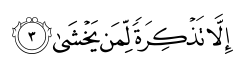
Islam, in its social manifestation and theological content, has logic, wisdom and benefit to those who are willing to embrace it. The Qur'an itself tells us that religion is specifically for God ( Q 39:3). Meaning, the primary focus is on understanding the reality of God and His guidance for the world.  Authentic Islam will never be useless for its adherents, it will always be a source of strength and stability. It is the summary of the teachings of all the Prophets, and a clarification on issues of confusion. 


Let us benefit from Islam, use our intellect, and not surrender to random emotions or trends. Indeed, one of its blessings is that it does not advocate giving up one's cultural or family identity. It embraces diversity as a healthy fixture to human life. 


Tuesday, March 4, 2025

Debate with Christian Apologist Avery (Godlogic)

 Below are videos of a recent debate we had with Avery, better known as "Godlogic, 


                                                       (The Bible and the Qur'an)


(Part 2, the person of Jesus)


Tuesday, July 2, 2024

Contemplation of Divine power & Satanic weakness: a reexamination of Ayatul Kursiyy


Introduction

The Qur'an is a unique scripture for many reasons, one of them being is the multiplicity of diverse benefits and understanding. It is used as the primary source of theology (in Islam), its passages recited in prayers, its sentence structure held as THE standard insofar as Arabic grammar, its words (in its totality) memorized by millions of people, and a host of other utilities. Here, we focus on the famed Ayatul Kursiyy or the throne verse, which is one of the most popular, memorized and recited texts of the Qur'an.


Translation

"Allah: there is none deserving worship except Him. the Ever-Living, Self-supporting. He is not overtaken by either fatigue or sleep. To him belongs what is in the heavens and the Earth. Who can intercede with Him, except by His permission: He knows what is in front and behind them. None can encompass anything of his knowledge, except by His will. His throne ('Kursiyyuhu") extends (through) the heavens and the earth, He tires not in preserving them, and He is the highest, the magnificent." (Q 2:255)


Analysis of some concepts and vocabulary

Ayatul Kursiyy functions as one of the most important Quranic texts that provides an articulation of God-concept. The Ever-living (Al-Hayy), as a Divine attribute, refutes any notion of God being dead at any time(ft.1). "He is not overtaken by either fatigue nor sleep" (Laa Ta'khudhuhu sinatun wa laa nawm) places an outright denial of the Biblical language which asserts that God slept on the seventh day after creation. (ft.2).

While many take this text as evidence for shafaa'ah (intercession), a careful reading seems to suggest that shafaa'ah would not be needed, at least not in the manner popularly imagined(ft.3). The text reads: "Who can intercede (yashfa'u ) with him, except by his permission: He knows what is front and behind them."  Allah already knows the actions of humanity, as well as the genesis of those actions. Moreover, the Qur'an asserts elsewhere " Say: intercession (shafaa'ah) is in the domain of Allah entirely (jamee'an). To him belongs the kingdom of the heavens and the earth, then to Him you will return." (Q 39:44)


Regarding the throne (ft.4), it seems to us that we should not take this as God literally having a chair. This is metaphorical language, a fact recognized even by early exegetes. The notions that God is literally sitting in a chair does a disservice to the Quranic presentation of God, and ultimately places Allah Subhaanahu wa ta'alaa in human terms with human limitations. Ibn 'Abbas is reported to have said that the term "His throne" referred to Divine Knowledge, while others have asserted it refers to Divine power (Qudrat). While the attribution to Ibn 'Abbas (the cousin to the Prophet, one recognized by the early Muslims for his keen Quranic insight) is admittedly disputed (as is much of the attributions to him in both Sunni and Shiite tafseer literature), I find it convincing. Another level of evidence is that the Arabic word for "notebook" (Kurrasah) comes from the same field of original meaning as Kursiyy. What is a "notebook"? A container of written information. And what is a "throne"? A throne ultimately serves as a symbol of power and authority for those who hold it. The term "throne" is used in every language in both metaphorical and physical ways. In a similar way, we have to understand God's hand (yadullah) and God's face (Wajhullaah) in metaphorical ways, they are certainly used in the Qur'an in a figurative fashion. 


Message of Ayatul Kursiyy


In a broad sense, the text is speaking to us as a reminder of the omnipotence of God. Thus, it makes sense that it has taken a place within culture and liturgy. Most Muslim homes and mosques are decorated with this passage and is often recited as part of a litany of protection texts when initiating travel. As explained above, it has theological information utilized even within polemics. The Prophet Muhammad (Sall Allahu 'alayhi wa sallam) is reported to have said that if this text is recited after every salaah (prayer), that person would be granted paradise (ft.5)


As a protection from machinations of Satan: focusing on negative dreams


The Qur'an records a dialogue between Allah (The Creator) and Satan (known in this period as "Iblees" in the Quranic discourse), when the latter refused to obey the Divine order to "prostrate" before Adam (this was because of the arrogance of Iblees, seeing himself as superior lifeform). Satan actually promises to "sit and wait" and "assault" humans from every possible angle. (Q 7:15-17) 


While we have discussed dreams elsewhere (ft.6) as having the possibility of coming from God (or other influences), the possibility of malevolent forces or influences cannot be easily dismissed. After all, the above Quranic passage informs us that Satan launces attacks on us from every angle!  As such, we need to be reminded that the Prophet (upon whom be peace and blessings) has also suggested recitation of texts before sleeping, among them ayatul kursiyy. The recitation of these texts has proven to be affective in granting a restful sleep, devoid of many negative dreams/nightmares. 


The Satanic agenda is mainly the promotion of instability, immorality and disconnecting us from God (ft.7). This is why it is important to try our best to remember Allah and to follow the teachings of the religion of Islam as much as we can. We are to support each other in these regards as well, so it's necessary to associate with those who have the mindset of Imaan (faith). 


Conclusion

Ayatul Kursiyy accomplishes so much more than simply a decorative item. It helps us to remember Allah, and to remember that Satan has no authentic power over those who have faith. It is worth noting that some exegetes have asserted that ayatul kursiyy ( 2:255) cannot be fully understood or interpreted without reading verses 256 and 257. These verses assert that correct, mature attitudes prevail over muddled thinking, that God is more reliable than the false (even tyrannical) trends that dominate the discourse (taaghoot), and that God is the supporting friend of the believers, who delivers guidance from darkness into light. 


Thus, we have an appropriate set of guidelines meant to provide maximum protection and benefit, if only we heed those guidelines.


Footnotes

(1) Mainstream Christianity asserts Jesus is actually God, yet it also says he was killed via crucifixion as an atonement for humanity's sins and rose from the dead three days later. Such a doctrine contradicts what is said here, i.e. that God is Ever living and never dies. Thus, Islam rejects the Christian view. 


(2) Genesis 2:2-3 asserts that God rested after creating the world. While admittedly this has been interpreted by many in the Jewish tradition in metaphorical terms, nonetheless Islam, on the basis of ayatul kursiyy, rejects the idea of God resting in any sense. 


(3) Most Muslims believe in shafaa'ah in some form, summarized as follows: on judgement day, the Prophet Muhammad (as well as other prophets and righteous people) will be approached and asked to intervene on behalf of their followers for admittance to paradise. In many countries, a strong culture of shafaa'ah has manifested itself in visitations to graves of prophets and righteous people, Imams etc., seeking tawassul, istighaathah and even tabarruk (using the items of the deceased such as hair etc.) as a means to reach God.  It is our view that the Qur'an places God (and God only) in center-focus. Ayatul Kursiyy shows that God is already knowing the situation of His creation, thus, it seems that seeking out shafaa'ah (atleast in its popular form) is unnecessary. A type of shafaa'ah that is readily understood and acceptable by all hands is that of when we ask someone more pious than us to pray for us, for our health, etc. Praying in a mosque or "holy place" occurs because we believe that environment makes our prayers more likely to be accepted is similarly undisputable. 


(4) The term "Kursiyy" in everyday Arabic (as well as other languages such as Urdu and Farsi) is used for a "chair", but here has the significance of "throne". 


(5) An Nasaa-i 2:326. Quoted in Bulugh ul Maram  by Ibn Hajar Al 'Asqalaanee. 


(6) See Shamsuddin Waheed: Dealing with Dreams


(7) See Qur'an 24:21, 2:102, 2:268, 3:75, 4:119 and more . 


Monday, March 29, 2021

The Relationship between the Bible and The Qur'an (parts one and two)

 Peace and blessings to you all,


Below is a lecture on various aspects of the scriptures. Part one is the lecture, part two is the Q and A session.


Both videos have timestamps, and comments are welcome.


https://www.youtube.com/watch?v=Jnzt4ldANn0&t=66s


Part two 


Saturday, January 5, 2019

THE PATH OF THE PROPHETS: TIMELESS GUIDANCE

( Note: The following is an edited version of our Salaat al Jumu'ah Khutbah delivered 1/4/19 at Masjid Ibrahim, Las Vegas, Nevada. The opening Hamd, as well as the expressions of peace for the Messengers of God, have been omitted here.)


The Path as described by the Qur'an

لَہٗ مَقَالِیۡدُ السَّمٰوٰتِ وَ الۡاَرۡضِ ۚ یَبۡسُطُ الرِّزۡقَ لِمَنۡ یَّشَآءُ وَ یَقۡدِرُ ؕ اِنَّہٗ بِکُلِّ شَیۡءٍ عَلِیۡمٌ
 شَرَعَ لَکُمۡ مِّنَ الدِّیۡنِ مَا وَصّٰی بِہٖ نُوۡحًا وَّ الَّذِیۡۤ اَوۡحَیۡنَاۤ اِلَیۡکَ وَ مَا وَصَّیۡنَا بِہٖۤ اِبۡرٰہِیۡمَ وَ مُوۡسٰی وَ عِیۡسٰۤی اَنۡ اَقِیۡمُوا الدِّیۡنَ وَ لَا تَتَفَرَّقُوۡا فِیۡہِ ؕ


In the Tafseer field, there is a principal known as Tasfeer ul Qur'an bil Qur'an, meaning that the Qur'an is best explained or understood by referencing other places within the Qur'an. Often, this practically means studying the context in which a particular verse or assertion is placed, rather than developing a stand-alone understanding based on a single text. Here, we have a beautiful example of this principal.

" To Him ( i.e. Allah) belongs the keys of the heavens and the Earth. He widens provision to whom He wills, and limits ( as well). Indeed, He is the One knowing all things." ( Q 42:12)
In other words, God is the "owner" of the universe, and as the one who possesses the keys, to open and close doors, Allah does that for whom He wills, in accordance to His plan and wisdom, according to his own schedule. Other texts to recall in these regards include Ayatul Kursiyy (ft.1) and Ayah An-Noor(ft.2).

Next, we are told " He ( Allah) has made you ( O followers of Muhammad) traverse on the same path, in terms of deen (Shara'a lakum min ad deen) which We (Allah) enjoined on Noah, which has been sent to you (O Muhammad), and what has been enjoined on Abraham, Moses and Jesus-establish deen, and do not place division therein.." ( Q 42:13).

These verses are to be read together, as they clearly indicate that Allah opened the doors of spiritual provision to the followers of Prophet Muhammad, the same doors He (soobhaanahu wa ta'alaa) opened for four other prophets.

These four prophets are all associated with safety on some level. Noah and his ark, Abraham's teachings, which-when followed, "save" a person from idolatry, Moses, who led his followers away from the tyranny of Pharaoh, and Jesus, who was leading people away from the traps of anger and self-deception.

To be on that path, the path of maximum benefit and safety, is truly a blessing This is why we should be consistent in  proclaiming praise to Allah for the blessing of Islam (Alhamdulillaahi 'ala Ni'matil Islaam).


The operative word is "path". On this path, there are people ahead of us and people behind us. In this ayah, Allah says to "establish deen, and don't create division therein" (Aqeemud-deen, wa Laa Tatafarraqoo feeh.). 

"Establish" means to build, and building takes patience, intelligence and planning.  It takes team work as well, to establish firmly deen, be it in personal or communal application.

In whatever stage of the journey we are on, we should help each other and remember that it takes patience, commitment, and planning. So have the Niyyah to build up your deen, not only in practice but in particular in thinking right.

Addressing sectarian divisions

The verse (42:13) also asserts that there should be no breaking apart or divisions with regards to deen. This assertion can be taken in a number of ways. We can take it as a command (amr) for unity, meaning not to break up into sectarian denominations, or it can be taken as instructing us to recognize that the prophets and messengers all taught the same deen, and thus, we should not view them as teaching different things, also implying that we should make no distinctions between God's messengers ( Q 2:285).

A reply to the above can be made, pointing out that there are divisions among the Muslim community. This is true, among the Ahlus Sunnah we have different Madhaahib (ft.3), and of course the main sectarian difference being with the Shiites. However, in general these divisions are on secondary points (furoo') and not on fundamental principles(usool) . Thus, all Muslims, of all theological colors, have the same Qur'an, the same pillars of faith, same prayers, and same ethical and behavioral principles.

This is a reflection of Allah's blessing for the deen, a deen which has been completed and protected ( Q 5:3). Thus, in the big scheme of things, the sectarian divisions among Muslims should not be exaggerated.

Footnotes

(1) The "Throne verse" ( Q 2:255), for which see here

(2) ''The verse of God's light" ( Q 24:35) , which describes the reach of Allah's guidance. See here

(3) The schools of jurisprudence only differ in terms of applications of legal methodology, and not really on theological points. There are theological differences between the Sunnis and the Shiites, some of them important, however in terms of fundamentals, both groups share that in common.

Tuesday, August 28, 2018

The Real Miracle

The following video is a Friday Khutbah (Sermon) which  argues that the most powerful miracles are those produced by humans, inspired by God.


Saturday, February 11, 2017

Common misconceptions about Islam

Introduction

Islam is the religious choice of a fifth of humanity, it is the dominant faith in areas of the world rich in resources and strategic importance. It has influenced countless trends in philosophy, culture, theology, and the practical sciences. It has not only given us 'Umar ibn Al-Khattab(1), it has given us figures as diverse as Rumi (2) and Muhammad Ali.

Despite these presence of these undeniable facts, there persists a number of myths and misconceptions in the minds of people, Some of these myths have their origins during the time of the Crusades(3) while others are of a more recent creation,

While misconceptions may be held and perpetuated out of simple ignorance, we have to admit that outright distortions of the Islamic message are spread via mass media, movies and the like, out of political interests. In short, the religion of Islam and Muslims are a convenient scapegoat.

This brief article seeks to address the leading misconceptions on Islam. Comments/questions are welcome, and as time allows this writer will seek to address them all.

Who or what is 'Allah'?


Allah is the Arabic name for 'God'. Literally, it is a contraction of two words,"Al" and "Ilah", "The" "Object of worship". It refers to the One and Only God!

It may come as a surprise that Arabic translations of the Bible have God referred to as "Allah"!

The concept of the Divine as given in Islam can be found in well known Quranic references "Say: He is God alone, God the Absolute, He has not given birth to any, nor was he born to any, and there is nothing like him." ( Q 112:1-4)

"He is God {Allah}, besides whom there is none deserving worship but him. (The one who) knows the hidden and the apparent, He is the Merciful, The Compassionate. He is God, besides whom none deserves worship but Him, The Sovereign, The Sacred, The Source of Peace, The Guardian (4) of faith, the Protector, The Mighty, The Powerful, The Great. Glory belongs to God, he is exalted above what is [wrongly] attributed to Him. He is God, The Creator, The Maker, The Creator of Form, To Him belongs the most beautiful of names. To him belongs glory, in the heavens and the earth, and He is The Mighty, The Wise." {Q 59:22-24}


Is Allah a moon god?

This particular assertion has been made in recent years by a handful of Christian polemicists in books and, more popularly, comic-book leaflets. The gist of their argument is that a pantheon of deities were deemed worthy of worship by the Arabs of Muhammad's time, and he simply picked one, a deity associated with the moon!  This, the argument continues, is why the traditional calendar is lunar, mosque domes often have a crescent moon adorning it, and the reason why many Muslim nations have a crescent on their flags!

There is a plethora of evidence to refute this notion and this has been addressed succinctly by others(5), however, this Quranic evidence should be sufficient for an honest reader.

"Do you not see that verily, to God is submissive who is in the heavens, the earth, the sun, the moon, the stars, the mountains, the trees, animal life as well as a goodly number of humans..?{ Q 22:18}

In another Quranic verse, we read that the pagans were asked "If you ask them 'who created the heavens and the Earth and subjected the sun and the moon, they will reply 'God".." [Q 29:61].

The Qur'an repeatedly speaks of both the moon and the sun as being used to measure time [6:96, 10:5, 55:5] and under the control of God. The Qur'an has never given legitimacy to a view that the Moon has Divine properties, or that "Allah" was synonymous with a moon deity!

Allah cannot be seen physically by human beings, because, ultimately, we would not be able to grasp Him in a full and complete manner, This is why God is never depicted in human form [or any physical form for that matter] and no pictures are present in prayer halls. Indeed, we find that if any decorations adorn the Mosques, it would be quotations from the Qur'an itself, designed to remind the visitor of the greatness of God.

"And the mosques are for God, therefore do not supplicate any other than him."[Q72:18]


Islam as the teaching of Prophets preceding Muhammad and coming through Muhammad

Islam is an Arabic word meaning "submission to God". The one who does the act of submission is called a "Muslim". If one were to read about the characters of old, particularly in the Jude-Christian dispensation, we find that indeed, they taught their followers submission to God. It is true that there are some differences in emphasis and rituals, however the core of submission remains.

As Muslims see it, this thread of teachers, scriptures and Prophets ended with the coming of Muhammad. He comes, according to Islamic teachings, as a Mercy from God to be felt universally [Q 21:107], as the Last of the Prophets with the final scriptural revelation { Q 33:40}, and with teachings that correct certain important misconceptions and that will act as an ultimate criterion for judgement between what is authentic and what is spurious, { Q 27:76 and 25:1].

As part of the Muslim practice, we are to pray for peace and blessings to be bestowed on all the Prophets and do not allow any disrespectful language about them.

Islam's relation with Jews and Christians 

The modern discourse has placed the three monotheistic religions alongside each other as reflective of the shared roots in Abraham, thus, the term Abrahamic religions.

While it is true that Islam has strong theological disagreements with the other two faiths, the Qur'an repeatedly calls them as "People of Scripture" and allows both marital and other social ties [Q 5:5].


Terrorism/Violence to spread religion

This is perhaps the greatest myth perpetuated by forces with political interests. It is imagined that Islam has taught its followers to spread the faith at the point of a sword, however, this is far from the truth. The Qur'an itself says "There is no compulsion in religious affairs, as truth stands clear from error.."[Q 2:256].

It says further "And say; Truth is from your Lord, so he who will accept, let him accept, and he who will reject, let him reject..[Q 18:29].

The Qur'an tells us that Noah says to his interlocutors "Shall we compel you to accept while you are hateful of it?" [ Q 11:28]

So we should be able to see clearly that using violence as a means to spread religion is not correct as far as Islam is concerned. In today's world, forces both inside and outside the Muslim community seem to believe otherwise, but all of that is connected to political causes and often are simply masks to disguise other agendas!

Islam is a missionary religion, it does seek to call people to investigate it and accept it. However, it does so by telling the "caller" to use "wisdom and articulate expressions" { Q 16:125}. The Qur'an refers to itself as a scripture given in order to influence people to think [Q 12:4, among other texts], so it is clearly against a blind faith.

Jesus

Depicted as a Prophet and great teacher, Jesus is mentioned by name twenty five times in the Qur'an. Muslims affirm his virginal birth and view him as the Messiah, although the understanding we have on the meaning of that differs from mainline Christianity.

This article does not seek to enter into details on that(6), nonetheless what we should convey is that belief in Jesus as Messiah is part and parcel of Islam. He is loved and respected by Muslims, even though our understanding of his significance differs from Christians,

Women

Increasingly in the West the issue of how women are treated and viewed in Islam has been raised. The most visible Muslim women are of course those who wear Hijaab or other well-recognized dress associated with Islam.

It can be said that certain parochial cultures have a negative attitude towards women, but that reflects their own views, not necessarily the teachings of the Qur'an and Prophet Muhammad. In the time before Arabia accepted Islam, the Arabian custom was to view females with little regards, even practicing female infanticide! The Qur'an, in one of its earliest texts, addressed this horrific practice [Q 81:8-9]. Islam as taught by Muhammad himself gave inheritance rights, leadership roles, rights in choice of marriage and freedom with their own incomes. Indeed, we have an entire Quranic chapter entitled "The Women" [An Nisaa'].

There are guidelines for dress for women, but what is often ignored is that there is a dress code for both men and women. The Qur'an does directly speak on how women should dress [Q 24:31 and 33:59] but what is often ignored is that the context of these regulations, particularly in the Qur'an's chapter 24 as referred to above, speaks on men and women abstaining from inappropriate staring, and behavior in general. In other words, the dress code is connected to a wider set of behavioral guidelines.

How those guidelines are carried out will vary from culture to culture. Nigerian clothing styles differ from those in the Arab world, but so long as modesty and appropriate respectful guidelines are observed, they are all equally Islamic or allowable in Islam!

For women, the dress code includes the covering of the whole body, including hair. This actually seeks to create an environment of respect and appropriateness. It has no relation to oppression of women.


Endnotes

(1) 'Umar ibn Al-Khattab {d.644 C.E.} was initially a foe of Islam, even wanting to kill Prophet Muhammad, but his heart was touched by the Quranic message and he went on to become a strong defender of the faith, even at one point becoming the leader of the Muslim community after the Prophet's death. He is well known for his modesty and sense of justice for all.

(2) Jalaluddin Ar-Rumi [d. 1273 C.E.] was a great poet, philosopher and spiritualist. The Western world absorbs his poetry and often he is seen as having been divorced from Islam. While there is admittedly some controversy surrounding him in Muslim discourse, nonetheless he saw himself as totally in line with Islam. One quote attributed to him says "Be in the community of those who receive Divine Mercy, don't abandon the Sunnah of Ahmad [i.e. Prophet Muhammad], rather, be commanded by it." A book has recently been published, which I have yet to obtain, that speaks on this attempt to divorce Rumi from Islam. The book is called Rumi's Secret by Brad Gooch. A review of it, as well as a very pleasant overview of Rumi's reach, is to be found at [url] http://www.newyorker.com/books/page-turner/the-erasure-of-islam-from-the-poetry-of-rumi[/url] .

(3) Some of these myths are described well in the book Holy Wars: The Crusades And Their Impact On Today's World by Karen Armstrong [New York, 2001].

(4) Al Mu'min is rendered here as "The Guardian", but it has been variously interpreted. Tafseer Al-Jalalayn has it as informing us about God who is "The truthful, who conveys the truth of miraculous creation". I'raab Al Qur'an  mentions three different interpretations, which include God's "Protecting of his servants from danger." " The Protector of his closest ones [Awliyaaa'] from his own wrath." and "That the believers will testify on judgement day and their testimony will be truthful, verified as true by God.."  This work, by the 10th century Egyptian scholar Abu Ja'far Ahmad bin Muhammad Isma'il An-Nahhas, is a wonderful reference source for examining the grammatical possibilities of Quranic words. The edition we have is published by Dar Al Ma'rifah, Beirut, Lebanon.

(5) The famed Muslim debater and academic Dr. Shabbir Ally has published a thorough refutation of the moon god theory. It can be found at [url]http://www.beautifulislam.net/christianity/robert_moreys_moon_god_myth.htm[/url].

(6) The Islamic understanding of the role of Jesus is explained by this writer at [url] http://shamsuddinwaheed.blogspot.com/2008/01/jesus-in-islam.html[/url].


Thursday, February 11, 2016

The Psychology of Family and Spirituality in Islam

[Note: This is an edited version of the address given at the February 2016  Tazkiyatun Nafs program at Toledo Masjid Al-Islam.]


Let us begin by asking how 'family' is defined? Or even the term 'spirituality' for that matter. In this age, we think of the Nuclear Family unit when it comes to family. The Nuclear Family unit is a married couple, with three children maximum. Admittedly this does still get extended to include grandparents, cousins etc.

Traditional cultures tend to expand these family groupings to include clan, tribe or a feeling of loyalty to locality.

Families have shared bloodlines and history. They also develop over long periods shared experiences, pains and laughter. This is a bond that is usually unbreakable.

"And have Taqwaa of Allah, through whom you ask each other [O humans] [of your rights], and the family [as well], Indeed, Allah is Ever-Watchful over you." [Q 4:1]
يَا أَيُّهَا النَّاسُ اتَّقُواْ رَبَّكُمُ الَّذِي خَلَقَكُم مِّن نَّفْسٍ وَاحِدَةٍ وَخَلَقَ مِنْهَا زَوْجَهَا وَبَثَّ مِنْهُمَا رِجَالاً كَثِيرًا وَنِسَاء وَاتَّقُواْ اللّهَ الَّذِي تَسَاءلُونَ بِهِ وَالأَرْحَامَ إِنَّ اللّهَ كَانَ عَلَيْكُمْ رَقِيبًا
The family bond is natural, and Taqwaa is expressed by respecting that bond.

The soul and the family in New Testament tradition

Some religions have a shaky view when it comes to the ties between the family and the soul. Paul [1 Cor. 7:8]  says it is better to not marry. The New Testament has Jesus ['Isa, 'alayhis salaam] say that he has come to divide family members [Matt.10:35]. So we have these two New Testament assertions that place family as something that can destroy the soul, and that the family must be sacrificed  for the welfare of the soul!

Issues that need to be addressed from the Islamic perspective

[1] God placed you with your blood family. The blood ties, shared experiences, all creates bonds which are not to be broken. Indeed, Allah says that even if our disbelieving parents try to induce us towards false worship, we are not to do that. however we are to keep strong ties with them in life. [ Q 31:15]

[2] The blood family is the first school wherein we learn about God, worship, 'aqeedah etc.

The Prophet said "Marriage is half of the deen" {Bayhaqi}. Why does he, 'alayhis salaatu was salaam, say this? Because from that, a Jamaa'ah has the potential to be born, born to worship Allah. Even the relationship between two people, with it's ups and downs, can bring them closer to Allah in giving thanks as well as calling on him during times of difficulty. When one has a family, the believer spends much time praying [Du'aa] for them. According to the Messenger of Allah [Sall Allahu 'alayhi wa sallam], this counts as worship.

"Du'aa  is the core of worship," [ Tirmidhee].  "Du'aa is worship" [ Abu Dawud and Tirmidhee].

[3] The concept of 'family' is very much expanded in Islam. Allah says the believers are nothing more than a brotherhood. "Brotherhood" [Ikhwah] is nothing more than a fancy term for family. [ Q 49:10]

Healthy people care about their family, they are careful with regards to the feelings and health of their family, they look for the interests of their family. Muslims are  supposed to be concerned about each other. This is even reflected in the small act of watching the news whenever we come across a news item involving other Muslims. Even without knowing the Ahadeeth or Quranic verses on this subject, Muslims do this, they do this because caring for other Muslims is something which is built-in into the daily practice of this Deen!


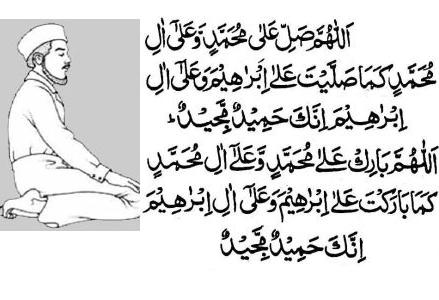
In the sitting posture of Salaah, we pray "O Allah, make the needs of Muhammad and his people be met." We also pray "O Allah, send blessings on Muhammad and his people." We are praying for the cause of Muhammad, the person of Muhammad, but also for his followers, that they have not only their needs, but blessings as well. That they have not only their immediate needs, but to have extra things, happiness in their existence.


Moreover, we 'officially' end the Salaah by turning to the right and the left, reciting the Tasleem [As salaamu 'alaykum wa rahmatullah, may the peace and mercy of Allah be on you].

Even praying alone, we still do this, and it's not restricted to communal prayers. It is said that we do this in order to greet the angels. Another way of looking at this, however, is that this serves as a training. In the midst of our worship of Allah, we are conditioned to care about other people.

In addition, in the family the family prays together in Jamaa'ah. They pray for each other and with each other. So we have here family connected by blood, but also connected [i.e. formed] by their shared belief in Almighty Allah.

This should bring us to a better understanding of the Prophet's statement [peace and blessings be on him] "None of you have Imaan until [Hattaaa] you love for your brother what you love for yourself." [Muslim].

Faith in God is deficient unless it is accompanied by- at minimum-  concern for one's brother. This is a value Islam seeks to develop within its followers.

What to do when family members are detrimental for our spiritual development

This scenario is one faced very often, by Muslims with Non Muslim family members, as well as Muslims dealing with [Muslim] family with different ideas of what it means to practice the religion.

The Qur'an gives us a powerful set of guidelines to answer this query.

"O believers, Indeed, some of your wives and your children are enemies to you." [Q 64:14]

We have to stop for a moment. Enemies is an extreme term to use. It means that they [the family members] have the potential to bring you harm when they are not on the same page spiritually. The verse continues to give us instructions.

ا أَيُّهَا الَّذِينَ آمَنُوا إِنَّ مِنْ أَزْوَاجِكُمْ وَأَوْلَادِكُمْ عَدُوًّا لَّكُمْ فَاحْذَرُوهُمْ وَإِن تَعْفُوا وَتَصْفَحُوا وَتَغْفِرُوا فَإِنَّ اللَّهَ غَفُورٌ رَّحِيمٌ
[1] Beware of them[Fah-dharhum].

Knowing that they can bring harm, one takes precautions. If they go in a direction that seeks to take you to Haraam, or to that which brings harm, even though they may not realize the harm they are bringing, be on the lookout!

In modern times we talk about toxic people or narcissistic  personalities. Included in this are folks who are emotionally manipulative or even guilty of emotional blackmail. We are told to limit our interactions with these types. Extend this to, for example, those who constantly backbite or gossip. In Islam, the listener is also deemed as guilty as the speaker. So if we know these types, when they start, change the subject or leave the conversation. Similarly, if they offer you drugs, alcohol and the like, simply decline and avoid that environment.

[2] "If you pardon" [wa in Ta'foo]

Try to be understanding of their situation or condition. Try to excuse them, even though you are taking precautions to limit their harm to you.

[3] "Overlook" [wa tas-fahoo]

To be forbearing, to put up with it all to a point. To be patient. One need not turn everything into an argument.

In the age of internet and mass communication, we often hear about the Haraam Police. This is a nickname give to Muslims who are always so preoccupied with the issues of other people. They will police your clothes and your Facebook posts. They will critique your beard, women's Hijaab and the like. They have stations everywhere, and will even spend time critiquing Imams. They will analyze speeches of Imams and scholars, especially the famous ones, for theological mistakes, for mispronunciation of Qur'anic sentences. They will even publish books of 'refutations' regarding these personalities "deviance" and YouTube videos will follow suit.

We can understand the command to overlook in that sense as well. Don't let it bother you. You don't need to become the Haraam police yourselves, Take precautions, yet be understanding and overlook their issues. Strive to be better yourself, and avoid becoming judgmental. You may end up becoming a positive influence on them. This is precisely the way of the Prophet.


The great Egyptian scholar, Shaikh Muhammad Al-Ghazzali [1917-1996] was once asked "What is the ruling about one who has abandoned prayers? The questioner was probably expecting that the Shaikh would declare such a person a disbeliever and the like. However, the Shaikh gave a beautiful response. He says "His ruling is that YOU take him WITH YOU to the mosque."

To take someone with you is a sign of caring, and that care may indeed change that person's condition and you can become the best of friends. Remember Khalid ibn al-Waleed, who fought the Muslims at Uhud, or Umar ibn al-Khattab, Radee Allahu 'anhumaa. These were foes to Islam and the Prophet himself, yet became the greatest champions of the deen.

[3] "And forgive" [wa taghfiruu]

Forgiveness is the last response in this series of steps. The Prophet practiced this many times, the most important being when he issued an amnesty for all those who had led a two decade bloody campaign against him.

Forgiveness is difficult but doable. It is also one of the main pillars of a high spiritual position, to be yourself forgiving, and not just asking Allah for his forgiveness.

The verse ends "So Indeed, Allah is the Forgiver, Compassionate"

Your 'foes' and yourself receive forgiveness from God. God is intensely forgiving. He does so often. He is the Constantly Merciful.

Understanding Mercy and Forgiveness

Enmity which is causing you stress, coming from whatever quarter, bringing into your life negative energy, striving to take you away from God and what is healthy, Allah can still deal with them. He can bring people to guidance. Allah can heal such people, here in this life.

That is an equation that we best remember.

By the same token, Allah says the Qur'an itself is a healer. He also says to "Make Jihaad against them [the rejectors] with it [i.e. Qur'an], and a mighty Jihaad it is." [Q 25:52]

Allah's healing can come to others by your own hands. To those with bad habits, share with them what the Qur'an says on that habit. To those who oppose Islam based on misinformation, share with them what the Qur'an says on that subject. If necessary, given them a Qur'an to read for themselves.

A Realistic Religion

This deen addresses all angles and all sides. If the majority of human beings could be influenced by only a third of what it teaches, the world would surely be better off. The Muslims have forgotten much of these teachings, that is the only logical explanation behind the many wars being fought in Muslim lands.

May Allah make us stronger as a body of believers, and increase in our our understanding of others, and understanding of our own needs.


Saturday, February 6, 2016

Accessing our lost spiritual wealth

The following is an edited version of the address given at the spirituality session at Toledo Masjid Al-Islam January 11th, 2016.]


We have to begin this subject by referring to the Qur'an. It says that the essence of every human being acknowledges their Lord. Alastu  Berabbikum? Qaaloo Balaa Shahidnaa. "Am I not your Lord", God asks. "Yes, we testify", is the response. It goes on to say that on judgement day, the excuse of "simply" adhering to family/social conventions will not be acceptable in the Divine Court.[ Q 7:172-173]

We also have the hadeeth in which the Prophet reportedly says " Every child is born upon the Fitrah." . This part of the hadeeth can be seen as Tafseer on the verses mentioned earlier. The hadeeth continues "His parents make him a Jew, a Christian, or a Zoroastrian." [Bukhari and Muslim]. So what do we learn?

[1] All humans possess, to use the language of tonight's program- that treasure, or at least they possess the potential to access that treasure.

[2] That treasure is bright, it is shiny and attractive, and is at its brightest in children, especially the very young. This fact is universally know, across religions and cultures. The Bible has it that Jesus says "You shall not enter heaven until you become like these little children." [Matt. 18:3]

Across human cultures, the statements and smiles of children are seen as reflecting an essential goodness and purity. Indeed, adults are often judged by other adults based upon their children's impressions. That is just a fact! In Islamic terminology, this is called Fitrah, the term highlighted in the hadeeth cited earlier.

Moreover, across human societies, crimes against children are seen as among the most horrible of crimes.


[3] Children are raised, influenced by their societies, to become adults with the thinking of that society or their surroundings. Thus, the import of the second part of the hadeeth "the parents make him a Jew, Christian or Zoroastrian".  This part of the hadeeth highlights  for us that treasure becoming lost or, to use another term, buried.


When the treasure gets buried, the consequences are profound. Faith in fellow man as well as faith in God weakens, if not totally dies! Ties between peoples become little more than business transactions. Trust is destroyed. A Vacuum is created, a hole is made. Some attempt to fill it by using drugs. Some turn to alcohol. Some will turn to other items. Others may seek to fill that hole by harming themselves, or others, even going to the route of committing suicide. Others still will turn to materialism as their god, or fill that hole in their own soul by seeking to dominate other human being, seeking after power and authority. They will often proclaim belief in empty, meaningless expressions. They make their lives' mission the acquisition of the biggest phones, the biggest cars. They risk becoming a people dedicated to nothing but indulgence.


Why tell us about the original acknowledgement?

After God says all of Adam's children recognize, in their own core, we are told

"Thus, do we [Allah] explain clearly the signs so that perhaps they will return " { Q 7:174]

وَكَذَلِكَ نُفَصِّلُ الآيَاتِ وَلَعَلَّهُمْ يَرْجِعُونَ
This means that Allah has told us this in order that we may return to it. He has told us a treasure exists and has even given us a map.


Continuing with this analogy. By stages, we are taught how to read the map. Messengers of God come to give us tips, to instruct us as to its symbols. There is even a discipline that must be adhered to if we are going to read the map correctly.

The  role of ritual

All religions have the rituals of worship, fasting and prayer, in some sense or another. These concepts have survived the corruptions that have taken place over the countless generations. However, in Islam we have Al Kitaab Al Mubeen, The Clear Scripture and we also have the Straight Path. "All paths lead to God", the popular saying goes. However, the Islam of the Qur'an and Prophet Muhammad constitutes the straight path. The shortest distance between two points is a straight line. That is Islam. Islam is the path that gets you there quick.

We have prayer and fasting, but we also have a discipline. This is shown in what the religion says about pork. Yes, Allah created pigs, yet he also says we are not to consume them. God created grapes, yet he says we are not to consume wine. These are NOT petty injunctions. These are examples of the discipline needed to study that map and bring out the treasure which has been hidden for so long!

So all of the authentic teachings and rules of Islam are present for our benefit and welfare.


Can antiquity be our guide?

When we talk about guidance, we tend to look at the past. For Muslims of all shades and madhaahib, we will look to the time of the Prophet. For Christians, they will focus upon the person of Christ. In this practice, we are indirectly acknowledging that there are deficiencies in today's way of thinking.

There is truth in this, however we can also view this in another way. Our Recent past, as recently as our parents and grandparents, can likewise provide us with keys to unlocking that treasure. Our recent past includes people we admire in our family line or in our society. I am not talking about actors and politicians. I am talking about figures who were truly about what is right, especially those we saw personally and was able to access personally.

Think about what you admire and love within them. Perhaps they were hard working, courageous. People dedicated to prayer, overcoming serious problems. These positive things are also a source of guidance. After all, Allah does not make mistakes. He placed you in your family and in your unique set of circumstances as a foundation.


Contemporary mindset very evil

The prevalent mindset in today's world is directed by evil forces. In politics, social order, even in the imagery of religion. The prevalent mindset promotes violence, xenophobia, racism, enmity between communities, selfishness, distrust, greed and paranoia. It promotes individualism in an unhealthy way, making us easier prey. Moreover, the prevalent mindset is against education.

Education should give us knowledge as well as cultivation, to make us better people. But today there are moves that seek to go against making us better people, In short, the prevalent mindset seeks to lock us out of the treasure.


Be courageous

Don't be afraid to be "weird". The Muslim should particularly be "weird" in the sense that our thinking and mindset be directed by this religion more so than any other consideration.

"And whosoever obeys Allah and his Messengerr have already acheived a mighty acheivement.{ Q 33:71}
وَمَن يُطِعْ اللَّهَ وَرَسُولَهُ فَقَدْ فَازَ فَوْزًا عَظِيمًا
Every child is born upon the Fitrah

Children don't know fiqh or religious labels. They don't even care about that. They do, however, love. They share. They trust. They bring out things in adults. They worship without any urging from their parents.

Watch your toddlers put down a rug and make Sajdah. They do so with joy, and brings joy to the hearts of nearby adults.

The Prophet's grandchildren [Hasan and Husseein] used to climb on his blessed back when he was in Sajdah, and it has happened to us all. Even within the animal kingdom, at the Haram [Makkah, site of the Ka'bah], birds are always circling the Ka'bah [i.e. Tawaf] and never make any droppings on the pilgrims.

Children and animals both exists in a state which recognizes God. For children, the older they get the easier it gets to be taken into another direction, which is mentioned in the hadeeth.


Job of Parents

Parents have to strive to bring up their children right, and the children also push their parents in the right direction, having the correct attitude. The children can give us keys to the treasure, and even tips on how to read the map. When that map is read with the distractions of ego, anger, insecurity, past hurts and the like, you will go in the wrong direction.

So it's more than having a map or even the treasure. It has to be read correctly and the treasure has to be utilized correctly.

Qur'an

"So when you read the Qur'an, seek refuge with Allah from Satan, the rejected enemy." [ Q 16:98]

فَإِذَا قَرَأْتَ الْقُرْآنَ فَاسْتَعِذْ بِاللّهِ مِنَ الشَّيْطَانِ الرَّجِيمِ
We don;t just say 'Bismillah"! People can [and do] be horrible in the name of God. We have to say A 'oodhoo Bellaahee Minash shaytaanir Rajeem.

In a similar way, money cannot solve our problems unless we know how to use it!

As life goes on, the more knowledge and experience we get under our belt, the easier it should be to use that map and utilize the treasure. If we don't have the knowledge/experience, we have to follow those who do.

"So ask the people opf reminder, i.e. knowledge, if you don't know" { Qur'an 16:43, 21:7]
فَاسْأَلُواْ أَهْلَ الذِّكْرِ إِن كُنتُمْ لاَ تَعْلَمُونَ
The guides can take us there, or at least show us where to look and what to zoom in upon.

Addressing our unique needs

All of us have some common needs, but there are needs that are unique. A person needing evidence that God exists is not the same as one needing to learn the details of the salaat. The first person is skeptical, while the other simply needs technical support.

Moreover, an astray person, in need of guidance, yet attempts to always argue with the guide or put on a show for the guide, that person needs hidaayah the most, and if the guide cannot deal with them, it is to the loss of that astray person.

In the Seerah literature, we have a report which states that a man came to the Prophet [peace and blessings of Allah be upon him]  complaining that he [the Prophet] was  not giving out wealth correctly. The man said to the Prophet "Fear Allah, O Muhammad" [as the exact wording says Faqaala "AttaqqiLLaah, Yaa Muhammad"].

The man didn't even call him "Prophet or Messenger" . He says "Muhammad". The Prophet responded "who is more in obedience to God that me, who is more trustworthy than me?" [Bukhari and Muslim].

The hadeeth says the man walked away. That man, tradition says, is the progenitor of the Khawaarij [Kharijites], the first terrorists group in the Muslim communitty. This emerged in Iraq, where ISIS has likewise, also emerged.

So when the guides are marginalized or ignored due to ego, the consequences can be devastating, both physically and spiritually.

The same hadeeth goes on to talk about a people who recite the Qur'an, but it doesn't go beyond their throats. They leave the religion the way an arrow leaves the bow when shot out [thus, the name Khawaarij, from the root kharaja 'he left']

While we see this hadeeth as predicting a political rebellion, this can also be seen in a spiritual sense. God knows what he's doing. He sent prophets and guides as well. He sent guidance. He sent a map. So don't underestimate the guide. Let him help you, and you help him,

Let us use the map, let us access the treasure for our benefit, and whatever level we are at now. May Alllah be our protector and guide.


The struggles to find balance in religious history: Friday Khutbah

[ Note: The following is the Friday Khutbah from 2/5/16, at Toledo Masjid. It has been formatted into one article, and the opening Hamd has been omitted here.]

Among the things we see when we study religion, and by 'religion' I mean the doctrines and history of religions worldwide, we find that all of them attempt to create balance between competing needs. This can be stated in another fashion, i.e. these religions would seek to address pressing issues at the time these religions emerged. The solutions that these religions would give became outdated, meaning that the solutions no longer applied because the circumstances had since changed. A good example is that of divorce. In the Jewish Fiqh, [ Deut.24:1] when a man finds his wife displeasing, he gives her a certificate of divorce and sends her away. This was obviously abused. We can easily see how this can be abused, leading to destroyed families and homeless divorcees.

Jesus ['Isa , 'alayhis salaam] comes along, according to the New Testament [  Matthew 19:8] forbids divorce totally, the only exception being when adultery has been committed. The New Testament has materials that almost discourages marriage itself totally. Paul says :It is better for a man not to have relations with a woman" [ 1 Cor 7:1]. He also says "It is better to be like me" [1 Cor. 7:8], meaning to be unmarried, as he was.

The prohibition of divorce is only enforced in today's Christian world among the Catholics, the Eastern Orthodox churches, and some smaller sects such as the Jehovah's Witnesses. The wider Christian world has faced new circumstances which has forced them to abandon this edict!

The Qur'an now comes, six centuries after Christ.  It comes to a universal Prophet [ Muhammad, Sall Allahu 'alayhi wa sallam]. It comes as a scripture not only for the Jews, but for all humanity. In addition, it is the final scripture, sent to the final Prophet [Q 33:40]. Therefore all of its teachings has a place for all times to come!


As a student of religion, I can tell you in all fairness that this Deen, particularly the Qur'an, is for all places and all times. It's rules, edicts, are still relevant.

Returning to the example of marriage, Islam encourages marriage and discourages divorce, although it is allowed. Indeed, some people simply cannot get along, that's simply a reality. The sayings of the Prophet [Sall Allahu 'alayhi wa sallam] and the scholars of Islam all point to marriage as being something that is very helpful in terms of the growth of the spiritual life. He says "Marriage is half of the deen" [ Bayhaqi]. Similarly, the family life, working for an income, are deemed in Islam helpful to the betterment of one's spiritual condition.

It is not our intention to go into the details of this subject, but rather to make a point. The Islam as found in the Qur'an is an Islam that, if understood and applied correctly, can remove most of the problems we face. It has the capacity to give us peace, balance, understanding and virtues in this life.

"We [Allah] have not sent the Qur'an to you to make you have stress, rather, only as a notice to those with the fear of God, a revelation from the One who has created the Earth and the Highest heavens." [Q 20:2-4]


It is true that Muslims can be unbalanced and have problems. This is mostly due to our ignorance and our lack of obeying Allah and his Prophet. We are told "And whosoever obeys Allah and his Messenger, have already achieved a mighty achievement." [Q 33:71]

The solutions are all here, if only we take some time to look at them, to internalize its teachings, to exemplify the light. May Allah be merciful to us with this Qur'an, make it for us a leader, a source of light and guidance.


How can a religion of 1400 years age give any solutions today?


A skeptic can raise the question that Islam is fourteen centuries old, how can it give any solutions today? This is a honest and fair question. We answer that by saying that what Islam gives is TIMELESS PRINCIPLES. Concepts or teachings that work in any context. The Qur'an tells us that Pork is forbidden, but it also tells us that it becomes lawful [Halaal] during a period of starvation. [Q 2:173 and 6:119]. This is not reasoning, this is an example of the principles in the text itself.

It is these principles that allow us to identify what is truly wrong in our lives or in our society today, and likewise to allow us to identify what is good and to build upon that good, so we won't be in confusion, drifting through life.

Rich or Poor, Black or White, we become a people of confidence, purpose, progress, deserving of Paradise.

"Deserving" of paradise is a strong claim, but look at the time  of Prophet Muhammad. One hadeeth [Bukhari and Muslim] tells us that a man had done some sin, probably a sin that would require punishment in Islamic law. He came to the Prophet wanting to confess. The Prophet ['alayhis salaatu was salaam] kept ignoring the man. Finally, the time of prayer came, and they all offered the prayer. Afterwards, the man came again, trying to confess his sin. The Prophet asked "did you pray with us?". The man replies in the affirmative. The Prophet says to him "Then indeed, God has forgiven your sin or your action that would require punishment." 

This is a beautiful hadeeth. This Islam created in the man the consciousness to strive to be one of the best, not to dodge responsibility. Such a person deserves paradise.

The Qur'an says "Indeed, prayer restrains [a person] from immorality and repugnant acts, the recollecting of Allah is the greatest [source of power and inspiration], and Allah knows what you manufacture." [Q 29: 46]

So the act of daily salaat is an act that generates the conscious, it pricks at our hearts to strive to be about what is right.

May Alkah keep us firm upon this Deen!


Saturday, December 26, 2015

Jesus and Muhammad: Using the holidays to derive certain lessons [Friday Khutbah]

[ Note: The following is an edited version of the Khutbah delivered December 25, 2015. The opening Hamd and most of the Arabic quotations have been omitted here.]


Birth of Jesus and Muhammad

This is an interesting moment in time. Today is Christmas, which is observed by Christians to celebrate the birth of Jesus Christ, and yesterday was Mawlud an Nabi, which celebrates the birth of Prophet Muhammad, 'Alayhimas salaam [peace be upon both of them].

It is also the time of heightened rhetoric against Islam and Muslims, worldwide troubles, and of course an election year in this country. All of these things have come together at the same time.

While it is true that the birthday celebrations of both Prophets are innovations, in the sense that they did not instruct their followers to do it, nonetheless it does serve as a time when we can derive lessons from them.

For Muslims, we believe in both Jesus and Muhammad, whereas the Christian believes in Jesus. The Qur'an speaks on Jesus and rejects what are now considered mainstream doctrine in Christendom, such as Jesus' supposed divinity, that he was the literal son of God, and that he dies for mankind's sins. Certainly we know this already, so is there anything else we learn from the Islamic sources besides doctrinal or polemical arguments?

Humanity of Jesus and Muhammad

Allah tells Our Prophet to proclaim, simply "Say: I am a man similar to yourselves." Another Quranic verse has God tell him to make the proclamation even more strong "Say: I am nothing more than [Innama] a man like yourselves."

The life of Muhammad, Sall Allahu 'alayhi wa sallam, is a demonstration of the same life of Jesus. He, upon whom be peace, says, according to the Qur'an: "Peace was upon me the day I was born, the day I shall die, and the day I shall be brought back to life." [Q 19:33]

Birth, death, and the emergence to face a public accounting before Allah is a reality for us all, Jesus and Muhammad are no different!

Allah told the Prophet, as recorded in the Qur'an, the prayer of insightful believers. They pray "Our Lord, you are the gather of mankind, on a day in which there is no doubt." [Rabbana Innaka Jaami'un Naasi Liyaumin laa rayba feeh.]

So both Jesus and Muhammad were cognizant of facing God and taught this reality to their followers. Indeed, Muslims daily are to recognize this when we recite "Ruler of the day of Judgement" [Maalikee Yaumid deen] in Salaah.


Truly gaining from the sources

Muslims have the Qur'an and Sunnah. However, we also have a rich history, a spiritual culture that has produced scholars of great insight, men and women who have studied many sources, gathering materials that would benefit their students. We have in this age been guilty of overlooking these materials.

One such reference is the great scholar Imam Abu Haamid Al-Ghazzali, or simply Imam Al-Ghazzali, whose most important work is Ihyaa 'Uloom id-Deen. The name of this work itself is important, it means The Revival of Religious Sciences.


This work has been widely criticized in our history, particularly his usage of Ahadeeth declared weak or even Mawdoo' [narrations falsely attributed to the Prophet], nonetheless we should appreciate this work and works like it, and examine what this great scholar saw as useful to his readers.


Traditions from Jesus from Islamic sources

In the Ihyaa, a tradition is recorded in which Jesus 'alayhis salaam was asked "Who taught you the rules of conduct?" Perhaps the questioner had the oppurtunity to interact with him and saw his character as exemplary, and wanted to simply know where he acquired this breeding.

Jesus responds " No one! I simply keep away from that which I don't like in others!" 

So if we see hastiness, arrogance, ignorance in others, that should alert us to avoid adopting those characteristics in ourselves.

Another tradition recorded in the Ihyaa has Jesus say "Do not take the world [Dunya] as a Lord, so that the world does not take you as its slaves." 

The servants of Allah, followers of Prophets, are not to be swayed by the trends and vices of this world. Nor are they to be swayed by internal calls to that which is lowly. These are all issues of the Nafs. May Allah show us truth as truth, and give us the ability to follow it.


Comparing Jesus and Muhammad

When comparing the two, Jesus is the one that gets called "The Prince of Peace". In today's world, we find people calling Our Prophet ['alayhis salaatu was salaam] a "warlord"!

As Muslims, we are, in fact, connected to both Prophets. So it's an incorrect expression to call Muhammad "Our Prophet"! Jesus and Muhammad both belong to us. To follow Muhammad is to also follow the essence of what Jesus and the other prophets brought. To break them apart or see them separate is- according to the Qur'an, manifest Kufr.

"The Messenger [Muhammad, Sall Allahu 'alayhi wa sallam] believes in all that has been sent to him from his Lord, as do the Mu'minoon. All of them believe in God, His angels, his scriptures and his messengers. There is no distinctions between any of his messengers.." [Q 2:285]

Attributes of Prophet Muhammad's followers

The Qur'an tells us the qualities of those who follow Muhammad. We are told

"That which is with Allah is beneficial and most lasting [Khayrun wa Ab-qaaaa] for people of Imaan, who trust their Lord. They avoid the great sins, indecencies, and when angered, are [nonetheless] forgiving." [Q 42:36-37]

Sometimes the opponents of Islam will say "Jesus said forgive your enemies, to forgive those who trespass against you." and they will add "Your Mohammud was all about conflict." They will disrespect the Prophet's name intentionally!

However, what Muhammad the Messenger instilled in his followers, as seen from this Qur'an, without doubt, is that even in the midst of temporary anger, the quality of forgiveness is still in their personalities!

When the Prophet entered Makkah, the enemy capital, he issued a general amnesty which included those who actually planned and even took part in the events leading to battle, death of his followers, assassination attempts etc.

Think about the companions, such as 'Ali. In battle, he was about to strike an enemy down when the latter spat upon him. 'Ali backed off, because previously it was a battle for what is right, and did not want to act with anger, making it a personal issue.

The Prophet is himself reported to have said that the strong man is not the one who can wrestle another down, but the one who restrains himself when angry.

That is the teaching of our Prophet, the manifestation of the ethics this Deen is to create.


So while Jesus and Muhammad may be different in what was emphasized, their overall roles are the same. Character development, patience, clean hearts, God-fearing, and able to see the big picture.


Let us create within ourselves what Jesus had, what Muhammad had.

Sayyidah 'A'ishaa describes the Prophet as one whose character was the Qur'an. So we should want to be the same.

The Qur'an tells us that Jesus sumarized his teachings and what he was about in one short sentence.

"Verily, God is My Lord and Your Lord , so worship him, this is a straight path." [Q 3:51]

So we want a personality that serves God and God alone, not in the service of trends or ego.